-
-
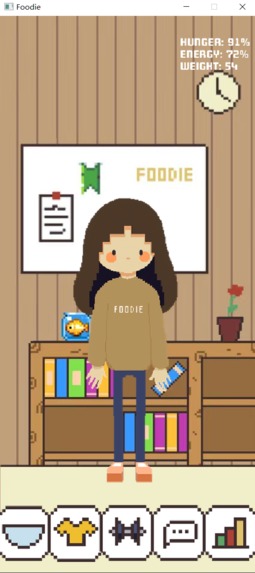
Main game screen
-

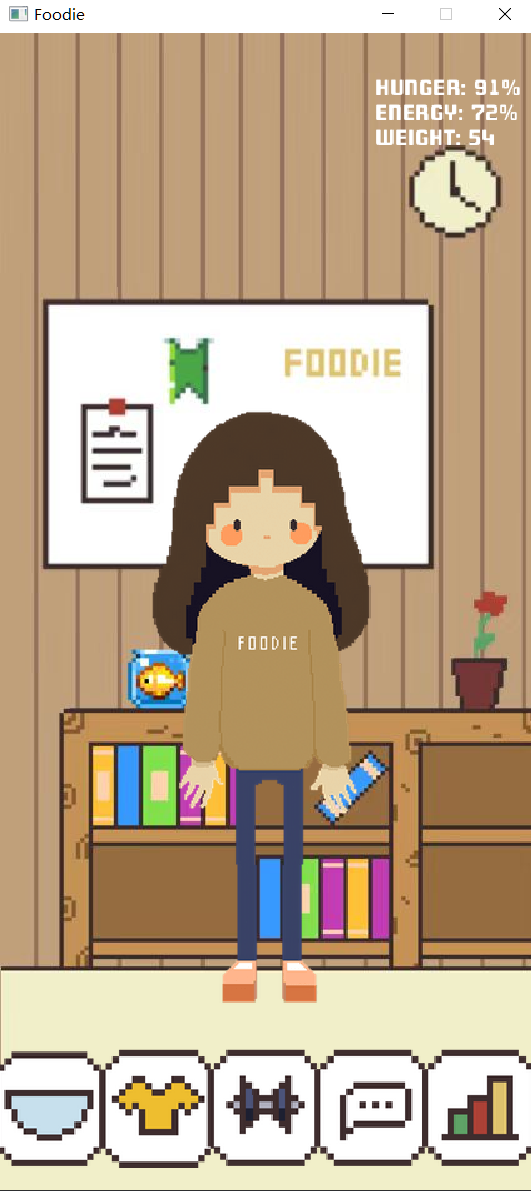
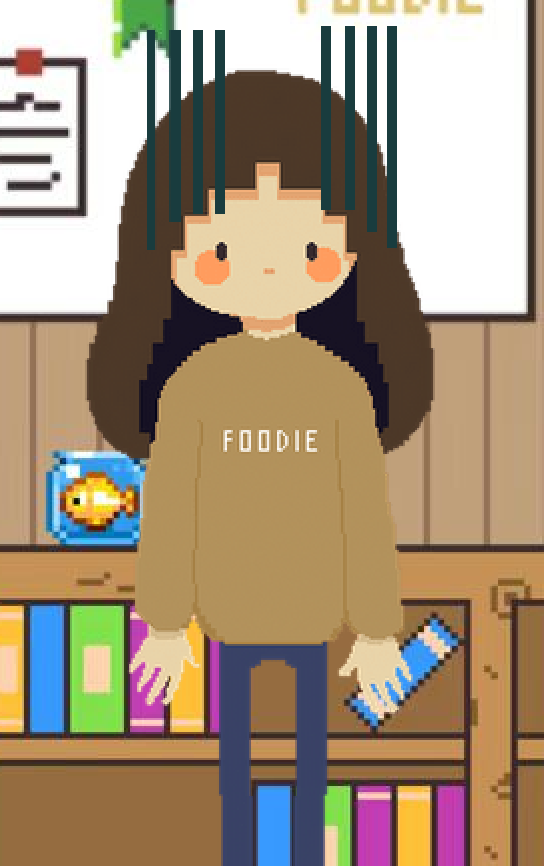
low energy aura
-

Food bar

Inspiration
Today, not only is healthy eating integrated in school education, even a YouTube video on “healthy food” can obtain 432 million views, highlighting our society’s heavy focus and common goal to adapt a healthy eating lifestyle. But just like “sleep early” and “study productively” - how many people can confidently say that it is achievable without an external push, or at all?
Many food-tracking diet applications have attempted to provide this push. It is organised and clear and all, but does it “push” or lie in solitude in your phone? On the other hand, simple motivational-based tools like Forest attracted over four million paid users. What can we take from them?
Here is where Foodie comes in!
What it does
By creating a virtual avatar, users can feed the characters simulating their actual food intake in reality, which will alter the avatar’s physical appearance over a period of time according to the food’s nutritional composition. The game establishes a parallel timeline that aims to objectively portray the impacts of various food choices to the human body, that can guide individuals to better understand how to construct a suitable diet to reach and maintain their personal body goals.
How we built it
With Java, using the bagel library (a library that extends on lwjgl), provided by the OOSD course in unimelb
Challenges we ran into
None of us has any previous game building knowledge, so we experimented with different kinds of gae building libraries (e.g. unity). In the end we opted for a familiar option (bagel)
Accomplishments that we're proud of
Finishing the game prototype
What we learned
Game developing skills, teamwork
What's next for Foodie
Adding more functionalities like leaderboards. See our pitch video for more details.
Video link
use this link for the pitch video https://drive.google.com/file/d/1rNGTiQ6gKt3xw3kANsay2MgoyXs0lGv5/view?usp=sharing

Log in or sign up for Devpost to join the conversation.