Inspiration
FoodFindr was inspired by the horrifying amount of food waste worldwide, as well as rising food costs that students continue to face. We realized how frustrating it is to try to cook with a random assortment of ingredients. We wanted to find a way to allow people to reduce their food expenditure by using food that they would otherwise throw away.
What We Learned
We learned how to work with a variety of technologies, such as Snowflake, integrating AI and streaming responses into a web app in a way that feels natural to users, and designing around real-world issues such as incomplete data and API limitations.
How We Built The Project
FoodFindr is a Flask-based web application. The project was split into focused modules so that different parts of the system could be developed and tested separately. We started by looking for publicly available APIs that would allow us to gather the necessary data, such as recipe and supermarket information. We then designed a simple python-based backend that allowed us to compile the data. We used TheMealDB API to get the meal data, and Loblaws, No Frills, Superstore & Maxi Scraper API to gather price and location data from multiple grocery stores. We used Snowflake to create a chatbot to provide conversational recipe guidance. Our development philosophy was simple: Try to create a solid foundation first rather than branching out immediately.
Challenges We Faced
One of the more immediate problems we ran into was the fact that TheMealDB API did not allow us to filter by multiple ingredients under the free tier. This meant that we had to iterate through each ingredient individually and find common meals between them. Another challenge we faced was integrating the AI into our project. None of us had prior experience with Snowflake, so we reached out to a mentor to help us. Overall, it was difficult to combine several external and make sure they collaborated properly.
Functionality
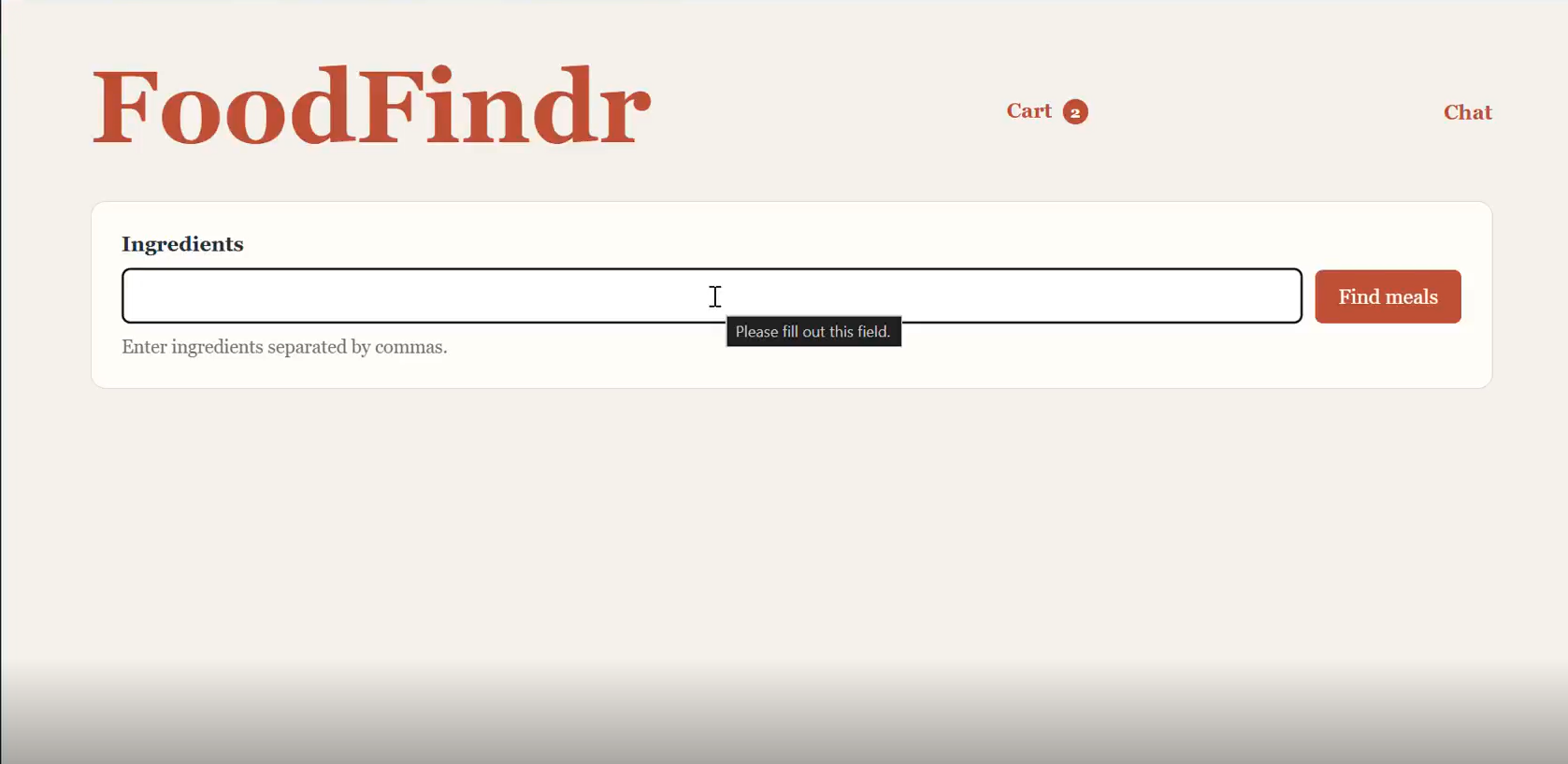
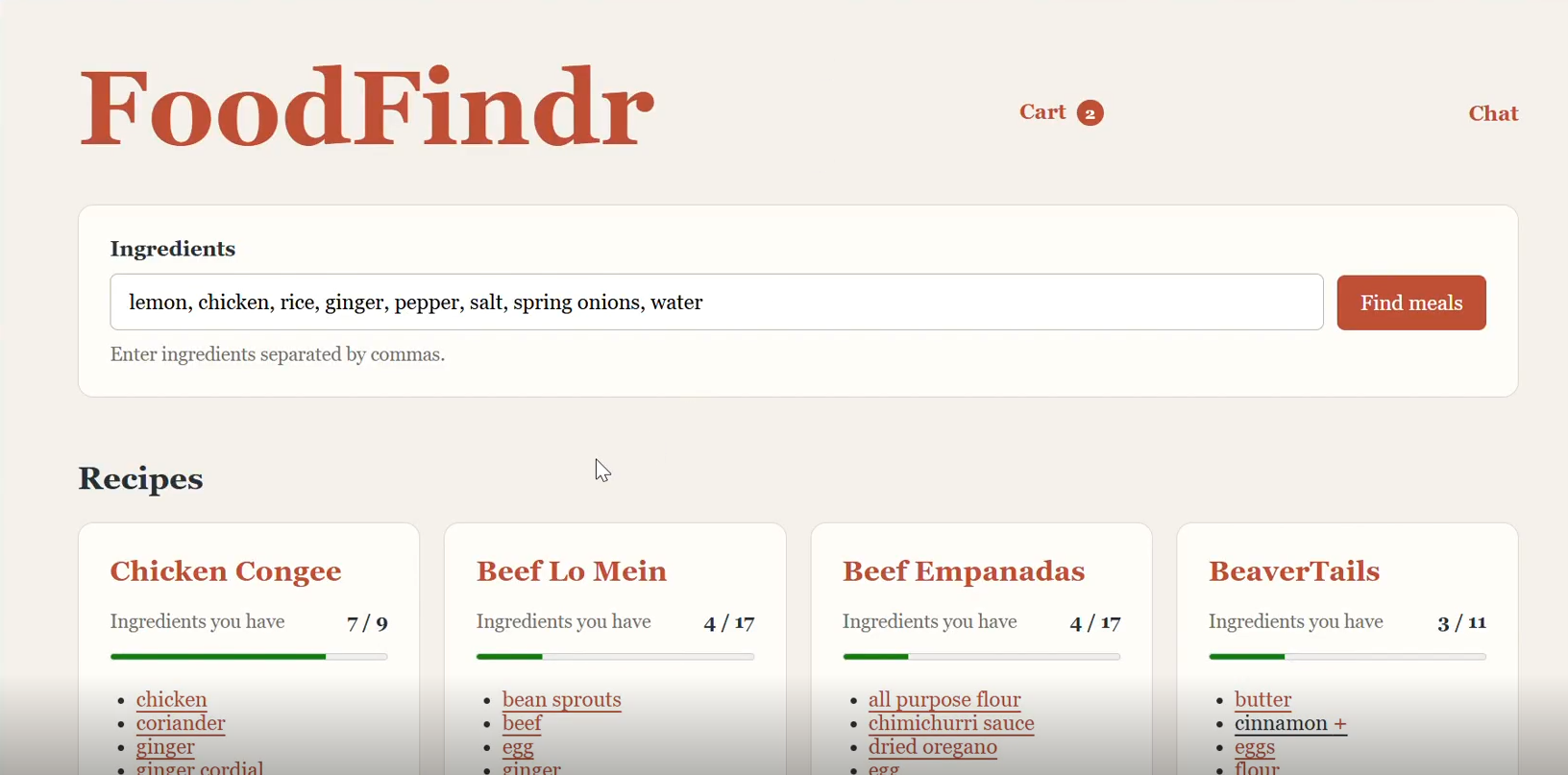
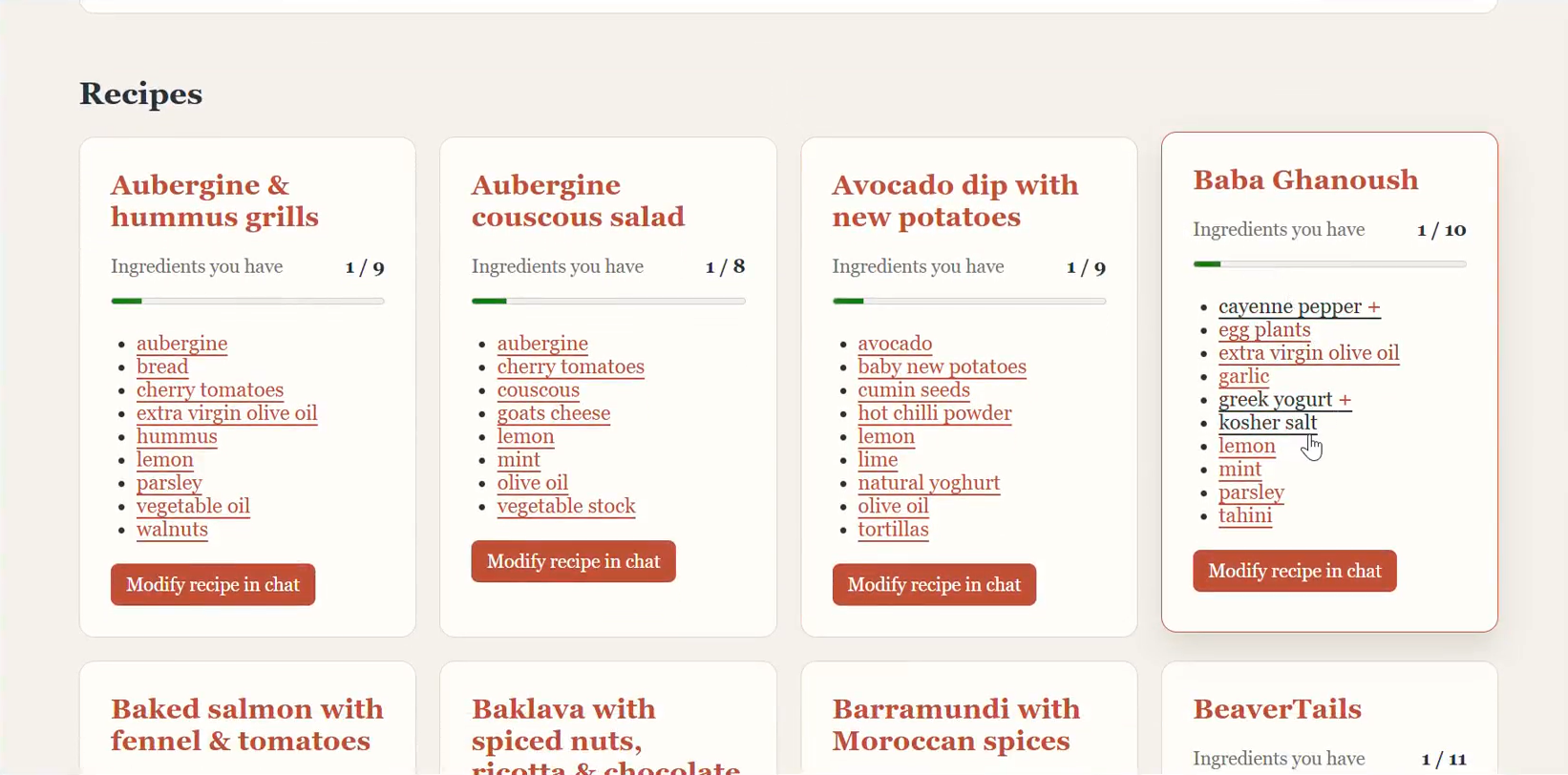
FoodFindr allows users to enter the ingredients they already have and receive recipe suggestions that best match their pantry. The app compares the user’s ingredient list against recipe ingredients, ranks meals by overlap, and separates results into full matches and partial matches. This allows users to quickly see which meals can be made immediately and which ones require a few additional items. This makes meal planning faster and helps reduce food waste by encouraging smarter use of ingredients already at home.
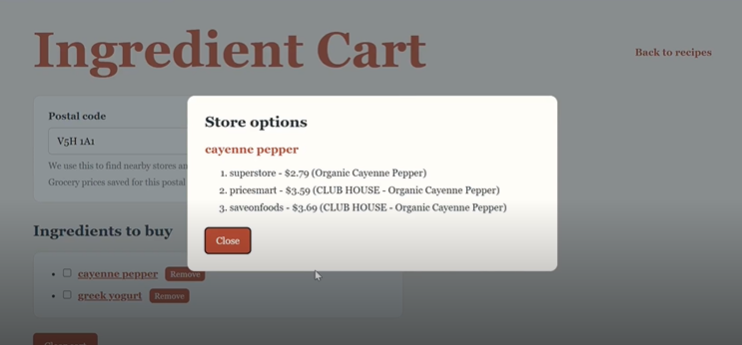
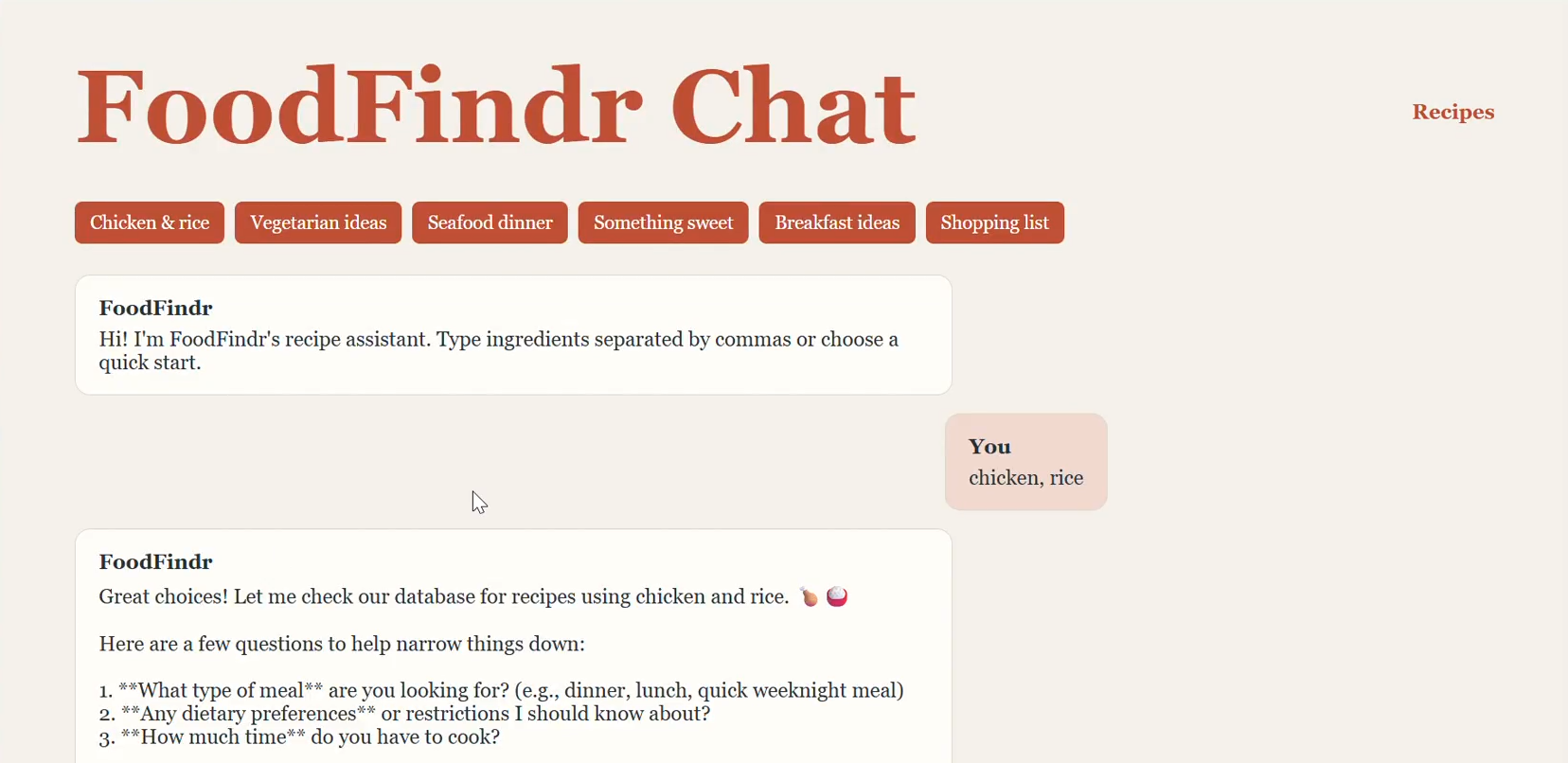
The project also includes a grocery-shopping component that helps users identify missing ingredients and find the most affordable nearby purchasing option. In addition, an AI-powered chat assistant supports recipe suggestions, ingredient-based conversations, and shopping-list guidance, creating a more interactive and practical cooking experience. Together, these features turn a basic ingredient list into a complete meal-planning and grocery decision tool.
Built With
- css
- flask
- html
- javascript
- python
- snowflake
- themealdb

Log in or sign up for Devpost to join the conversation.