-
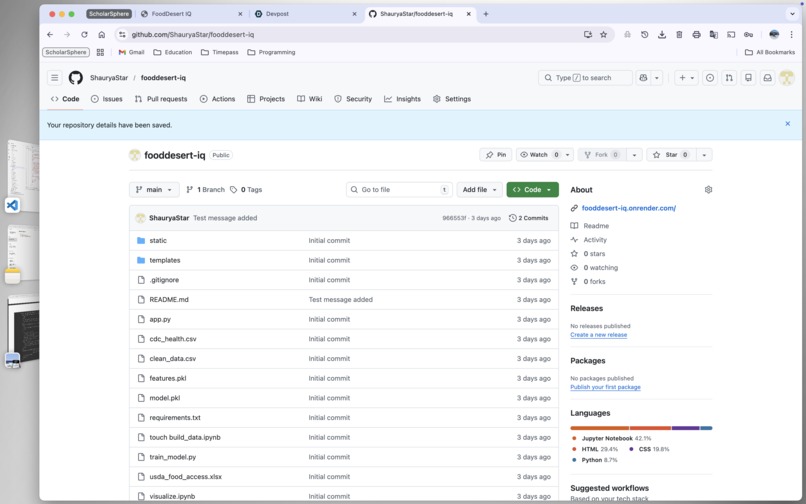
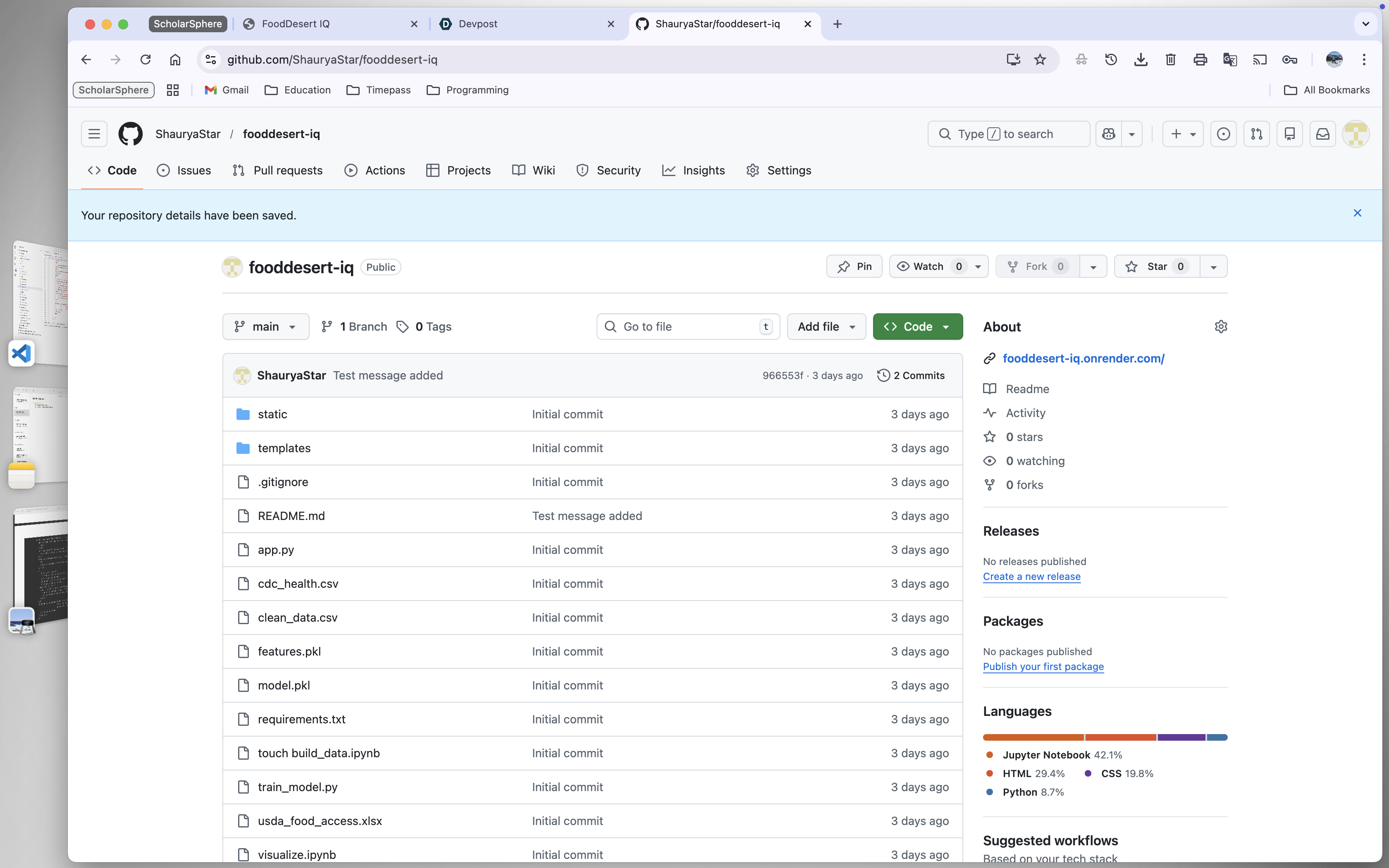
My Github Repository
-
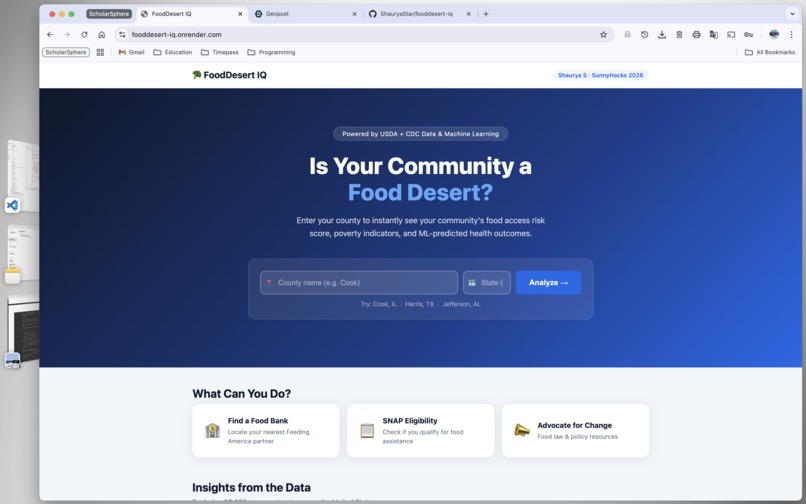
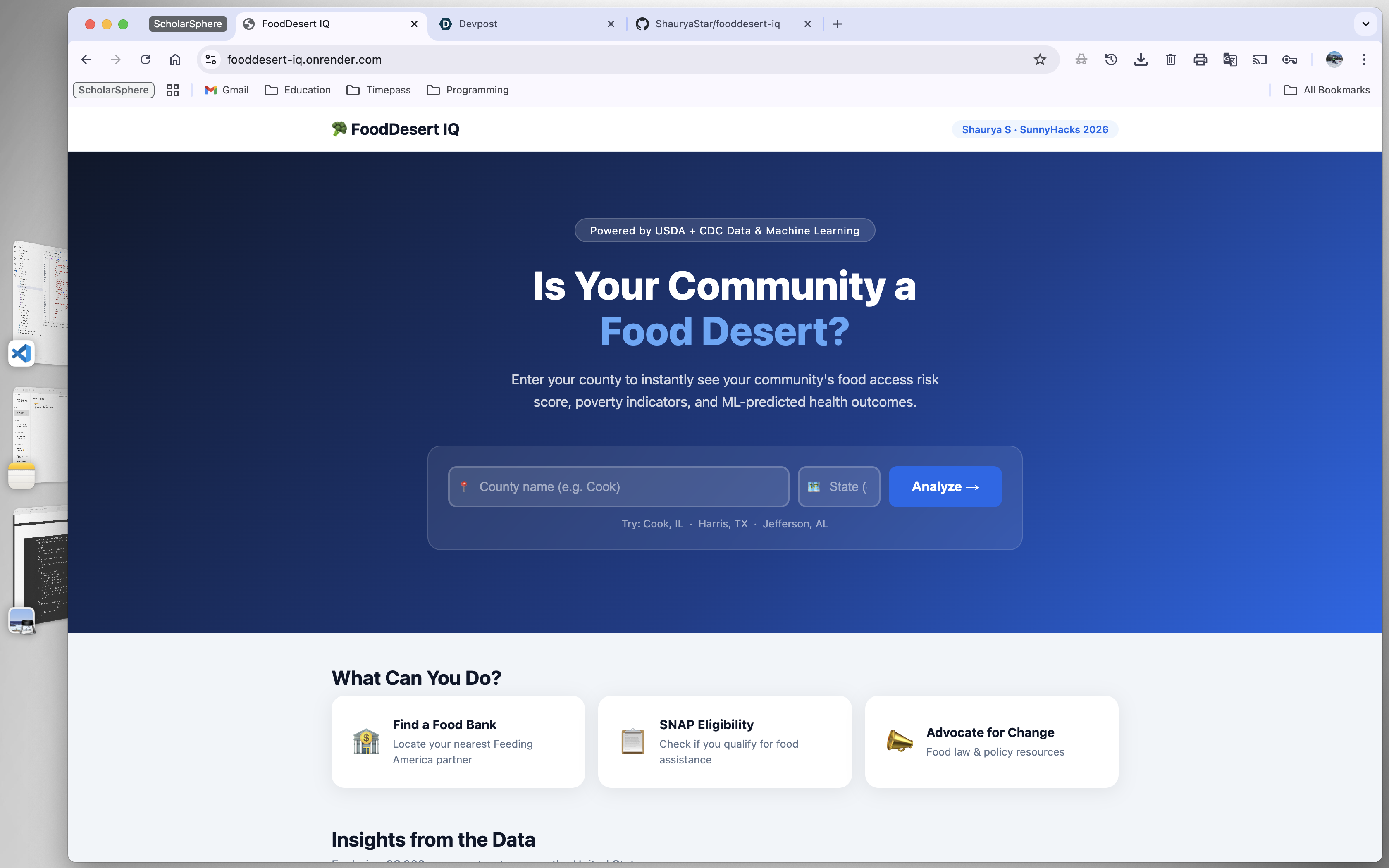
My 'FoodDesert IQ' Website
-
-
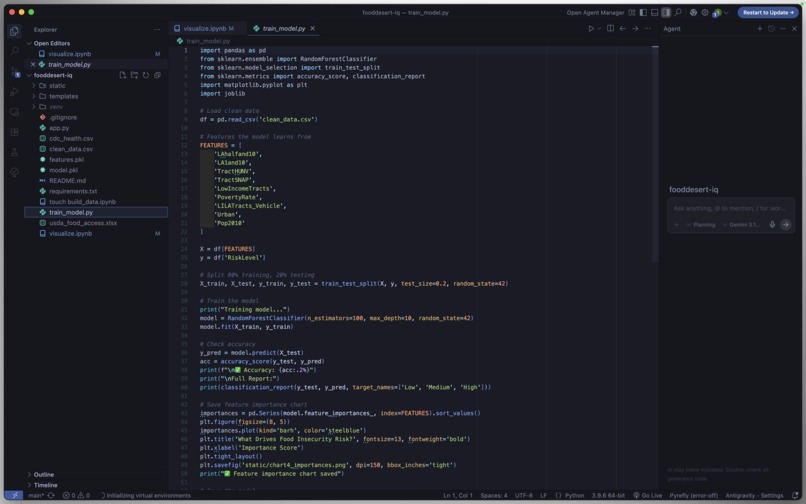
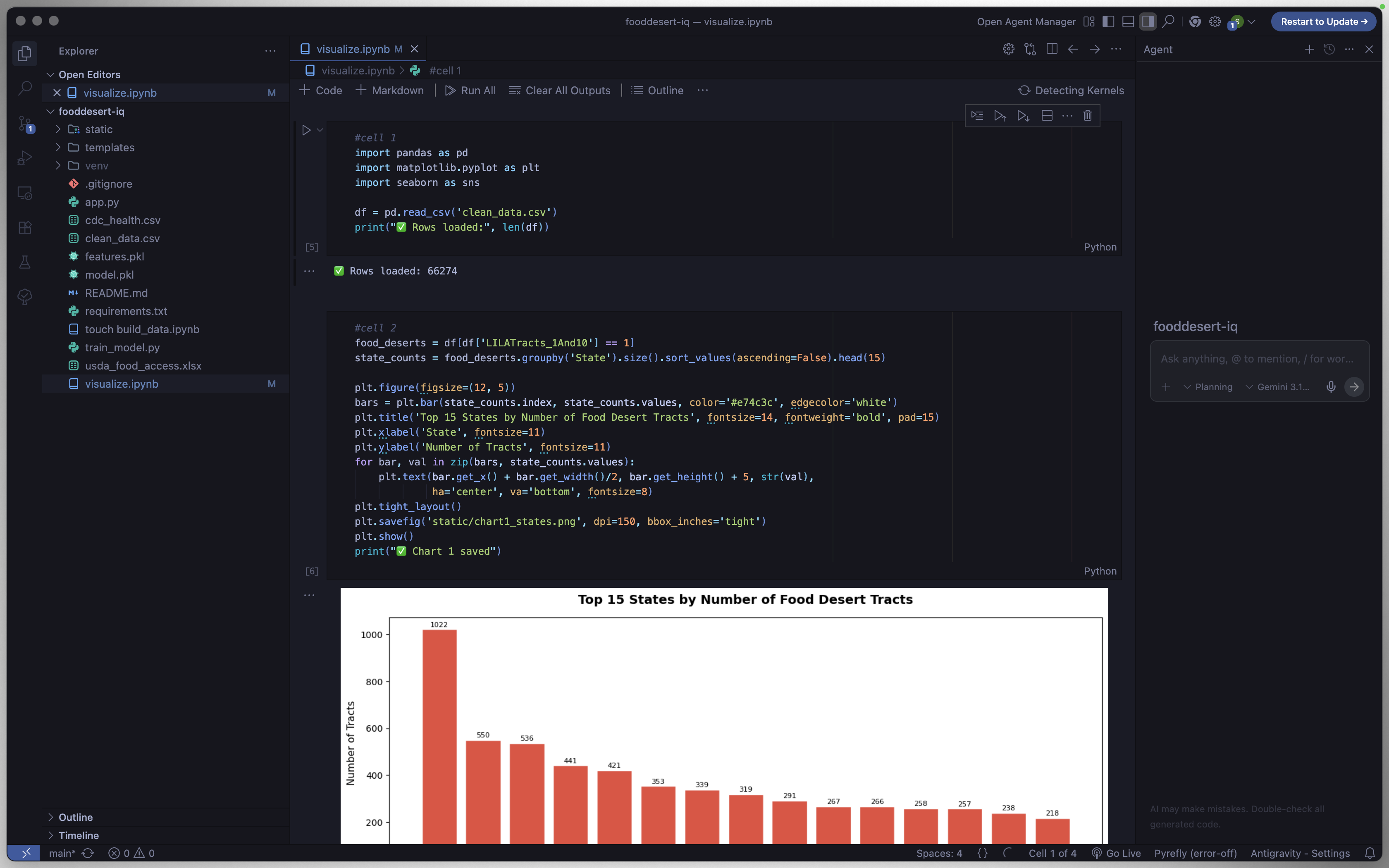
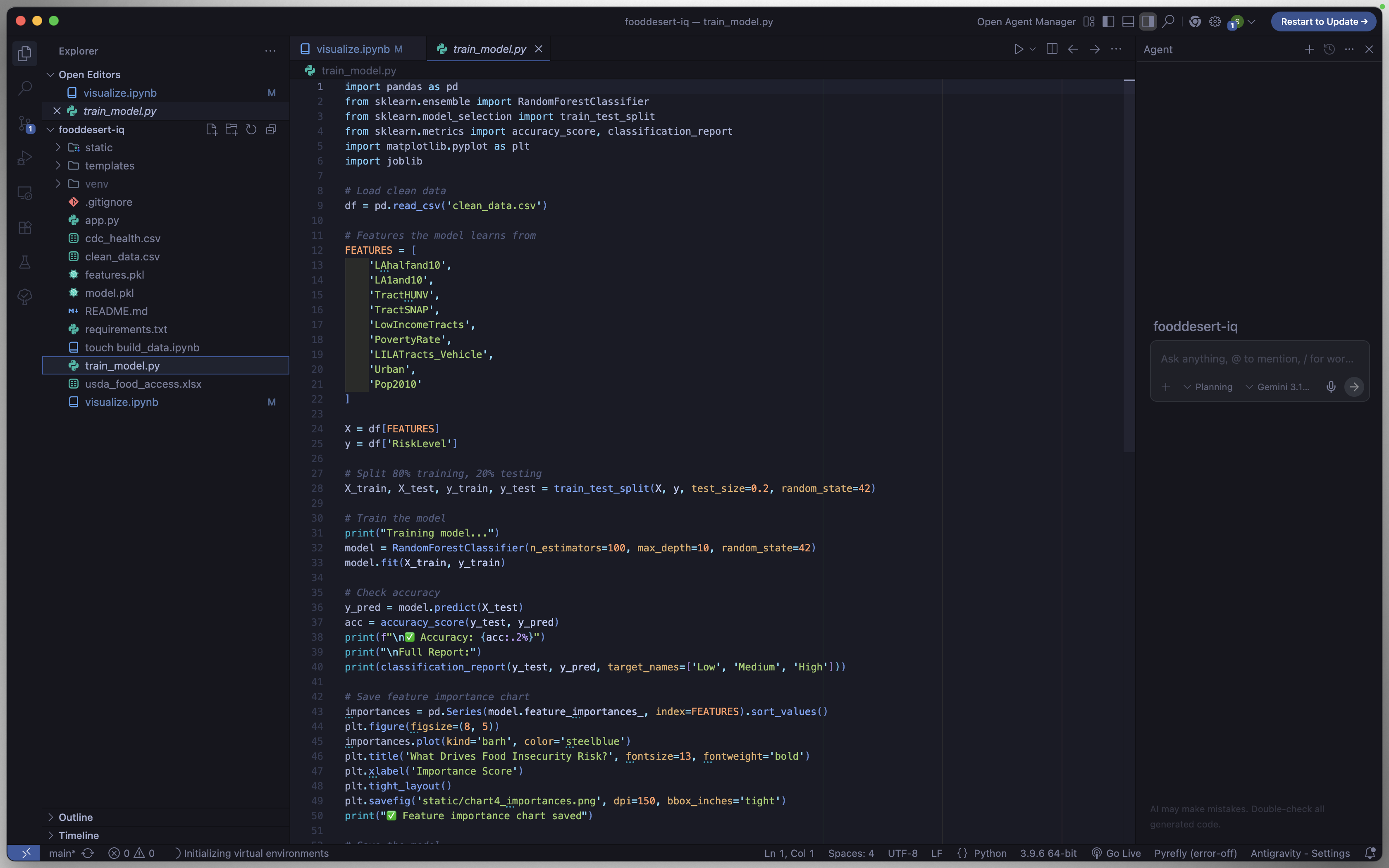
one set of my program
-
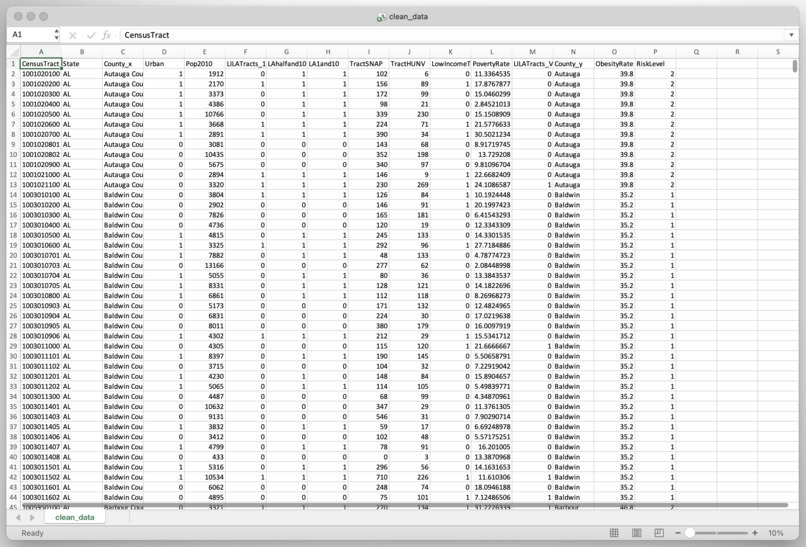
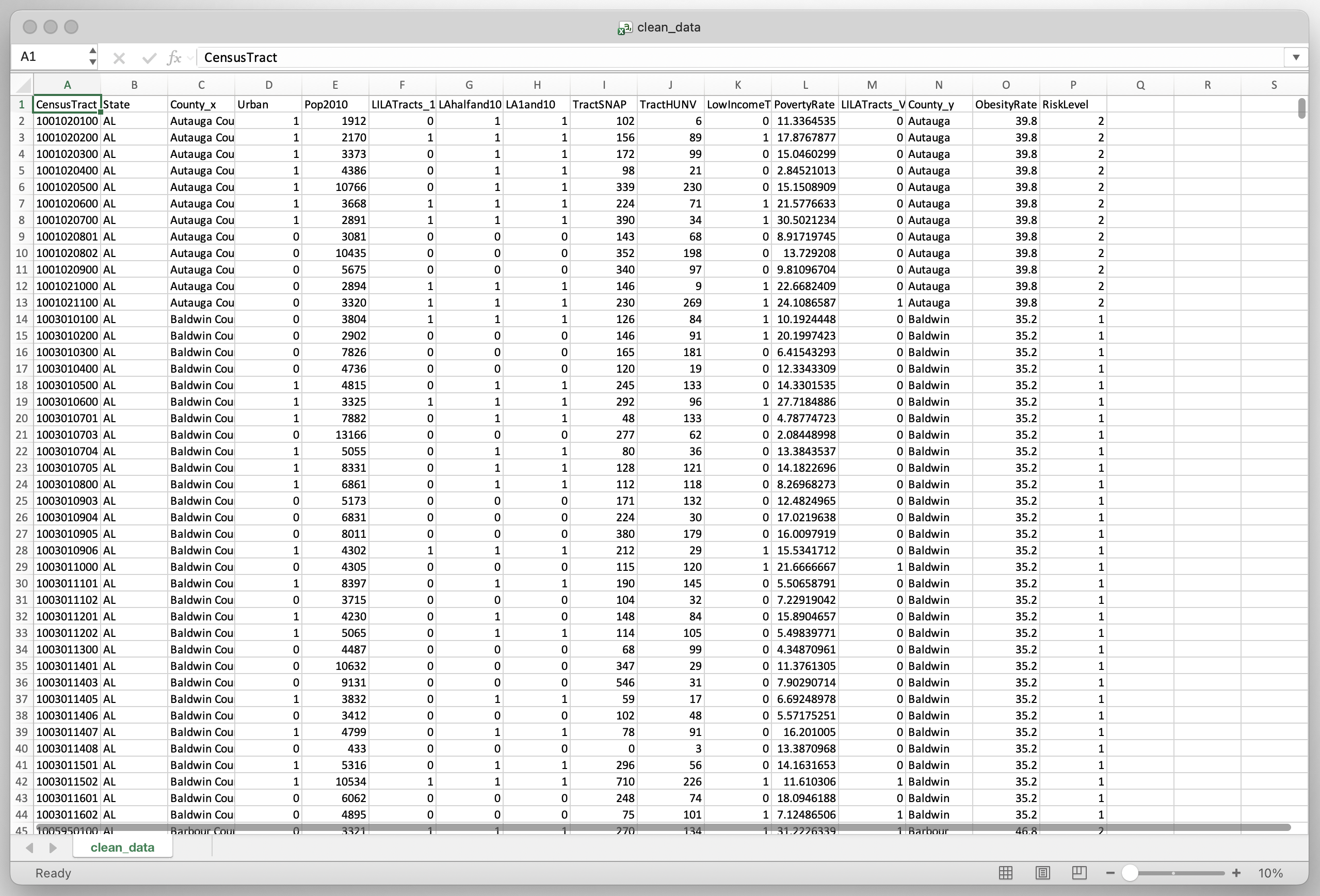
the data sheets
Inspiration: 19 million Americans live in food deserts but most people have no idea if their own community is one of them. I wanted to build something that made this invisible crisis visible to anyone — not just researchers or policymakers.
What I Built: FoodDesert IQ is a machine learning web app where you type in any US county and instantly get:
- A Food Access Risk Score (0–100)
- A Community Snapshot — poverty rate, vehicle access, SNAP recipients
- An ML Probability Breakdown across Low, Moderate, and High risk
- Actionable resources — food banks, SNAP eligibility, policy links
How I Built It: I merged two real government datasets:
- USDA Food Access Research Atlas — 72,531 census tracts
- CDC PLACES Health Data — 229,298 county health records
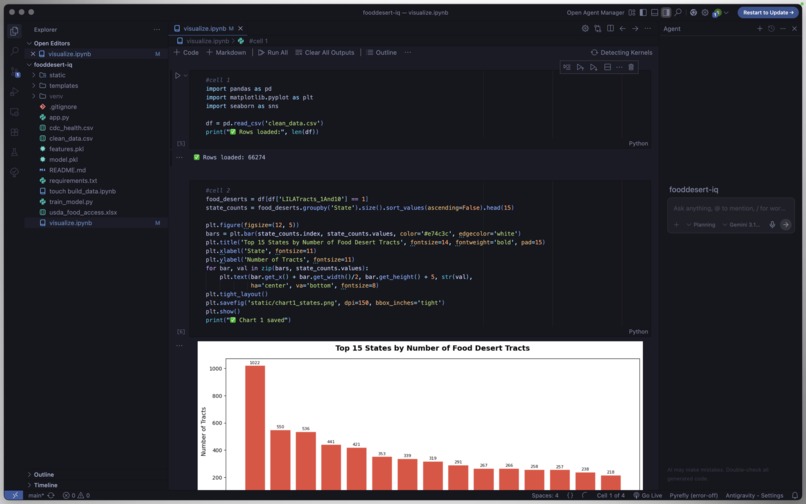
After cleaning and normalizing both datasets (fixing state name mismatches, normalizing county names, filling missing values), I merged them into 66,274 rows and trained a 'Random Forest Classifier' to predict obesity risk levels from food access features.
The backend is 'Flask', the frontend is vanilla HTML/CSS/JS, and the whole thing is deployed on Render.
What I Learned
- How to clean and merge real-world government datasets
- How to engineer features to improve ML signal
- How to build and deploy a full-stack ML web app
- That poverty rate and vehicle access are the strongest predictors of food insecurity risk
Challenges The biggest challenge was the state name mismatch between datasets — USDA used full names ("Illinois") while CDC used abbreviations ("IL"). This caused the initial merge to return only 192 rows instead of 66,000+. Fixing this with a state mapping dictionary was a breakthrough moment.
Built With
- cdc
- css
- flask
- html
- javascript
- joblib
- matplotlib
- pandas
- python
- render
- scikit-learn
- seaborn
- usda-open-data

Log in or sign up for Devpost to join the conversation.