-
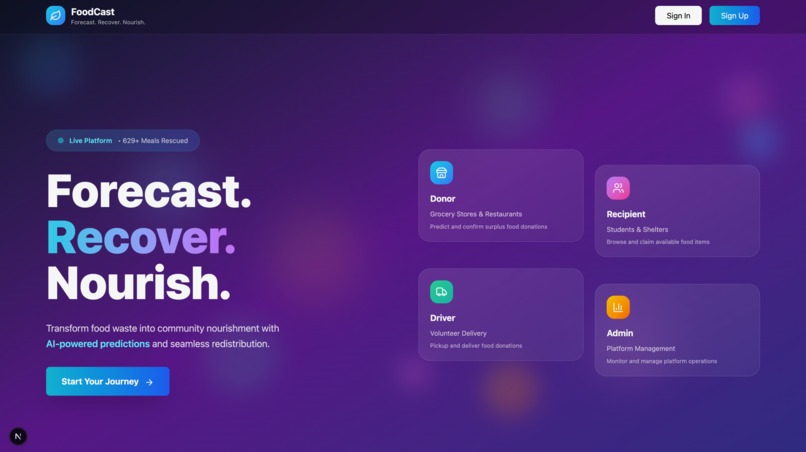
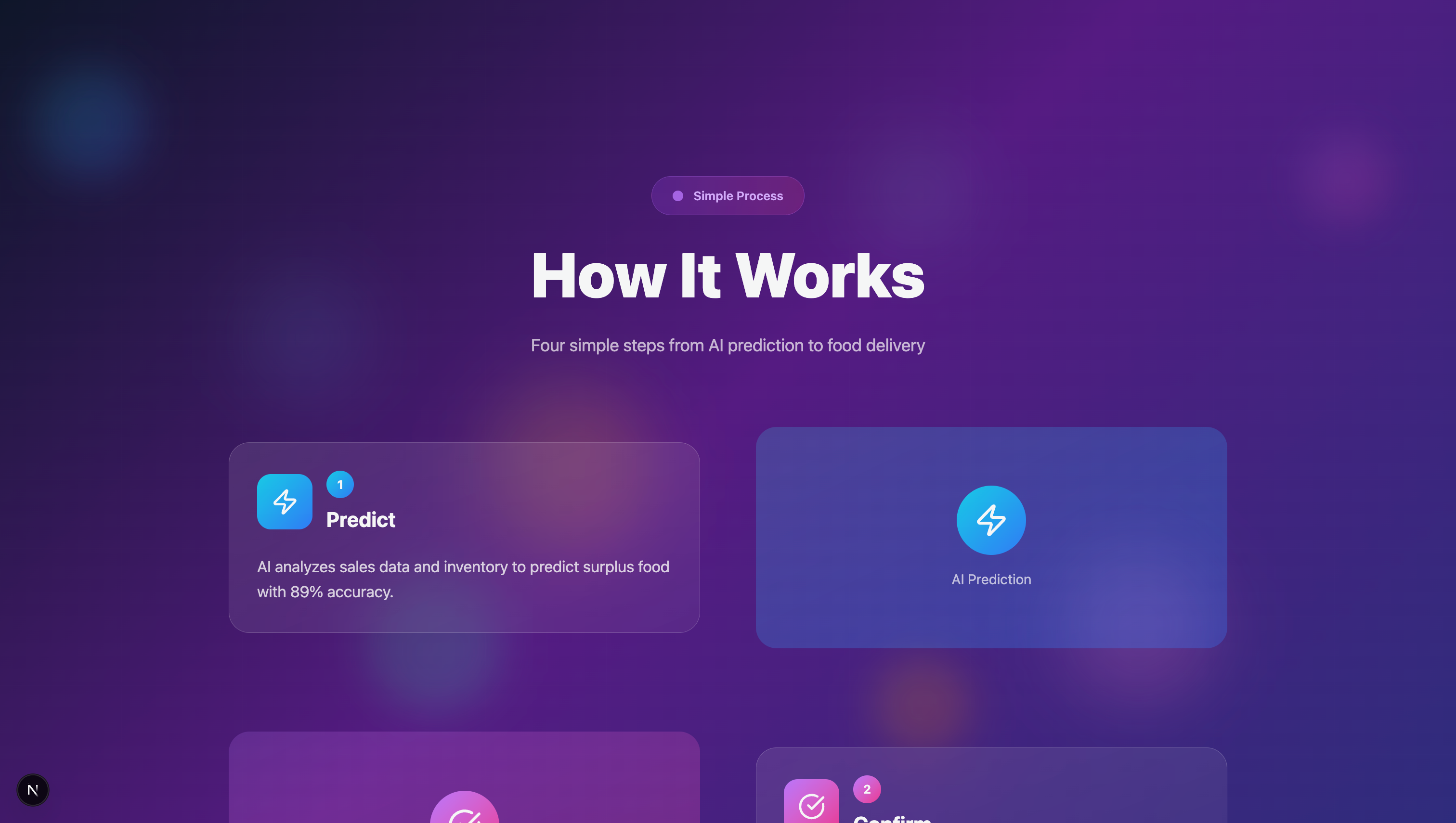
Home Page
-
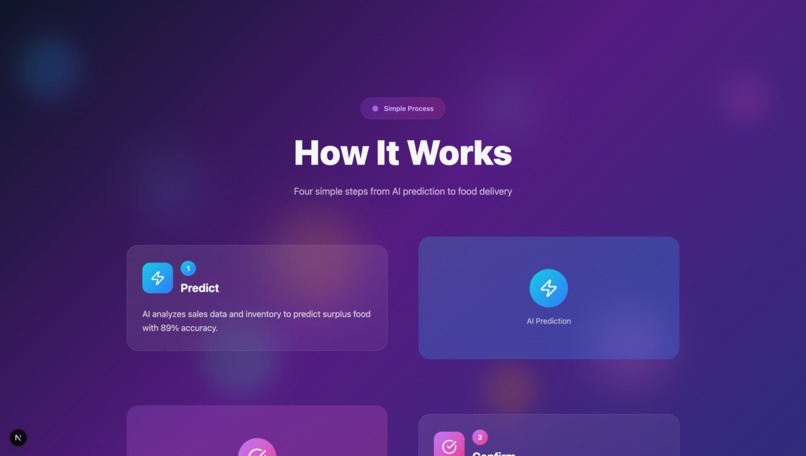
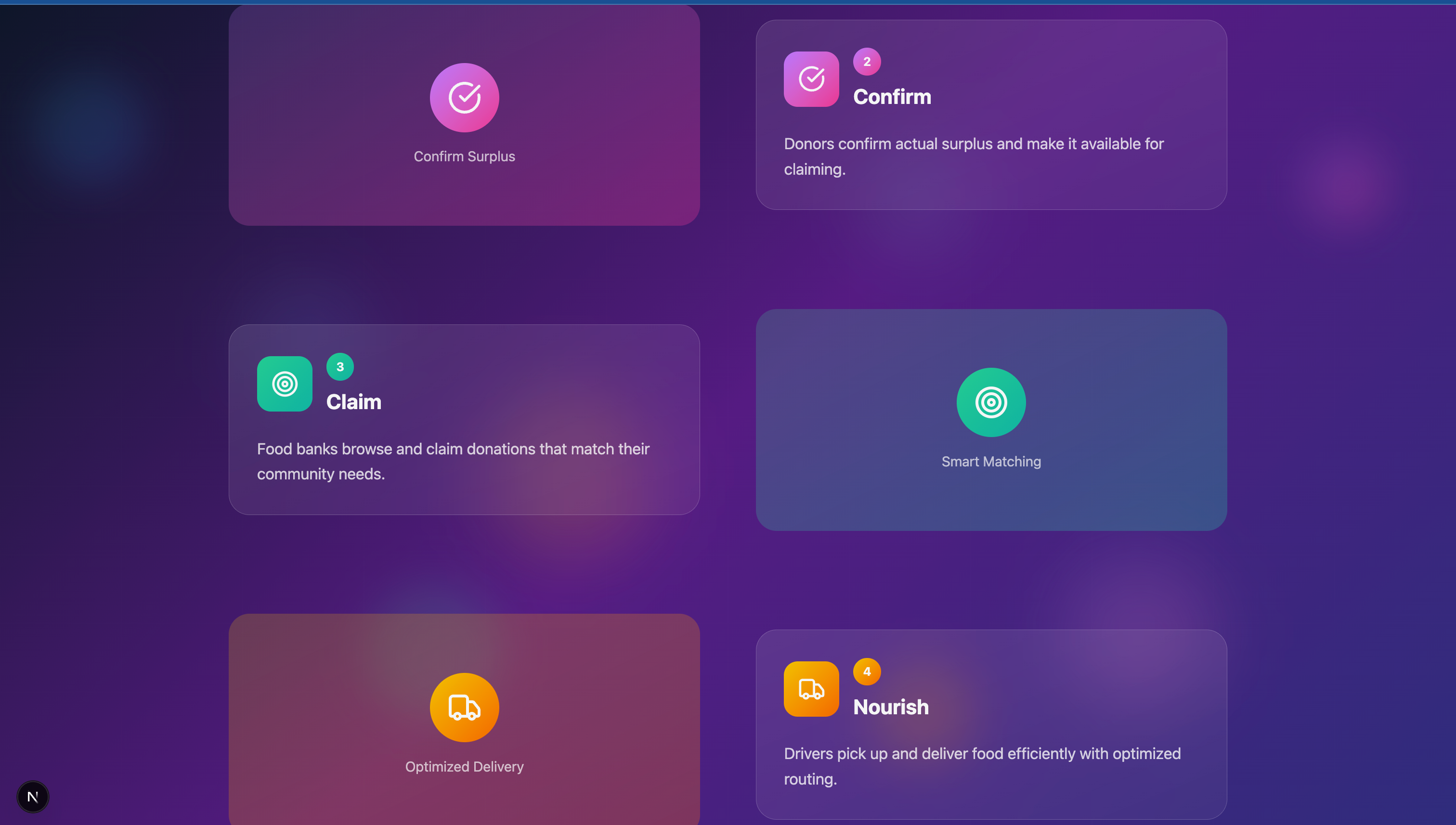
How it Works
-
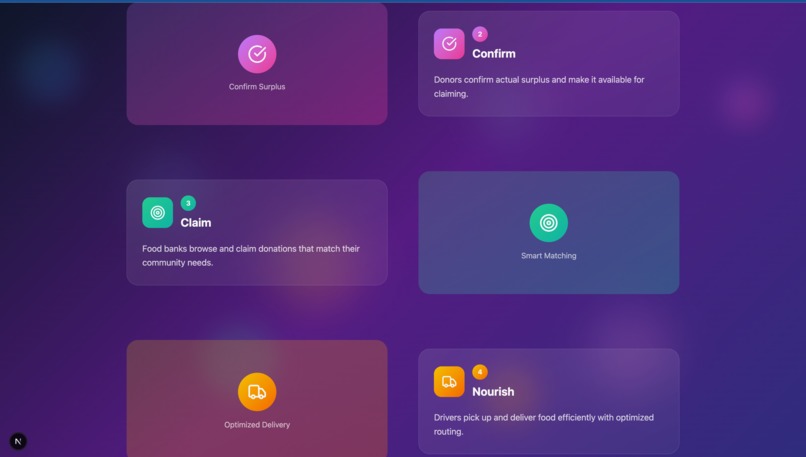
Steps
-
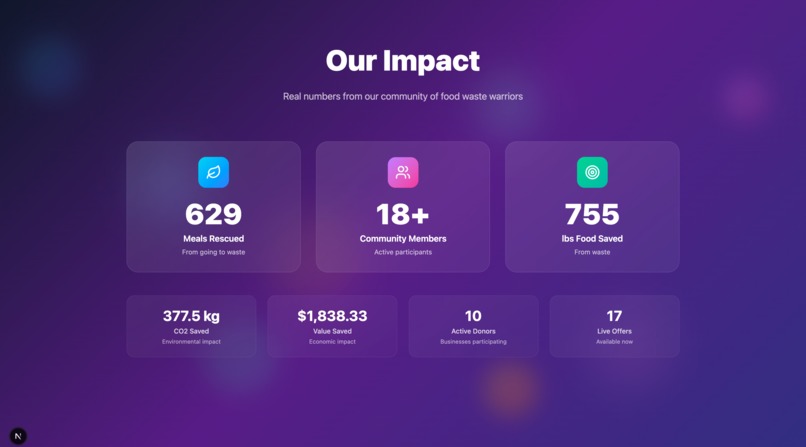
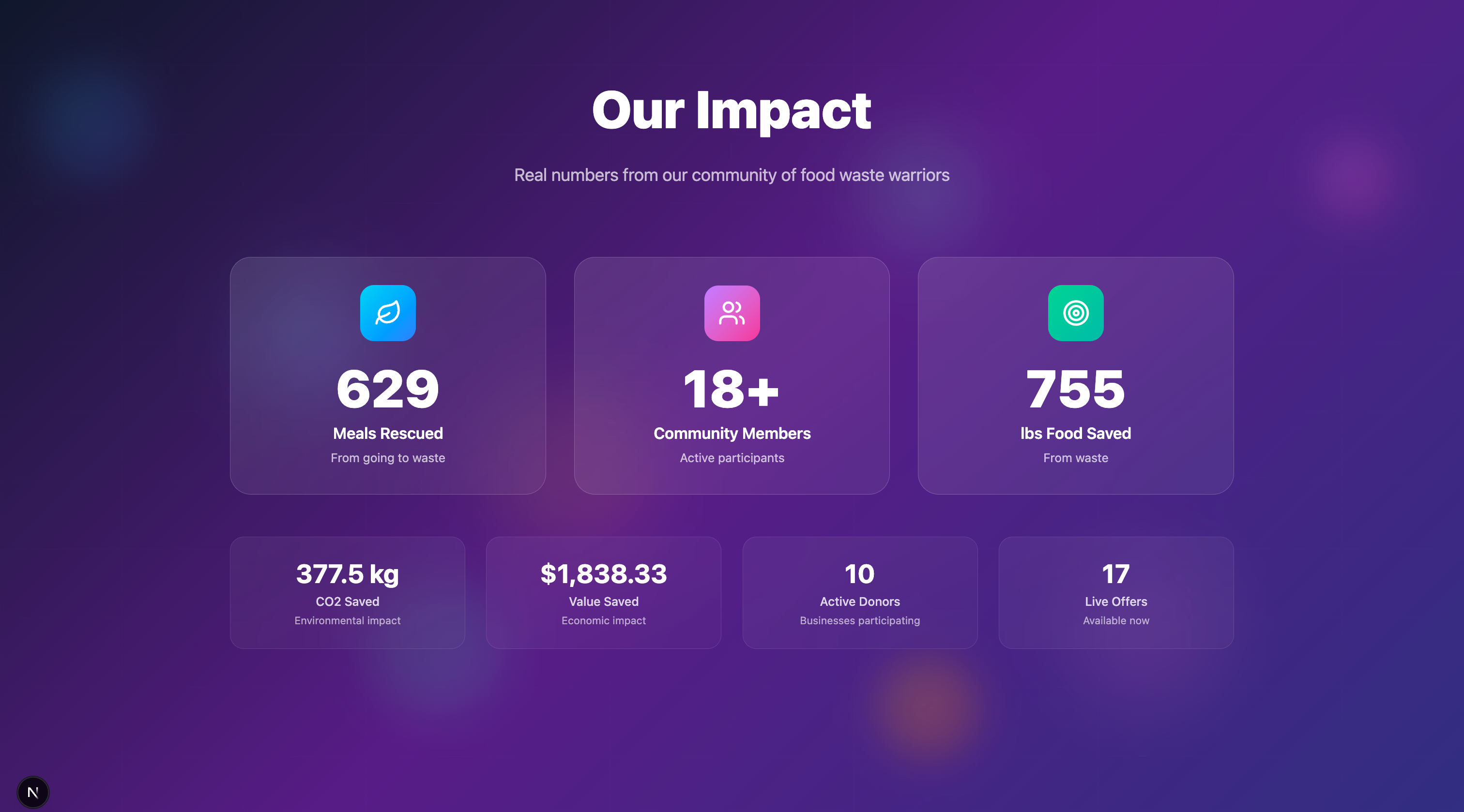
Our Impact
-
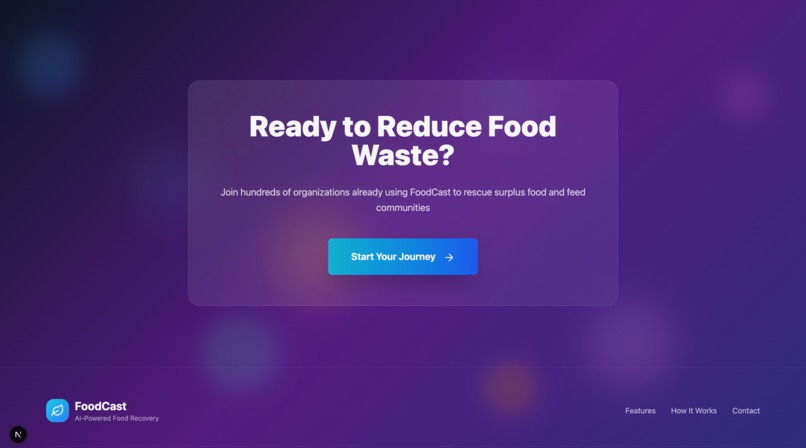
User Engagement
-
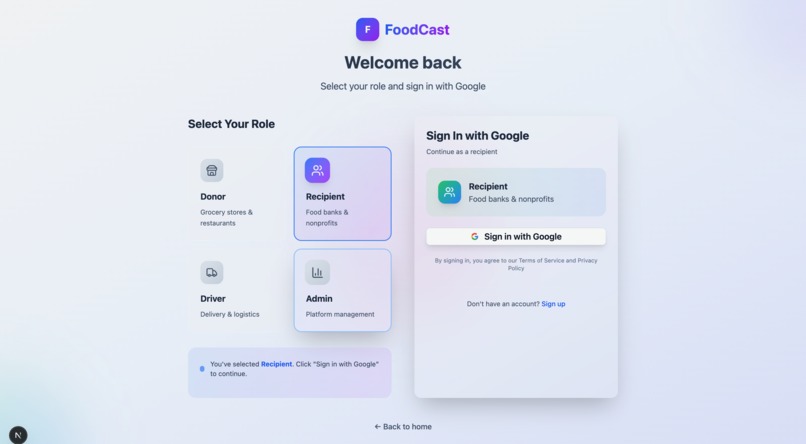
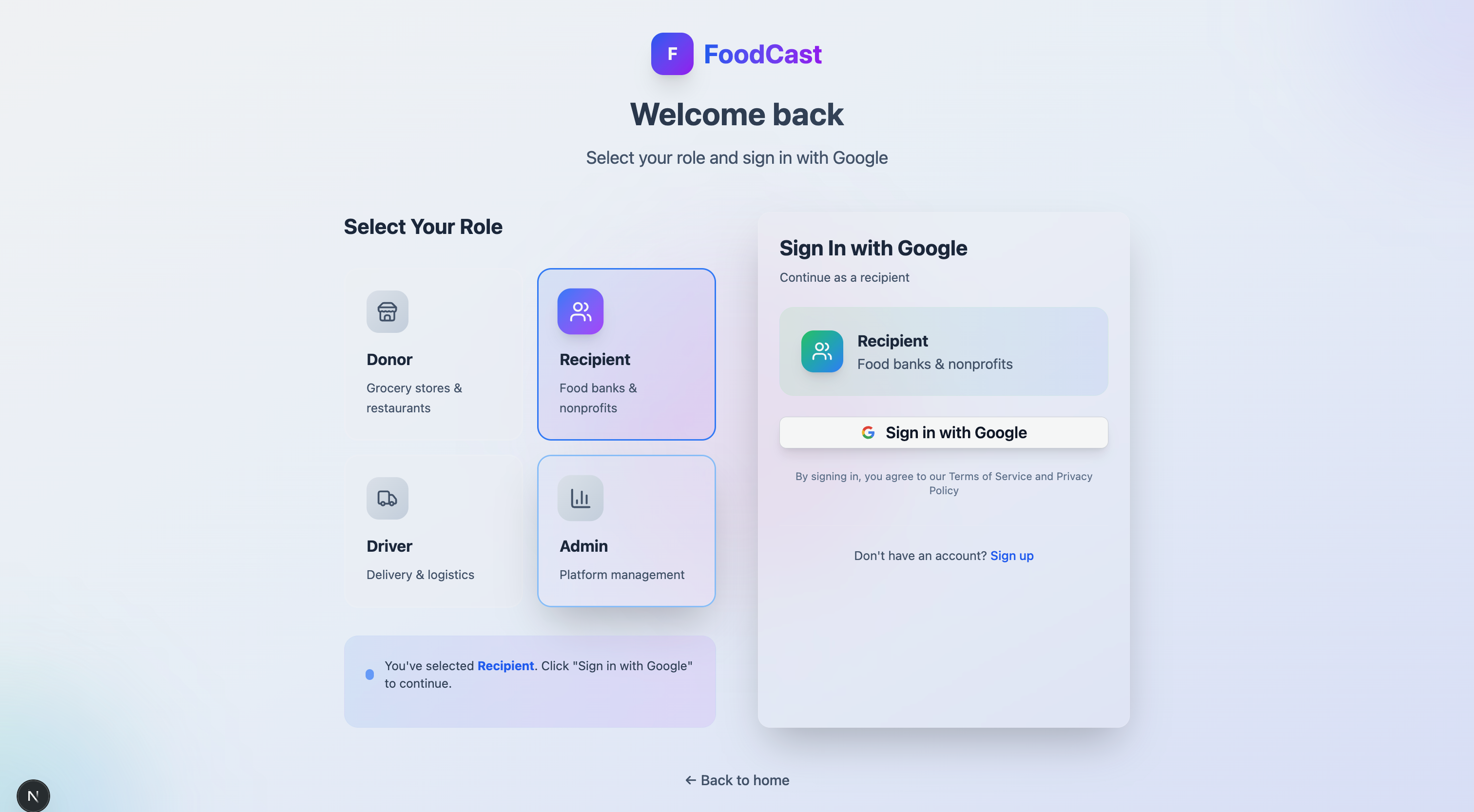
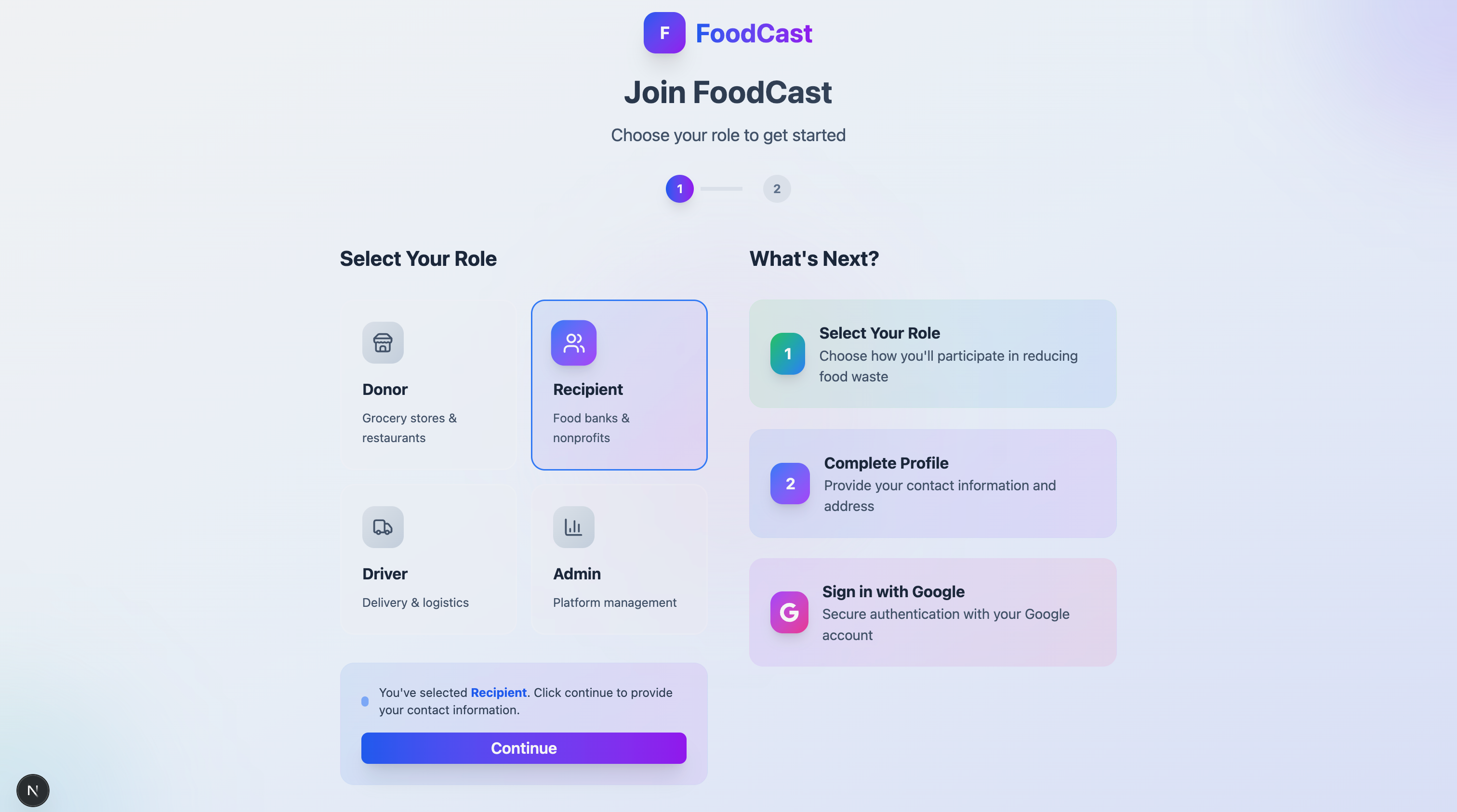
Log in/Sign Up
-
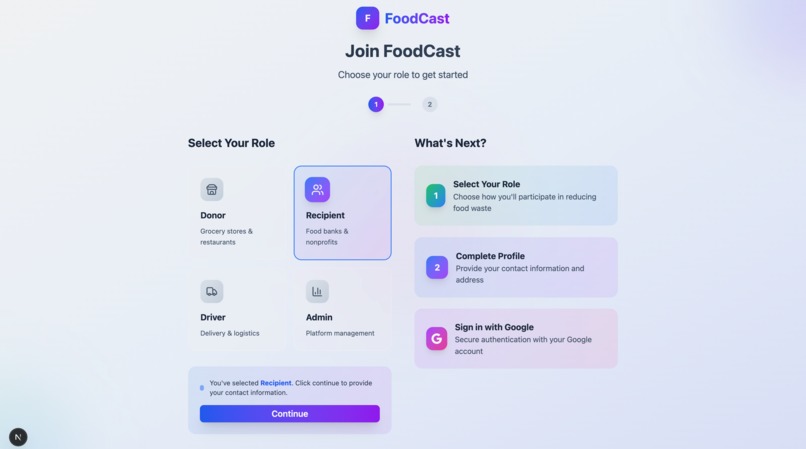
Clicking a role
-
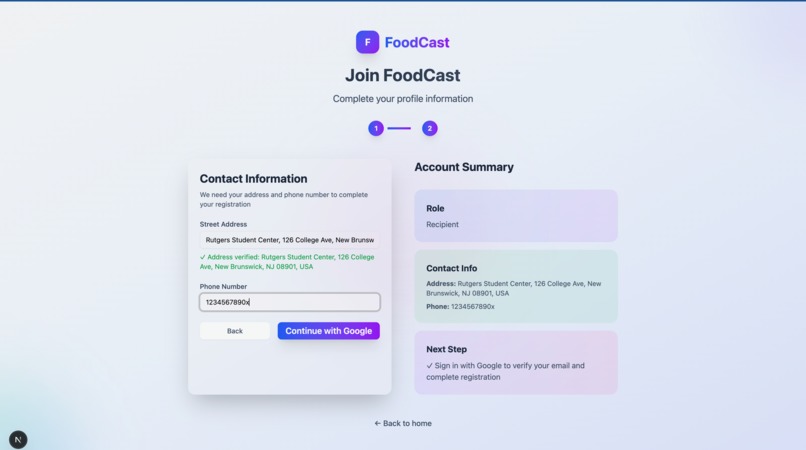
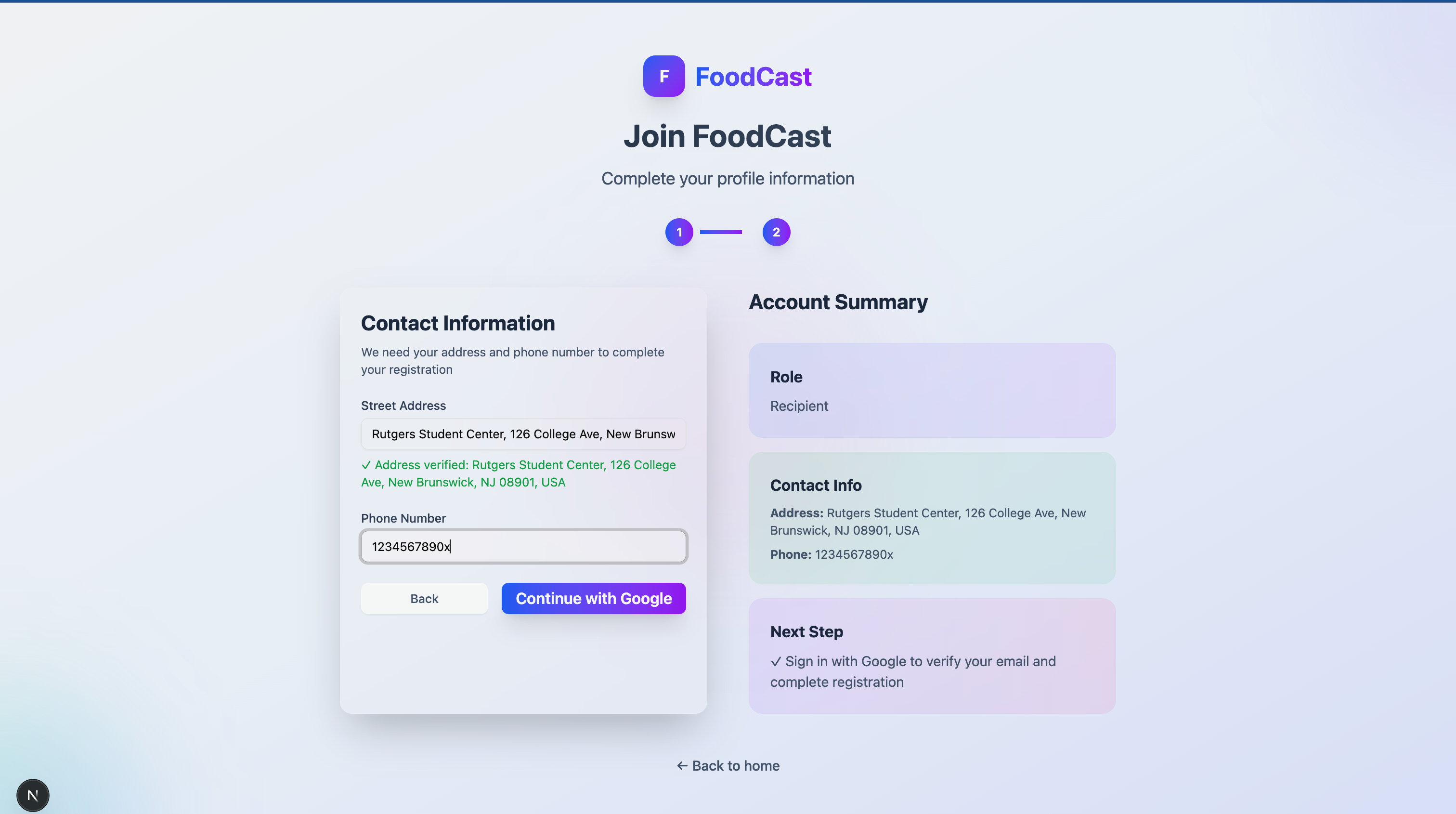
Google OAuth and Other Sign In Info
-
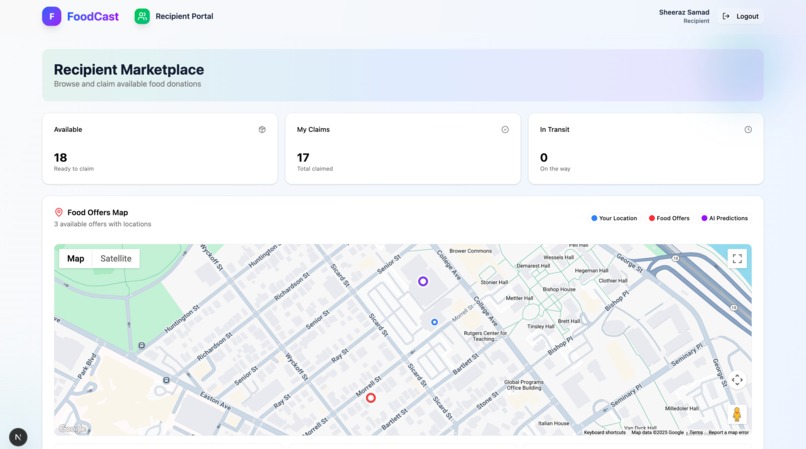
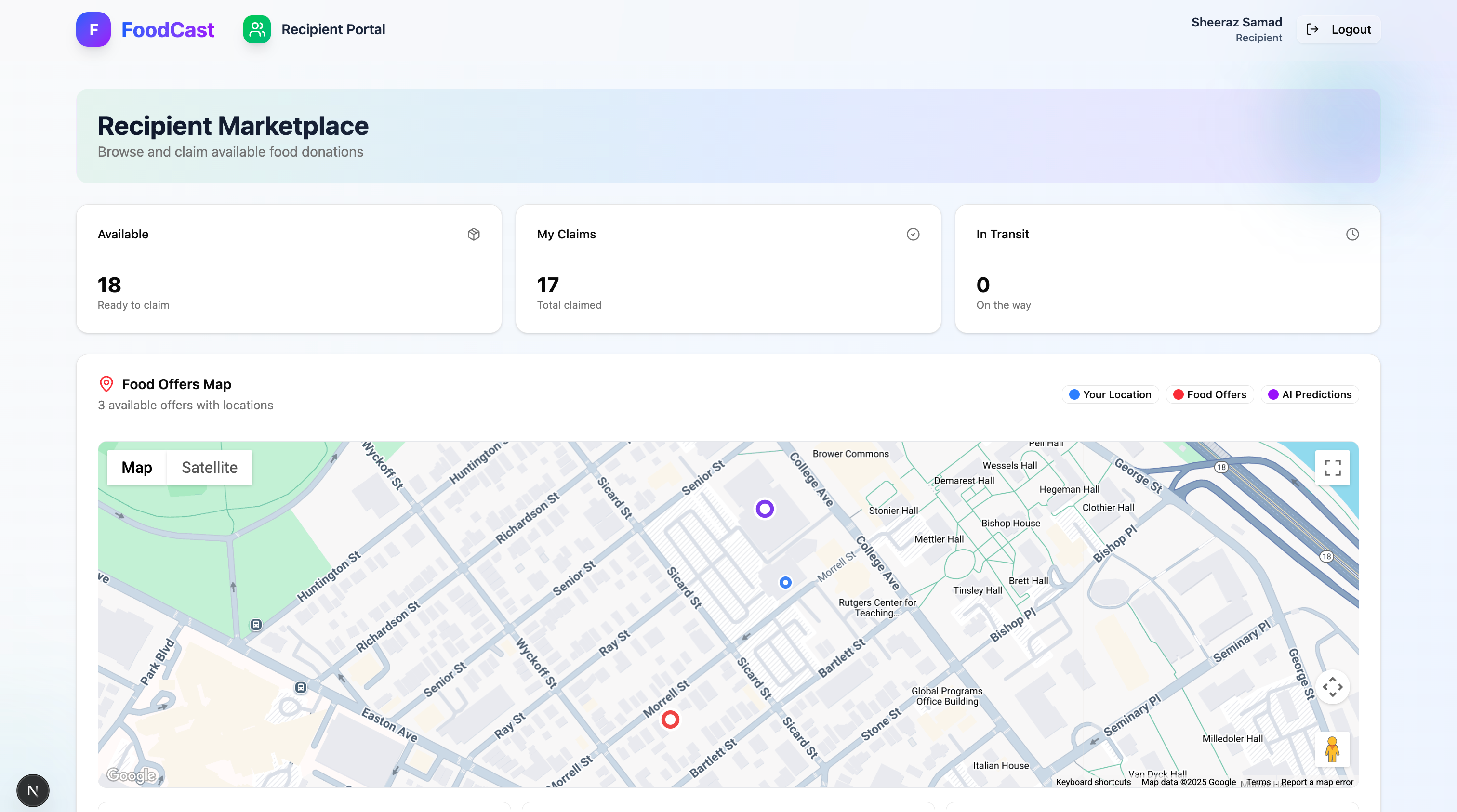
Recipient Portal
-
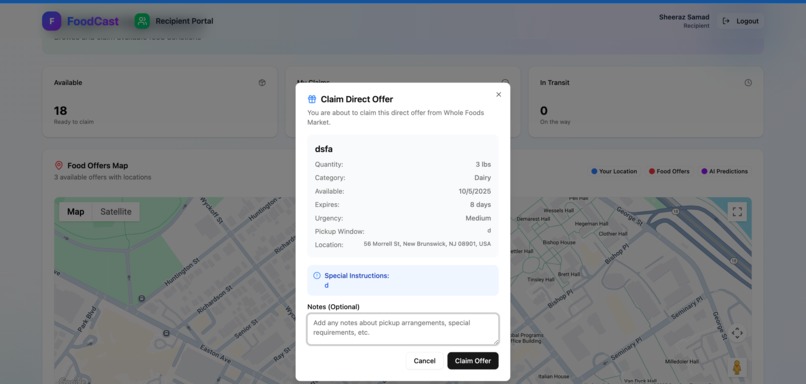
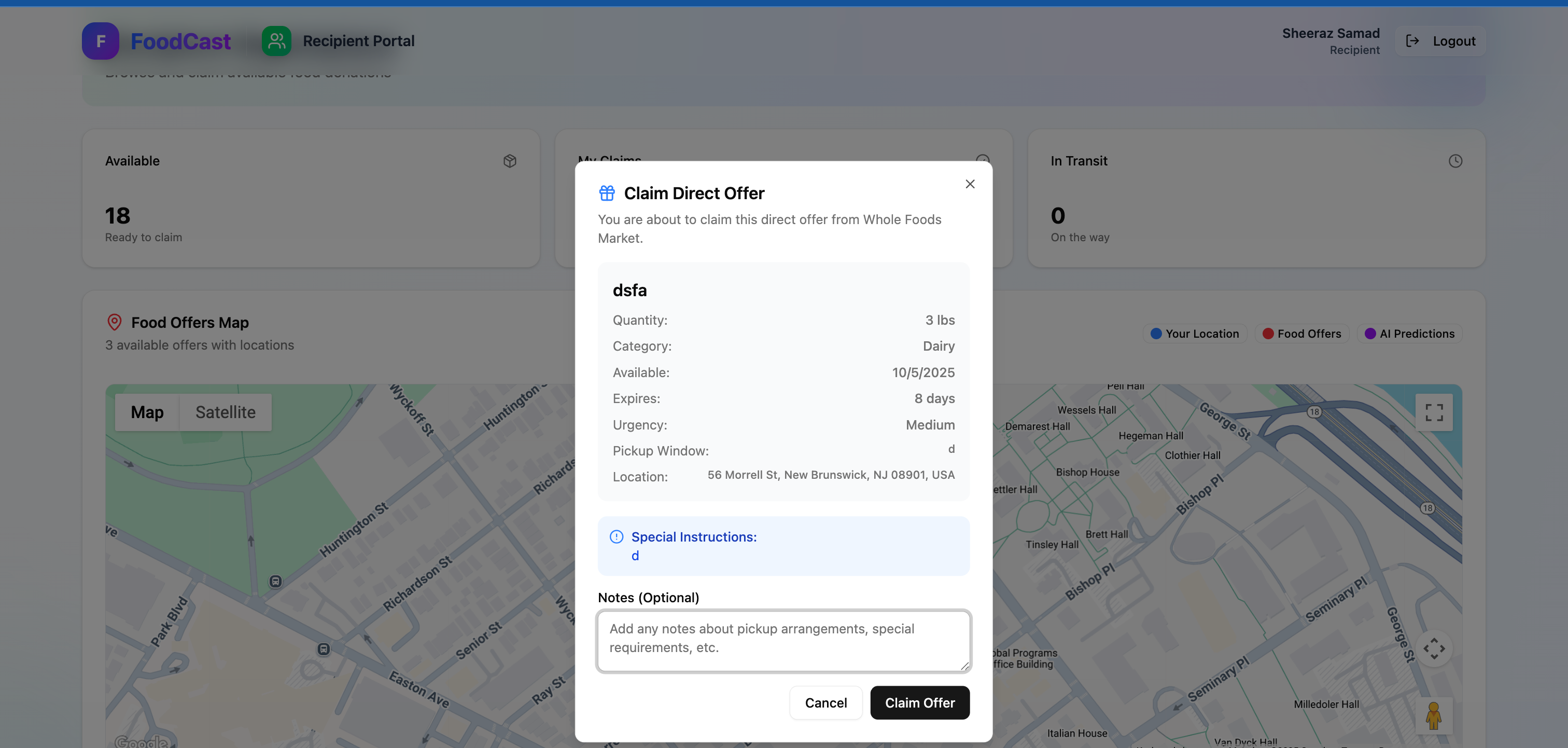
Claiming Direct Offer
-
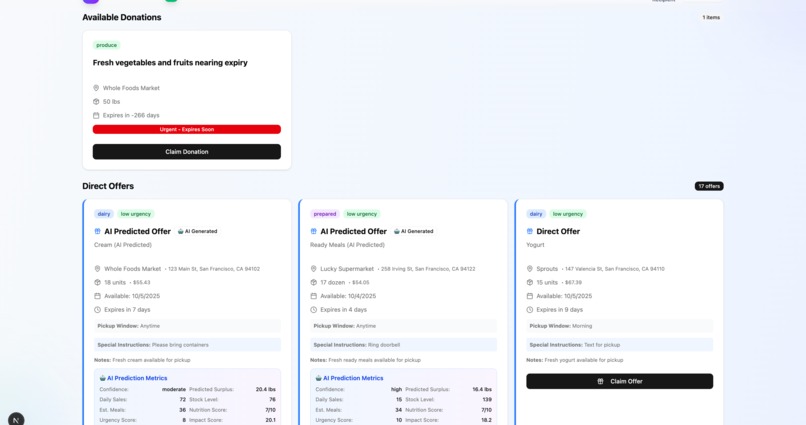
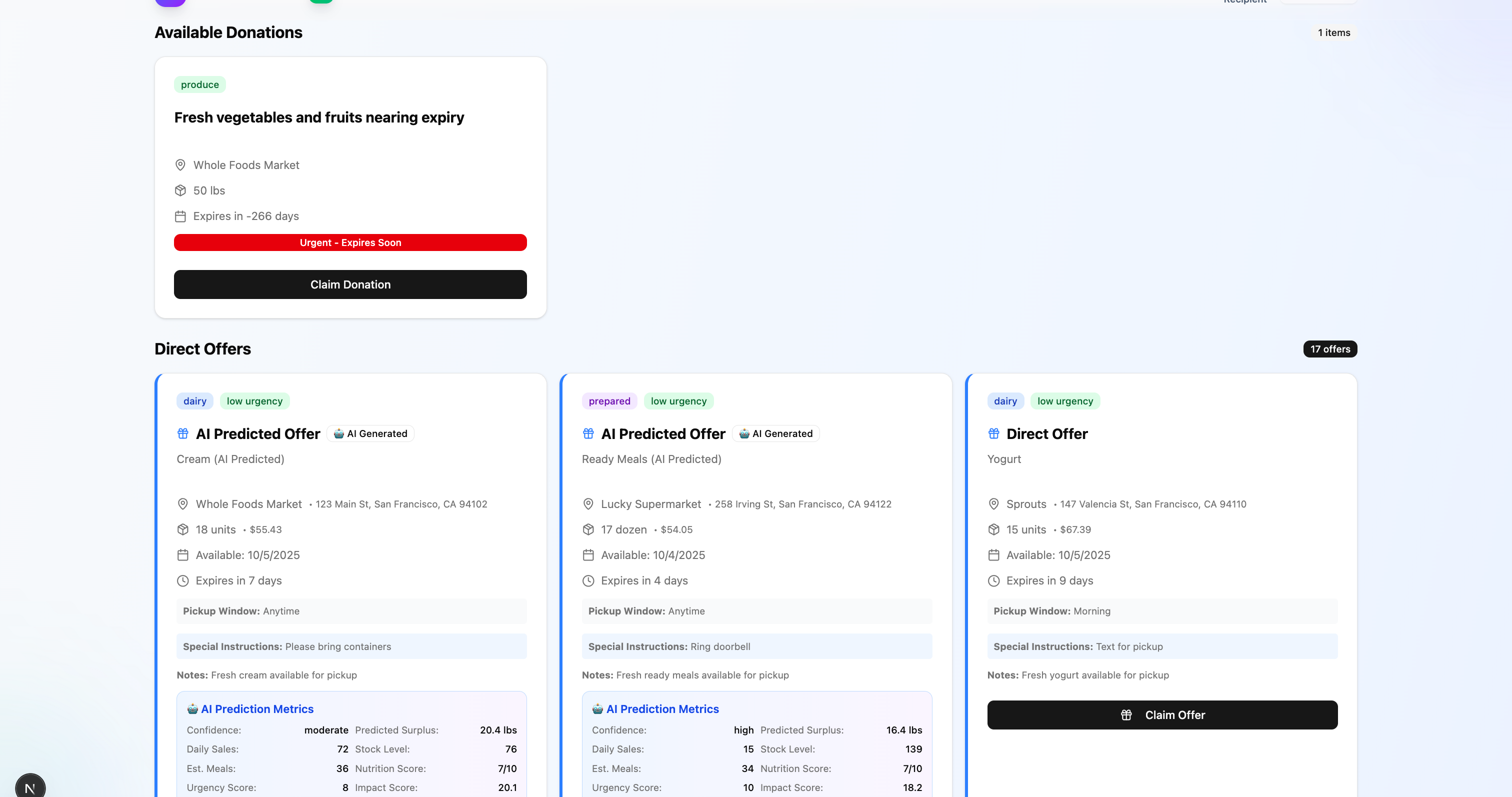
Checking Offers
-
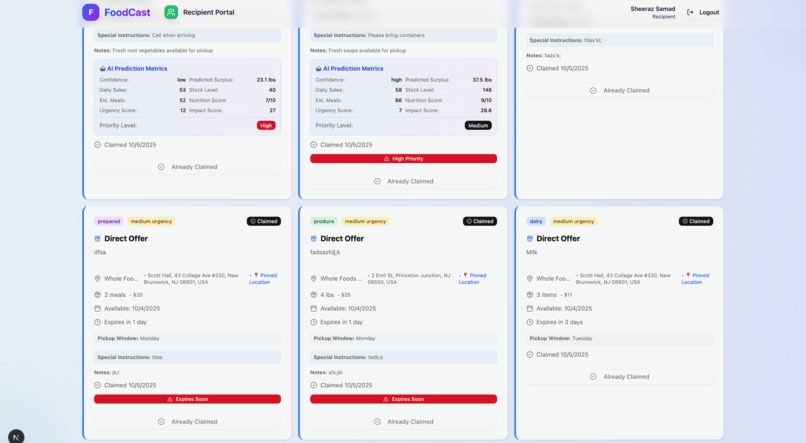
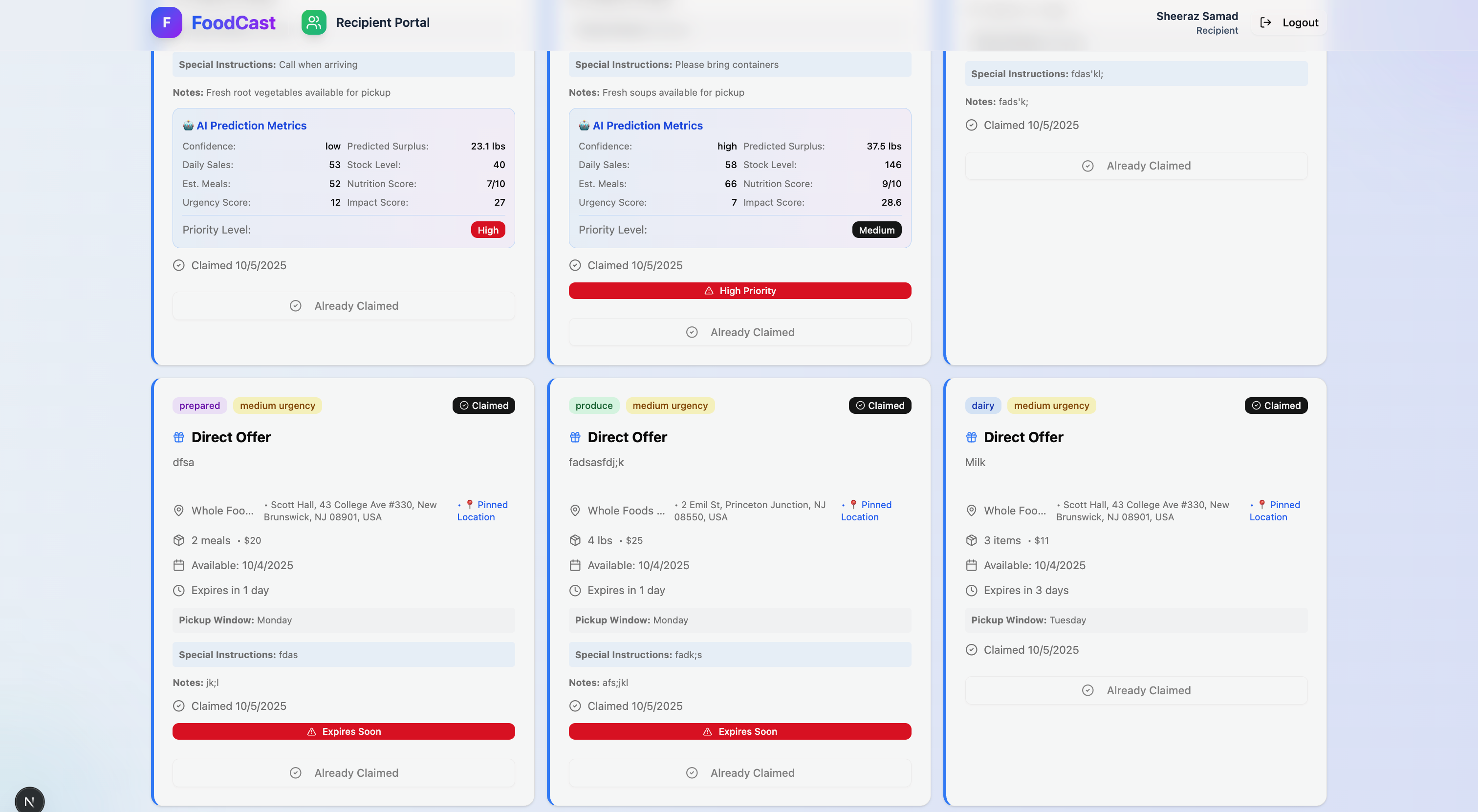
Checking Expired Offers
-
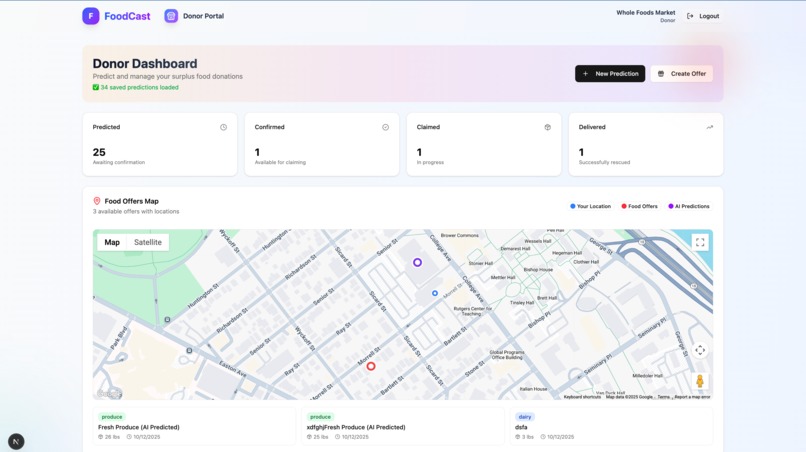
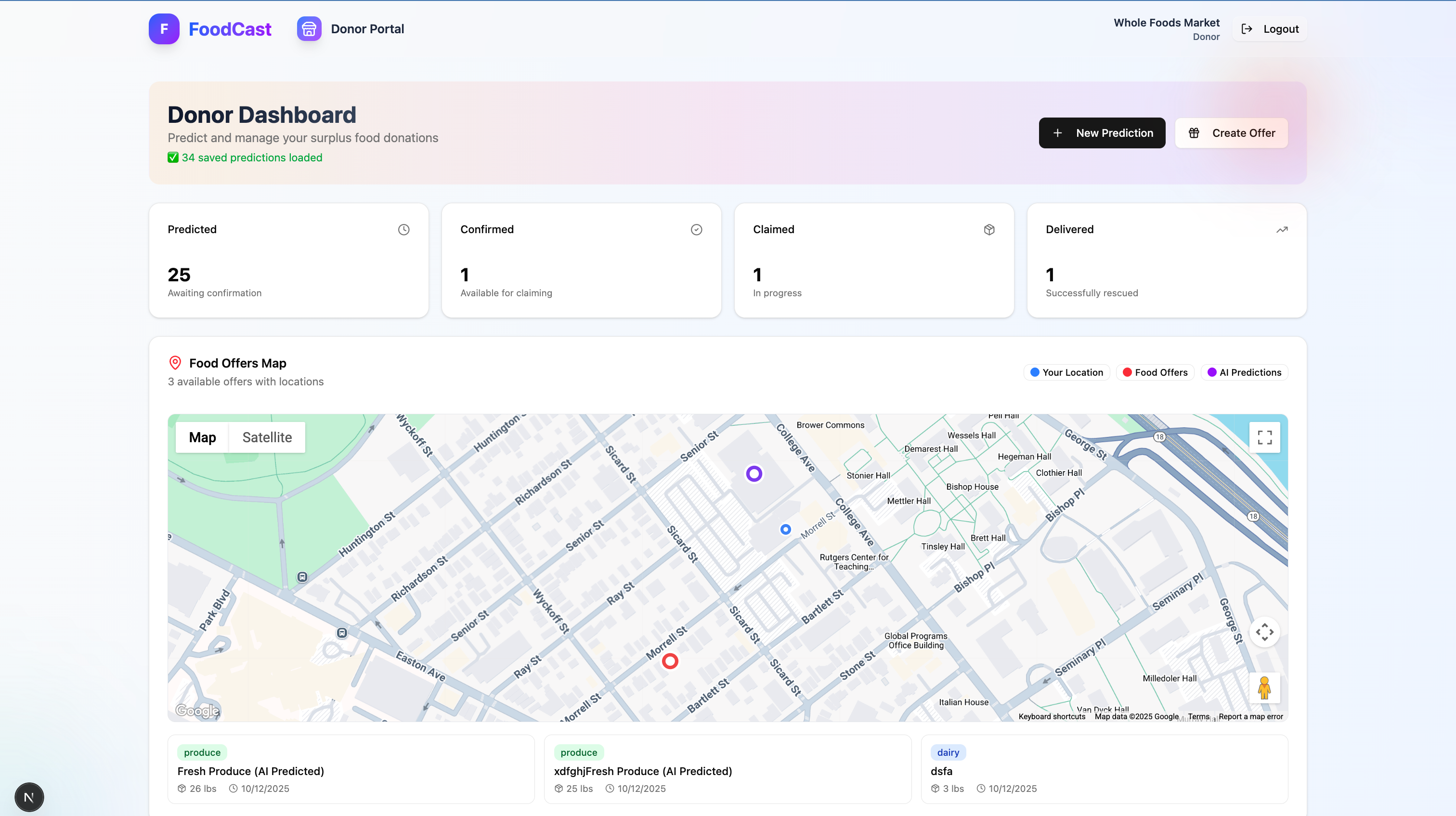
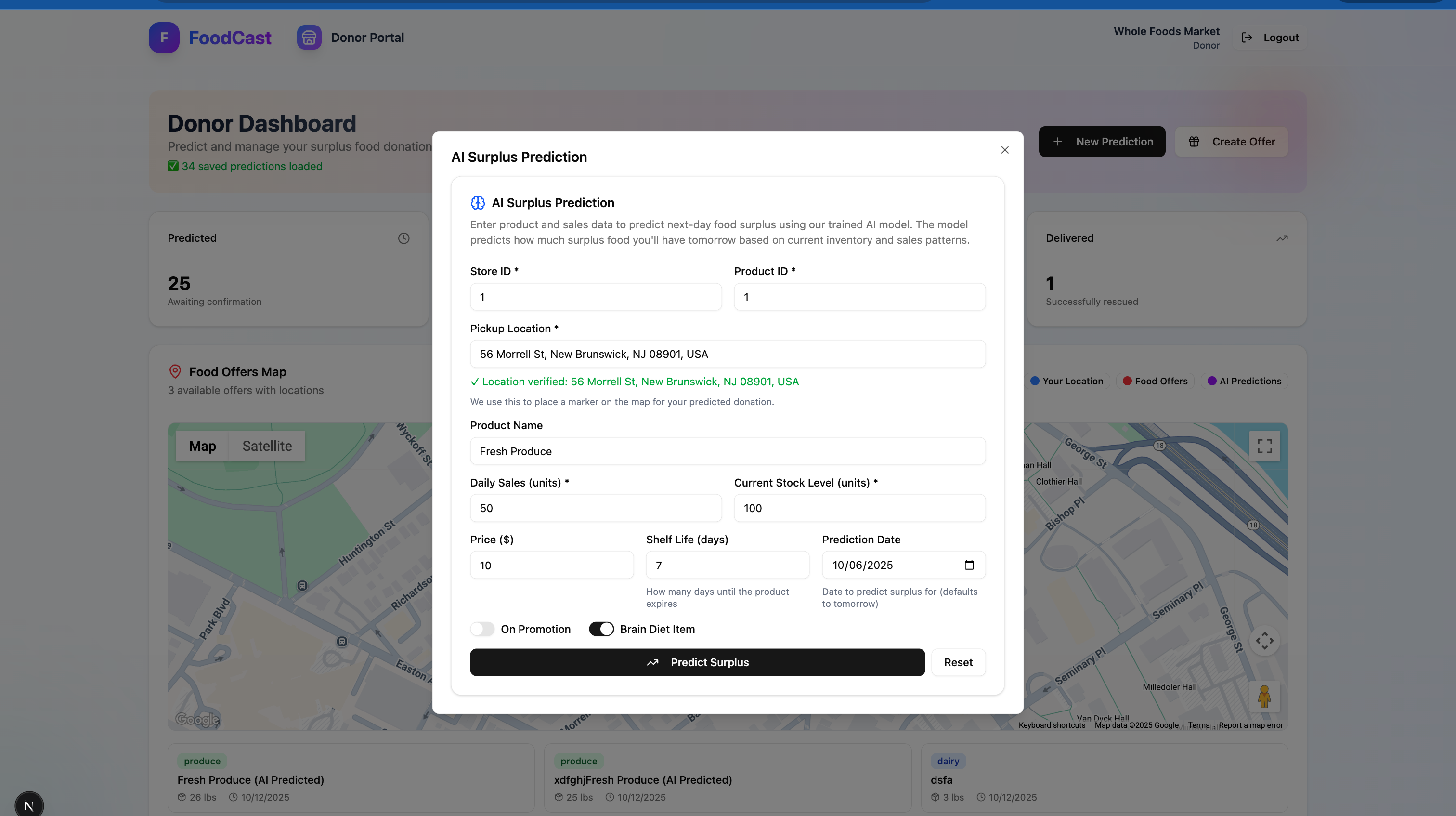
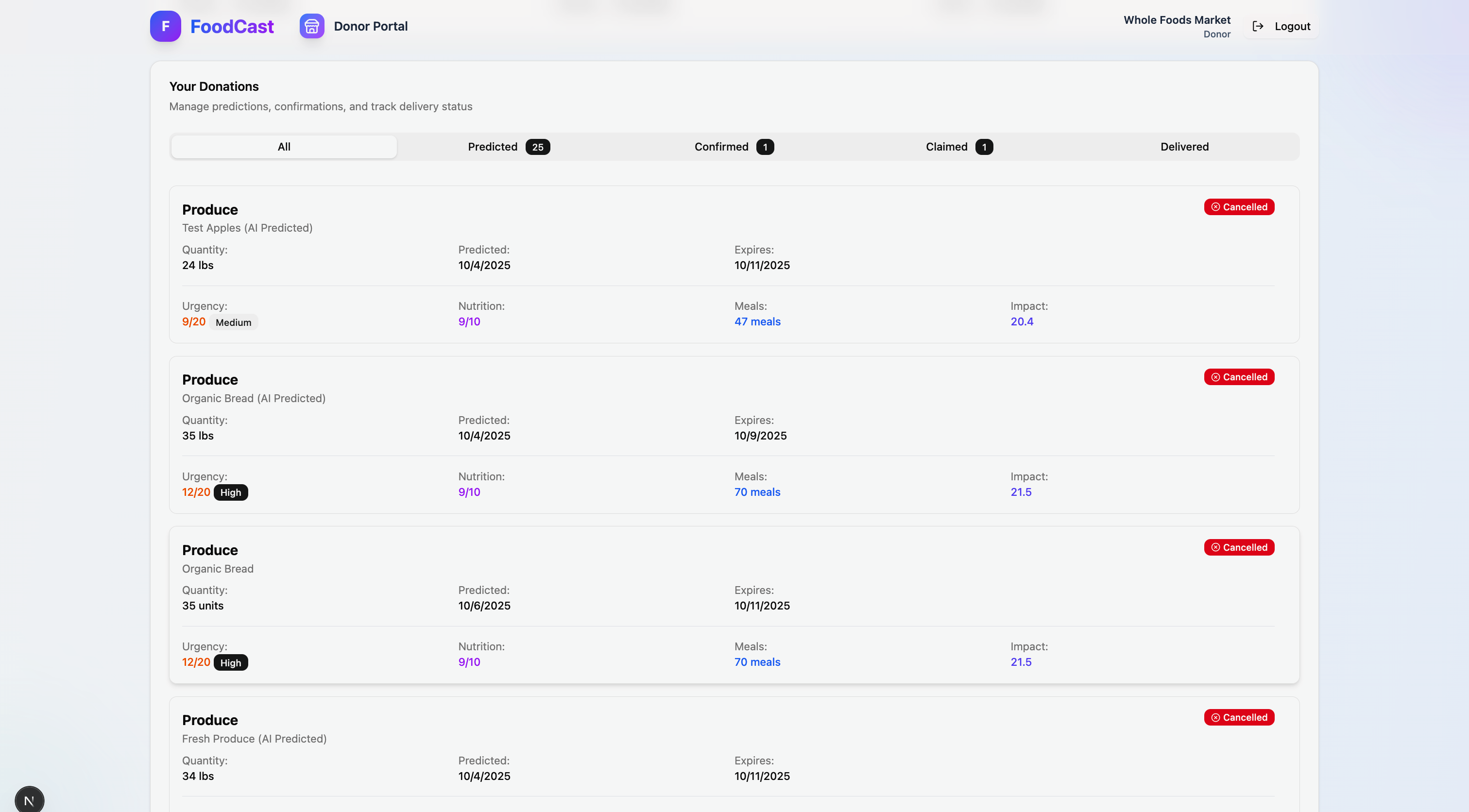
Donor Dashboard
-
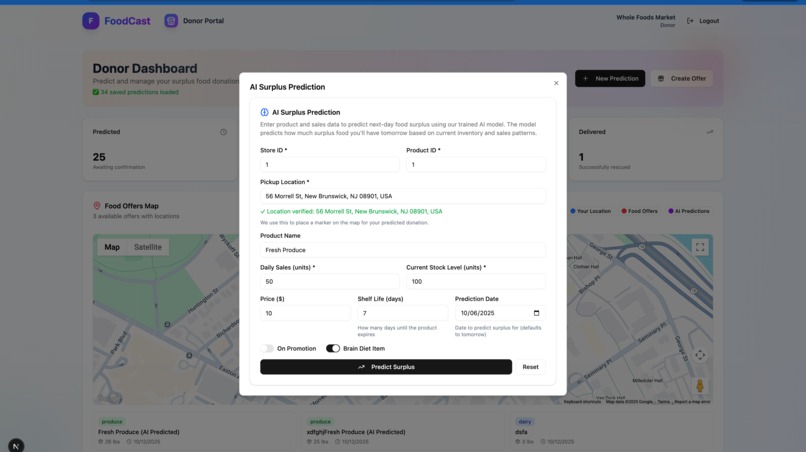
Ai Prediction
-
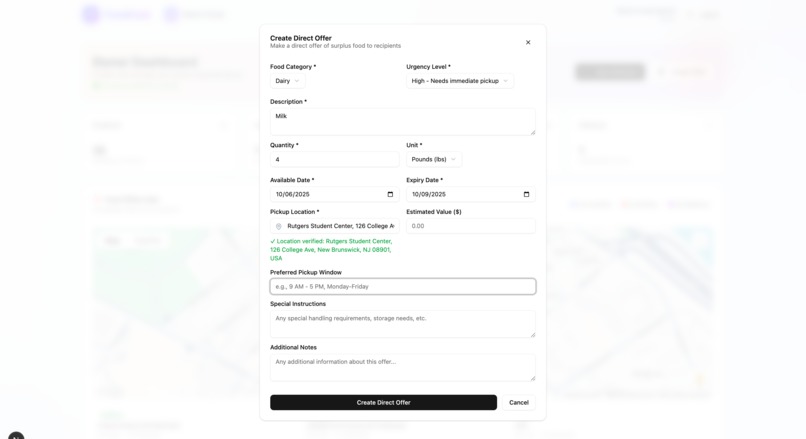
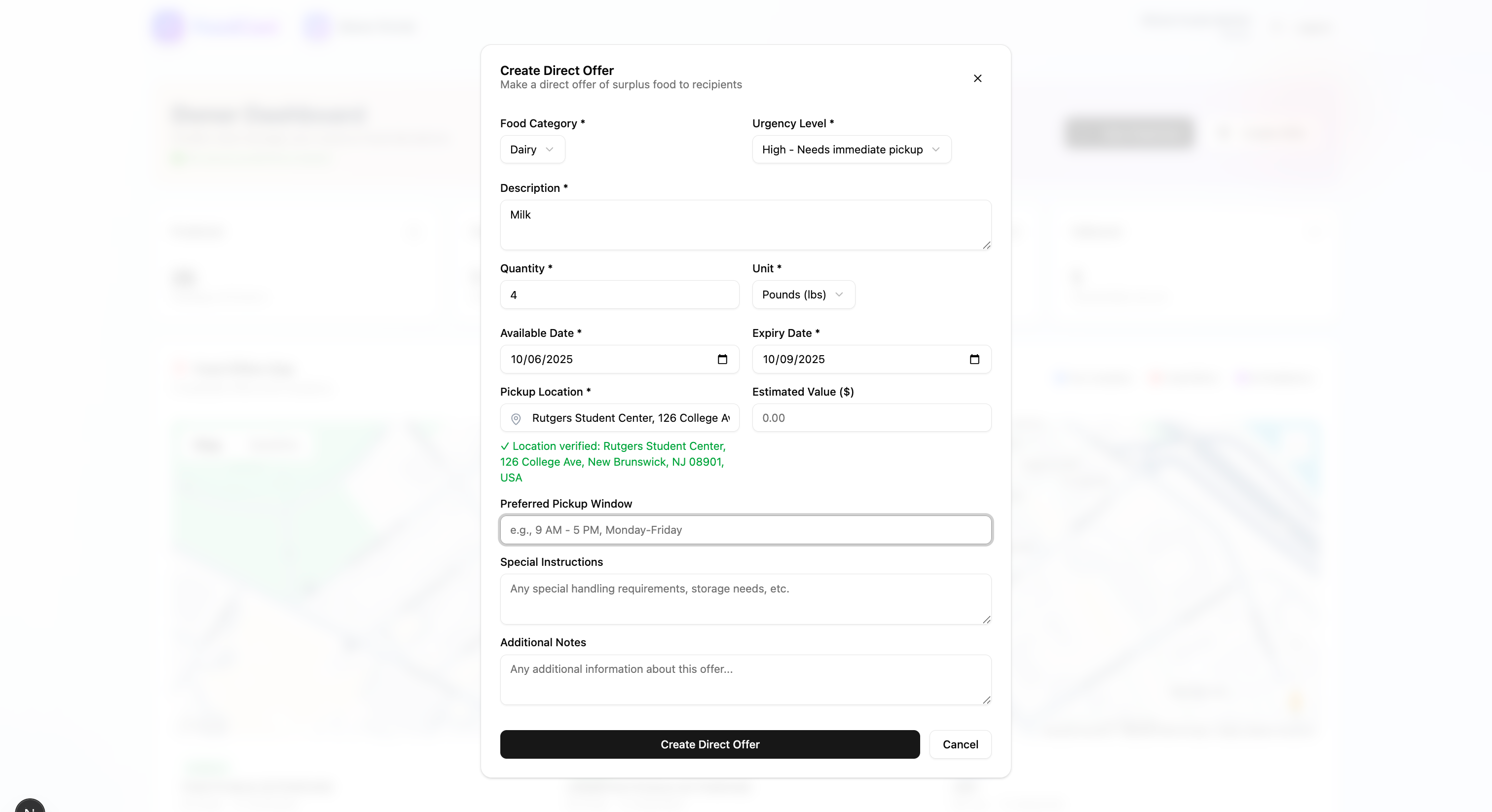
Creating Direct Offer
-
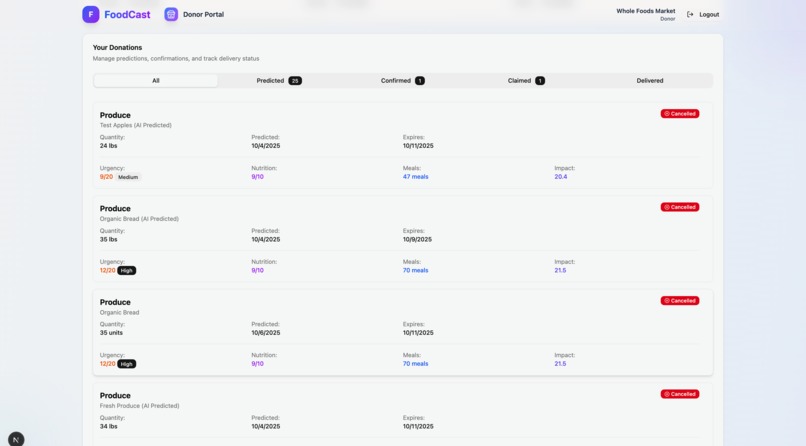
Checking Offers
-
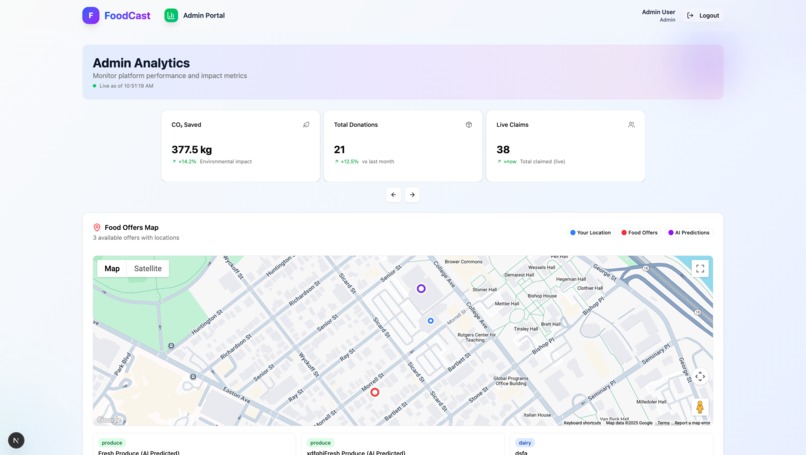
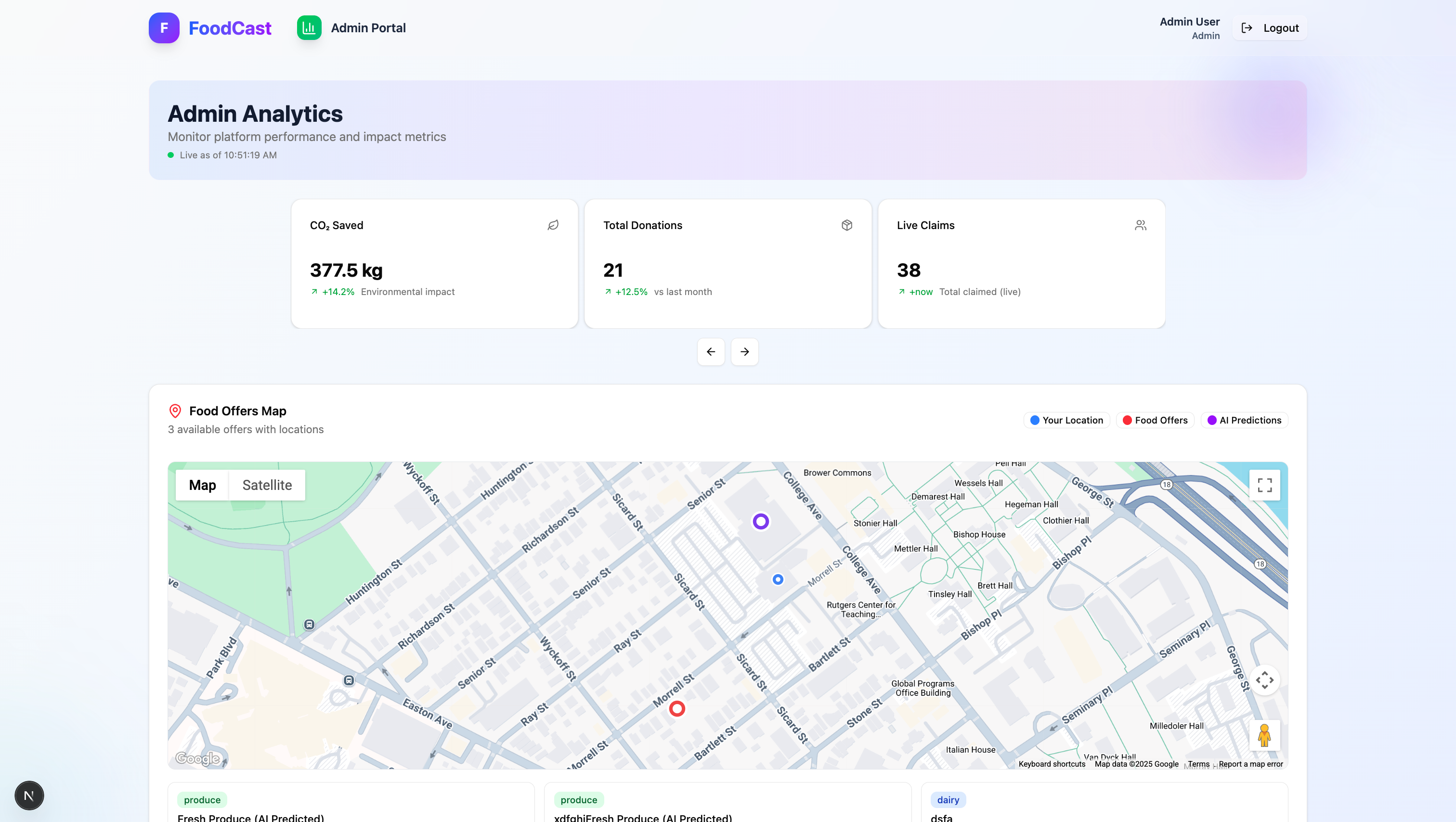
Admin Analytics
-
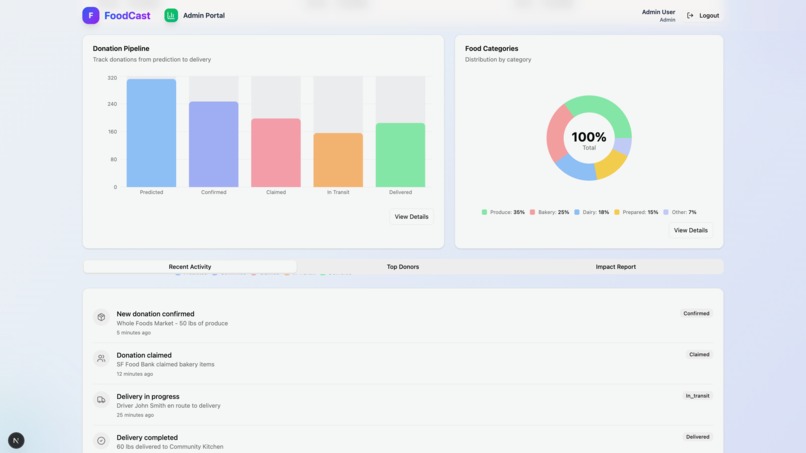
Stats
-
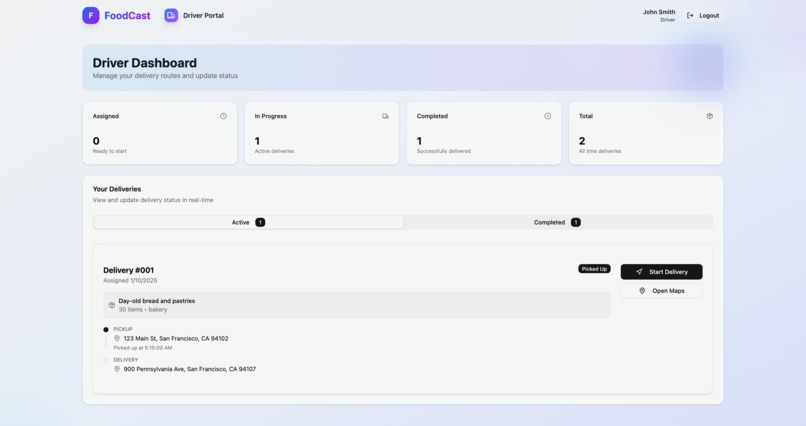
Driver Dashboard
Inspiration
- We were inspired by the gap between food surplus and food insecurity -often in the same city-motivating a system that predicts surplus, surfaces it instantly, and coordinates pickups to minimize waste.
What We Built
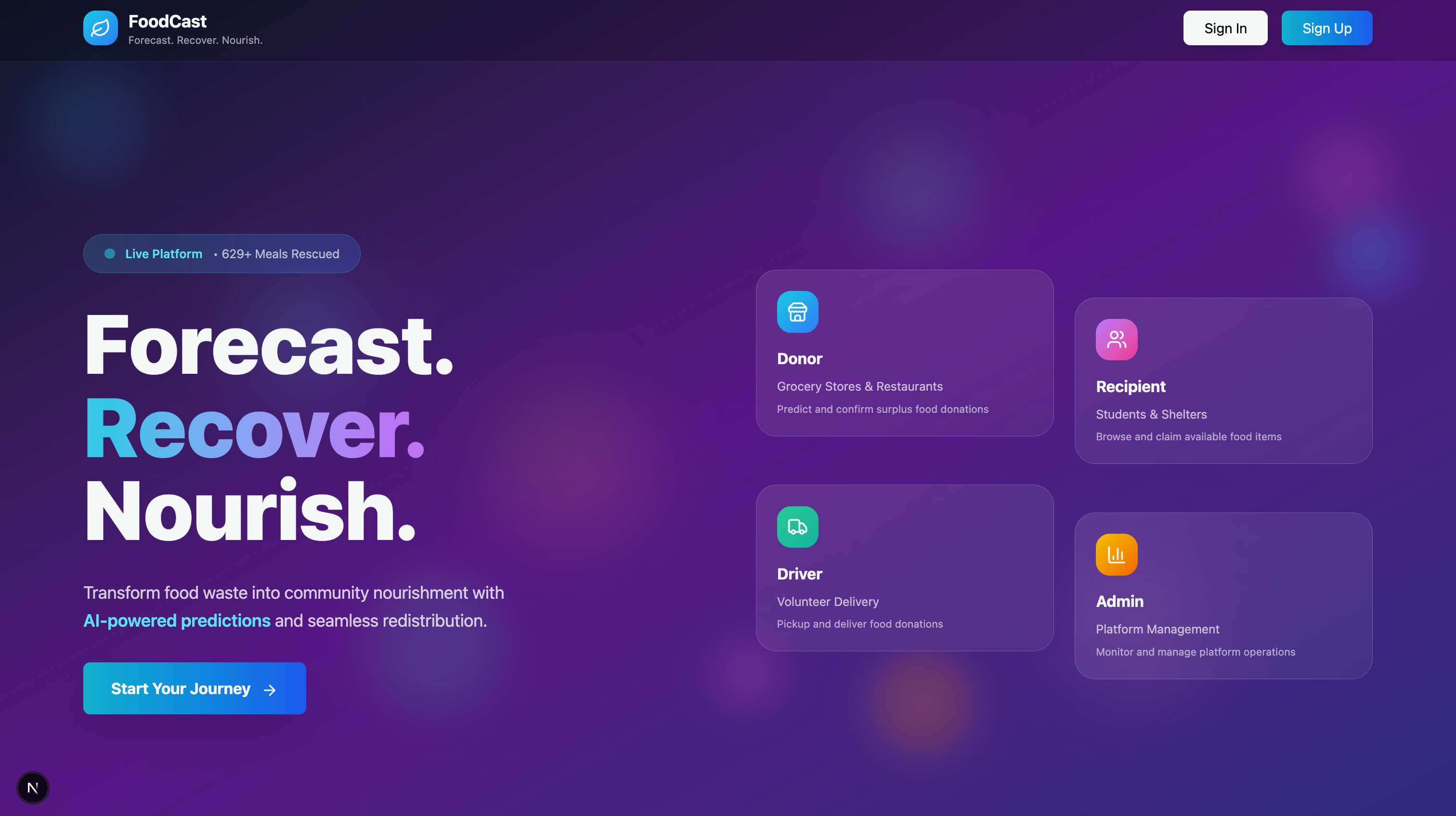
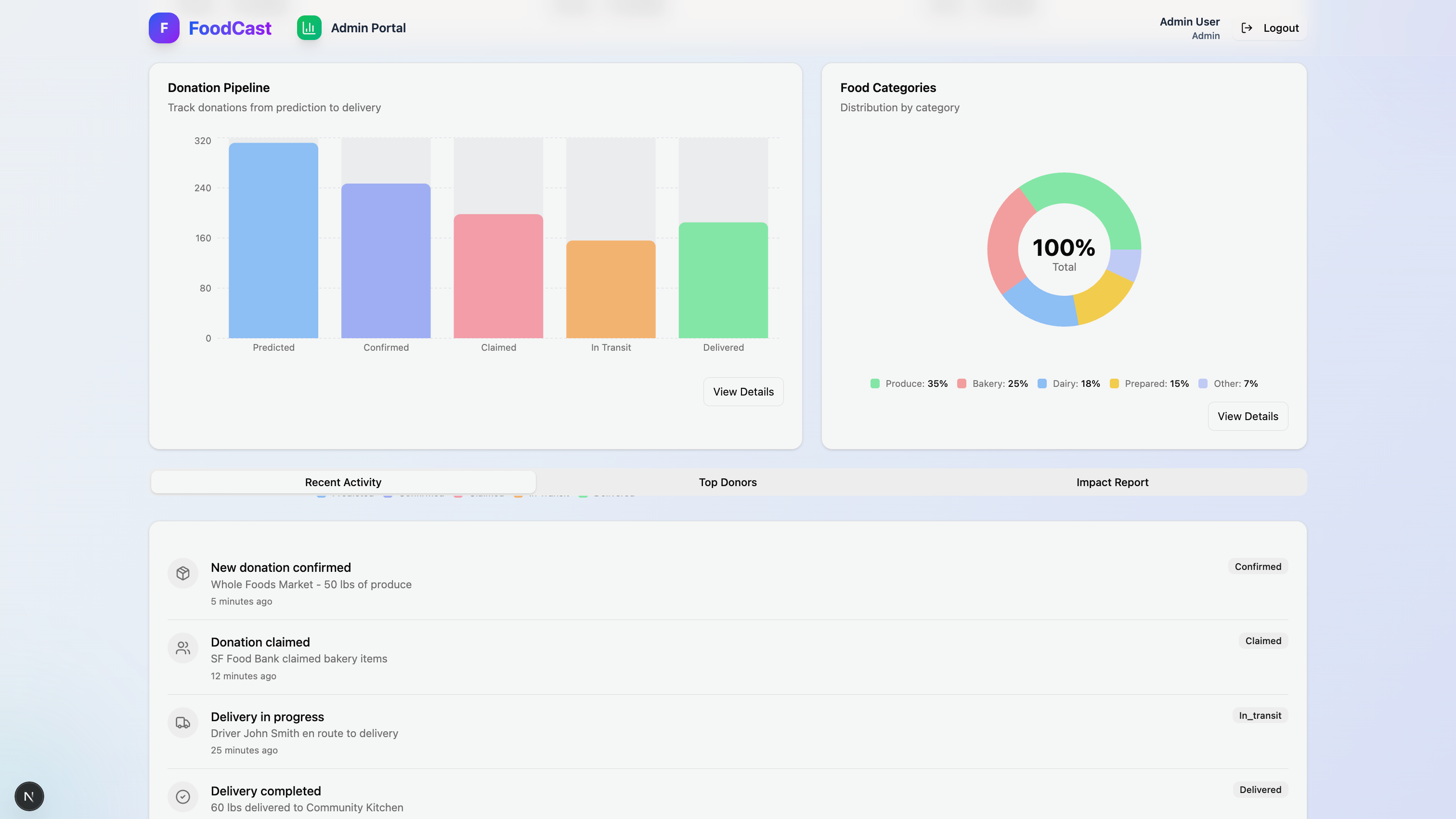
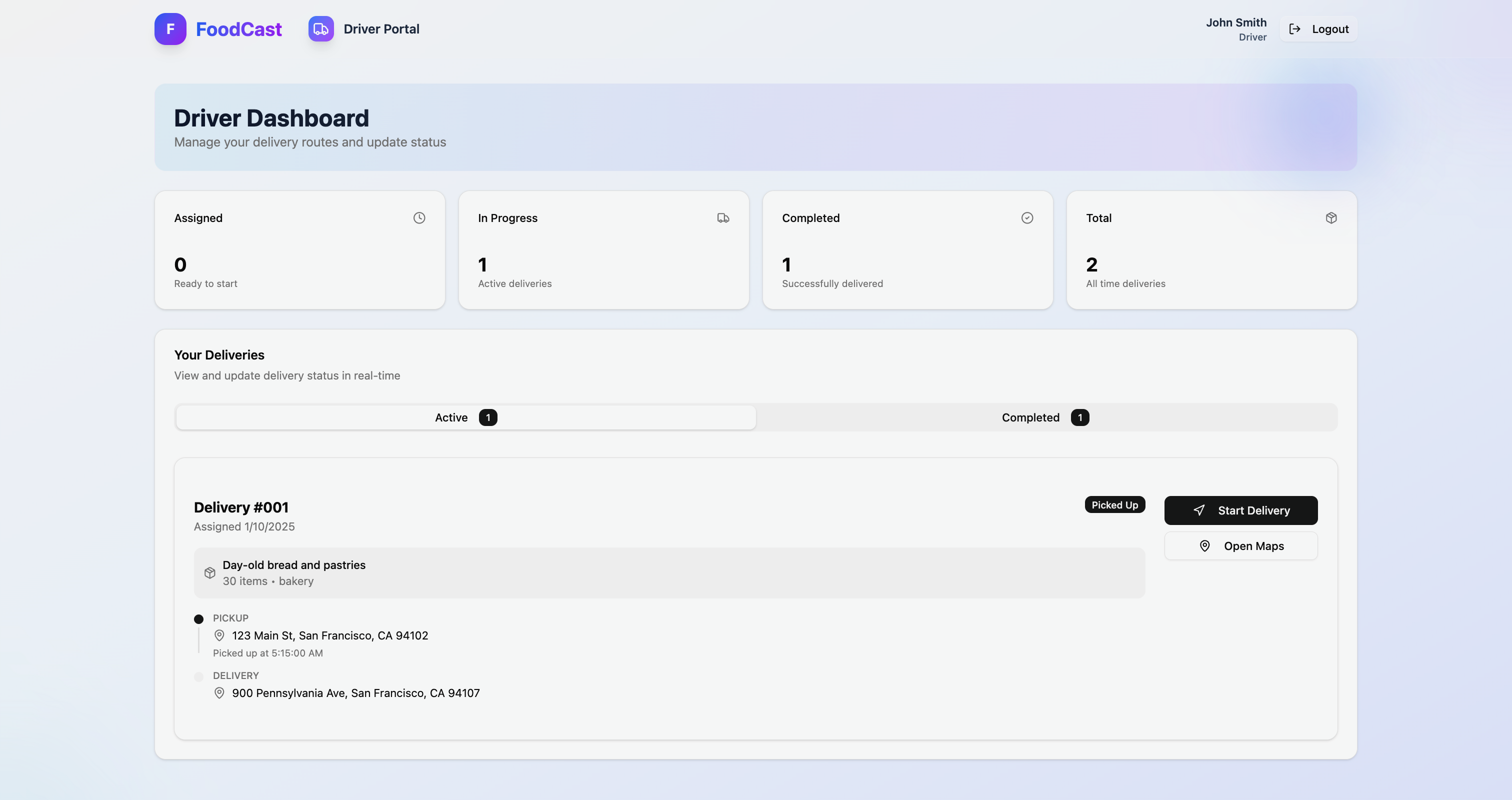
- A full‑stack web app with donor, recipient, driver, and admin views: donors create offers or run AI predictions; recipients claim items; drivers manage deliveries; admins track KPIs and category trends.
- A modern, accessible UI: Google Places address autocomplete, a persistent map, soft‑pastel analytics with clear legends, and a compact KPI carousel.
How We Built It
- Frontend: Next.js (App Router) + TypeScript + Tailwind CSS + Radix UI, with Embla Carousel for KPIs and Recharts for charts.
- Backend/API: Node.js routes for offers, users, and analytics; a Python model server powering AI predictions; local JSON storage for demo persistence and clear RLS-ready patterns for a future DB.
- Maps: Google Maps/Places APIs for geocoding, autocomplete, and location-aware offers; robust PAC dropdown anchoring with a MutationObserver.
What We Learned
- Clean, realistic data and conservative post‑processing often outperform complex models in practice.
- Small UX details - anchored autocomplete, modal questionnaires, labeled charts - really improves trust and speed.
- Separation of concerns prevents subtle bugs (ensuring predictions aren’t auto‑duplicated as offers).
Challenges
- Data realism vs. availability: synthesizing credible patterns and validating with error metrics instead of chasing perfect datasets.
- UI integration edge cases: ensuring Google’s
.pac-containerrenders under the input, not at the bottom of the page. - Logic correctness under demo constraints: eliminating double‑creation of predictions/offers and keeping state in sync across views.
- Performance vs. clarity: balancing rich analytics with a calm design that stays fast and legible.
Outcome
- A focused product that turns surplus predictions into actionable logistics, proving that “good enough” predictions + great coordination can move real food to real people - fast.
Built With
- app-router)-with-tailwind-css-and-radix-ui-on-the-frontend
- embla-carousel
- embla-carousel-for-kpis
- google-maps
- google-maps-places/maps-apis-for-geocoding-and-ui
- google-oauth
- javascript
- next.js
- node.js
- node.js-apis-with-file-based-json-storage-(demo)-plus-a-python-model-server-(fastapi-style)-for-predictions
- python
- radix
- react
- recharts-for-analytics
- supabase
- tailwind
- typescript


Log in or sign up for Devpost to join the conversation.