-
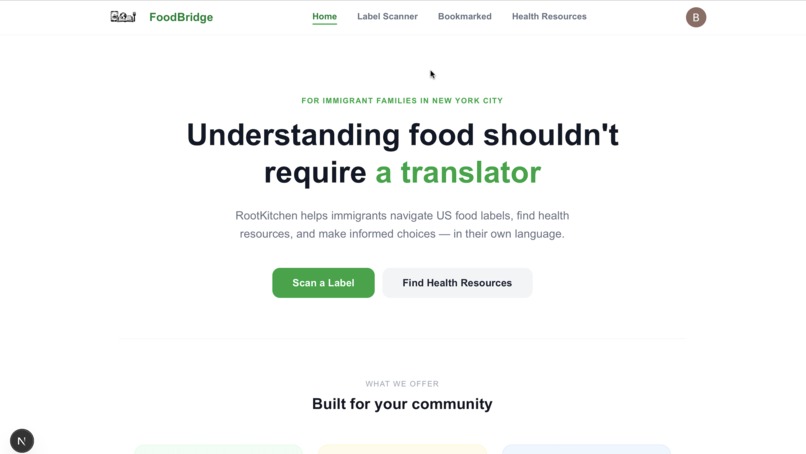
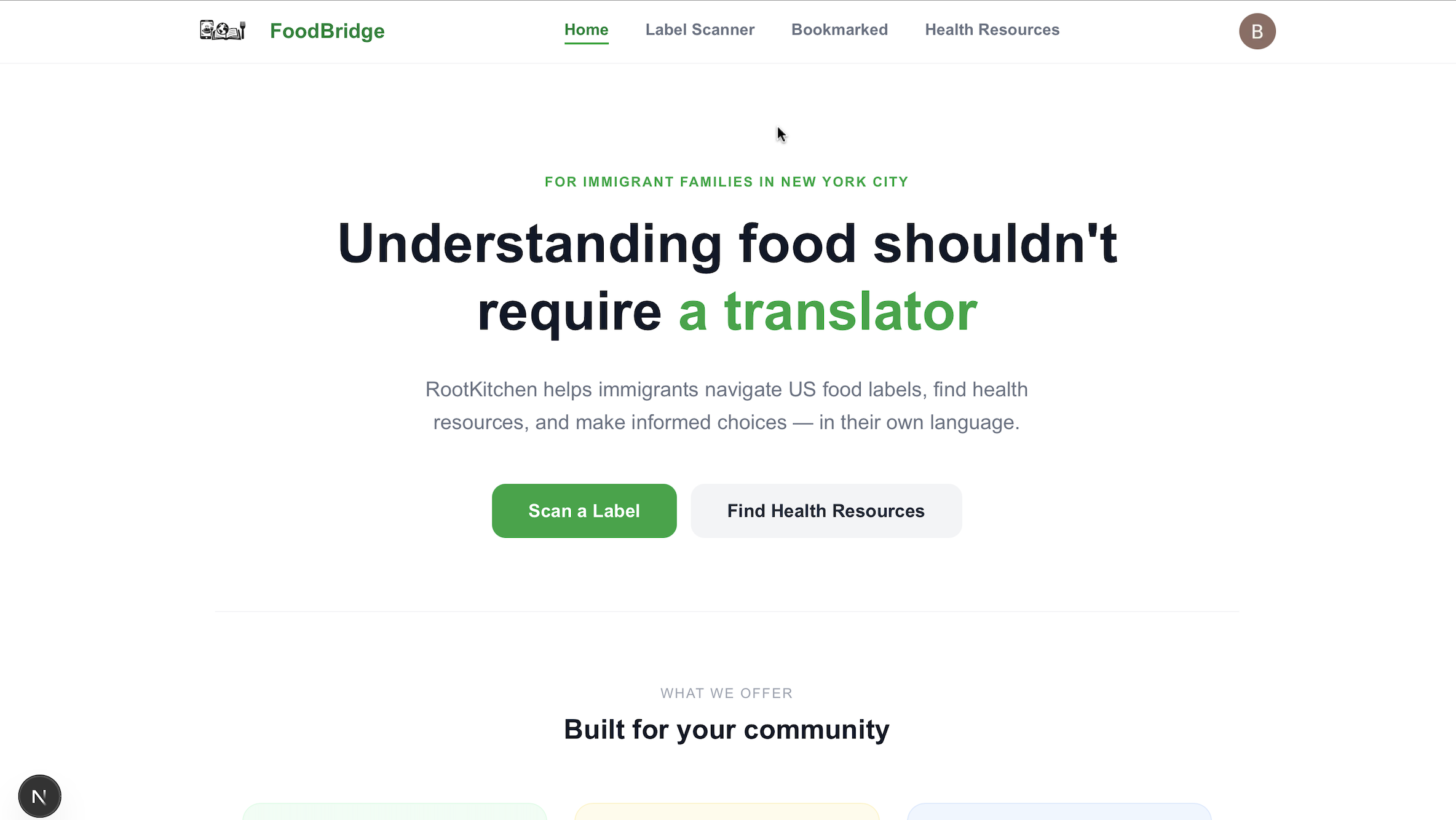
Homepage
Inspiration
New York City is home to over 3 million immigrants, many of whom struggle to navigate the US food system. Walking into an American grocery store when English isn't your first language can be an overwhelming experience. We built FoodBridge because we believe that understanding what you're eating shouldn't require a translator, a degree in nutrition, or the privilege of growing up in this country. As students at Hunter College, we see this challenge in our own community every day.
What it does
FoodBridge is a multilingual food and health companion for immigrants living in New York City. It has three core features: Nutrition Label Scanner — Users take a photo of any US food label and receive a plain-language breakdown in their native language, complete with cultural context. For example, a user scanning a can of soup will receive a warning if the sodium content is high, along with a cultural note explaining why this matters relative to their dietary background — delivered entirely in their chosen language, whether that's Spanish, Arabic, Haitian Creole, or Bengali. Ingredient Substitute Finder — When a product is flagged as unhealthy, users can tap one button to find healthier alternatives available at NYC grocery stores, with specific guidance on where to find them in their borough. Health Resource Navigator — Users can browse or search in any language for real NYC clinics, food pantries, and dietitian services filtered by borough. The search is powered by Claude AI, so a user can type "clínica en Queens" in Spanish and get relevant results explained back to them in Spanish. Users can also bookmark scans and view their full scan history, so their nutrition journey is always saved.
How we built it
We built FoodBridge using Next.js and React for the frontend, with Tailwind CSS for styling. The AI features are powered by the Anthropic Claude API, specifically Claude's vision capability for reading food label images and its multilingual text understanding for the health resource search. We integrated two real NYC Open Data APIs for live clinic and food pantry data. User authentication was built with NextAuth and scan history is stored in localStorage. The app is fully responsive with both desktop and mobile layouts including a bottom tab bar for mobile users.
Challenges we ran into
On the technical side, getting Claude to return consistently structured JSON from image inputs required careful prompt engineering. We also hit several broken NYC Open Data endpoints before finding datasets that were live and well structured.
Accomplishments that we're proud of
We're proud that every major feature actually works end to end. The label scanner reads real food photos, returns structured multilingual breakdowns, and connects seamlessly to the substitute finder. The health resource page pulls live NYC government data and lets users search in Arabic, Chinese, Spanish, and more.
What we learned
We learned the importance of prompt engineering: the difference between Claude returning a wall of text versus clean structured JSON that drives a polished UI comes down entirely to how you frame the request.
What's next for FoodBridge
We want to replace localStorage with a real database so scan history and bookmarks persist across devices and sessions. We'd like to expand the language support beyond our current seven languages to cover more of NYC's immigrant communities including Tagalog, Punjabi, and Wolof. We also want to build out the health resource navigator further by integrating real language and insurance filtering using verified city data.
Built With
- css
- html
- javascript
- next.js-15
- nextauth.jsanthropic-claude-api-(claude-opus-4-5)-?-vision-and-multilingual-text
- nyc-open-data-api-(health-facilities)
- react
- tailwind-css
- typescript

Log in or sign up for Devpost to join the conversation.