-
-
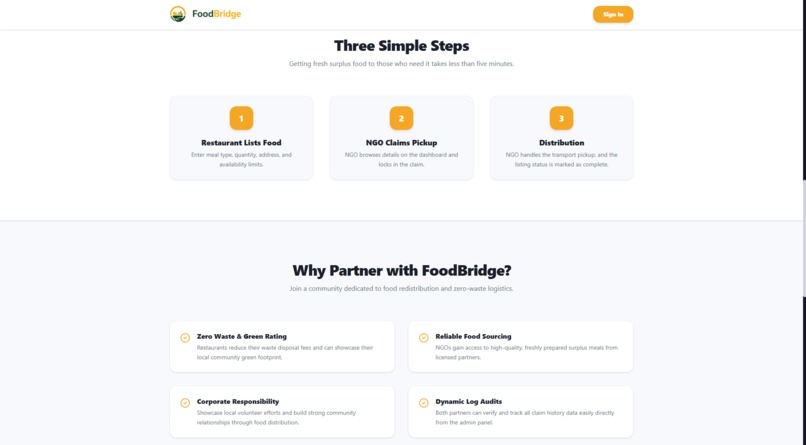
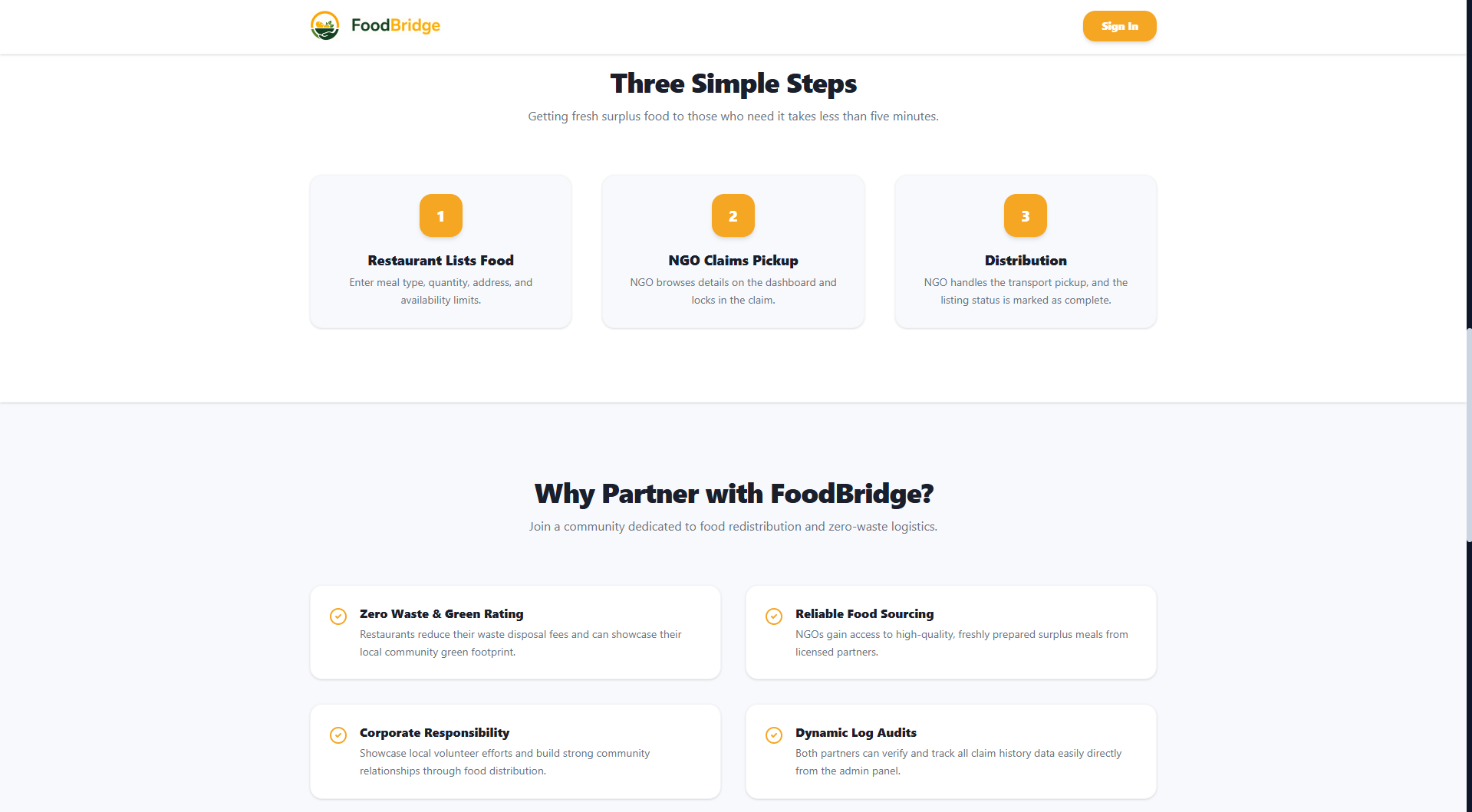
Learn how FoodBridge connects restaurants and NGOs through a simple, transparent, and efficient donation process.
-
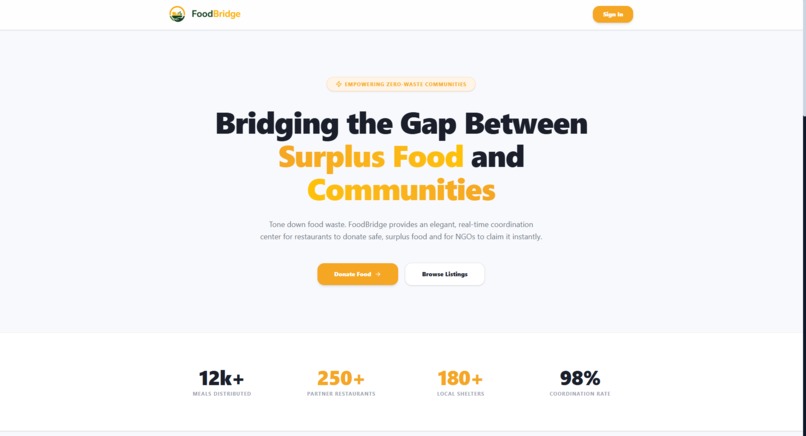
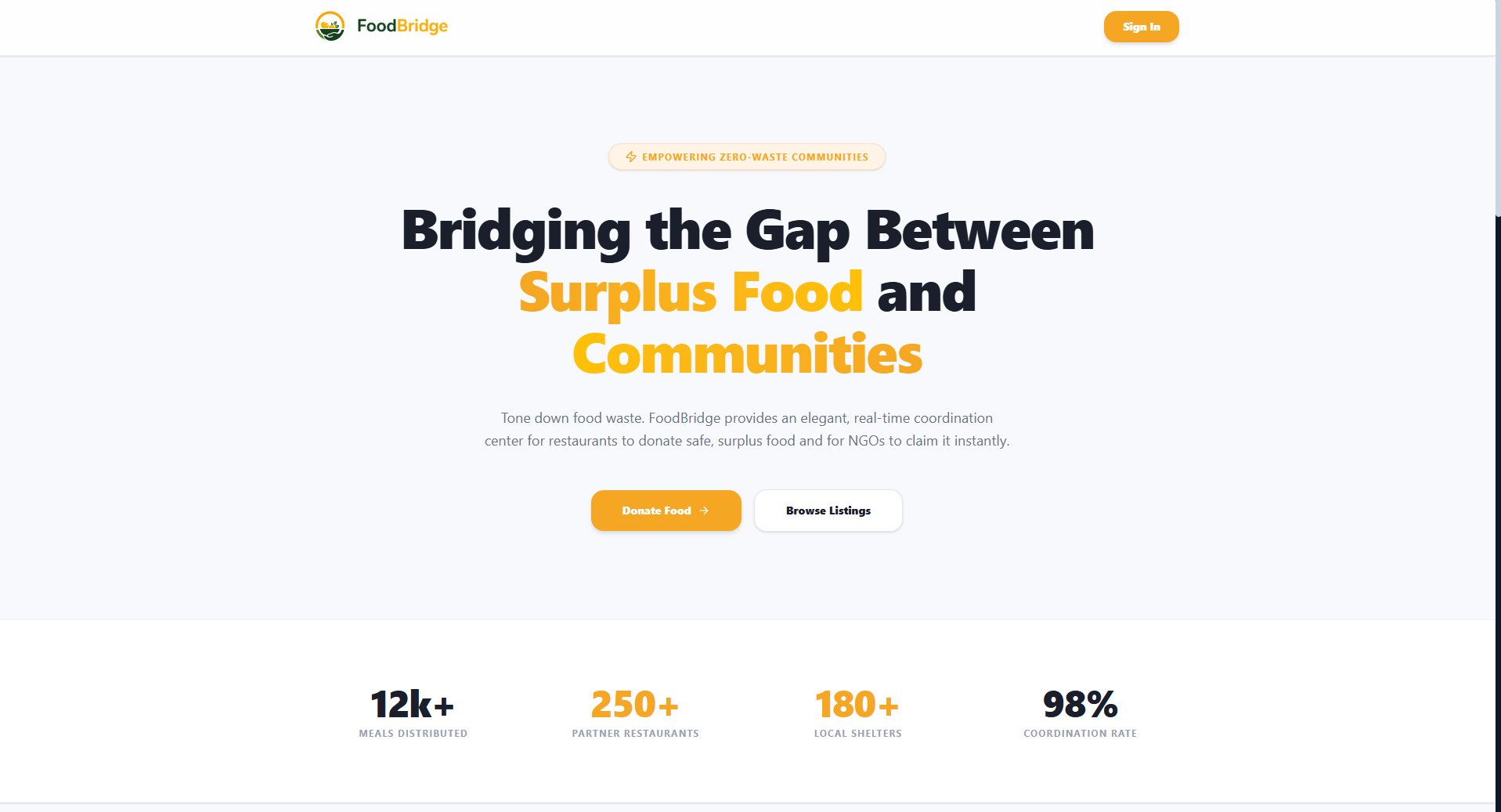
A modern landing page introducing FoodBridge and its mission to reduce food waste through real-time food donations.
-
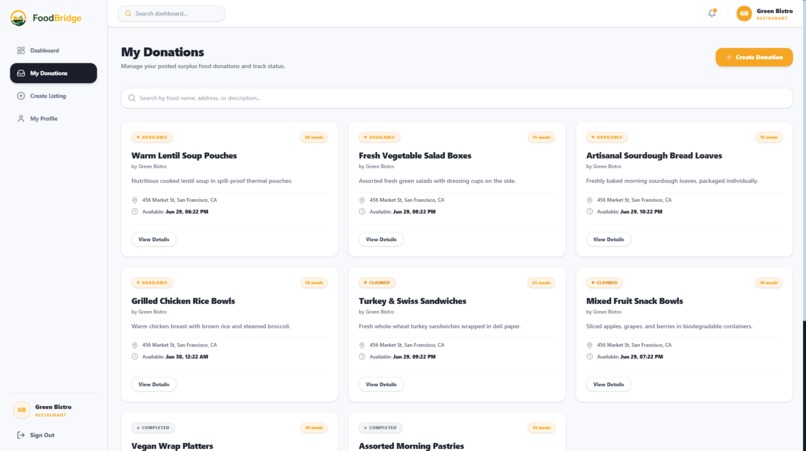
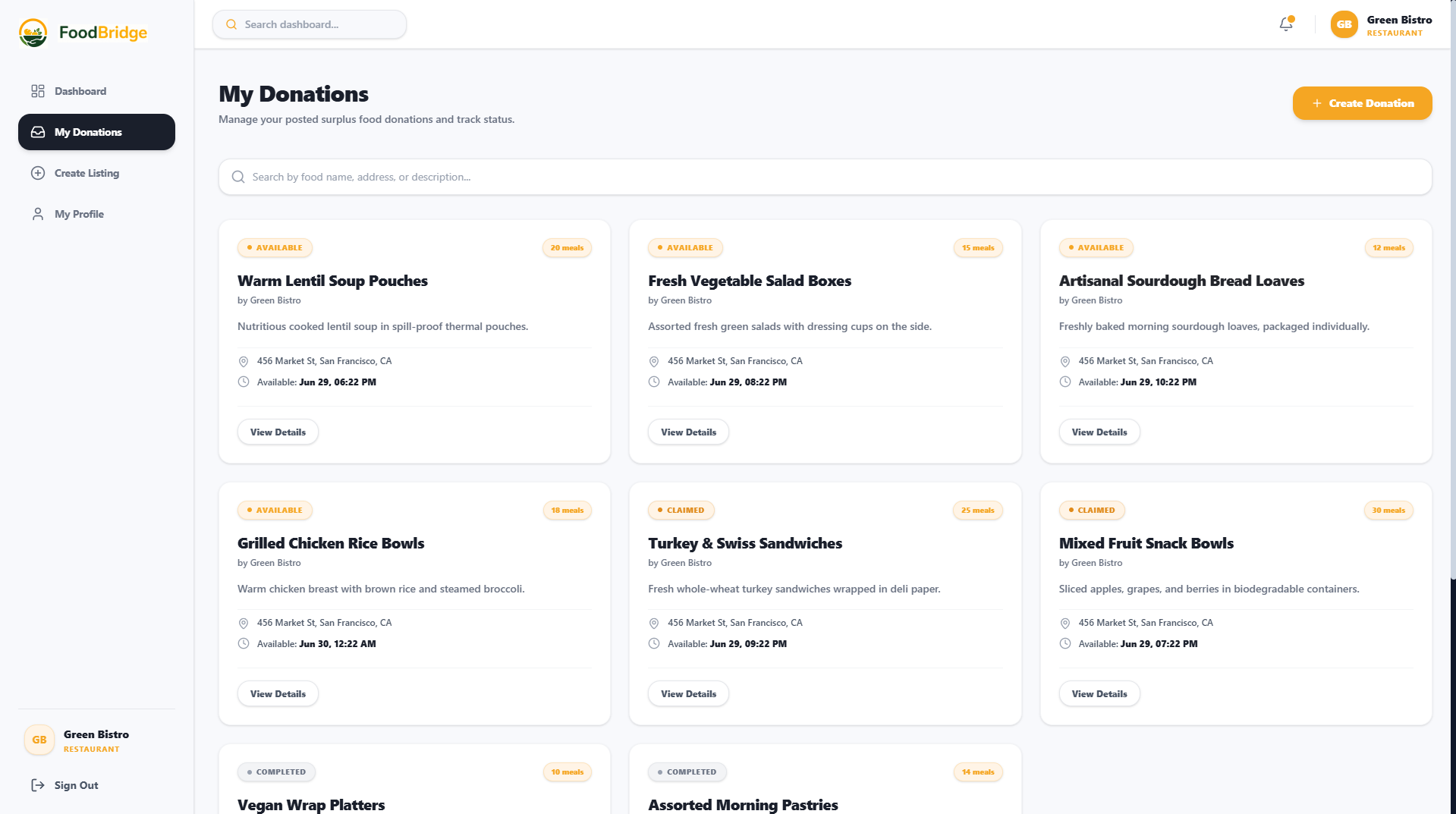
Restaurants can create, manage, and track surplus food donations with real-time status updates.
-
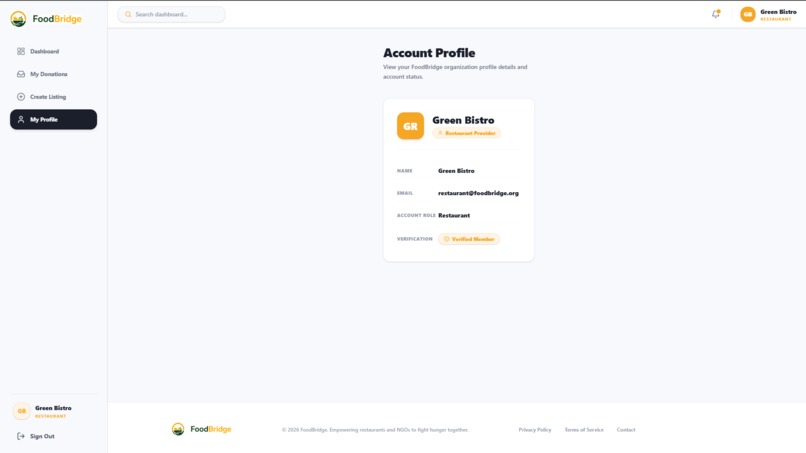
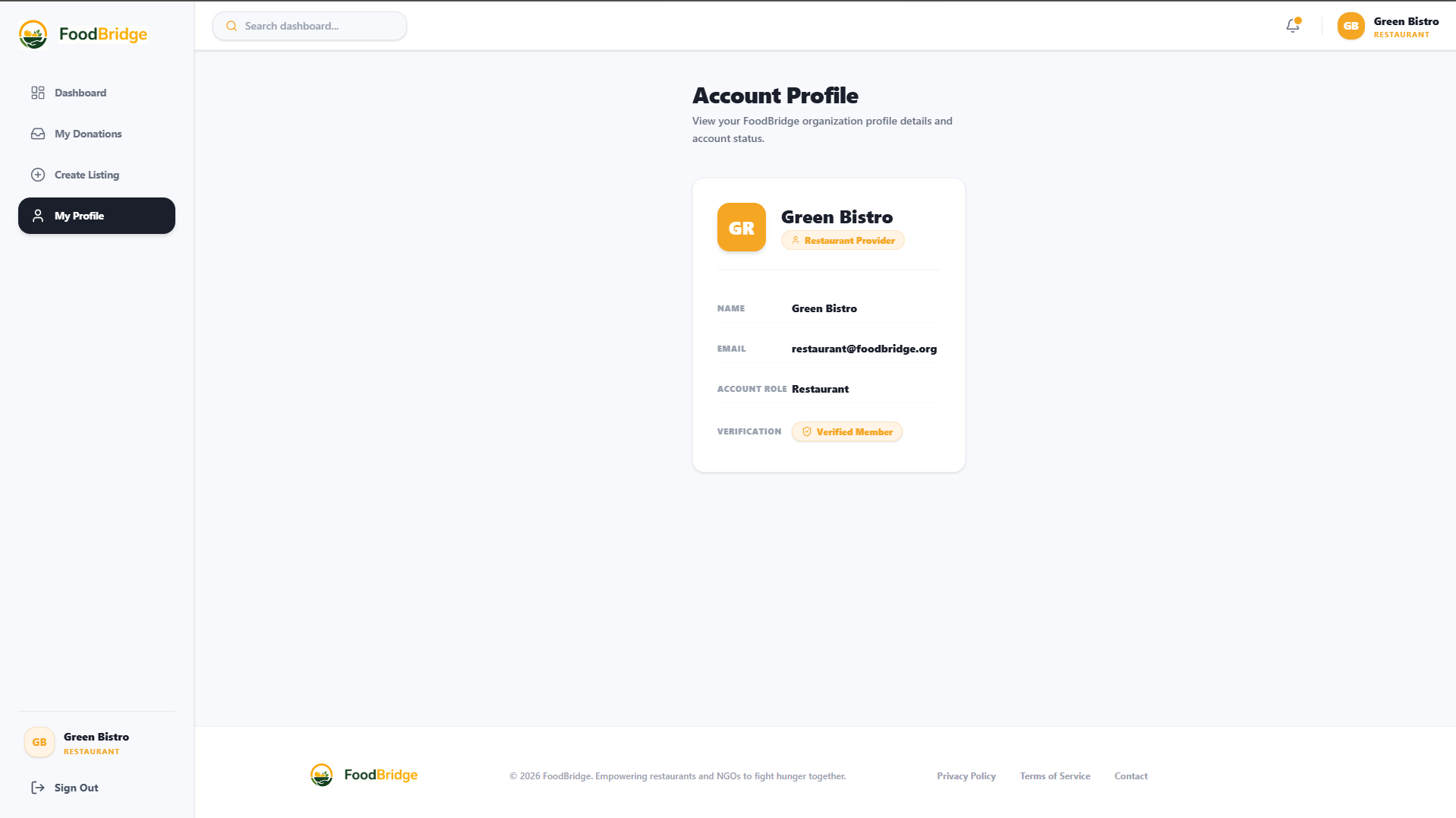
Restaurant profile with account details, donation statistics, and personalized dashboard information.
-
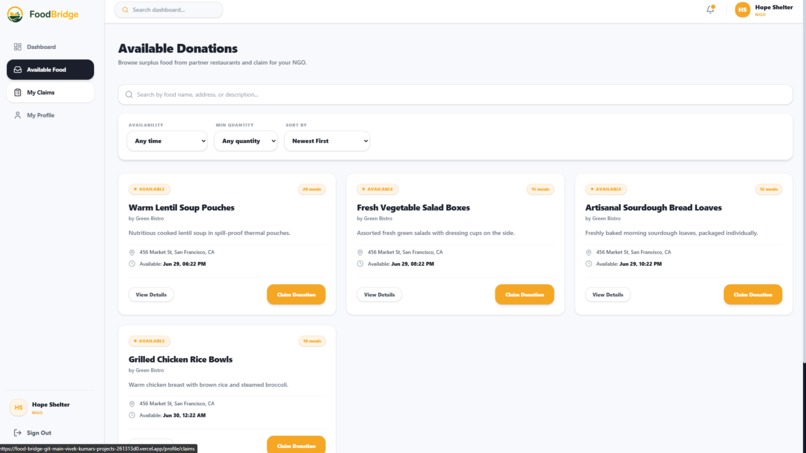
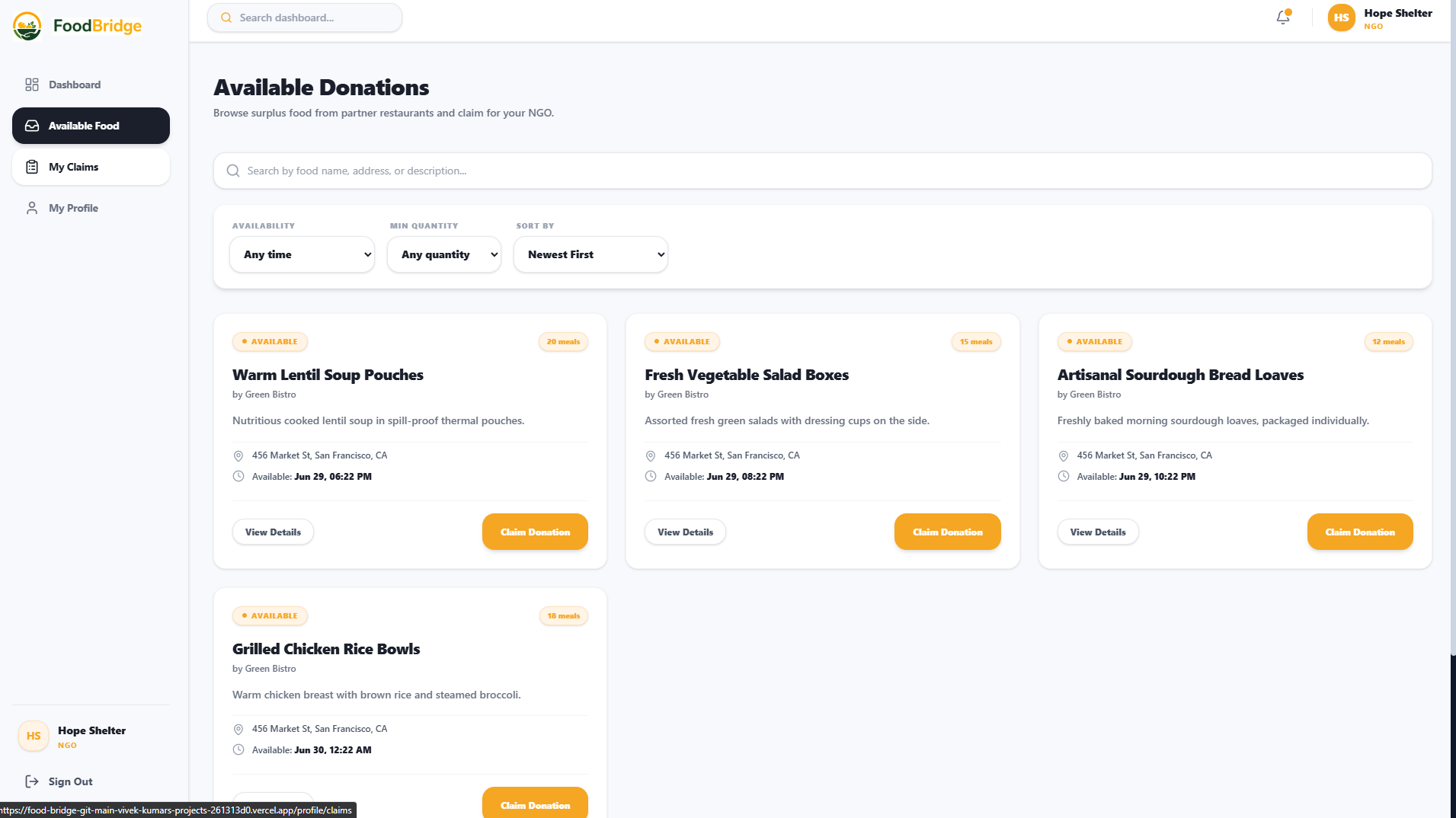
Browse available food donations, view details, and claim surplus food instantly for community distribution.
-
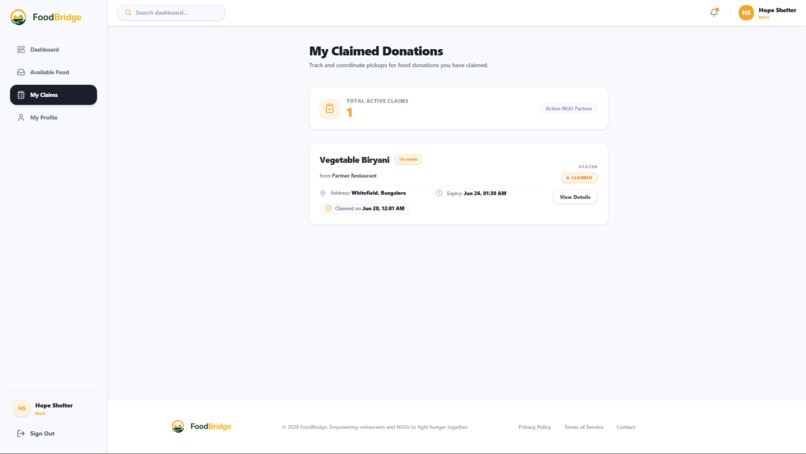
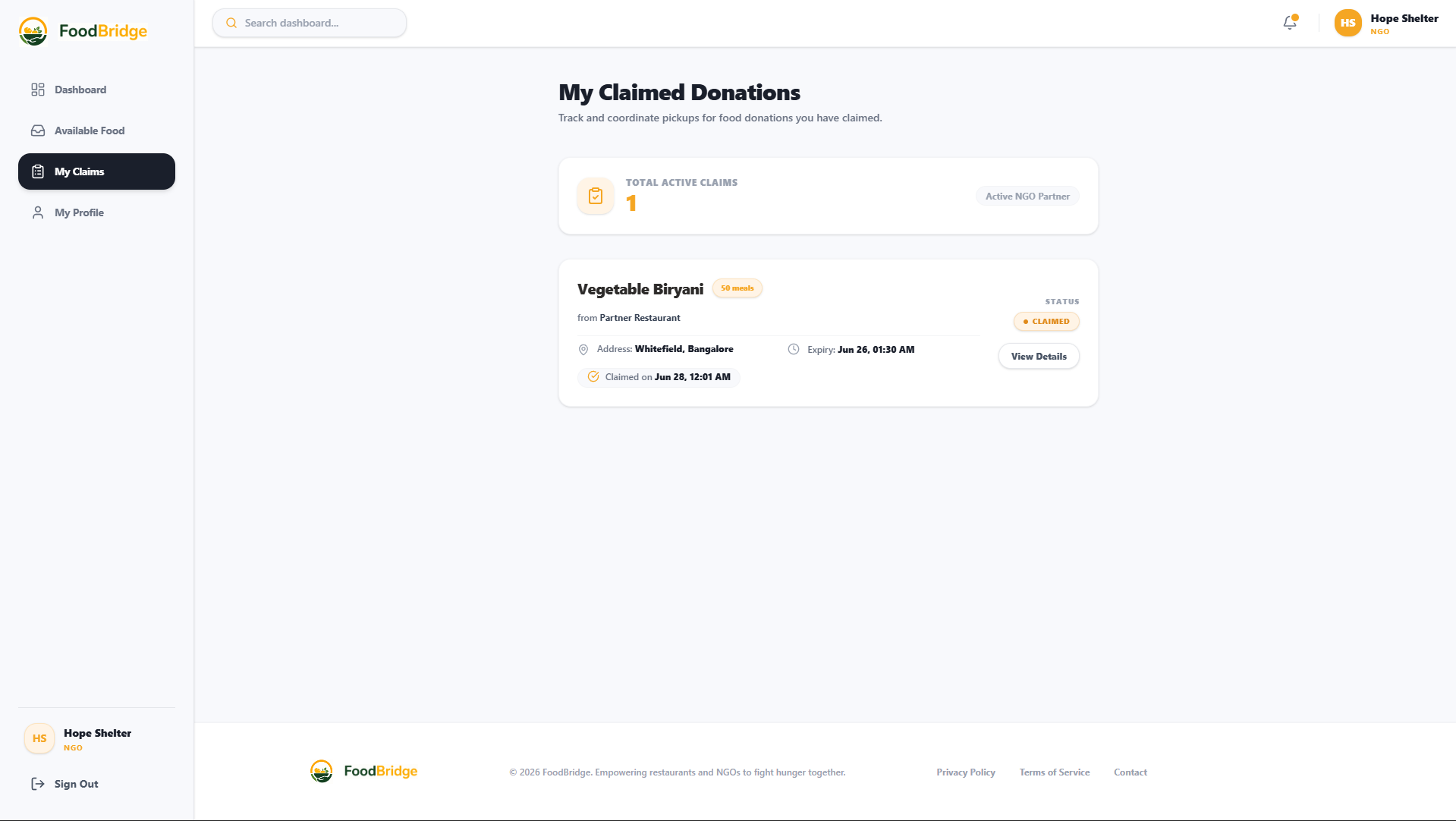
NGOs can view and track all claimed food donations in one organized dashboard.
FoodBridge
Inspiration
Every day, restaurants, cafés, hotels, and event organizers throw away perfectly edible surplus food because there is no simple way to connect with organizations that can distribute it quickly. At the same time, NGOs and community shelters often struggle to source enough food for people in need. We were inspired to bridge this coordination gap by creating a platform that makes food donation simple, fast, and transparent.
What it does
FoodBridge is a real-time food donation platform that connects restaurants with NGOs.
Restaurants can create surplus food donations by providing details such as food type, quantity, pickup location, and availability. NGOs can browse available donations, claim food instantly, and track their claimed donations. The platform also provides dashboards with live donation statistics, activity summaries, and donation status tracking to give both parties a clear view of the donation lifecycle.
Our goal is to reduce food waste while making food redistribution faster and more organized.
How we built it
We built FoodBridge as a full-stack web application using:
- Next.js 15 (App Router) for the frontend and backend route handlers
- TypeScript for type-safe development
- Tailwind CSS for a responsive and modern user interface
- AWS DynamoDB as the primary NoSQL database
- AWS SDK for JavaScript (v3) for database operations
- Vercel for deployment
We designed the backend around three DynamoDB tables:
- Users
- Donations
- Claims
This structure keeps the application simple while supporting the complete donation workflow.
The platform includes:
- Restaurant dashboard
- NGO dashboard
- Donation management
- Claim management
- Dashboard analytics
- Real-time status updates
- Responsive user interface optimized for desktop and mobile devices
Challenges we ran into
One of the biggest challenges was designing a database structure that remained simple while supporting multiple user roles and donation workflows. Since DynamoDB is schema-less, careful planning was required to organize data efficiently.
Another challenge was designing an intuitive user experience that worked for both restaurants and NGOs without creating completely separate applications. We focused on reusable components and role-based interfaces to keep the experience consistent.
Building a polished frontend while maintaining a clean component architecture was another important challenge throughout development.
Accomplishments that we're proud of
We're proud of building a complete end-to-end application that demonstrates a realistic solution to food redistribution.
Some highlights include:
- Successfully integrating AWS DynamoDB as the application's primary database.
- Building a complete donation and claim workflow.
- Creating separate experiences for restaurants and NGOs.
- Developing a modern, responsive interface with a reusable design system.
- Deploying a production-style full-stack application using Next.js and Vercel.
Most importantly, we're proud that FoodBridge addresses a real-world problem with a solution that could be expanded into a production platform.
What we learned
This project gave us valuable experience designing full-stack applications using server-side rendering, API routes, and cloud databases.
We learned how to model real-world workflows in DynamoDB, structure scalable frontend components, organize reusable UI systems, and connect frontend interactions with backend services efficiently.
The project also reinforced the importance of designing around user experience instead of simply implementing features.
What's next for FoodBridge
FoodBridge has significant potential for future development.
Some planned improvements include:
- Google OAuth authentication
- Live notifications for new donations
- Interactive maps for pickup locations
- QR code verification during food collection
- Route optimization for NGOs
- Reputation and trust scores for organizations
- Food expiry reminders
- Analytics powered by historical donation trends
- Multi-city support with location-based matching
Our long-term vision is to build FoodBridge into a scalable platform that helps communities reduce food waste while improving access to surplus food through efficient, technology-driven coordination.
Built With
- amazon-web-services
- api
- css
- dynamodb
- framer
- git
- github
- javascript
- lucide
- next.js
- node.js
- react
- rest
- sdk
- tailwind
- typescript
- vercel


Log in or sign up for Devpost to join the conversation.