-
-
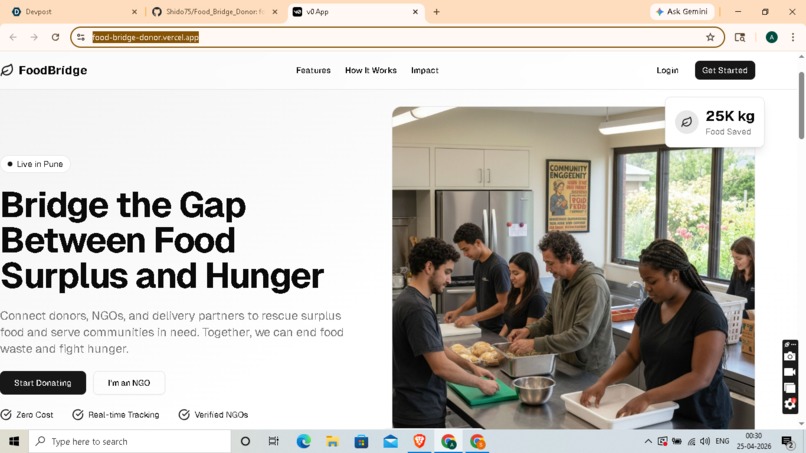
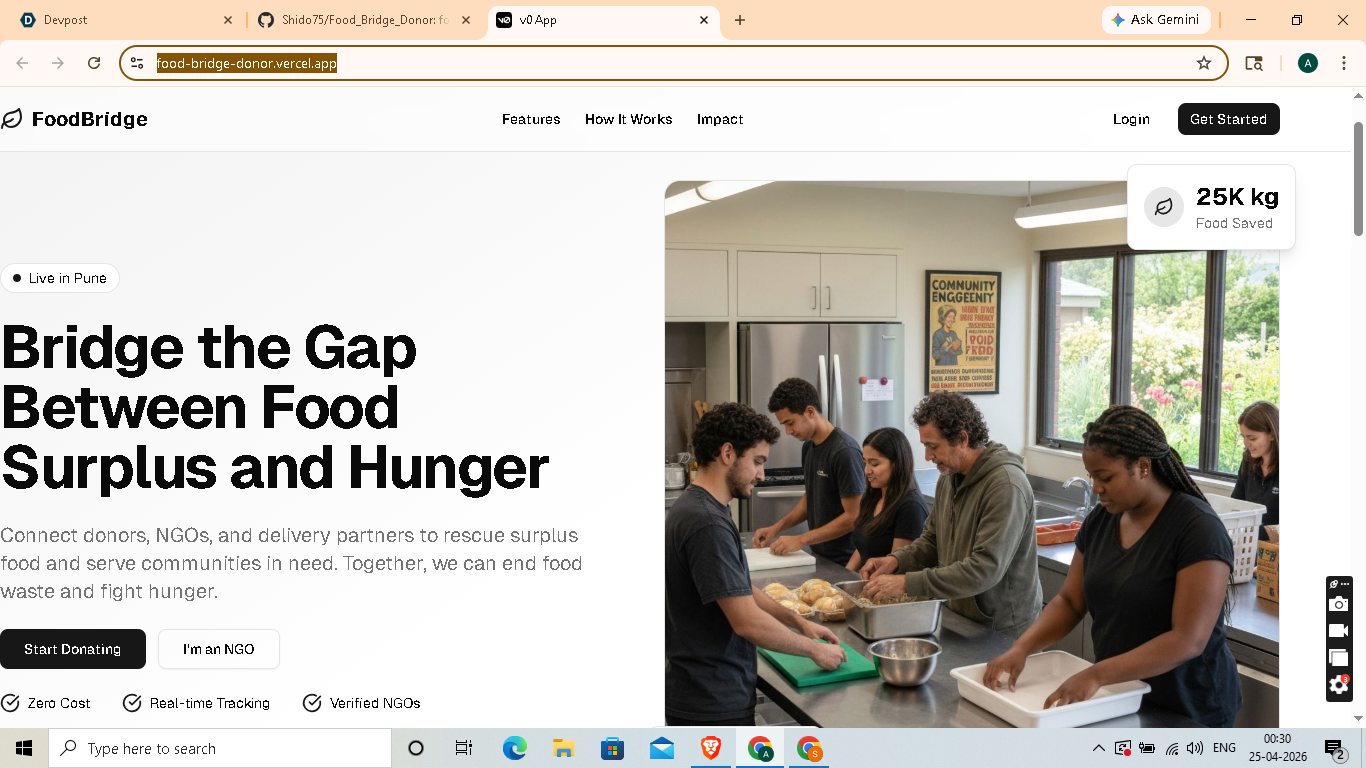
FoodBridge: A 3-sided logistics engine for Pune built to eliminate urban food waste through automated verification and live tracking.
-
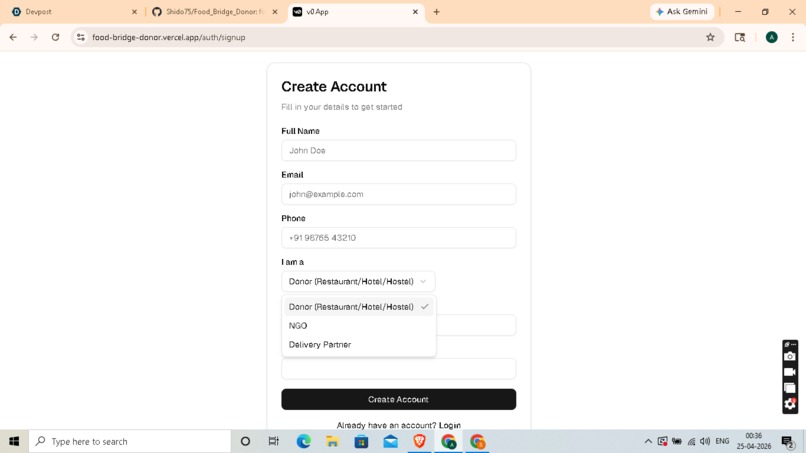
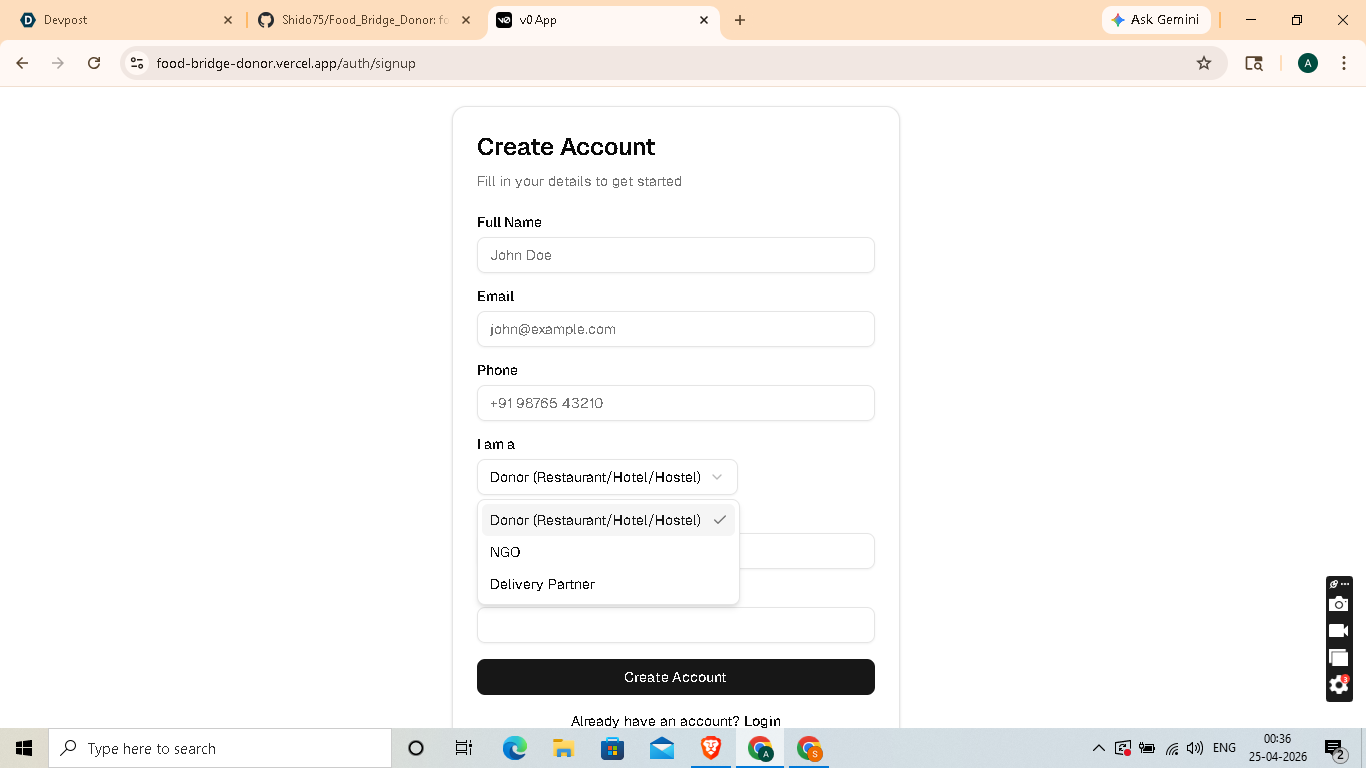
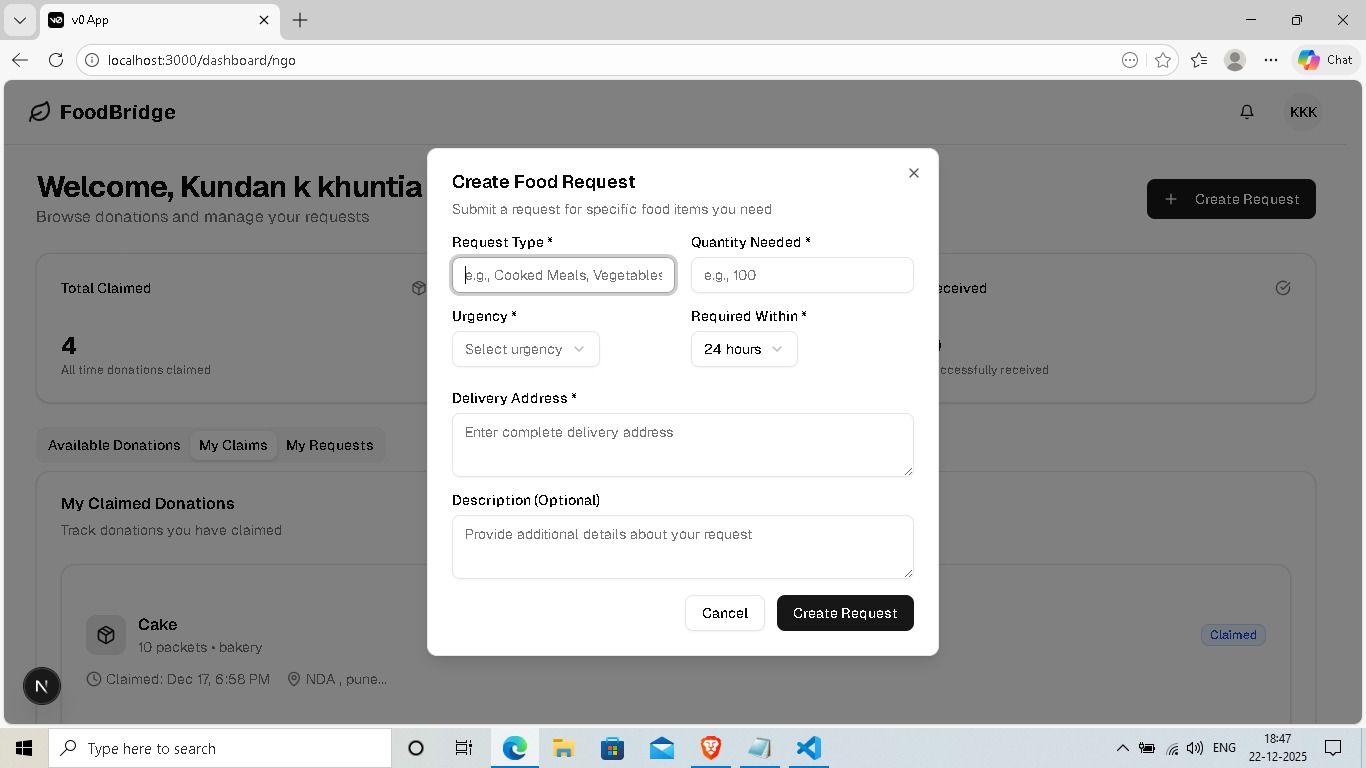
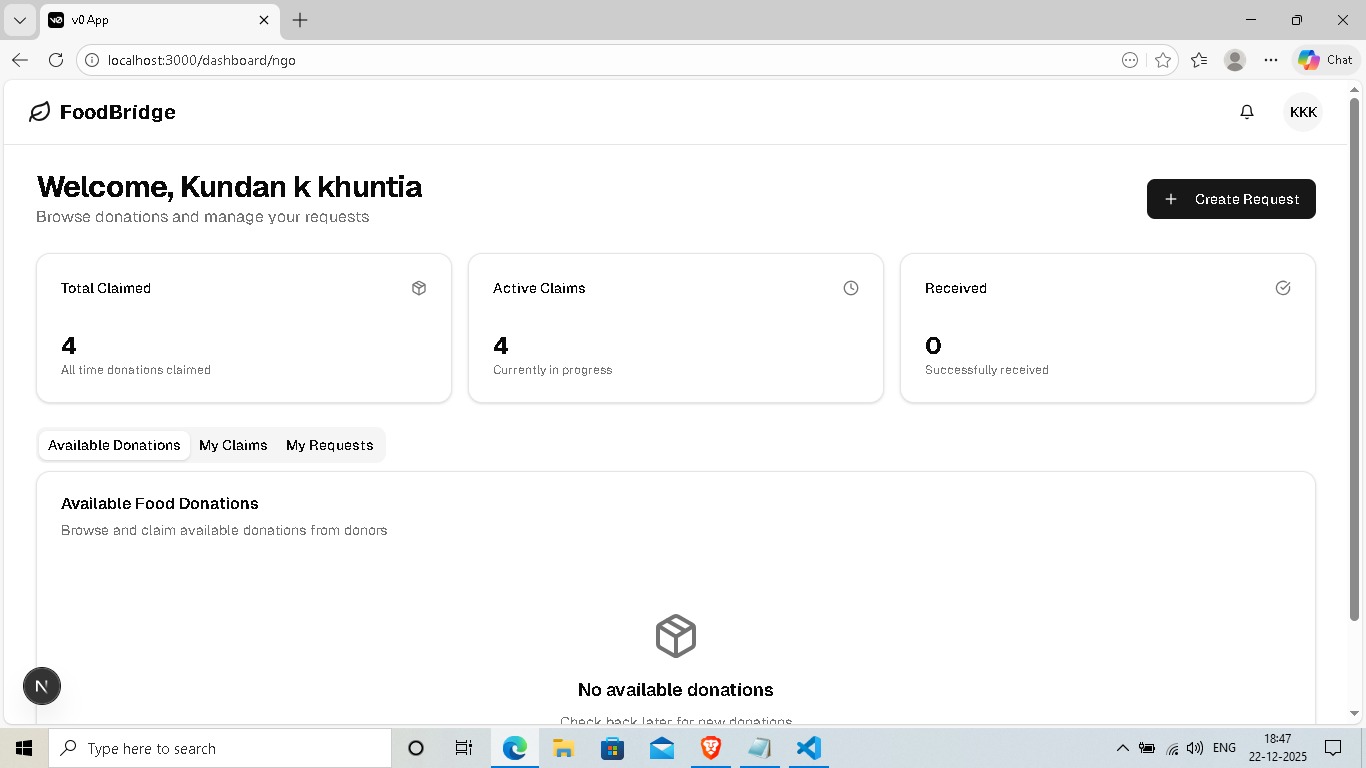
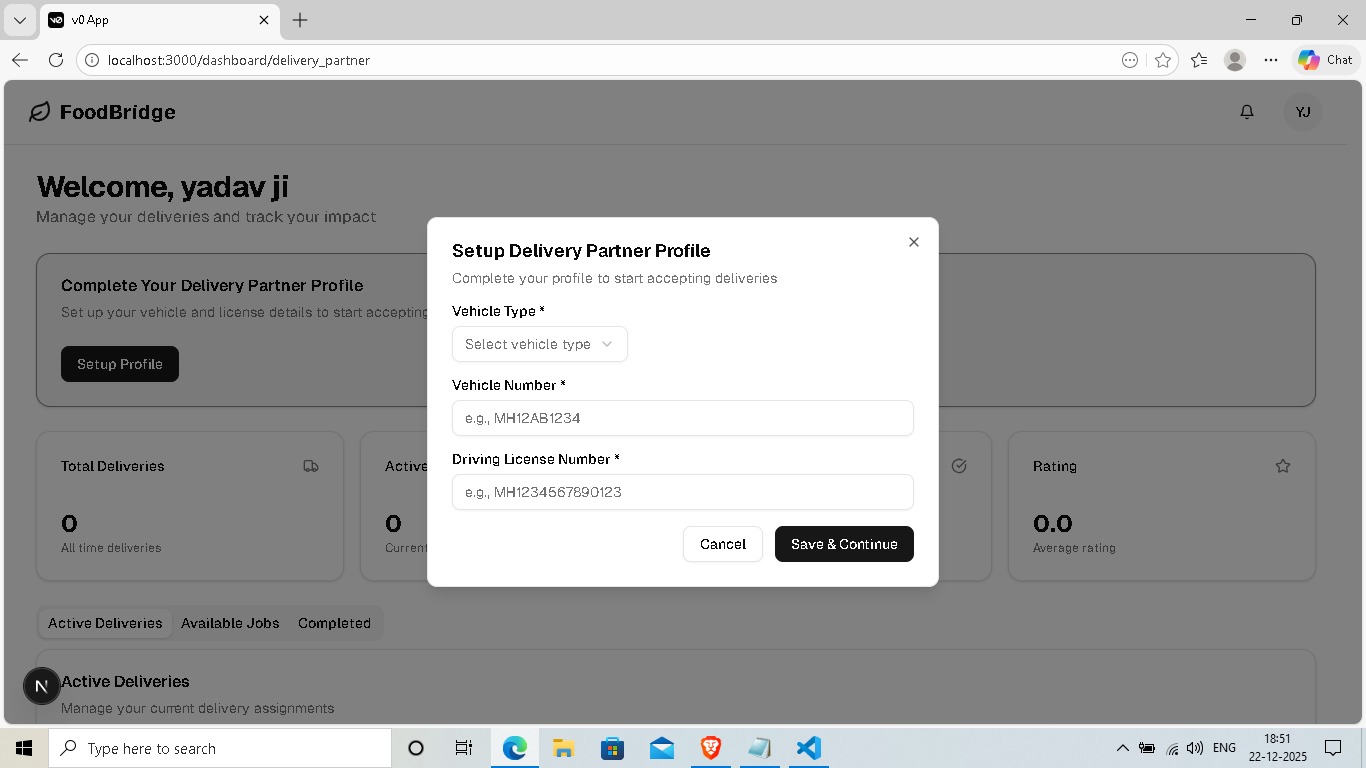
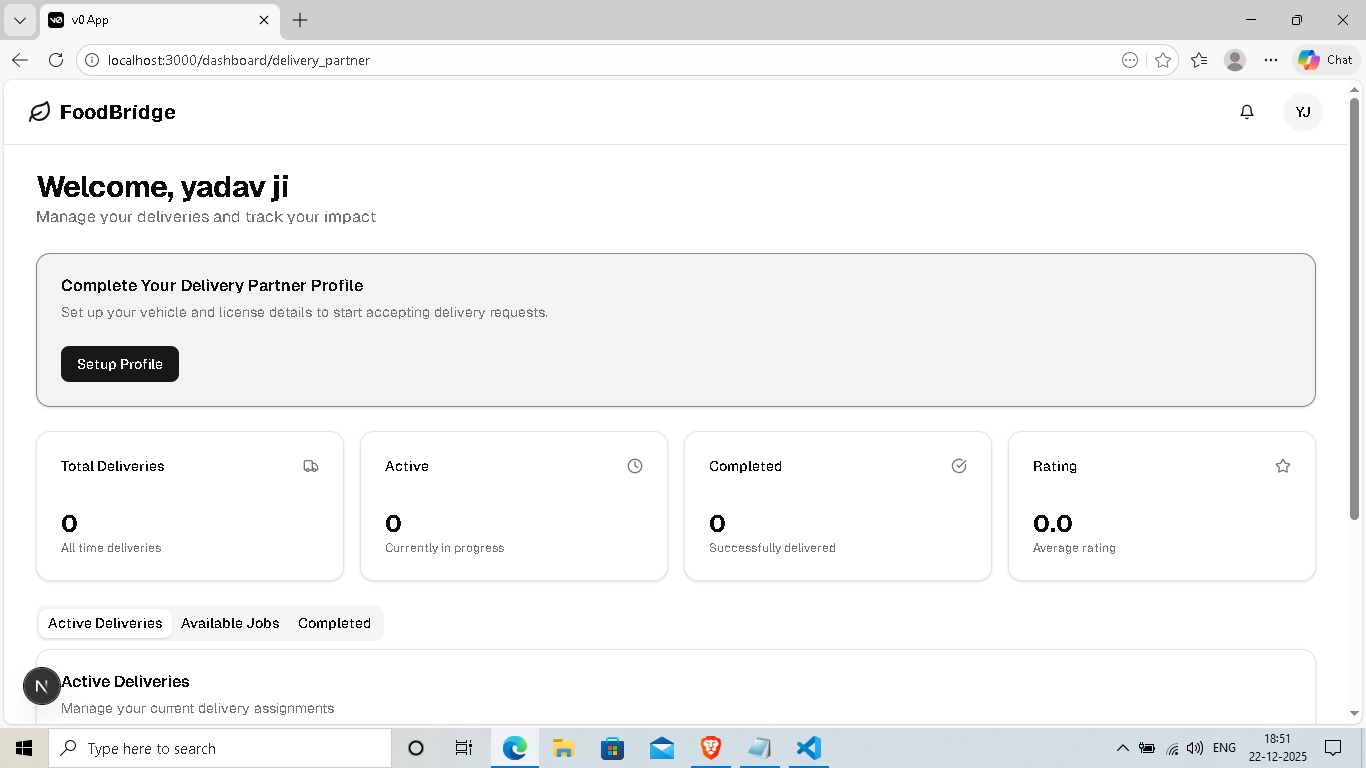
Secure RBAC onboarding for our 3-sided network, using Supabase RLS to silo data for Donors, NGOs, and Delivery Partners.
-
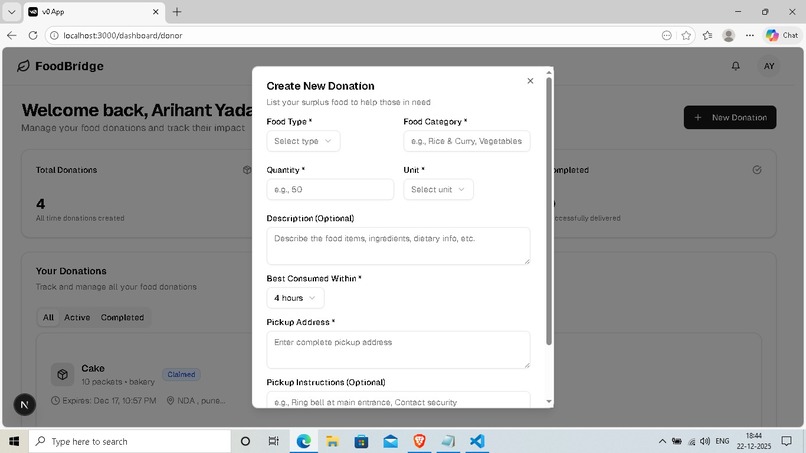
Donor
-
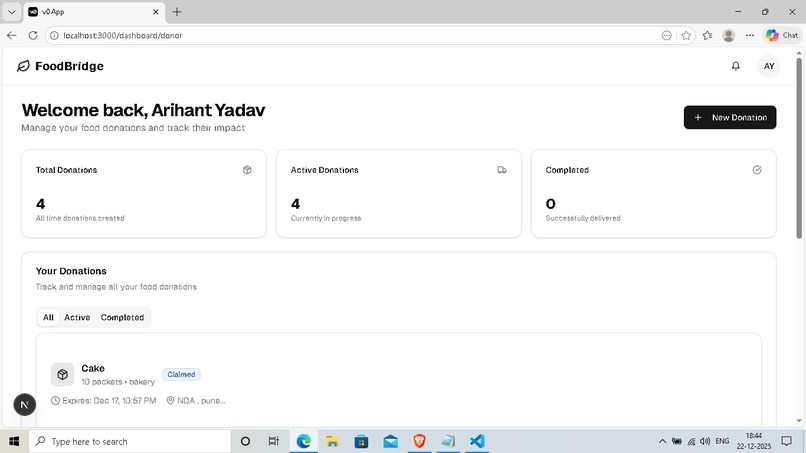
The person who is donating the food is doing it.
-
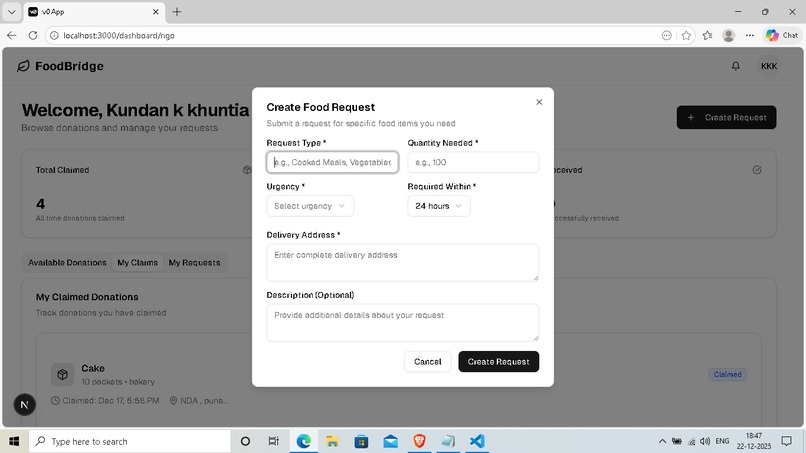
NGO
-
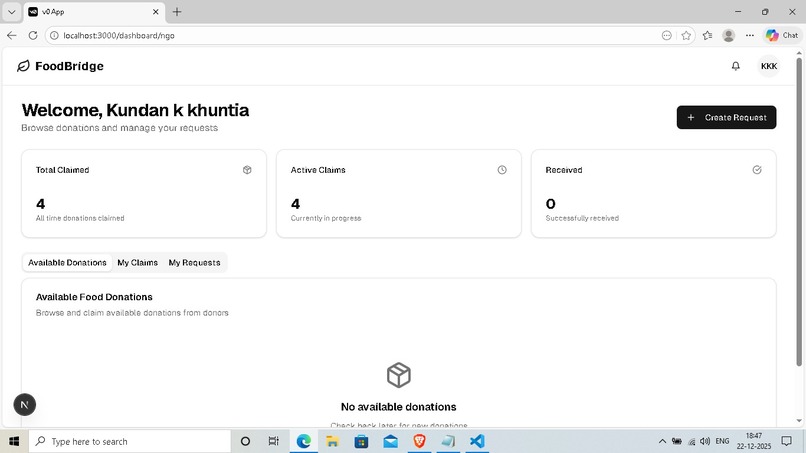
The person who is requesting the food.
-
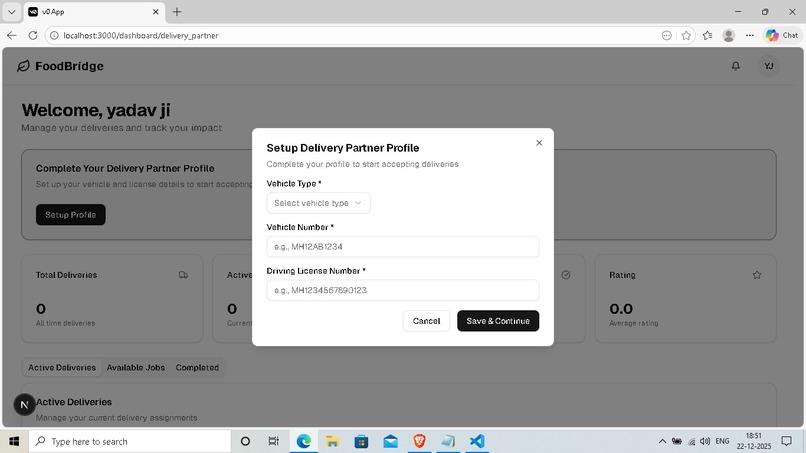
Delivery partner and Rider
-
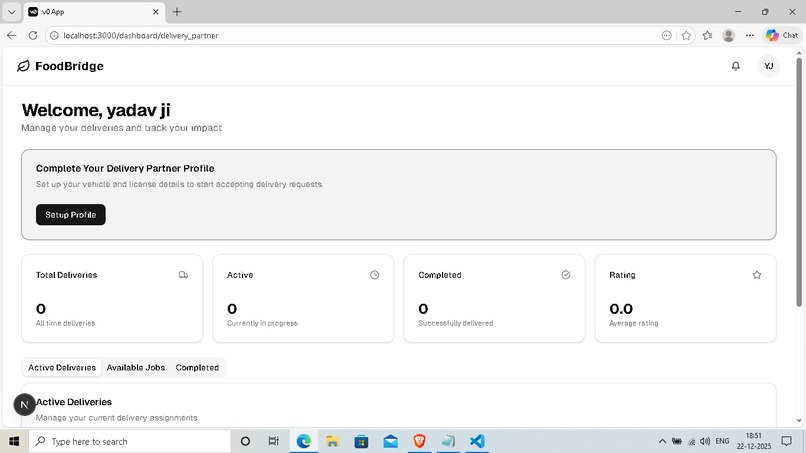
Delivery partner for both the donor and the NGO.
Inspiration
While living in Pune, I saw a big problem. Every night, fancy hotels and restaurants in areas like Baner were throwing away fresh, healthy food. At the same time, poor communities just a few streets away didn't have enough to eat.
I realized the issue isn't that we don't have enough food. The real problem is we can't move it to the right people.
So I started FoodBridge. The goal is to use technology to fix this. We can turn food waste into a solution by connecting donors and people in need in real time.
What it does
FoodBridge is a local system that connects 3 groups to stop food waste:
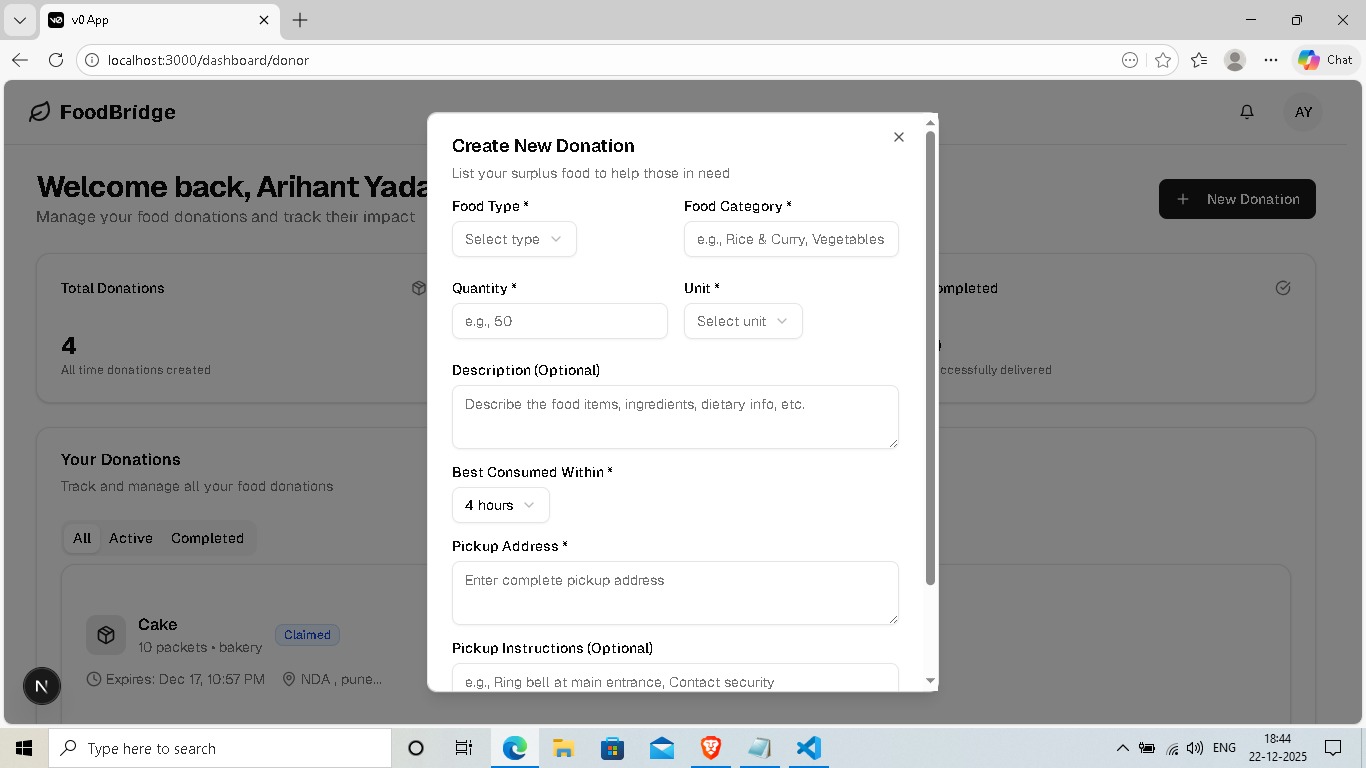
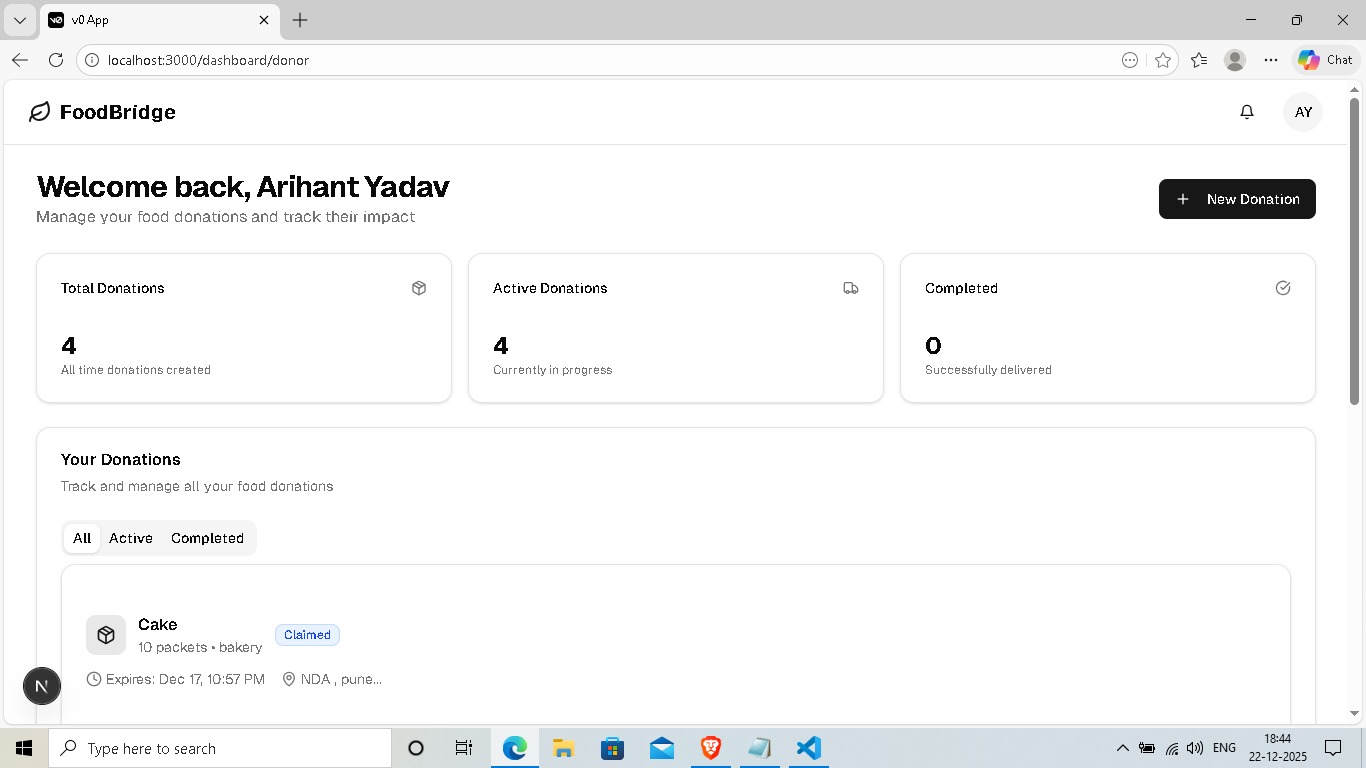
Hotels/Restaurants: They can post extra food in less than 30 seconds, while it’s still fresh.
NGOs: They can claim food based on what their community needs right now and where they are.
Delivery riders: Independent riders pick up delivery jobs on a live map. This makes sure food gets delivered fast and tracked.
Admin Dashboard: Shows live data on how much food waste we’ve saved and keeps the system running safely.
How we built it
To make sure our system runs fast and safely, we used modern, reliable tech:
App: We built it with Next.js 16 and TypeScript. This keeps it quick and stable.
Data & Updates: We use Supabase with PostgreSQL. It sends instant alerts using Supabase Realtime.
Smart Routes: We added PostGIS to our database. It finds the shortest, fastest delivery routes.
Maps: We use OpenStreetMap and Leaflet. They give us "Uber-like" live tracking without expensive fees. This keeps costs low so we can keep helping.
Challenges we ran into
The hardest tech problem was setting up user permissions. Donors, NGOs, and riders all use the same database, but they need to see different live data. We had to write advanced security rules in Supabase to make this work.
Another challenge was the live map for riders. Internet speeds in Pune change a lot. We had to optimize the app carefully so it stays light and works well even on slow networks
Accomplishments that we're proud of
We built a complete system, not just a basic app. Most projects only let you "list" food. We went further — we handle everything from the hotel posting the food, to the NGO claiming it, to the rider delivering and confirming it.
In our demo, we watched a marker move across the map in real time. That marker was a meal that would have been thrown away. Seeing that happen was our biggest win, both in tech and in impact.
What we learned
We learned that moving real food is much harder than just saving data. Delivering time-sensitive items needs more than a database. You have to really understand how users work and keep everything updated live.
We also learned how to use free tools like Leaflet to build powerful features without spending money.
What's next for FoodBridge: Hyper-Local Logistics for Food Security
Our plan to grow:
AI Forecasting: We’ll add an AI tool that helps restaurants predict when they’ll have extra food, using past data.
Expansion: We want to grow beyond Pune to other areas like Pimpri-Chinchwad.
Monetization: We’re looking at a "Sustainability-as-a-Service" model. Businesses would get reports for tax benefits based on how much food waste they reduce.
Built With
- auth
- leaflet.js
- next.js
- osm
- postgis
- postgresql
- rls
- supabase
- tailwind
- typescript
- v4
- vercel

Log in or sign up for Devpost to join the conversation.