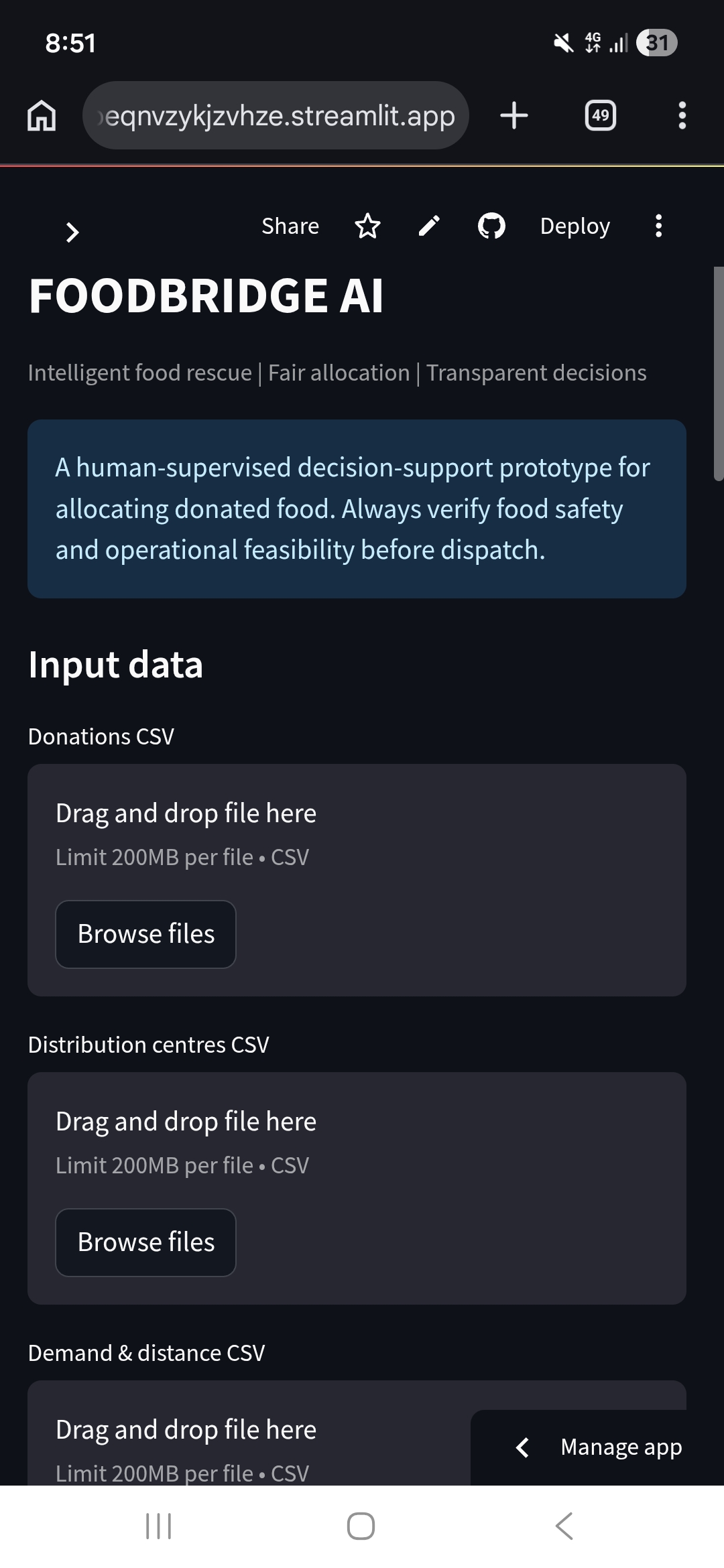
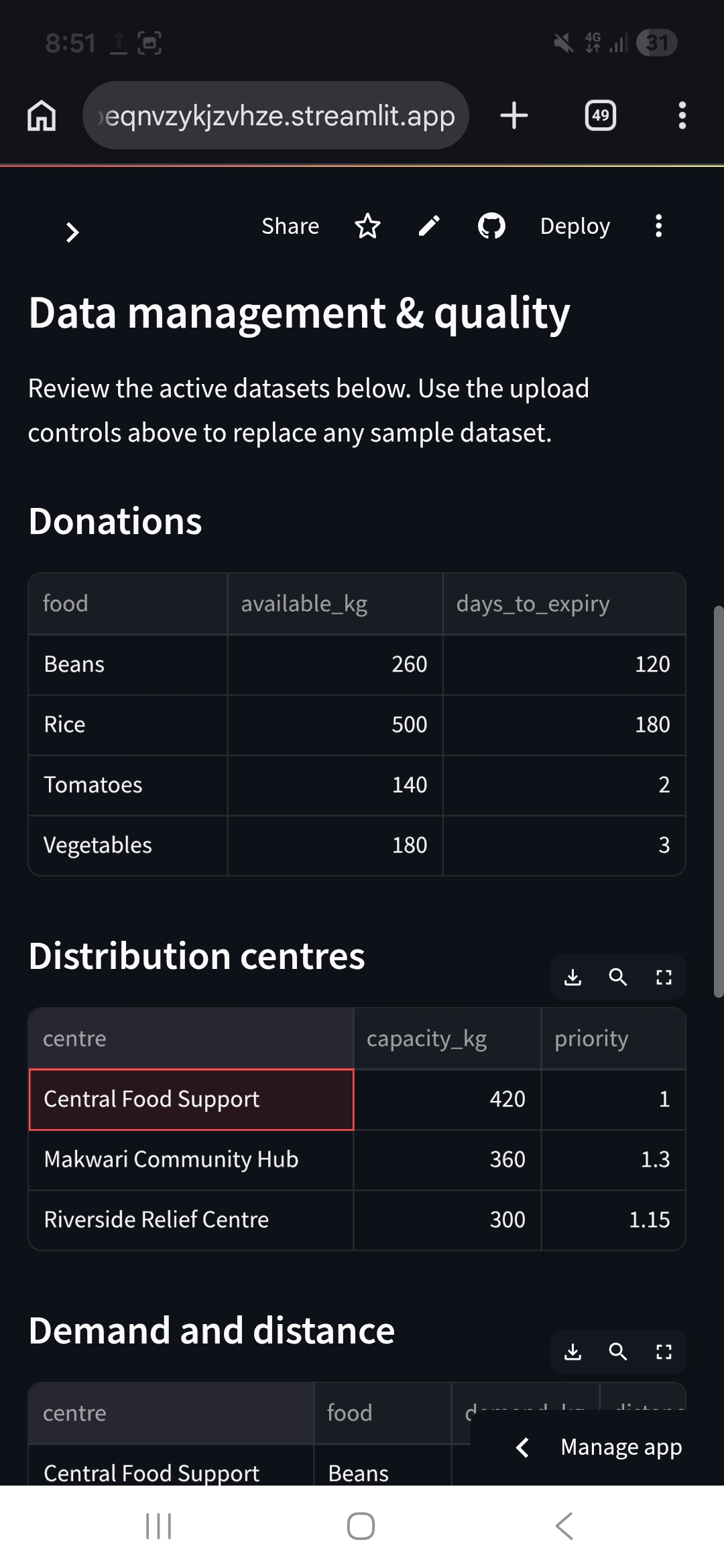
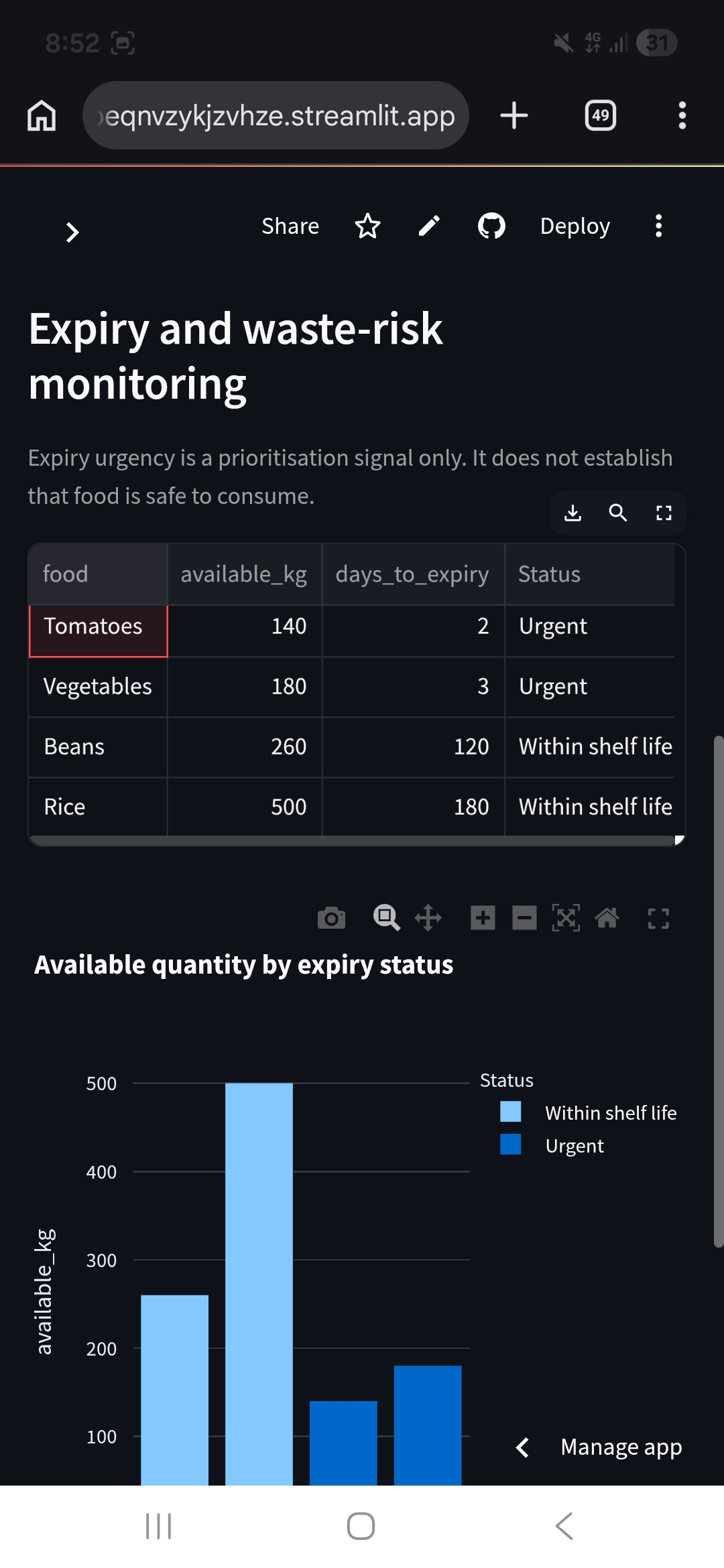
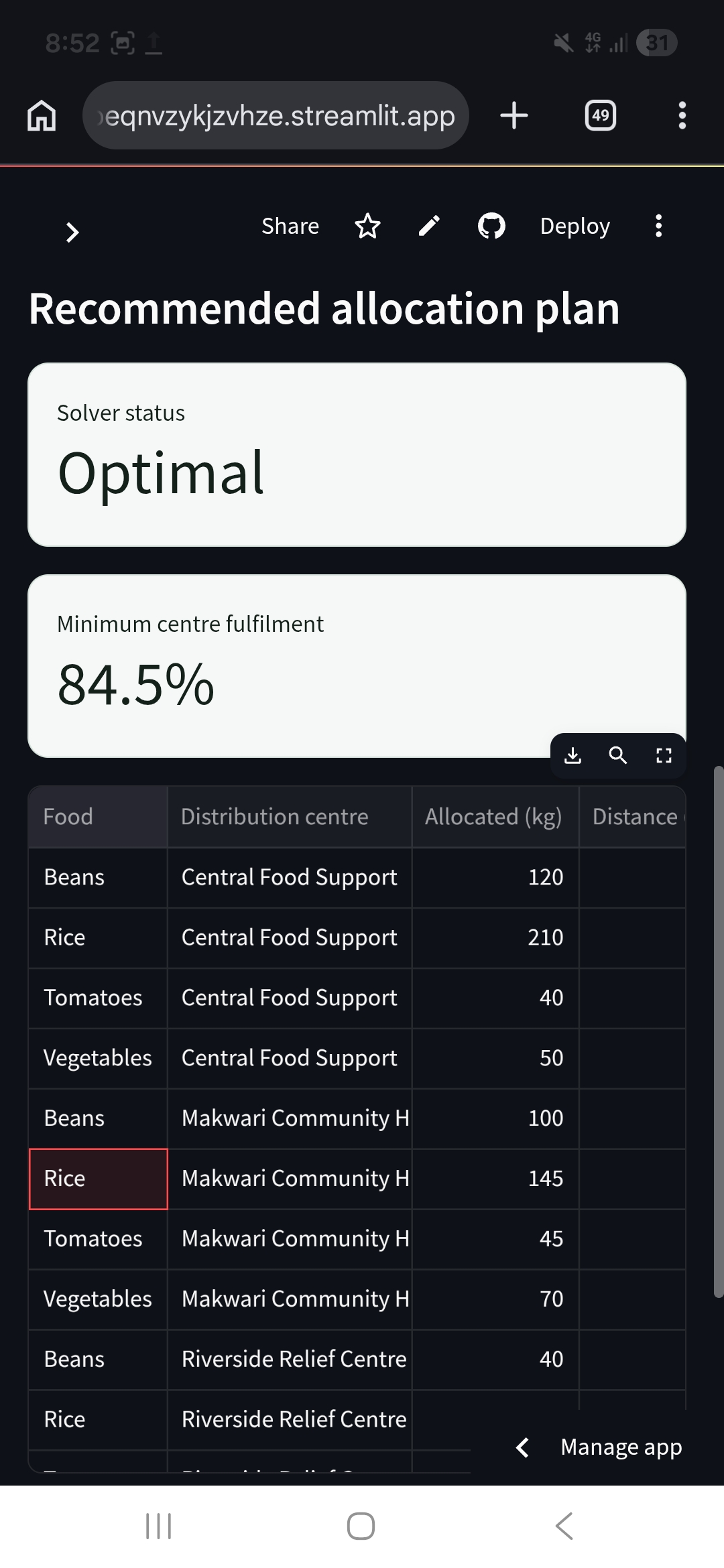
FOODBRIDGE AI was inspired by a problem that deserves more attention: while some communities struggle to access food, donated supplies can still go to waste because of poor distribution and planning. I wanted to explore how technology could help make food distribution smarter, fairer and more efficient.
Building this project was one of my biggest challenges. I didn't have a development team, expensive equipment or even a laptop. I worked mainly with my mobile phone, learning, coding, testing and fixing problems along the way. There were moments when the application refused to work, deployment failed and features disappeared. I had to troubleshoot repeatedly, sometimes starting over, but I refused to give up.
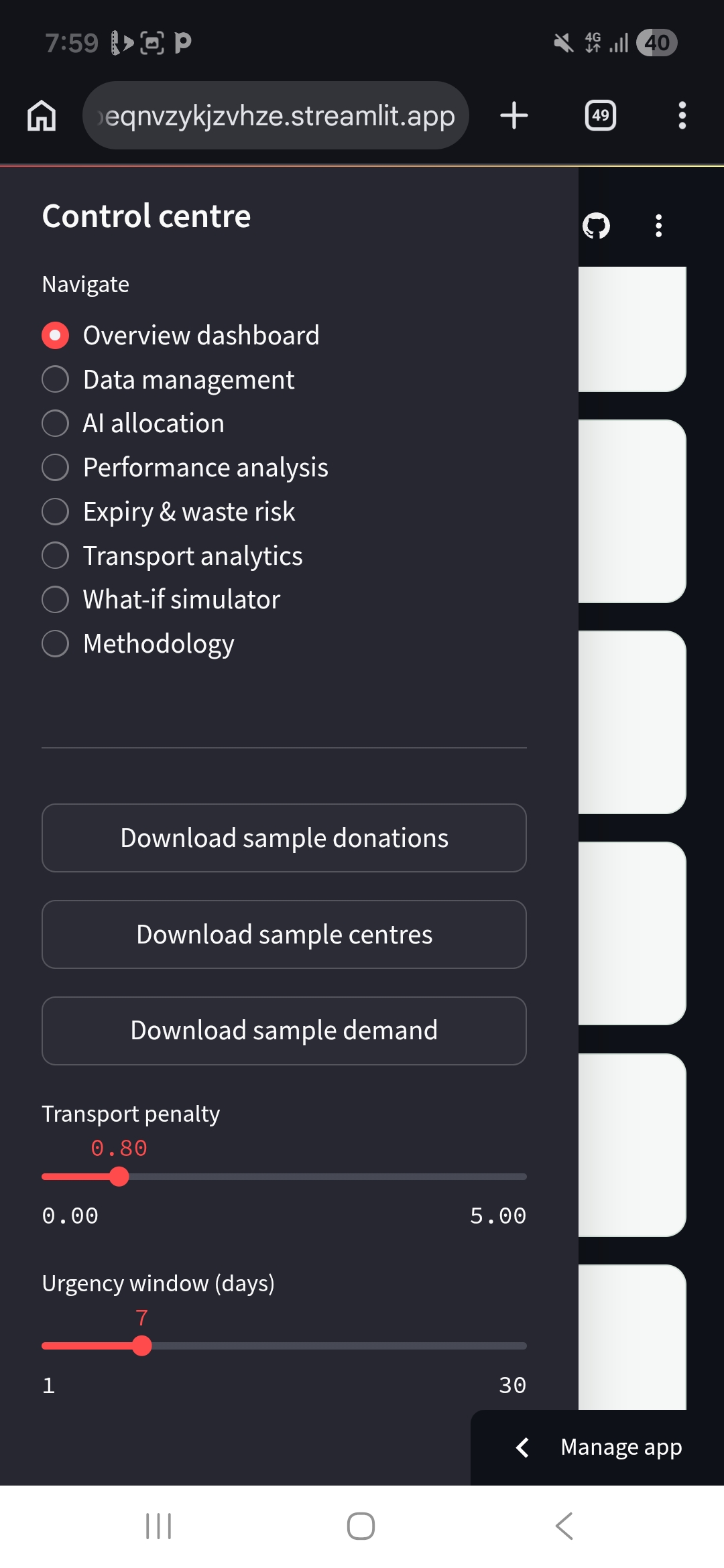
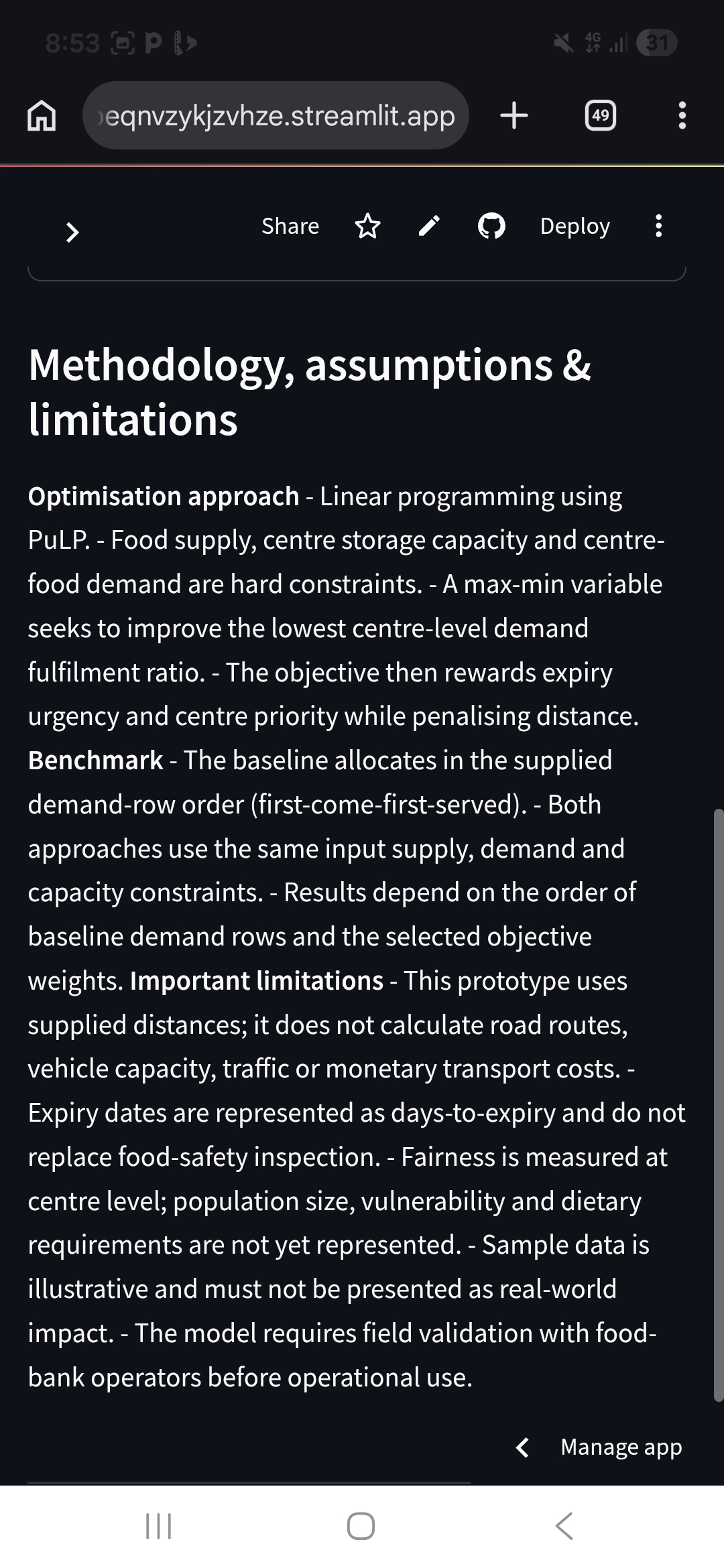
I built FOODBRIDGE AI using Python, Streamlit, Pandas, Plotly and PuLP. It uses mathematical optimisation to recommend food distribution based on demand, available supply, storage capacity, expiry urgency, distance and centre priorities.
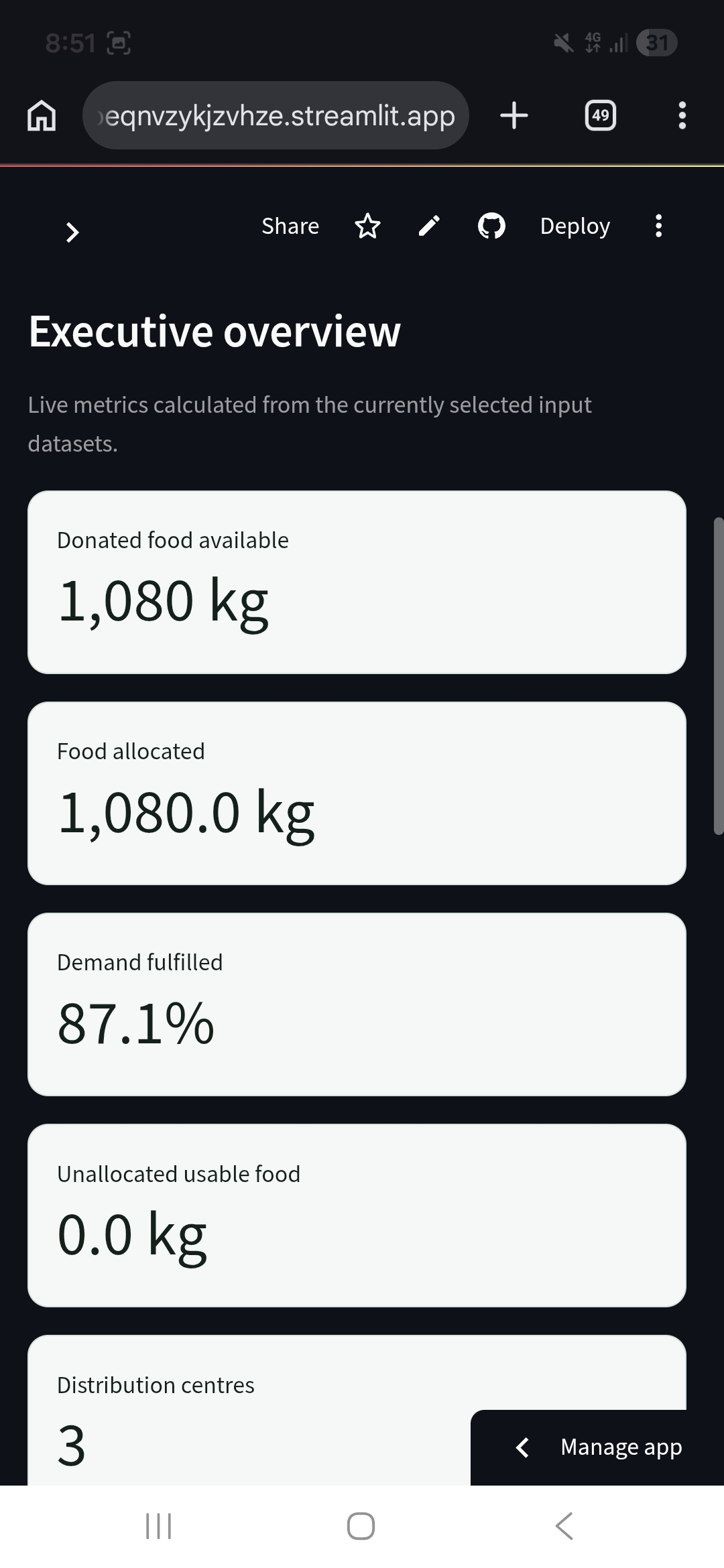
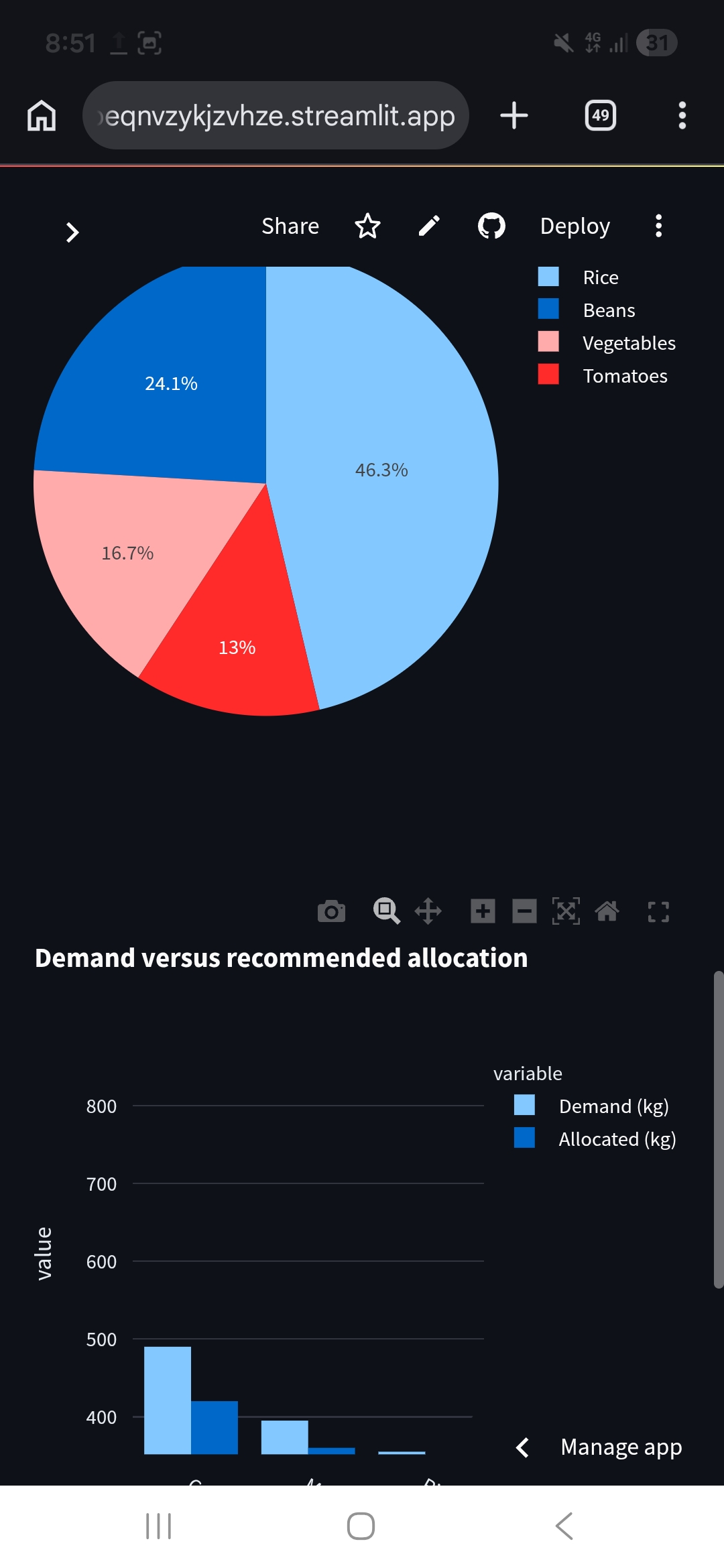
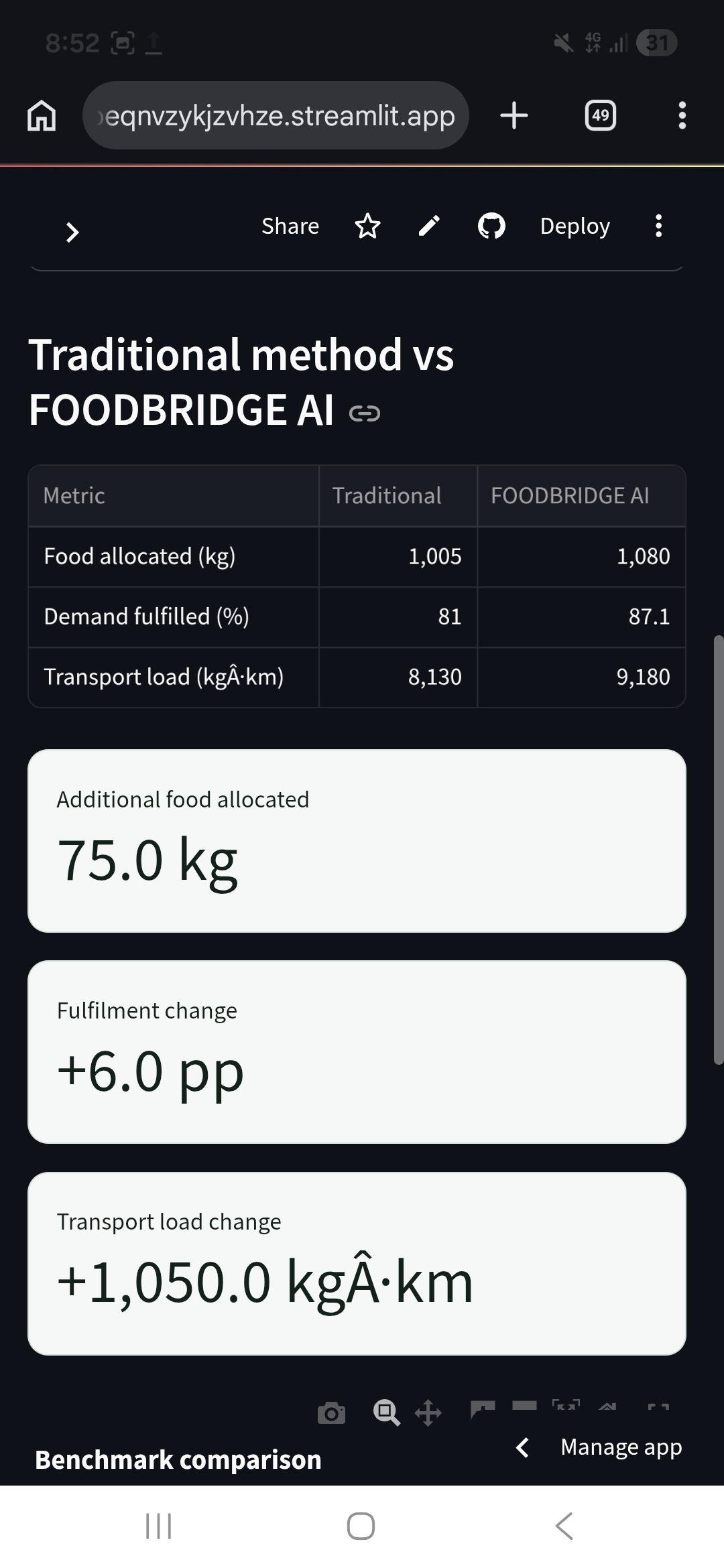
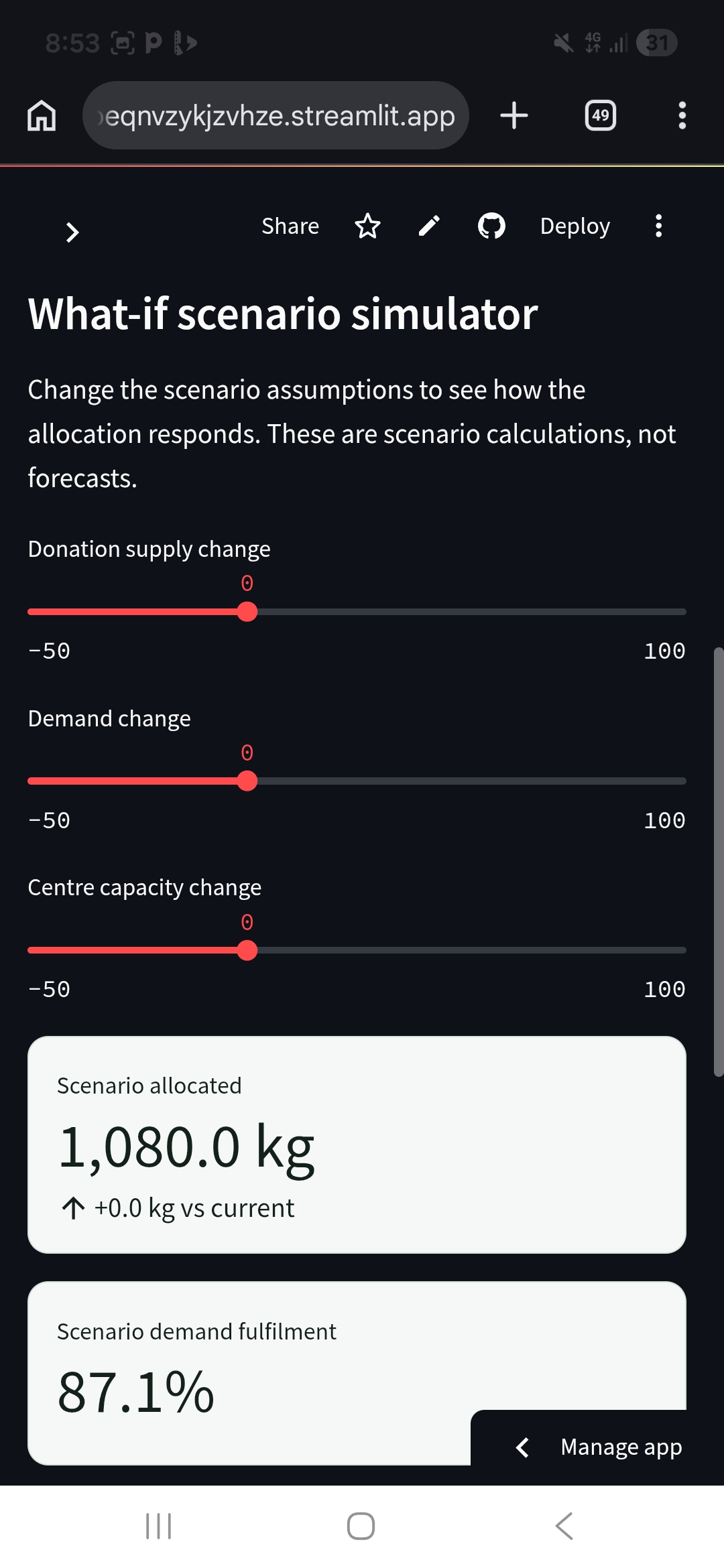
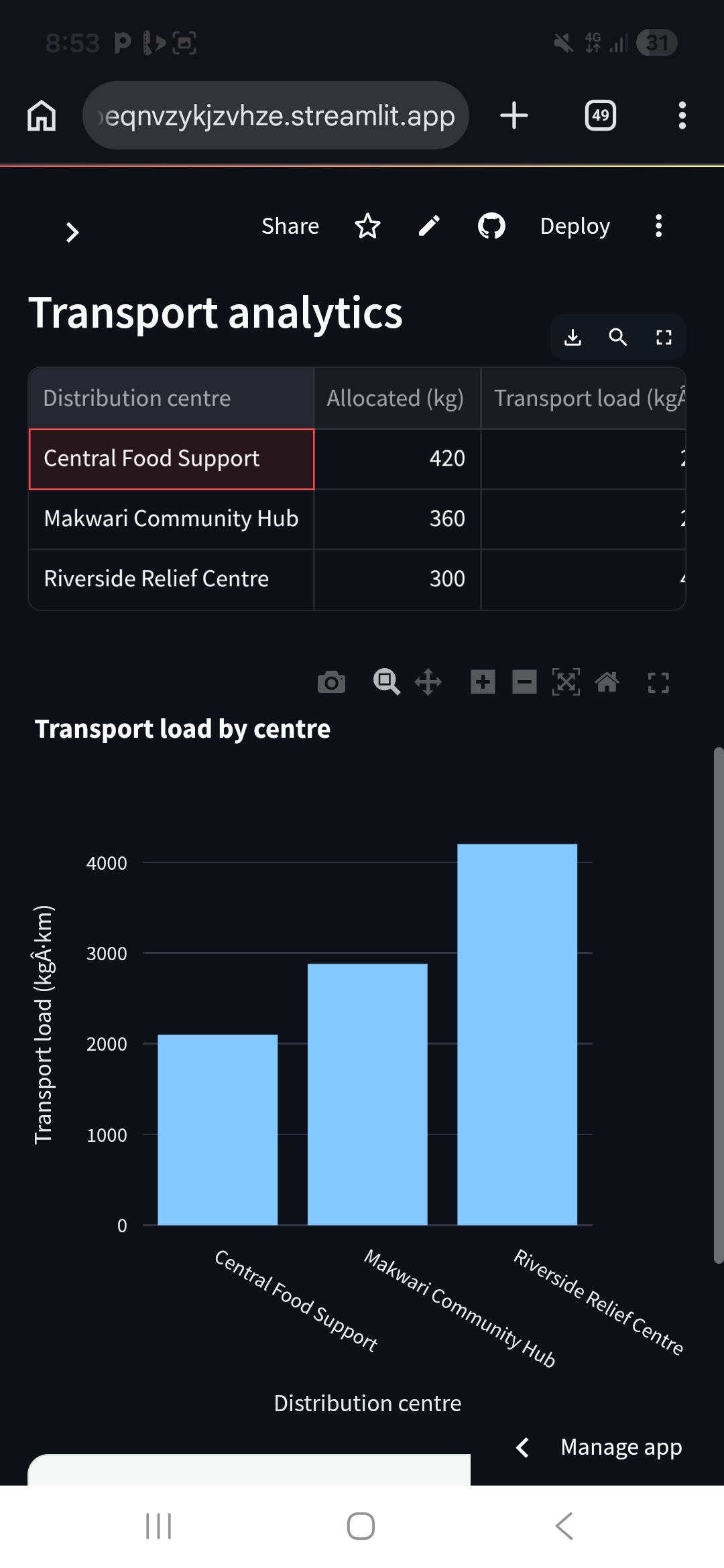
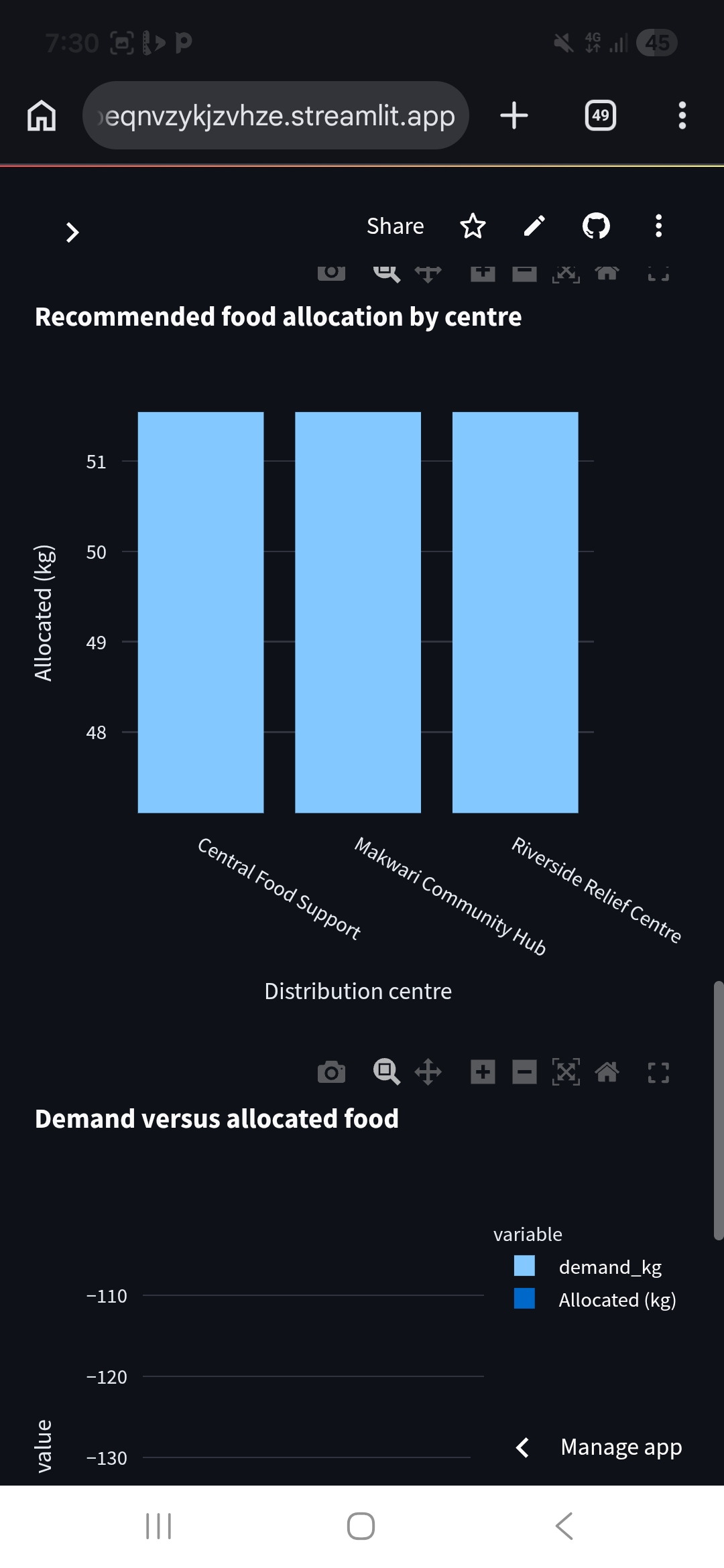
During development, I learned that building technology is not just about making something work; it is also about understanding its limitations. Our sample-data testing showed improved food allocation and centre fulfilment, but also revealed increased transport load.
This journey taught me practical programming, data analysis, optimisation and persistence. FOODBRIDGE AI is still a prototype that needs real-world testing, but I am proud that an idea I started with limited resources has become a working solution.