-
-
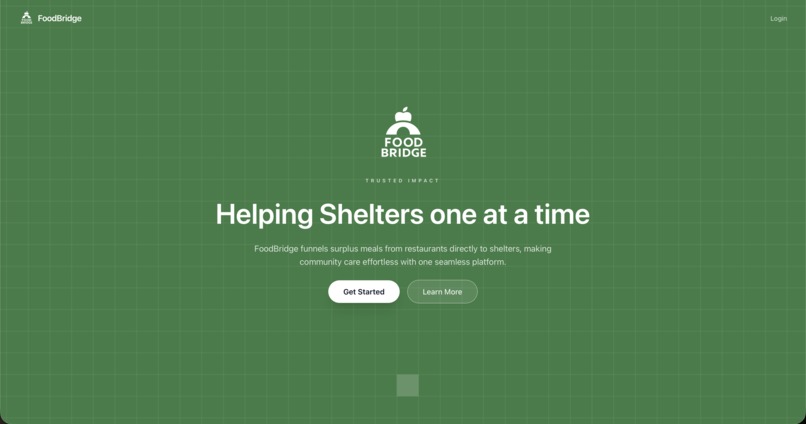
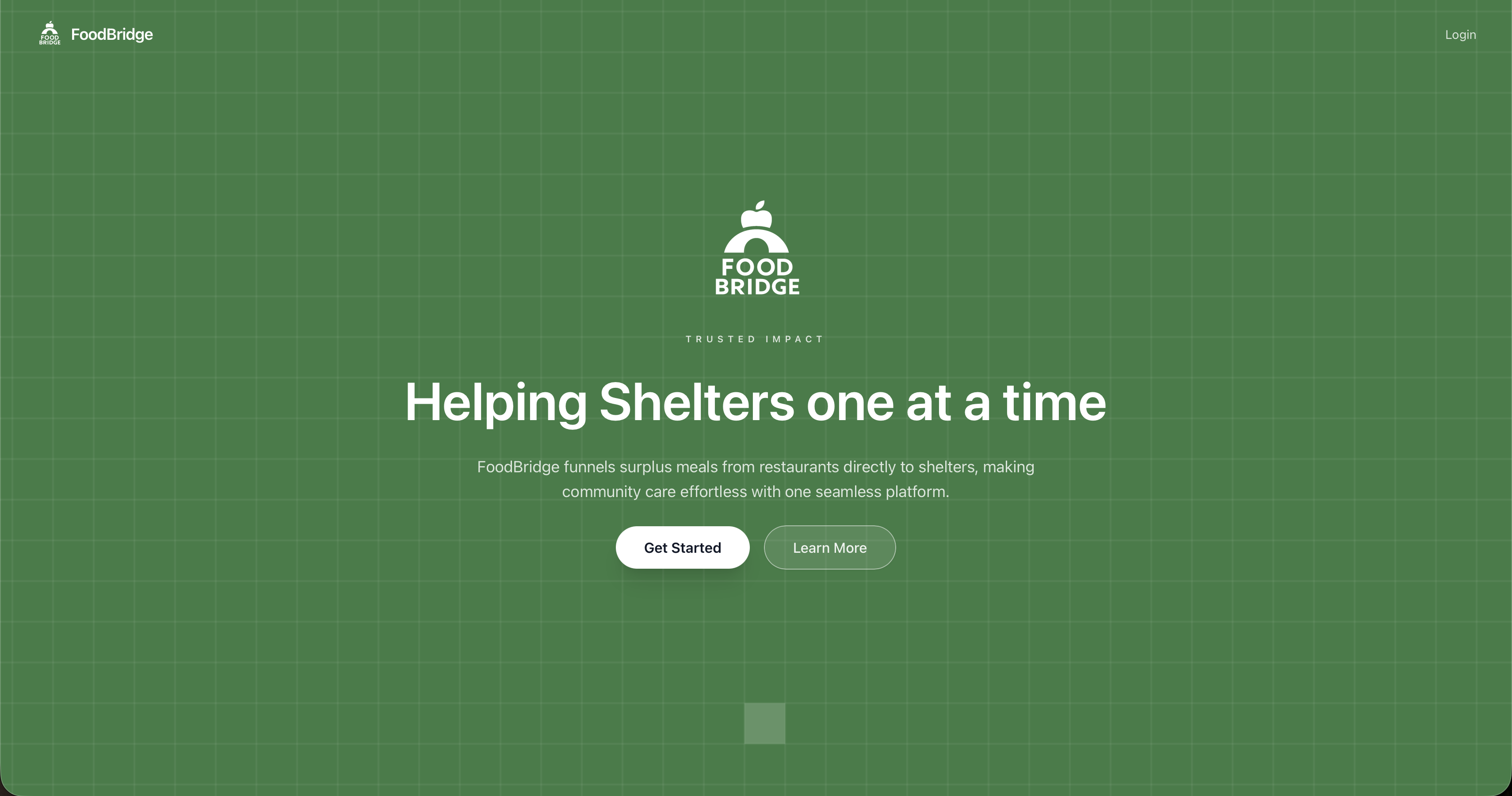
Foodbridge
-
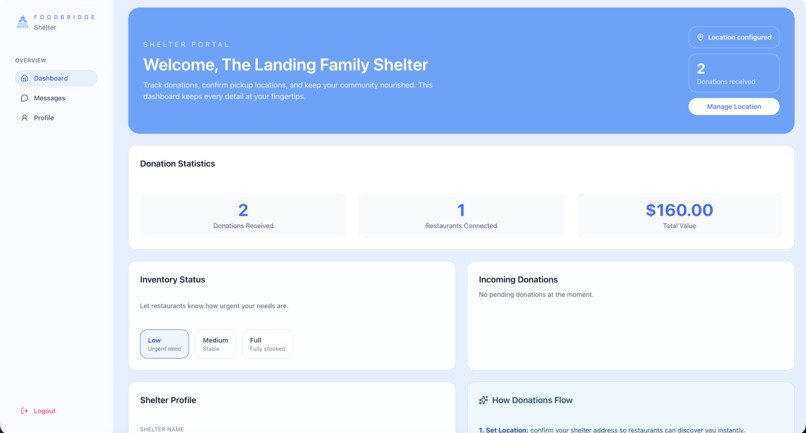
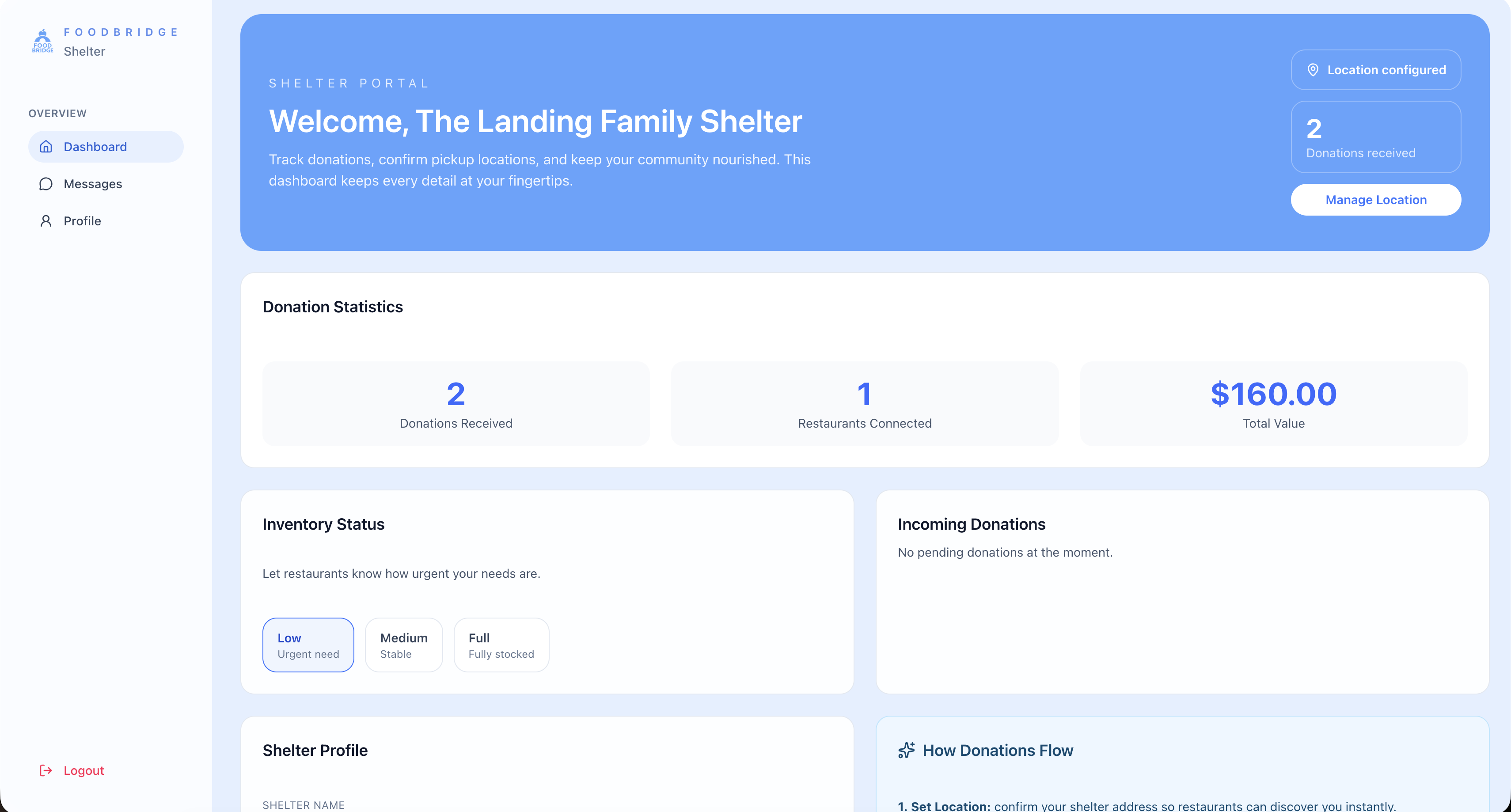
Shelter's Login Portal
-
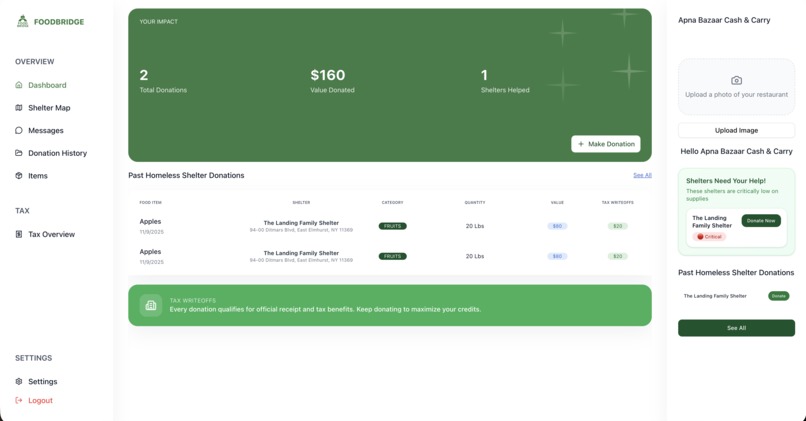
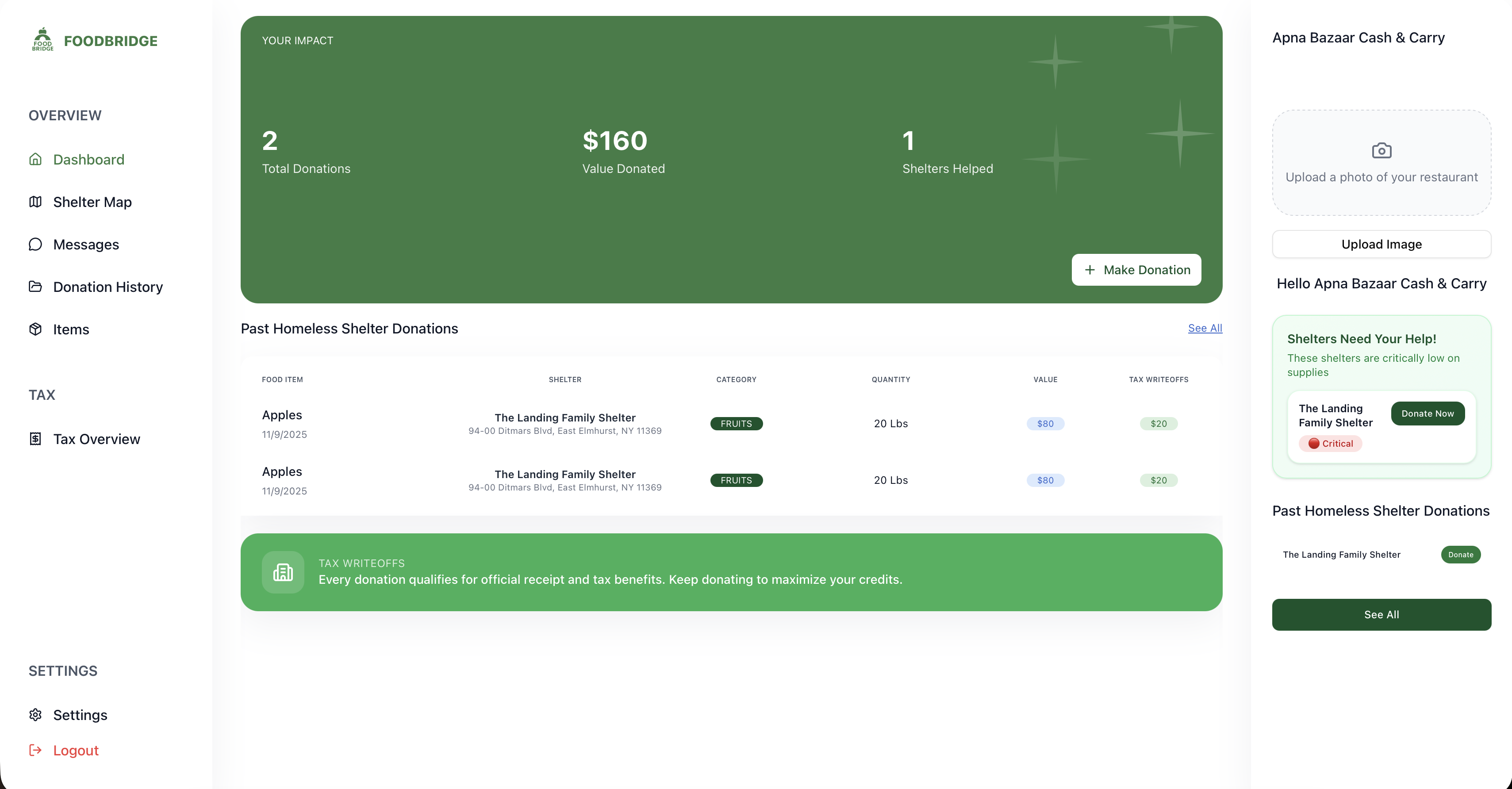
Restaurant Login Portal
-
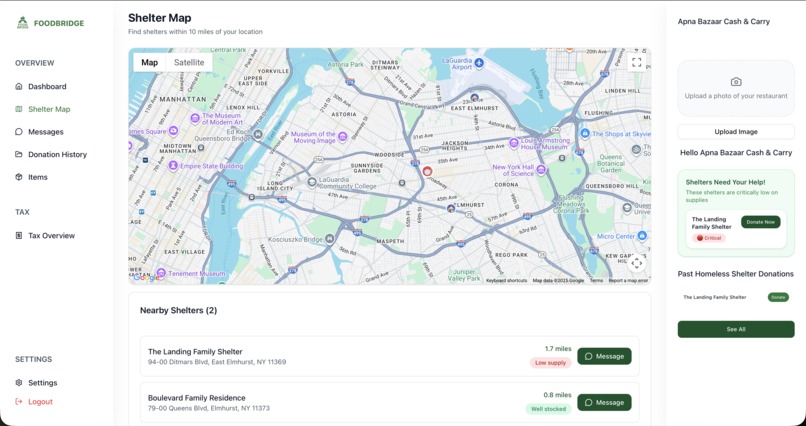
Restaurant Map View of Shelters
-
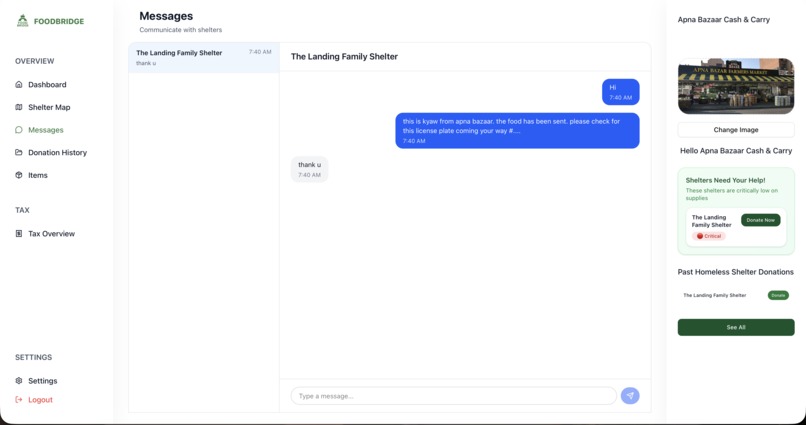
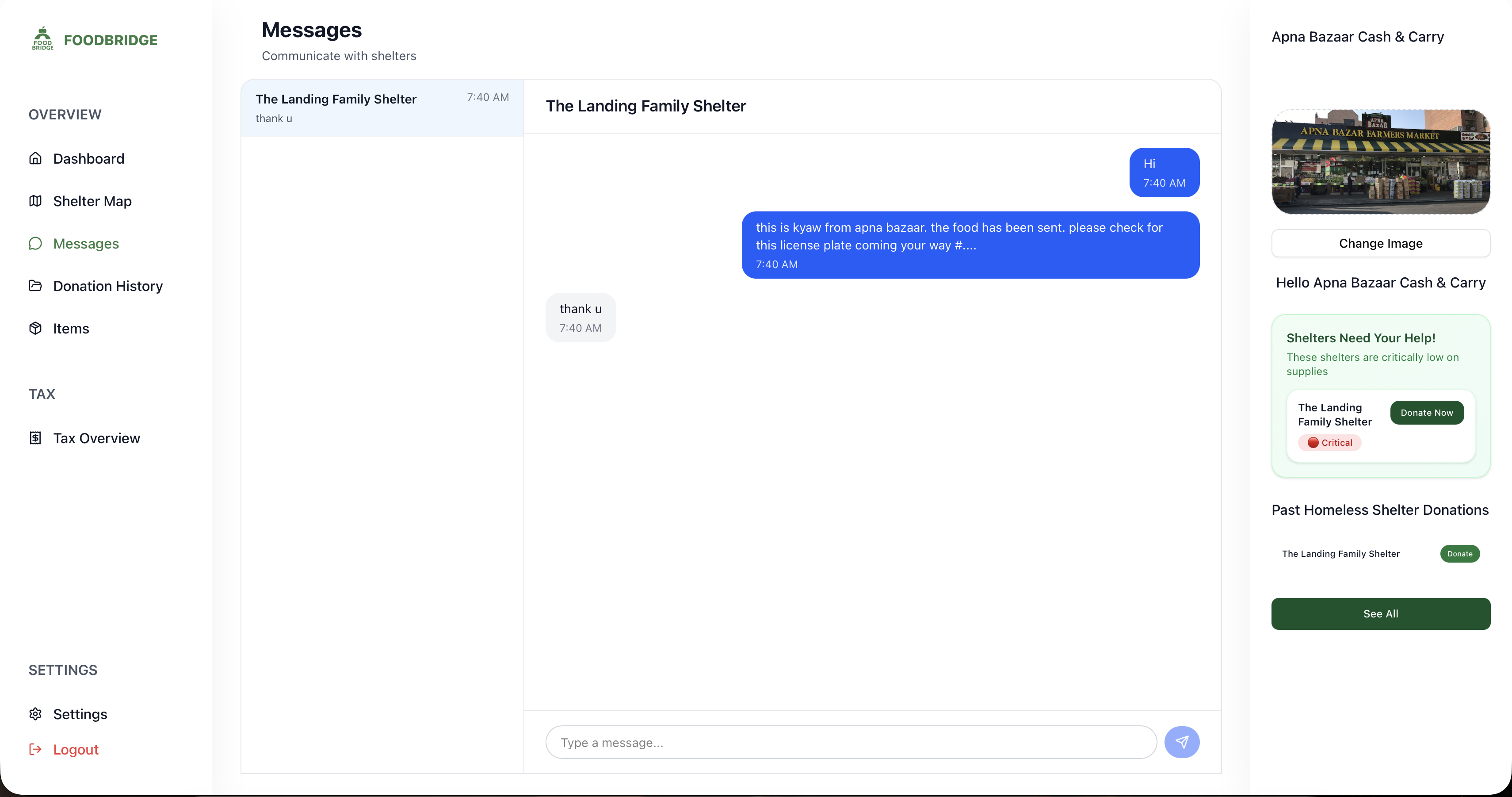
Restaurant's messaging system
-
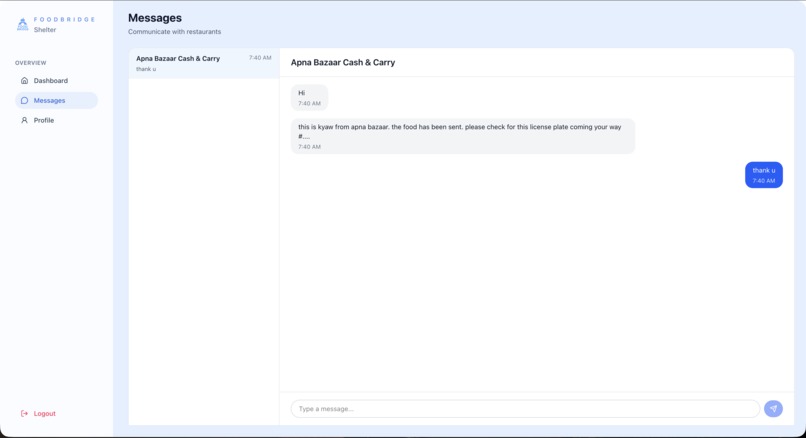
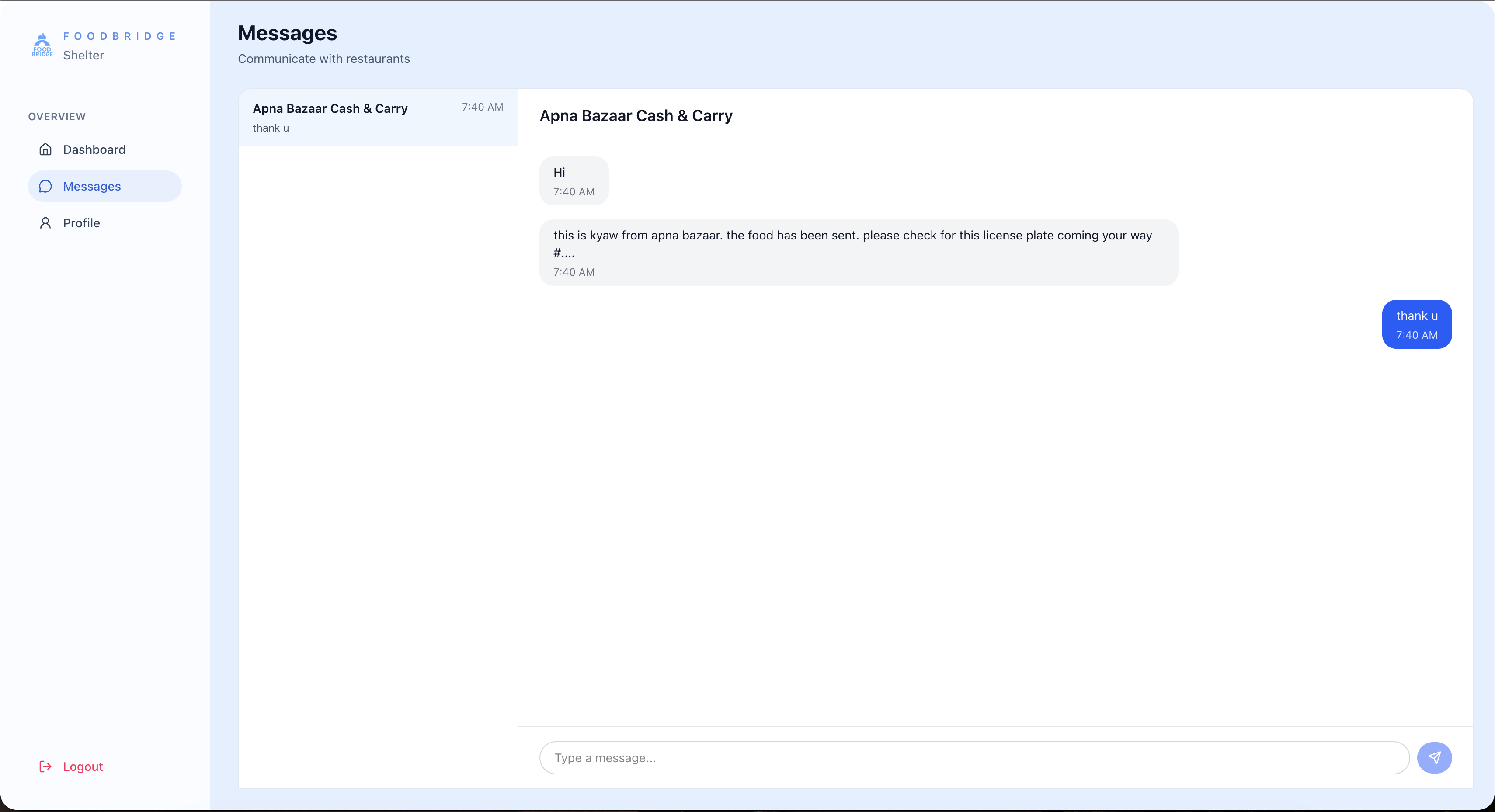
Shelter's messaging system
-
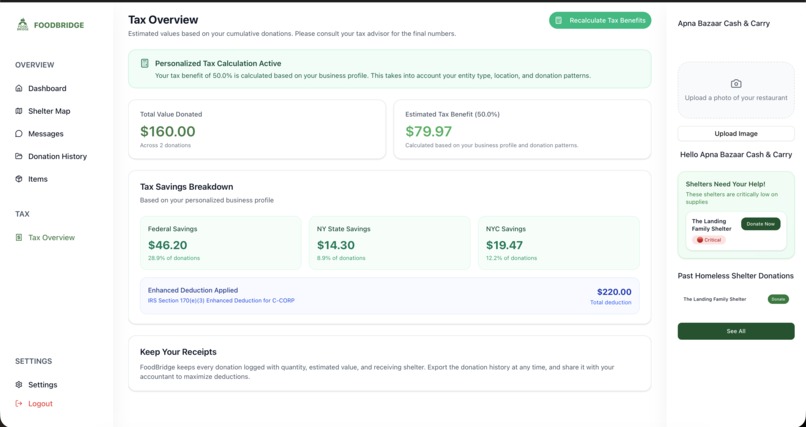
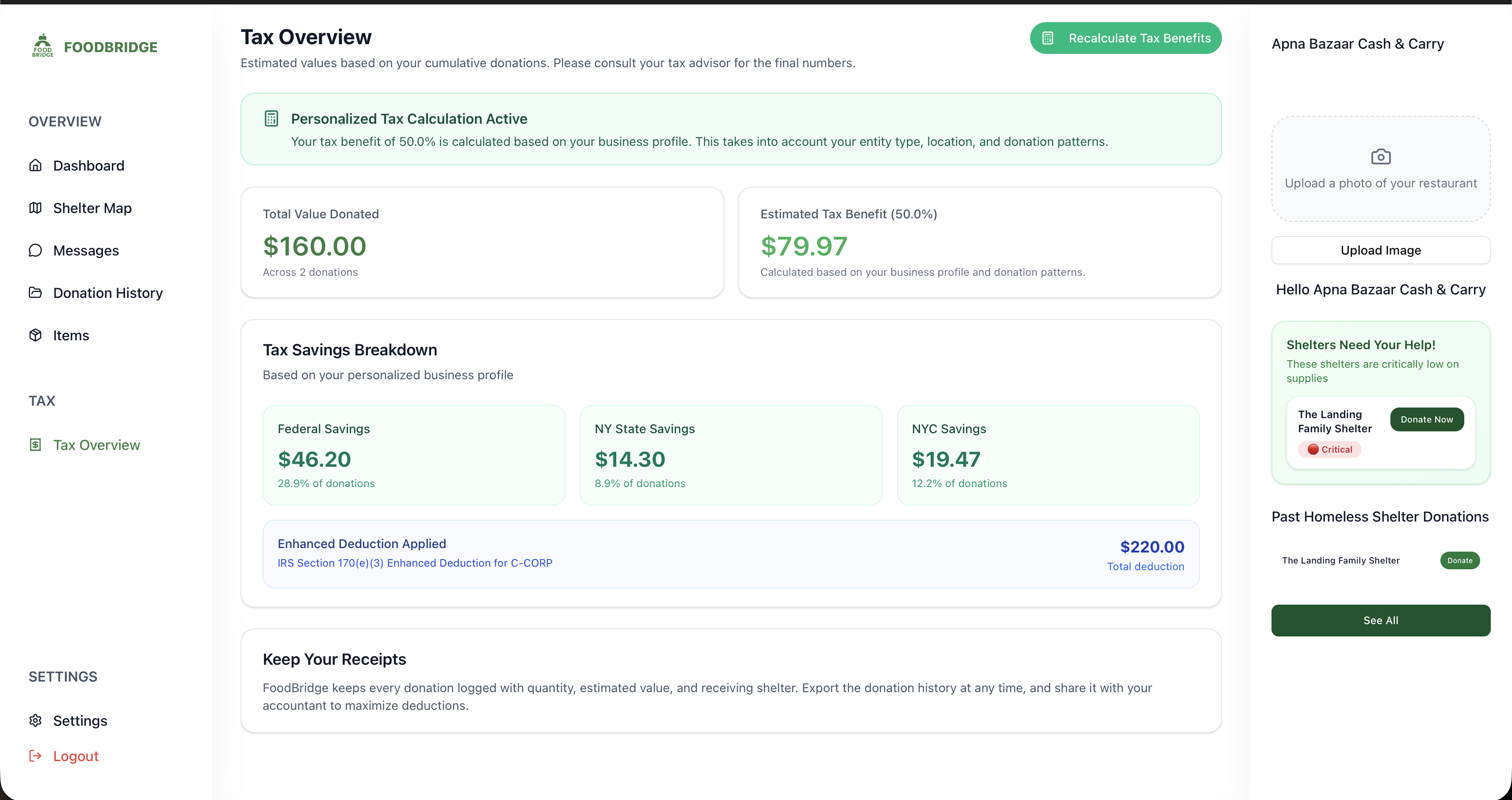
Restaurant's Tax benefits
-
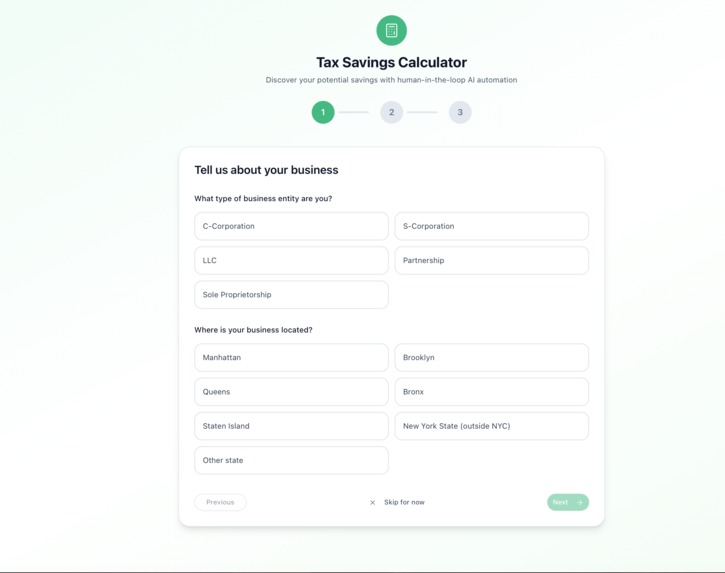
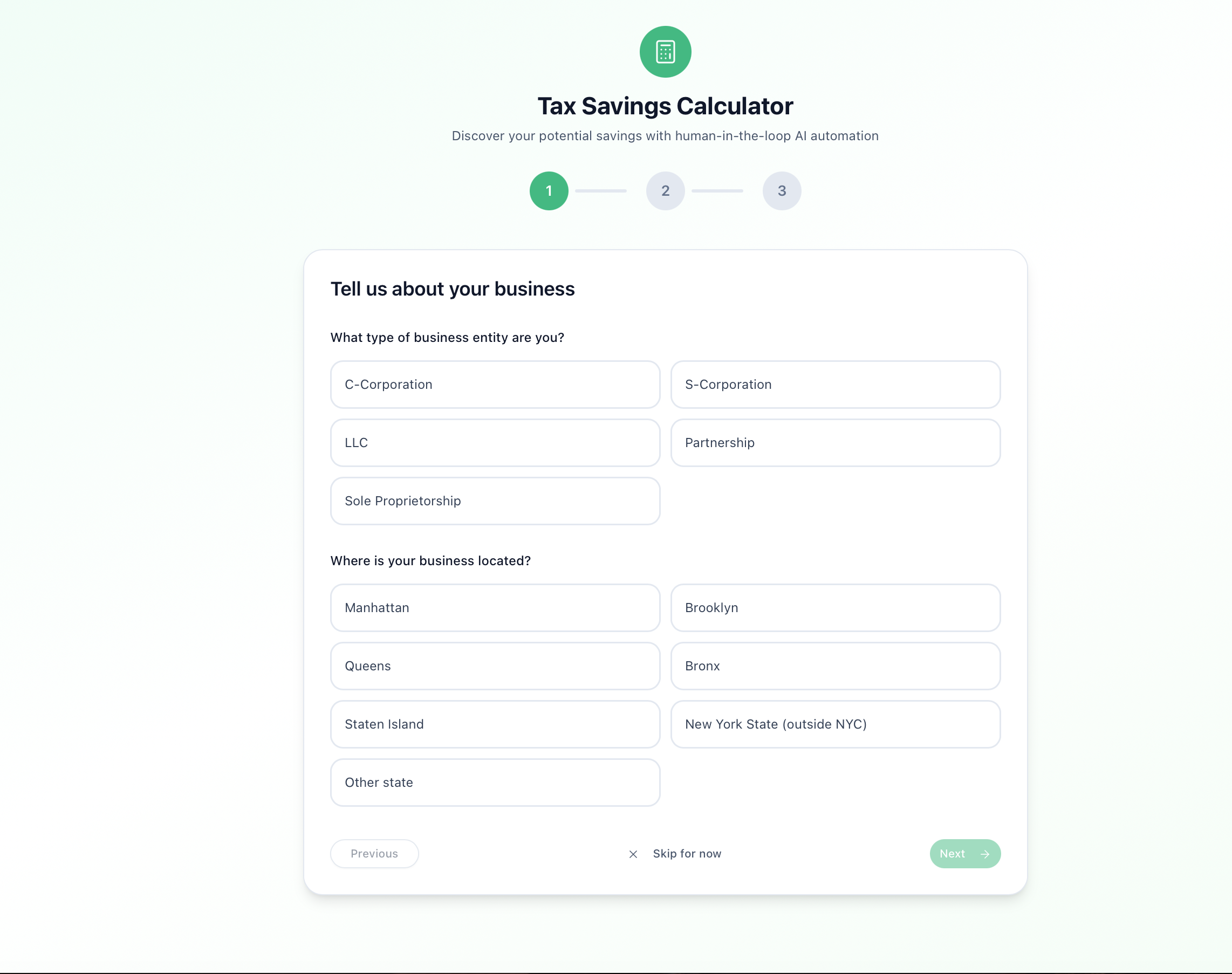
Restaurant's Tax Questions
-
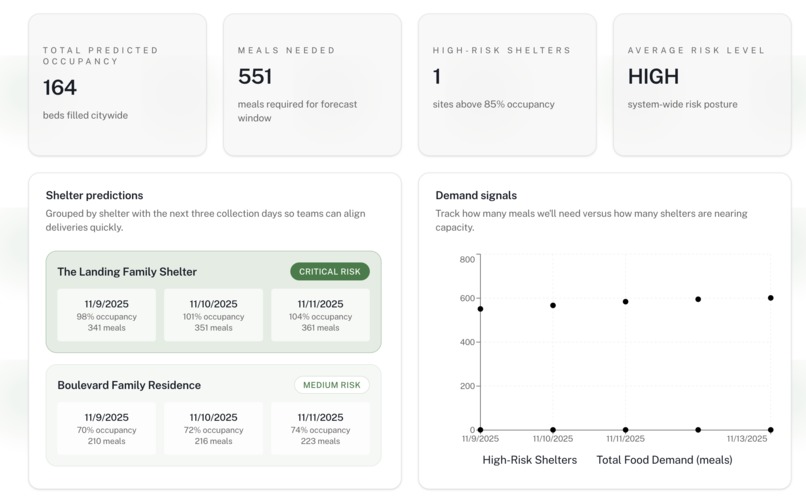
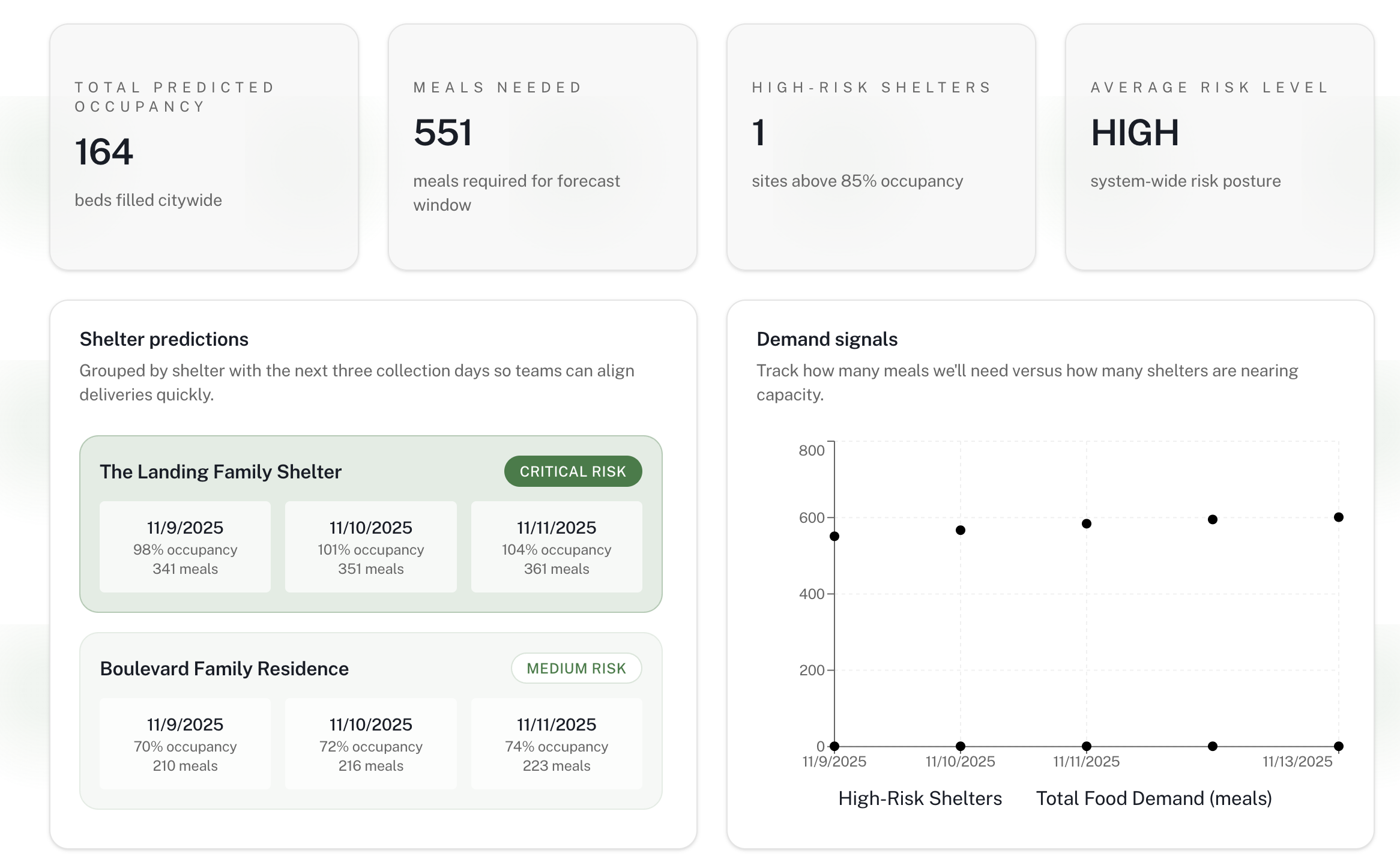
Predictive Analysis

FoodBridge
Inspiration
One night my dad came home from his factory job, exhausted, and said something that has stayed with me ever since:
"Every single day at the factory, we waste around 200 perfectly good donuts. Great food just thrown in the trash."
I could not stop thinking about those donuts, all that food going straight into the garbage while people just a few miles away were going to sleep hungry. My dad still works there today, and now that our team has the skills to actually build things, it feels wrong not to try and do something. That is where FoodBridge comes from: a platform built to make sure no good food is wasted while people are still going without meals.
FoodBridge is meant to be simple, practical, and hard to say no to: businesses save money through tax deductions for excess food donations, helping solve hunger; it's a win-win situation for everyone.
What it does
Restaurants and food businesses throw away huge amounts of perfectly edible food every day, while shelters and community kitchens struggle to meet demand. There is no simple, real time way for them to find each other at the exact right moment.
FoodBridge fixes that, and turns that "waste" into tax savings and impact.
At a high level, FoodBridge:
- Connects restaurants with nearby shelters and food banks in real time
- Helps restaurants unlock impressive tax deductions for eligible food donations
- Helps restaurants with their outreach and community building, and the best part is it saves them even more money
For restaurants, FoodBridge:
- Lets you list surplus food in seconds at the end of a shift
- Shows a map of nearby shelters and food banks, ranked by urgency of need
- Lets you schedule a pickup or drop off with a few clicks
- Automatically generates donation receipts and records that can be used as documentation for potential tax deductions in consultation with a tax professional
- Summarizes your impact over time, for CSR reports, marketing, and brand goodwill
For shelters and food banks, FoodBridge:
- Shows a live map of nearby surplus offers
- Lets staff set daily food needs, which we turn into an easy-to-read "health bar" that signals urgency
- Provides a simple way to claim donations and message restaurants to coordinate logistics
In short:
Restaurants dump billions of dollars worth of food while shelters starve.
FoodBridge turns that waste into instant tax documentation and real meals for communities.
Great for the community, great for businesses.
How we built it
Lots of celsius and snacks and claude and codex + cursor + a lot of brain power. On the serious note tho, we started by mapping the flow of food: where surplus is created, when shelters need it most, and what information both sides actually care about.
From there, we built:
- A restaurant dashboard where businesses can log in, list surplus items, see nearby shelters, and schedule donations
- A shelter dashboard where organizations can set their daily food needs, see offers on a map, and claim or request donations
- A matching engine that connects surplus food with nearby shelters based on location, timing, and need
- A built-in messaging system so restaurants and shelters can coordinate without leaving the platform
- An email layer that sends donation confirmations and records to restaurants through the Gmail API
Behind the scenes, we experimented with predictive logic to estimate shelter demand and help highlight high priority donations.
The stack was powered by a lot of Celsius, snacks, and late nights, with tools like Claude, Codex, Cursor, and a Figma MCP server helping us go from design to code much faster.
Challenges we ran into
1. Predictive analysis
Designing a useful "need score" for shelters was much harder than it sounded. We had to think about:
- Time of day
- Typical peak demand
- How to deal with missing or noisy data
We wanted a system that felt intuitive, not random, so tuning that logic took time.
2. Gmail API integration
Implementing the Gmail API was rough. OAuth, scopes, and formatting emails correctly without breaking everything took a lot of debugging. Getting automated confirmation emails to reliably send right after a donation was a big learning experience.
Accomplishments that we are proud of
- We actually shipped a full stack app, not just a slide deck
- Restaurants can log in, list surplus food, and see nearby shelters on a map
- Shelters can set their food needs and claim donations
- Messaging works, so both sides can coordinate directly inside the platform
- Most importantly, restaurants receive automated donation confirmations that give them a clear record of what was donated, to whom, and when
We are especially proud that FoodBridge makes the tax side simple and automatic for busy restaurant owners. Instead of juggling spreadsheets and emails, they get a clean, centralized history of their donations that can support tax preparation and CSR storytelling.
What we learned
We learned:
- How to work with real APIs, including authentication, rate limits, and messy JSON
- How to go from Figma designs to a working product, keeping design and implementation in sync
- How many real world constraints shelters and restaurants face, and how important it is to keep the user experience extremely simple
We also learned that building "tech for good" means thinking like an operator: if it does not save time or money for the restaurant, they will not use it, even if the mission is noble. That is why the tax benefit and documentation flow is front and center.
What is next for FoodBridge
We do not want this to stay as just a hackathon project.
We plan to run a demo pilot program in New York City during winter break, and where food waste and food insecurity are both visible and urgent.
We already own the domain: foodbridge.me
Our next steps:
- Partner with a small group of local restaurants and one or two shelters to run a focused pilot
- Tighten the matching and notification system so it fits into daily closing routines, not extra work
- Improve impact and tax reporting, so restaurant owners can literally see:
- How many meals they helped provide
- The total estimated value of donated food
- Downloadable records they can share with accountants and marketing teams
FoodBridge started with 200 wasted donuts. Our goal is that one day, stories like that feel impossible, because there will always be a bridge between surplus food and the people who need it most, and a clear financial reason for businesses to help.
Also checkout our Tax doc: https://drive.google.com/file/d/1K9O1U38-kf5RImyC-3LoWRUYuJok7GME/view?usp=sharing
Built With
- java
- nextjs
- tailwind
- typescript


Log in or sign up for Devpost to join the conversation.