-
-
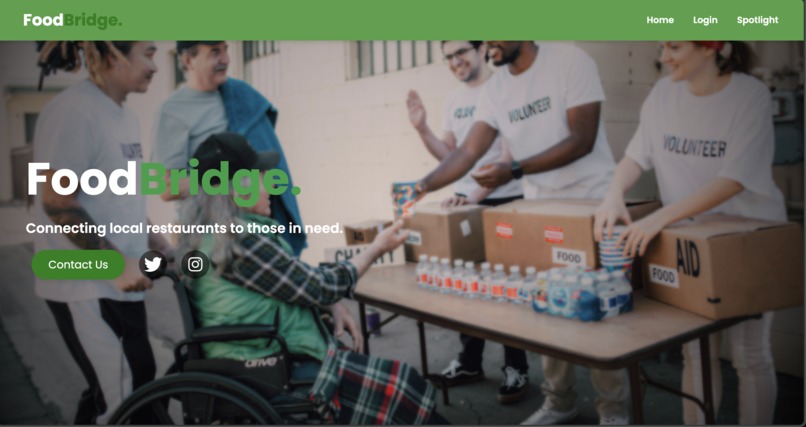
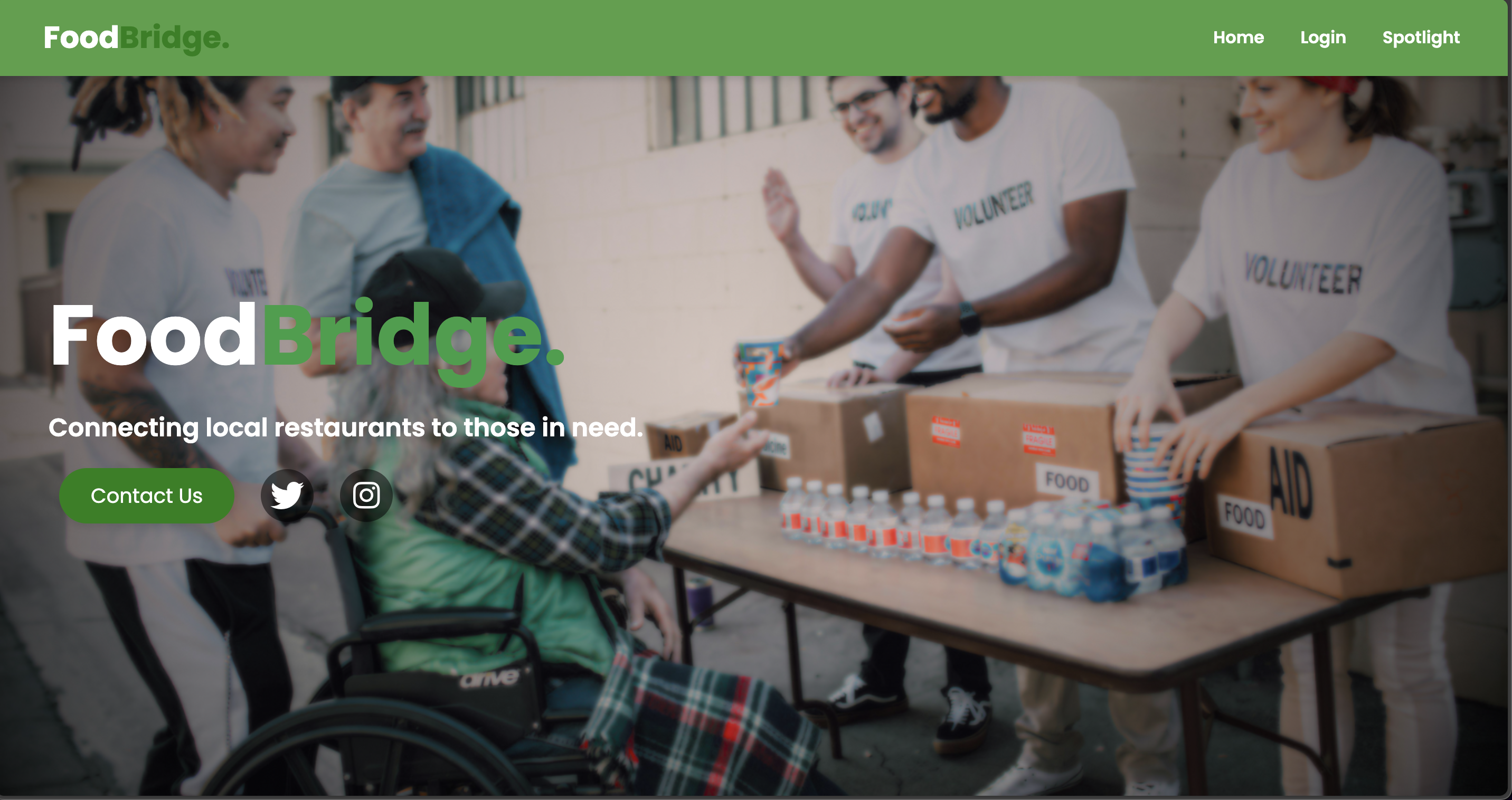
Landing page
-
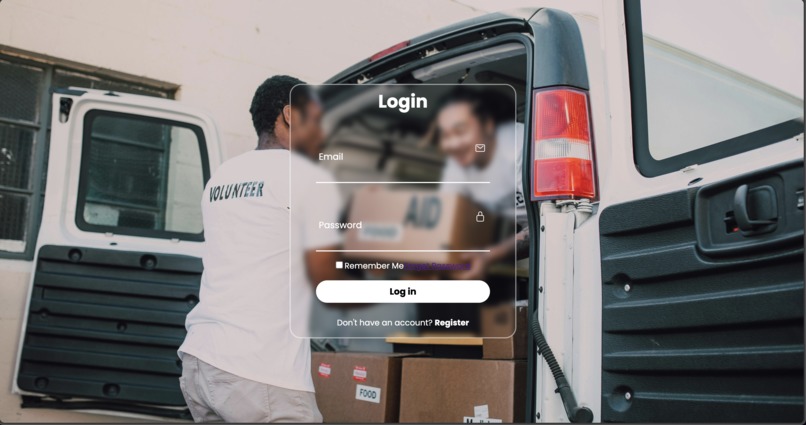
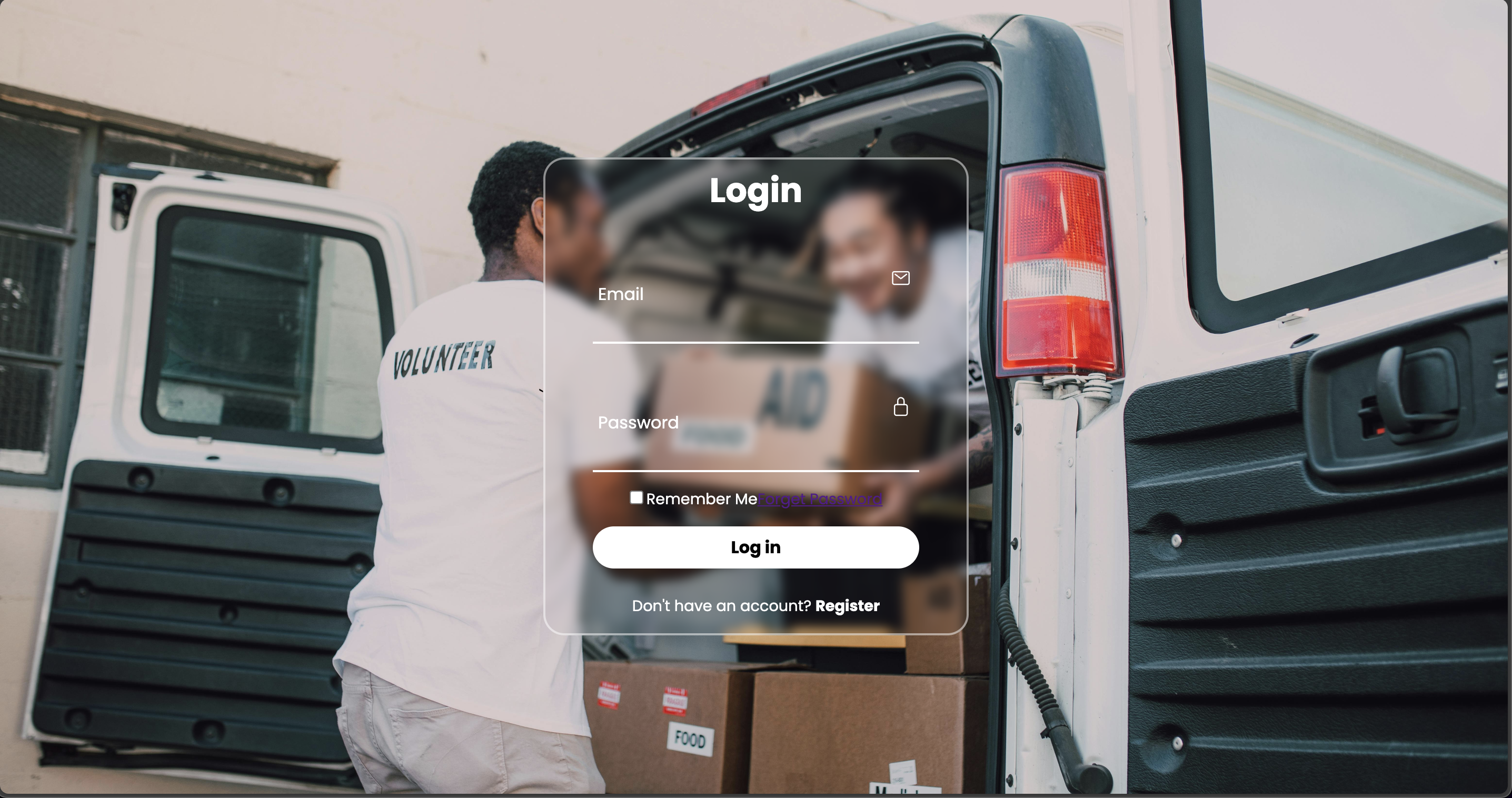
Log in page
-
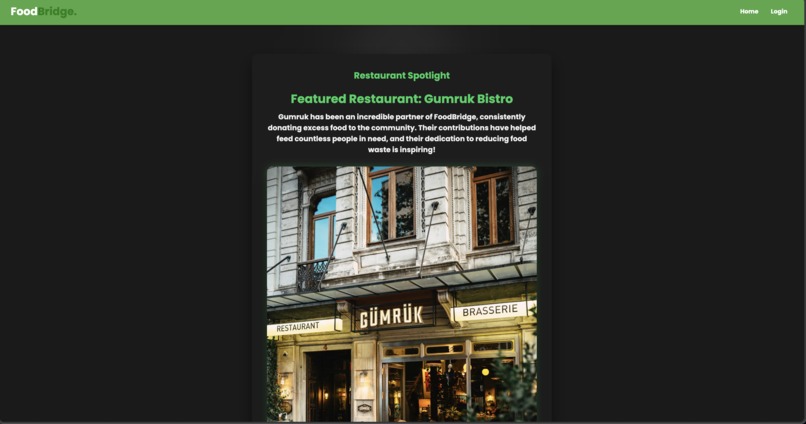
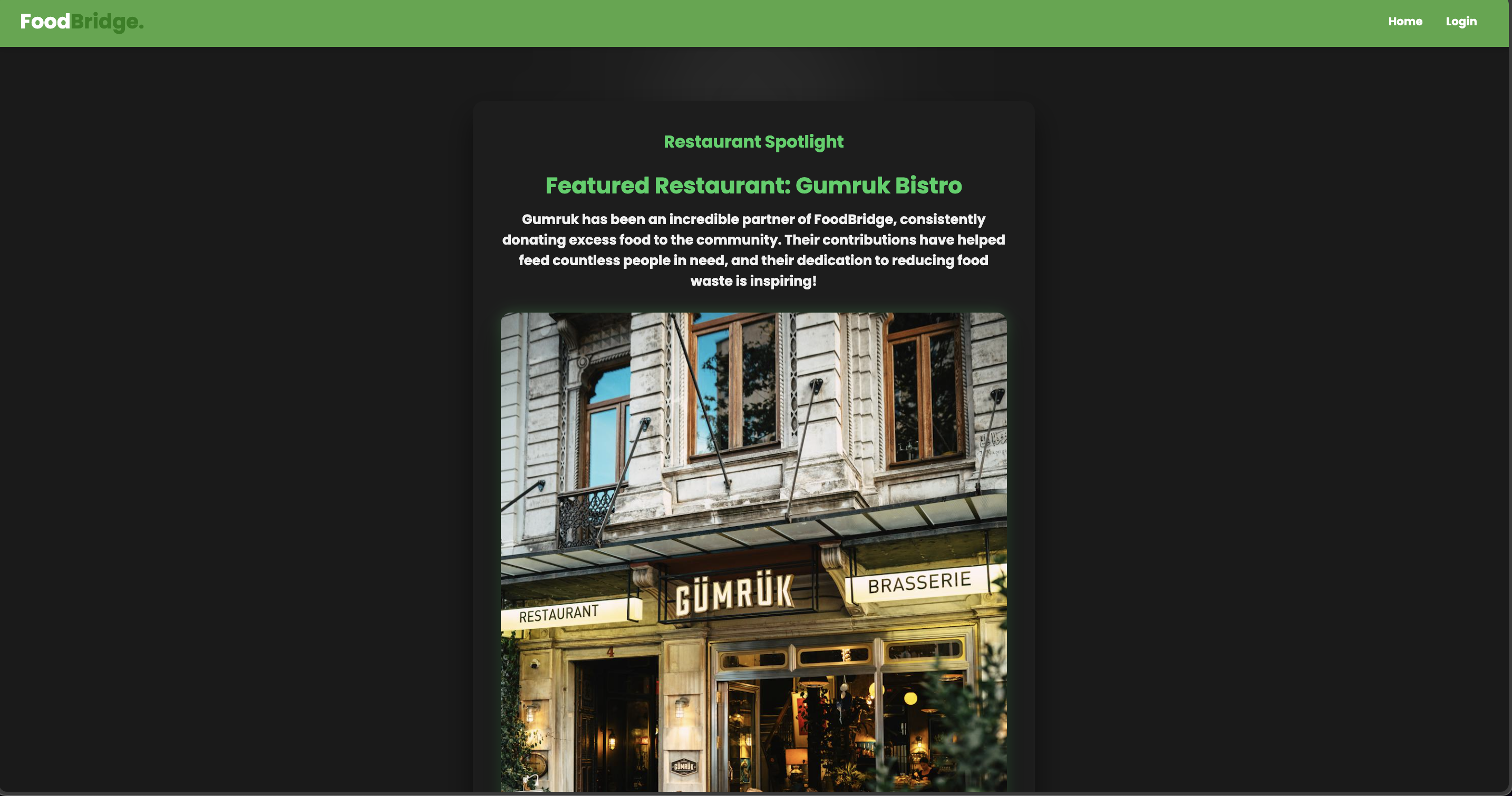
Spotlight page
-
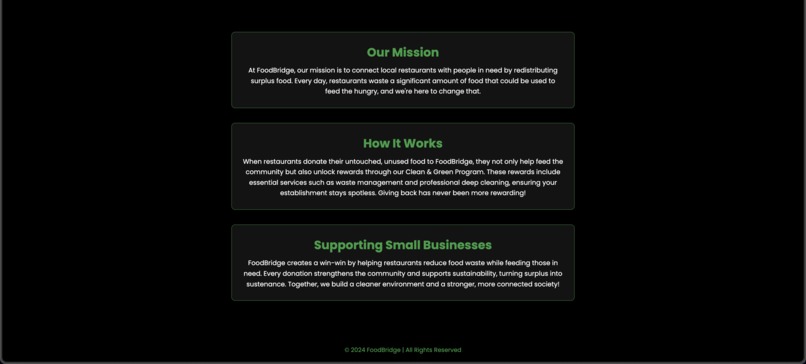
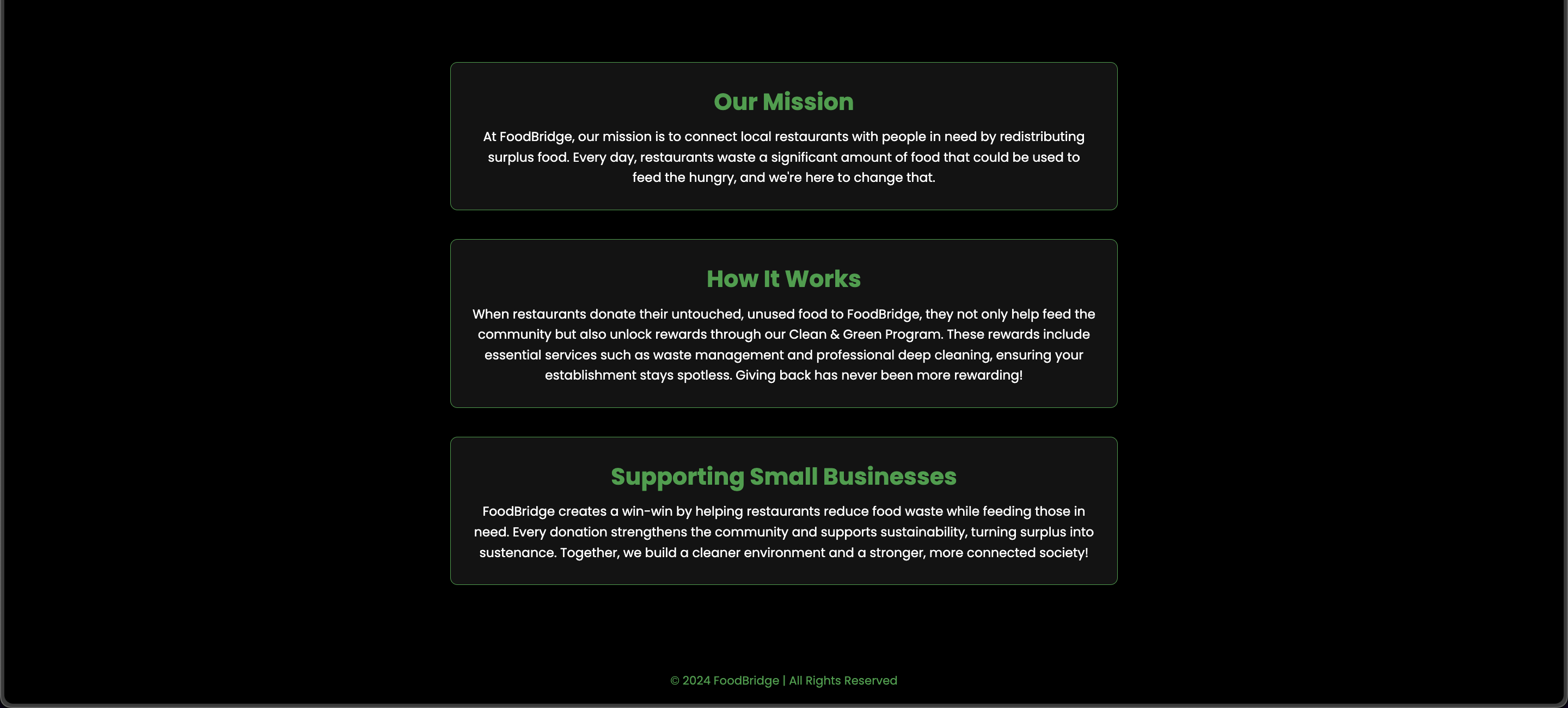
About us
Inspiration
With half of our team working in the food industry, we saw firsthand the staggering amount of food wasted daily. This inspired us to act, creating a solution that not only reduces food waste but also helps those who are uncertain about where their next meal will come from. FoodBridge was born from our drive to make an immediate impact on both restaurants and the community.
What it does
FoodBridge is more than just an app—it's a non-profit 501(c)(3) initiative that gives local restaurants the opportunity to donate their untouched, excess food in exchange for valuable business services. From waste management and deep cleaning to streak-free glass maintenance and free publicity, FoodBridge supports sustainability while offering practical benefits to restaurant owners.
How we built it
- Front end: HTML/CSS
- Backend: Next.js server, facilitating the external server's functionality
Database and Storage: Google Firebase: Chosen for its scalability and real-time database capabilities, Firebase efficiently stores and retrieves data related to user profiles and shared inventory.
User Authentication: Users, both restaurants and those in need, can securely log in and log out, ensuring a personalized experience and custom pages depending on the role.
Inventory: Restaurants have a personal inventory where they can add food they would like to donate. They also have to include an image of the item and the date of expiration.
Recipients Inventory: Recipients can see all the available food from all restaurants. They would be able to see the name and address of the restaurant, the image uploaded, and the expiration date. They would also have the ability to reserve that item.
Cross Inventory Management: Whenever recipients pick up food, the food gets popped from the restaurant's database and goes to a different section reserved.
Spotlight: A page where we weekly give a shoutout to the restaurants that donated the most amount of food in a week.
We started with big ambitions, planning to use Next.js and Google Firebase. However, with the intense 36-hour hackathon timeline, we made the strategic decision to focus on the essentials. We pivoted and built the project using HTML and CSS, prioritizing a sleek, functional front-end to ensure our vision was not just a concept but something we could present while we keep building the structure of the app.
Challenges we ran into
During the hackathon, we faced several challenges that required adaptability and quick decision-making. Designing a NoSQL database schema to efficiently manage user data and interactions was a significant hurdle due to the steep learning curve. Additionally, we developed two distinct home pages for logged-in users—one for restaurants and one for recipients—further adding to the complexity. However, time constraints proved to be our greatest challenge. Although we initially planned to utilize more advanced technologies, we quickly realized the importance of adjusting our approach. We streamlined our tech stack, focusing on the essential elements of our project, which allowed us to maintain the integrity of our core idea while meeting the tight deadline and delivering a functional, high-quality product.
Accomplishments that we're proud of
Despite the intense timeline and scaling back, we successfully created a fully working app that brings our vision of sustainability and business support to life. Our focus on creating something tangible and impactful within 36 hours is a huge win for our team.
What we learned
Throughout the project, we gained valuable experience in both technical development and team collaboration. Tackling a NoSQL database schema for scalable data management was a steep learning curve, but it taught us the importance of structuring data efficiently for diverse user interactions. We also honed our skills in React.js and Firebase, learning how to handle authentication, real-time data storage, and dynamic routing for different user experiences. Beyond the technical challenges, we learned how to adapt quickly in a fast-paced environment. Time constraints required us to prioritize features and focus on delivering a functional product, which taught us how to make strategic trade-offs without compromising the quality of our core idea. Working as a team under these conditions also improved our collaboration and communication skills, ensuring all components of the project came together seamlessly. Finally, we deepened our understanding of user-centric design, tailoring distinct experiences for both restaurants and recipients to create a practical and intuitive interface.
What's next for FoodBridge
Scalability options:
- Expand to not only food from restaurants but also start including supermarkets, making the app more accessible to everyone.
- Change the tech stack by implementing a SQL database instead of a NoSQL database.
- Smoother UI/UX.
- iOS and Android support.
- Sort restaurants by how close they are to the recipient.
We came into this hackathon with a mission, and through creativity, teamwork, and relentless execution, we’re confident we’ve built something truly game-changing with FoodBridge.

Log in or sign up for Devpost to join the conversation.