-
-
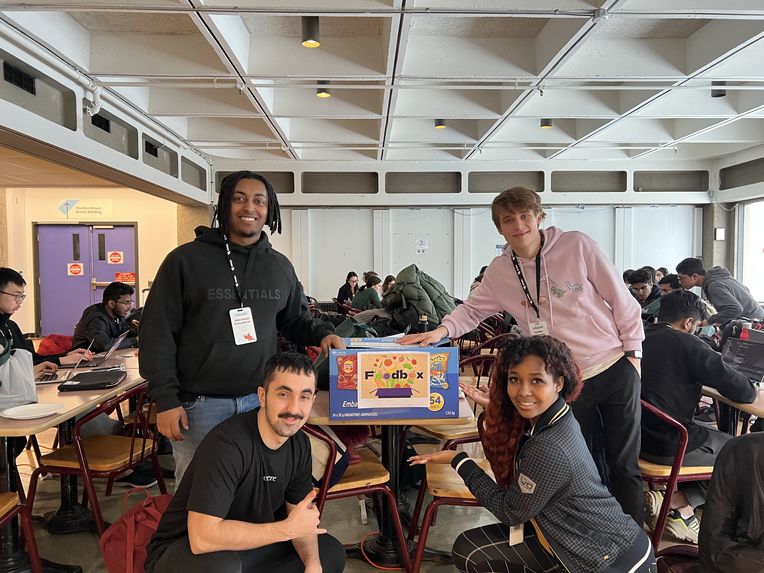
Us with an in-person version of Foodbox - which re-utilized all McHacks's leftover food from meals!
-
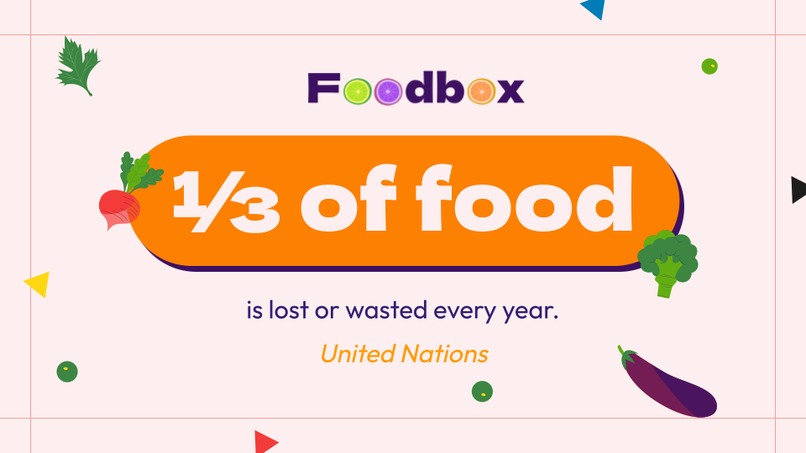
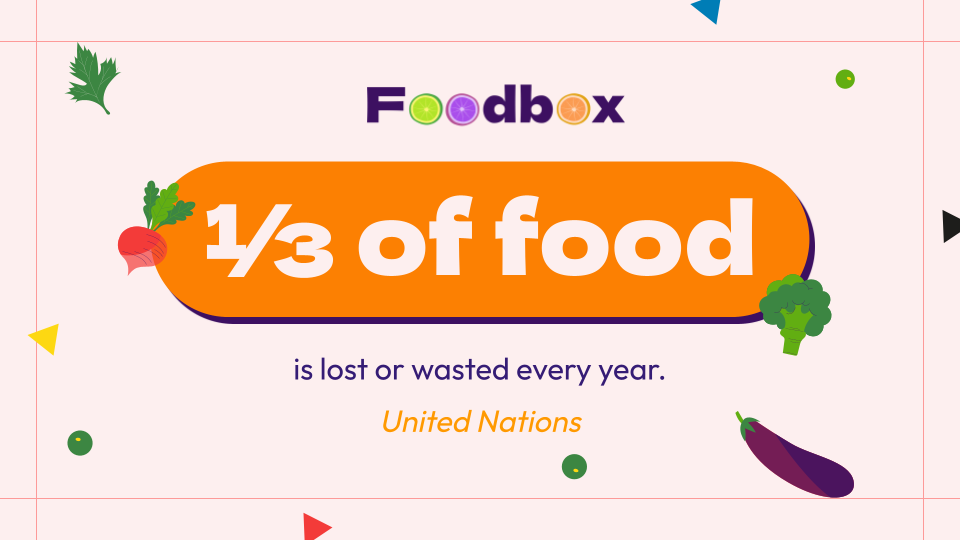
Food Waste Fact
-
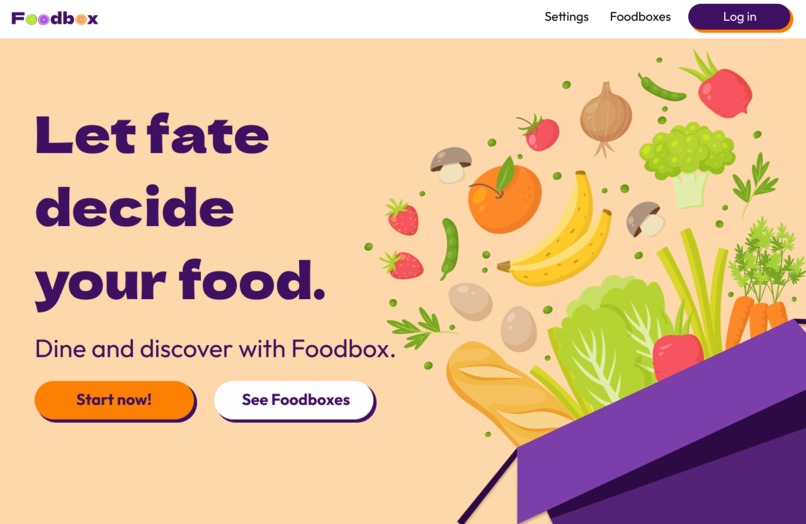
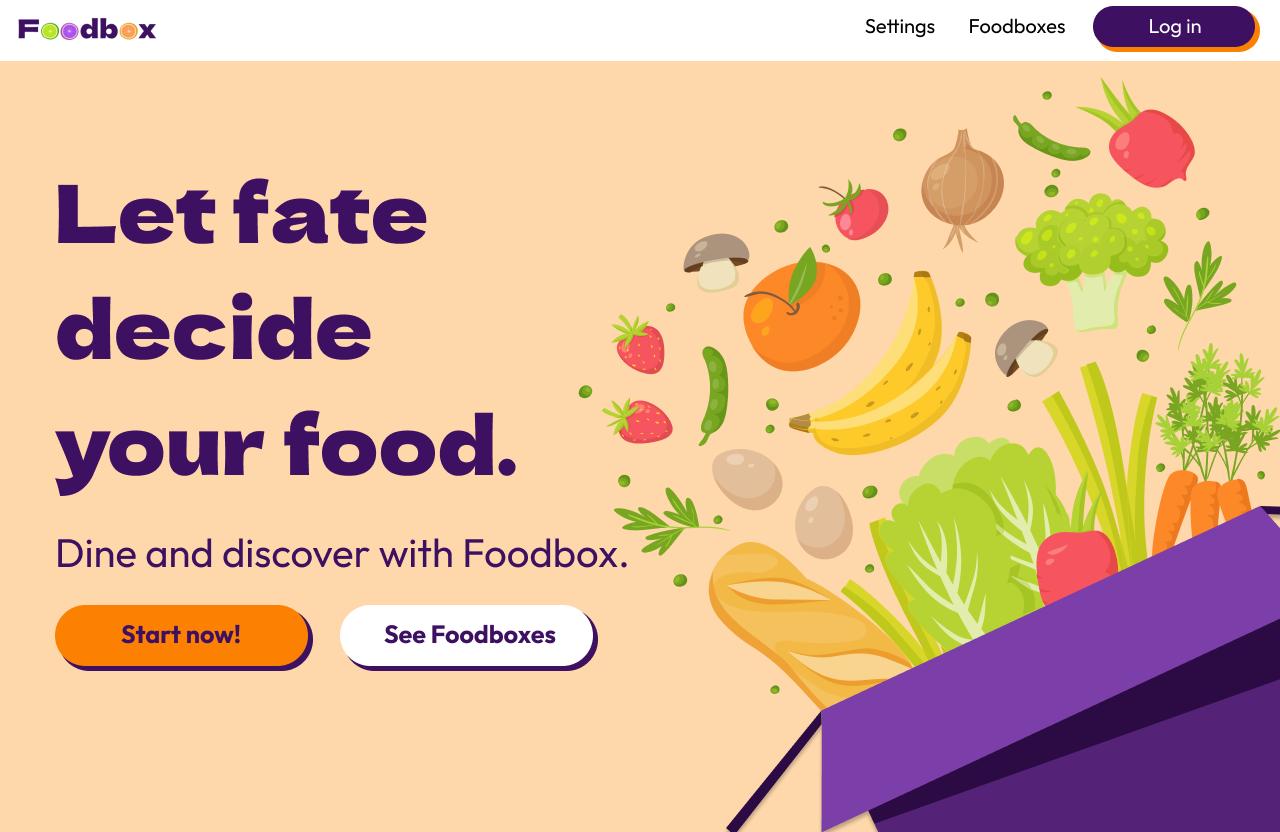
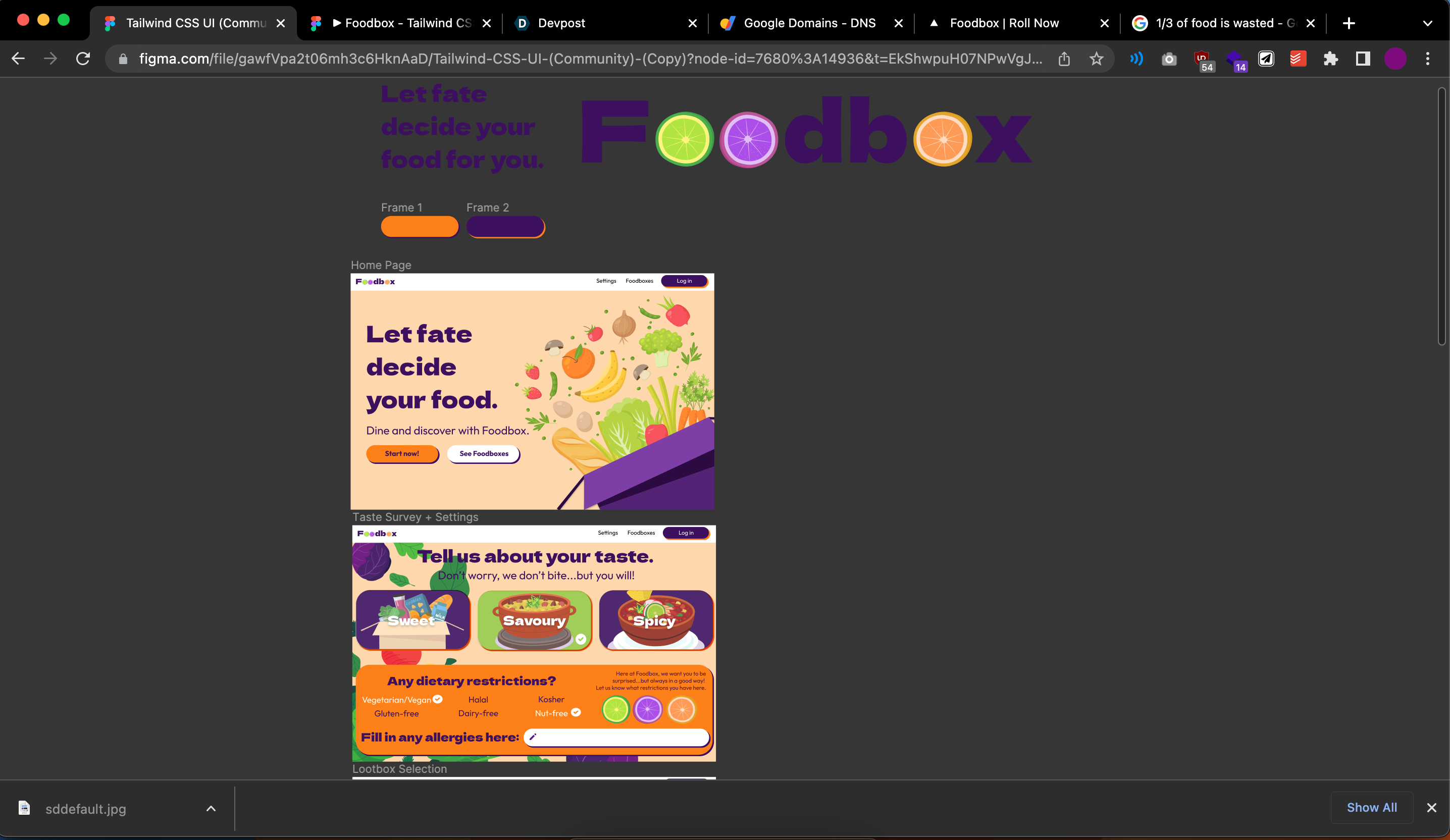
Home Page
-
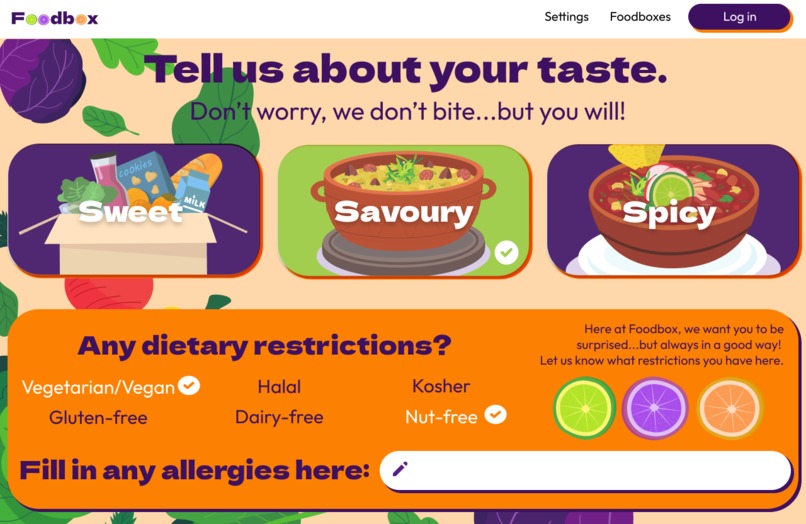
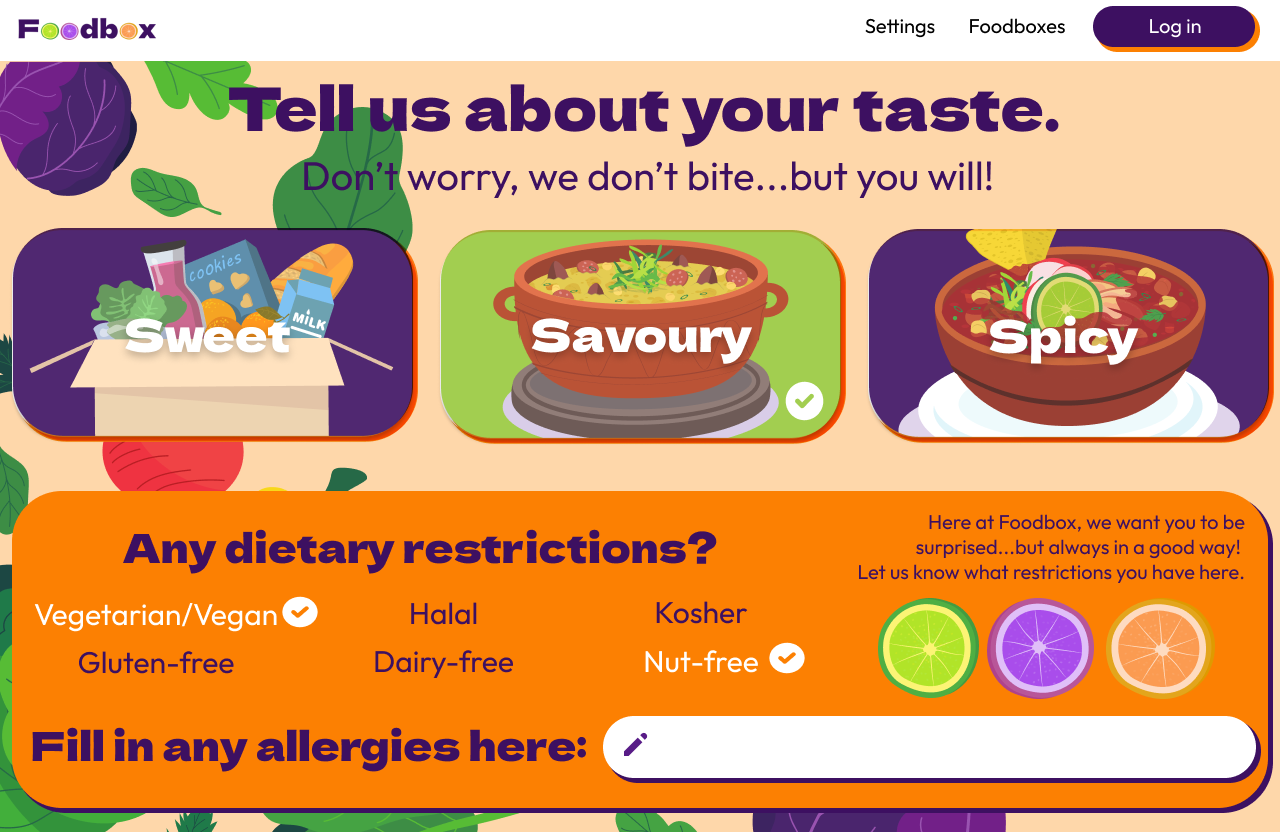
Customer Onboarding
-
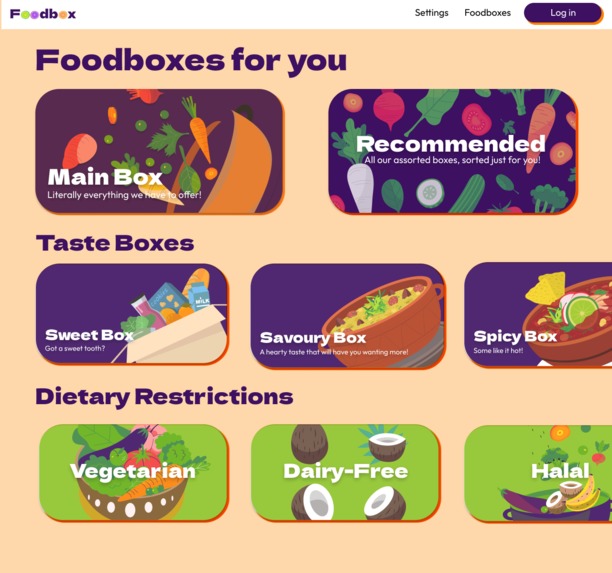
Foodboxes Page
-
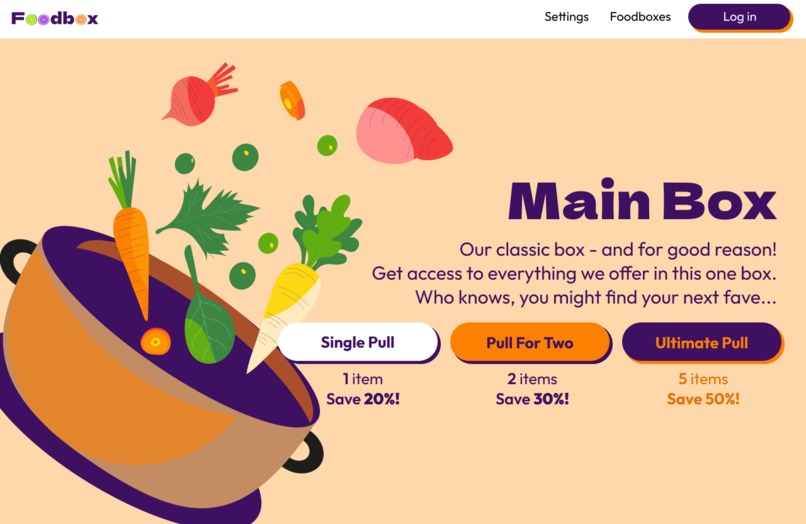
Main Box Page
-
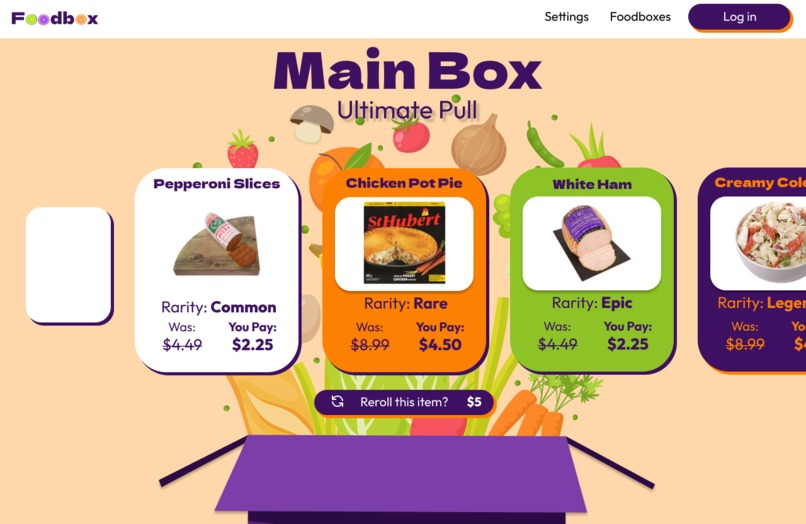
Rolling + Results
-
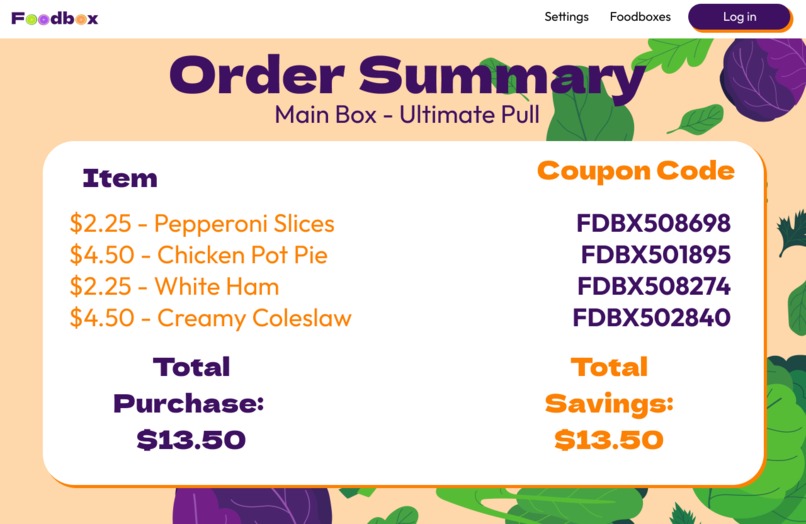
Order Summary
-
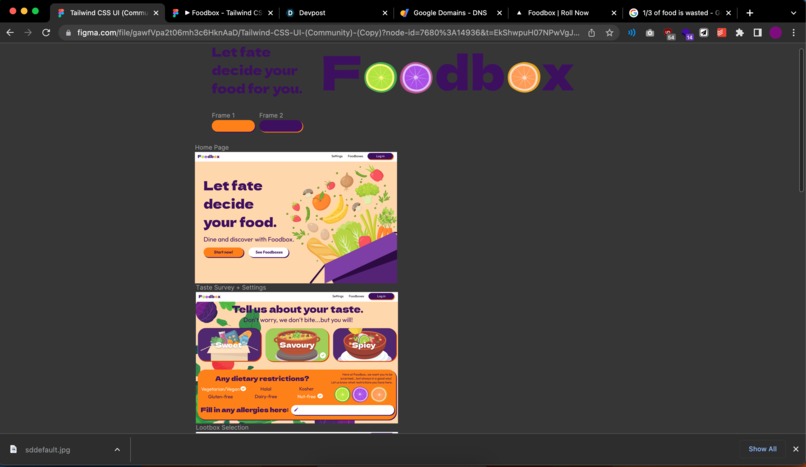
Figma

💡 Inspiration 💡
The idea for Foodbox was inspired by the growing problem of food waste in our society. According to the United Nations, one-third of all food produced globally is wasted, which not only has a significant environmental impact but also a social one, as so many people are struggling with food insecurity. We realized that grocery stores often have a surplus of certain products that don't sell well, and we wanted to find a way to help them move this inventory and avoid waste. At the same time, we saw an opportunity for consumers to discover new products at a discounted price.
Another inspiration for Foodbox was the increasing awareness of the environmental impact of our food choices. Food production is a major contributor to greenhouse gas emissions and deforestation, and by reducing food waste, we can also reduce our environmental footprint. We believe that Foodbox is a small but meaningful step in the right direction, and we hope that it will inspire others to think creatively about how they can also make a positive impact on the planet and their communities.
🛠️ What it does 🛠️
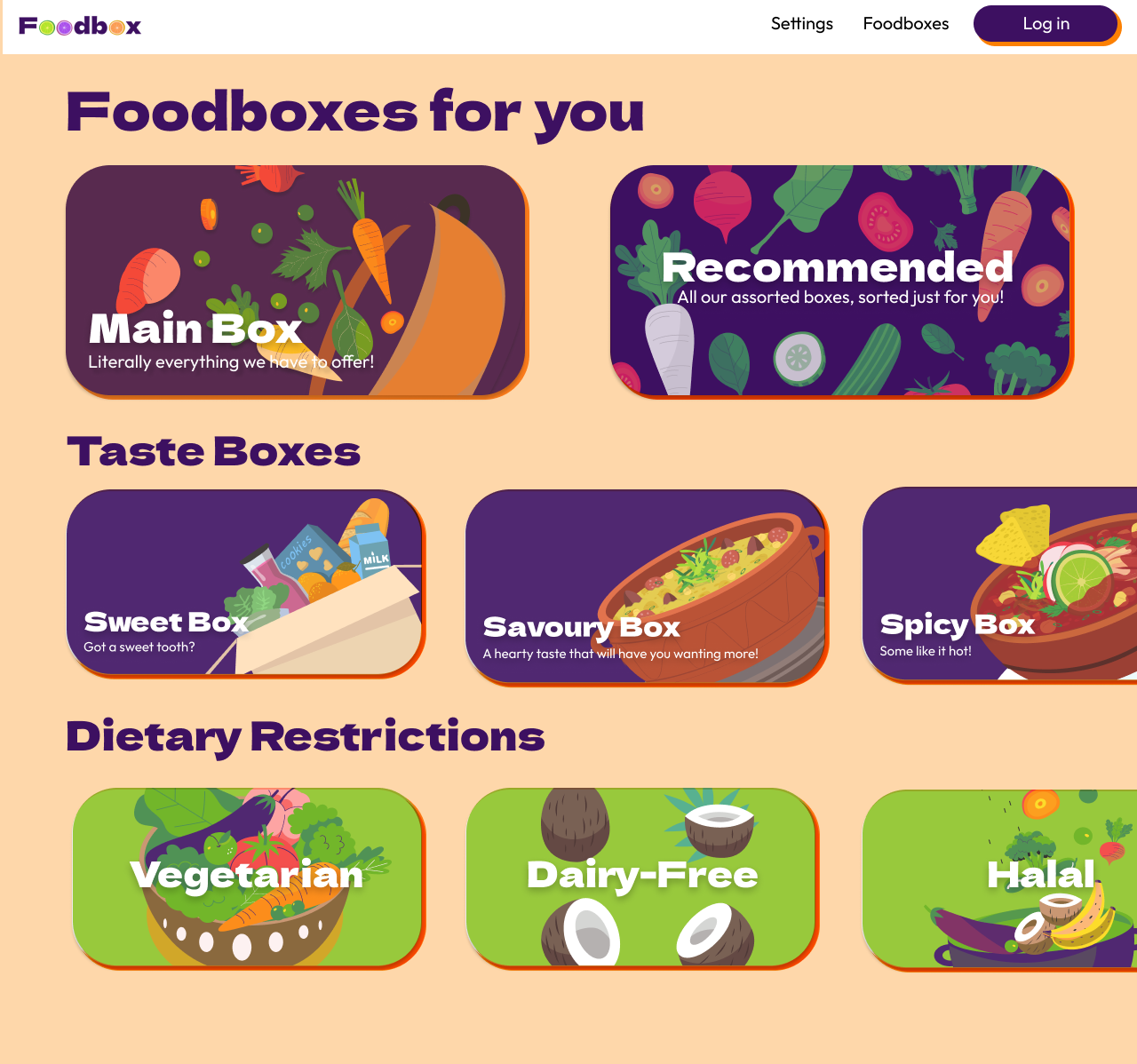
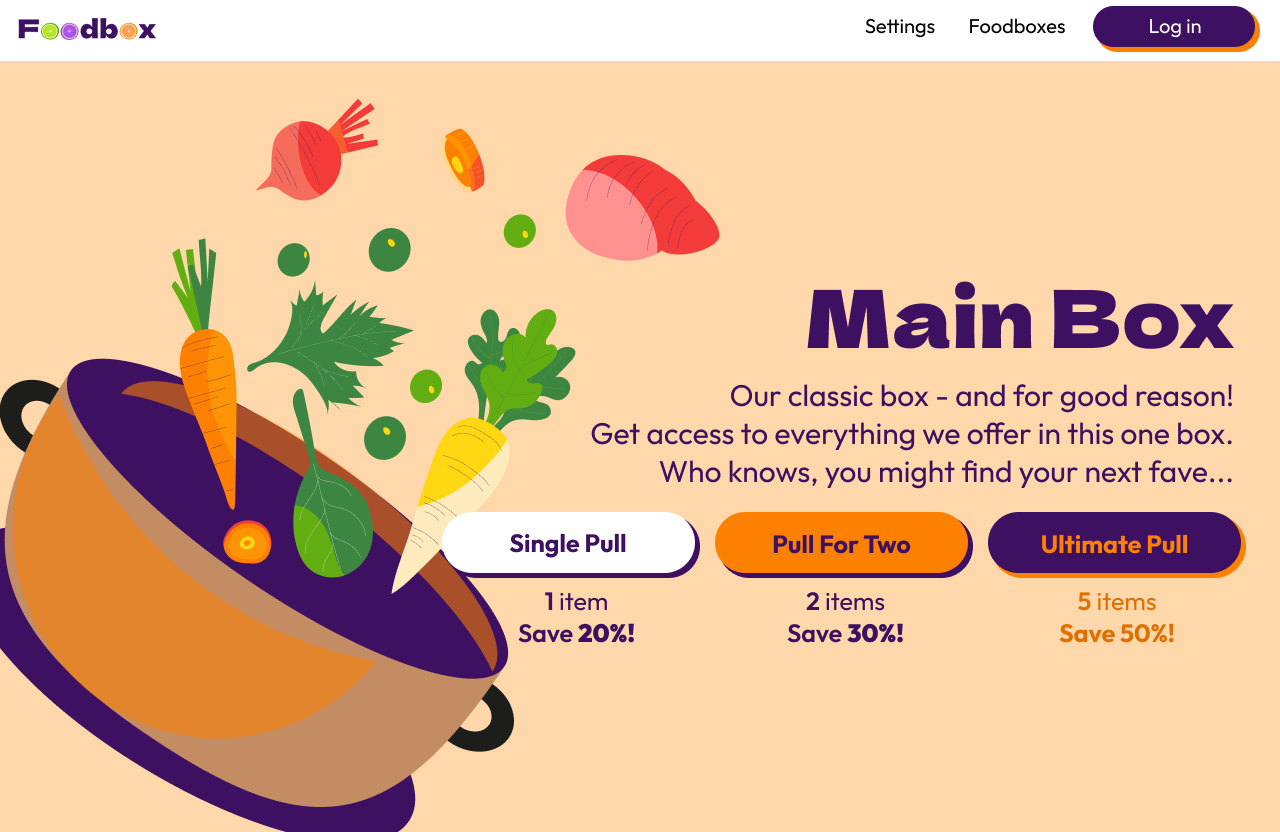
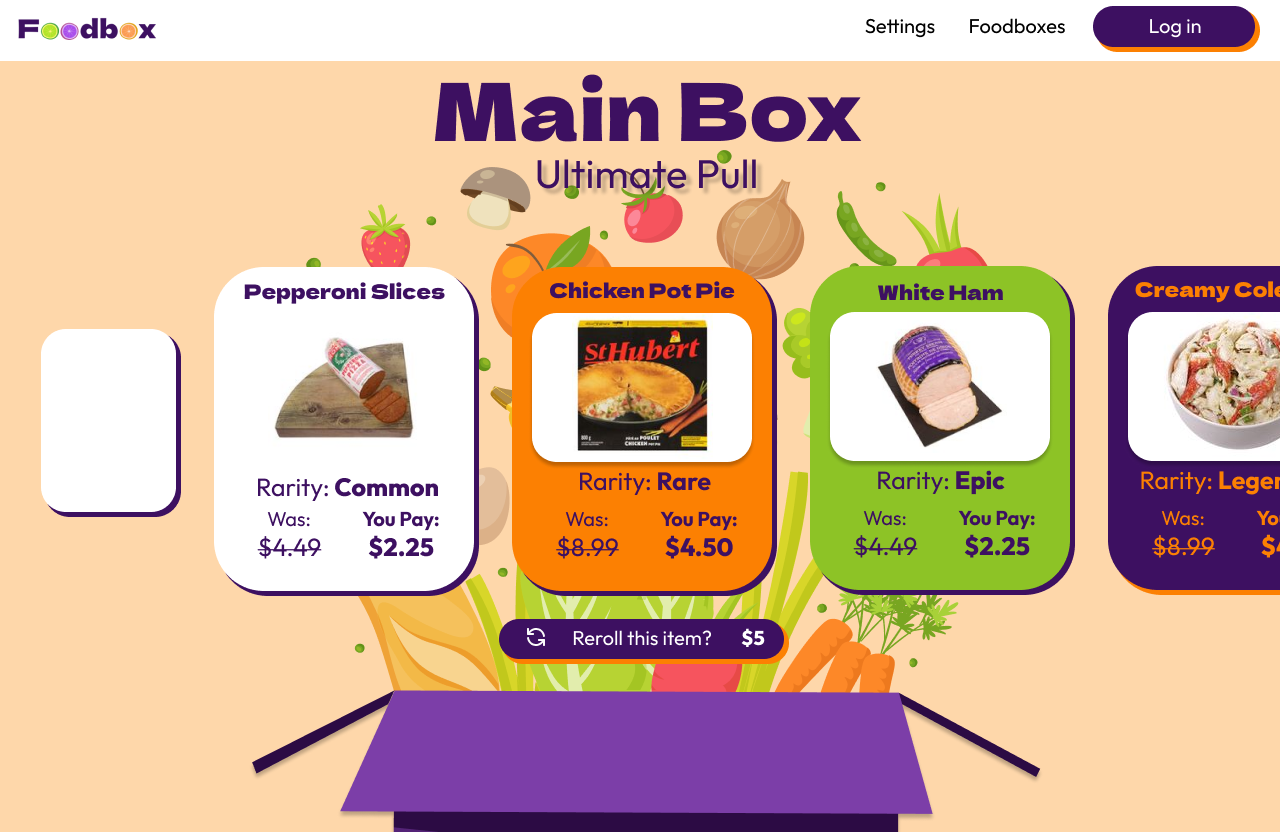
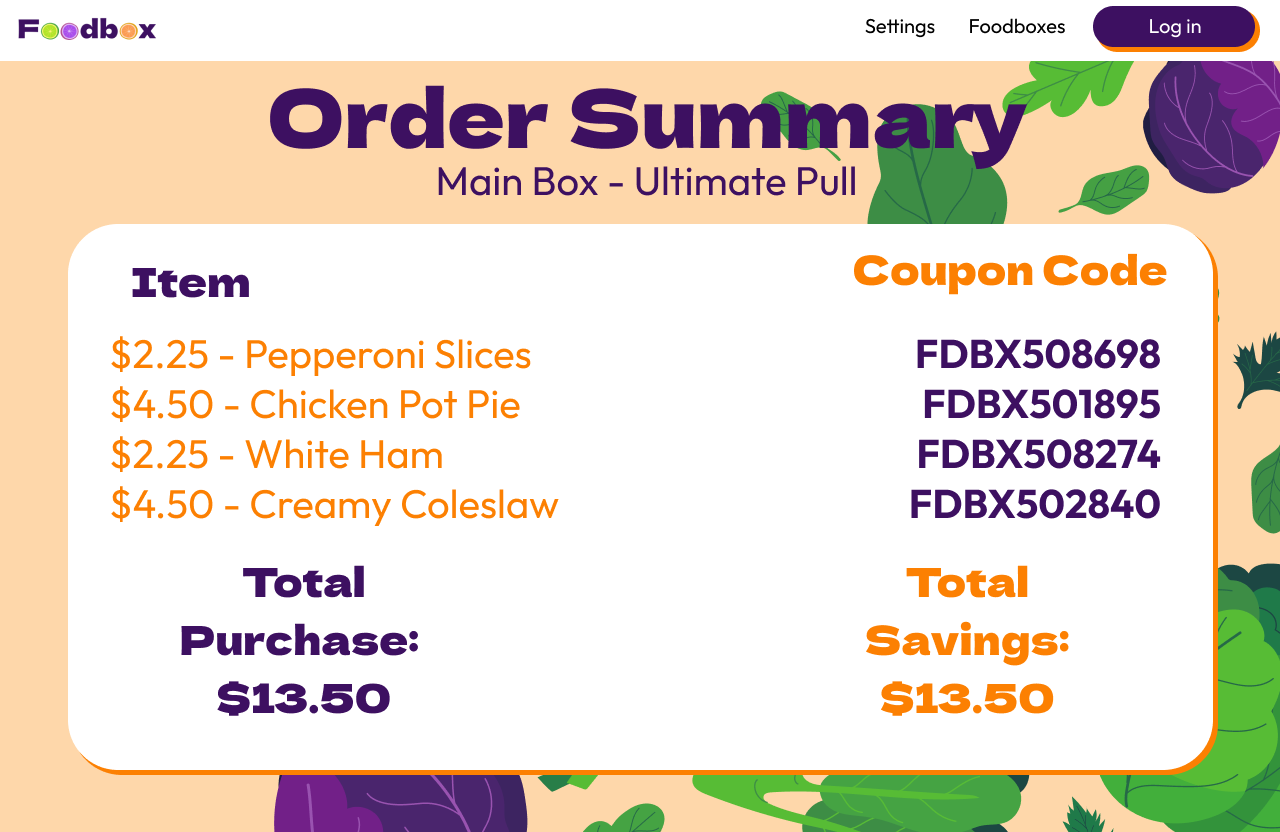
Foodbox is a platform that helps to reduce food waste and promote sustainability. We partner with local grocery stores to offer a 20% discount on their least popular items and package them in a "food mystery box" for our customers to purchase. This way, grocery stores can move their inventory and avoid waste, while customers can discover new products at discounted prices. The items in the box are drawn randomly, so customers can try new things and experiment with different products. Our platform also has a rating system where customers can rate the products they received and this will help the store to know which products are popular among customers. With Foodbox, we hope to create a win-win situation for both the stores and customers, while also making a positive impact on the environment.
🏗️ How we built it 🏗️
Our team built the Foodbox web application using Next.js, a framework for building server-rendered React applications. We used Tailwind CSS for styling and Supabase PostgreSQL as our database management system. The final application was deployed using Vercel, a platform for hosting and deploying web applications. With these technologies, we were able to create a fast, responsive, and visually appealing application that is easy to use and navigate. The combination of these technologies allowed us to quickly and efficiently build the application, allowing us to focus on the core functionality of the project.
🧗♂️ Challenges we ran into 🧗♂️
Upon meeting initially on the morning of the hackathon, we quickly put together a really good digital receipt app idea! But after doing some research and realizing our great new original idea wasn’t so original after all, we ended up thinking of a food loot box idea in the line for lunch! The best ideas really do come from the strangest places.
🏆 Accomplishments that we're proud of 🏆
Kelly: I’d had experience using Adobe XD for mockups at my job as a part-time web designer, but I’d never really used Figma to do the same thing! I’m proud that I managed to learn how to use new software proficiently in one night which allowed me to easily cooperate with my front-end teammates!
Abraham: I’m familiar with React and front-end development in general but I have not used many of the frameworks we used in this project. I was excited to learn and implement Next.js and Tailwind CSS and I am proud of the pages I’ve created using them. I’m also proud of our adaptability to change when we had to accept that our old idea was no longer viable and come up with a new one, throwing away all our previous planning.
Amir: I'm really proud of the idea my team came up with for Foodbox and how we made it happen. I also had a blast playing around with Framer motion and Tailwind, it helped me level up my CSS and React animation skills. It was a great hackathon experience!
Calder: I got to work with 2 new technologies: FastAPI and Beautifulsoup. I learned a ton about parsing HTML and creating an API! Expanding my skills on the server side and working with my awesome teammates made this hackathon a special one.
📕 What we learned 📕
During this hackathon, my team and I faced a lot of challenges, but we also had a lot of fun. We learned that it's important to take breaks and have fun to stay motivated and refreshed. We also made some awesome connections with sponsors and other teams. We were able to learn from other participants and sponsors about their experiences and ideas. This helped us to have different perspectives on the problem we were trying to solve and helped us to come up with more creative solutions. And let me tell you, we totally crushed the cup-stacking competition thanks to the strategy we learned. Overall, it was a great learning experience for all of us. We walked away with new skills, new connections, and a sense of accomplishment.
⏭️ What's next for Foodbox ⏭️
The next step for Foodbox is to continue to expand our partnerships with local grocery stores. By working with more stores, we can offer a wider variety of products to our customers and help even more stores avoid food waste. We also plan to continue to improve the customer experience by gathering feedback and using it to make our platform more user-friendly. We also plan to expand our efforts to educate our customers about food waste and the environmental impact of their food choices. Finally, we will be looking at other ways to leverage technology, such as artificial intelligence, to further personalize the experience for our customers and make even better recommendations based on their preferences.
Built With
- amazon-web-services
- beautiful-soup
- fastapi
- framer
- lambda
- nextjs
- postgresql
- python
- react
- supabase
- tailwind
- vercel


Log in or sign up for Devpost to join the conversation.