Inspiration
The inspiration for this project came from how challenging it can be to decide what to cook. People often waste time scrolling through recipe sites or end up making the same meals repeatedly. We wanted to create a fun, swipe-based way to quickly discover new recipes without feeling overwhelmed. The idea was also inspired by our personal experiences of not knowing what to cook, getting bored of the same dishes, and wanting a quick, easy way to find new options. The app aims to make cooking exciting again. We drew inspiration from the swipe mechanics of dating apps and the visual focus of Instagram. By combining the two, we've made a website more interactive, enjoyable, and social compared to traditional cookbooks or static websites.
What it does
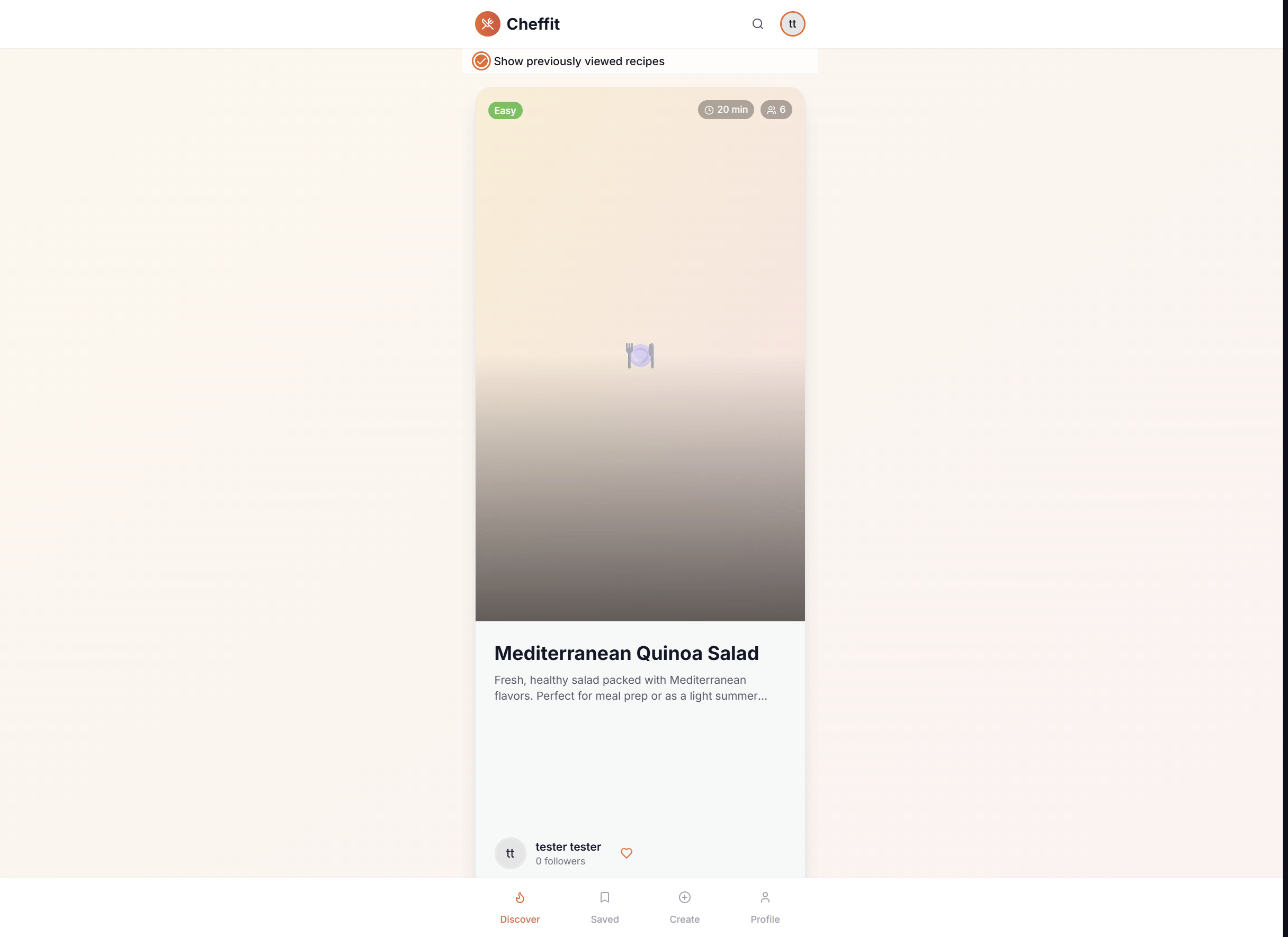
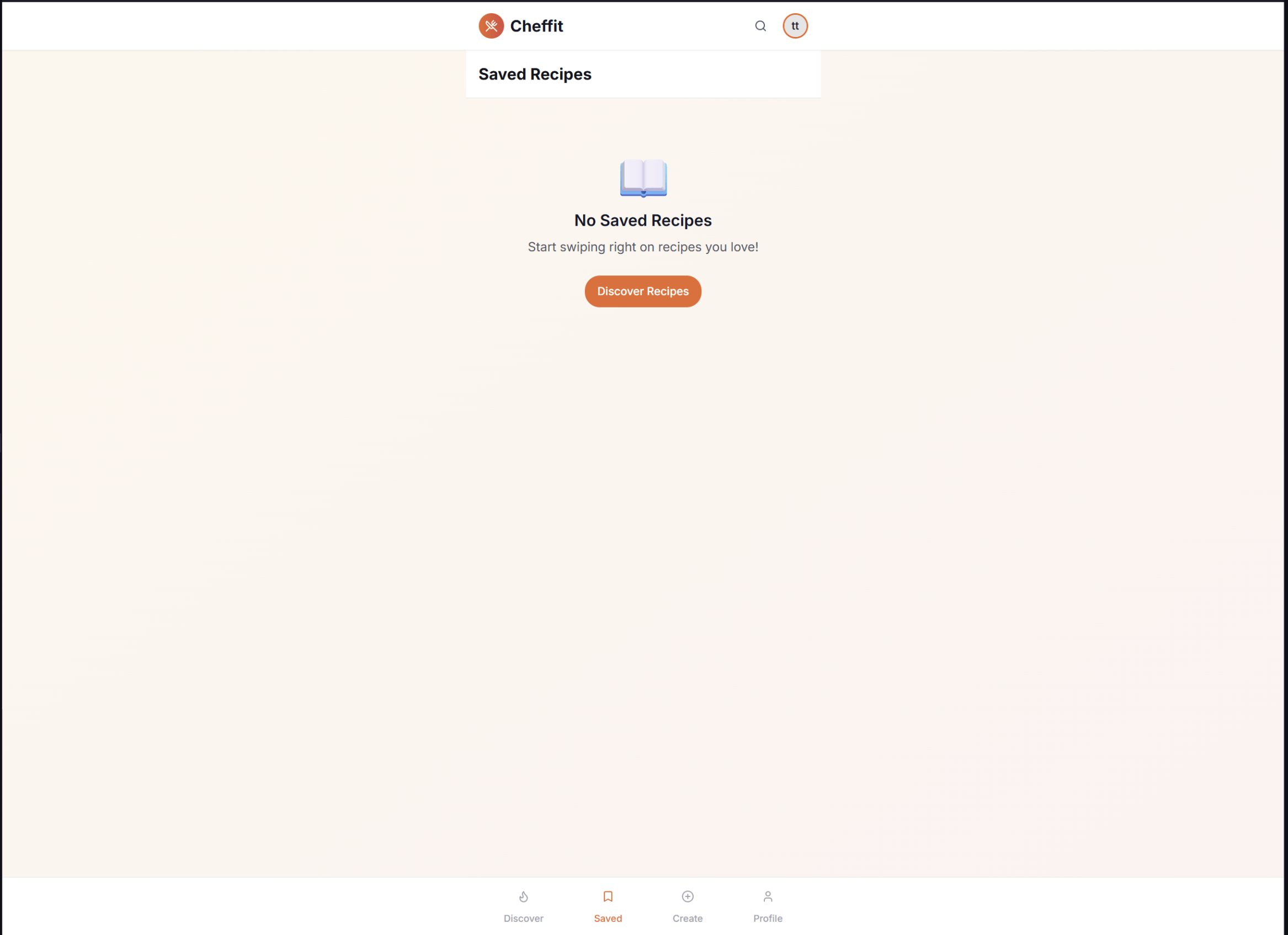
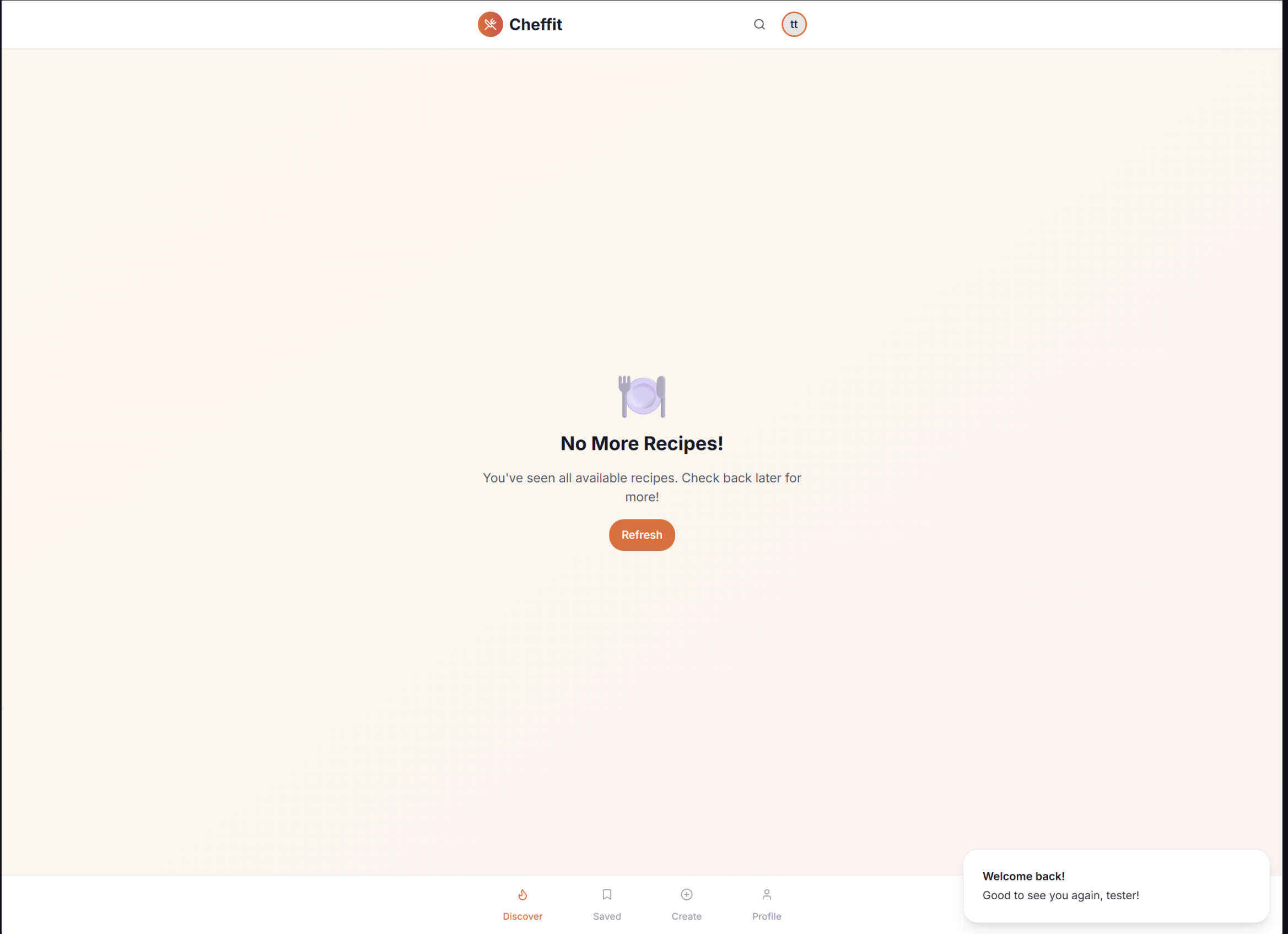
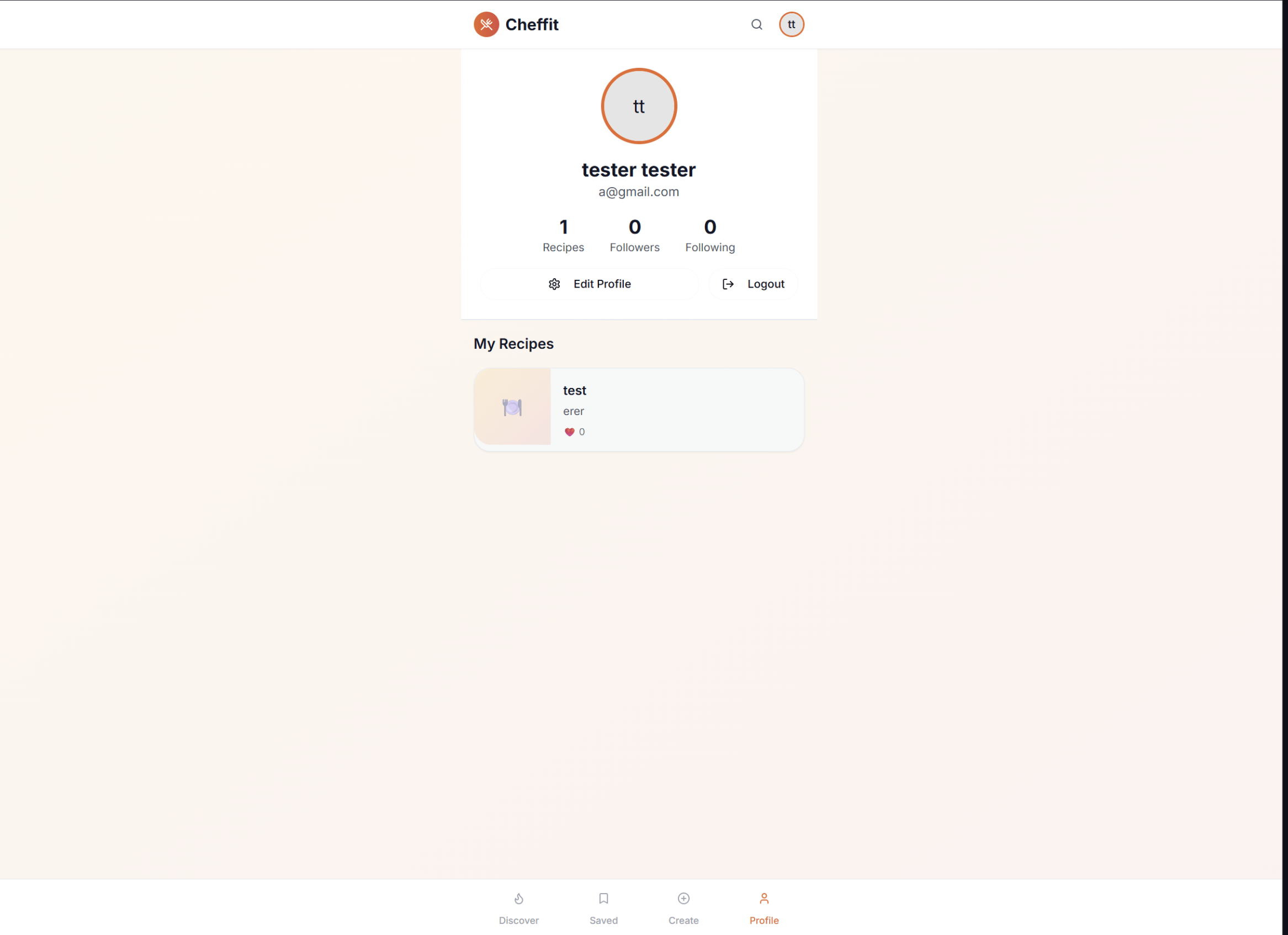
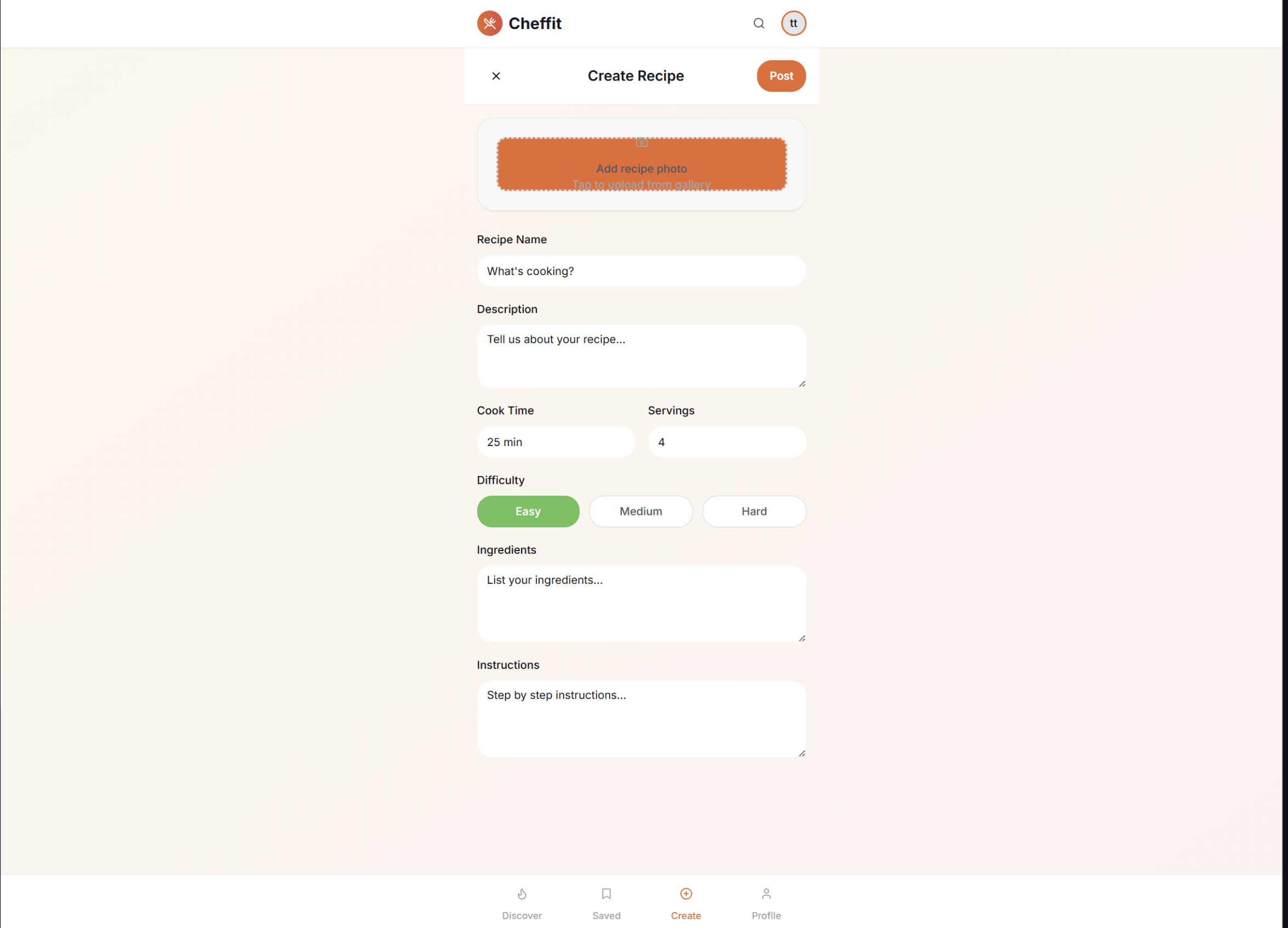
Cheffit is a social, swipe-based recipe discovery app that brings the experience of Instagram to cooking. Instead of scrolling endlessly through plain recipe lists, users are greeted with a visually engaging feed where each recipe appears as a swipeable card. If you swipe right, it means you’re interested in cooking it, and the app then reveals full details such as cooking time, difficulty, servings, ingredients, and step-by-step instructions. Users can also like, save, and follow recipes and creators, just like on a social media platform. With a built-in follower system, Cheffit creates a community where people can share their cooking experiences, discover new dishes through friends or influencers, and get inspiration from around the world. It turns recipe discovery into a fun, interactive, and social experience, rather than a chore.
How we built it
We quickly brainstormed the idea and drew a skeleton for how the site would work, and split into frontend (Andreas) and backend (Davut, Harsha). The frontend involved Tailwind and Typescript, and was made with a fairly minimalistic aesthetic to reinforce the idea that Cheffit is primarily an app where users can scroll through hundreds of recipes with convenience. We built the Cheffit with a strong focus on the backend. Using Django REST Framework, we created APIs to handle core features such as user authentication, recipe creation, and interactive actions like swiping and commenting. The backend logic was organized into separate apps for modularity: a main app that managed authentication and user endpoints, and a recipes app that handled models, serializers, and views for recipes, swipes, and comments. The models defined in Django represented the core data (recipes, user interactions, and comments) while the serializers ensured that data could be cleanly translated into JSON for the frontend. To manage the database, we used SQLite for storing core data such as users, recipes, likes, follows, and saved recipes. Images were handled separately through GitHub repository APIs, ensuring smooth integration with the frontend. This gave us strict validation through Zod schemas and a reliable way to evolve the database as features grew.
Challenges we ran into
One of the biggest challenges we faced within the code was implementing the swipe mechanic in a way that felt smooth and intuitive, since it required connecting Django’s backend with a responsive frontend interface. Getting the two to work seamlessly took some time, but we finally solved it after discovering that the data being sent from the backend wasn’t matching the format expected by the frontend. Once we fixed that alignment, the swipe feature worked as intended. Finally, working under hackathon time constraints meant debugging under pressure, as we had to solve errors quickly so we could keep pushing the project forward. For some of us, it was our first time using Django, while others had years of experience with it, so teaching what we were doing to everyone and ensuring everyone was on the same page was another challenge.
Accomplishments that we're proud of
We gained valuable insights into building a Django-powered backend for recipe data and user preferences, as well as creating a swipe-based interface inspired by social apps. It was our first time for some of us in using Django, so there was a lot of research and learning from one another. This was also the first hackathon for many of us, but we quickly learned the importance of understanding each other's strong points and working from that. Being in a team with new people taught us how to divide tasks accordingly, depend on the abilities of one another, and combine different perspectives. Finally, we learned how to be creative under strict time constraints, making sure that our ideas were ambitious but also feasible in a short hackathon schedule.
What we learned
This was the first time for a couple of us working on Django, and thus we had to perform so much research and learn from each other in the process. We also learned to assign tasks based on strengths, trust the others' abilities, and bring different perspectives to produce something that is worthwhile. On the technical side, we gained experience in structuring databases, integrating frontend and backend code, and debugging under pressure. Most importantly, we learned how to be creative within time constraints, turning ambitious ideas into a working prototype.
What's next for Cheffit
We also intend to introduce gamification elements like cooking stints, challenges, and unlockable recipes to enhance engagement. In the future, we envision AI-powered personalization, with Cheffit becoming familiar with each user's taste so it can recommend new recipes they will love. Finally, we would like to explore integration with grocery delivery platforms, allowing users to order missing ingredients on the go and make recipes come to life even faster.


Log in or sign up for Devpost to join the conversation.