Inspiration
I love Food. Food is essential for our health, but finding nutritional information on food and diet information is cumbersome and time consuming. They are fragmented across nutrition databases, condition-specific websites, research articles, and recipe tools. The problem becomes harder when someone is navigating dietary preferences, health conditions, or trying to achieve health goals.
I have always wanted to solves this problem, so I built FoodBook to make food knowledge easier to explore. FoodBook begins with a food profile database, a dietary library, clear filters, and reference pages. AI is then used where it can add practical value: helping turn food knowledge and selected ingredients into understandable answers and meal ideas.
What it does
FoodBook is an AI-powered food and dietary knowledge platform.
The current prototype includes:
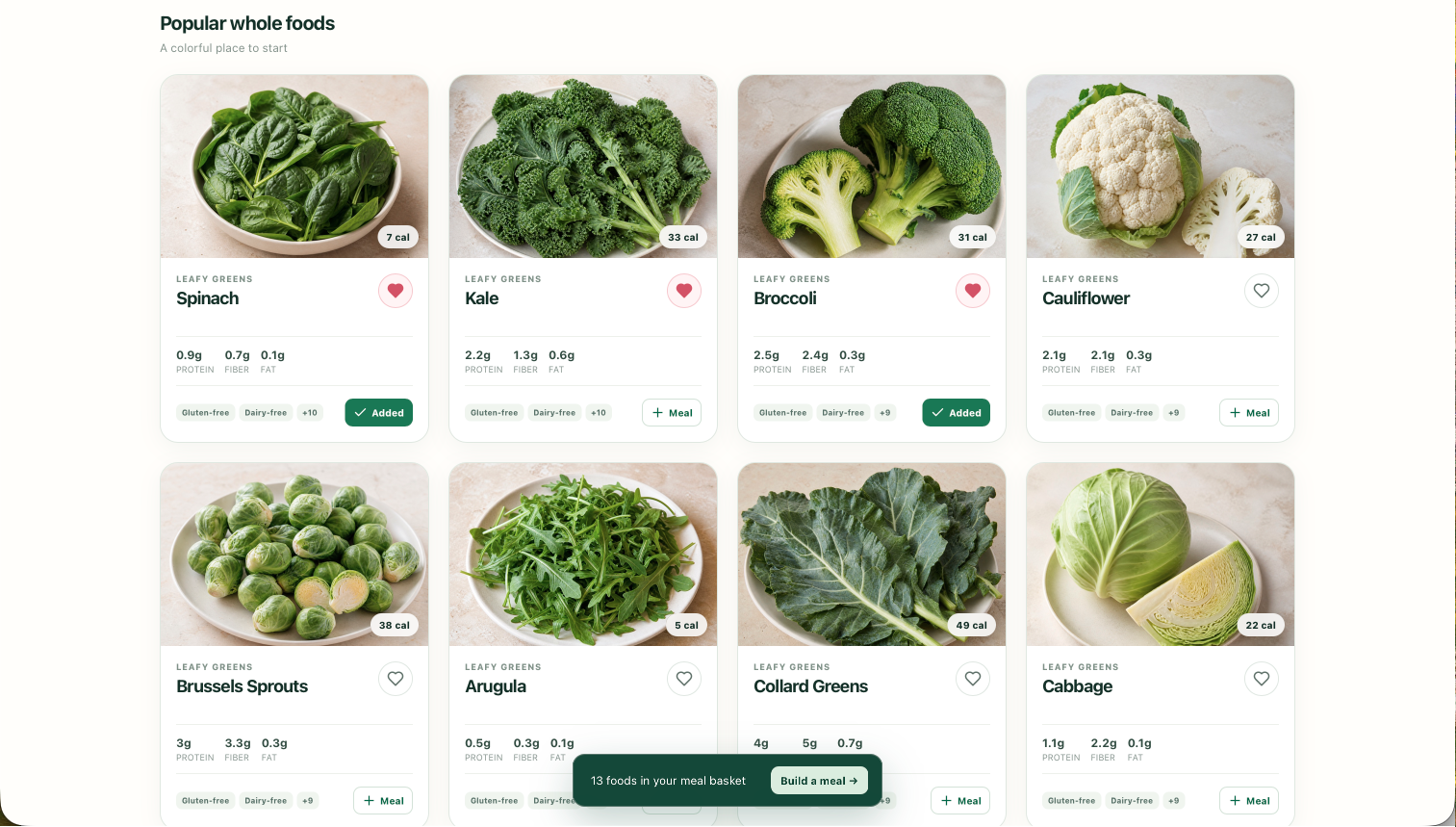
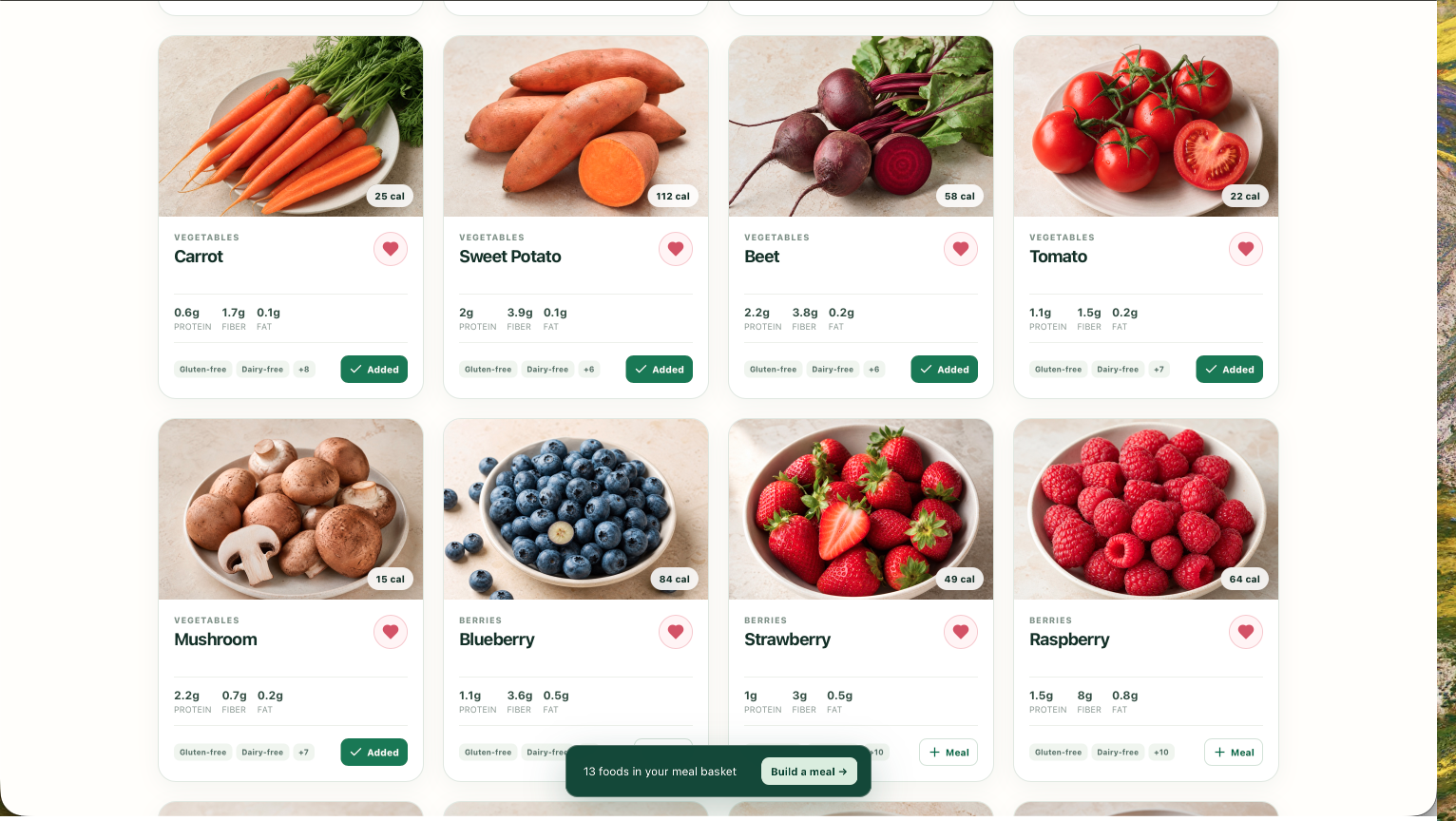
- 127 natural whole-food profiles
- 11 food categories
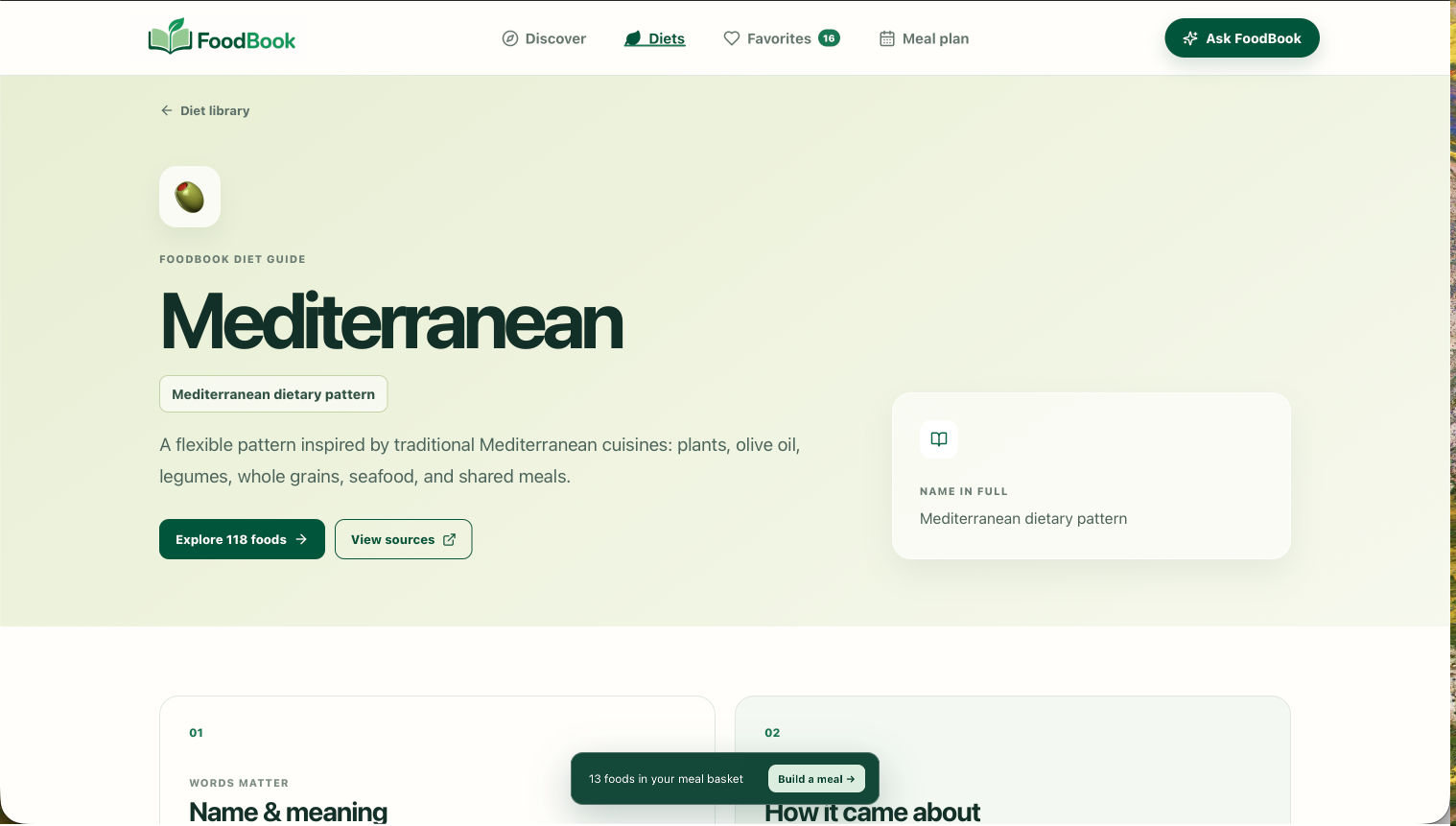
- 12 diet guides
- Search by food name
- Combined food-category and diet filtering
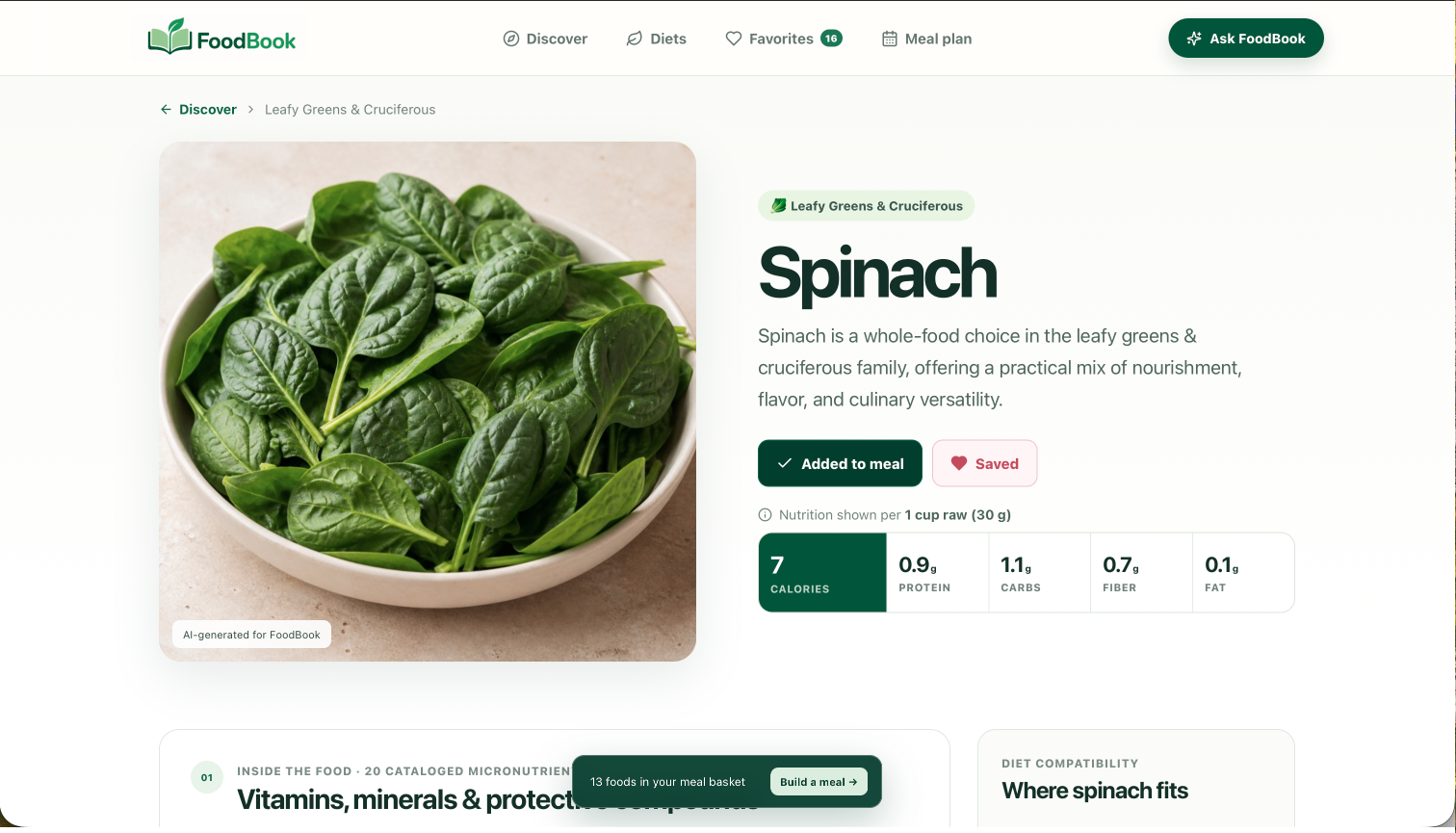
- Detailed food nutrition and reference pages
- Detailed diet pages with history, potential benefits, criticism, included foods, excluded foods, and learning resources
- Local favorites with no account requirement
- A meal basket
- Simple, daily, and weekly meal suggestions
- GPT-5.6-powered Ask FoodBook and Meal studio for generating meal plans
- Responsive desktop and mobile layouts
Users can search for a food such as turmeric, review its nutritional profile and dietary compatibility, save it, combine it with other foods, and continue into meal planning or AI-assisted guidance.
FoodBook is educational and does not provide medical diagnosis or treatment.
How we built it
FoodBook uses a React frontend and a Node.js and Express backend. This first version uses a local food catalog so the live demonstration remains simple and reliable. Favorites are stored in localStorage, which removes the need for authentication or a database.
The Express server hosts the production frontend and provides the backend route for the OpenAI integration. The application is deployed as a public Render service.
GPT-5.6 powers Ask FoodBook and Meal studio for meal generation. The backend sends the user's request and relevant FoodBook context through the OpenAI Responses API. The API key remains server-side.
How I used Codex
I developed FoodBook entirely with Codex using GPT-5.6 Sol.
Codex helped me:
- turn the initial product requirements into a working architecture;
- scaffold the React and Express project;
- create the catalog, diet, and page structures;
- implement combined search and filtering;
- build food-detail and diet-guide experiences;
- add local favorites and meal workflows;
- integrate the OpenAI API;
- generate and process local food imagery;
- test desktop and mobile behavior;
- prepare the deployment
I made the key product and engineering decisions, including the diet-first positioning, the feature scope, the tech stack, the design and visual, the food and diet information to include, etc. Codex executed my decisions and implemented them, wrote all of the code, tested them, and deployed the project.
Challenges we ran into
Balancing breadth with completion
FoodBook covers a large catalog, multiple dietary patterns, detailed pages, images, meal workflows, and AI functionality. The main product challenge was deciding how much breadth I could support while still delivering a coherent and responsive experience before the deadline.
I kept the architecture deliberately simple and removed features such as authentication, payments, user profiles, and a production database from the hackathon scope.
Building a large visual catalog
Creating a distinct, recognizable image for every catalog food became a substantial workflow of its own. Long image-generation sessions occasionally lost their connection, so I learned to audit completed files, resume from the actual repository state, and process the remaining images in smaller batches.
Accomplishments that we're proud of
I am proud that FoodBook is not simply a nutrition table or an AI chat interface.
It is a complete, deployed product experience that combines:
- Structured food knowledge
- Diet-centered exploration
- Personal saving and meal workflows
- GPT-5.6-powered assistance
- A responsive visual interface
It can be opened and tested immediately without an account, installation, or special hardware.
What we learned
I learned that Codex works best when I provide a clear product outcome, explicit scope boundaries, and concrete technical constraints.
I also learned that long agent tasks are more reliable when divided into small, auditable stages. This was especially important for image generation, asset processing, testing, and deployment.
What's next for FoodBook
Future versions of FoodBook could include:
- Personalized dietary profiles
- User-created food collections
- Ingredient substitutions
- Saved and shareable meal plans
- More advanced recipe generation
- Comparison tools for foods and dietary patterns
- A PostgreSQL-backed content system
- A native mobile application
FoodBook is an educational prototype and is not a substitute for medical advice, diagnosis, or treatment from a qualified healthcare professional.
Built With
- codex
- express.js
- gpt-5.6
- javascript
- json
- node.js
- react

Log in or sign up for Devpost to join the conversation.