
Inspiration
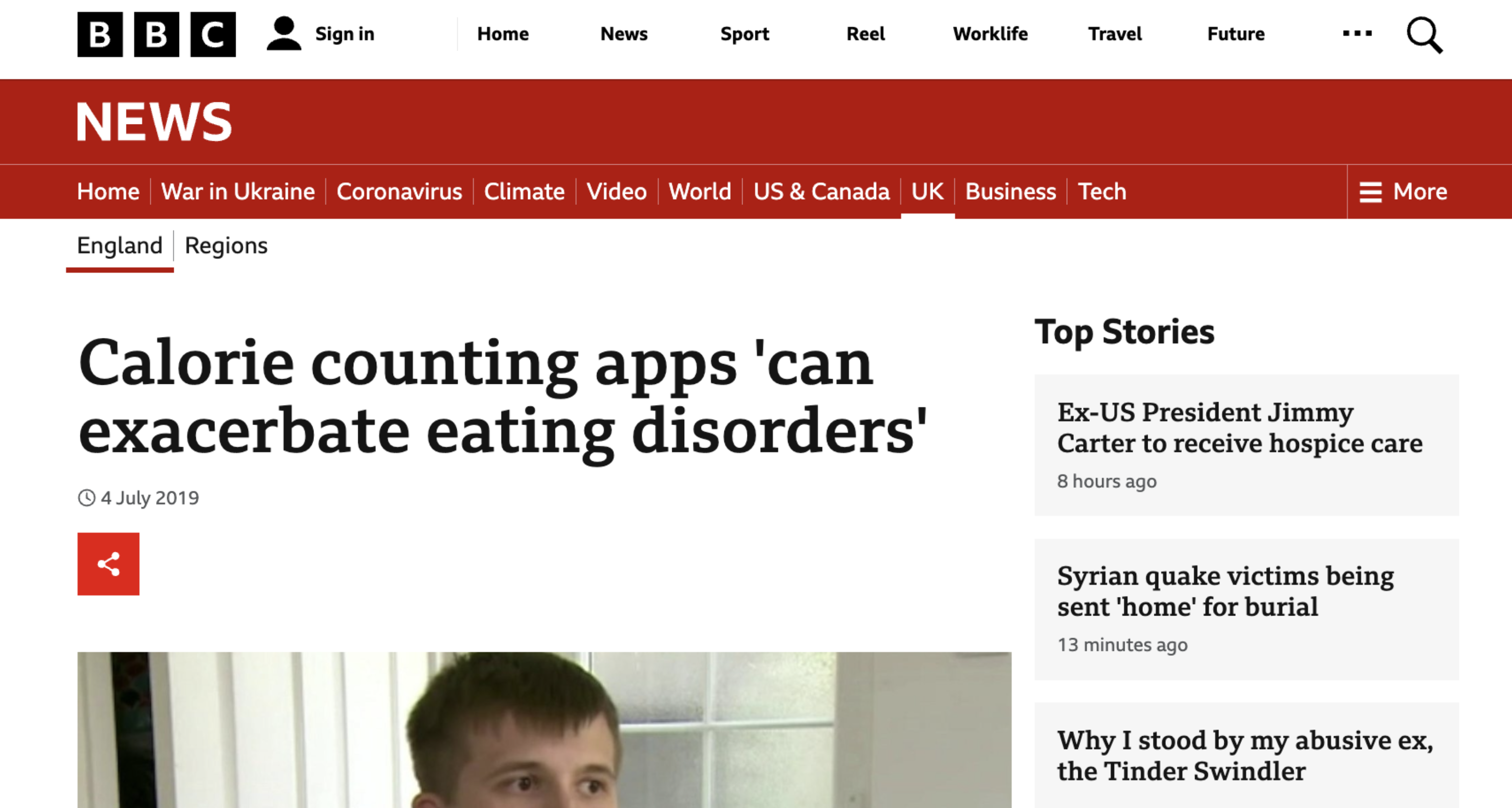
Eating disorders hit really close to home. Over the years, we’ve seen for ourselves how quickly the current apps on the market are not only tedious and error-prone, but can (more concerningly) make us overfixate on some specific number, make us incredibly restrictive in our habits, and so much more…

What it does
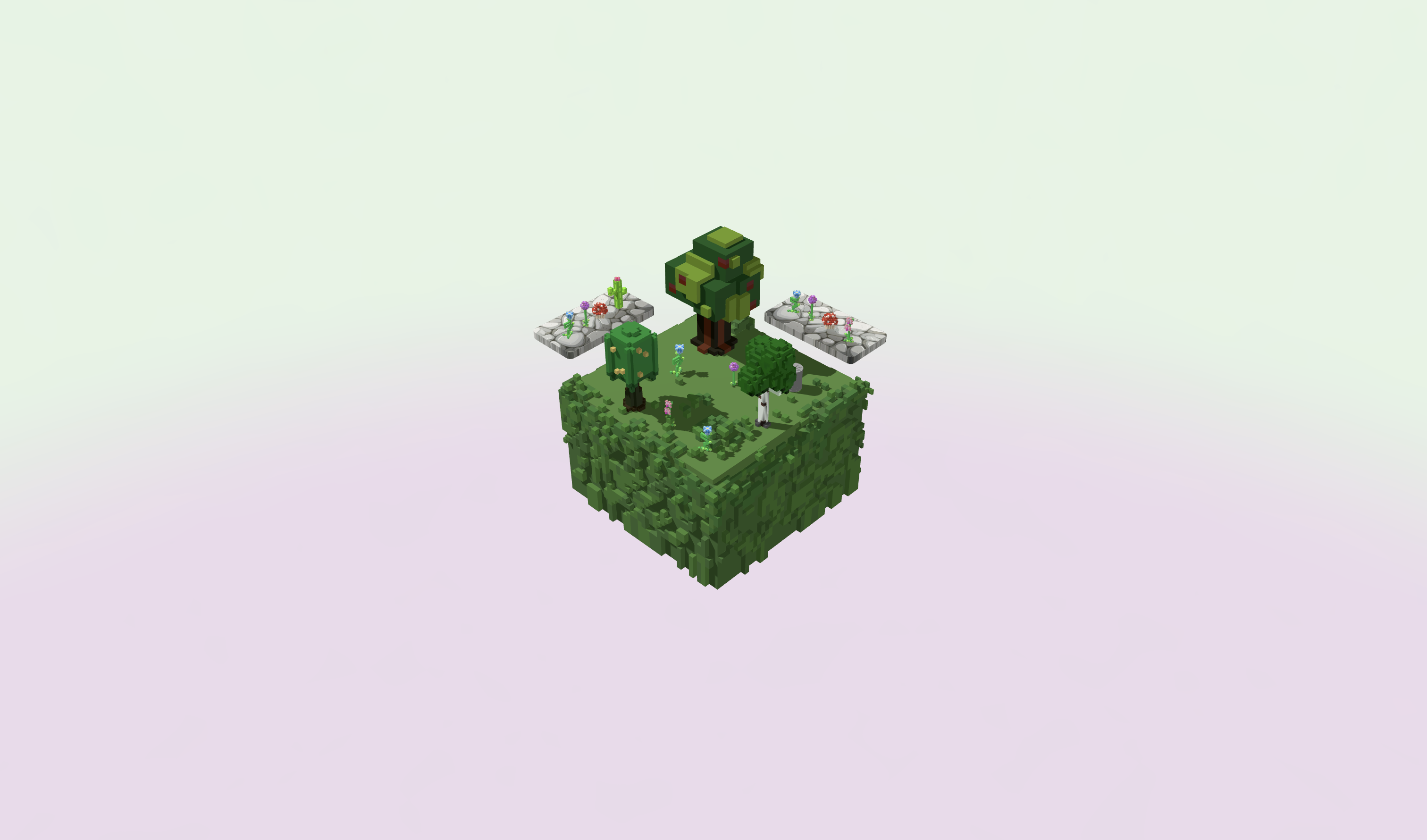
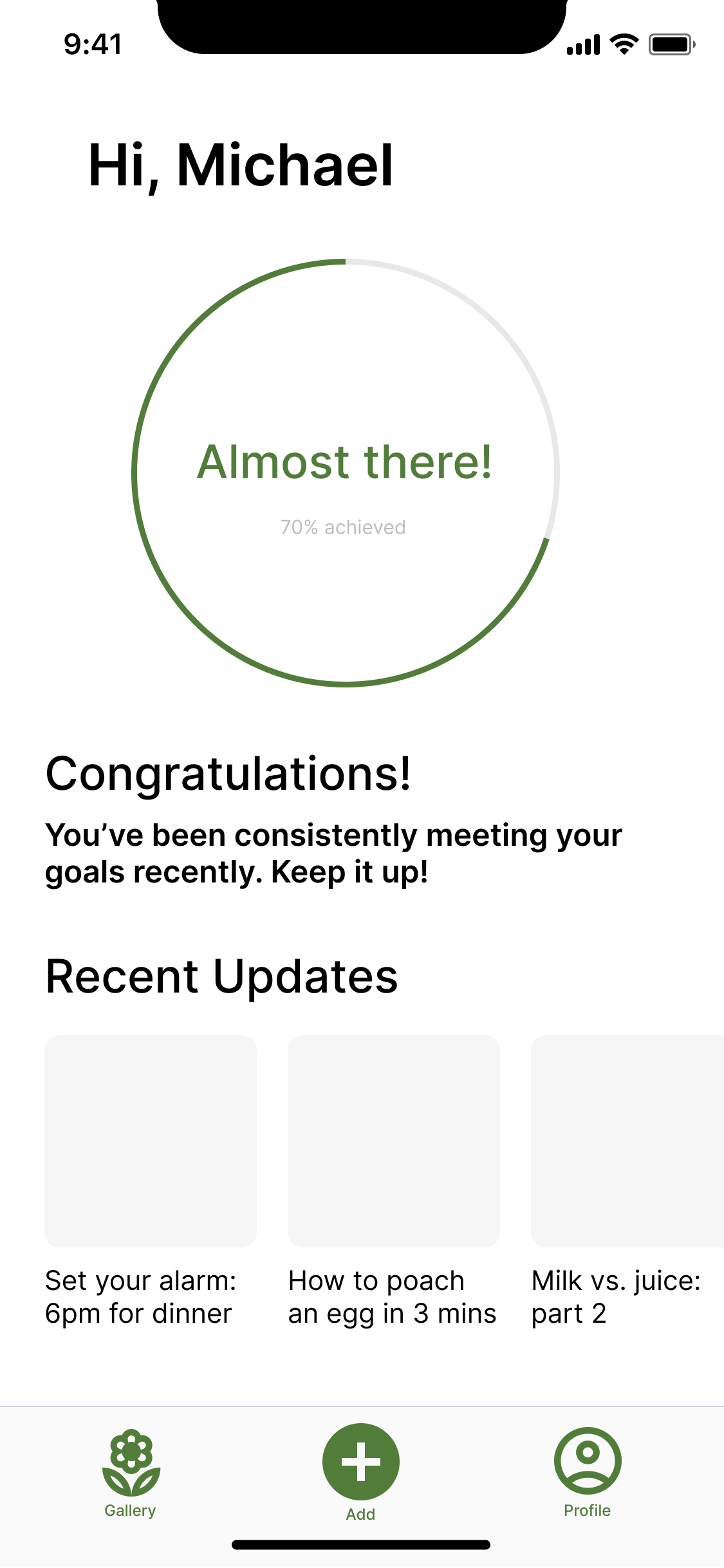
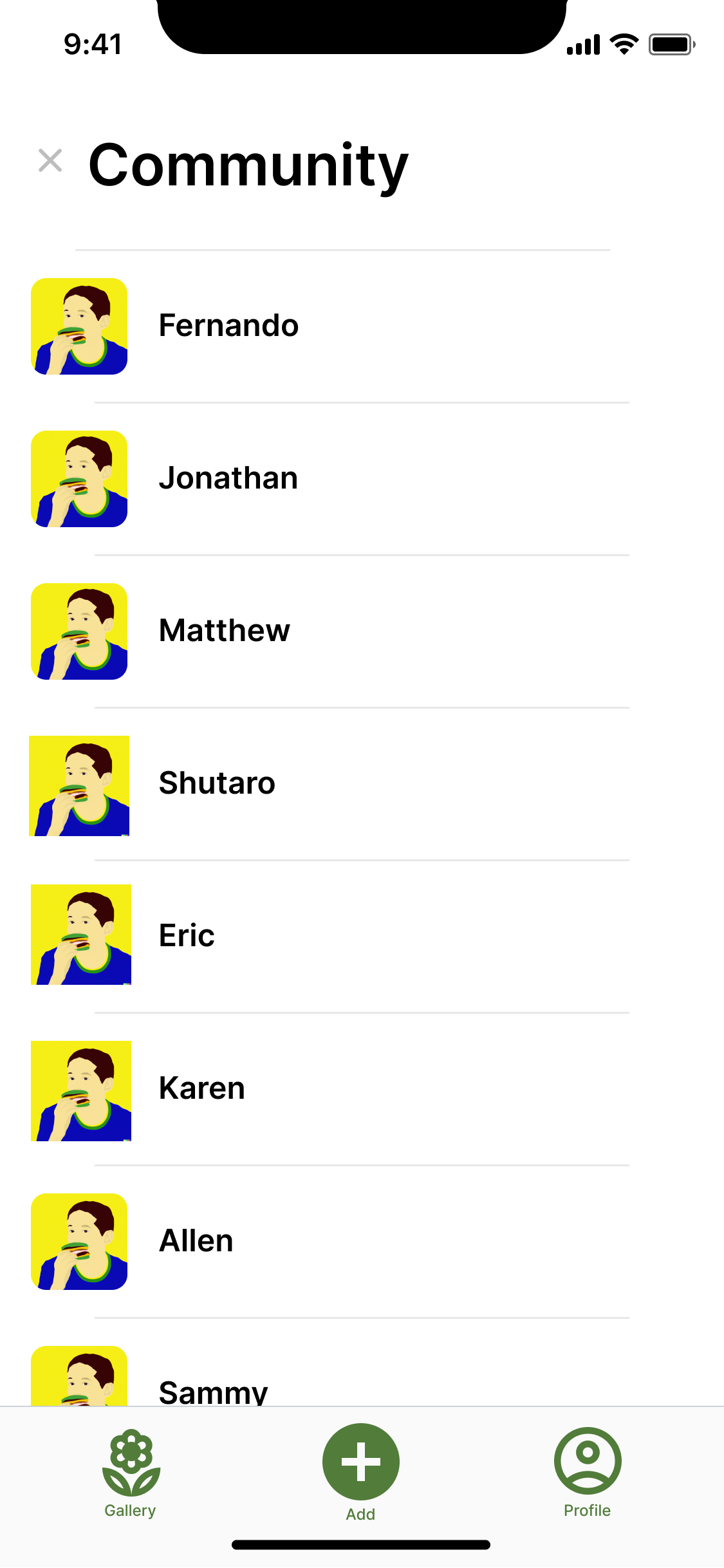
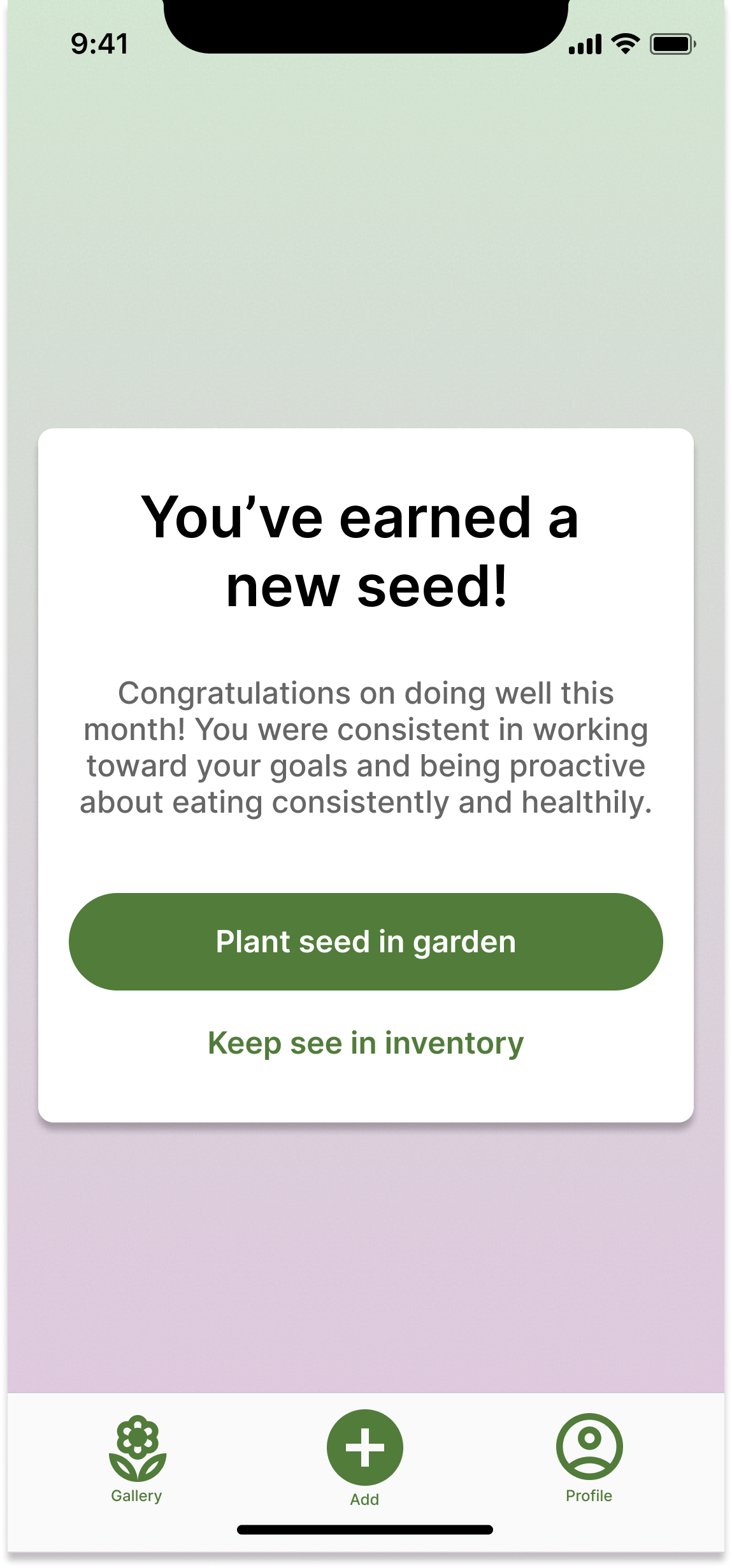
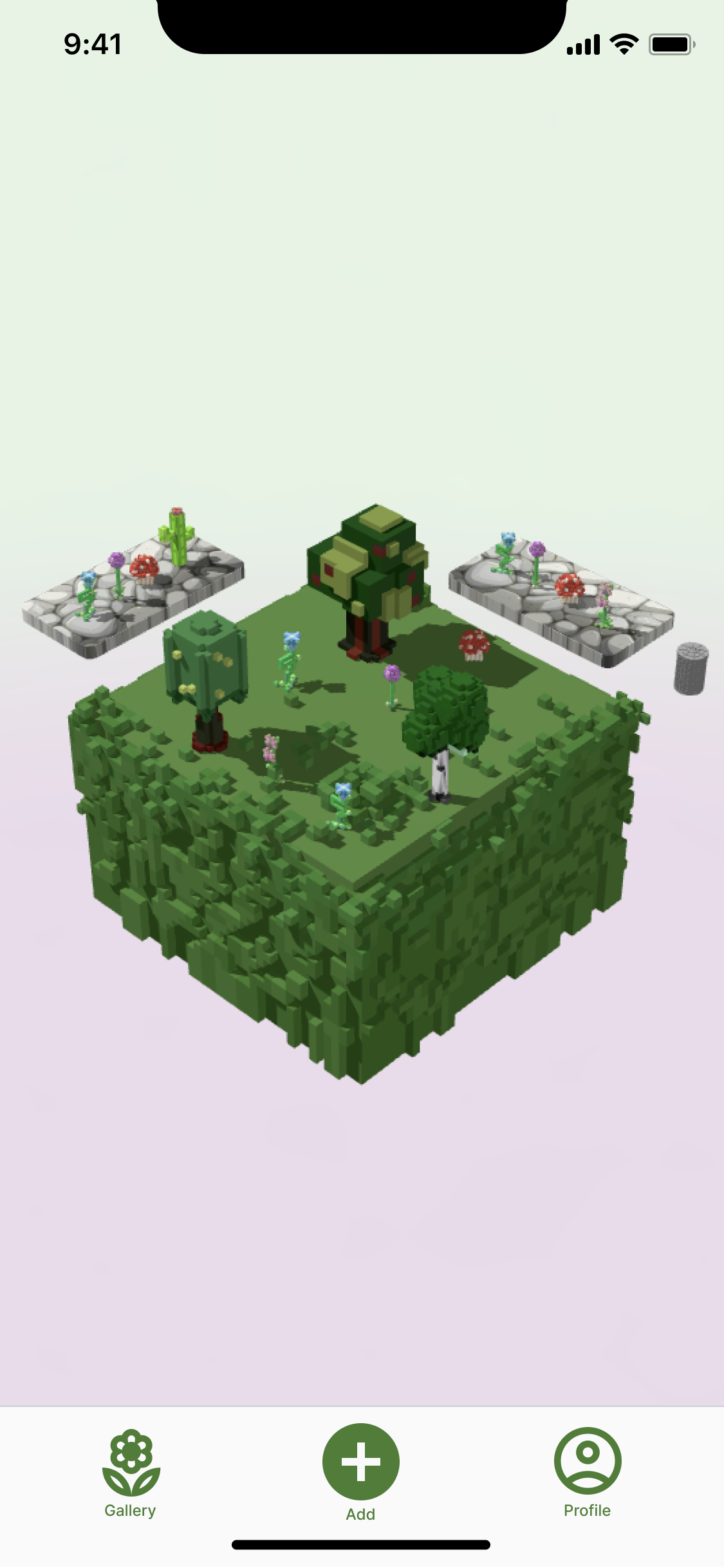
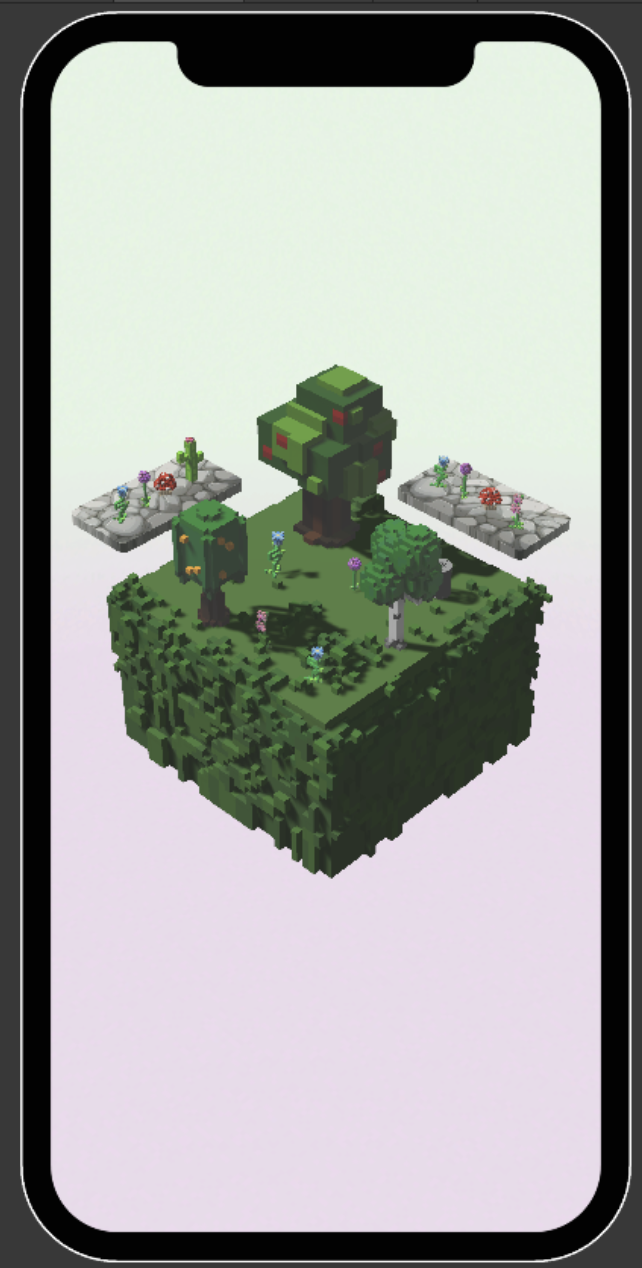
With Food for Flowers, we create a supportive community and foster a positive and inclusive environment that motivates our users to achieve their goals in a healthy and sustainable way. Nurture a garden together with your significant other! Travel around to find out which of your friends are budding landscape architects! Learn some new recipes and cool fun facts through our Updates for you!
It’s time we focussed on qualitative goals and developing maintainable, sustainable habits that promote long-term physical and mental health, rather than fixating on metrics that are easily misunderstood. Come have fun with us — your body, your garden!

How we built it
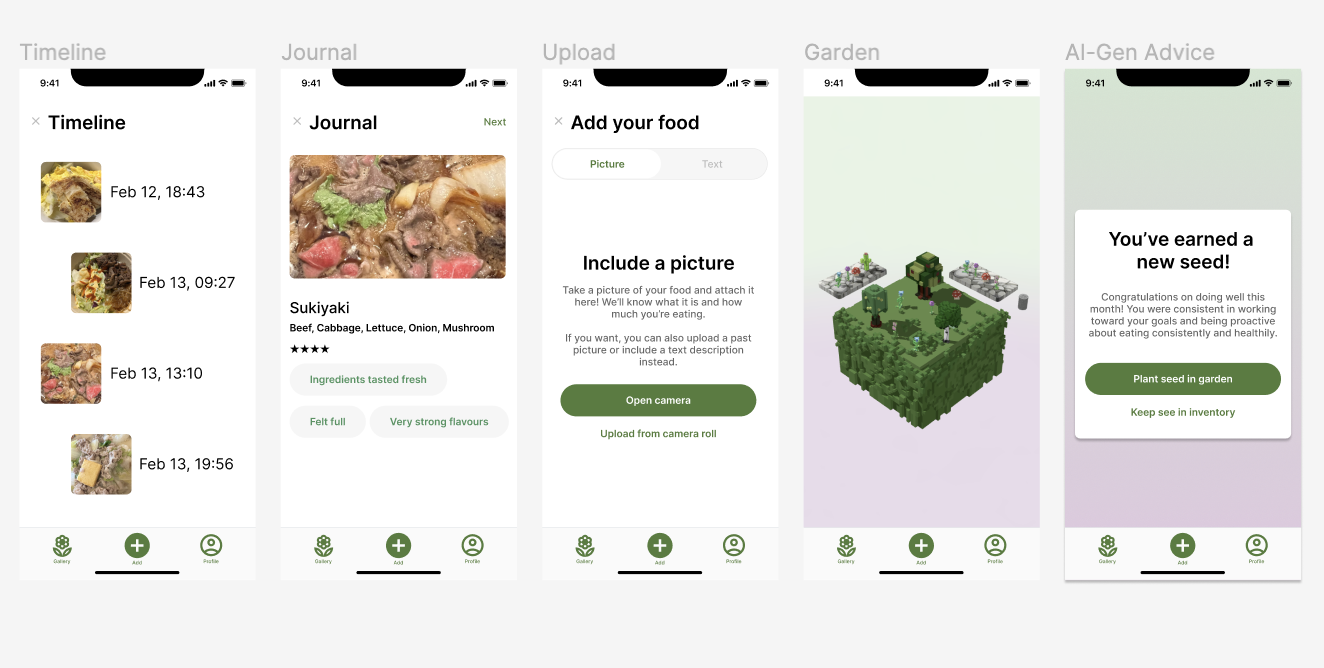
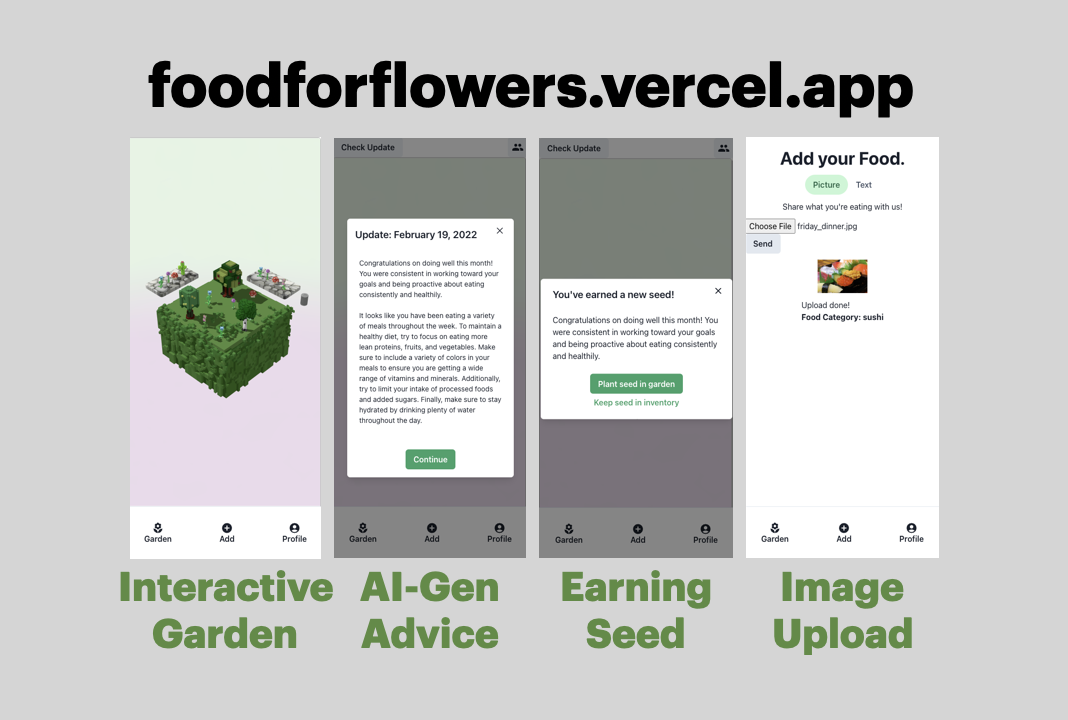
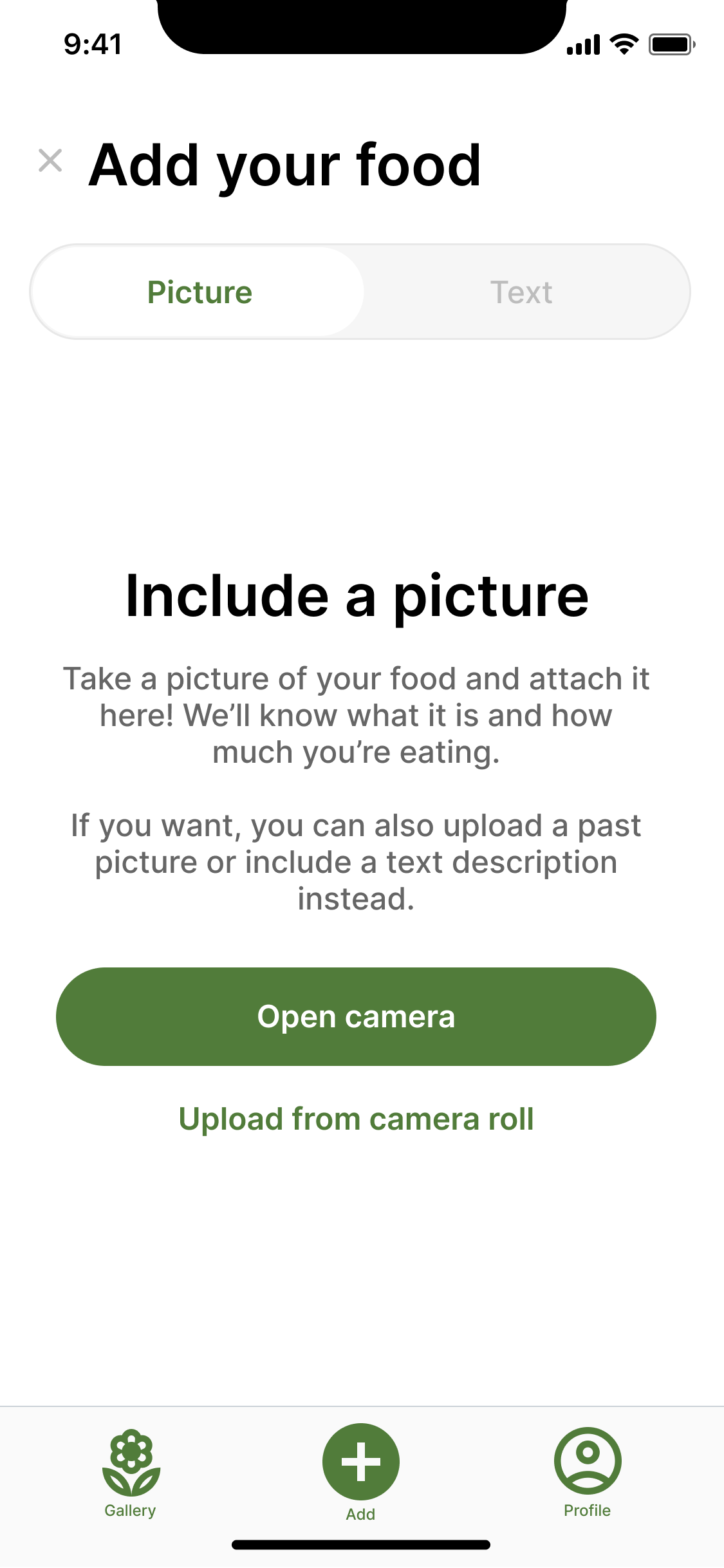
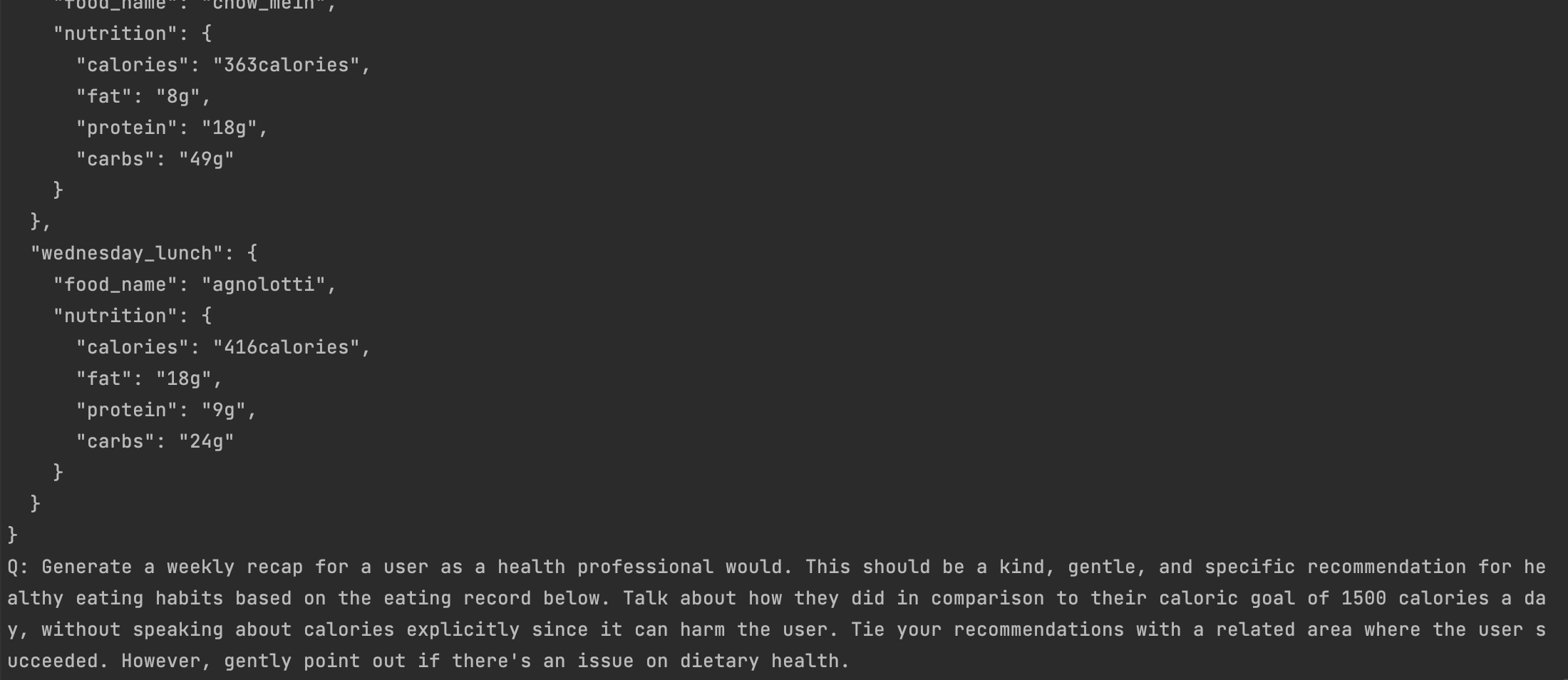
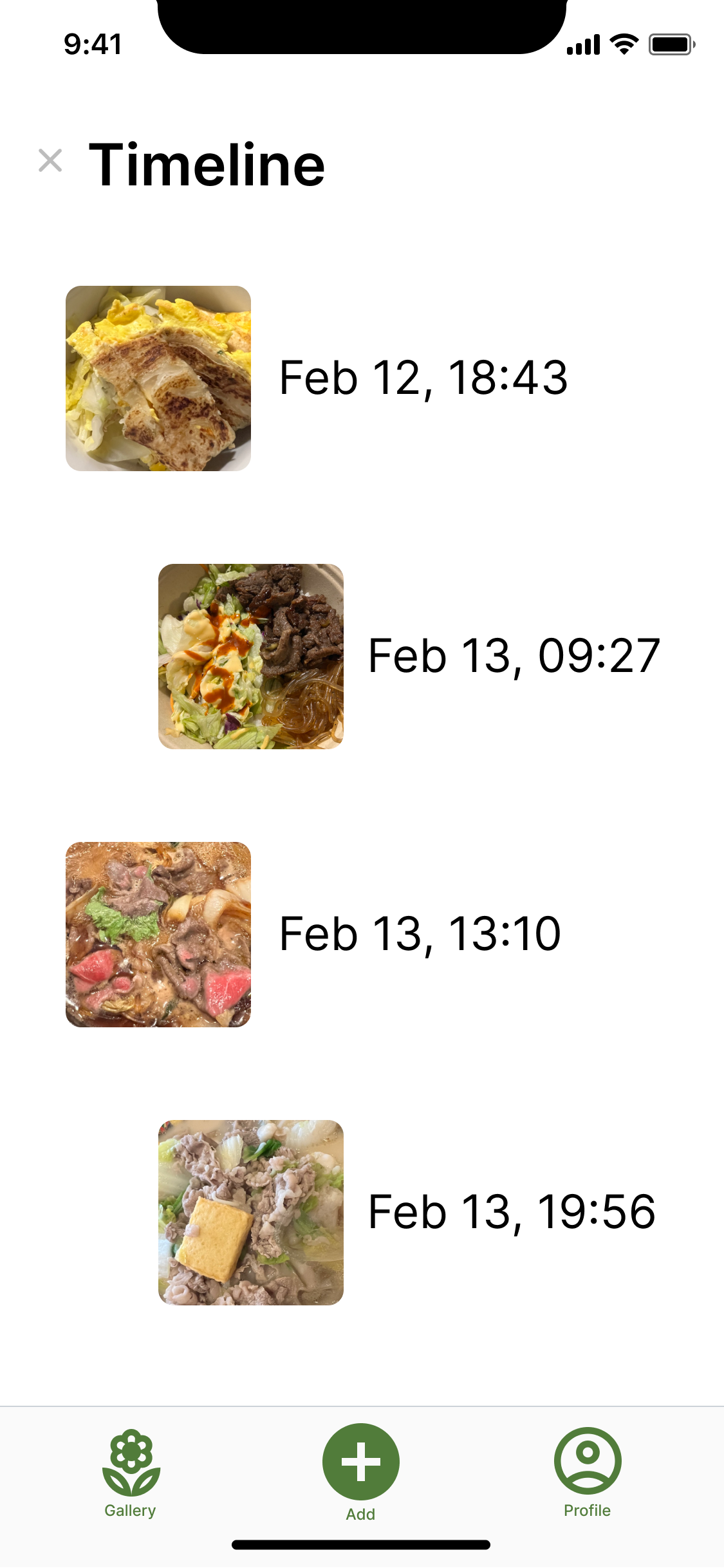
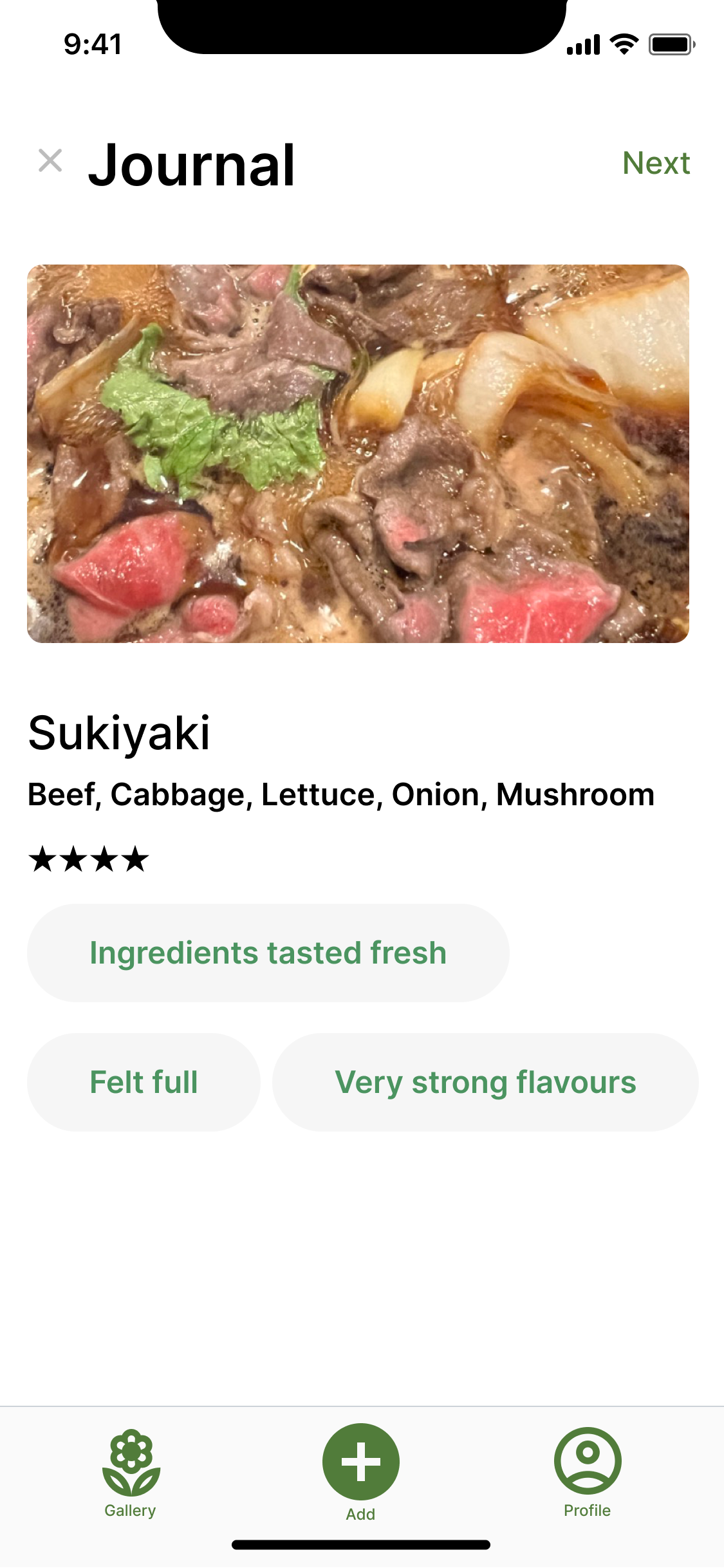
The interactive, customisable garden is built using Unity. The app is built using React and Typescript. We call on the Spoonlicious API to identify food item and their nutritional value, model the data, and feed it into the OpenAI GPT-3 API to generate user-specific recommendations every two weeks. Design and ideation took place on whiteboards, printer paper, and Figma.
 Screenshots of our prototypes, the API calls, and the garden in Unity are attached in the photo gallery.

Challenges we ran into
It took us a while to nail down the theoretical foundations for our project. A lot of the project required specific decisions to be made, such as the incentivisation structure and community building features of the app.
After we designed the information architecture and prototyped the user flow, we also had to spend a lot of time learning how to use our tools — getting comfortable with Unity and React, for example, took much trial and error!
Accomplishments that we're proud of
Looking back, we are extremely happy and excited to have built Food for Flowers. Not only did we pick up new skills and connect with the world on a deeper level, we also got to know each other and make some wholesome relationships along the way!
Most of all, we feel empowered — through our daring perseverance and confident teamwork, we achieved a result that was beyond anything we imagined before coming to TreeHacks. We’re all looking forward to building more for the world!
What we learned
In addition to picking up some new tools and tricks, we learned how to ask the right questions and think about our fellow humans — these are not just “end users” to consider, but rather they are friends, peers, family. We build for all of us to promote a kinder, healthier world.
What's next for
We hope to not only build out the app to provide a more cohesive user experience, but also to reinforce the technical implementation.
For example, we have found research that achieves high success in identifying not just the type of food in a picture, but also the mass and nutritional value. Hopefully, we can build on the literature and bolster the accuracy of our system.
Ethical considerations
Because of the intense and serious risks to mental health associated with food, we had to make very careful decisions when building this app. Our prompts to GPT3 are carefully constrained such that feedback will be considerate, constructive, and well-framed. Our incentive systems are designed to prevent any external influences or judgment for any users. We also highlight qualitative features in helping users become more comfortable with their relationship with food. Of course, we are not experts in food or learning sciences, so any considerations may require some review with the help of industry practitioners or through extensive user testing before deployment.

Log in or sign up for Devpost to join the conversation.