-
-
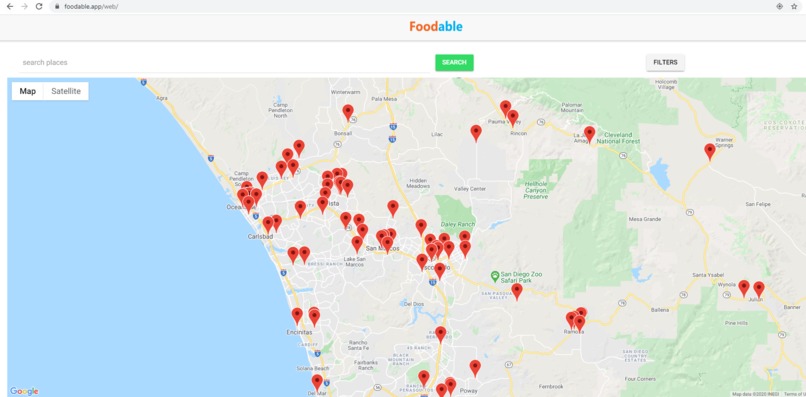
the main web interface for Foodable, which here is showing some food banks in North County San Diego managed by San Diego Food Bank
-
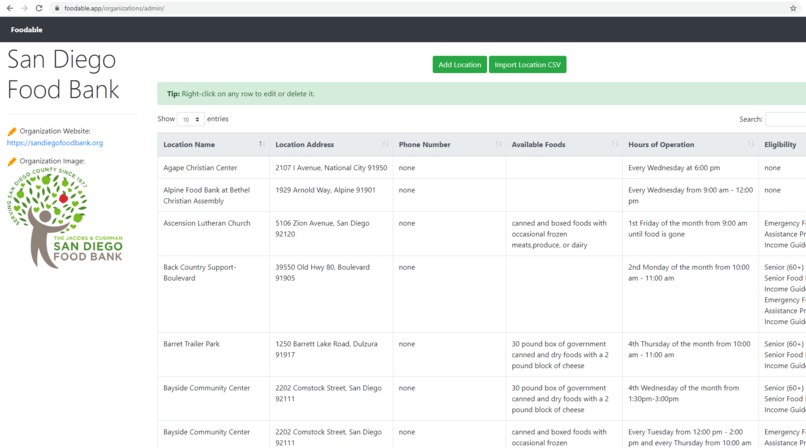
the admin panel organizations see for Foodable, in this case, the San Diego Food Bank's account
-
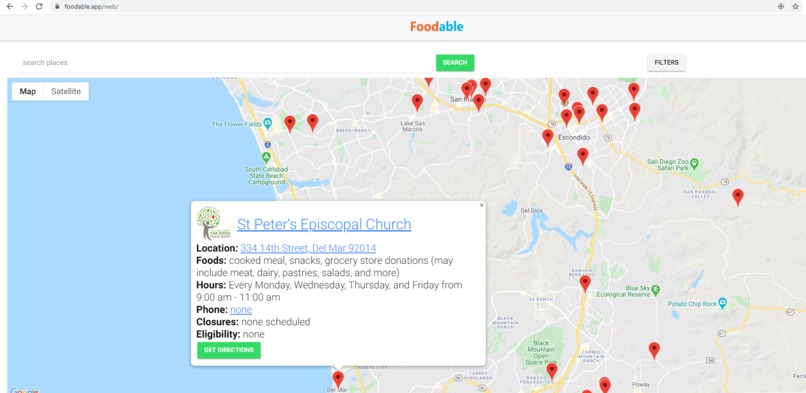
an example of a location selected on Foodable


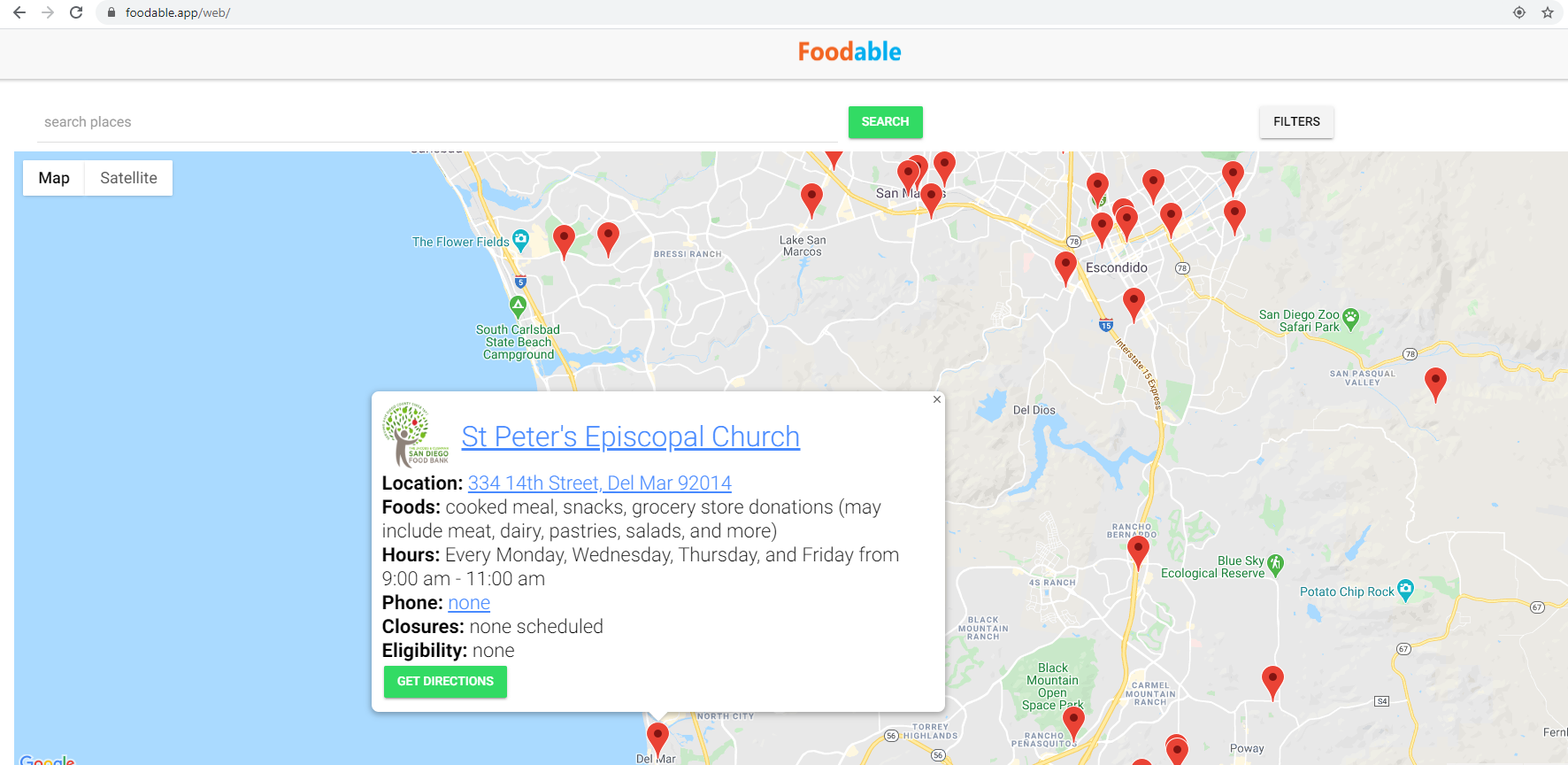
Who am I?
I'm Lucas Baizer, I'm a 17 year old high school junior in San Diego, California. I'm a passionate full-stack web developer and love working on projects for public good!
Inspiration
I began working on Foodable over a year ago to help the homeless and impoverished find food near them. Today, I see Foodable as a means to help the large increase of food insecure citizens find food during this critical time. Now affected are not only the homeless, but also senior citizens, those earning below the Federal poverty line and even those above the line who have no savings cushion but whose jobs have been eliminated due to the virus. Foodable provides information that allows those who are food insecure to avoid unnecessary trips and thus minimize further spreading COVID-19. Reducing travel in an effort to search for food sources is a key factor in stopping this disease and keeping those who are at increased risk safe.
What it does
Foodable is a singular, cross-platform system that allows you to search, find, filter, and research food banks within 100 miles of your current location. Users can utilize either desktop browsers or mobile devices, including both iOS and Android phones, to access Foodable. Food bank organizations and agencies can sign up on Foodable's admin panel and input their food bank locations, which gets reflected onto user's devices. Foodable is the first system capable of unifying food bank location data into one aggregated place.
How I built it
Foodable is built using the Ionic Framework which deploys to both desktop browsers and as a mobile app to phones as well. It uses Angular 5 on the web and mobile frontend, and uses the Google Maps API to render the map of locations. The admin portal and homepage of Foodable are built using Bootstrap 4. The organization and location data is managed via a REST API built in Node.js, and uses MariaDB as the database, which are both hosted on an AWS EC2 instance.
Challenges I ran into
Using the Google Maps API in Ionic was woefully undocumented when I started working on this project, so it took a lot of trial and error to get the mapping working. Beyond the technology, there were some difficult design decisions as well, like how to create the system without having users need to log in, or how to make the most efficient yet aesthetically appealing user interface (as I am not a graphic designer by any means).
Accomplishments that I'm proud of
I'm very proud of being able to say that Foodable is the first system that can truly unify all food bank data into one place. It's a complex, in-depth system, but easy to use for both administrators and users, and I'm happy to have accomplished that feat.
What I learned
Before working on Foodable, I had never worked with the Ionic Framework or Angular. I've used Ionic more in projects since, and I'm very glad I had the chance to learn it. Additionally, I was fortunate to have the San Diego Food Bank provide input on it, which helped me learn working in a professional environment with a customer and meeting their needs. Additionally, I learned about the Google Maps API.
What's next for Foodable
The mobile apps are currently not available to be downloaded on the iOS/Android app store, but I am actively working on getting them on the App Store/Google Play Store as fast as possible. If Foodable gets traction and people start using it more, I'll migrate the backend to AWS Elastic Beanstalk so it can properly scale to work with demand.


Log in or sign up for Devpost to join the conversation.