-
-
project image
-
recommendations
-
search
-
profile
-
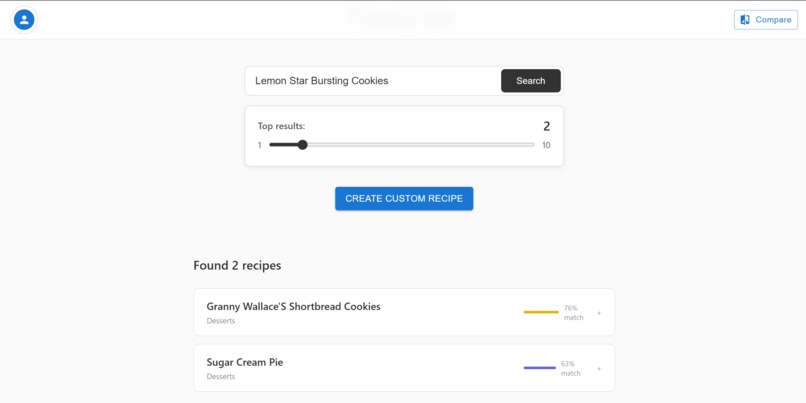
search
-
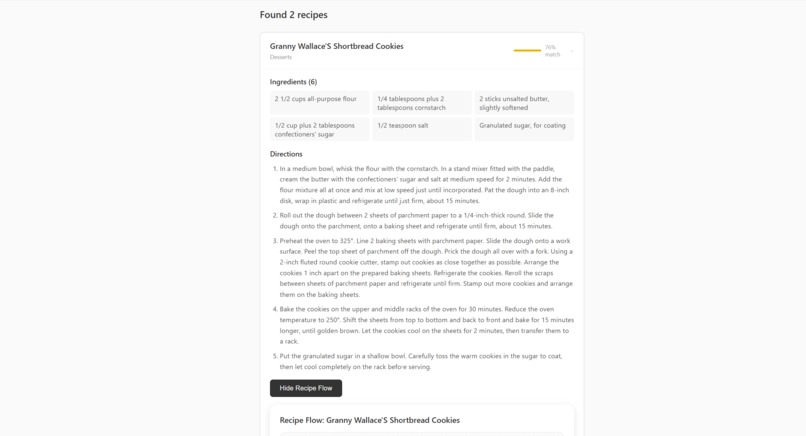
recipe description
-
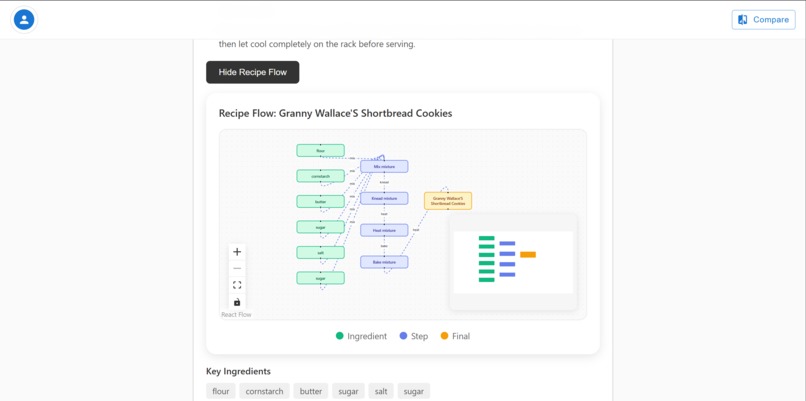
recipe graph
-
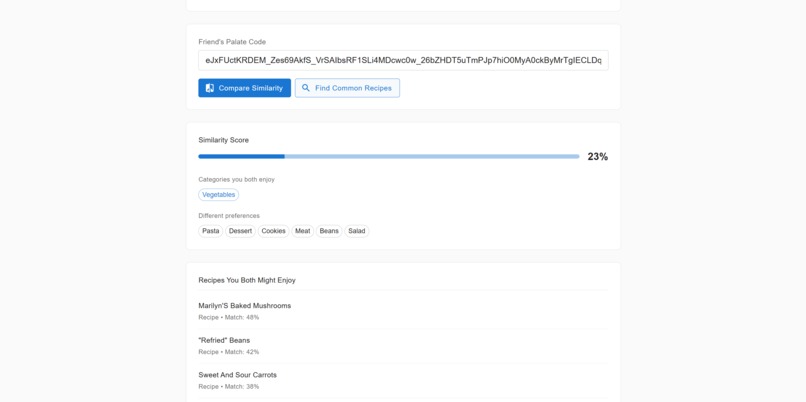
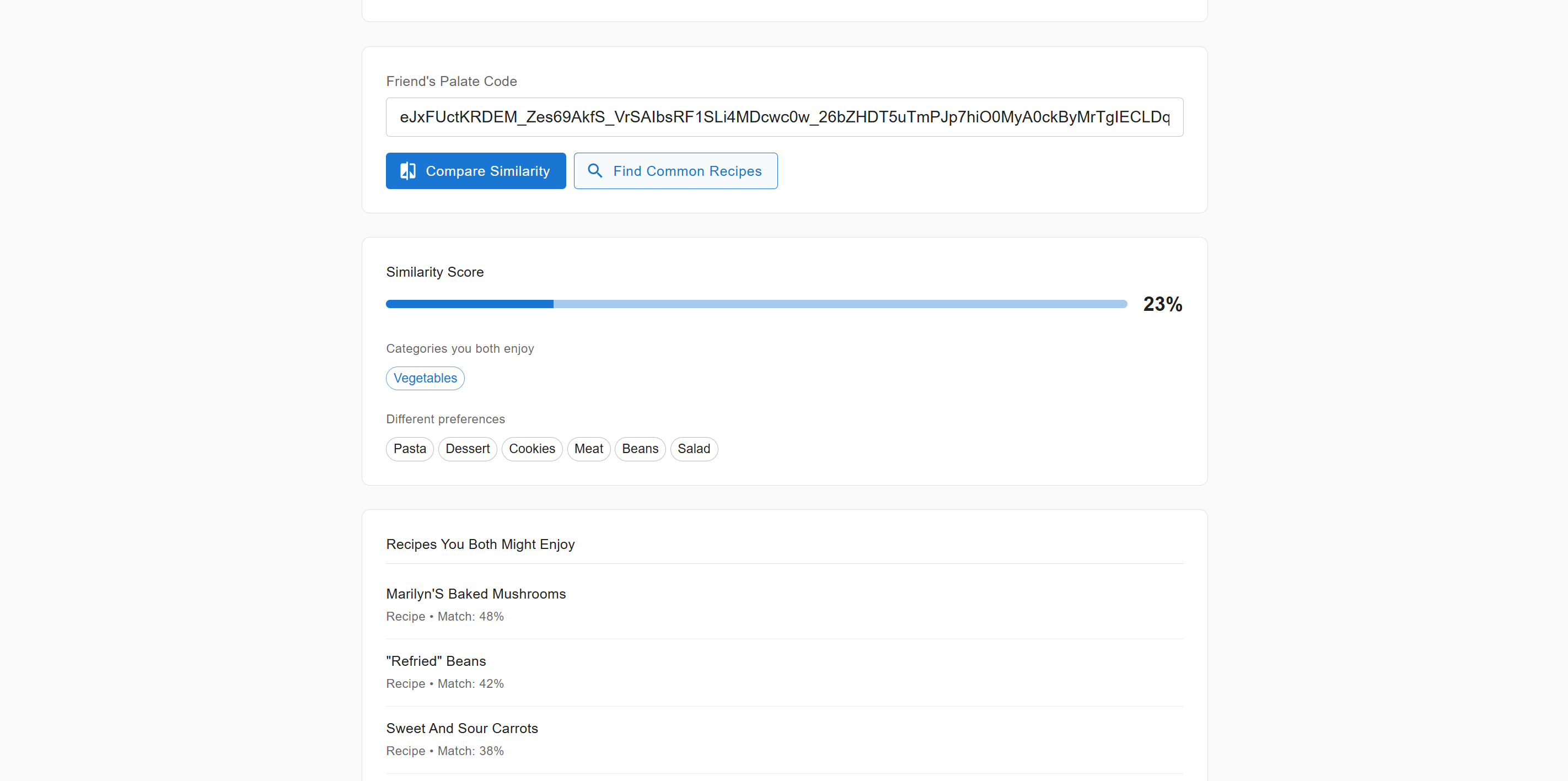
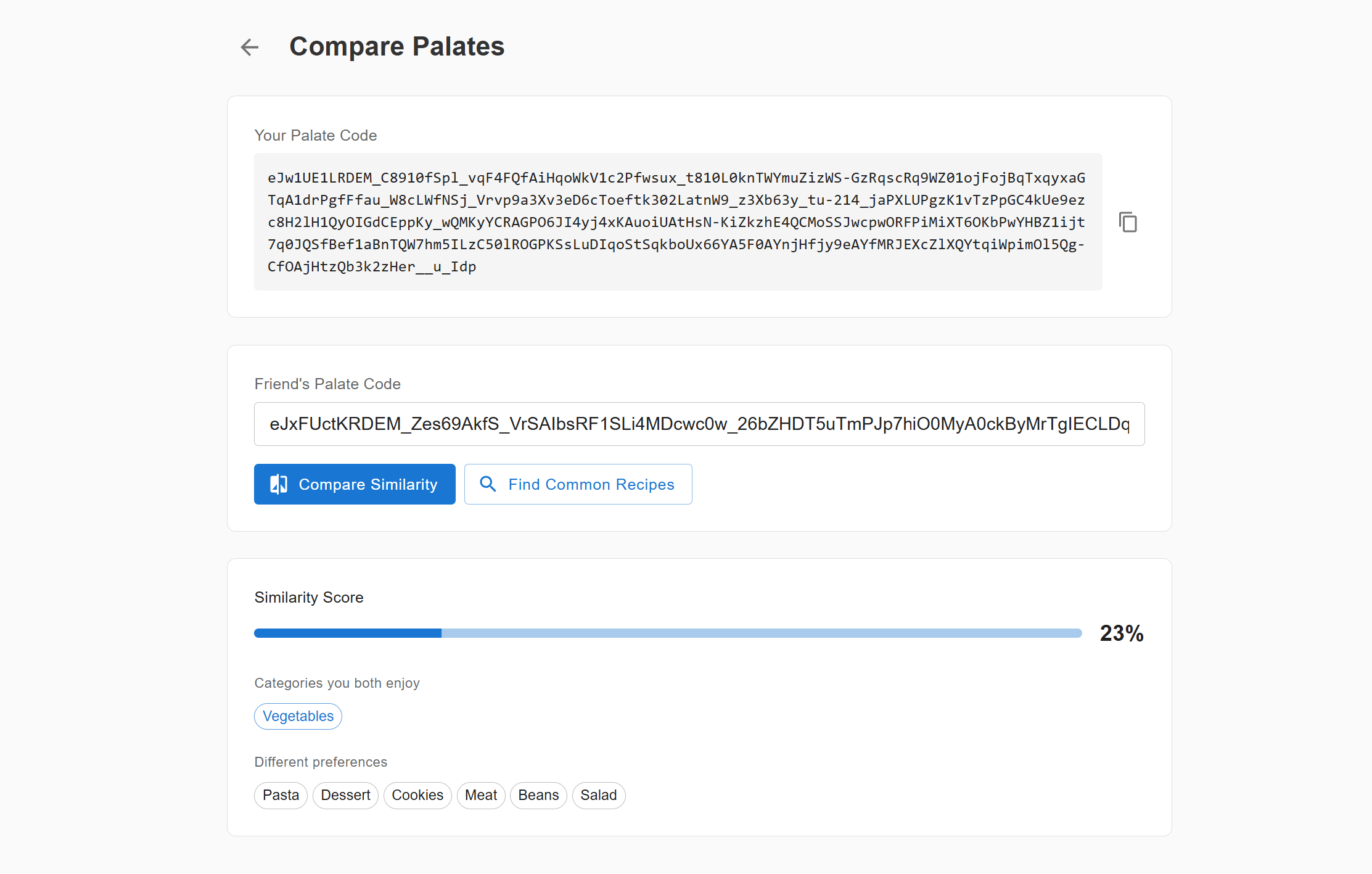
compatibility
-
compatibility 2
Inspiration
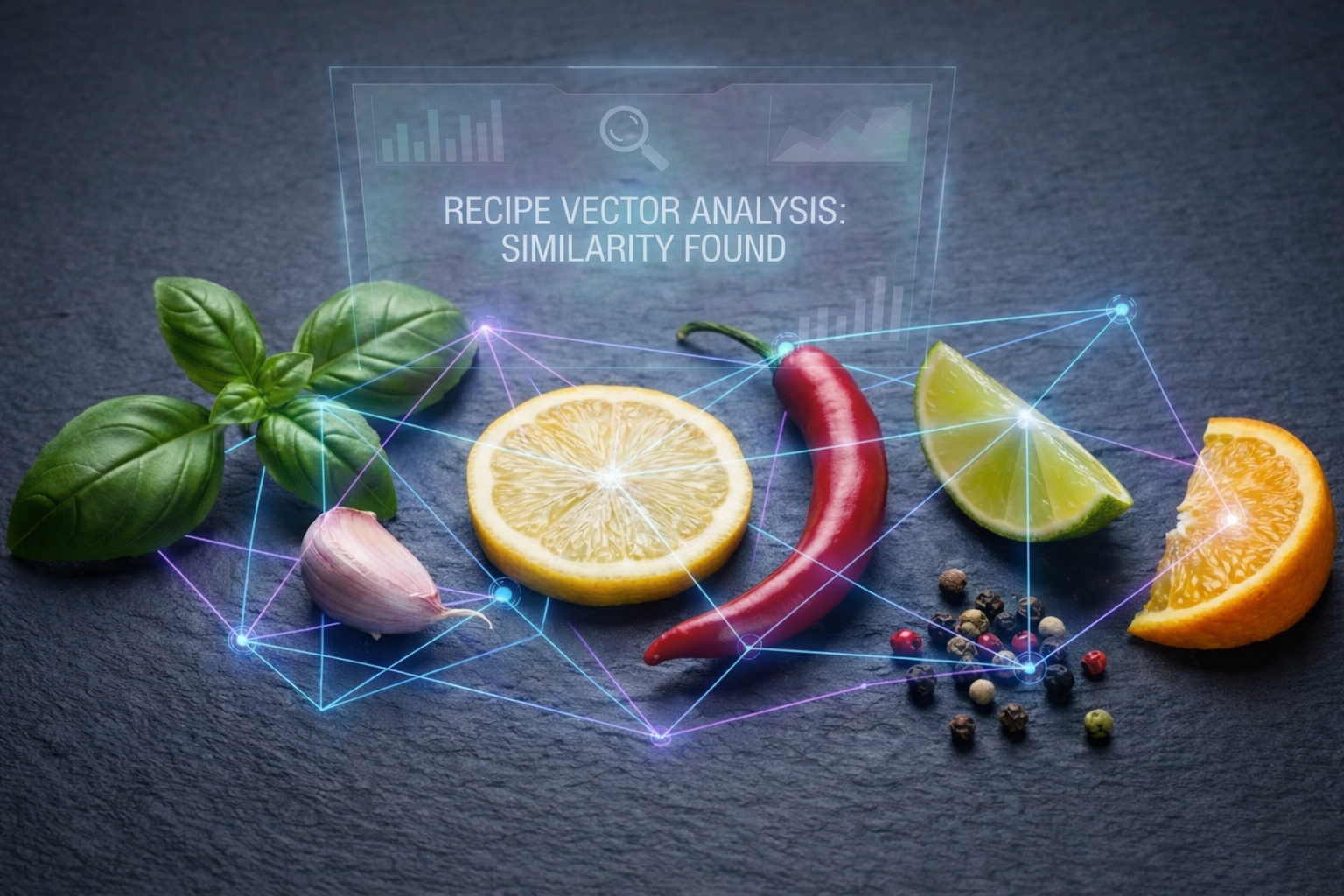
Food recommendation today is largely based on ratings, tags, or surface-level ingredient matching. Inspired by Word2Vec, we wondered: what if food could be embedded the same way words are where similarity emerges naturally from structure and context rather than manual labels? This led us to Food2Vec, a system that encodes food not just by ingredients, but by how it is cooked, transformed, and served, capturing taste and culinary similarity in a vector space.
What it does
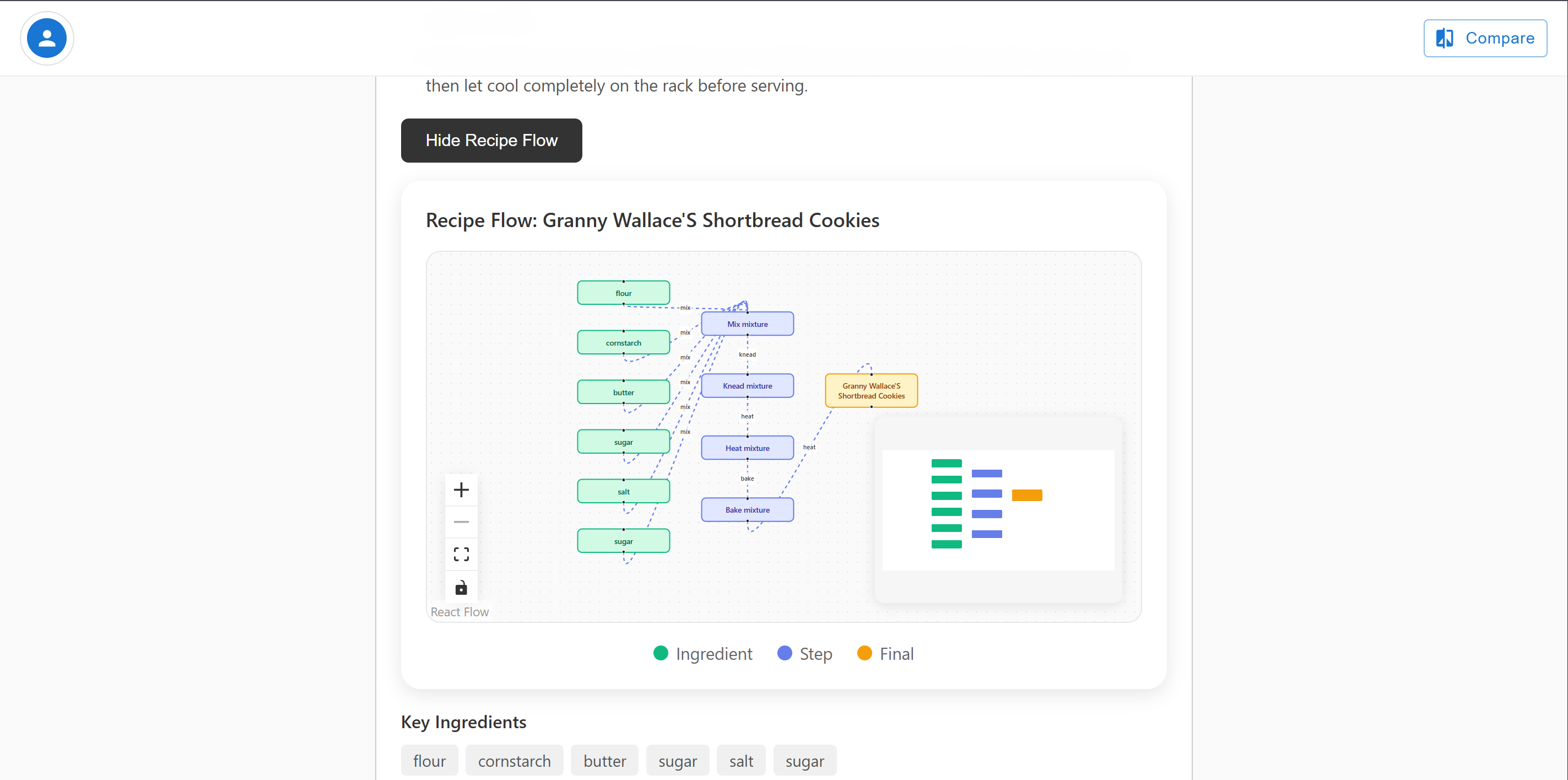
Food2Vec creates vector embeddings of food directly from recipes. Instead of treating a recipe as a flat list of ingredients, we model it as an ingredient–action–state graph, where:
- Ingredients are transformed through actions (e.g. dice, fry, boil)
- The order of operations matters
- Each step produces a new state that can be used in later steps
- Serving style (e.g. taco vs burrito) is also encoded
From this representation, Food2Vec can:
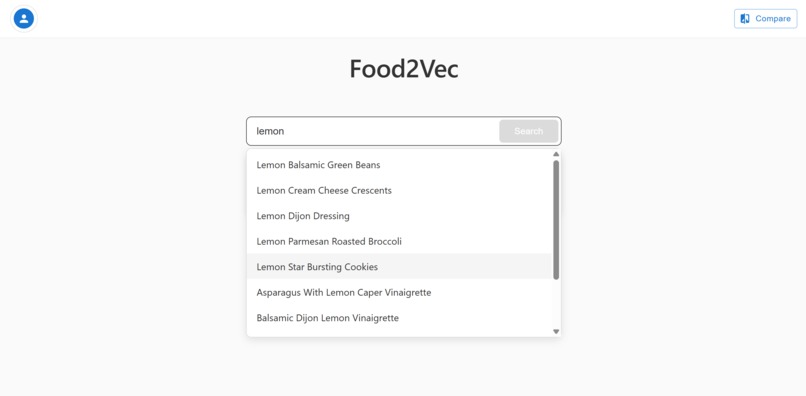
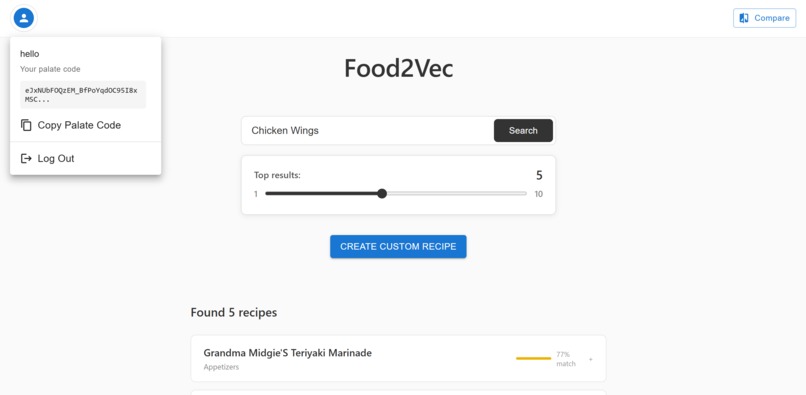
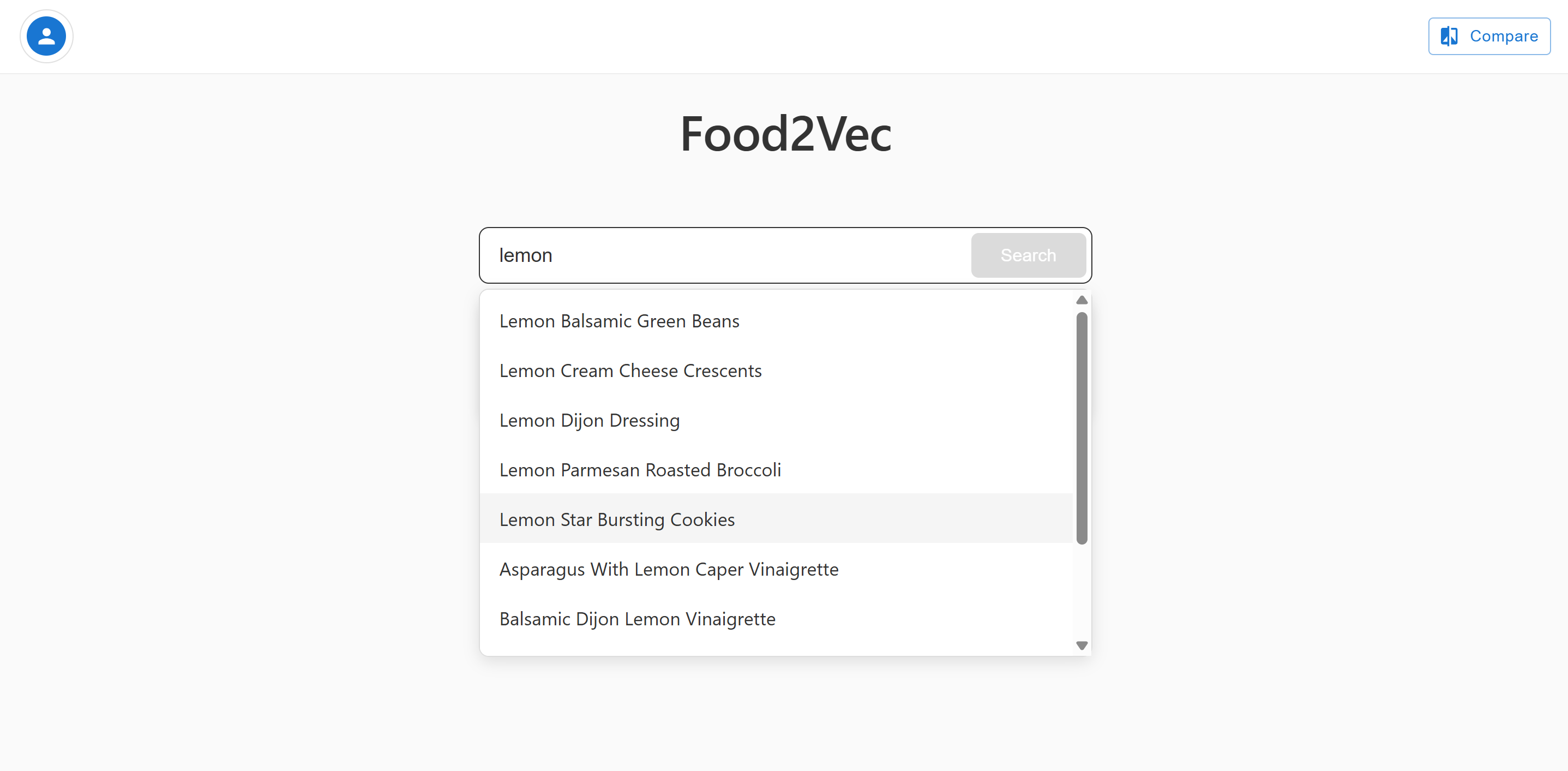
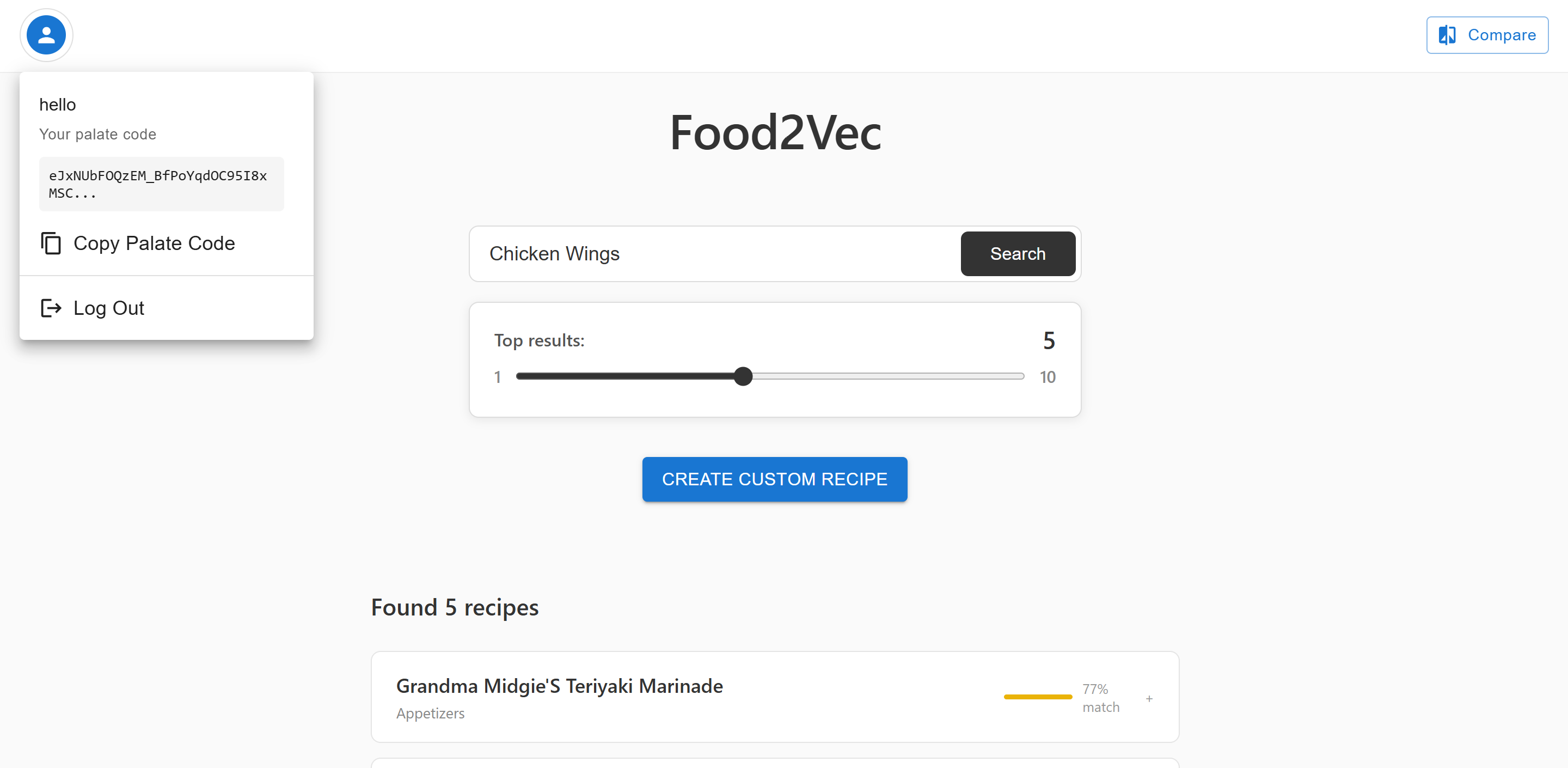
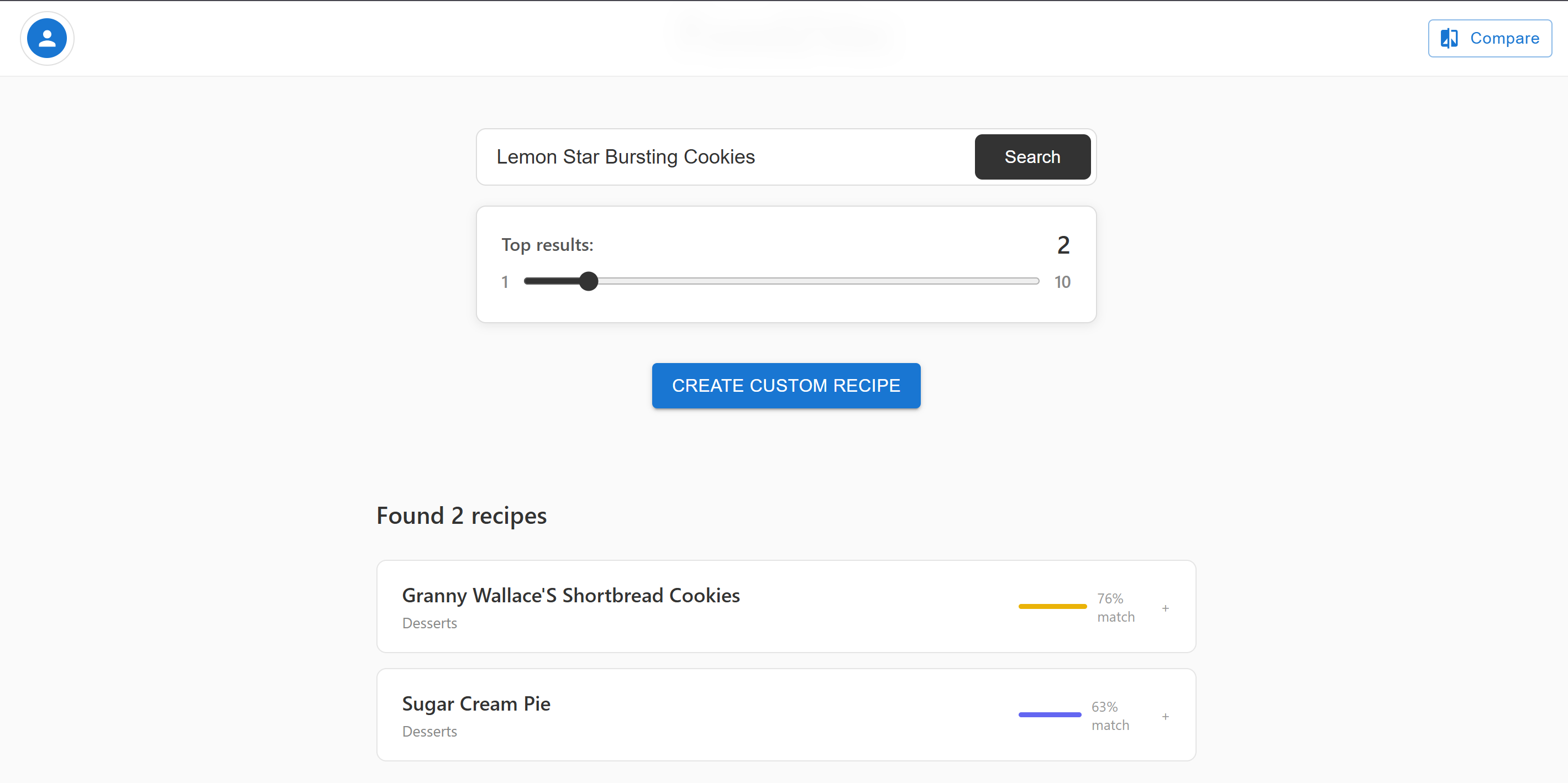
- Find similar foods by nearest-neighbor search in vector space
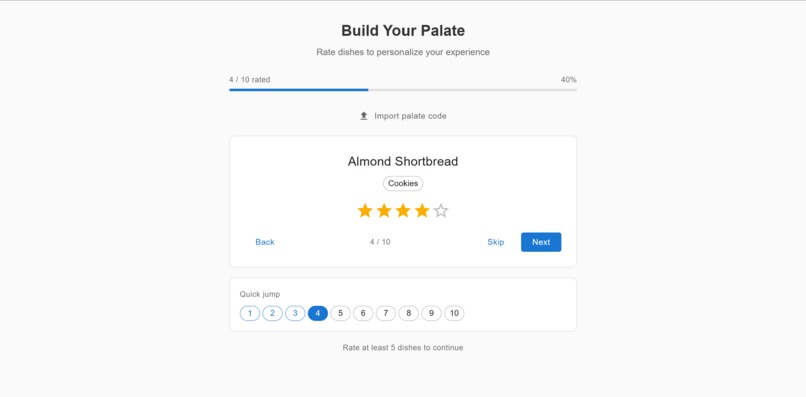
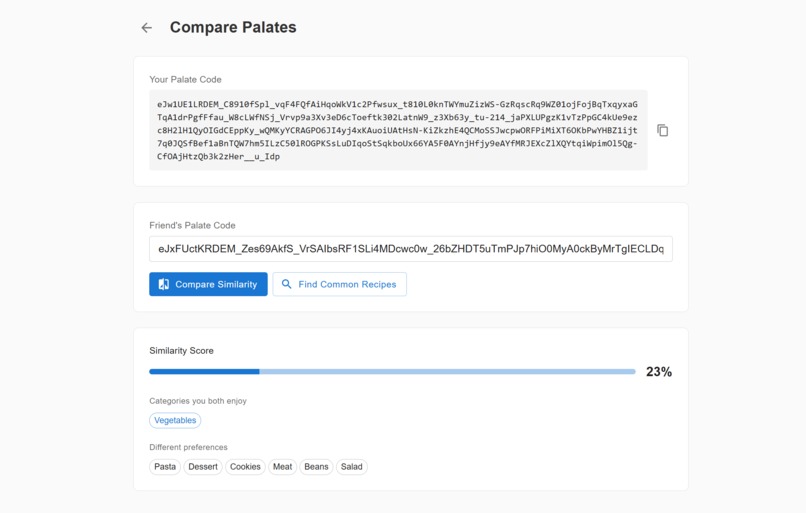
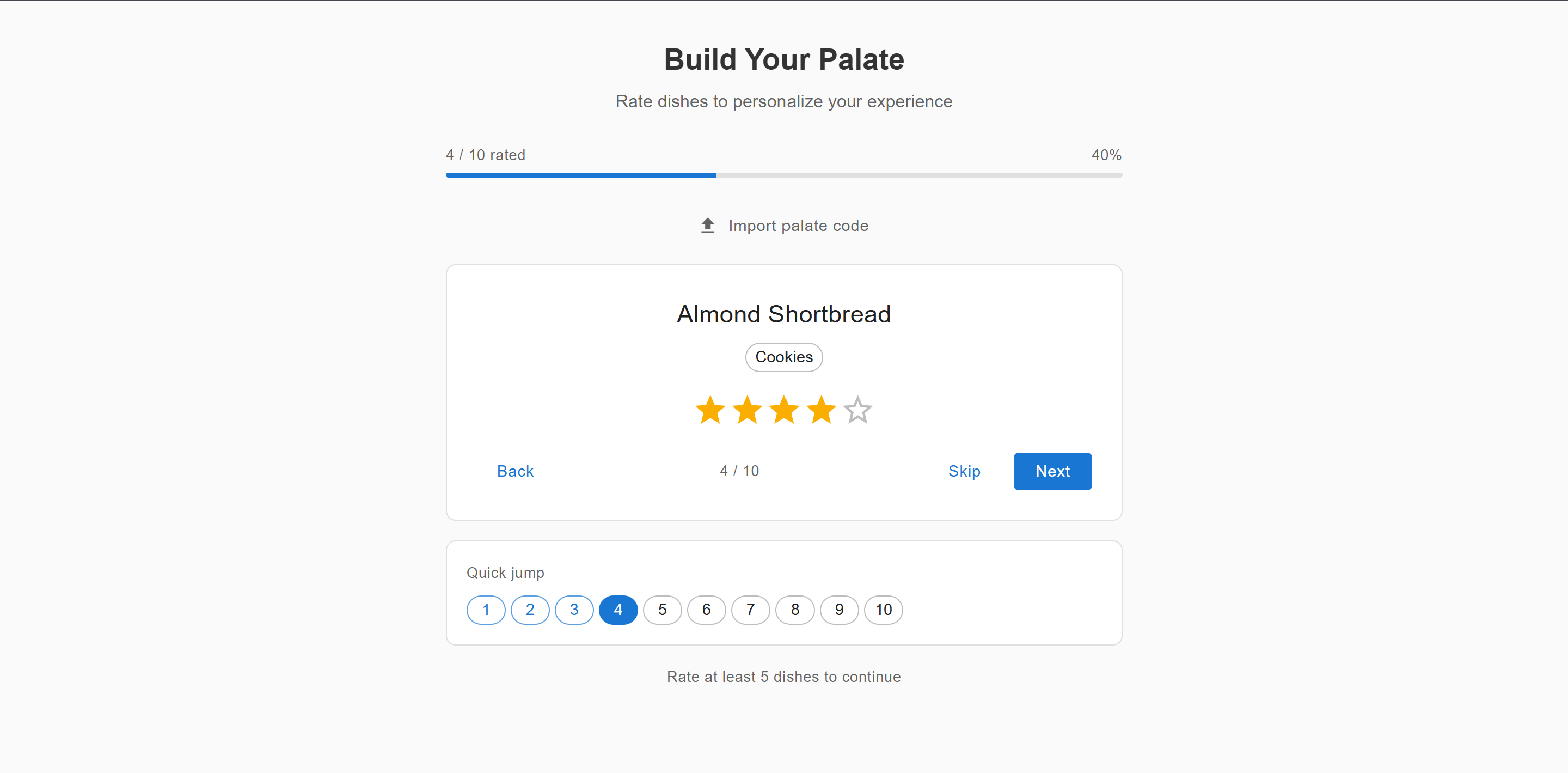
- Build a user taste profile based on likes and dislikes
- Recommend foods tailored to an individual’s preferences
- Match users with similar (or complementary) taste profiles to help groups decide what to eat together
Ultimately, Food2Vec aims to solve both:
- “What should I eat?”
- “What should we eat together?”
How we built it
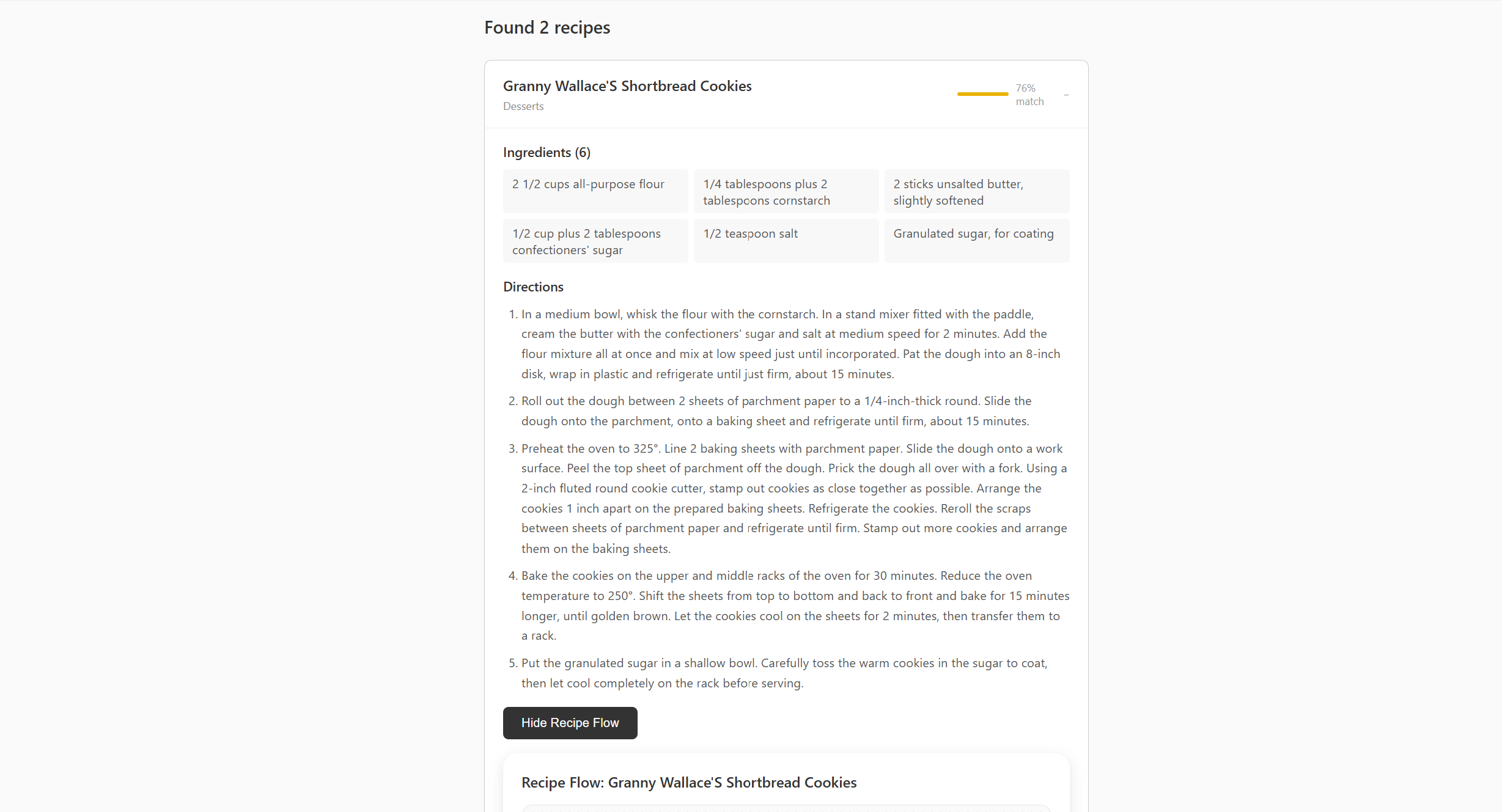
- Recipe representation We parse recipe instructions into ingredient–action–state graphs. Each cooking step consumes ingredients or intermediate states, applies an action, and outputs a new state. Every direction can be thought of as a state machine that takes ingredients or ingredient-states as inputs and outputs a new ingredient-state that can be an input for another direction. This effectively converts a recipe into a Directed Acyclic Graph.
Example:
tomato + onion --(stir fry)--> stir_fried_tomato_onion
Taste-aware encoding Ingredients are tagged with taste attributes (e.g. salty, sweet, umami), and then encoded using MiniLM to capture semantic similarities between broad classes of ingredients (chicken / poultry)
Vector embedding Recipes are converted into vector representations that encode:
- Ingredients
- Cooking processes
- Order of transformations
Vector database & retrieval We store embeddings in a vector database and perform similarity search to power food discovery, recommendations, and user matching.
User profiling Users swipe through foods, and their likes/dislikes move their position in the same vector space, forming a taste passport.
Challenges we ran into
- Parsing unstructured recipe text into consistent actions and states
- Preserving order and transformations, which are often ignored in recipe models
- Time constraints, balancing modeling ideas within a 24-hour hackathon
- Deployment and integration issues, especially under CI constraints
Accomplishments that we’re proud of
- Designing a novel ingredient–action–state graph representation
- Encoding not just ingredients, but encapsulating the process of cooking and flavours evolving together
- Creating a shared vector space for both food and users
- Demonstrating how embeddings can enable individual and group decision-making
What we learned
- The way data is represented can matter more than the model itself
- Food is inherently sequential and stateful, making it a great fit for graph-based representations
- Even simple taste heuristics can meaningfully shape embeddings
- User preferences can be modeled naturally as movement within an embedding space
What’s next for Food2Vec
- Improve automatic extraction of cooking actions using LLMs
- Expand and balance the dataset across more global cuisines
- Build richer group-matching features to help friends reach food consensus
- Integrate with restaurants to recommend places based on food similarity rather than ratings alone


Log in or sign up for Devpost to join the conversation.