-
-
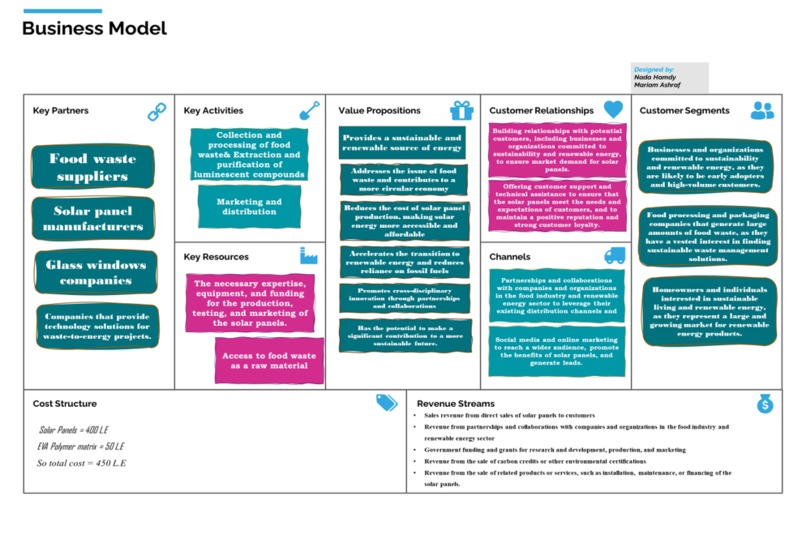
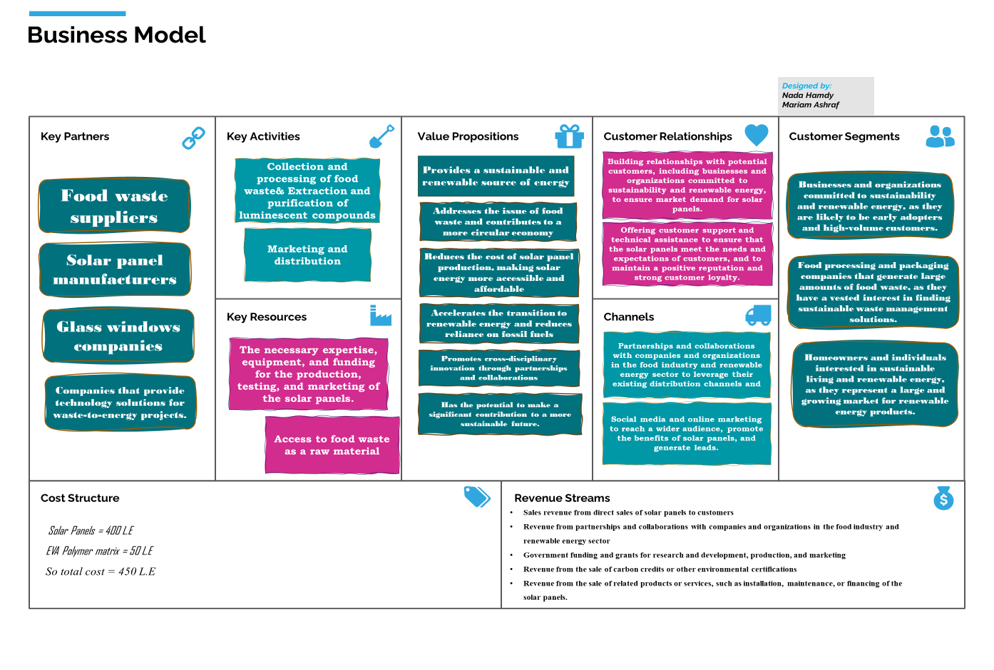
Business model
-
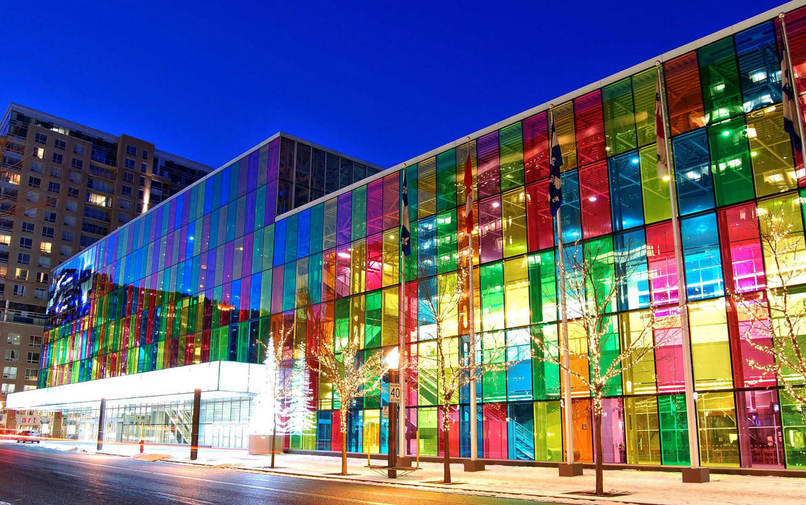
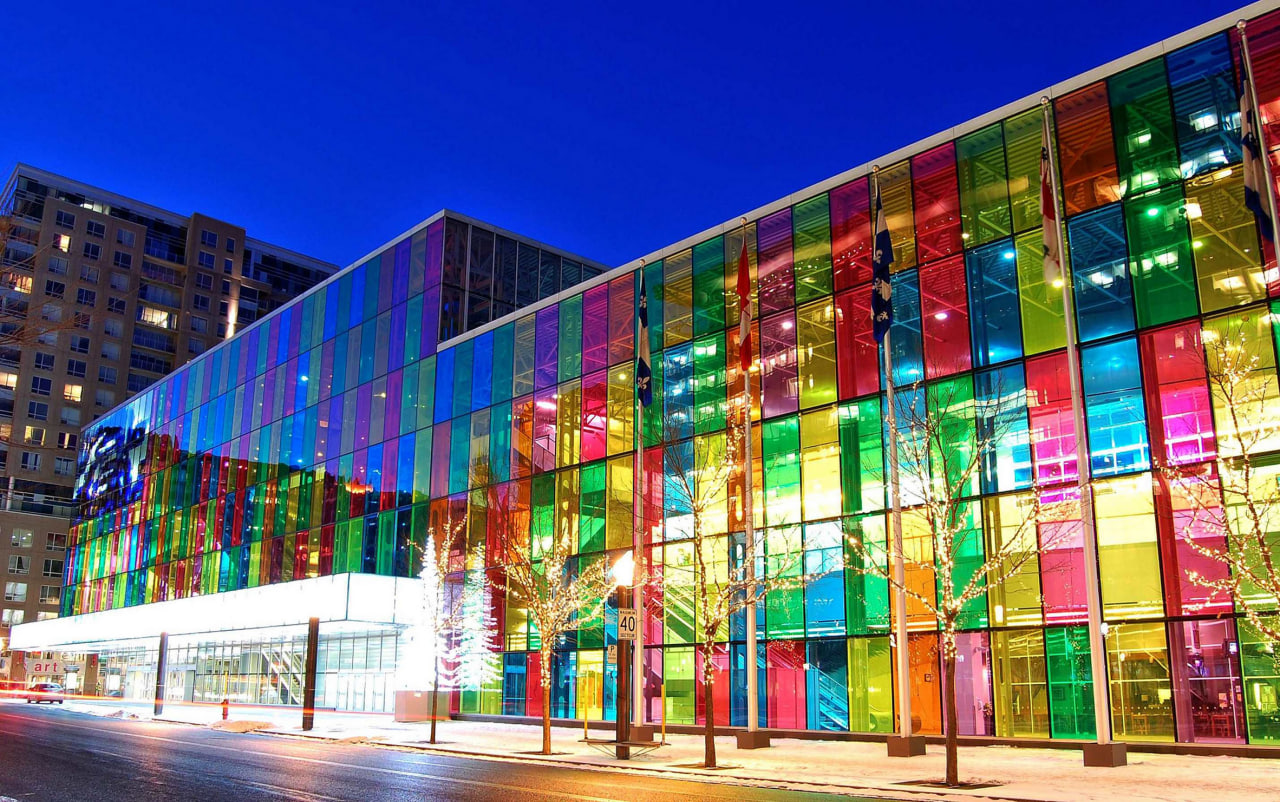
Philippian company that tried to implements the idea
Inspiration
In the beginning, the question arose as to why solar cells were not widely used despite their environmentally friendly nature. The challenges associated with solar cells, such as high costs and inefficiency during nighttime due to the absence of light, prompted us to seek solutions. Our idea was to address these challenges by harnessing the potential of phosphors to produce visible light in the dark. Through our research, we discovered that organic luminescent compounds found in food waste could convert ultraviolet (UV) light into visible light. This discovery opened up the possibility of enhancing the efficiency of solar panels by converting UV light on cloudy days and during nighttime.
The present project aims to tackle various challenges related to waste management and renewable energy generation. Particularly, it focuses on reducing dependence on non-renewable energy sources and mitigating negative environmental impacts associated with energy production. The proposal suggests using solar panels made from food waste-based materials as a more sustainable renewable energy source. This approach aligns with the concept of a circular waste economy, where waste materials are transformed into valuable products. Specifically, installing these food waste-based solar panels on windows and building walls not only blocks UV radiation but also generates clean and renewable energy. Moreover, considering the significant environmental issues caused by food waste, converting it into solar panels offers a sustainable solution. By doing so, we can contribute to addressing greenhouse gas emissions and promote a more sustainable future.
What it does
Solar panels have gained recognition as a sustainable alternative energy source. However, factors such as high installation costs and limited efficiency during nighttime and winter months due to the absence of visible light and cloud cover hinder their widespread adoption. Additionally, food waste presents numerous challenges, including environmental degradation through greenhouse gas emissions, economic losses for businesses and households, exacerbation of food insecurity and hunger, wastage of resources like water and energy, and undermining of sustainable development efforts. This paper introduces a solution to these challenges by modifying solar cells to be more affordable and efficient.
The proposed solution involves using a board made of food waste that allows the passage of visible light while converting harmful UV rays into visible light at the edges. Conventional solar cells are placed along the edges of the panel to generate electricity, making it suitable for use in buildings as a replacement for ordinary glass. The panel consists of a flexible and durable substrate composed of resin, along with luminescent compounds derived from food waste that convert UV radiation to visible light. Photovoltaic cells are affixed to the perimeter of the substrate, facilitating the conversion of visible light into electrical energy. By addressing issues related to high costs, lack of efficiency, and harmful UV rays, this project offers a sustainable, cost-effective, and efficient solution for solar panels.
The potential applications of this innovative approach are vast, ranging from buildings to automobiles and mobile devices.
How we built it
Step 1: Collection of crop wastes, such as tomatoes and oranges, which are frequently discarded as waste and contribute to environmental pollution.
Step 2: Extraction of natural dyes from crop wastes capable of absorbing UV light and emitting visible light. The extraction process involves soaking the crop waste in aqueous methanol, followed by crushing the waste to obtain indocyanine dye (in the case of tomato waste).
Step 3: Preparation of the resin by combining the extracted natural dyes with a polymer matrix. The polymer matrix, specifically Ethylene Vinyl Acetate (EVA), provides mechanical and chemical stability to the material and is compatible with the natural dye molecules.
Step 4: Molding of the resin material into a rectangular shape (12*8) using a silicon cast.
Step 5: Conversion of UV light to visible light. When the resin material is exposed to UV light, the natural dyes absorb the UV light and emit visible light through a process known as photoluminescence.
Step 6: Generation of electricity. The visible light emitted by the natural dyes can be captured by solar cells, which convert the light into electricity. This allows the technology to generate electricity using a sustainable and renewable energy source.
Overall, the methodology involves the extraction of natural dyes from tomato waste, preparation of a resin material using a polymer matrix (EVA), and the conversion of UV light into visible light to generate electricity. This technology has the potential to promote sustainability, reduce waste, and provide a new source of renewable energy.
Challenges we ran into
The high cost of solar cells posed a significant challenge, preventing us from freely setting up the prototype and conducting tests in our country. Additionally, the lack of extensive research papers related to the project made the research process difficult.
Accomplishments that we're proud of
Despite the challenges faced, we successfully completed our research on the project and established communication with a company in the Philippines that had attempted to implement the idea. We also participated in several competitions, which enhanced our understanding of the project and its potential. Currently, we are focused on updating and further exploring the concept.
What we learned
Throughout the project, we learned how to work under pressure, as we managed to complete the research within a two-month timeframe despite the challenges. We also developed a deeper understanding of scientific research methodologies and improved our skills in analyzing scientific papers.
What's next for Food Wastes 2 Solar Cells
Moving forward, the team's strategy includes an education and awareness mission aimed at spreading the message about the benefits of converting food waste into solar panels and promoting sustainable practices. The target audience comprises businesses, educational institutions, and industry professionals. The communication and marketing plan will be comprehensive, incorporating various forms of media and collaborating with local organizations and media outlets. By continuing to promote the project, we aim to contribute to sustainability efforts, resource management, and the realization of a more sustainable future.
Built With
- hardware
- solarcells

Log in or sign up for Devpost to join the conversation.