
Inspiration
The large amounts of edible food wasted in school dining halls sparked our desire to create something that would make people take action on environmental issues locally, in an applicable manner and relate to the problem directly seen by students on a daily basis.
What it does
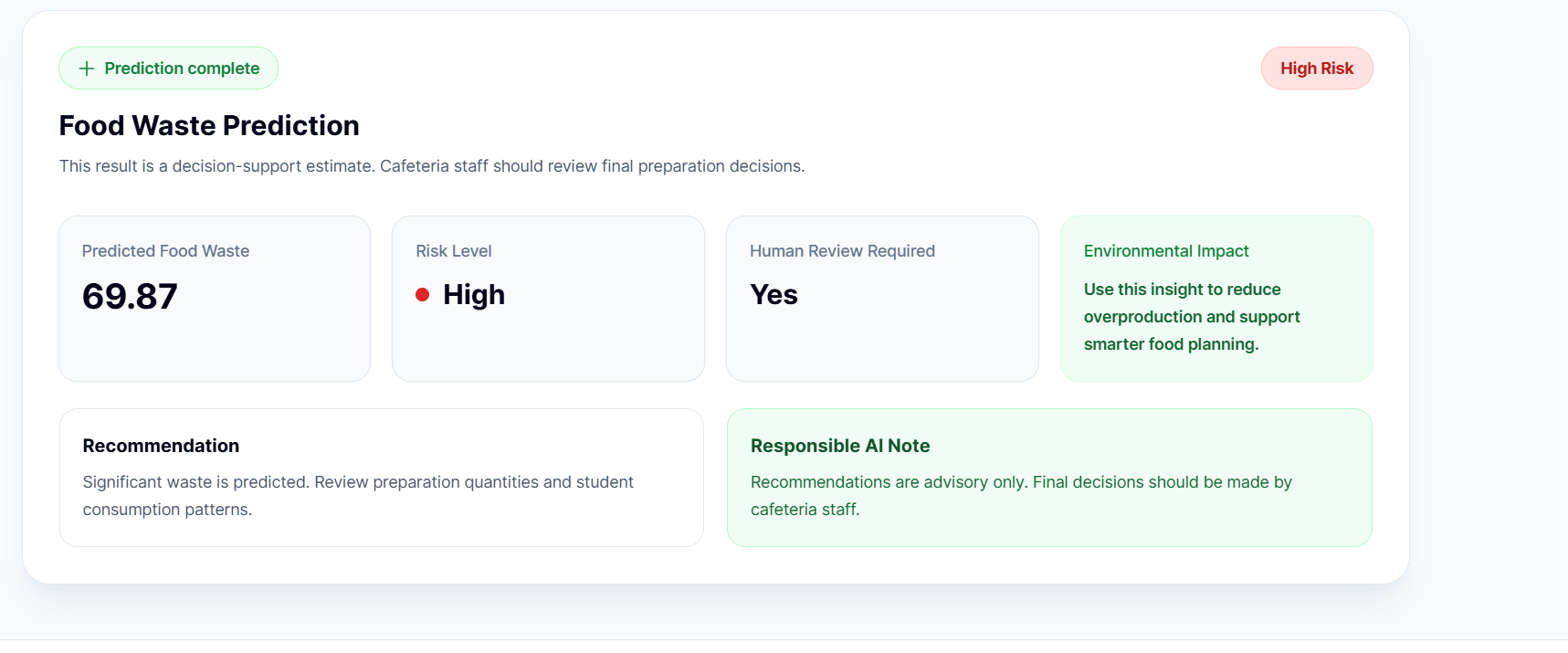
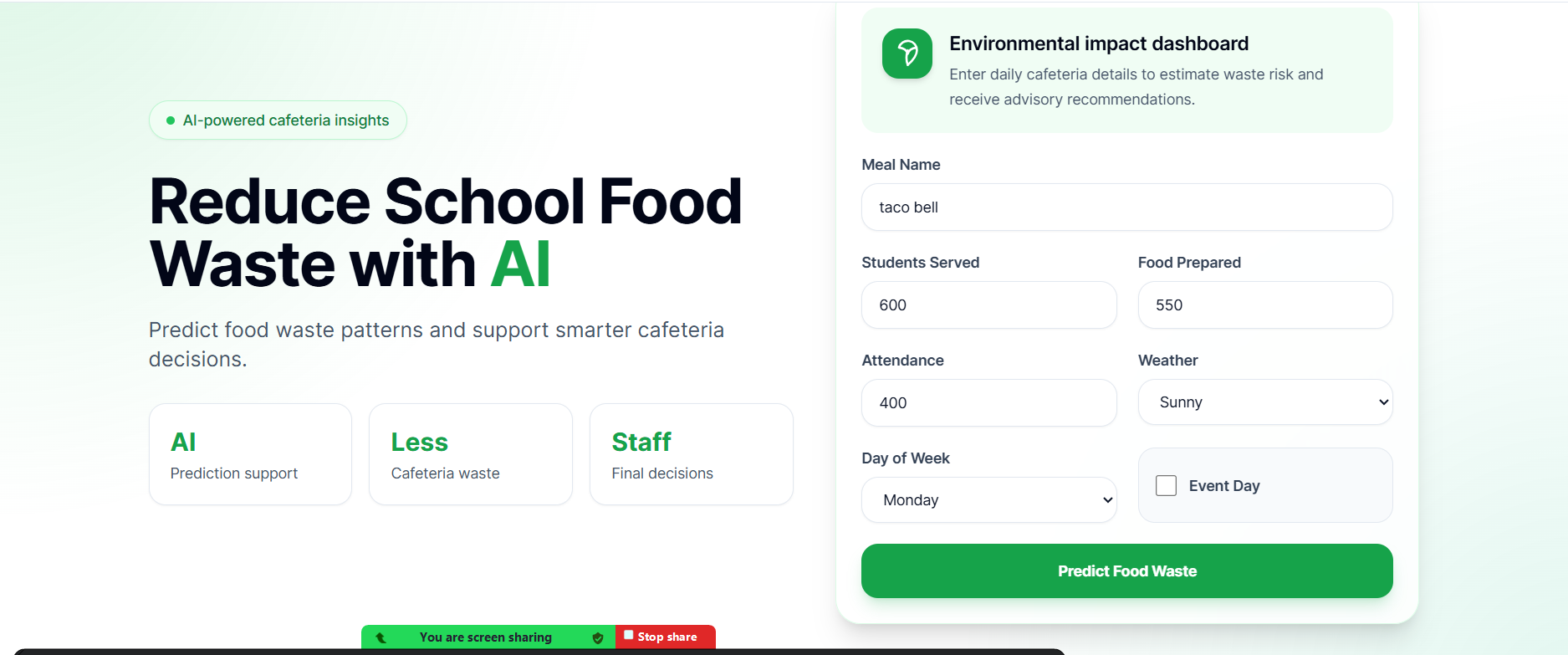
Food Waste AI will predict amounts of food in the cafeteria that will be wasted, based on the meal type, number of students being served, the amount of food prepared for the day, attendance levels, weather conditions, if there are any special events that day, and the day of the week. In addition to the predicted amount of waste, there will also be a risk level for the waste, and a recommendation for staff to review prior to the day of service.
How we built it
For the front end we used React, Vite, JS and Tailwind CSS. For the back end we used python and Flask. The AI model was developed using pandas, scikit-learn, and the Random Forest Regressor with the training data being pulled from a CSV file of cafeteria food waste data.
Challenges we ran into
One of our challenges was connecting the front end to the back end and the machine learning model. We also experienced setup issues between Node, npm, python virtual environments, Tailwind CSS and changes in the version of scikit-learn.
Accomplishments that we're proud of
We are proud to say we were able to create a complete full stack AI project including a front end, back end, trained model and prediction system for AI; we also used AI as a decision support tool rather than as a replacement for human beings.
What we learned
We have learned that machine learning models will use past data to train themselves as well as develop patterns for making predictions and also learned about the importance of data quality when it comes to making strong predictions; weak data will yield weak predictions.
What's next for Food Waste AI
Next steps will include enhancing the dataset by adding more robust graphs to represent food waste trends over time, enhancing the specificity of recommendations made to various types of meals and for different types of school lunch patterns.
Built With
- axios
- css
- csv
- flask
- flask-cors
- github
- html
- javascript
- joblib
- pandas
- python
- react
- scikit-learn
- tailwind
- vite


Log in or sign up for Devpost to join the conversation.