-
-
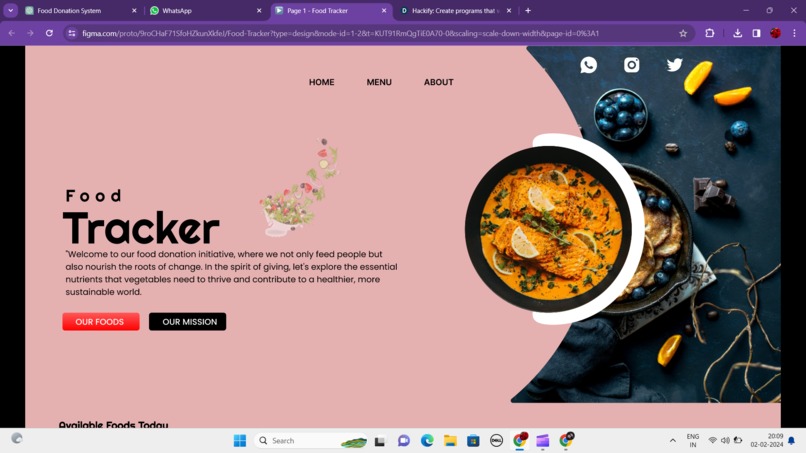
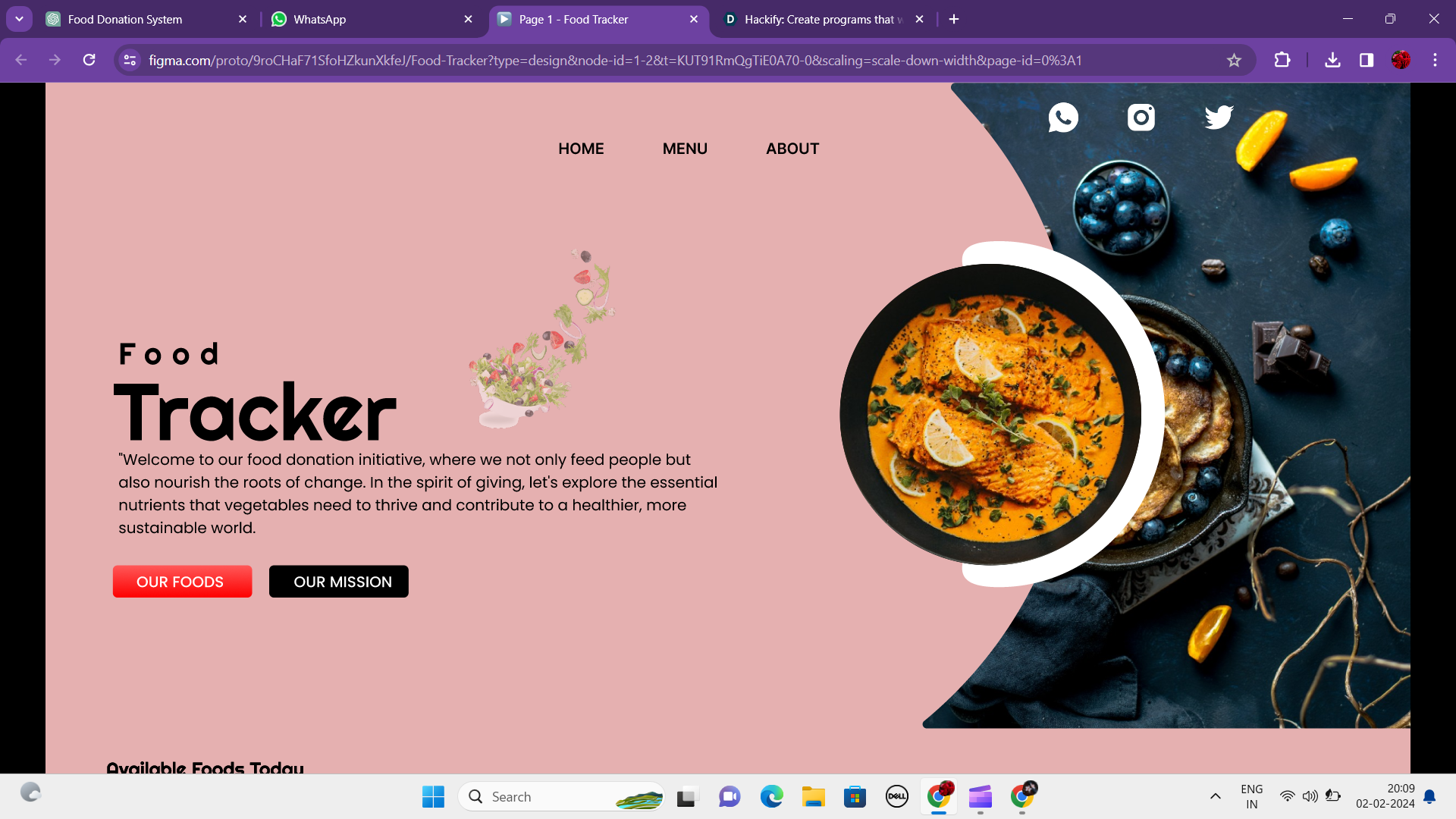
Food Tracker
-
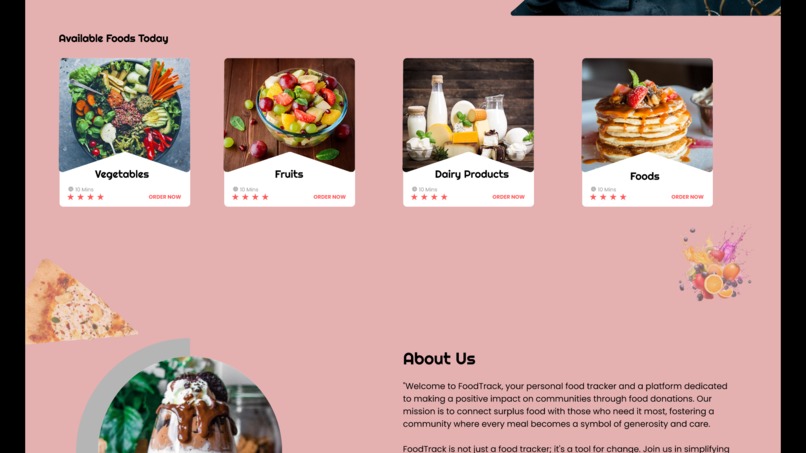
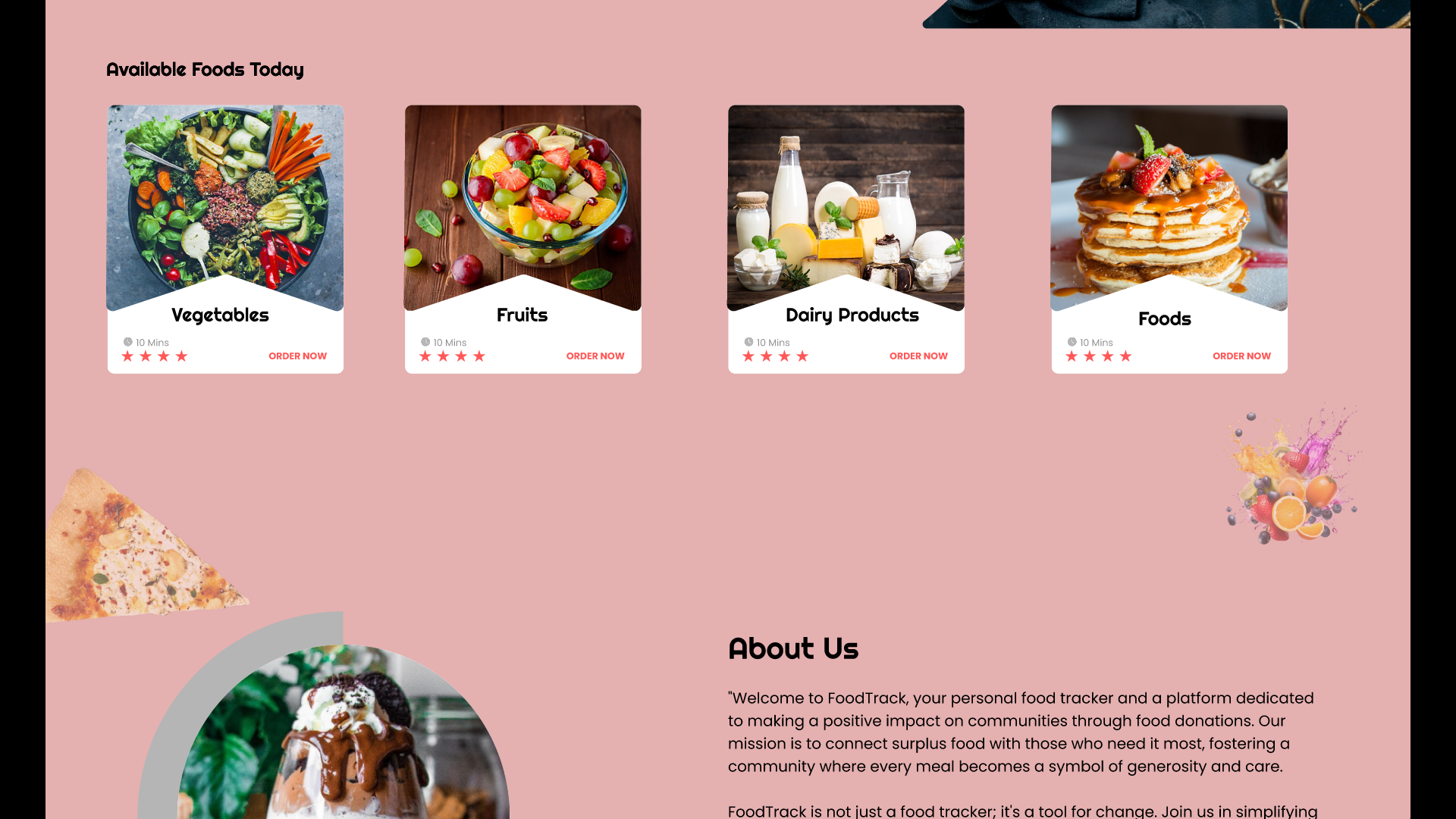
Foods
-
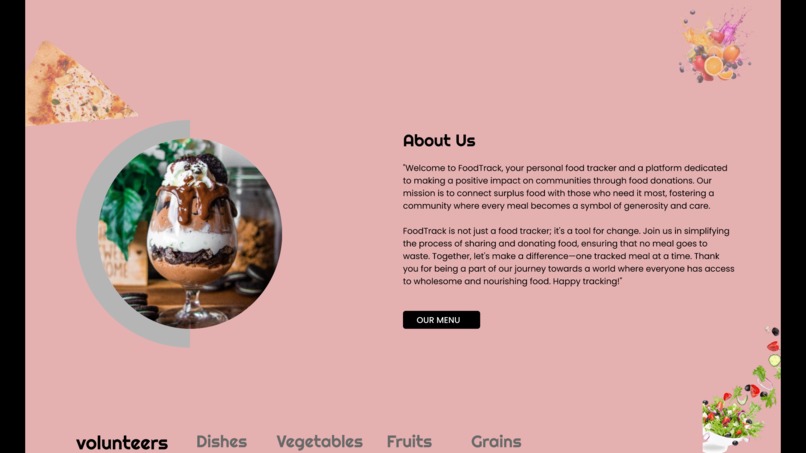
About Us
-
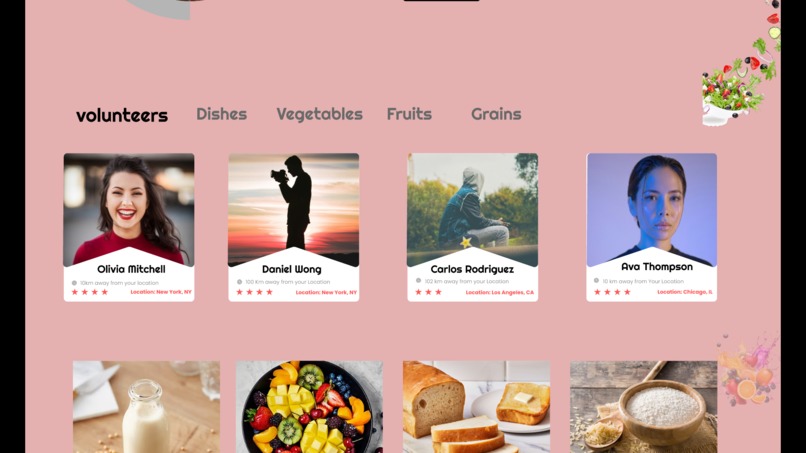
Volunteers
-
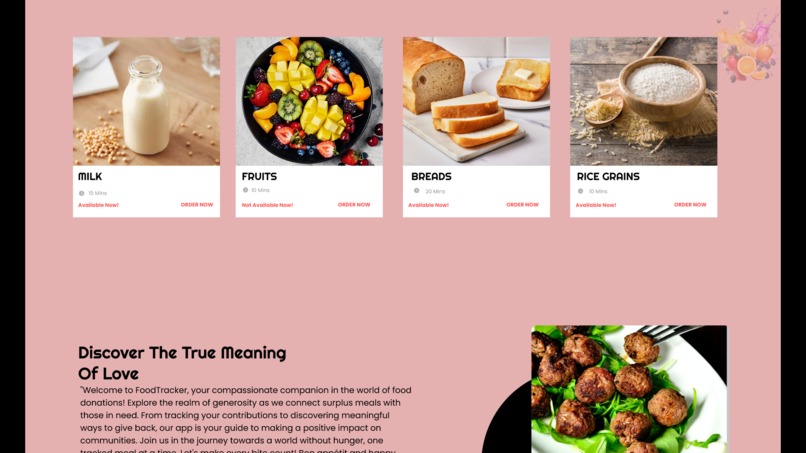
Foods
-
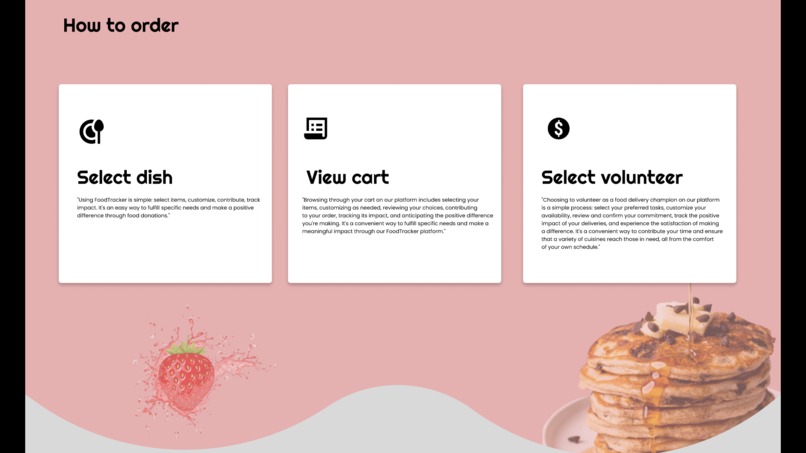
How to order
Inspiration
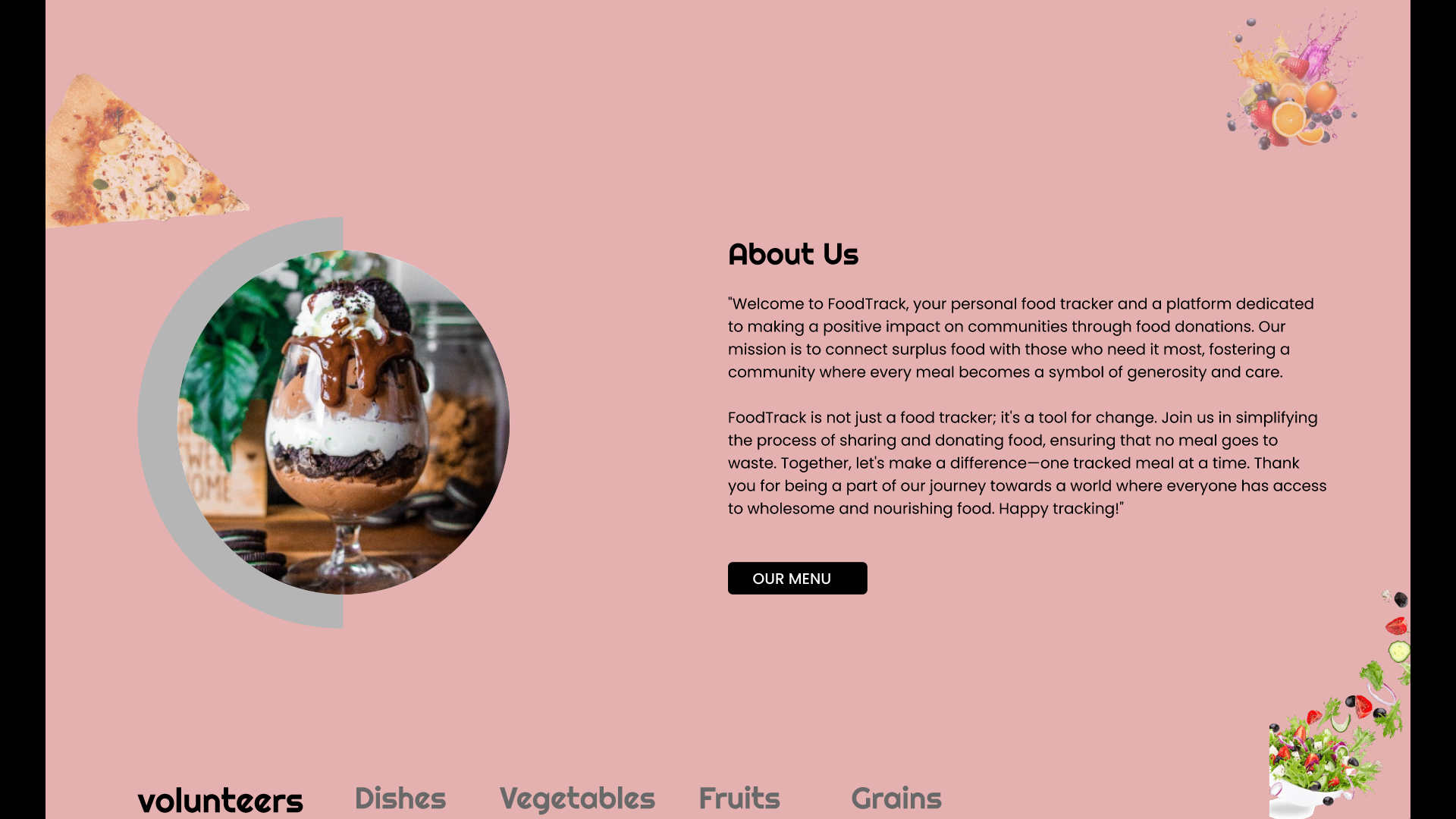
The inspiration behind this project arises from a commitment to address pressing social issues. Motivated by the desire to combat food waste and hunger, the project seeks innovative solutions through technology. The goal is to leverage digital platforms to streamline the food donation process, enhance communication between donors and charities, and foster a sense of shared responsibility within communities. This inspiration stems from a vision of creating a positive social impact by connecting surplus food resources with those in need, ultimately contributing to a more sustainable and equitable food distribution system.
What it does
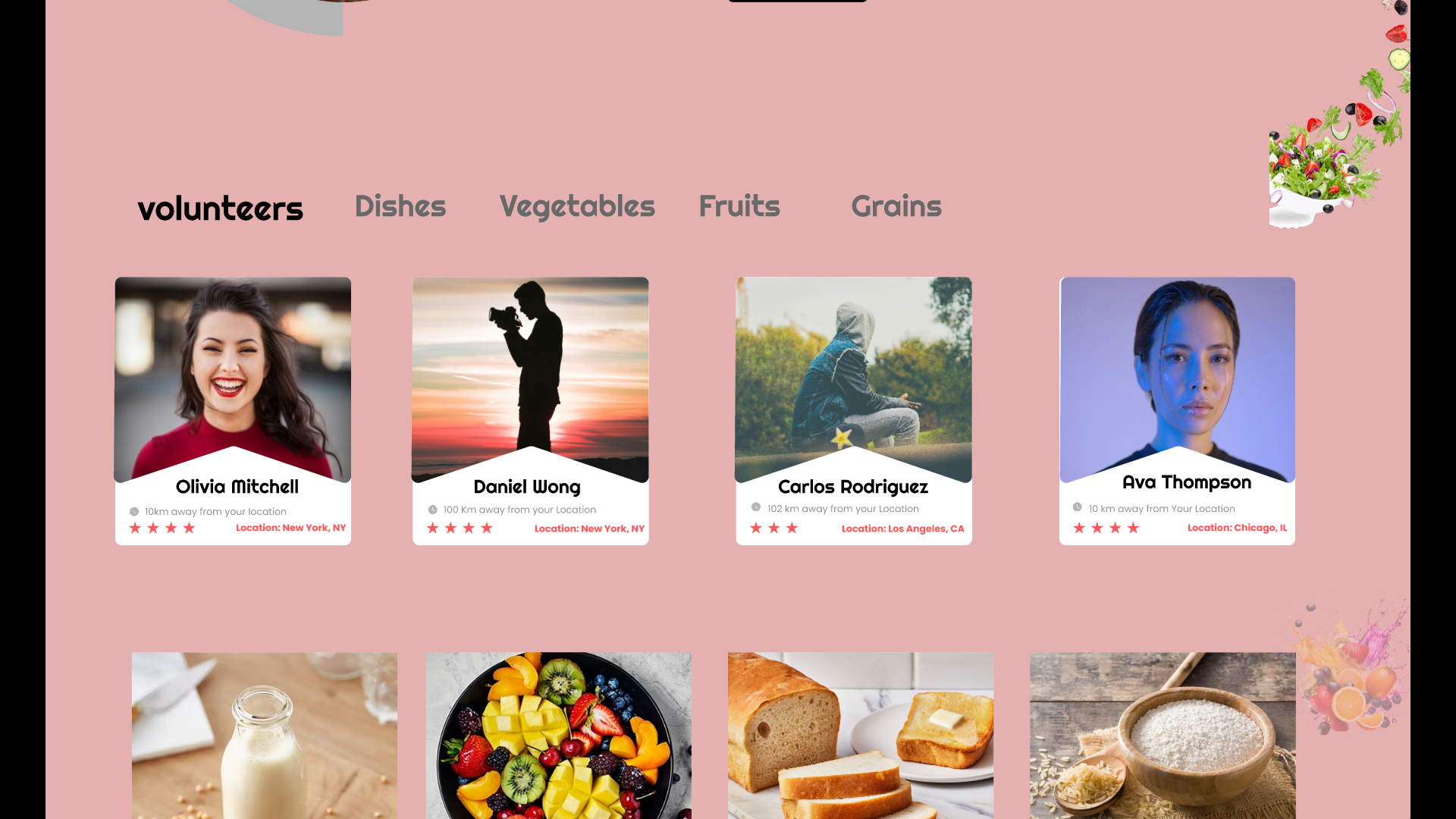
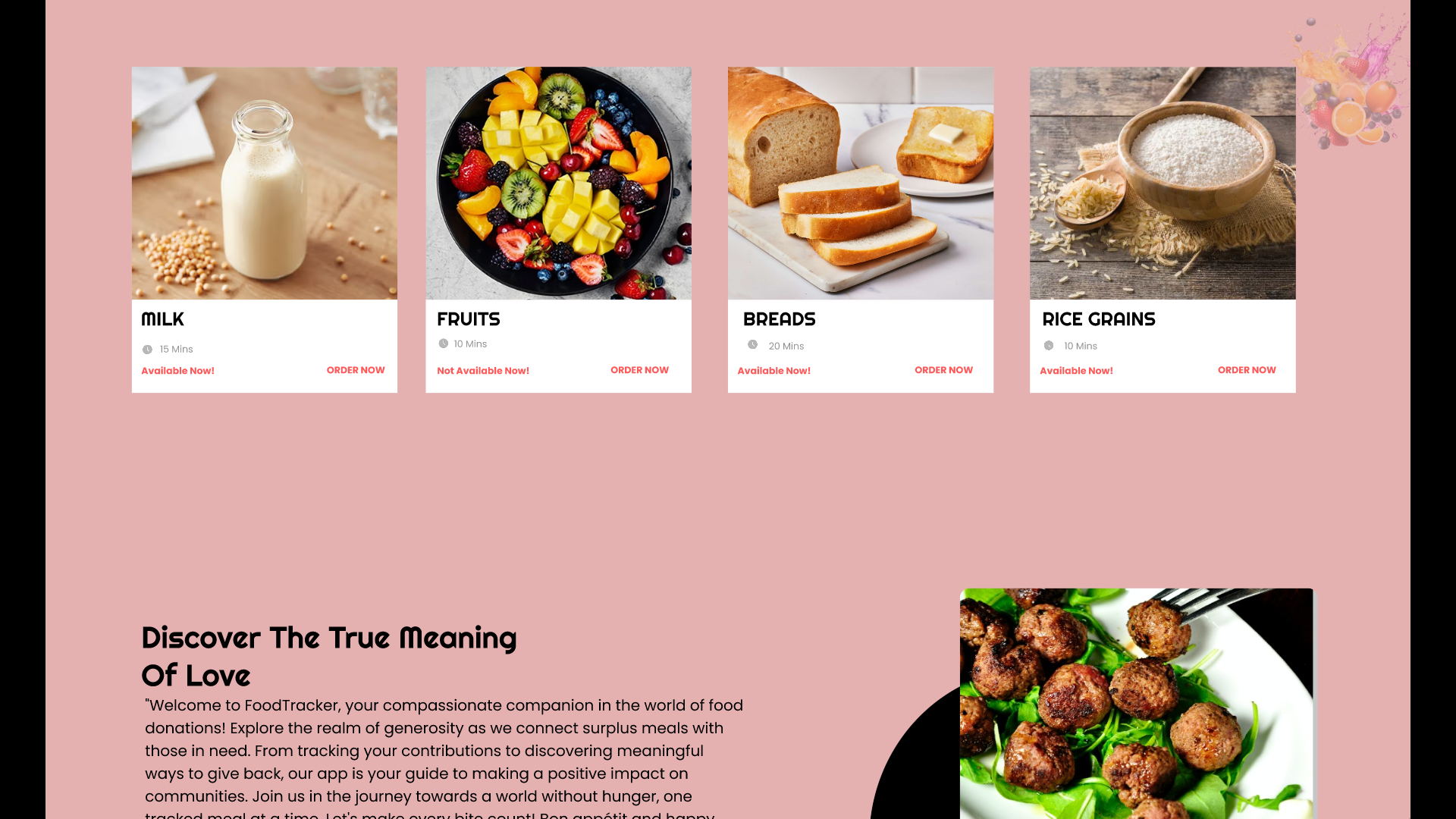
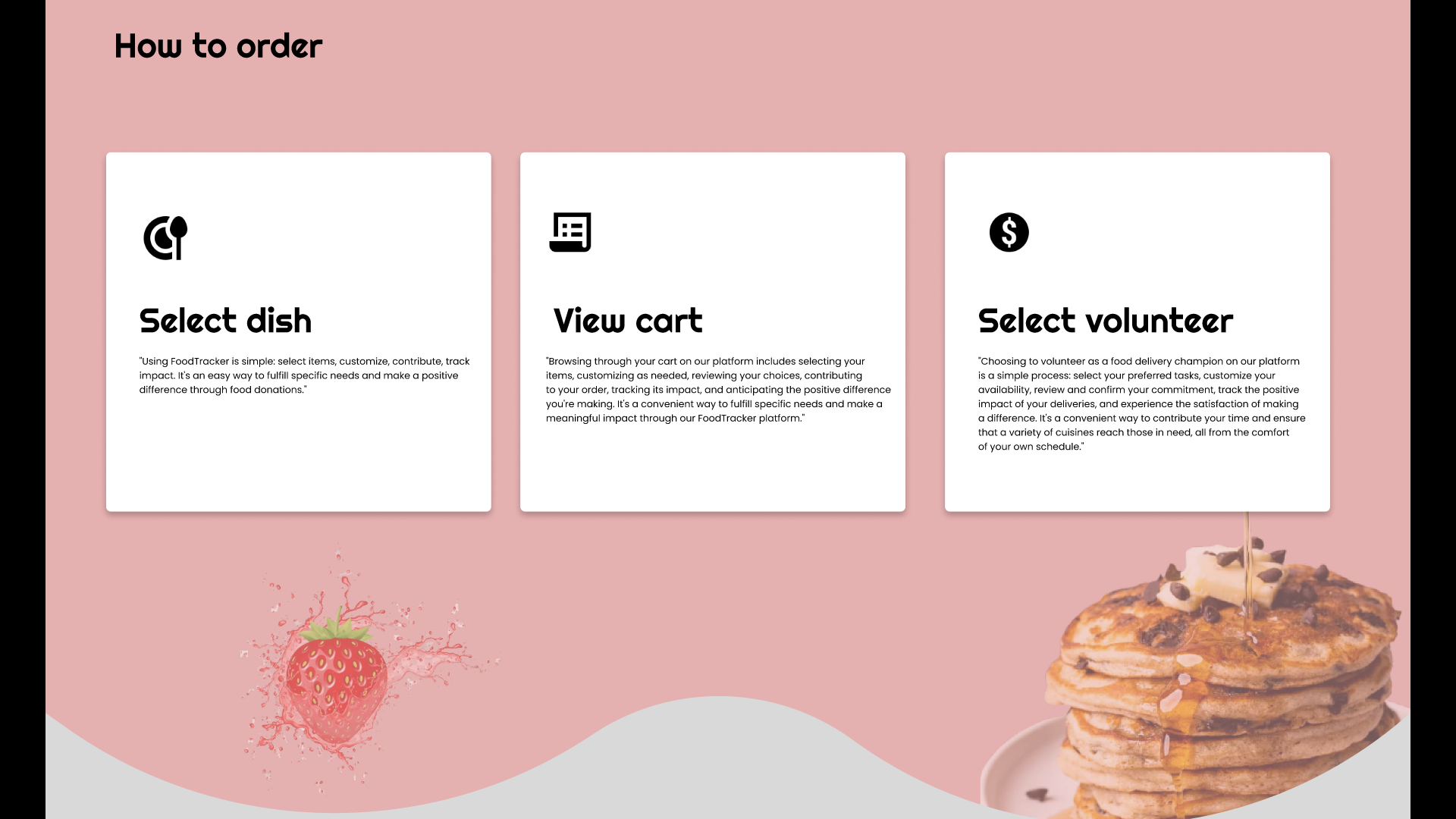
The food donation project serves as a comprehensive platform that efficiently connects surplus food donors with nearby charities. It streamlines the donation process, allowing donors to contribute excess food resources while enabling charities to receive and distribute these donations to those in need. The system includes features such as donor and charity registration, transparent donation tracking, location-based matching, and a delivery management system. By fostering community collaboration and leveraging technology, the project effectively addresses issues related to food waste, hunger, and community well-being. It creates a transparent and accountable ecosystem that empowers users to play an active role in supporting their communities.
How we built it
We constructed a functional model of our food donation platform using Python, with a focus on frontend development utilizing frameworks like Flask or Dash. The backend was intentionally excluded, aligning with our innovative approach to address challenges without a traditional backend infrastructure. Leveraging Python's capabilities, we implemented a robust location-based matching algorithm directly on the frontend, streamlining the connection between donors and charities. Real-time tracking features were integrated, offering immediate updates on donation statuses and enhancing user engagement. To visually conceptualize our design and ensure an intuitive user interface, we employed Figma. This design-centric approach allowed us to create wireframes and prototypes, contributing to a seamless user experience. The amalgamation of Python's versatility, a frontend-only strategy, and Figma's design capabilities resulted in a working model that emphasizes efficiency, transparency, and user satisfaction.
Challenges we ran into
The project encountered challenges in optimizing the location-based algorithm for efficient connections, ensuring real-time updates on the frontend, maintaining responsiveness across devices, addressing data security concerns without a backend, fostering user adoption, and seamlessly integrating Figma designs into the actual implementation.
Accomplishments that we're proud of
We take pride in the successful implementation of a highly efficient location-based matching algorithm, a cornerstone in facilitating precise connections between donors and charities. The seamless integration of real-time tracking features onto the frontend stands as a testament to our commitment to providing users with immediate and accurate updates on the progress of their donations. Crafting a responsive and user-friendly interface, adaptable to diverse devices and screen sizes, reflects our dedication to delivering an optimal and inclusive user experience. Additionally, our accomplishment in implementing robust data security measures on the frontend underscores our commitment to safeguarding user information and ensuring privacy throughout the platform. These achievements collectively demonstrate our team's capability in overcoming challenges and delivering a solution that aligns with our vision for a streamlined and impactful food donation system.
What we learned
Through the development of this project, our team acquired valuable lessons that have enriched our skills and understanding in several key areas. The optimization of algorithms, particularly the location-based matching algorithm, provided us with a deeper appreciation for efficiency and precision in complex data connections. The successful integration of real-time features on the frontend not only enhanced our technical abilities but also deepened our understanding of dynamic user experiences. Crafting a responsive and user-friendly interface taught us the importance of adaptability and inclusivity, ensuring seamless interactions across various devices. Additionally, implementing robust data security measures heightened our awareness of privacy concerns and the significance of safeguarding user information. These lessons collectively contribute to our ongoing growth as a team, fostering a commitment to delivering impactful and user-centric solutions in future endeavors.
What's next for Food Tracker
Moving forward, the Food Tracker project aims to expand its impact and capabilities. Our next steps involve enhancing the platform's scalability to accommodate a growing user base and increasing donation volumes. We plan to introduce additional features, such as advanced analytics for better insights into donation patterns and community needs. Integration with emerging technologies, like machine learning for predictive analysis, is on the horizon to further optimize the donation process. Additionally, partnerships with local businesses and organizations will be pursued to broaden the reach and effectiveness of the platform. The user experience will continue to be a focal point, with continuous refinement of the interface based on user feedback and evolving technological trends. Ultimately, our vision for Food Tracker extends beyond reducing food waste and fighting hunger; we aim to foster a sense of community and shared responsibility while actively contributing to a more sustainable and equitable future.


Log in or sign up for Devpost to join the conversation.