-
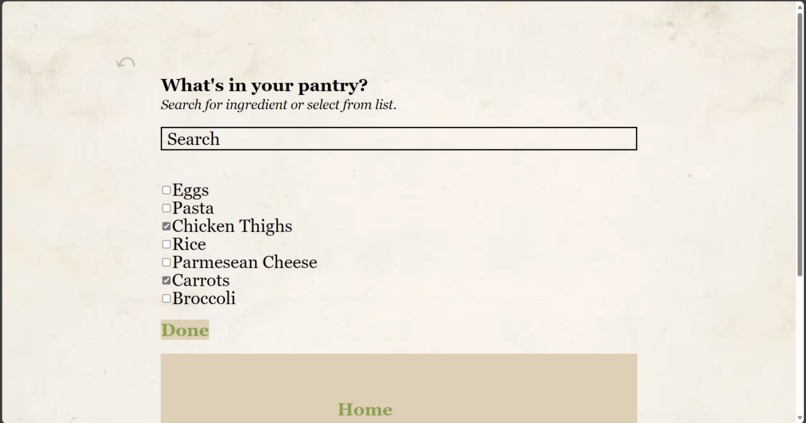
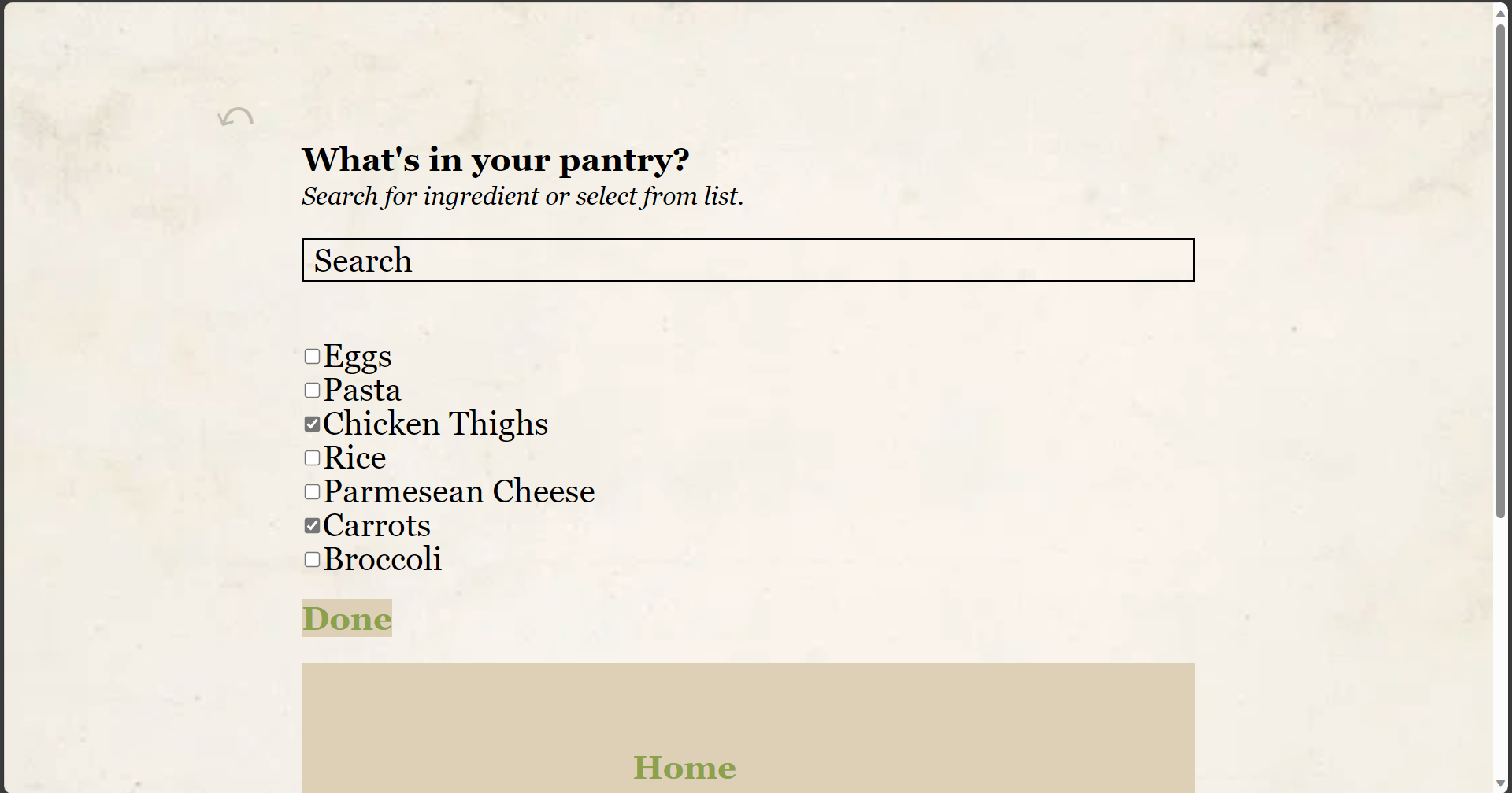
Ingredient Select Page
-
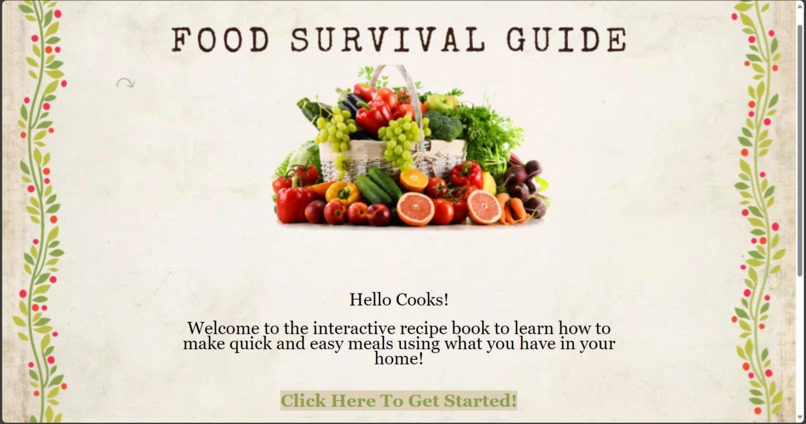
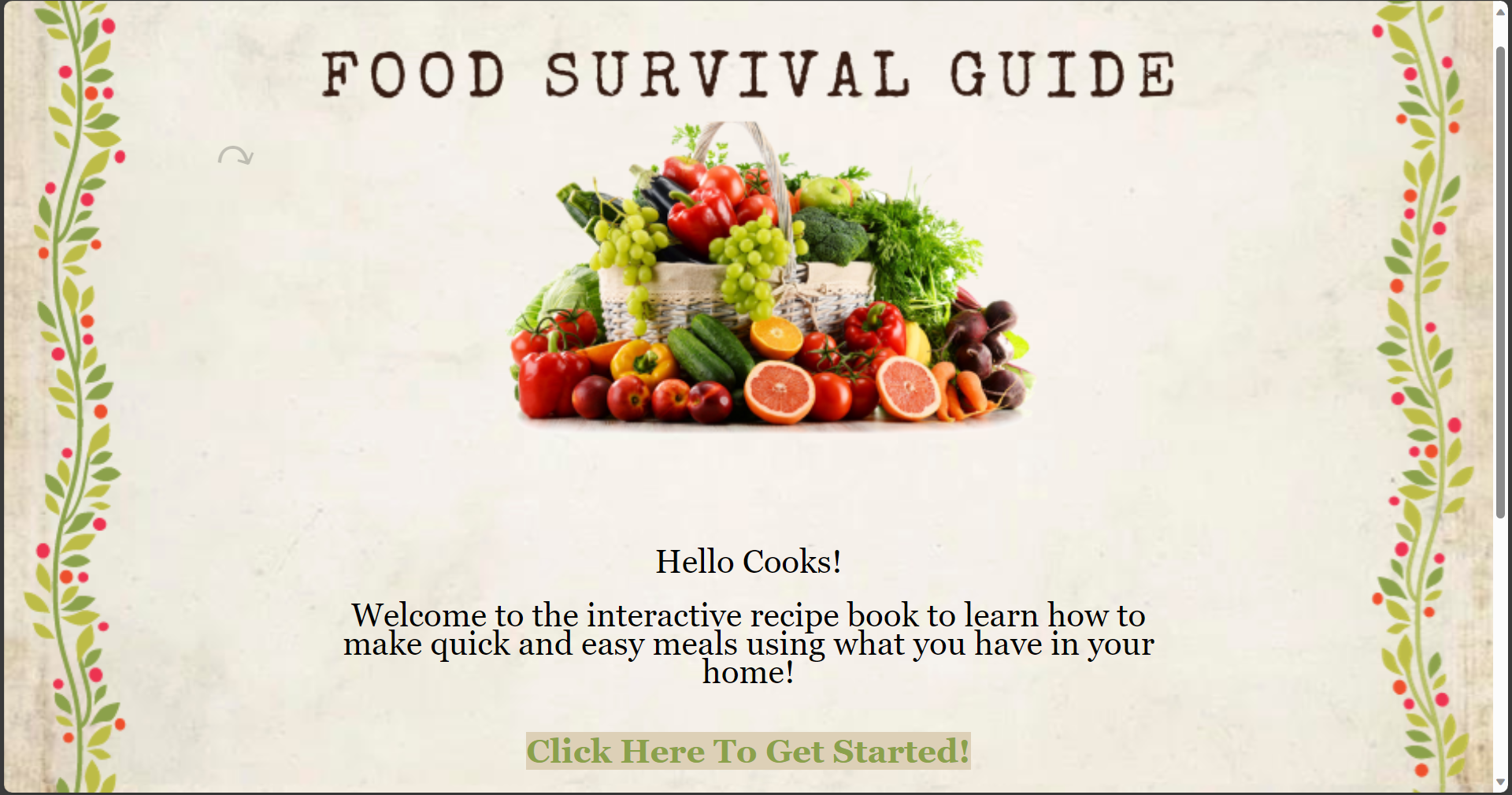
Home Page
-
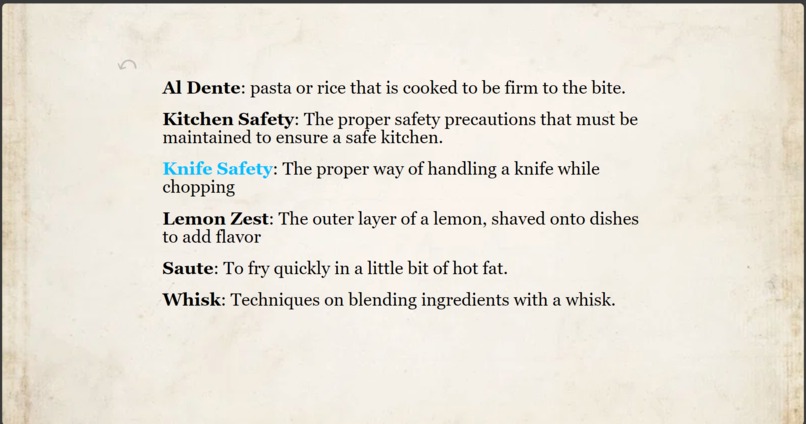
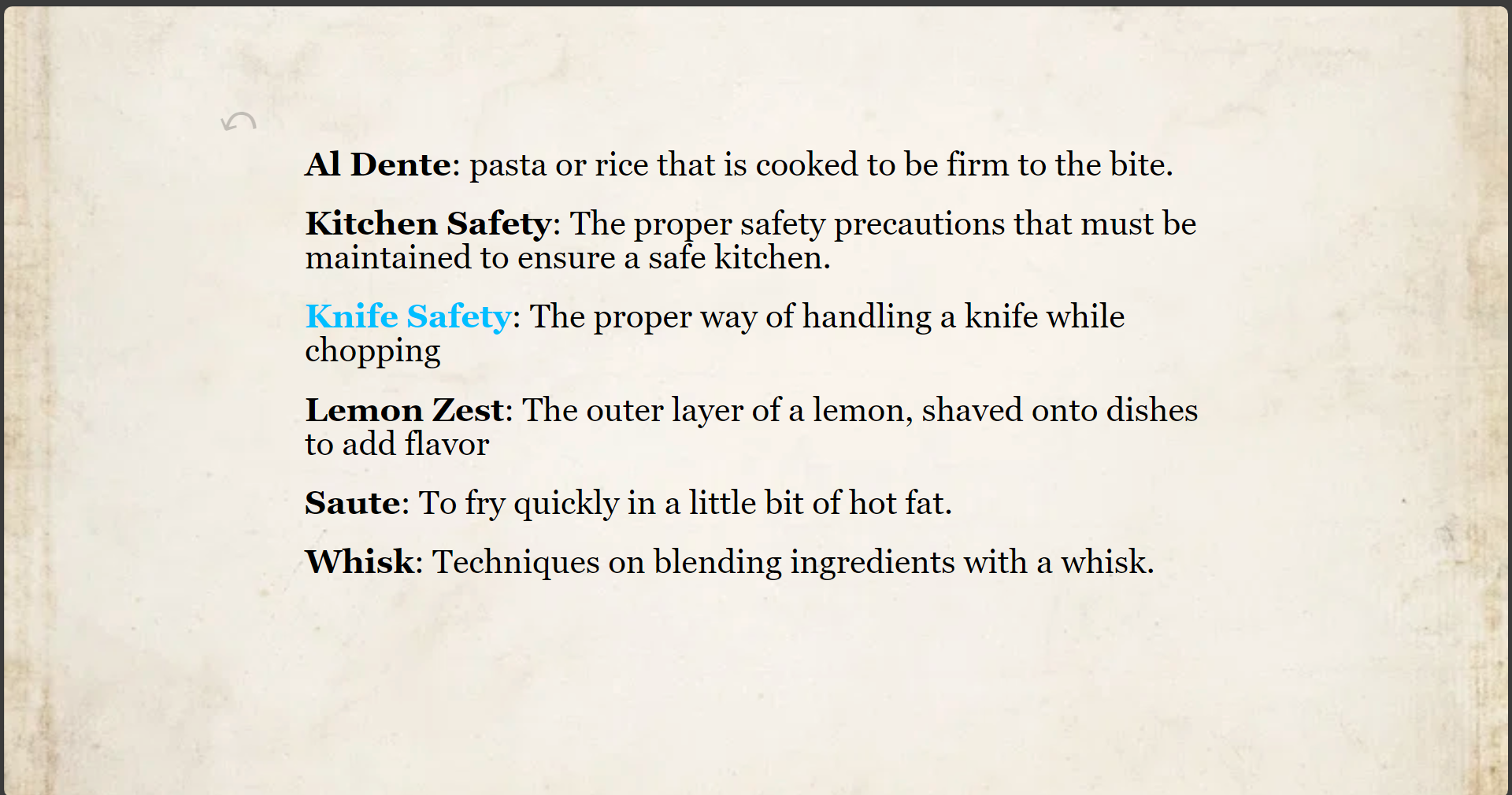
Glossary of Terms
Inspiration
As college students, our team understands what it means to struggle and how it feels to just want to order food all the time. We wanted to create a webpage that was able to recommend easy recipes with as much, or as little, ingredients that a person has at the time. We also wanted to make the website accessible to a variety of users so that anyone could cook something.
What it does
The Food Survival Guide is a website that recommends recipes that are quick and easy to learn based on the ingredients that the user has on hand. In addition, the Food Survival Guide makes cooking easier and more accessible by taking time to detail the different techniques and terminology within each recipe.
How we built it
The guide was built using an interactive story-building program called Twine. Twine primarily uses a language called Harlowe but accepts code that is written in HTML, CSS, and JavaScript. We used several tutorials and language manuals to give us a good idea of how to use these languages. In addition, we also pulled a text-to-speech module from an open-source GitHub repository link.
Challenges we ran into
The first challenge we ran into was a lack of skill. None of our team members was familiar with the Twine workspace and only one team member had any experience using HTML/CSS. This meant that there was a steep learning curve when it came to designing our site and implementing new features.
The second challenge was an issue with Twine itself. Twine, in short, has _ zero _ collaboration functionality. This meant that our team often found ourselves going to GitHub or Discord to share code with one another and keep up to date on each other’s progress.
This lack of function was then compounded by Twine’s inability to merge projects or copy from one project to another. Unfortunately, this resulted in much of our time spent copying lines of code from all our projects into one file that would be ready for submission.
Accomplishments that we're proud of
Our team is proud that, despite our lack of knowledge, we were able to end the 2023 ShellHack with a functional project in a little over 24 hours. This highlights incredible determination and collaboration skills within our team despite undesirable circumstances. We are also proud that we were able to include functional accessibility features such as text-to-speech, easy to read text fonts/sizes, and others to name a few.
What we learned
In the end, we gained several new skills. We learned to preserve in the face of adversity. More specifically, we continued working with each other even when we were exhausted, running on Red Bulls and other sources of caffeine. We learned to utilize languages such as HTML and CSS, two standards that are still widely used. And, finally, we learned not to use programs such as Twine for collaboration in the future. Although Twine makes the building process much easier, it also removes much of the key features needed when working on larger projects and when collaborating with others.
What's next for Food Survival Guide
Other than overall design improvements, we hope to include more accessibility features such as colorblind modes, alt-text, and proper use of H1/H2/H3 headers for better operation with text-to-speech and other screen readers. In addition, we would like to take more time to build upon the foundations that were formed for the recipe search and result pages.


Log in or sign up for Devpost to join the conversation.