-
-
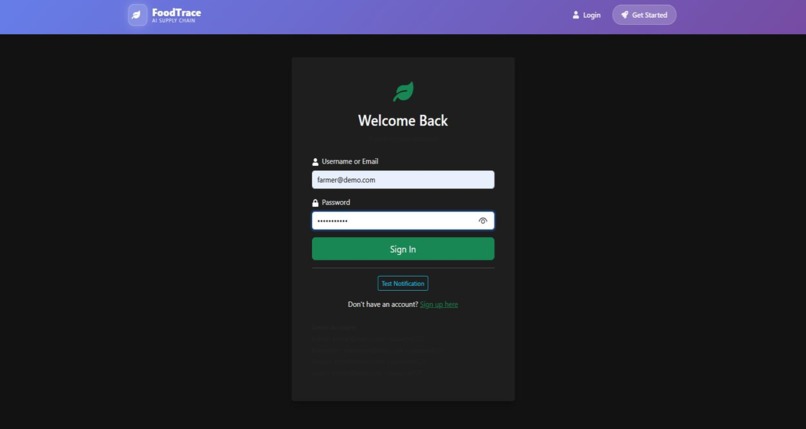
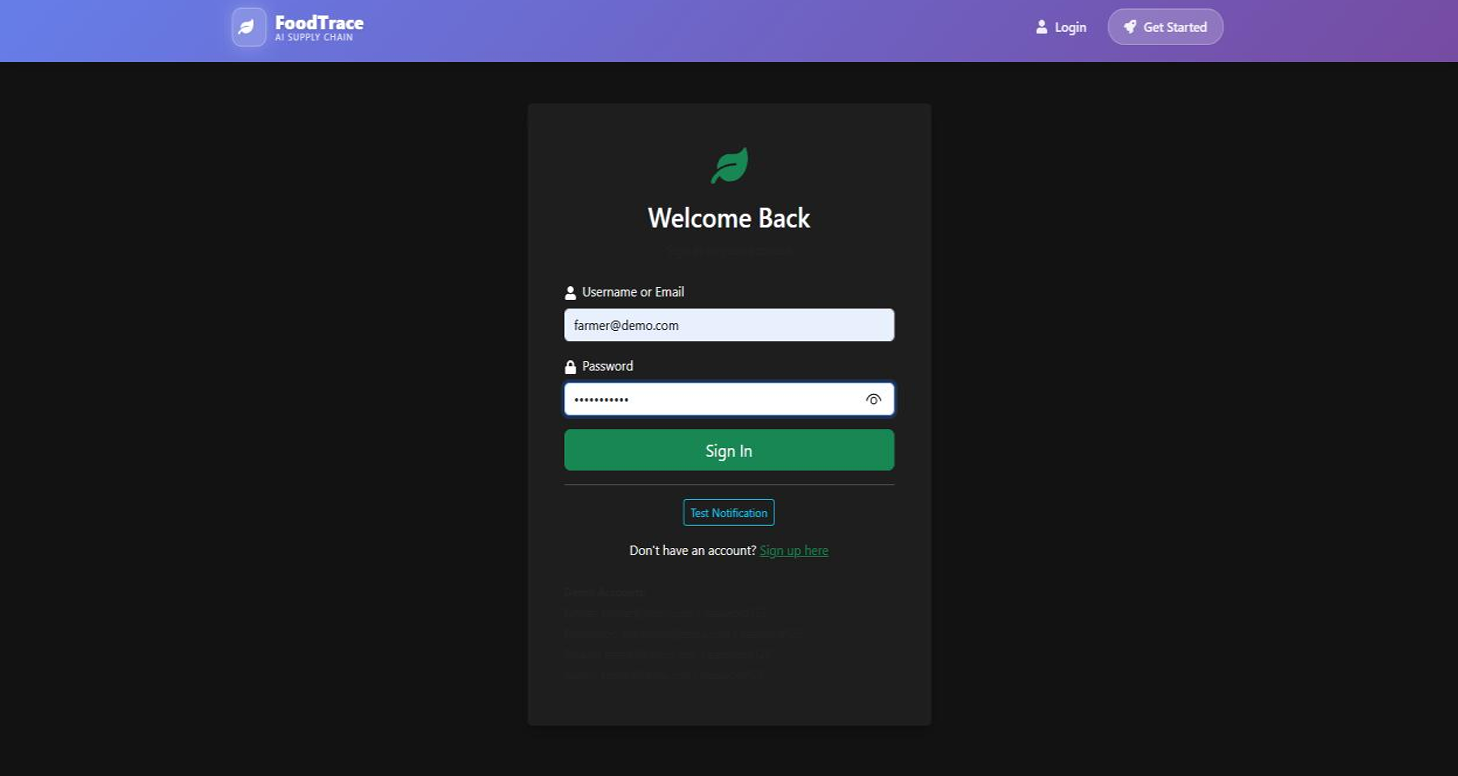
Login page , there are multiple users which has separate permissions to dashboard
-
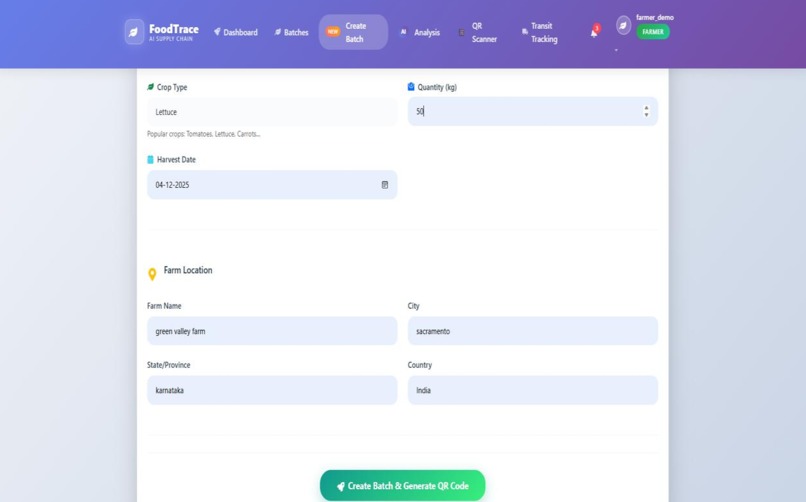
Crop details page
-
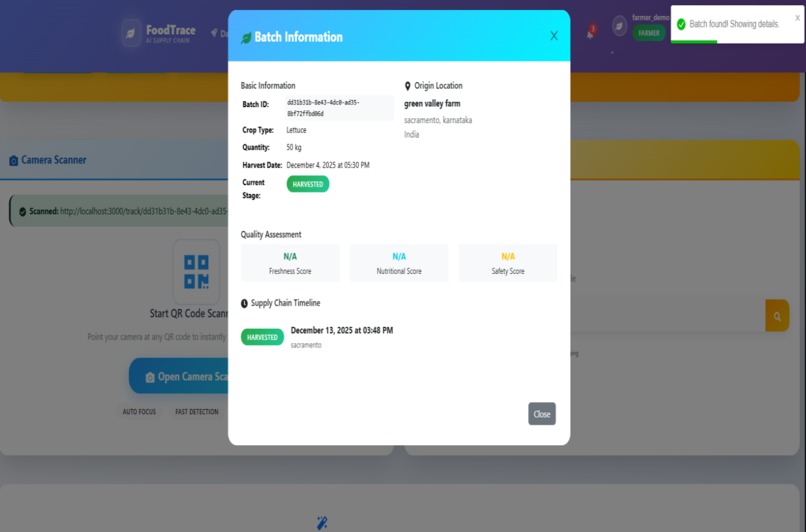
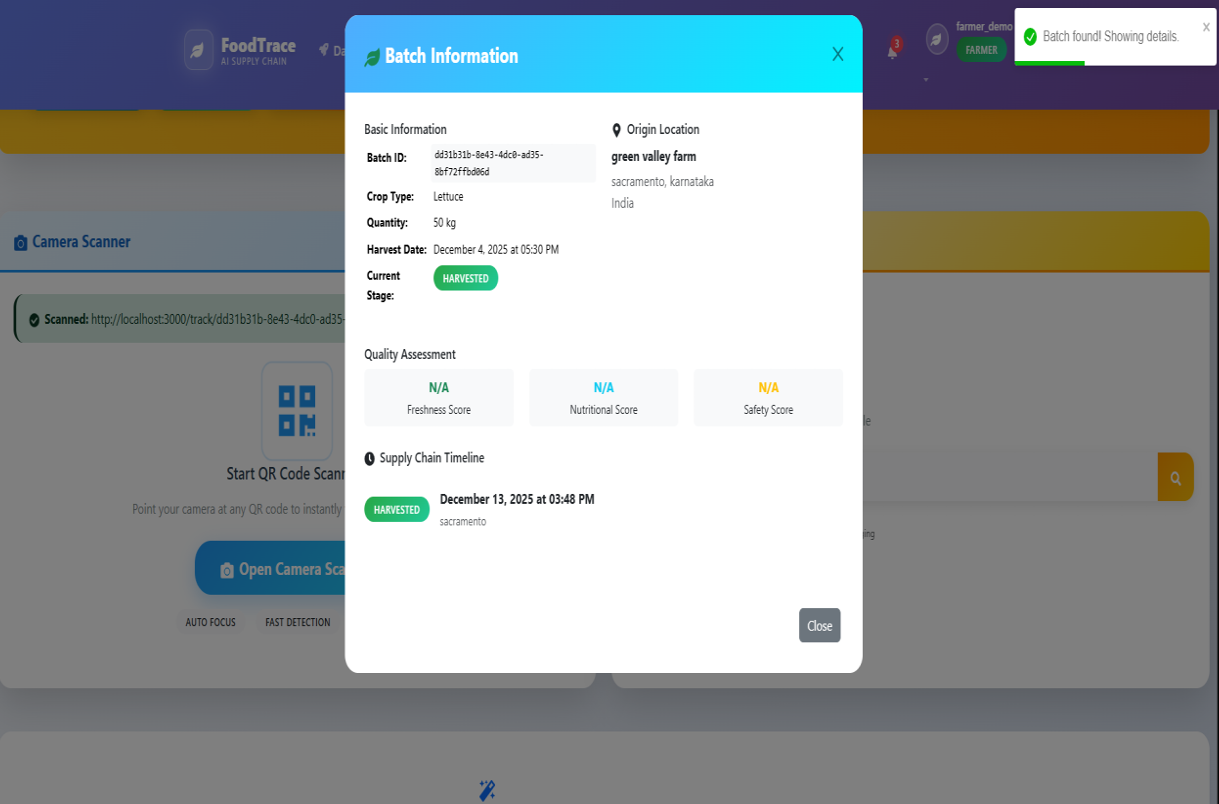
Batch information
-
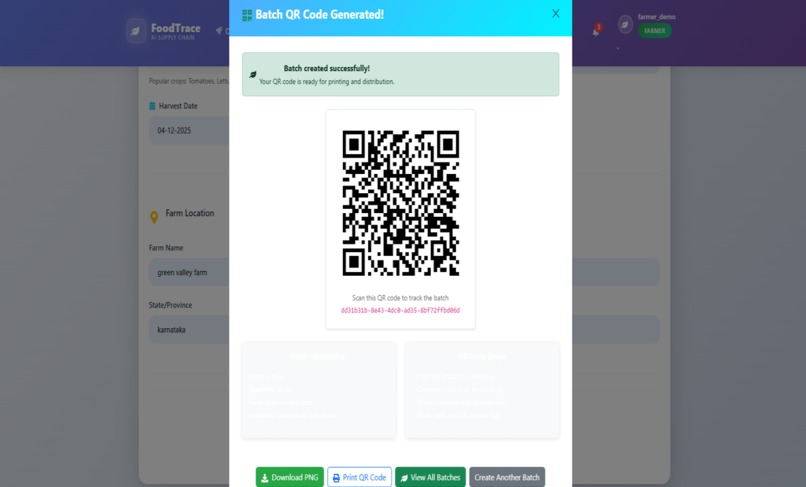
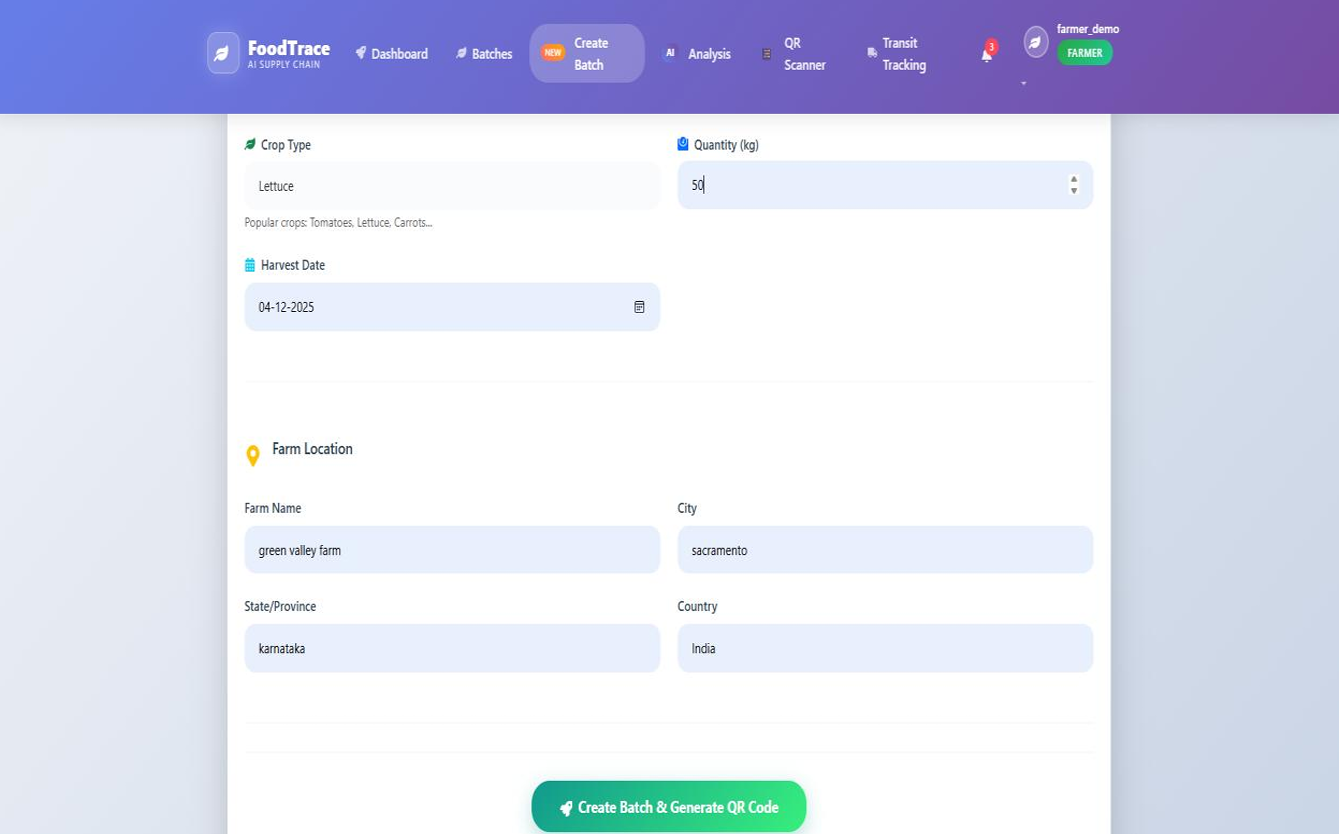
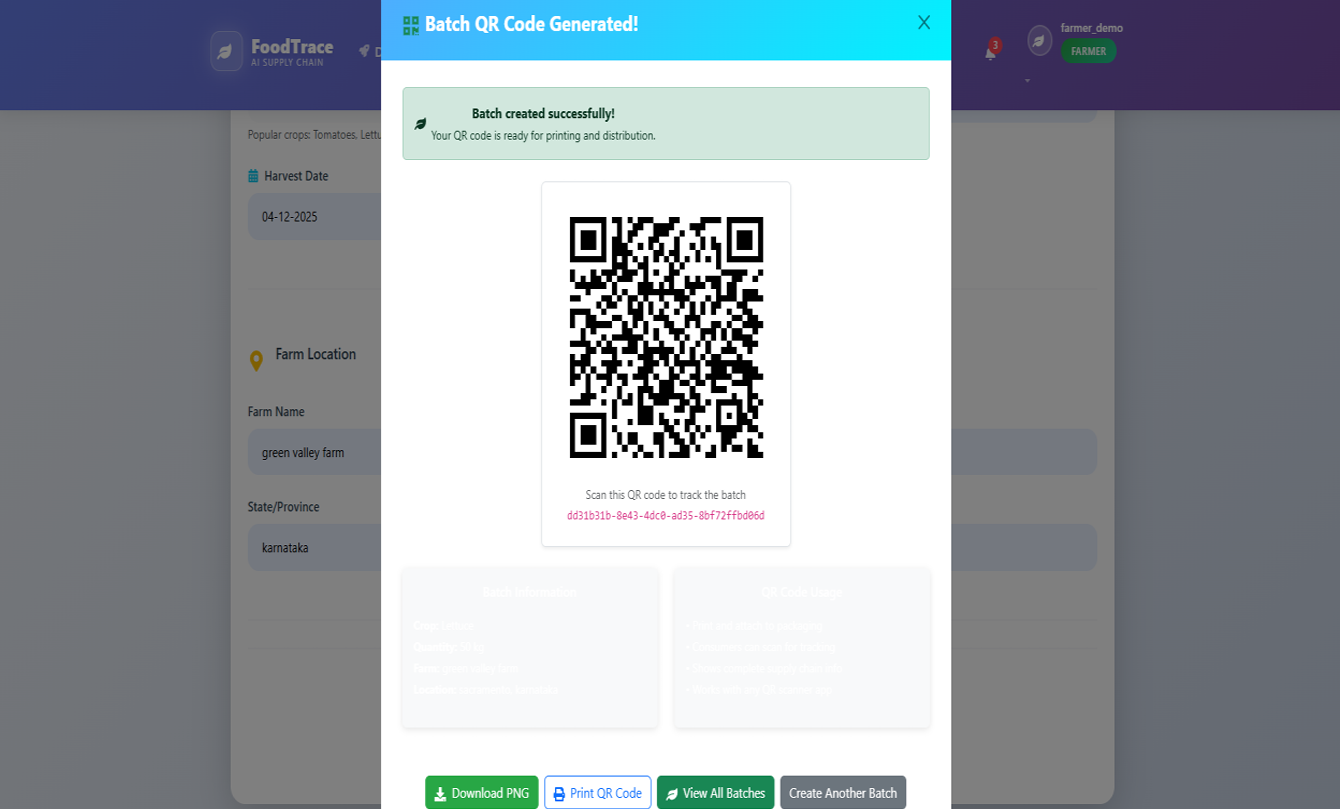
Batch generate QR to track
-
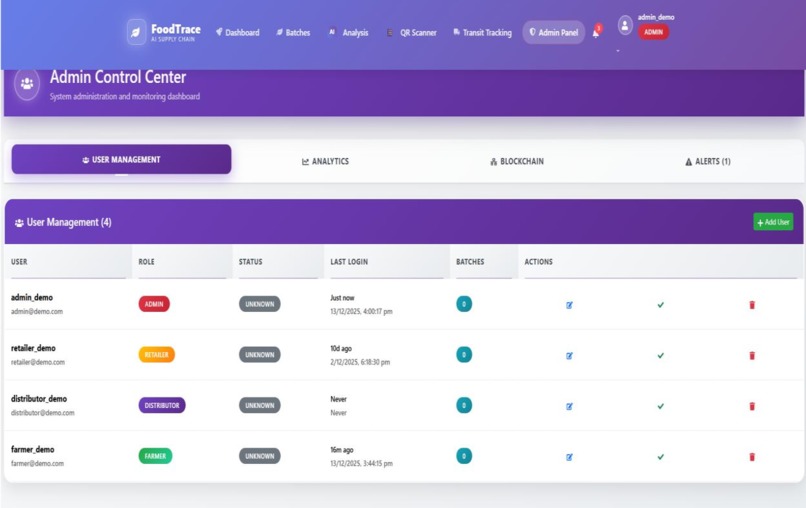
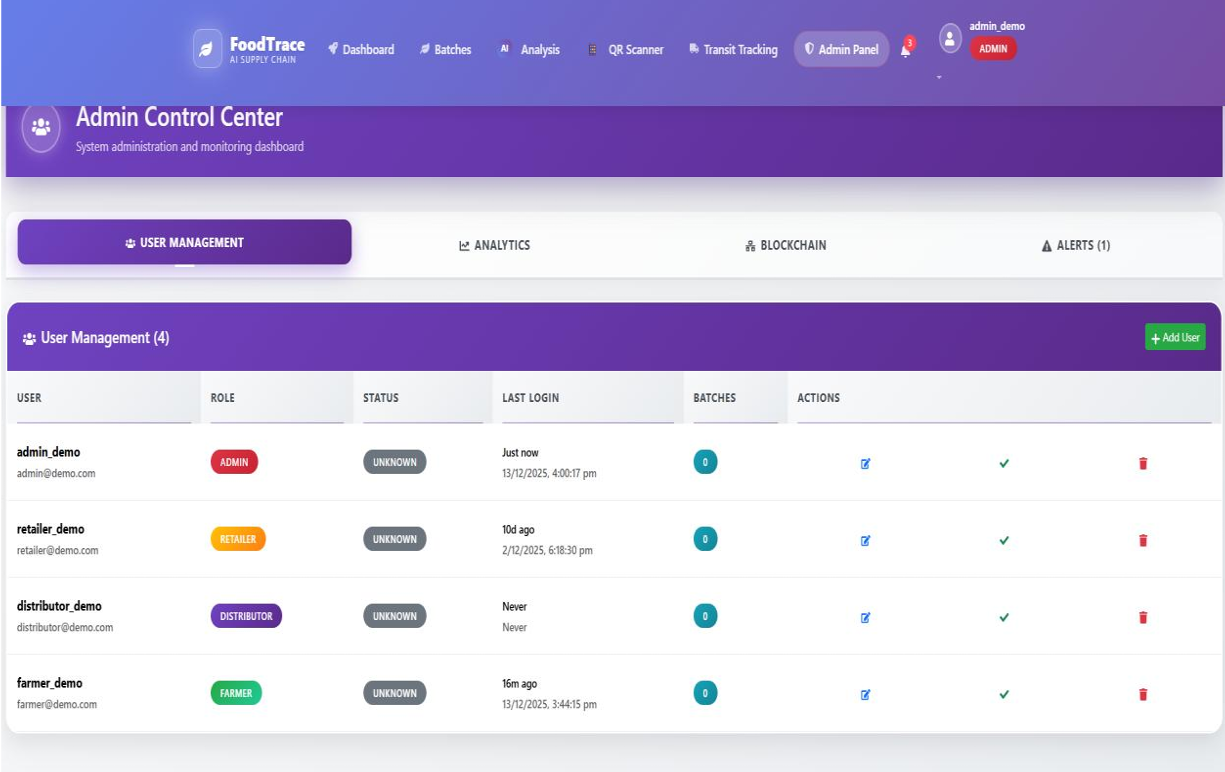
Admin control page
-
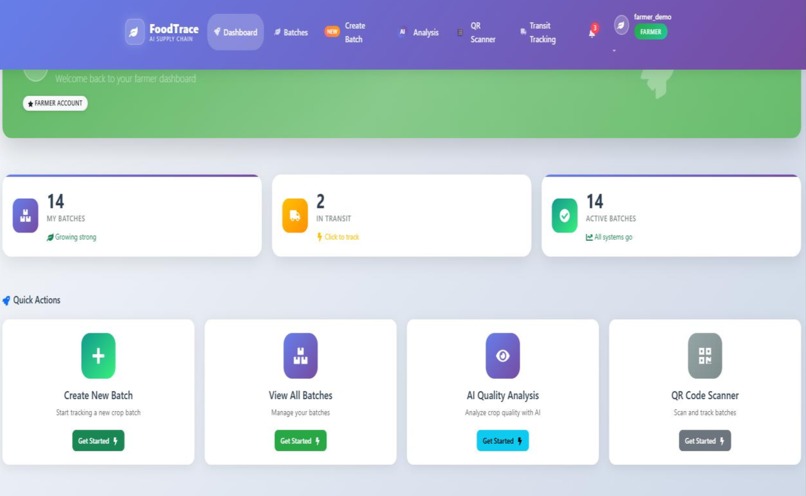
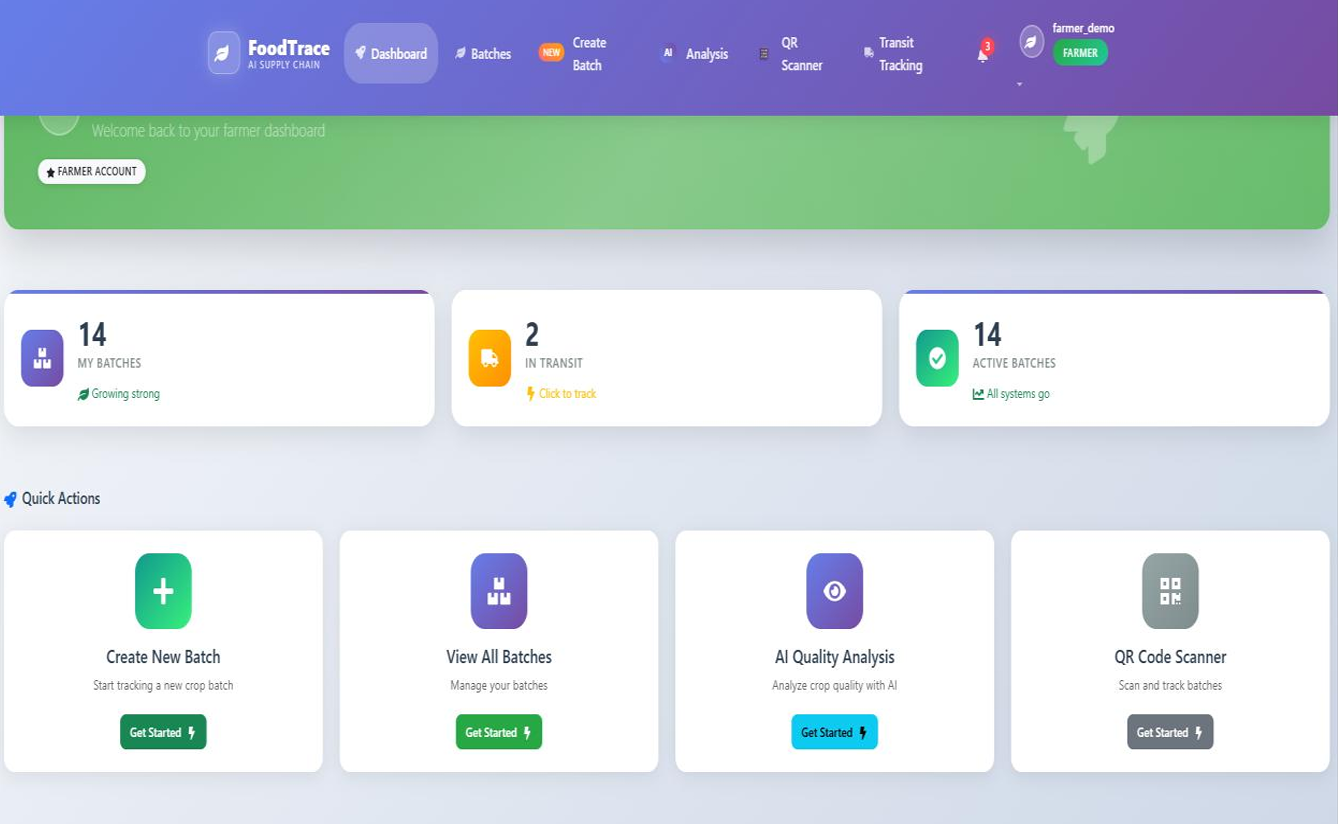
Farmer Dashboard
-
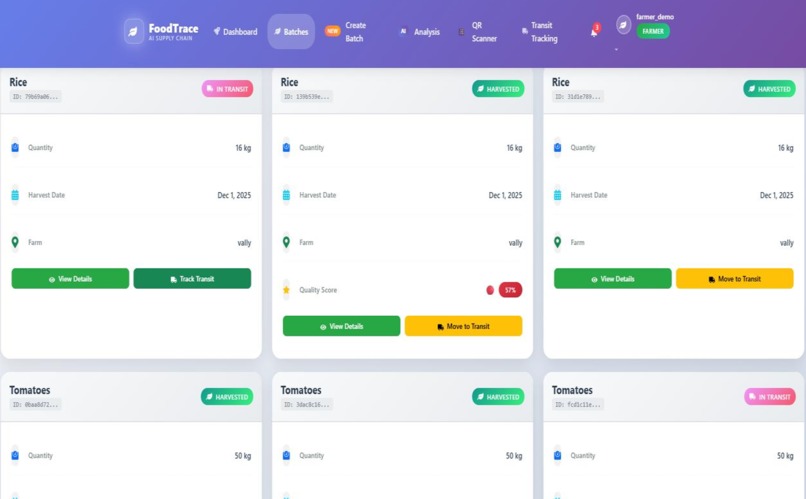
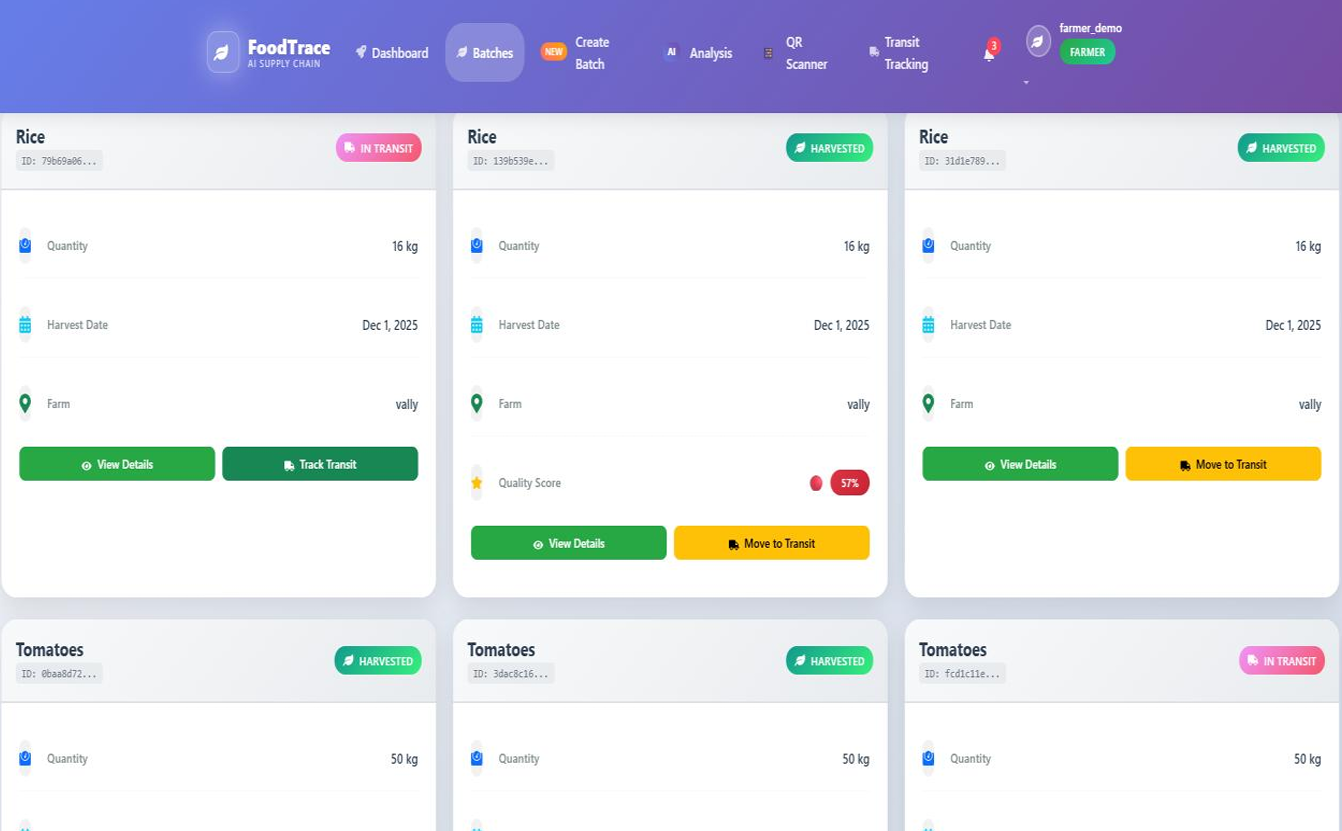
Batches page
-
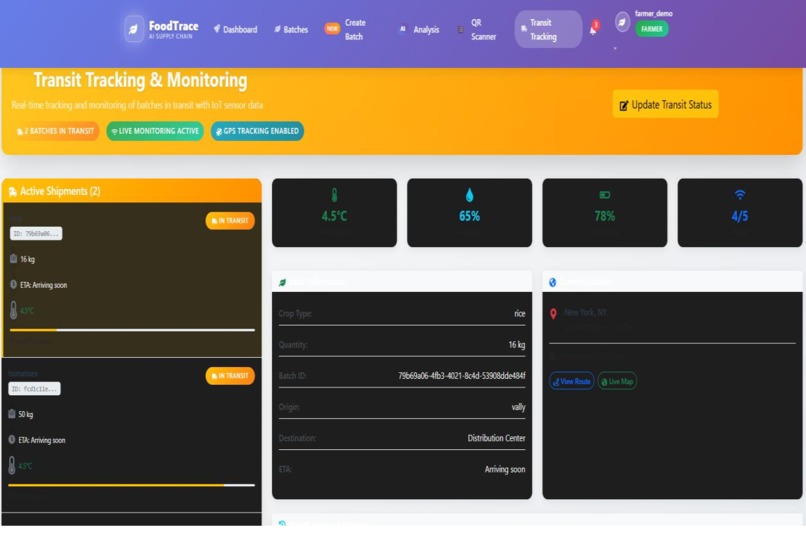
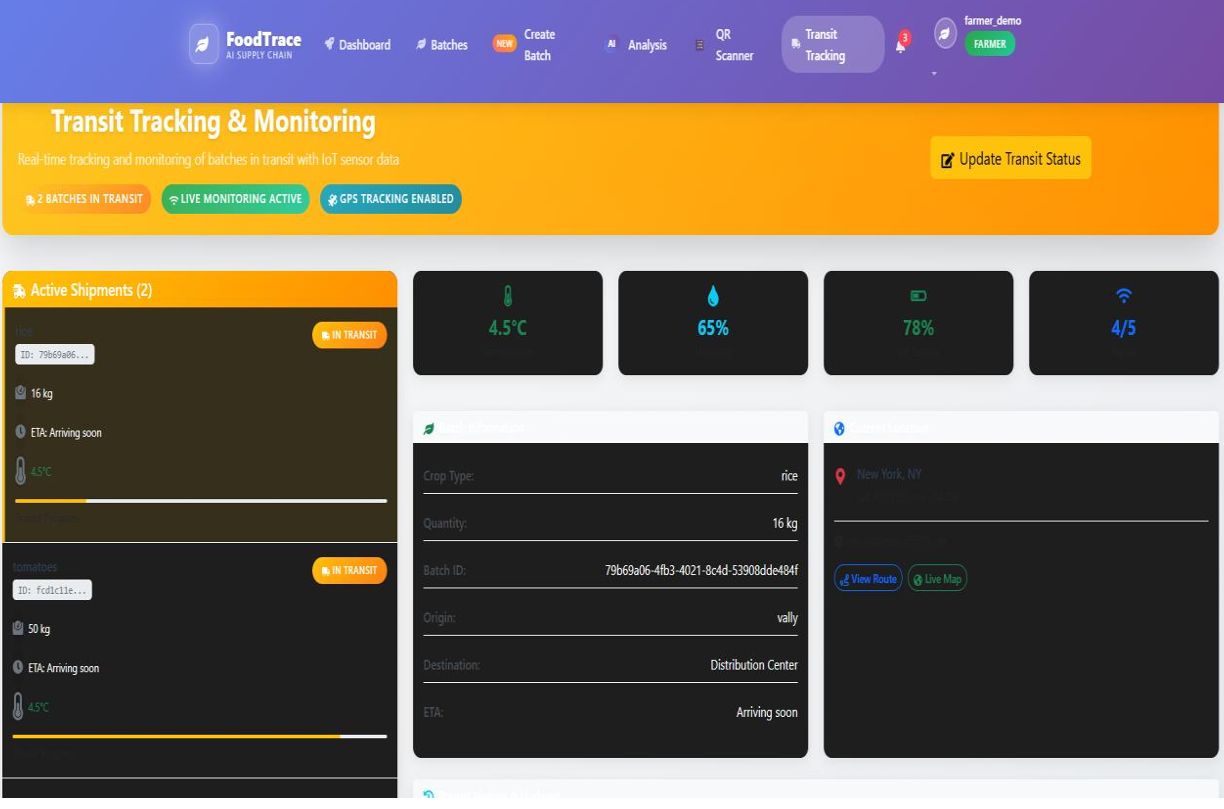
Transit , tracking , monitoring page
-
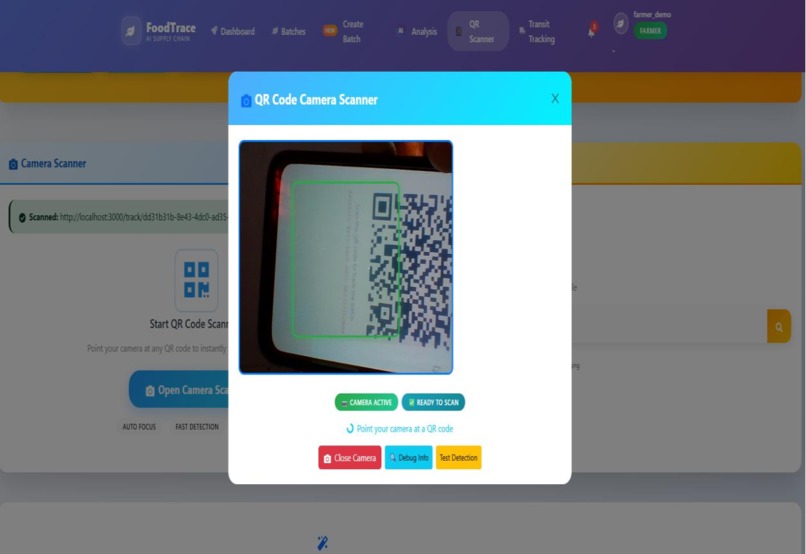
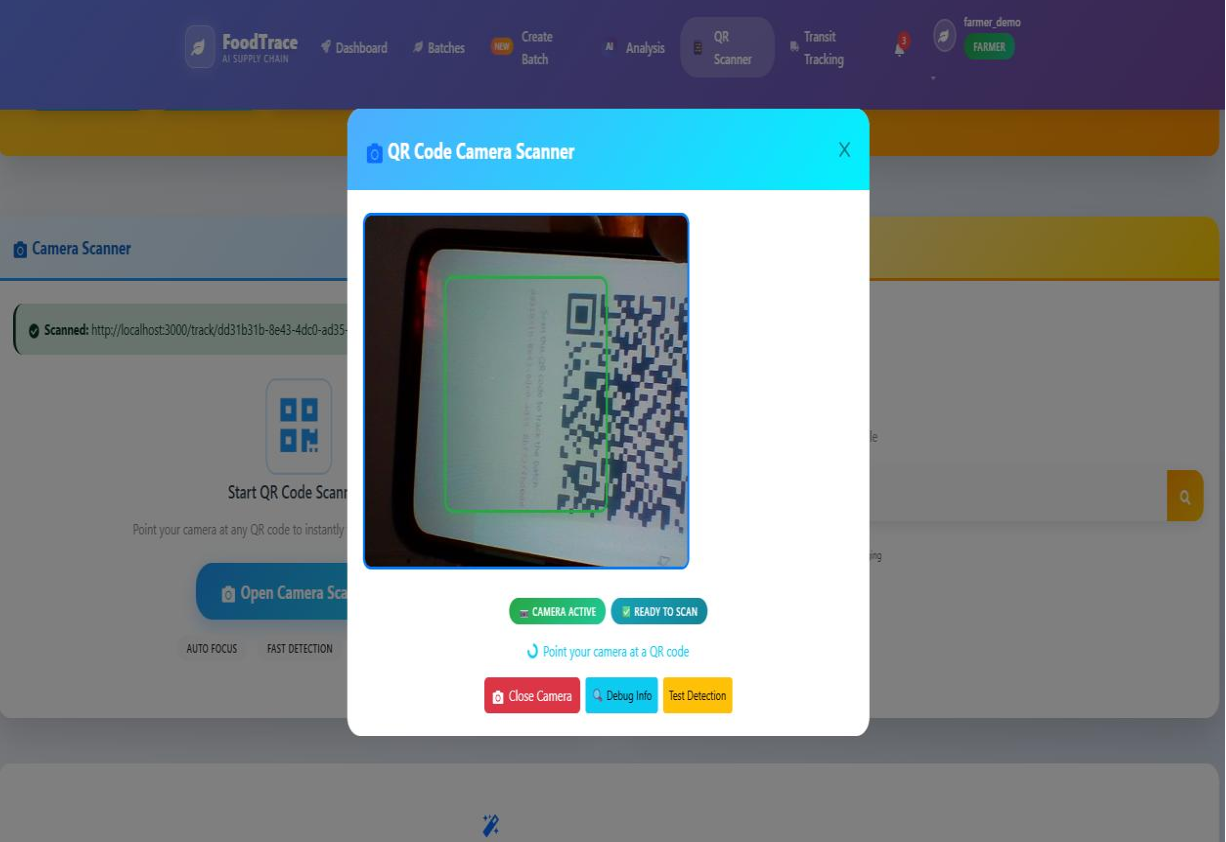
Scan QR to get crop transit details page
-
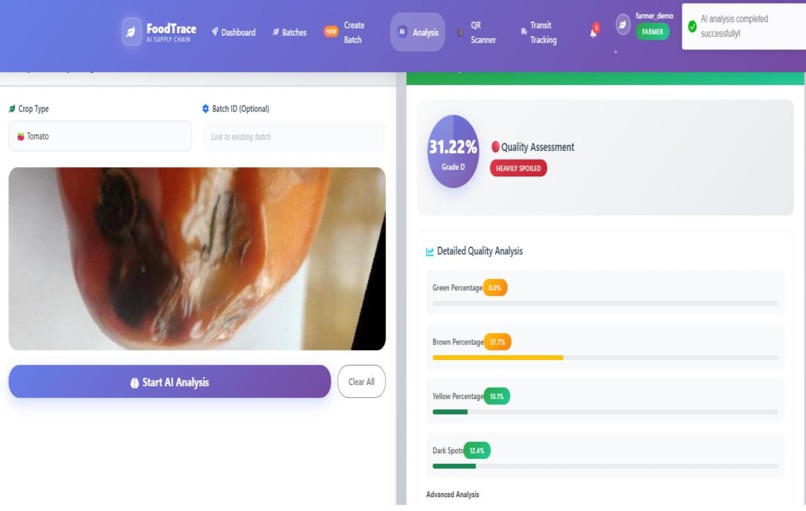
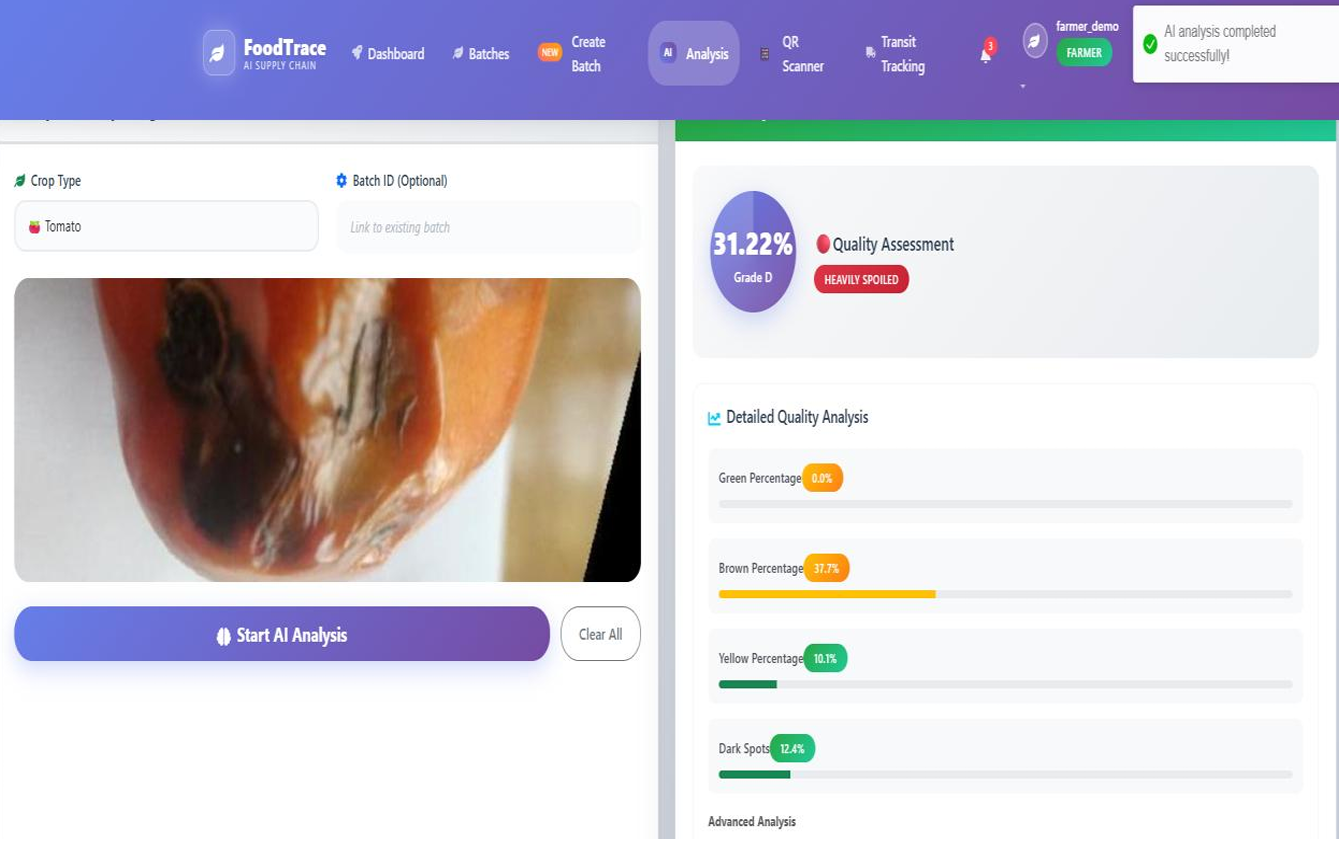
Food spoil detection analysis
Inspiration
Food supply chains today lack transparency and accountability. Consumers have no clear visibility into where their food comes from or how it was handled. At the same time, issues like spoilage, contamination, and food fraud are increasing due to poor monitoring and manual processes.
The idea for this project came from a simple question: “Why can’t we track food quality and history as easily as we track a package?”
This led us to combine AI for quality detection and blockchain for trust and traceability.
What it does
The Food Supply Chain Tracker is a system that:
Tracks food products across the entire supply chain Uses AI to detect spoilage and contamination from images Predicts nutritional degradation during transport Stores critical supply chain events on blockchain for transparency Provides role-based dashboards for farmers, distributors, retailers, and consumers Enables QR code scanning for instant product history access Monitors environmental conditions like temperature and humidity
How we built it
We built the system using a multi-layer architecture:
Frontend: React-based dashboards for different stakeholders Backend: Flask APIs handling business logic, AI integration, and blockchain interaction Database: MongoDB for flexible data storage Blockchain: Ethereum (Ganache for development) with Solidity smart contracts AI/ML OpenCV + TensorFlow for image-based quality detection Scikit-learn models for predicting nutritional degradation
For degradation modeling, we used: N(t)=N0⋅e−kt Where: N(t) = Nutritional value at time 𝑡 N0 = Initial nutritional value k = degradation constant
Challenges we ran into
Blockchain Overhead
Transactions are slow and costly, making it impractical to store all data on-chain. → We limited blockchain usage to critical traceability events.
Limited Training Data for AI
Real-world food datasets are inconsistent and hard to obtain. → We used preprocessing and simplified models to maintain reliability.
System Complexity
Combining AI, blockchain, and full-stack development made the system initially unstable. → We reduced scope and focused on core functionality.
Lack of Real IoT Data
No access to live sensors for temperature/humidity tracking. → We simulated environmental data for testing.
Accomplishments that we're proud of
Successfully integrated AI + Blockchain in a single working system Built a role-based platform covering all supply chain stakeholders Implemented QR-based product tracking for consumers Designed a system that is practical, not just conceptual Delivered a functional end-to-end prototype without overengineering
What we learned
Blockchain should be used selectively, not everywhere AI performance depends more on data quality than model complexity Full-stack integration is significantly harder than building isolated components Simplicity and focus are more valuable than adding excessive features Real-world systems require trade-offs, not perfection
What's next for Food Supply Chain Tracker
Integrate real IoT sensors for live environmental tracking Improve AI models with larger and more diverse datasets Deploy on a scalable blockchain network (e.g., Polygon) Build a mobile app for easier consumer access Add alert systems for spoilage and supply chain anomalies

Log in or sign up for Devpost to join the conversation.