-
-
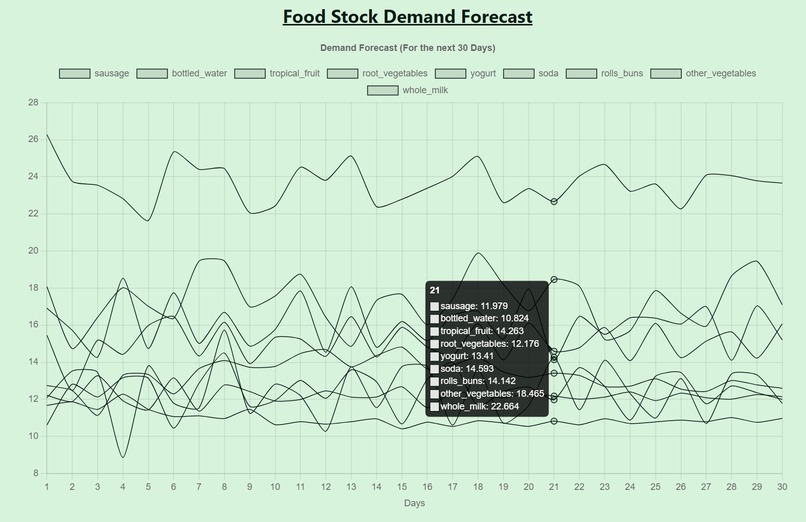
Demo forecast graph
Inspiration
- Food waste is a common problem in Singapore for retail outlets (e.g. supermarkets) due to the perishable nature of food.
- Amount of food waste generated has grown by around 20% over the last 10 years. In 2019, Singapore generated around 744 million kg of food waste.
- Since they do not know how much food demand to expect in the future, they would stock up excess food as they would not want to disappoint customers due to lack of stock.
- Hence, the excess perishable stock would be wasted, contributing to the worsening food waste problem in Singapore.
What it does
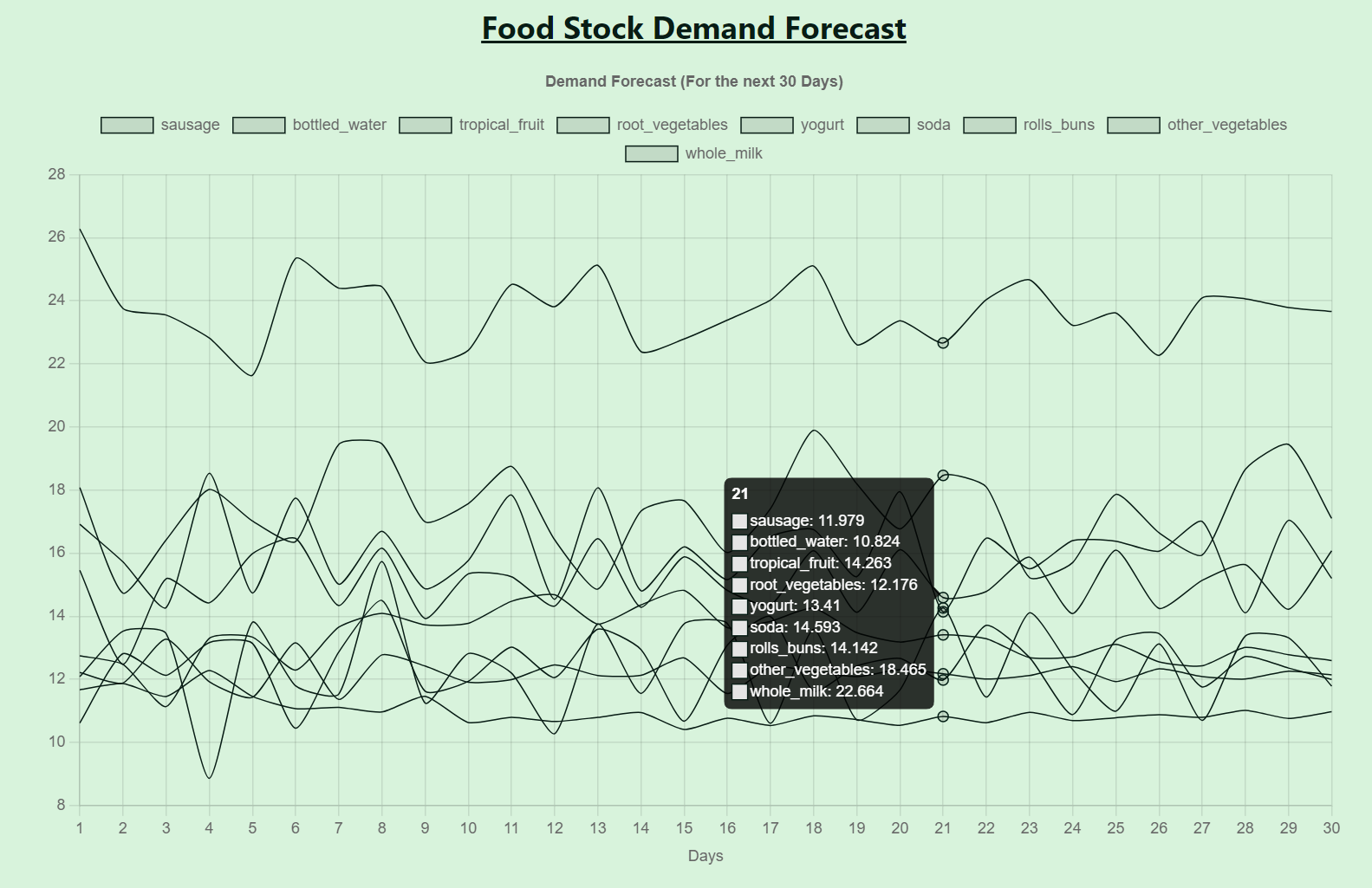
- Forecast future food stock demand based on past food stock data over a period of time.
How we built it
- Kaggle Dataset
- Time Series Forecasting by building an ARIMA model
Challenges we ran into
- Dataset lack sufficient data in each day for each type of distinct food.
- Implementing the most fitted ARIMA model (optimizing p, d, q) that minimizes the RSS (Residual Sums of Squares) value.
Accomplishments that we're proud of
- Forecasting future food stock demand using Time Series Forecasting
- A Web application to display the results in an interactive chart
What we learned
- Cleaning of datasets to suit our needs
- How to implement Time Series Forecasting with ARIMA model
- Planning, Teamwork and Communication are key elements to a successful project.
What's next for Dino Bots - Food Stock Demand Forecast
- Include other features when forecasting future food stock demand (e.g. promotion dates, expiry date) so as to increase the accuracy of the model.
- Implement a dynamic food pricing machine learning model to dynamically price food based on future food demand, promotion dates, and expiry date, to minimize food wastage and maximize profits.
- Create a mobile application that automatically stores sales data and forecast future food stock demand.


Log in or sign up for Devpost to join the conversation.