-
-
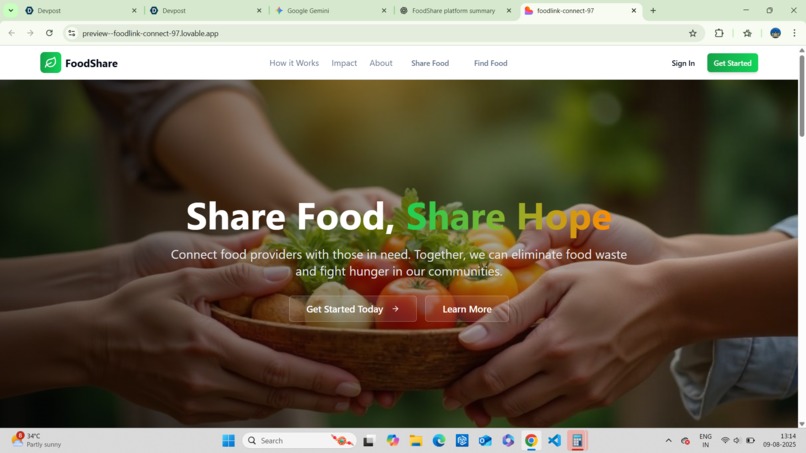
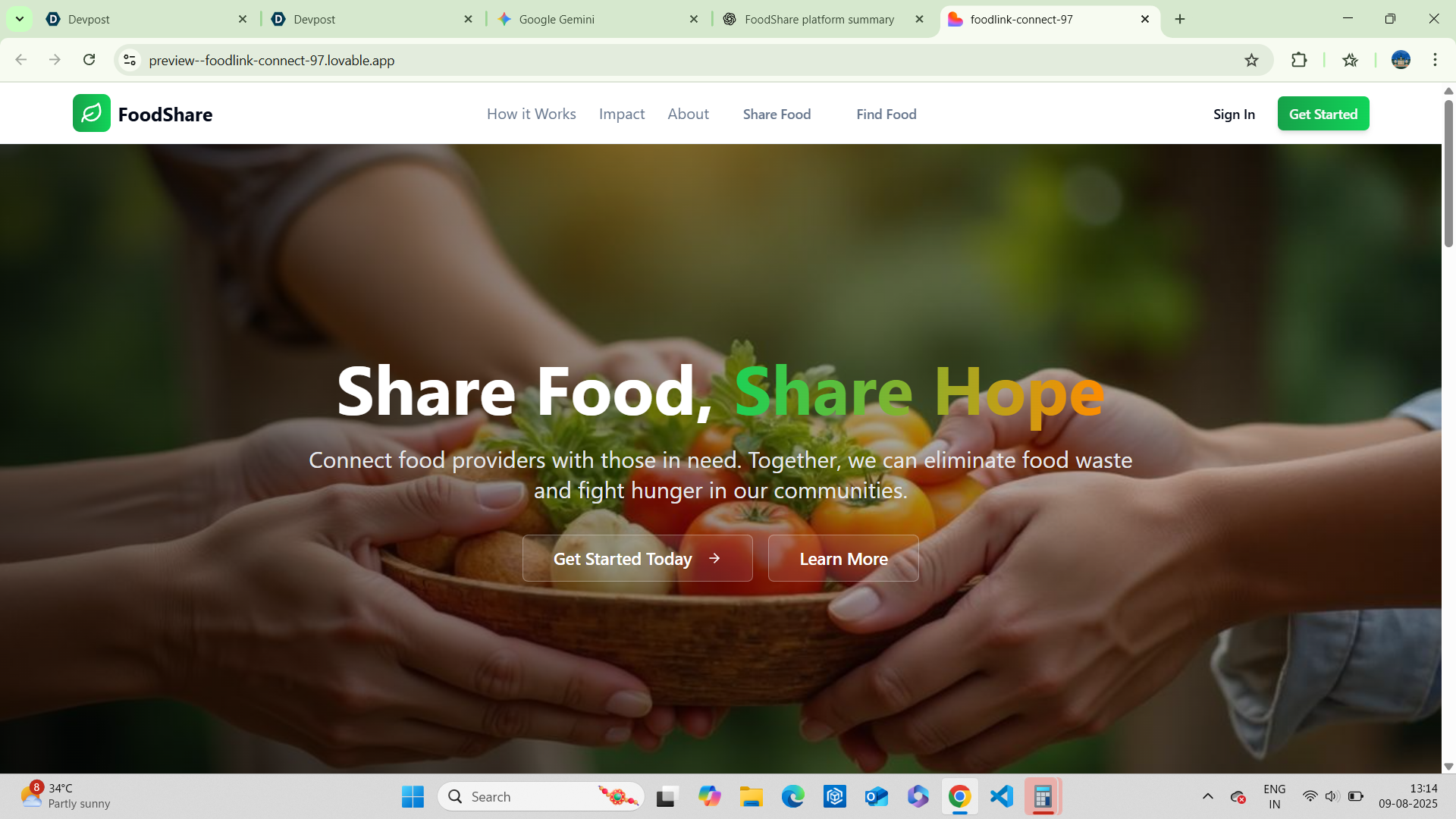
Home[ page
-
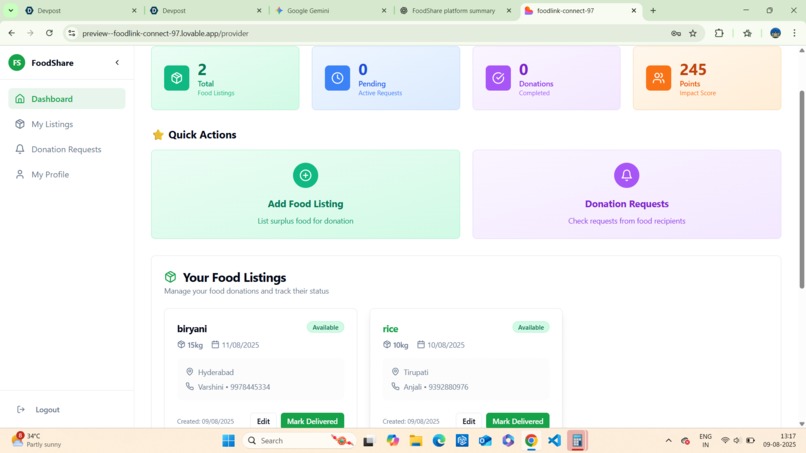
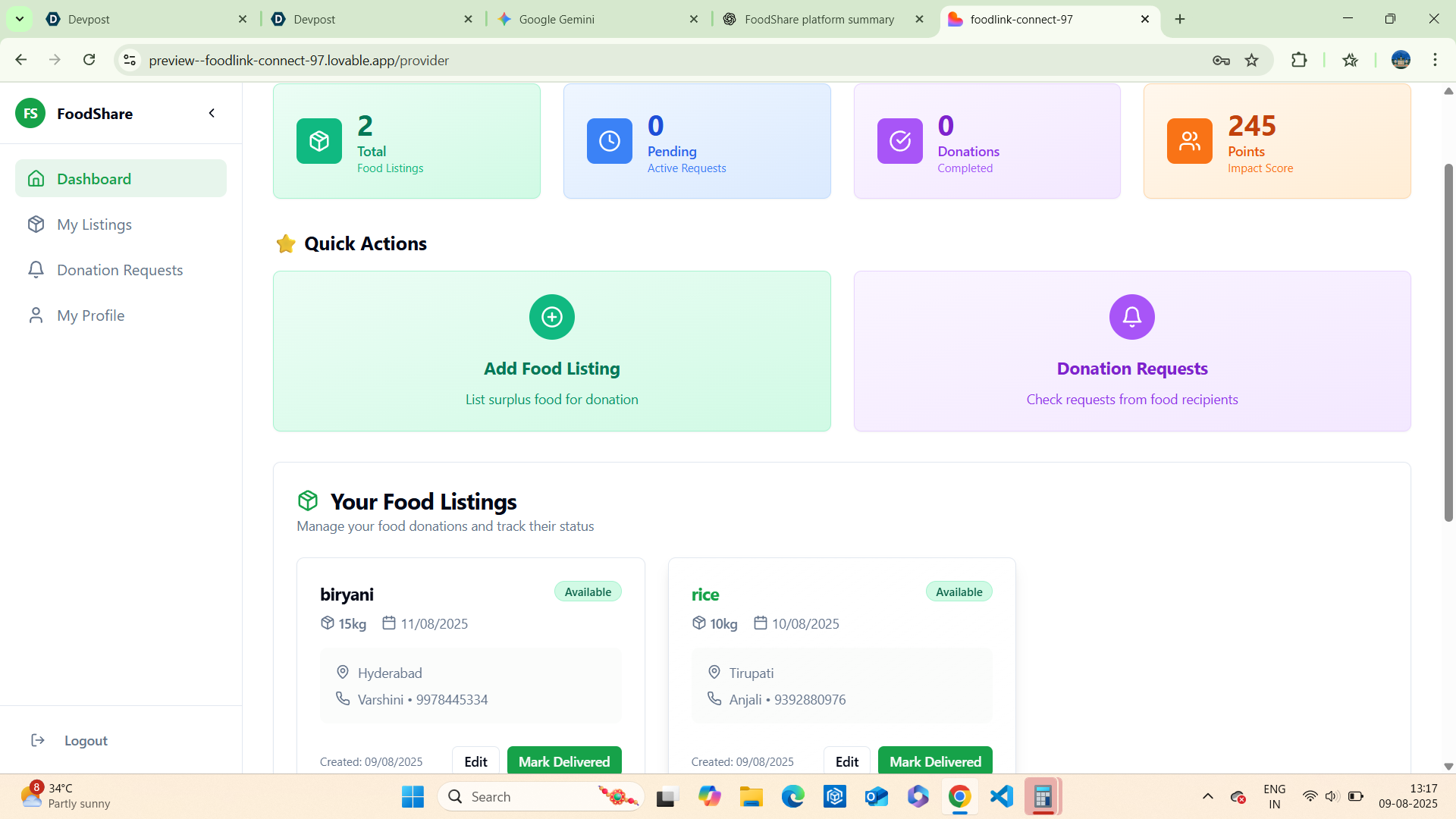
Donor Dashboard
-
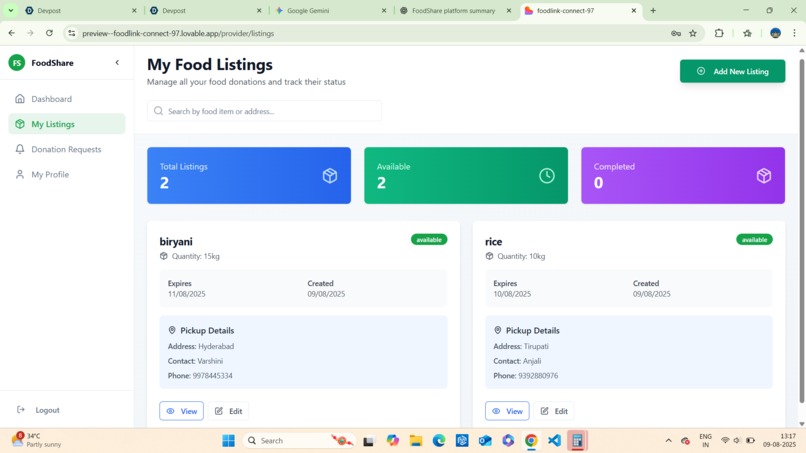
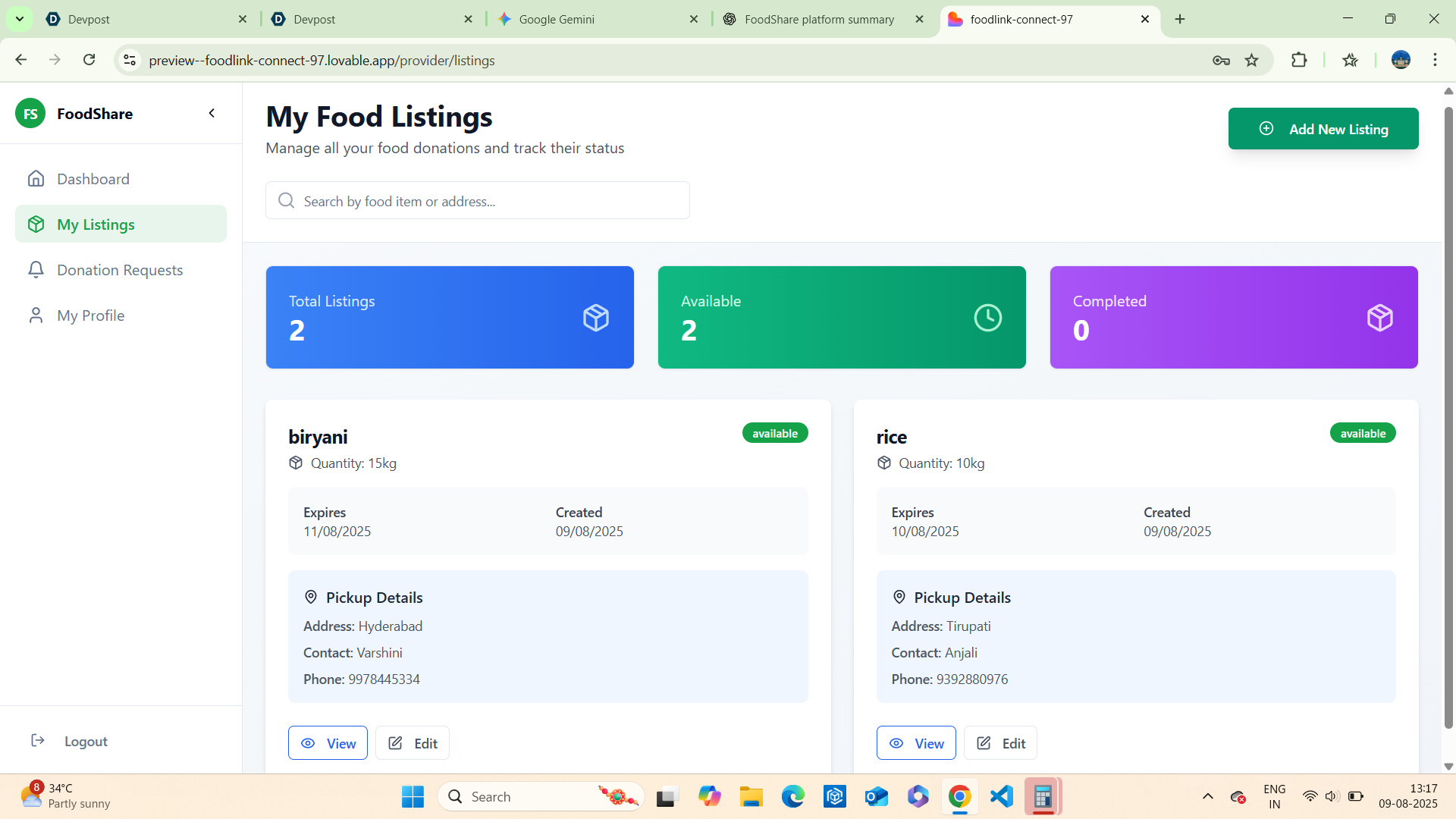
Food Listing
-
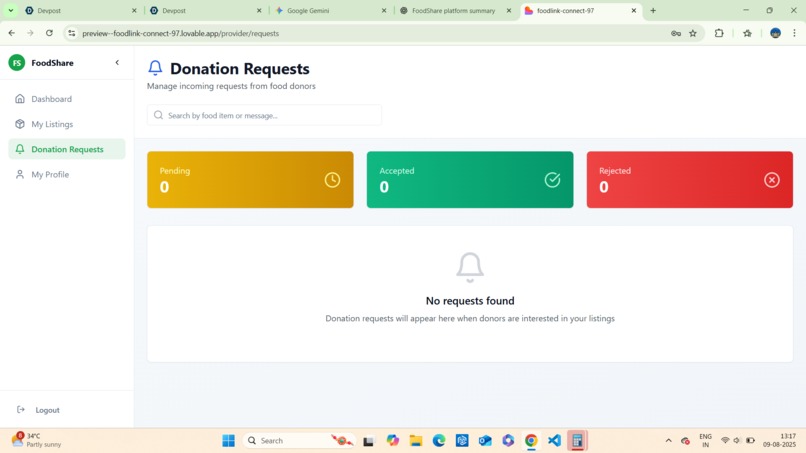
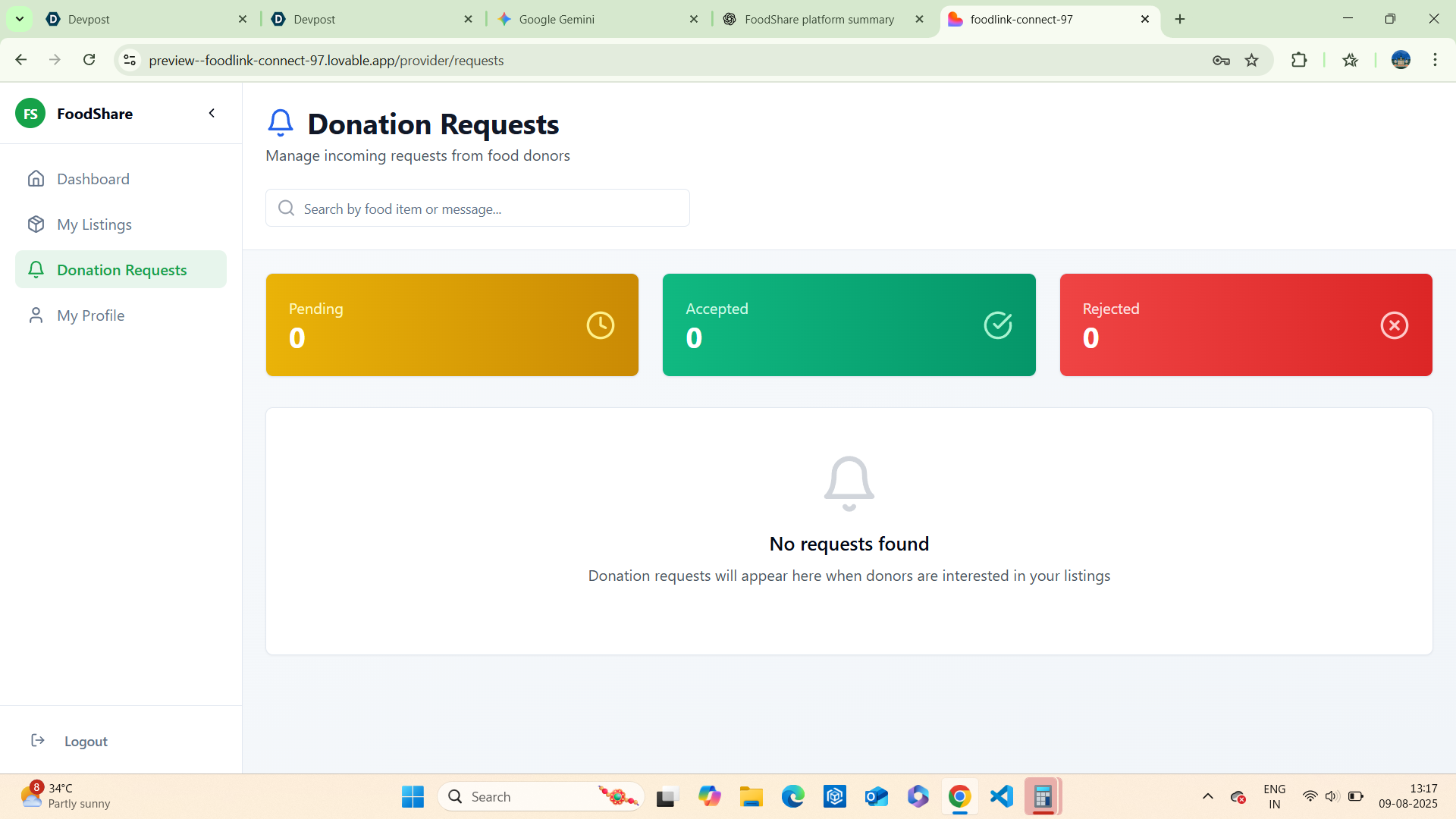
Requests
-
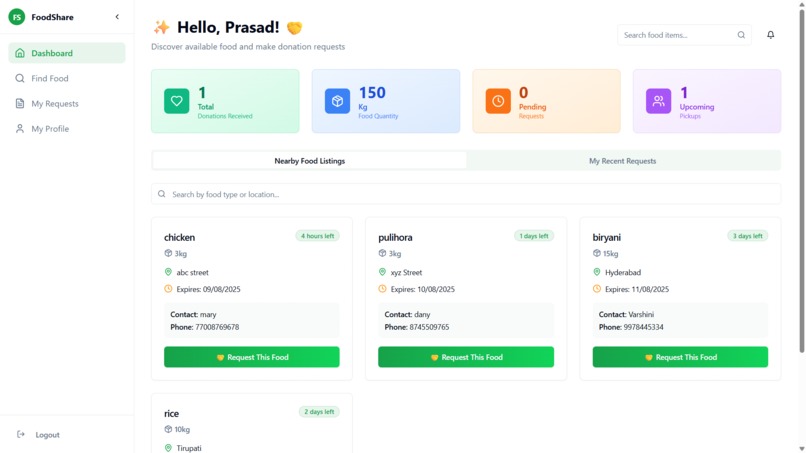
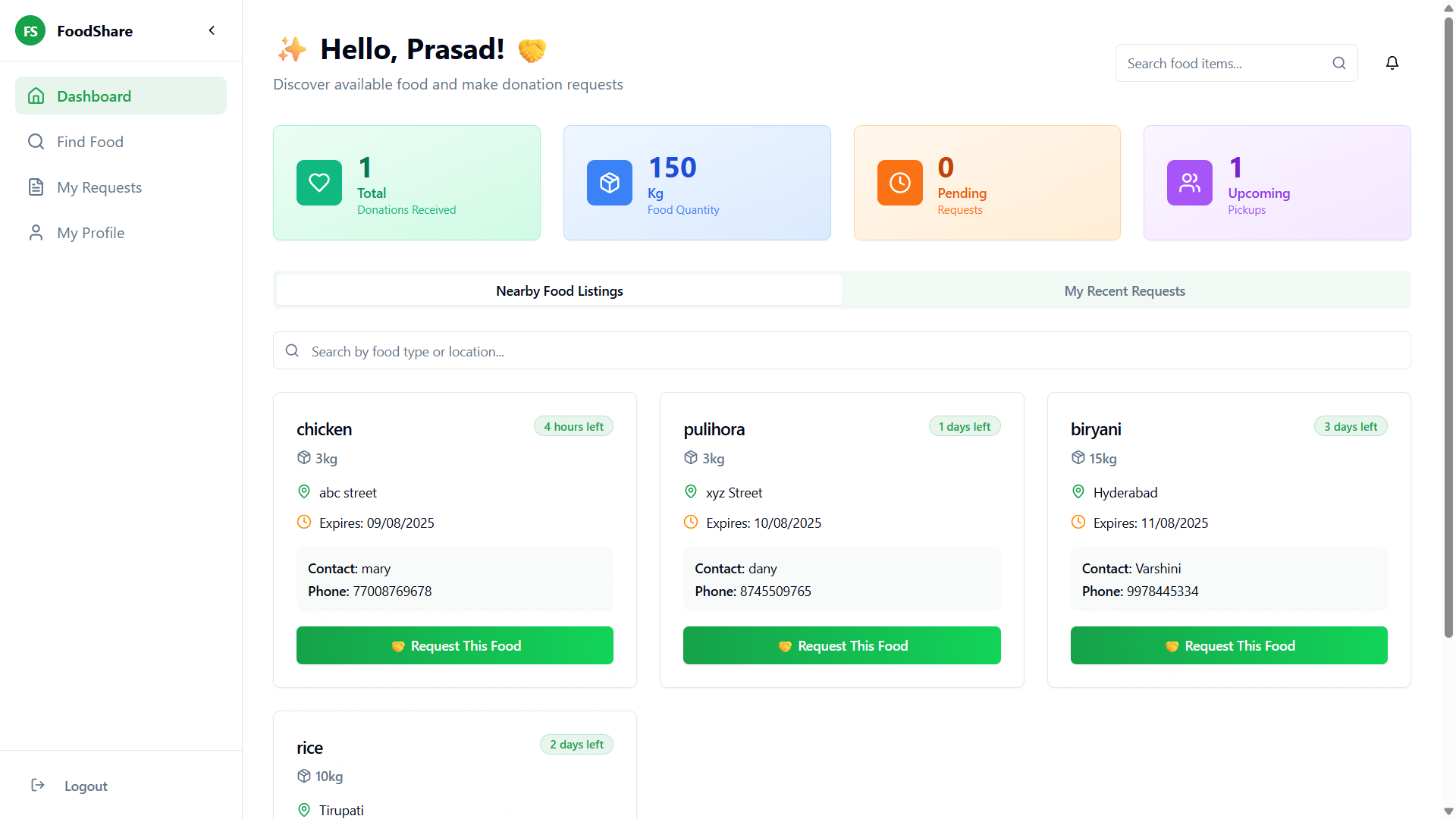
Receiver Dashboard
Inspiration
During my final year, I became acutely aware of the staggering amount of food that goes to waste daily in places like college canteens and hostels. At the same time, I know that many people in our community struggle with food insecurity. The disconnect between this surplus and the need felt like a problem that technology could directly address. I was inspired to build a platform that could bridge this gap, ensuring that perfectly good food doesn't end up in landfills but instead reaches those who need it most. The project is a direct response to this real-world problem of food wastage and hunger.
What it does
FoodShare is a two-sided web application designed to combat food waste and alleviate food insecurity. The platform has two primary user roles:
Food Providers (Donors): Users like hostel managers or event organizers can create an account and easily list surplus food with details such as quantity, expiry date, and a pickup address. They can view incoming requests from receivers and accept or reject them with a single click.
Food Receivers: Users such as NGOs or individuals in need can browse a list of available food items. They can search for food based on locality or expiry date. Once a request is accepted by a provider, the receiver is notified and can use our integrated map to get directions for pickup.
The platform's core function is to facilitate the seamless and efficient redistribution of surplus food, ensuring it finds a new home before it spoils.
How we built it
I built FoodShare as a full-stack application using a modern and scalable tech stack.
Frontend: The user interface was developed using React.js, with Tailwind CSS for a clean, responsive, and professional design. The components are highly modular, which made development efficient. I used React Router for client-side navigation.
Backend & Database: I chose Supabase for the backend, which provided a powerful and rapid development environment. I leveraged its built-in features for user authentication, database management (with a PostgreSQL database), and storage for food images. This allowed me to focus on building features rather than managing server infrastructure.
Mapping: For the location-based features, I integrated the Google Maps API to display food listings on a map and to provide turn-by-turn directions from the receiver's location to the provider's pickup point.
Version Control: The entire development process was managed using Git and hosted on GitHub.
Challenges I ran into
The biggest challenge was scope management. Initially, I wanted to implement a full-fledged real-time notification system, so that receivers would get instant alerts when new food was listed. However, due to time constraints and the complexity of real-time implementation with Supabase, I had to simplify. I pivoted to a more practical "manual check" notification system, where users simply navigate to their dashboard to view new requests or status updates. This decision was crucial for completing the project on time. Another challenge was ensuring the UI/UX was both beautiful and functional, especially for the distinct dashboards for providers and receivers.
Accomplishments that Iam proud of
Impact-Driven Solution: I am most proud of building a project that directly addresses a real-world problem with significant social impact. FoodShare is not just a technical exercise; it's a tool for positive change.
Professional UI/UX: I successfully created a visually appealing and intuitive user interface that looks and feels like a professional product, a key goal from the beginning.
Full-Stack Implementation: I built a robust full-stack application from scratch, handling everything from database design and authentication to frontend development and API integration. This demonstrates a comprehensive skill set.
What we learned
This project was an incredible learning experience. I gained a deeper understanding of full-stack development, particularly with the Supabase ecosystem. I learned how to manage project scope effectively and make difficult decisions to ensure project completion. Most importantly, I learned the value of user-centric design, creating distinct experiences for different user roles to maximize usability.
What's next for FoodShare
The future of FoodShare is exciting. I plan to expand the project by adding features such as: A rating and review system for providers and receivers to build trust within the community. An automated data analytics dashboard for providers to track the amount of food they have saved. A mobile application to make the platform even more accessible to a wider audience. Partnerships with local NGOs to integrate the platform directly into their logistics.
Built With
- api
- auth
- css
- git
- github
- javascript
- languages:-javascript
- maps
- postgresql
- react.js
- router
- routing:
- sql
- tailwind

Log in or sign up for Devpost to join the conversation.