
Inspiration
We got the inspiration from a personal reflection on all of our own experiences. When traveling anywhere, we realized that food planning becomes way larger of an issue than it should be. People have their own preferences that they stick to, and using ML, we saw a way to optimize the meal planning process. We also recognized how so many people have certain dietary and medical restrictions such as Diabetes, Allergies, and low-blood-sugar and that they require immediate food solutions on hectic days such as road trips. We wanted to completely remove the overhead of path and dietary planning for them, and that led us to make this app.
What it does
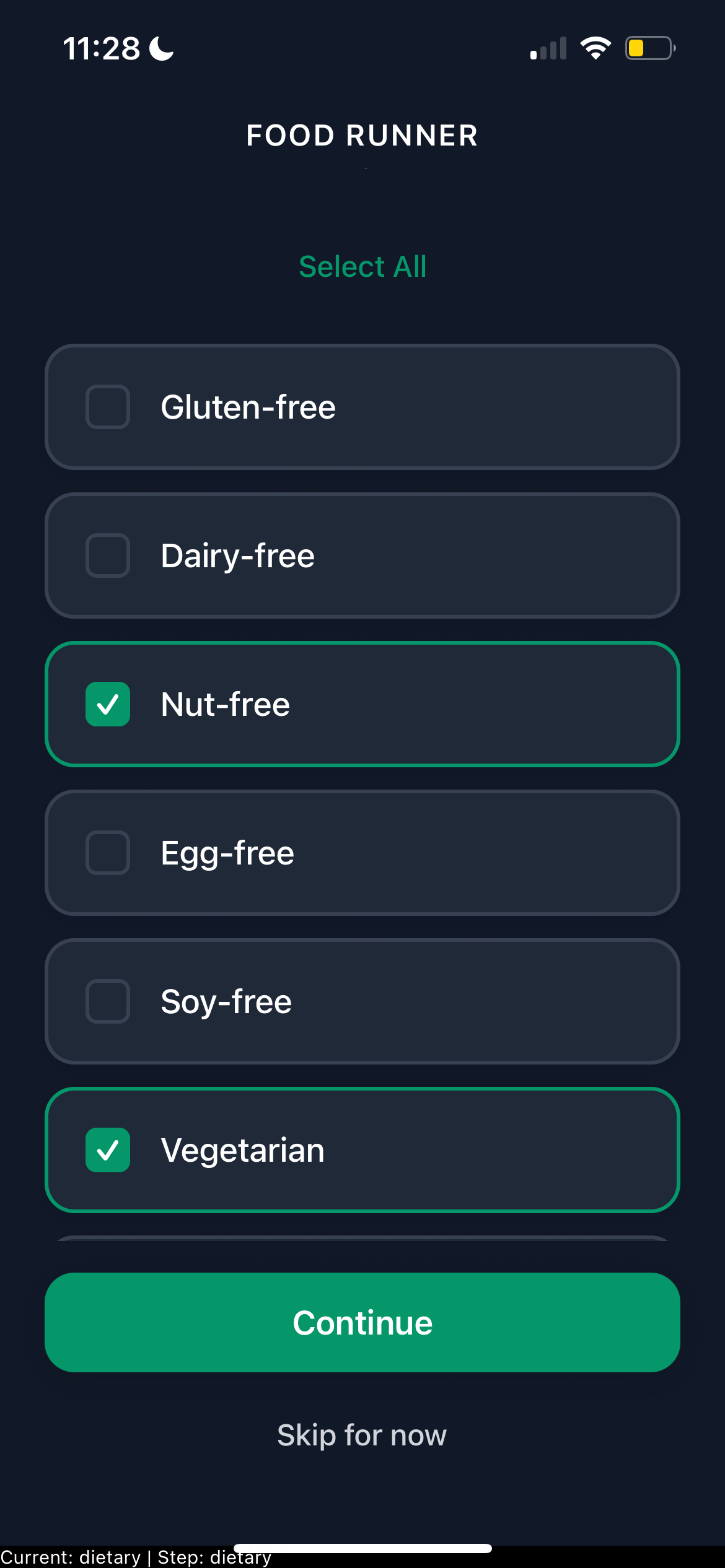
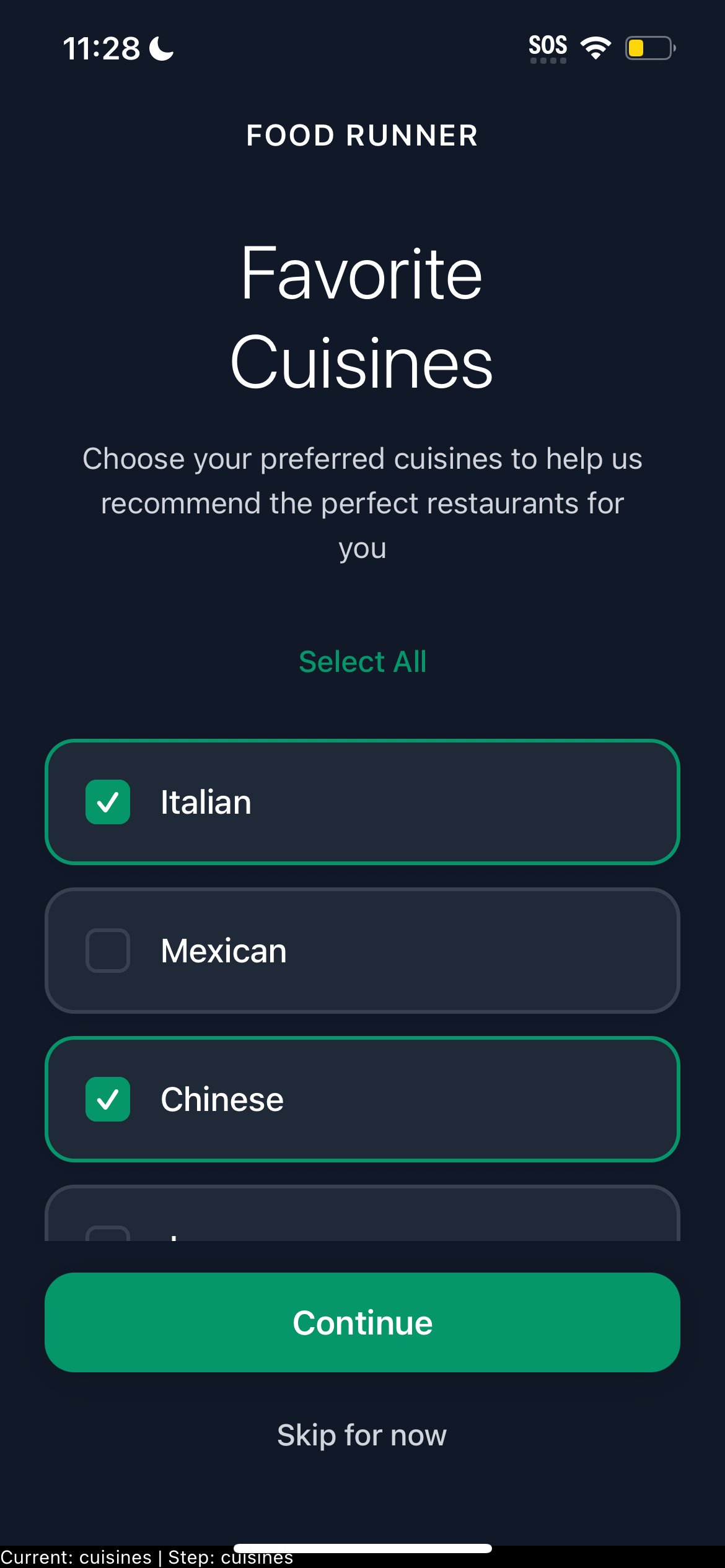
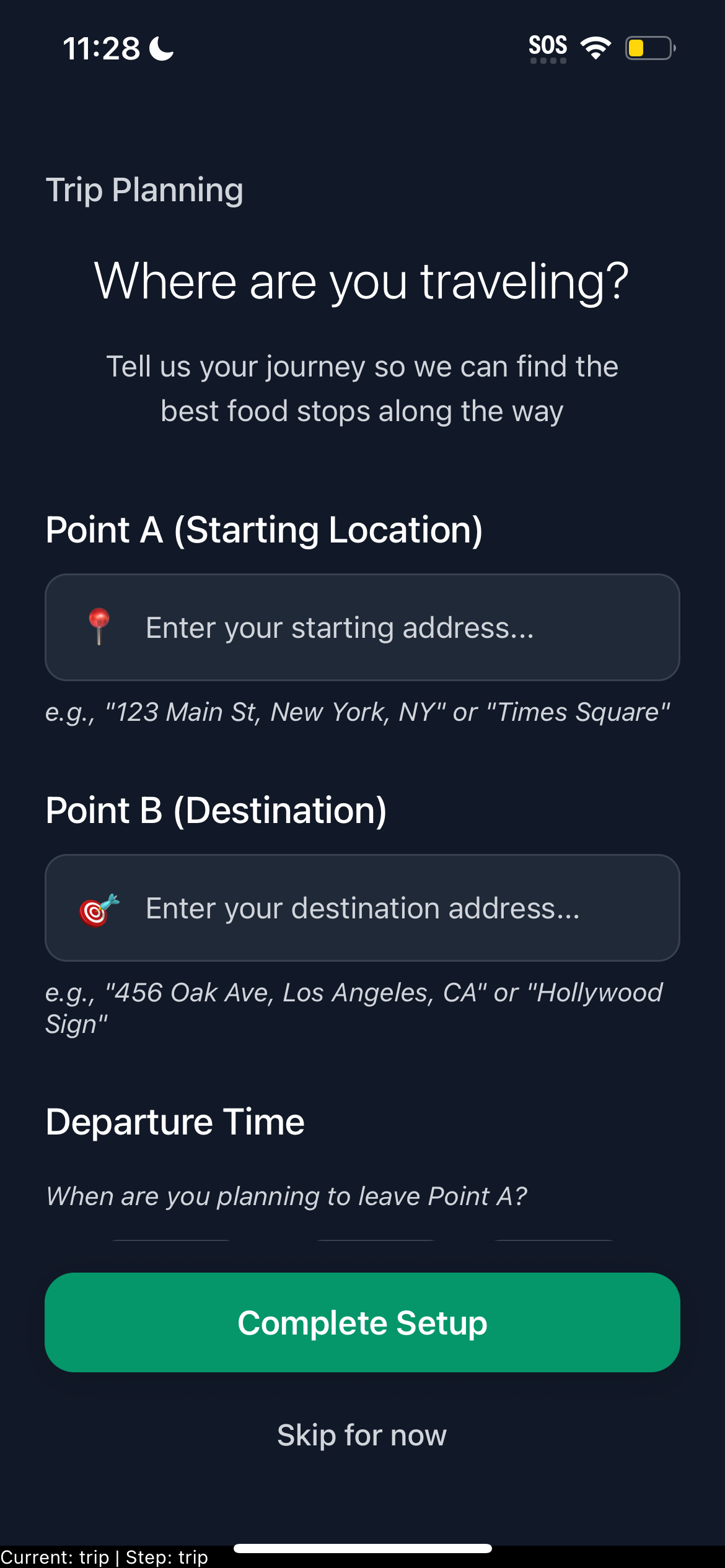
Food Runner eliminates meal planning stress by using AI to create personalized, optimized food routes. The app first takes user-profiled preferences including dietary restrictions, budget constraints, and location data in learns user preferences through reinforcement learning, considering. It then uses multi-constraint optimization to find the best restaurants within specified travel radius and displays using Apple Maps API. Then, after repeated use of the app, a rule-based learning system much more accurately suggests food paths for the user in the factors of cuisines and distance they are willing to travel for that meal, since these factors are tendencies that stay over time.
How we built it
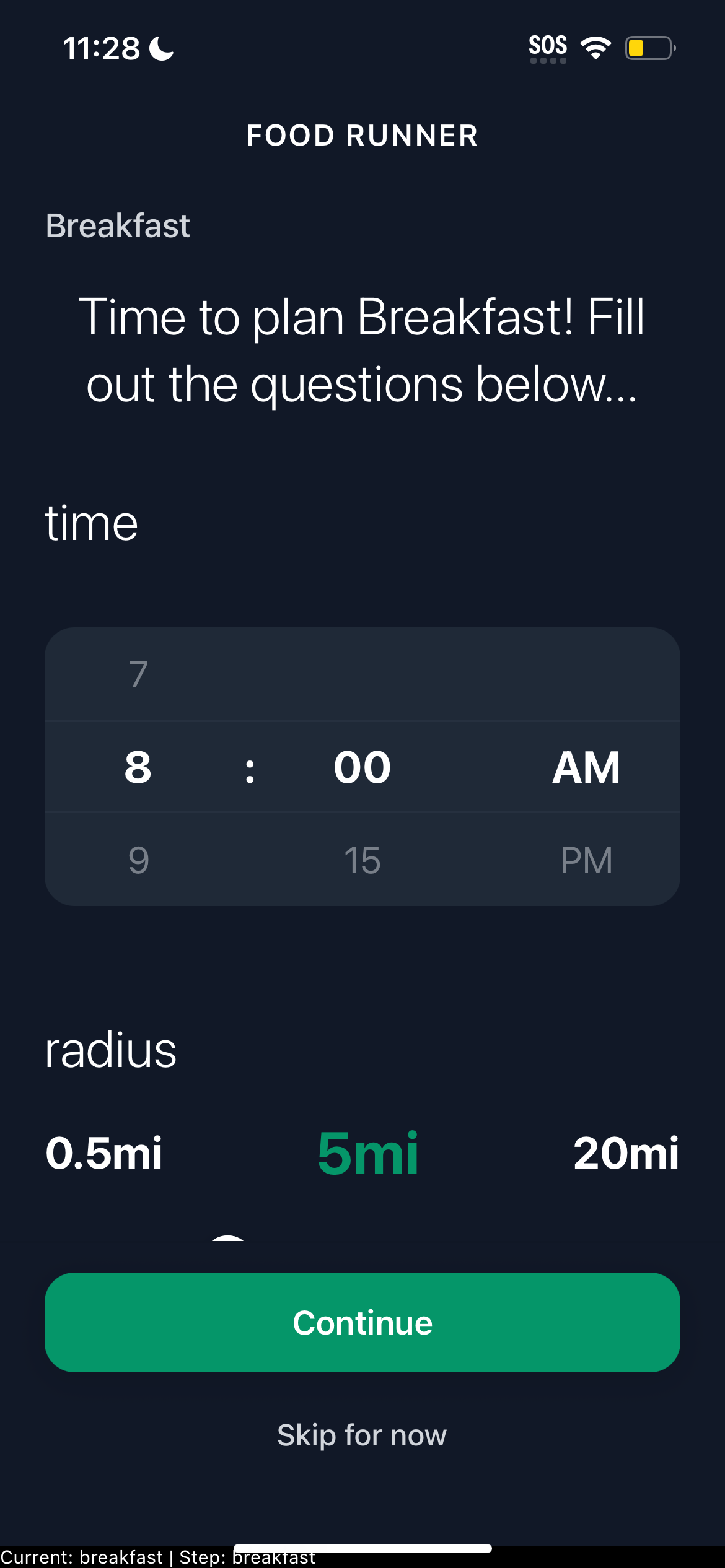
We built Food Runner using React and Expo for cross-platform mobile development, implementing custom iOS-style interfaces and smooth animations. The backend features a Flask API server integrated with OpenRouteService for route calculation, Overpass API for restaurant discovery, and Geopy for geocoding. Our rule-based learning engine uses multi-armed bandit algorithms with contextual learning, suggesting restaurants for all three meals. We implemented centralized data collection and a comprehensive onboarding flow that captures user preferences for ML training. The mapping algorithm considers travel time, budget limits, dietary restrictions, and real-time restaurant data to generate optimal meal paths.
Challenges we ran into
Challenges we ran into was the restrictions with Google Calendar. Google does not allow unverified apps to access full calendar data from user accounts, so we've had to restructure our app quite a lot to account for this.
Accomplishments that we're proud of
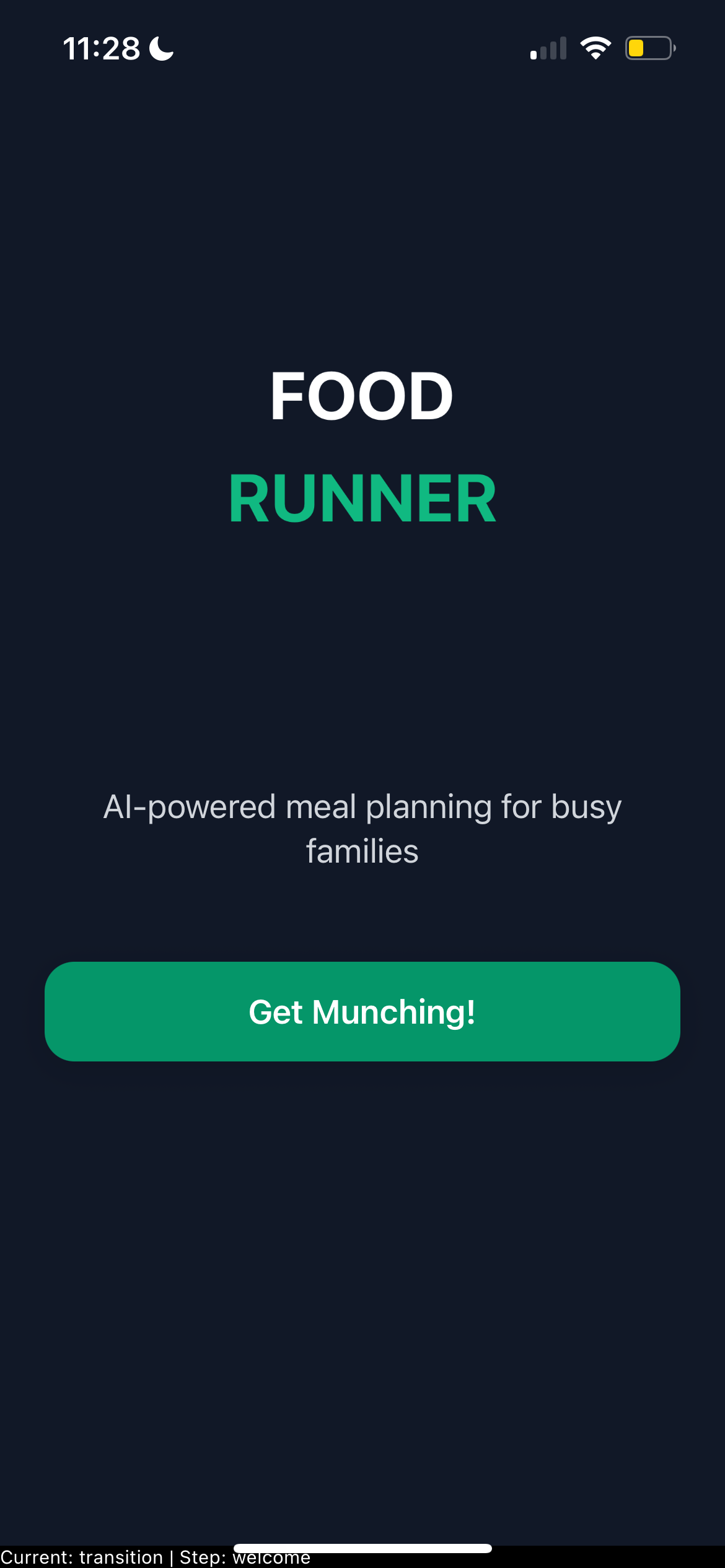
Making a working rule-based learning model; using dynamic Apple Maps GUI; the number of parameters we handle; smooth app functionality. And, our header animation :)
What we learned
Building Food Runner taught us valuable lessons about implementing learning algorithms in real-world applications, particularly in optimizing customer's life. We understood how to plan an app development project, start-to-finish. We gained deep experience with React development, API integration (OpenRouteService, Overpass), and multi-constraint optimization algorithms that simultaneously consider numerous parameters such as budget, time, location, and dietary preferences. The user experience design process revealed insights about onboarding flow optimization and the importance of centralized state management for complex data collection workflows. Most importantly, we learned about the practical challenges of deploying machine learning in consumer applications - ensuring the AI provides immediate value while improving over time, handling cold-start problems for new users, and designing feedback mechanisms that encourage continued engagement without being intrusive.
What's next for Food Runner AI
We want to expand the app to include a daily meal planning interface too, turning this into essentially "Reverse Doordash." People commuting daily to work looking for places to eat that align with their preferences should not have to waste time on any day. They should be able to find local steals and deals, etc. and sync up their Google Calendar so any new meeting, event, would automatically be loaded onto Food Runner's path. We need to gain permissions too access personal Google Calendars for this step. That duality would then turn the app to "Reverse Doordash", as we would bring new user bases to new places, benefitting consumers and restaurants alike.
Built With
- asyncstorage
- cors
- expo.io
- flask
- geopy
- openrouteservice
- overpass
- react-native
- react-native-maps


Log in or sign up for Devpost to join the conversation.