Inspiration
With the growing concern for health and transparency in food consumption, we wanted to build a platform that empowers users to explore, search, and understand the nutritional makeup of everyday food products. OpenFoodFacts, a non-profit open database, provided the perfect foundation to build a public utility app that’s both educational and practical.
What it does
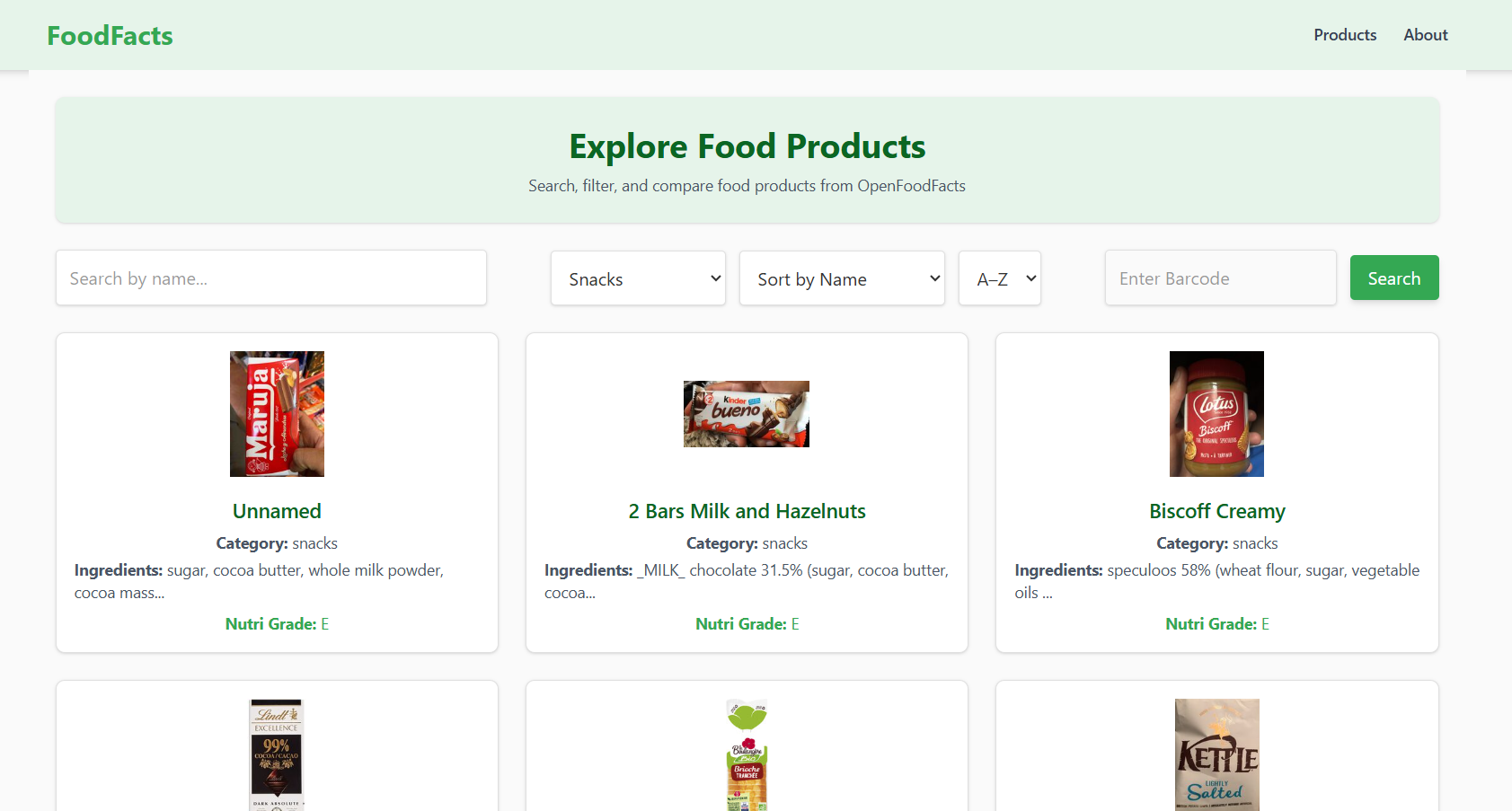
Food Products Explorer is a responsive web application that allows users to:
🔍 Search food products by name or barcode
📂 Filter products by category (e.g., beverages, snacks, cereals)
🔃 Sort products by name or nutrition grade (A to E)
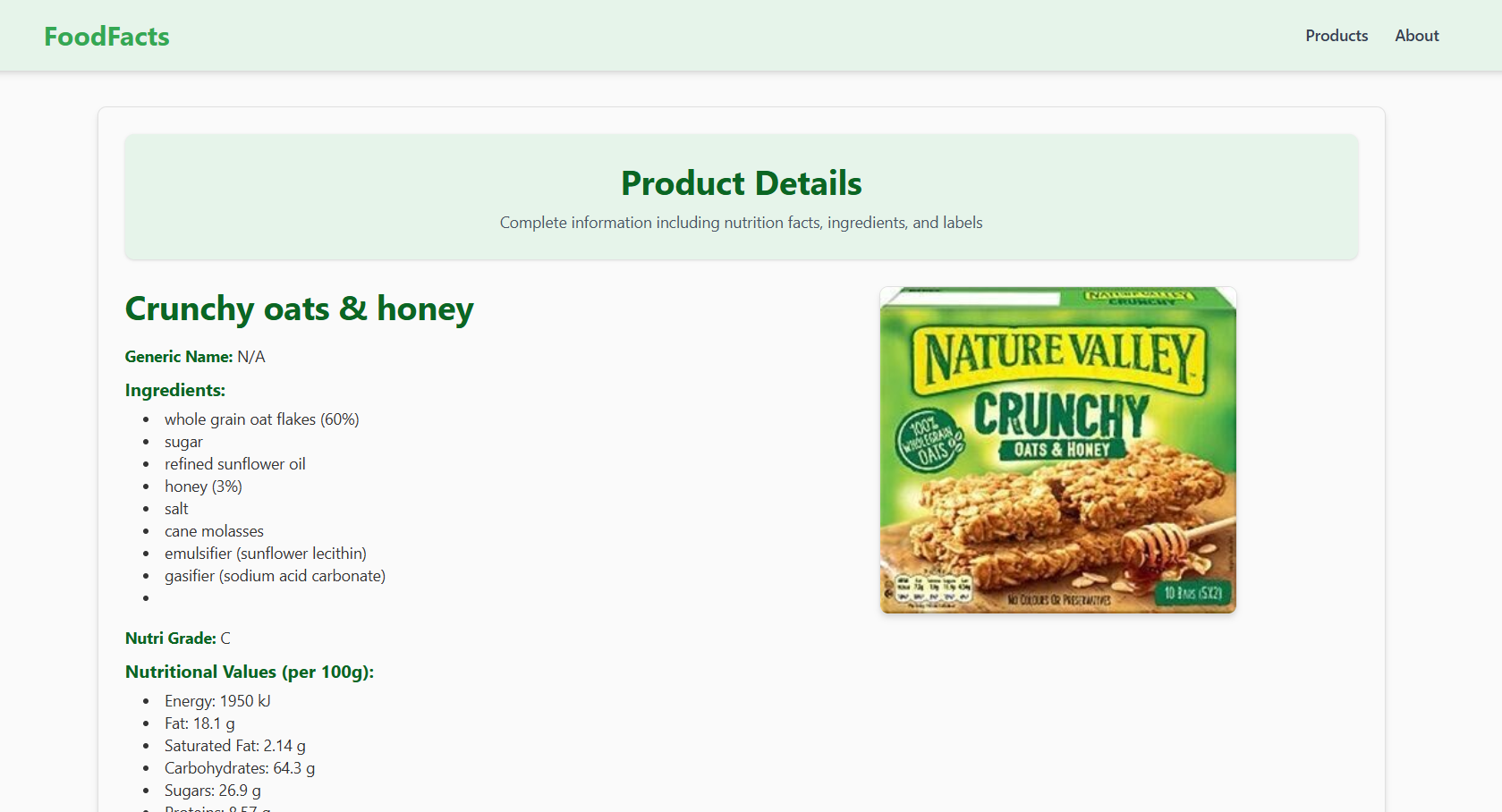
🧾 View detailed product information including ingredients, nutrition facts, and dietary labels
📱 Seamlessly navigate on desktop and mobile devices
How we built it
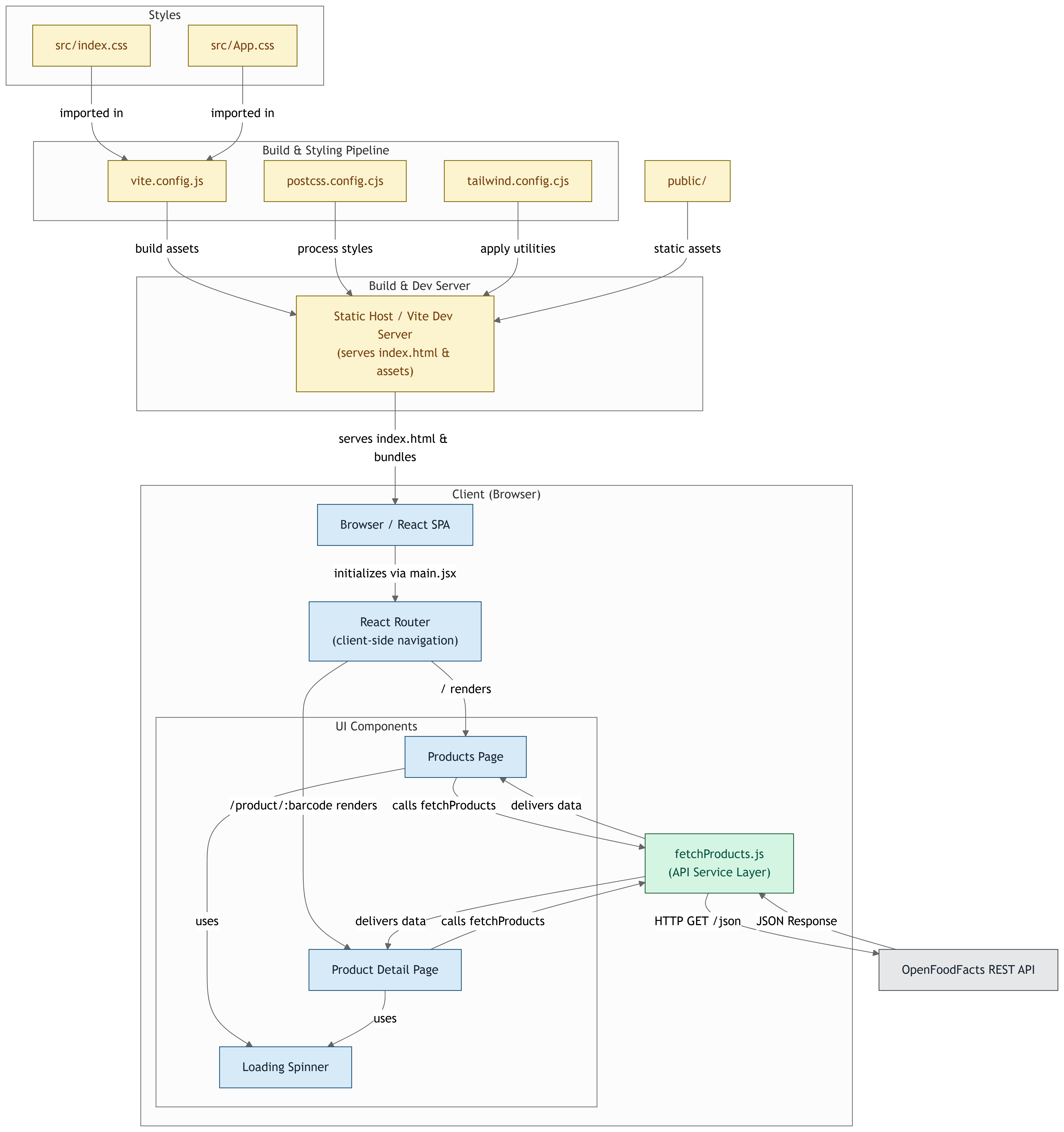
Frontend Framework: React.js (with Vite for performance)
Styling: Tailwind CSS for responsive, utility-first styling
API Integration: OpenFoodFacts API
Routing: React Router for seamless page transitions
State Management: React Hooks (useState, useEffect)
Componentization: Reusable and modular UI components for maintainability
Challenges we ran into
📦 Inconsistent API Data: Some products lack complete data (e.g., missing images or nutrition grades), requiring fallback handling and data validation.
📱 Responsiveness: Designing a clean layout that adapts gracefully across screen sizes while maintaining accessibility.
⏳ Pagination/Performance: Handling “Load More” functionality while ensuring good user experience without overloading the API.
🌍 Category List Size: The OpenFoodFacts categories endpoint can return hundreds of results, so limiting and selecting meaningful defaults was necessary.
Accomplishments that we're proud of
🎯 Delivered a fully responsive, accessible app that runs smoothly on both desktop and mobile
🔁 Implemented full-text and barcode search using real-world public APIs
🎨 Built a consistent UI/UX design with clean color theming and intuitive filtering/sorting
⚙️ Created modular, clean React components that are reusable and scalable
What we learned
📚 How to integrate and handle dynamic third-party APIs with inconsistent data structures
🎨 Importance of UI/UX and mobile-first design in real-world web applications
🧠 Use of React Hooks for managing complex UI states across components
💡 Best practices for building a modular codebase using Tailwind and component-driven architecture
What's next for Food Products Explorer
🛒 Add a shopping list or favorites feature with localStorage or Redux
📊 Integrate nutritional comparison charts for multiple products
🔍 Add advanced filters like allergens, additives, labels (vegan, organic)
🌐 Support internationalization (i18n) for multilingual audiences
💬 Enable user feedback or community contribution to enrich product data

Log in or sign up for Devpost to join the conversation.