-
-
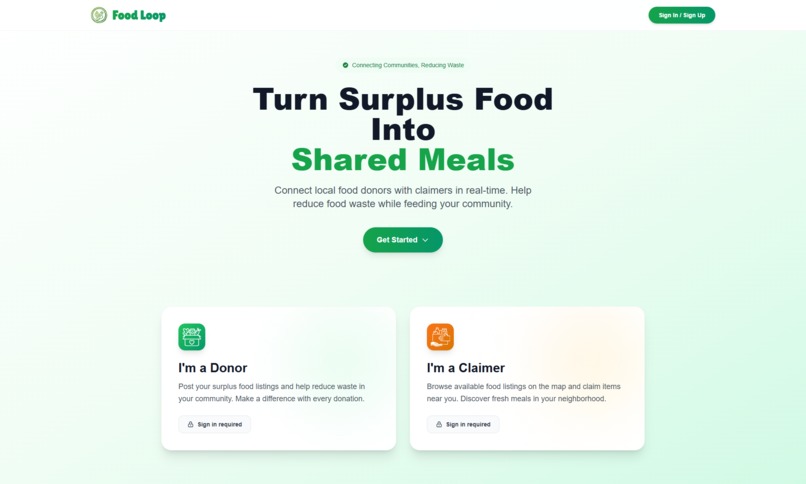
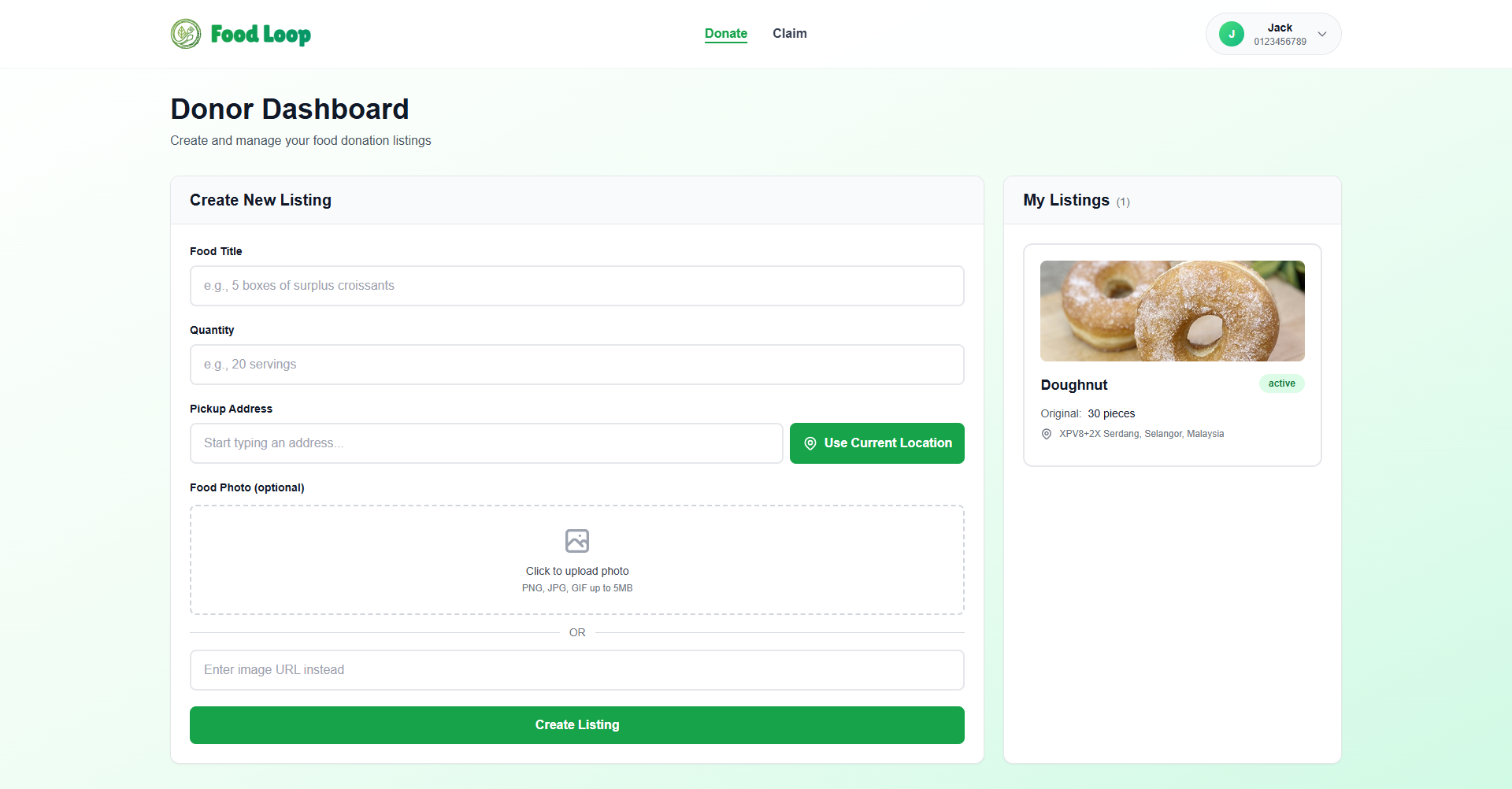
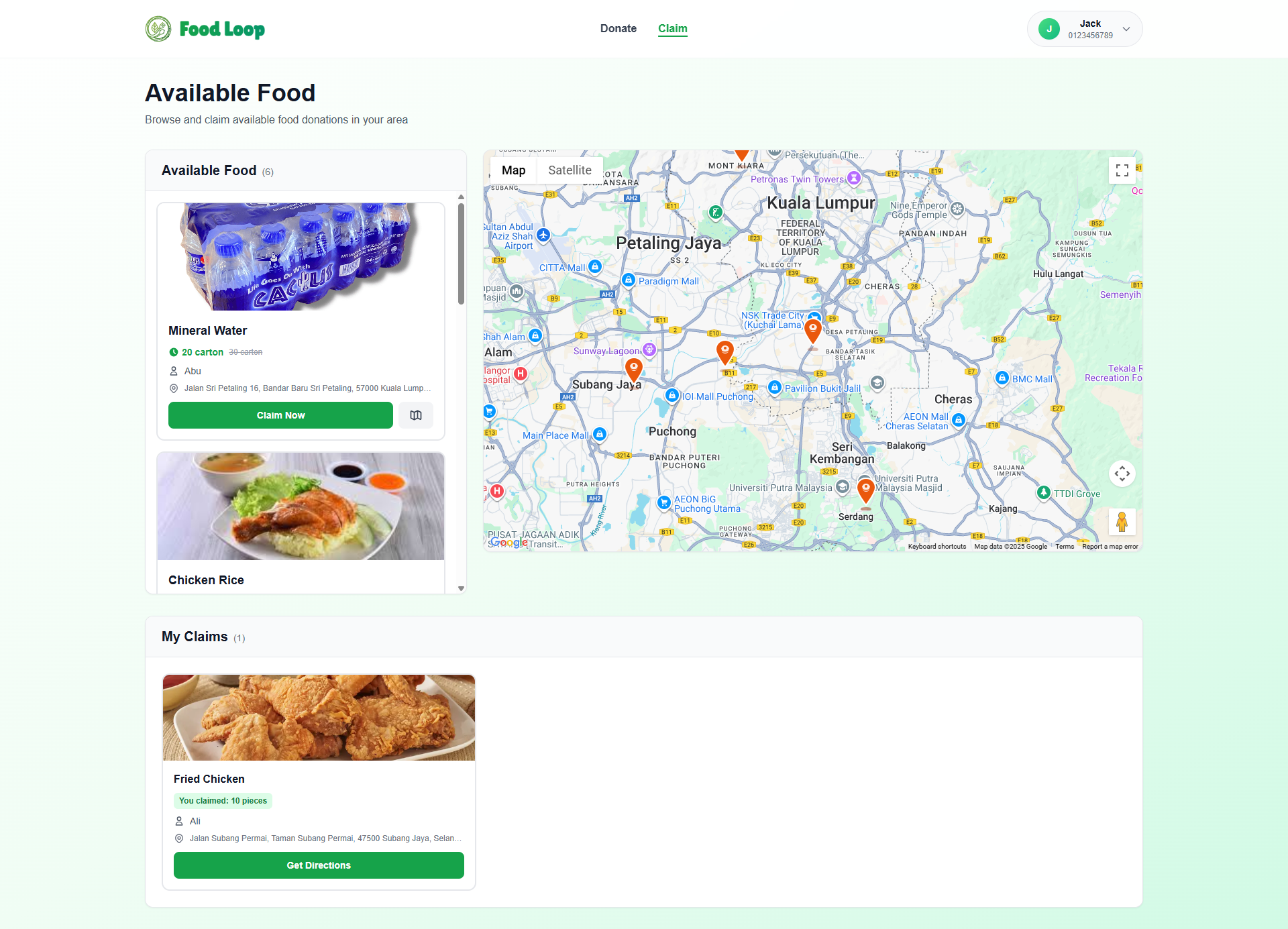
Home Screen
-
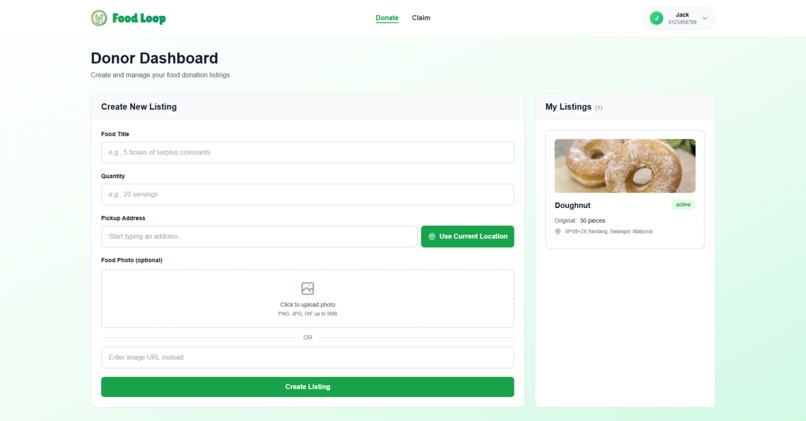
Donor Dashboard
-
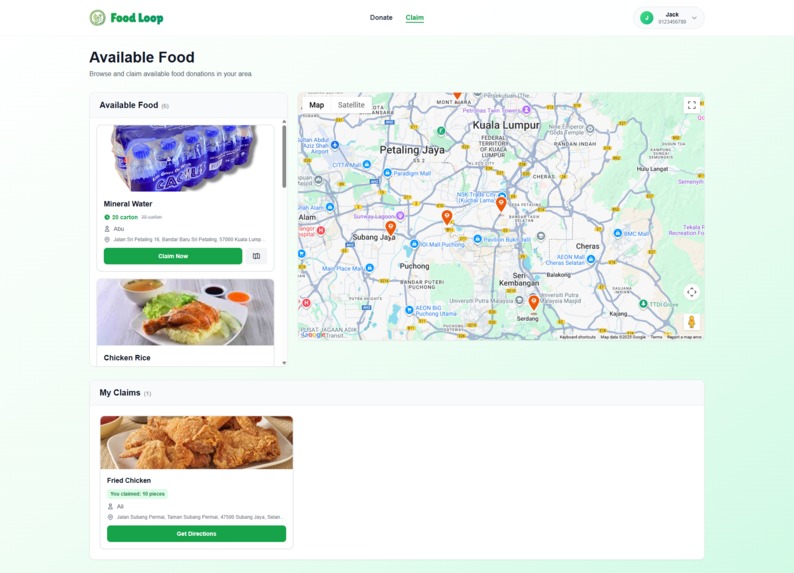
Claim Dashboard
Food Loop 🔄
💡 Inspiration
Food waste is a massive issue, yet simultaneously, many in our community struggle with food insecurity. We were inspired to build Food Loop to bridge this paradox. Living in Malaysia, we see an abundance of food being tossed away daily—from bazaars to cafes—while surplus food could easily feed those in need. We wanted to create a digital solution that "closes the loop," transforming potential waste into a resource for the community.
💻 What it does
Food Loop is a platform designed to connect food donors (restaurants, hotels, and individuals) with beneficiaries (NGOs, soup kitchens, and families in need).
- Real-time Listings: Donors can snap a photo and list surplus food in seconds.
- Smart Matching: The app notifies nearby beneficiaries based on location and food type.
- Tracking & Transparency: Users can see the impact of their donations, tracking how many meals they've saved and the CO2 emissions prevented.
⚙️ How we built it
We adopted a mobile-first approach to ensure accessibility for all users.
- Frontend: Built with Next.js 14, React 18, and TypeScript to create a highly responsive, type-safe user interface.
- Backend: We utilized [Firebase / Node.js] for real-time database management to ensure food listings are updated instantly.
- APIs: Integrated [Google Maps API] to calculate the distance between donors and receivers.
- Design: Prototyped in Figma with a focus on a clean, user-friendly interface that anyone can navigate.
🚧 Challenges we ran into
- Logistics & Verification: Ensuring the safety of the food was a major concern. We had to brainstorm ways to implement a verification system without making the user experience too cumbersome.
- Real-Time Data: Managing the state of available food items in real-time was tricky. We faced race conditions where two users might try to claim the same item, which we solved by using transactions in our database.
- Scope Creep: We had so many ideas (like volunteer delivery drivers!), but we had to discipline ourselves to focus on the core functionality first to deliver a working MVP.
🧠 What we learned
- The Power of Community: We learned that technology is just the enabler; the real solution lies in the community's willingness to help.
- Technical Growth: We gained a deeper understanding of [Asynchronous Programming / State Management] and how to integrate third-party APIs effectively.
- User-Centric Design: We realized that for a social impact app, the barrier to entry must be near zero. Simplifying the donation flow was our biggest design lesson.
Built With
- firebase
- google-maps
- javascript
- next.js
- tailwind-css
- typescript
- vercel

Log in or sign up for Devpost to join the conversation.