-
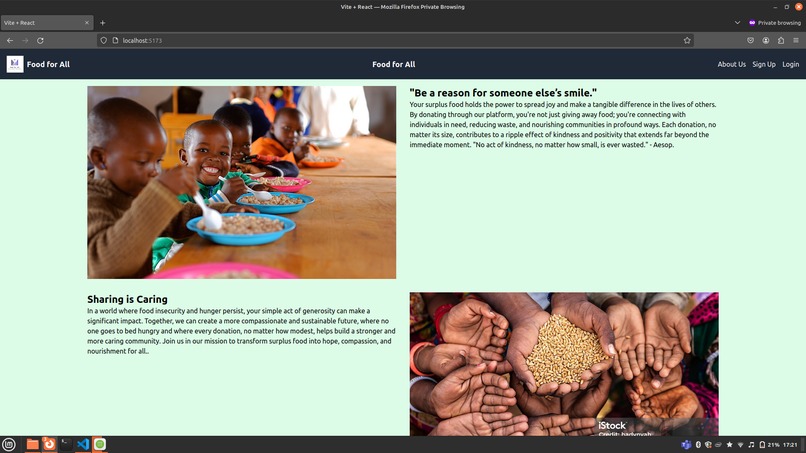
Home page
-
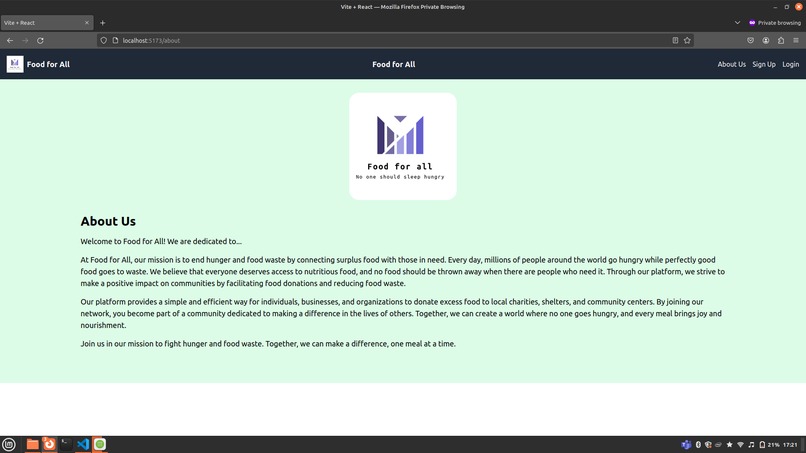
About page
-
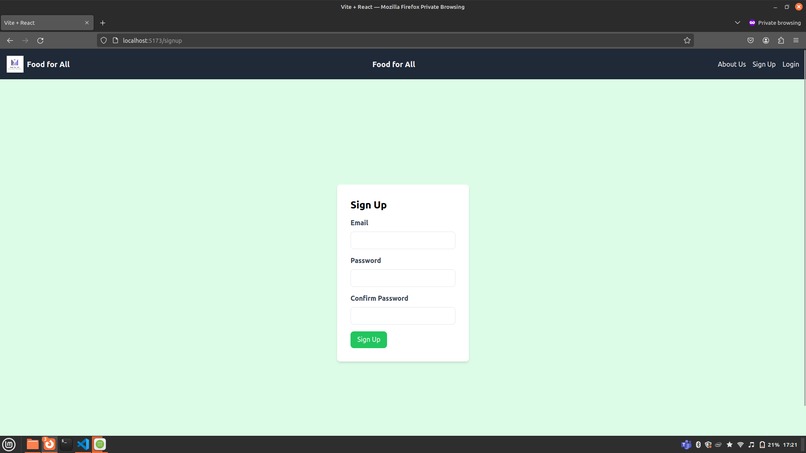
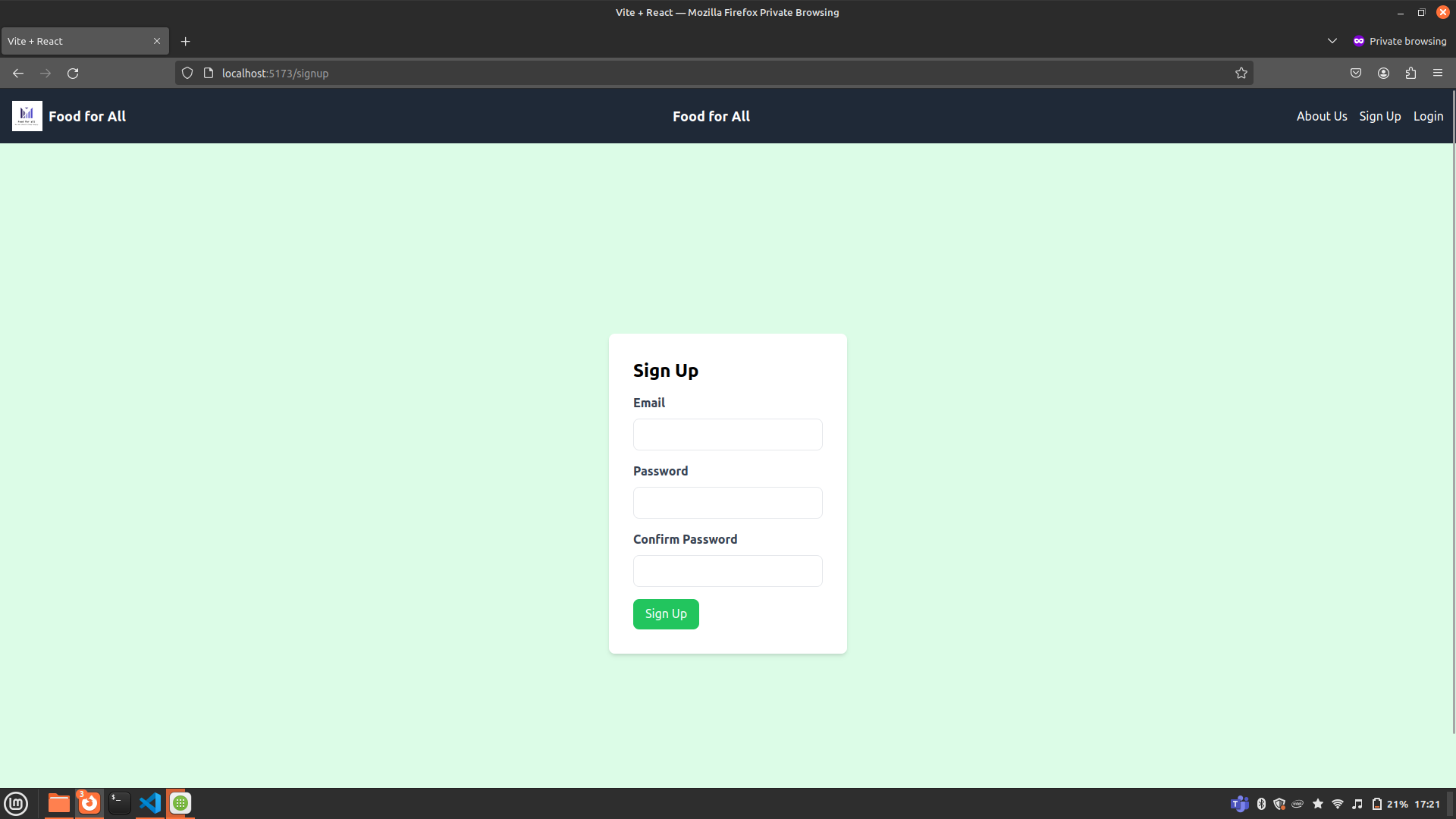
Sign up page
-
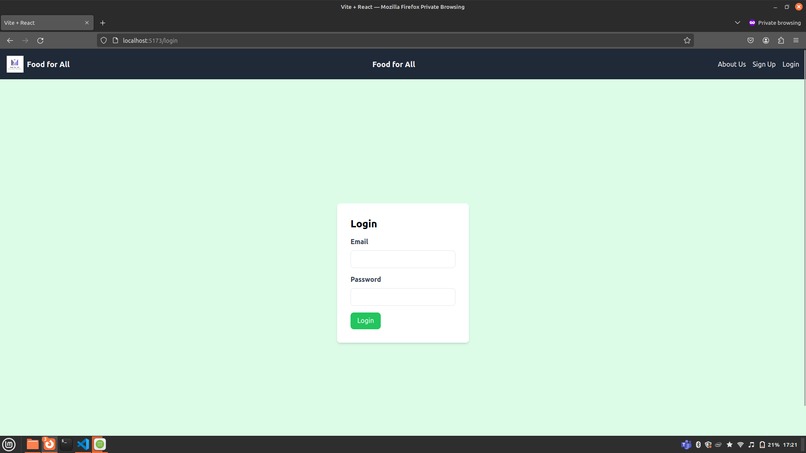
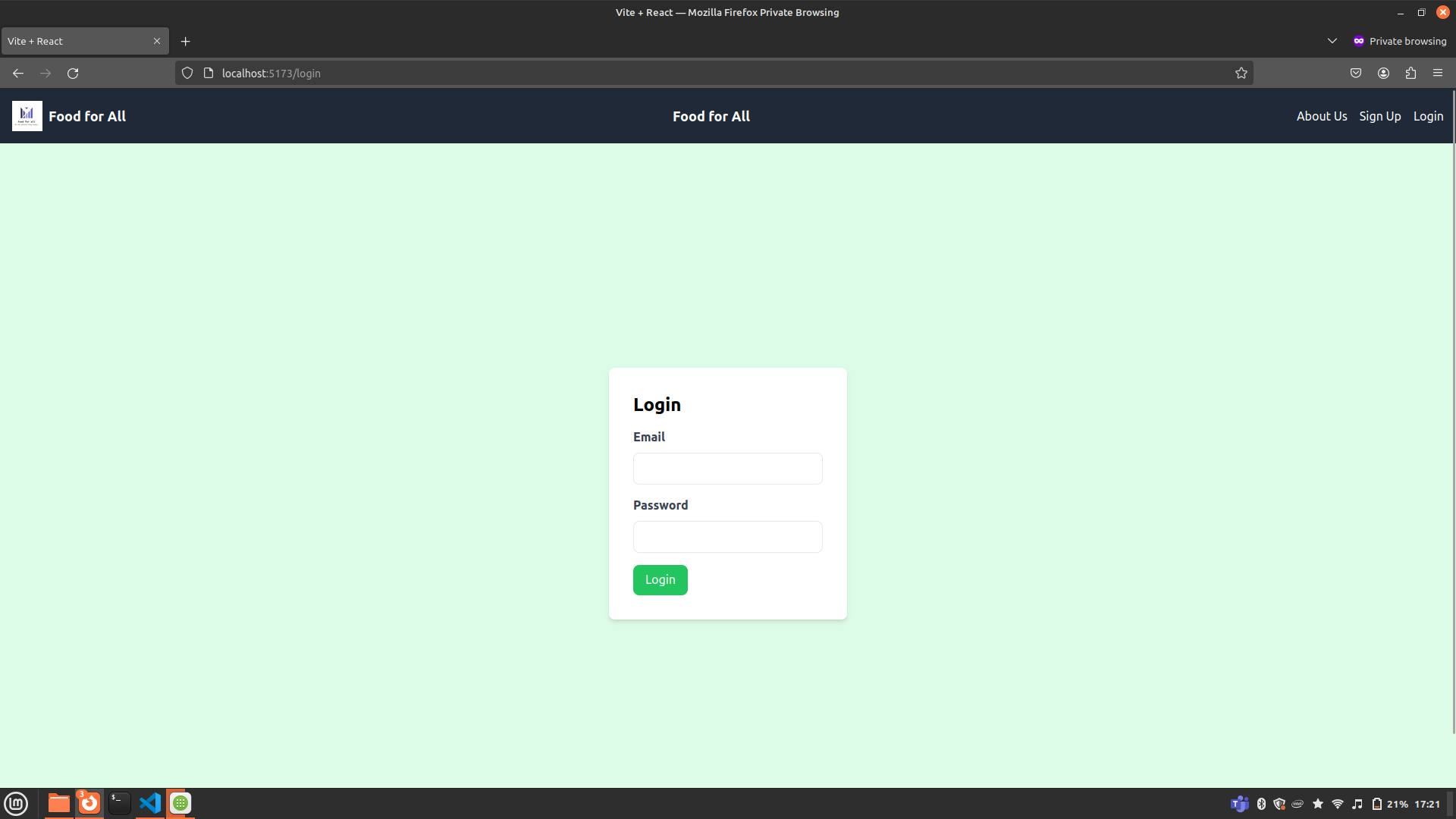
Login page
-
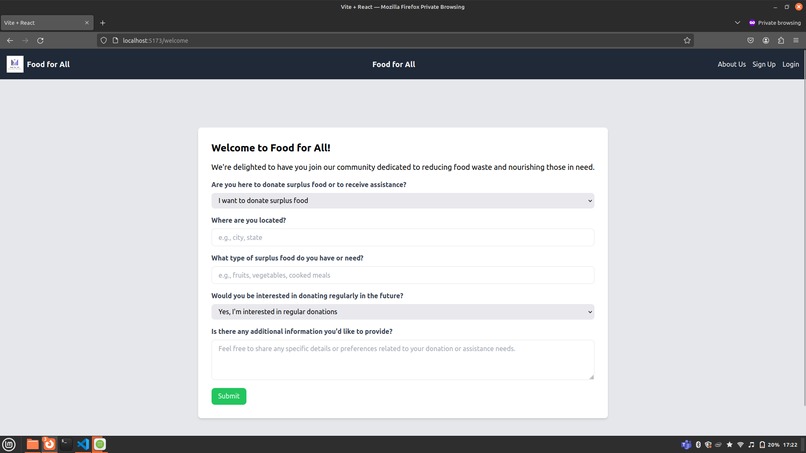
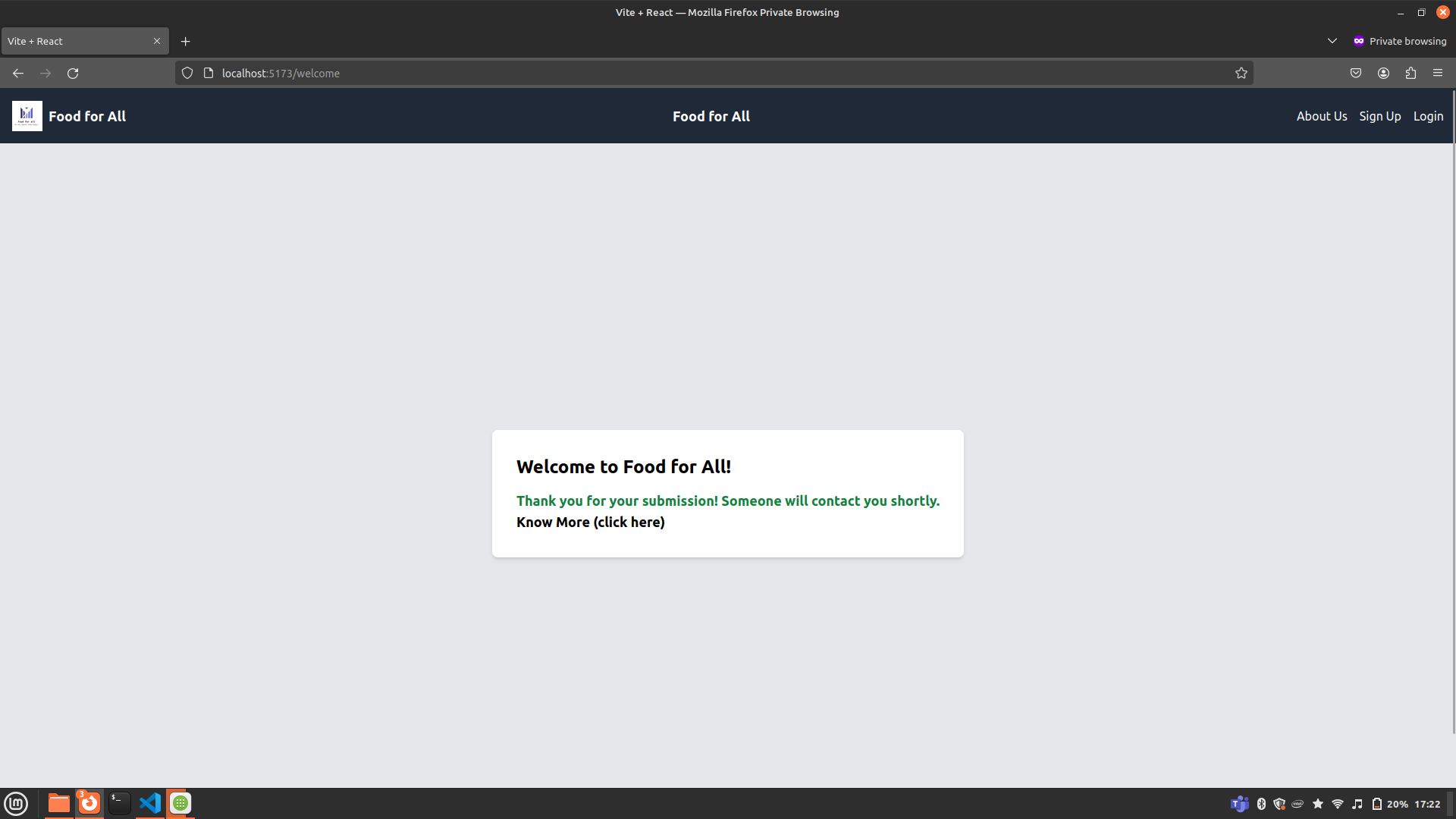
Welcome page
-
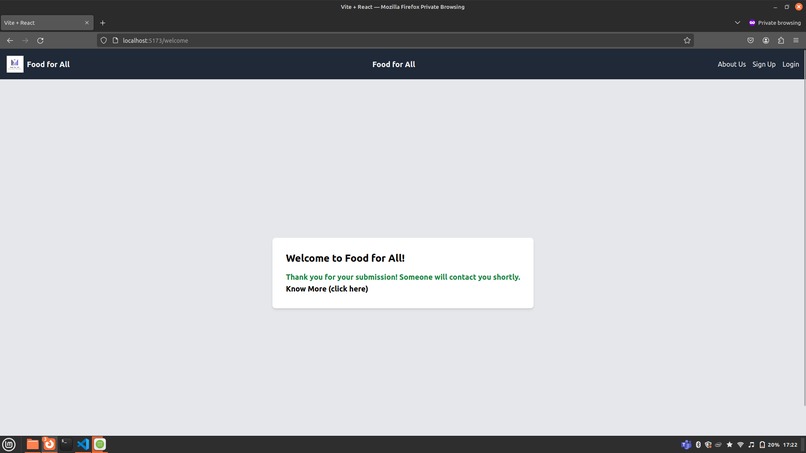
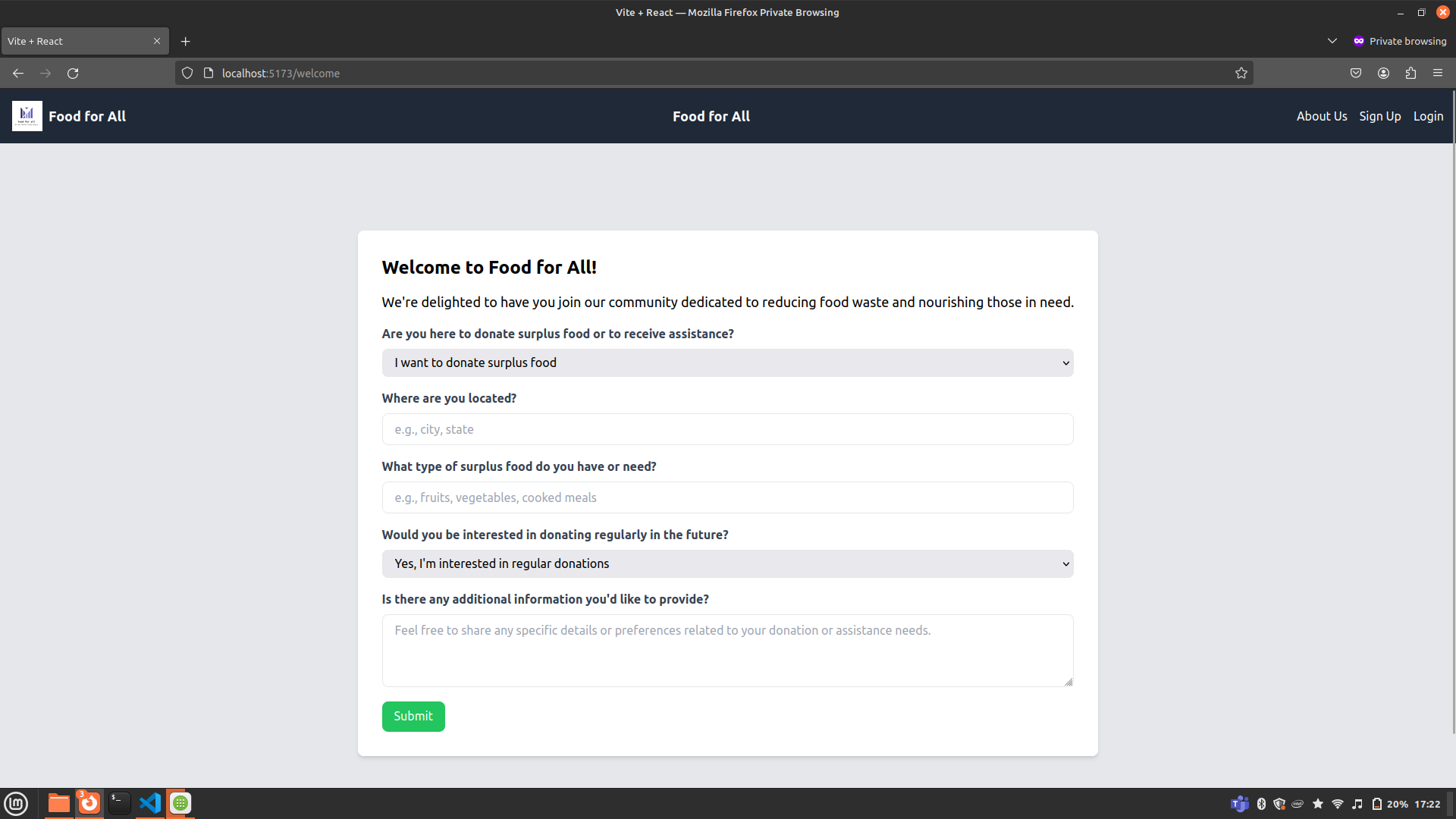
Additional info
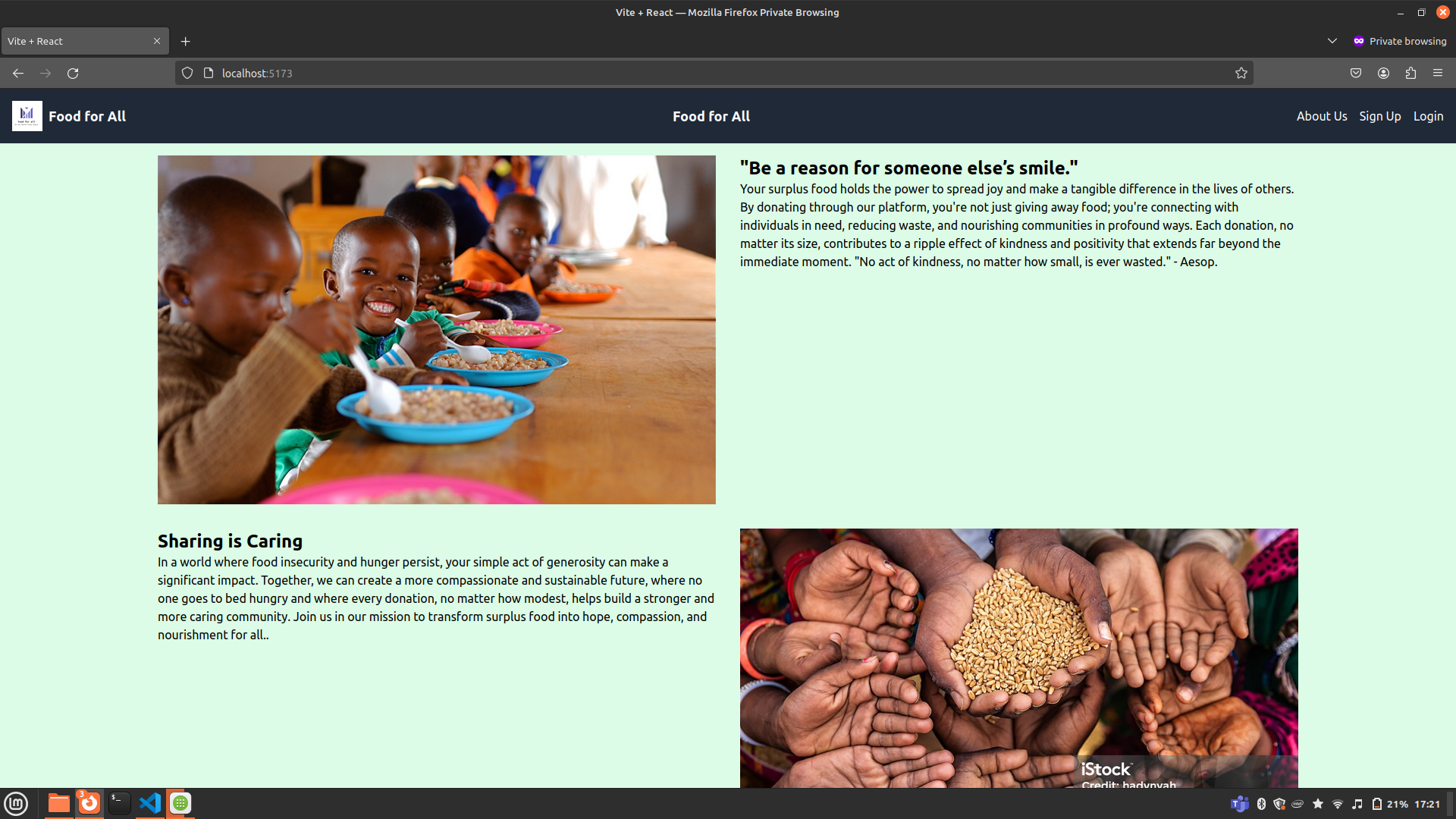

Inspiration
The inspiration behind Food For All came from the desire to address the issue of food waste and hunger simultaneously. We wanted to create a platform that connects individuals and organizations with surplus food to those who are in need, thereby reducing food waste and ensuring that everyone has access to nutritious meals.
What it does
Food For All is a web application that allows users to donate surplus food or request assistance with food. Users can sign up as donors or recipients and specify the type of surplus food they have or need. The platform facilitates the exchange of food between individuals and organizations, making it easier for those with excess food to share it with those who are in need.
How we built it
Food For All was built using React for the frontend and Node.js for the backend. We utilized the MERN (MongoDB, Express.js, React, Node.js) stack to create a robust and scalable web application. The frontend was designed using Tailwind CSS for a sleek and responsive user interface, while the backend was developed using Express.js and MongoDB to handle user authentication, data storage, and API requests.
Challenges we ran into
One of the main challenges we faced during the development of Food For All was implementing the real-time exchange functionality. We had to ensure that users could seamlessly donate or request food and receive notifications when a match was found. Additionally, integrating the user authentication system and ensuring the security of user data presented some challenges that we had to overcome.
Accomplishments that we're proud of
One of our proudest accomplishments is successfully implementing the real-time exchange feature, allowing users to donate or request food and receive immediate notifications when a match is found. We're also proud of creating a user-friendly interface that makes it easy for users to navigate the platform and contribute to reducing food waste and hunger.
What we learned
Throughout the development process, we learned valuable lessons about frontend and backend development, user authentication, and database management. We gained hands-on experience with technologies such as React, Node.js, MongoDB, and Tailwind CSS, improving our skills as developers and problem-solvers.
What's next for Food For All
In the future, we plan to enhance Food For All by adding additional features such as a rating and review system for donors and recipients, improved matching algorithms to ensure more accurate food exchanges, and integration with local food banks and organizations to expand the reach of the platform. We also aim to conduct outreach campaigns to raise awareness about food waste and hunger and encourage more people to join the Food For All community.

Log in or sign up for Devpost to join the conversation.