-
-
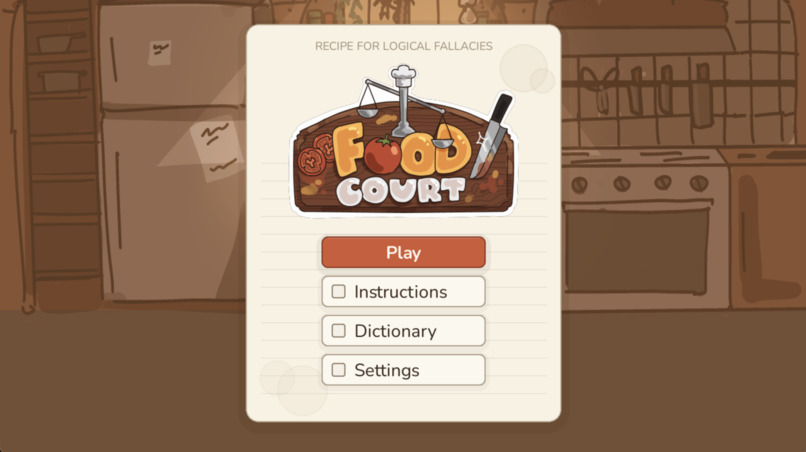
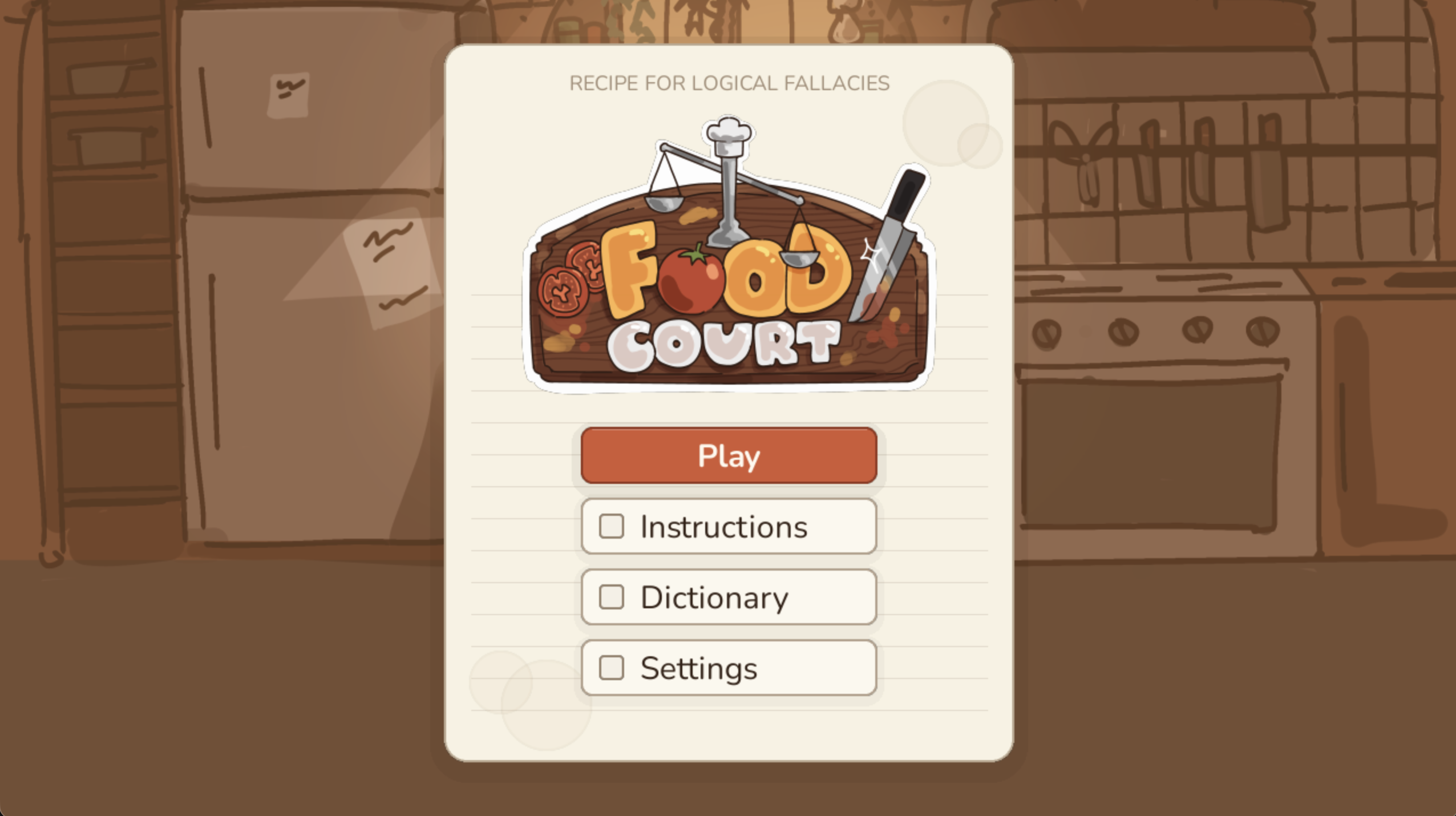
Welcome to Food Court: A playful way for kids to practice spotting flawed arguments.
-
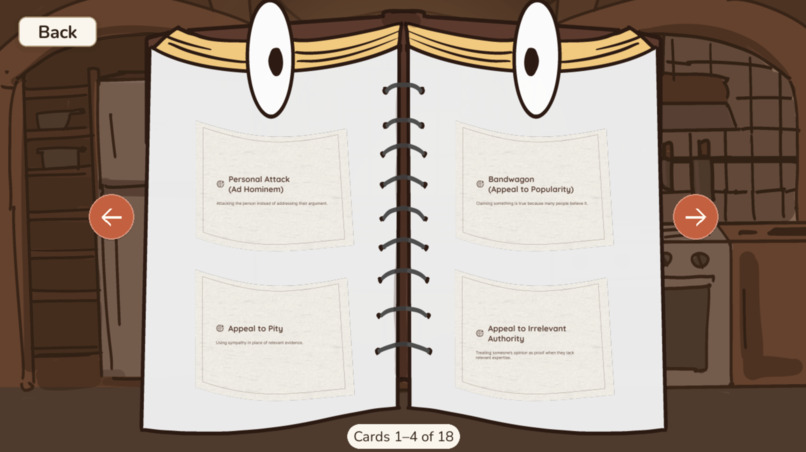
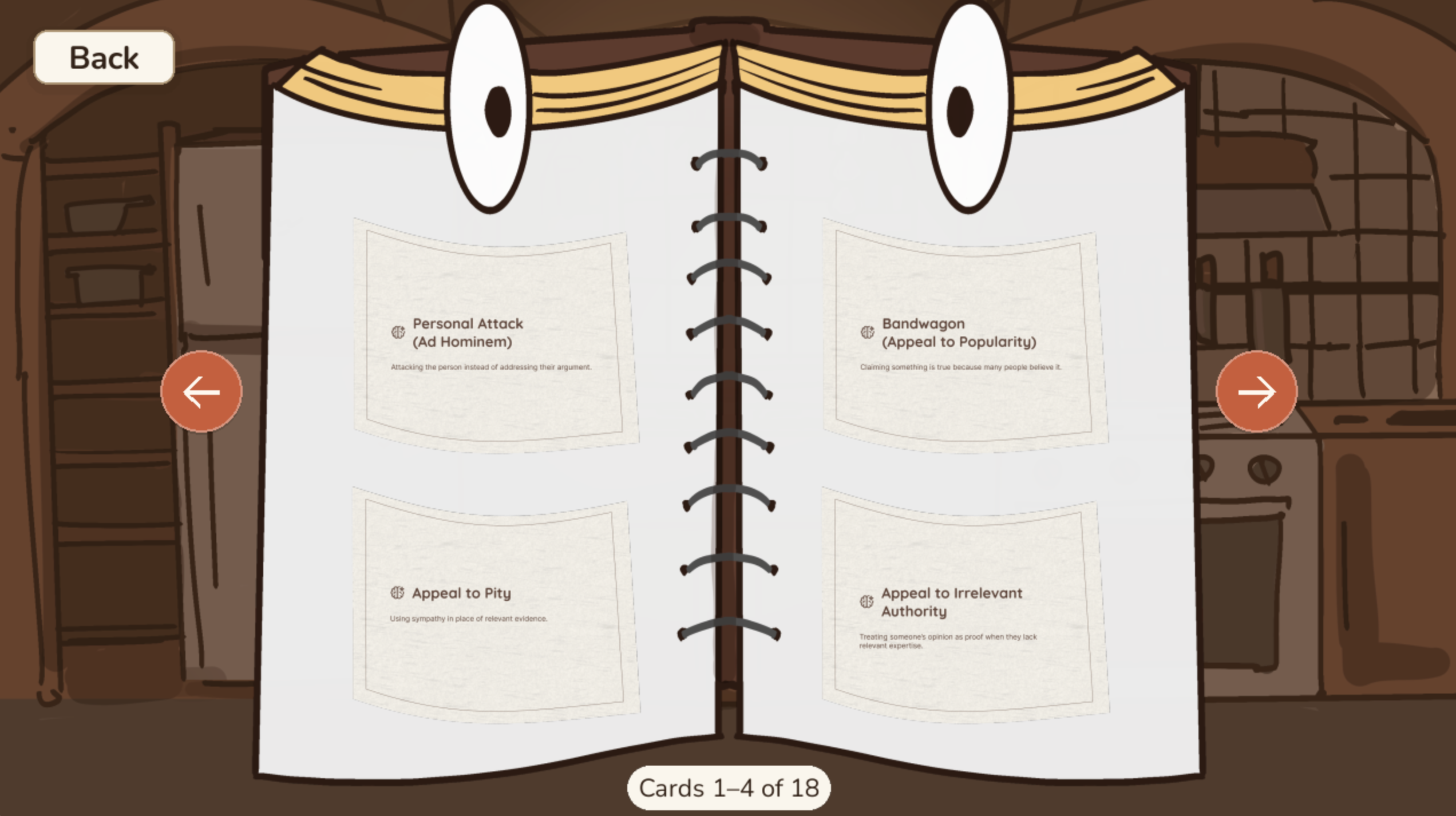
A Recipe: for Better Reasoning Explore 18 logical fallacies in the illustrated dictionary.
-
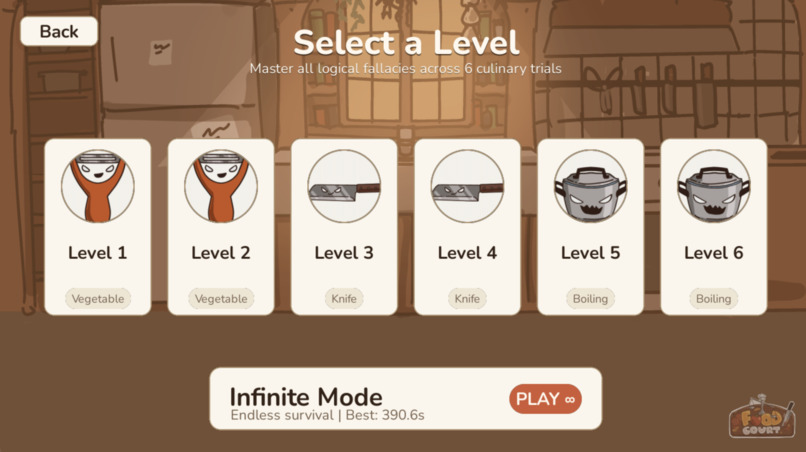
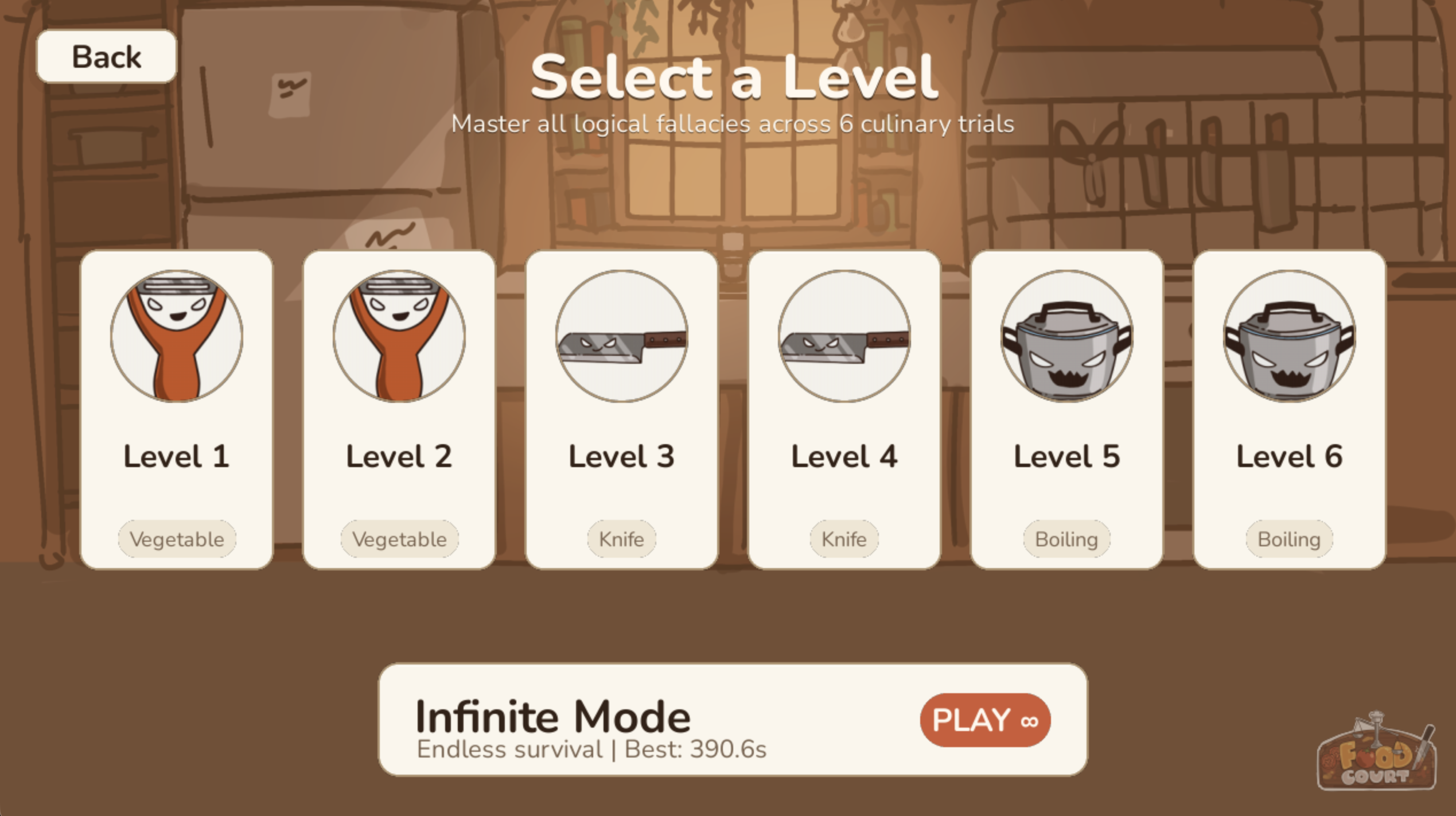
Choose Your Challenge: Play through six levels or test yourself in Infinite Mode.
-
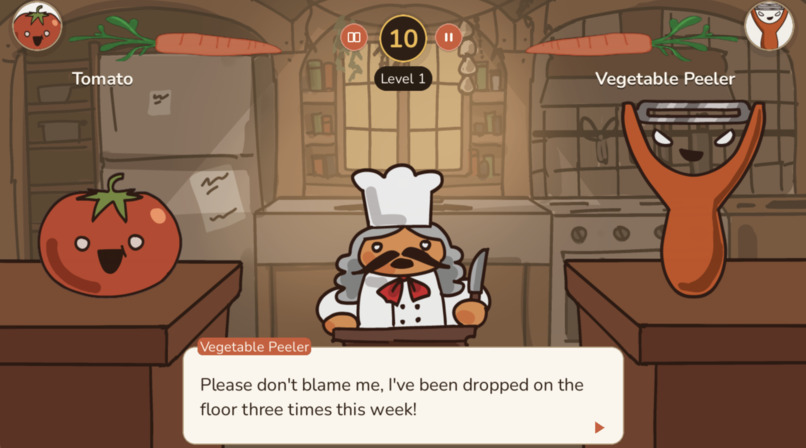
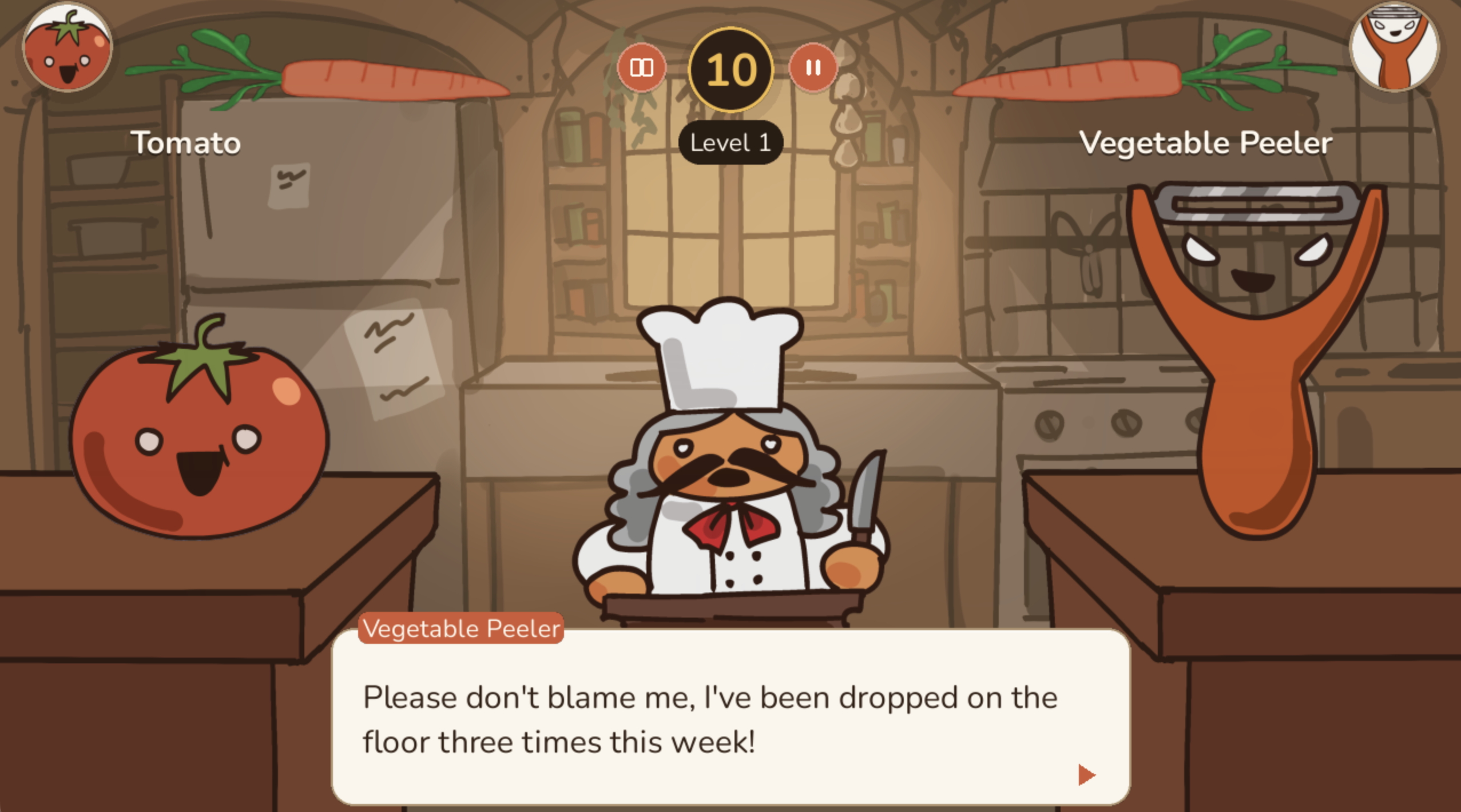
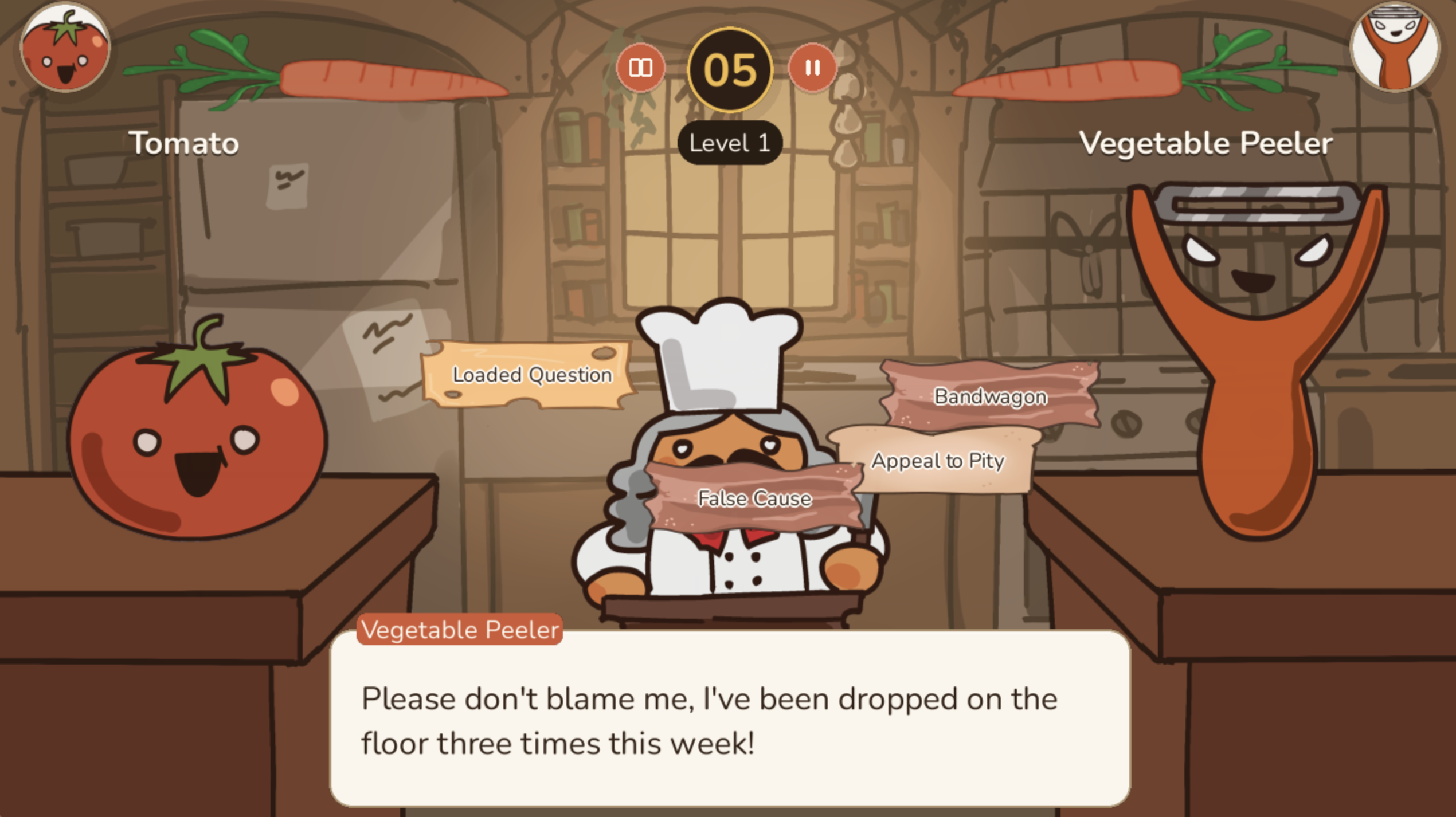
Hear the Argument: Can you spot the flaw in your opponent’s reasoning?
-
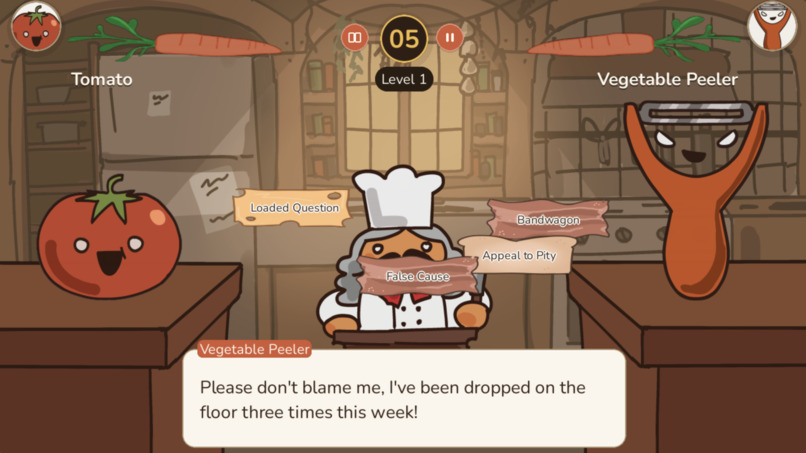
Think Fast, Click Carefully: Catch the correct moving answer before time runs out.
-
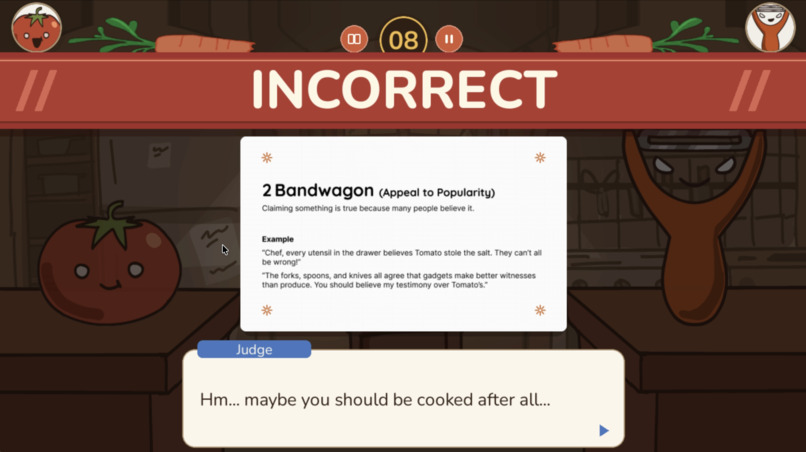
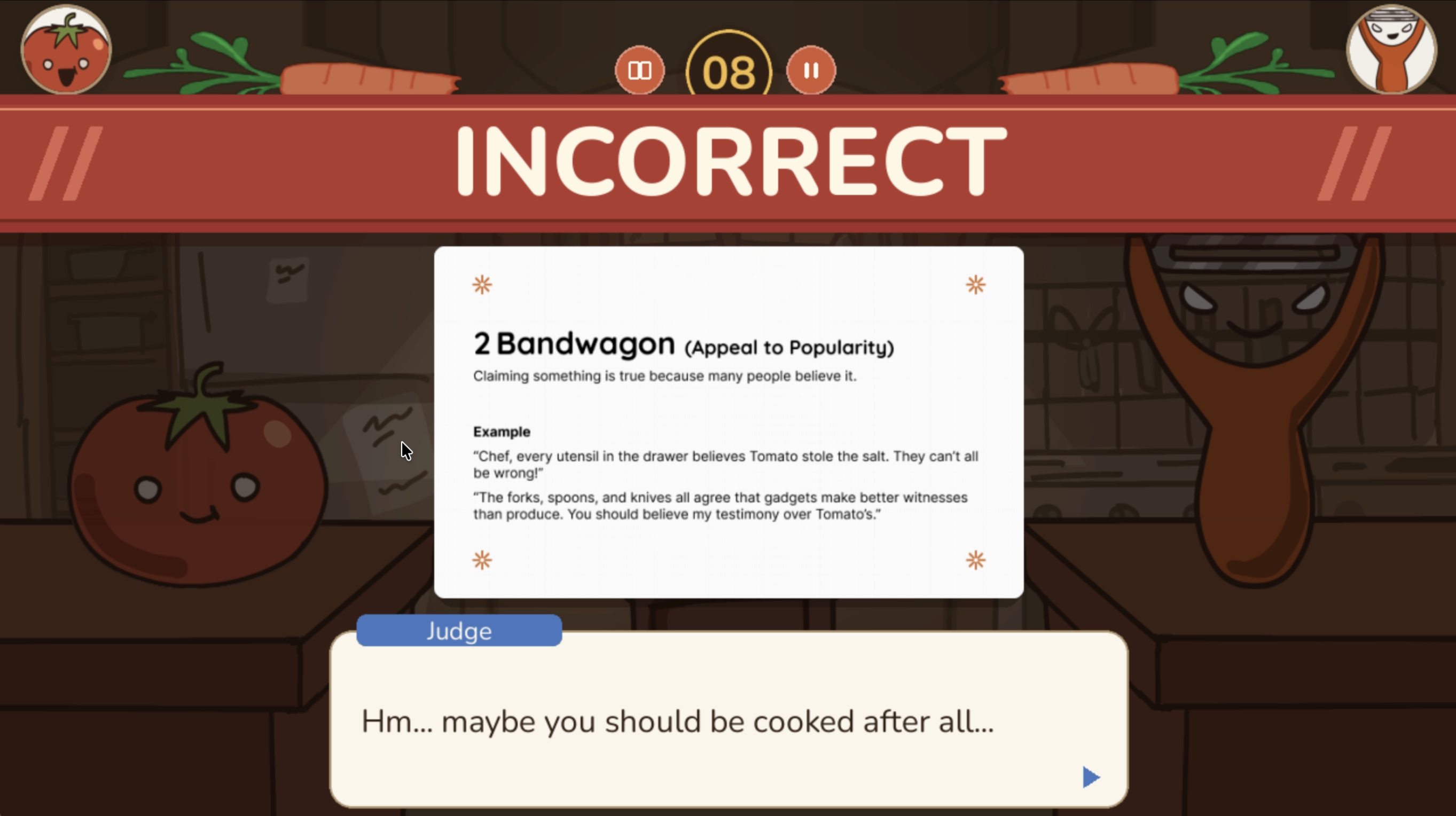
Learn from Mistakes: Review fallacy definitions and examples after an incorrect answer.
-
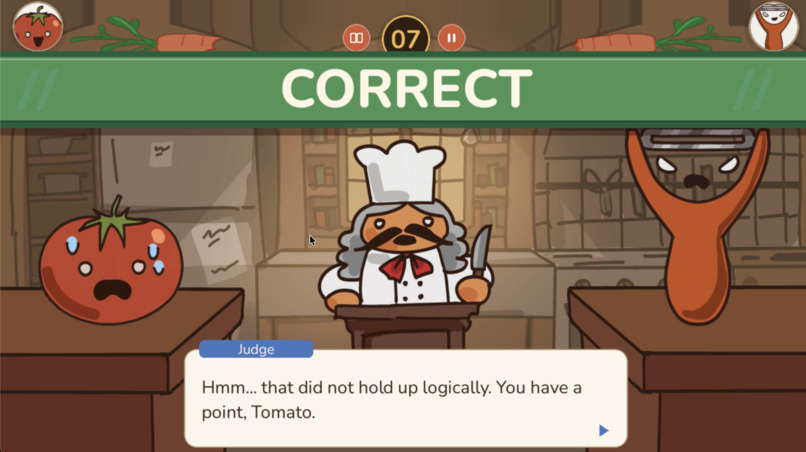
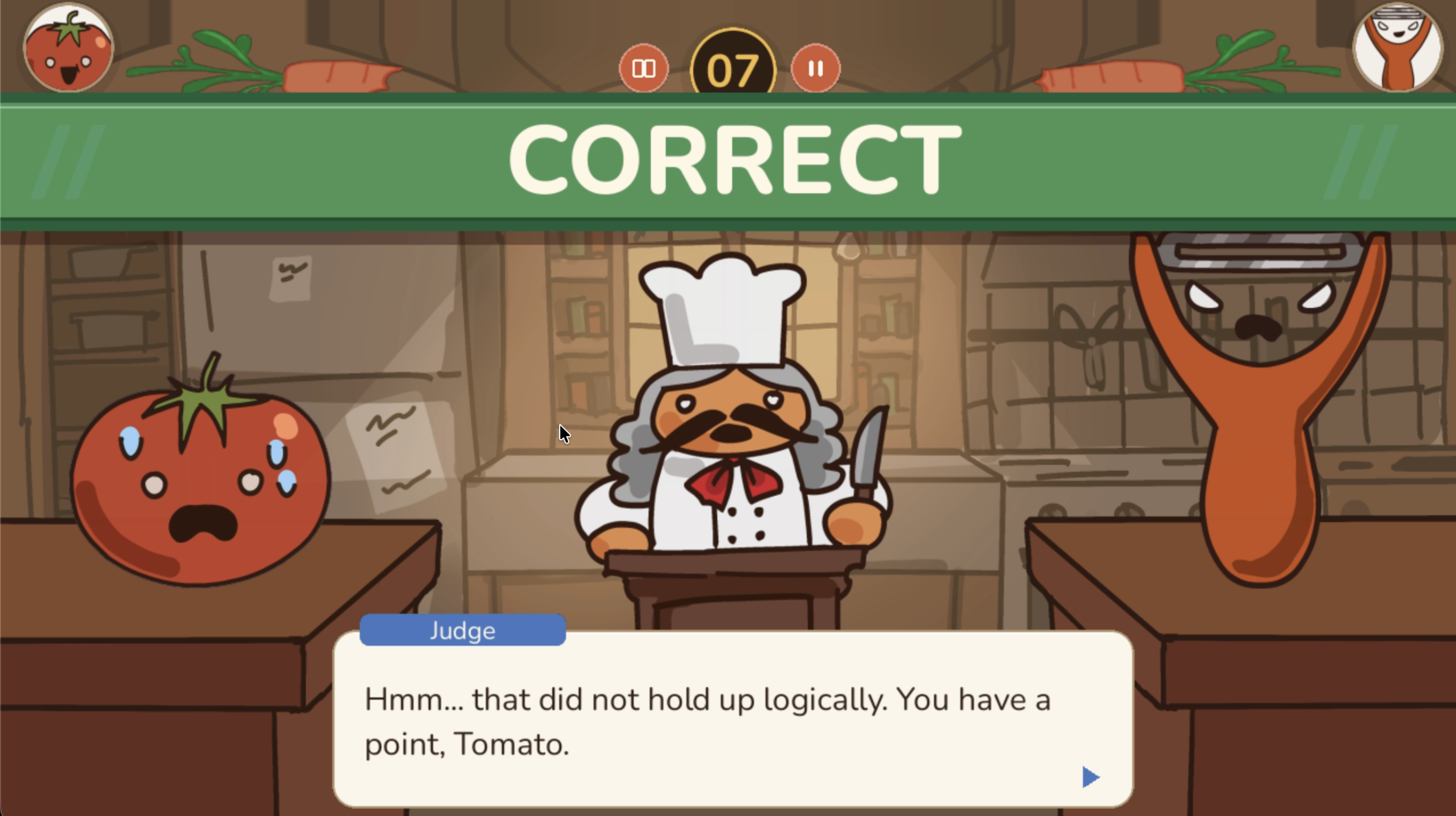
Defend Tomato with Logic: Identify the fallacy and win the judge’s support.
-
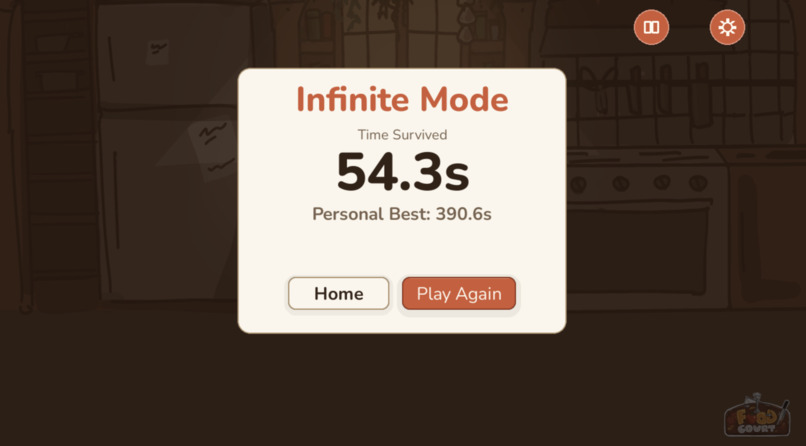
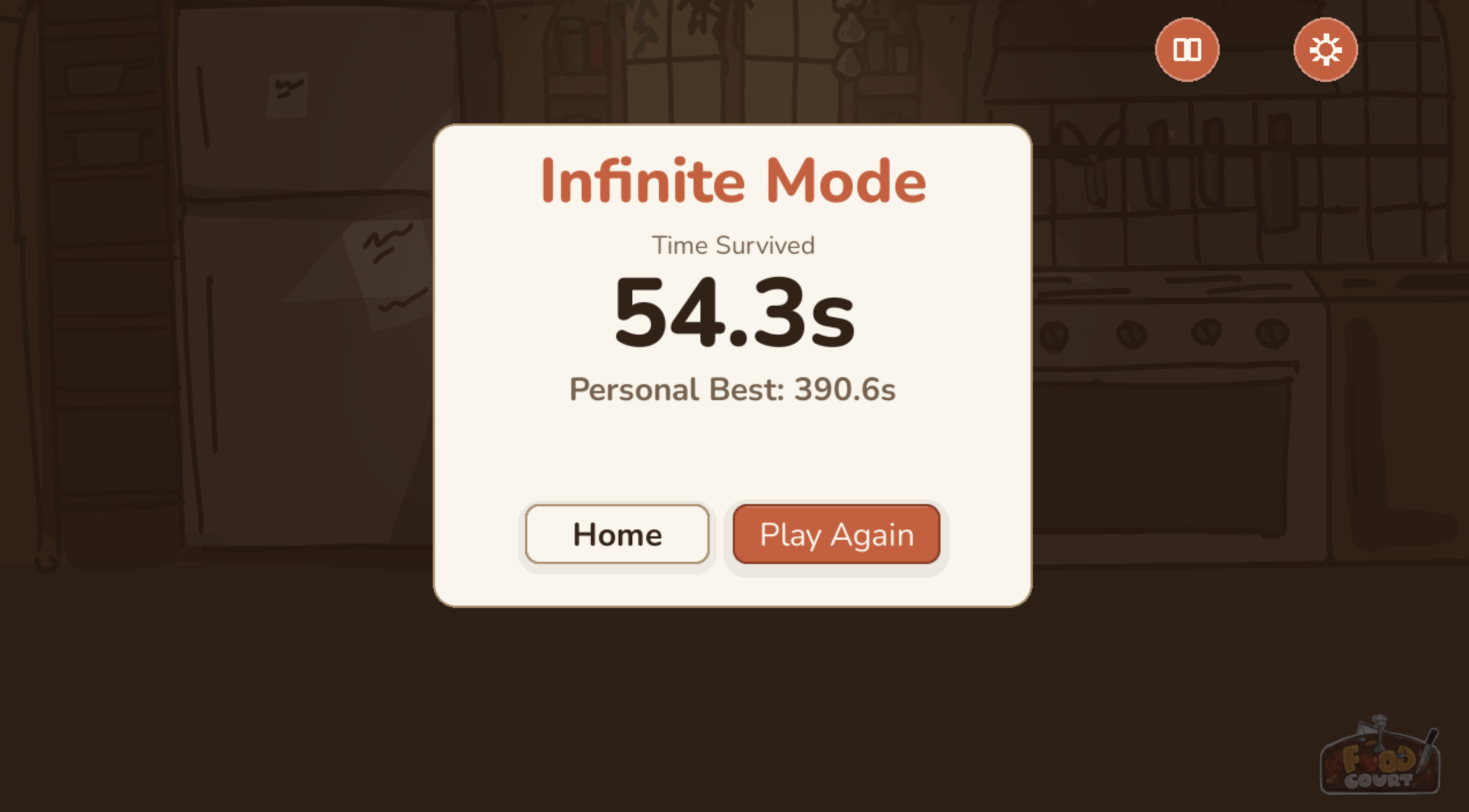
Beat Your Personal Best: See how long you can survive, then play again to improve your record.
Inspiration
As misinformation becomes increasingly difficult to identify for children, we wanted to explore how they could develop better critical thinking skills to recognize misleading arguments. Logical fallacies are often taught as abstract concepts, but recognizing them in real-world arguments takes a lot of practice.
Inspired by the DubHacks cooking theme and Ace Attorney, we created Food Court, a game focused around a vegetable on trial, turning learning about logical fallacies into an interactive courtroom battle. Rather than memorizing definitions, players must identify flawed reasoning under pressure to defend their vegetable from being cooked.
What it does
Food Court is an educational game that makes learning about logical fallacies interactive, playful, and engaging. Players take on the role of a vegetable fighting for its life in court against a prosecutor who presents arguments that were created through AI.
To defend themselves, players must identify the correct logical fallacy in the argument by selecting the correct label from moving answer choices on screen before time runs out. Correct answers damage the opponent's health bar, while incorrect answers cost the player health. As players encounter fallacies, they can collect them in an in-game dictionary, creating a reference they can revisit as they learn, but have to identify more as they progress.
By combining time-based challenges, combat mechanics, and a persistent learning resource, Food Court encourages players to practice recognizing flawed reasoning rather than just reading about it.
How we built it
We began by brainstorming ways to make children's media literacy education more engaging. This led us to logical fallacies—concepts we had encountered in school—and the idea of turning argument analysis into a courtroom battle.
Once we established the concept, we outlined the gameplay and features with ChatGPT and developed a project plan to guide implementation. We then used Cursor to help translate that plan into code. Our three-person team divided development across separate Git branches, using Claude, Cursor, and Codex to assist with different features.
We built the game in Python using Pygame, bringing together the courtroom setting, character visuals, timed challenges, health mechanics, and fallacy dictionary into a playable prototype within 36 hours.
Challenges we ran into
One of our biggest challenges was managing AI-assisted development. Our initial version was built from an insufficiently detailed prompt, leaving important parts of the game ambiguous and making the code difficult to understand and debug. As we added features, bugs and inconsistencies made it increasingly difficult to build on the existing implementation.
Instead of continuing to patch a fragile foundation, we made the difficult decision to rebuild the game with a clearer structure, salvaging and integrating visual assets from our earlier version. This taught us that AI coding tools are most effective when guided by a well-defined plan. Clear requirements, a shared understanding of the architecture, and deliberate coordination are essential when multiple people and AI tools are contributing to the same project.
Accomplishments that we're proud of
We're proud of turning an educational concept into a playable game in just 36 hours. We developed a distinctive visual identity around our courtroom-meets-cooking premise and created visual assets that help make a potentially abstract subject feel approachable.
We're also proud of bringing together several gameplay systems—including timed answer collection, health-based combat, and a fallacy dictionary—into one cohesive learning experience. Most importantly, we adapted when our initial approach wasn't working and still delivered a prototype we could play, test, and build upon.
What we learned
We learned that successful AI-assisted development requires more than writing prompts and generating code. Defining requirements before implementation, breaking a project into manageable features, and understanding how those features fit together can make the difference between a fragile prototype and a maintainable project.
We also learned the value of iteration and feasibility under time pressure. Rebuilding our initial implementation was challenging, but it helped us prioritize a working core experience over continuously adding features to an unstable foundation.
What's next for Food Court
We want to expand Food Court with additional courtroom levels, a wider variety of logical fallacies, and a story that develops as players progress. We also envision more character customization options so players can personalize their vegetable defenders.
Beyond adding more content, we'd like to explore how to make the learning experience more adaptive, provide clearer explanations after each answer, and evaluate whether players become better at recognizing logical fallacies over time. Our long-term goal is to make critical thinking practice feel less like studying and more like playing a game worth coming back to. We want to expand Food Court with additional levels, a wider variety of logical fallacies, and a story that develops as players progress. We also envisioned more character customization options so players can personalize their vegetable defenders.
Built With
- claude
- codex
- cursor
- python


Log in or sign up for Devpost to join the conversation.