-
We can send pdf if that is easier
-
-
🧭 Food Compass
Connecting students with free food before it goes to waste.
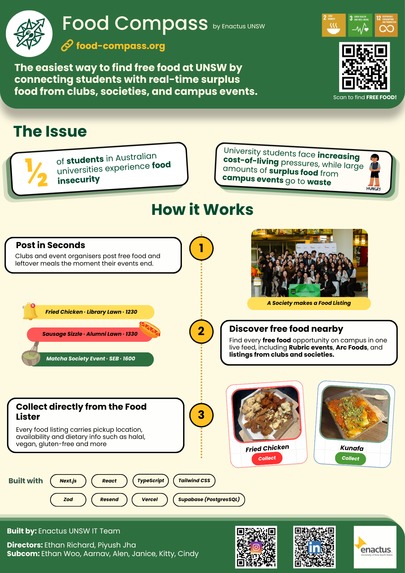
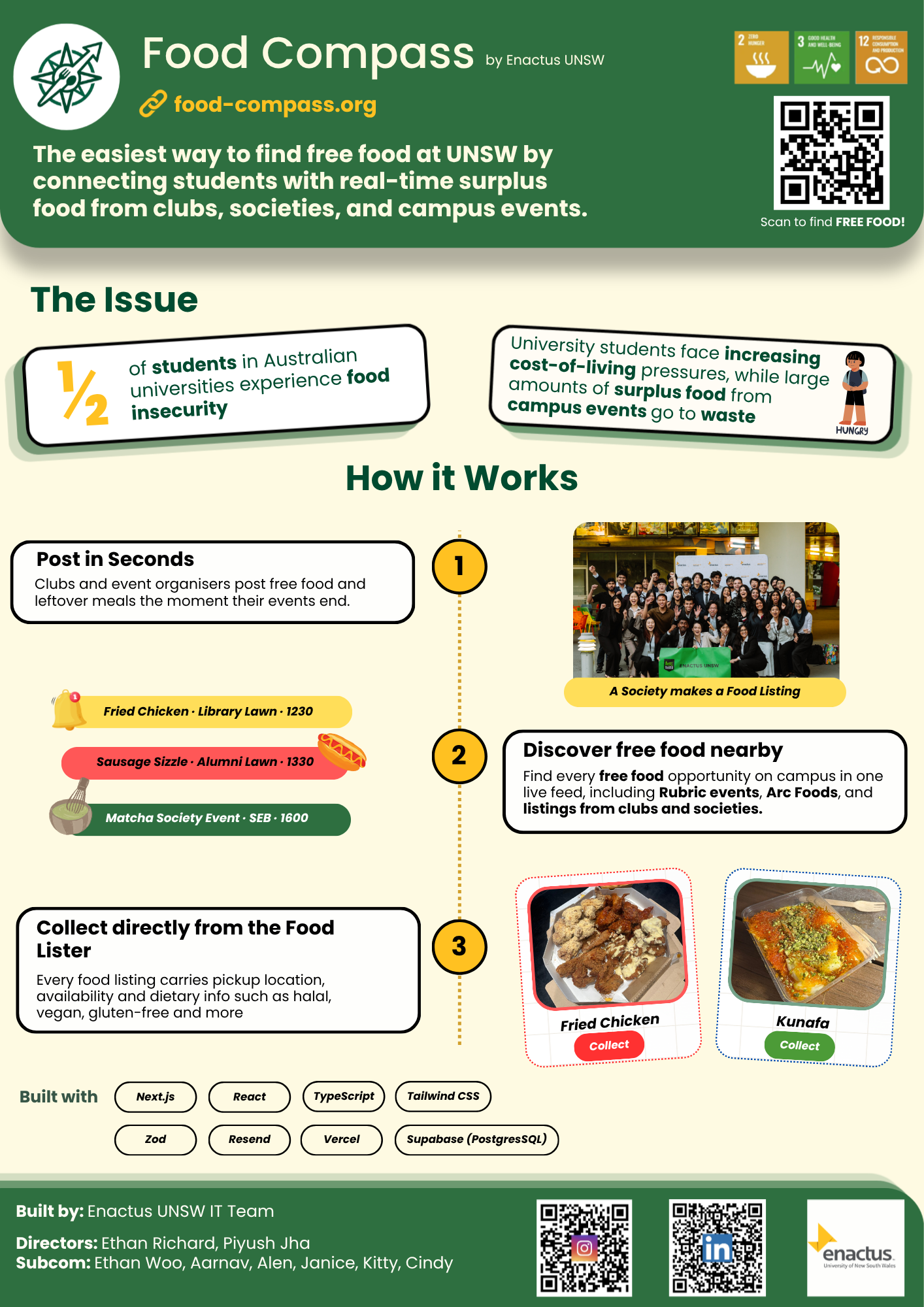
Food Compass is a free, centralised platform developed by Enactus UNSW that tackles student food insecurity and campus food waste by providing real-time access to free food opportunities. Clubs, societies, and event organisers can instantly post surplus food, while students can discover and claim nearby listings before they're thrown away.
🚀 What it does
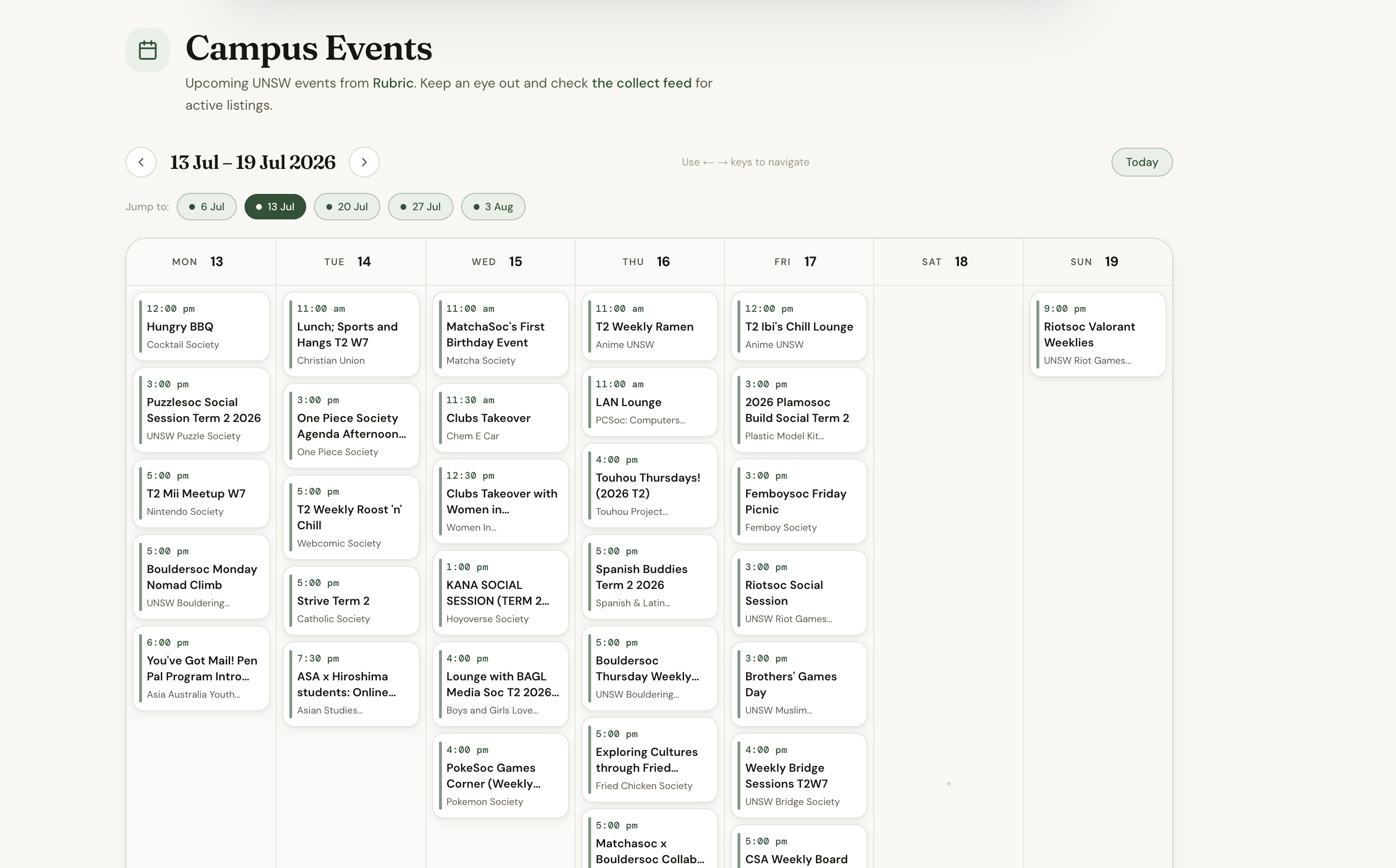
Food Compass makes it easy for students to find free food across campus in one place.
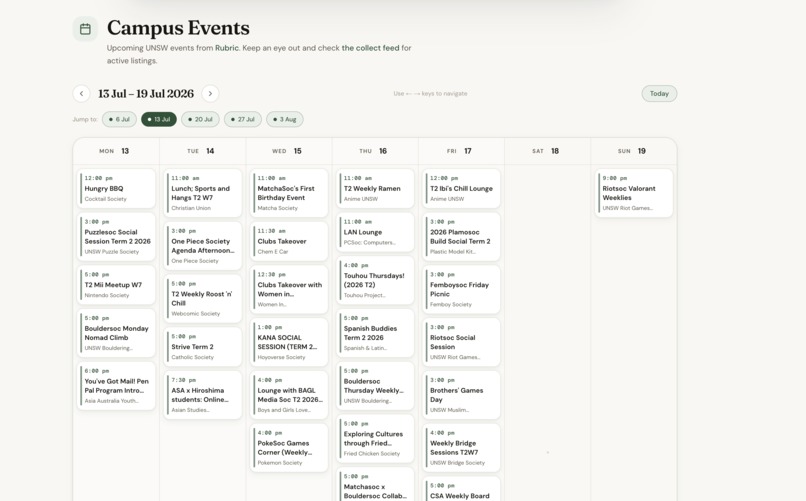
Instead of relying on scattered Instagram stories, Discord messages, or word of mouth, students can browse a live feed of free food opportunities from:
- Clubs and societies
- Arc and university events
- Leftover catering from campus events
Each listing includes:
- 📍 Pickup location
- ⏰ Availability
- 🥗 Dietary information (Halal, Vegetarian, Vegan, Gluten-free and more)
- 📸 Photos of the food
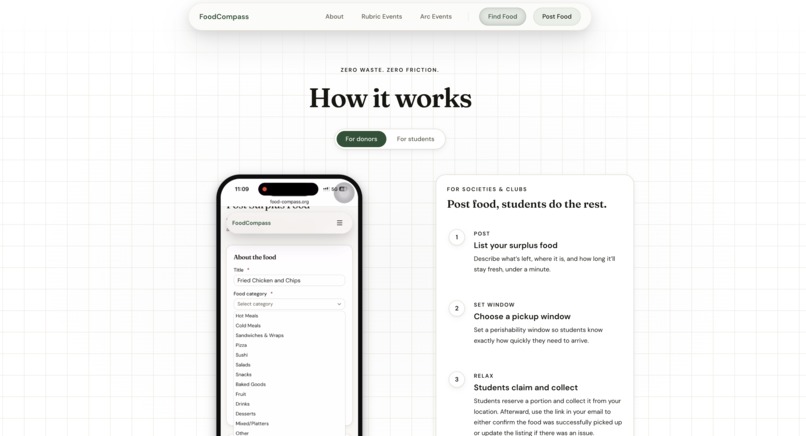
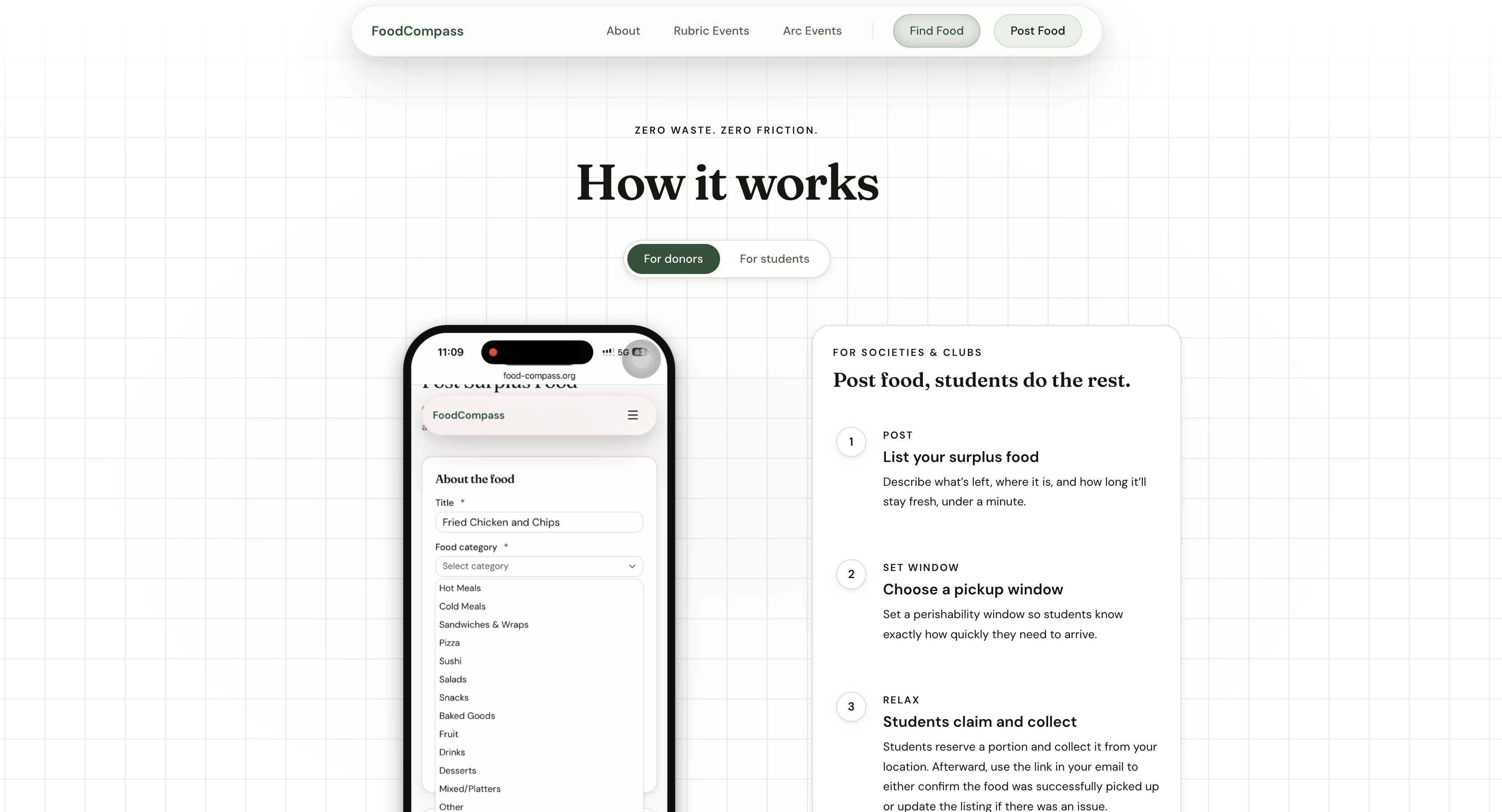
For organisers, creating a listing takes only a few seconds, helping reduce food waste while making surplus food accessible to students.
🛠️ How we built it
Food Compass is built using a modern full-stack web stack:
- Next.js for the frontend
- React for the user interface
- TypeScript for type safety
- Tailwind CSS for styling
- Supabase (PostgreSQL) for authentication, storage and the database
- Zod for schema validation
- Resend for transactional emails
- Vercel for deployment
⚡ Challenges we ran into
- Designing an interface that allows organisers to post food listings in seconds.
- Creating a platform that works for both students and event organisers with different needs.
- Making real-time food listings simple and intuitive while ensuring information such as pickup location, availability, and dietary requirements is clear.
- Balancing a clean user experience with enough information for students to make quick decisions.
🏆 Accomplishments that we're proud of
- Built a fully functional platform that addresses a real problem affecting university students.
- Created a central hub for free food opportunities instead of relying on fragmented communication channels.
- Made it easy for clubs and societies to redistribute surplus food rather than letting it go to waste.
- Developed a polished, responsive web application with real-world usability.
📚 What we learned
Building Food Compass reinforced the importance of designing around users rather than technology. Through feedback from students and organisers, we learned that reducing friction is key—posting food needs to be almost effortless, and discovering it needs to be quick and intuitive.
We also gained valuable experience building and deploying a full-stack application using modern web technologies while collaborating as a multidisciplinary team.
🔮 What's next for Food Compass
- WIN NATIONALS 2027!!!!!!~!!!!!! we got top 4 this year
- Partnerships with more societies, Arc, and university departments to increase adoption across campus.
Built With
- nextjs

Log in or sign up for Devpost to join the conversation.