-
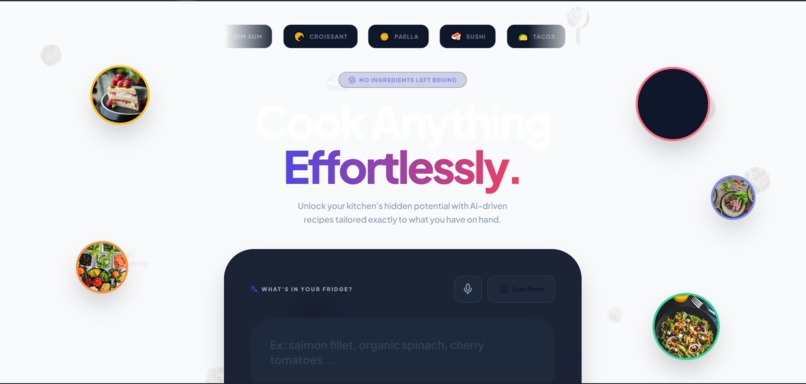
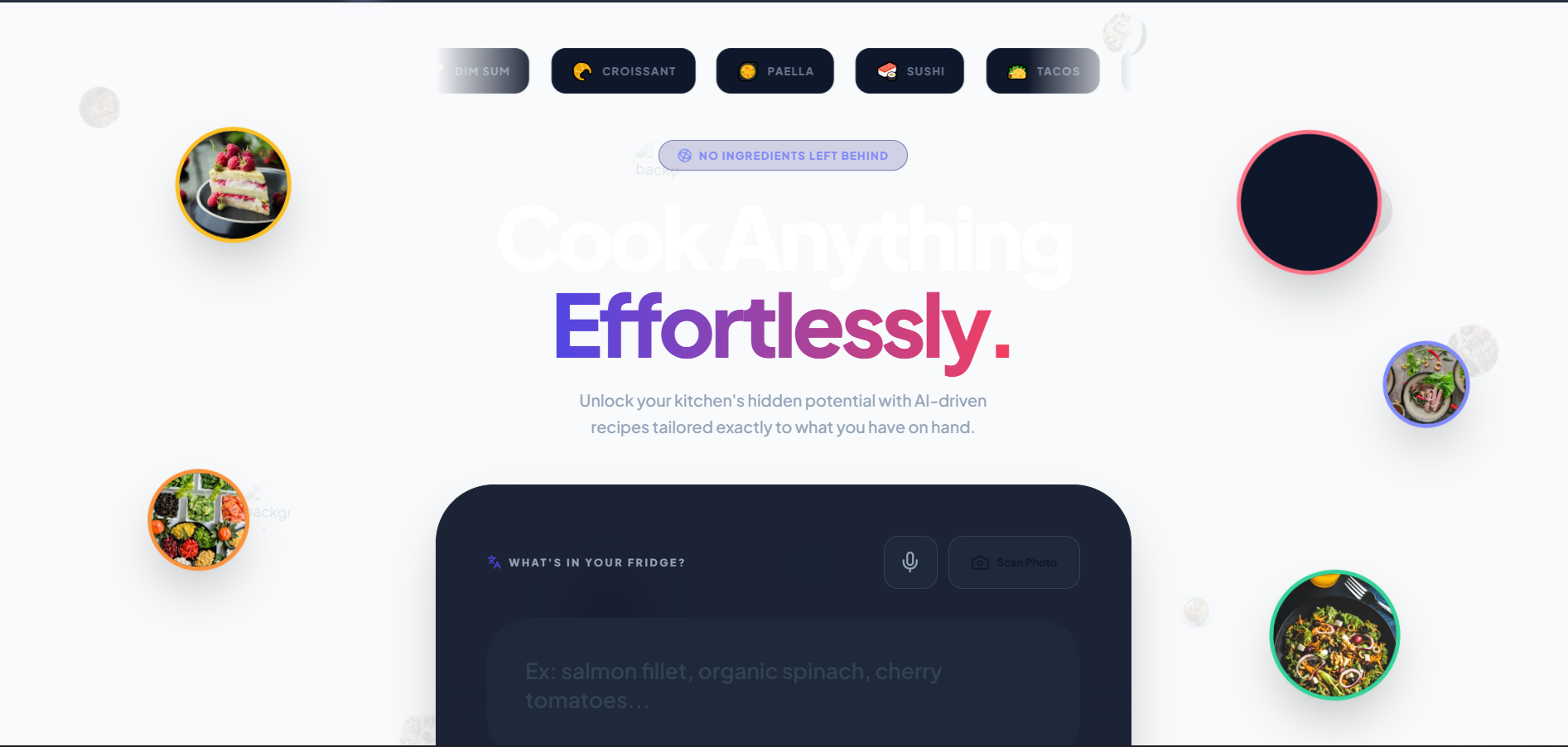
Light Theme Top
-
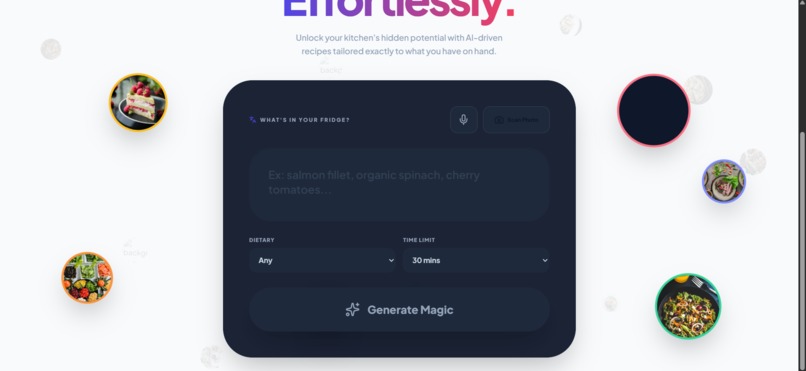
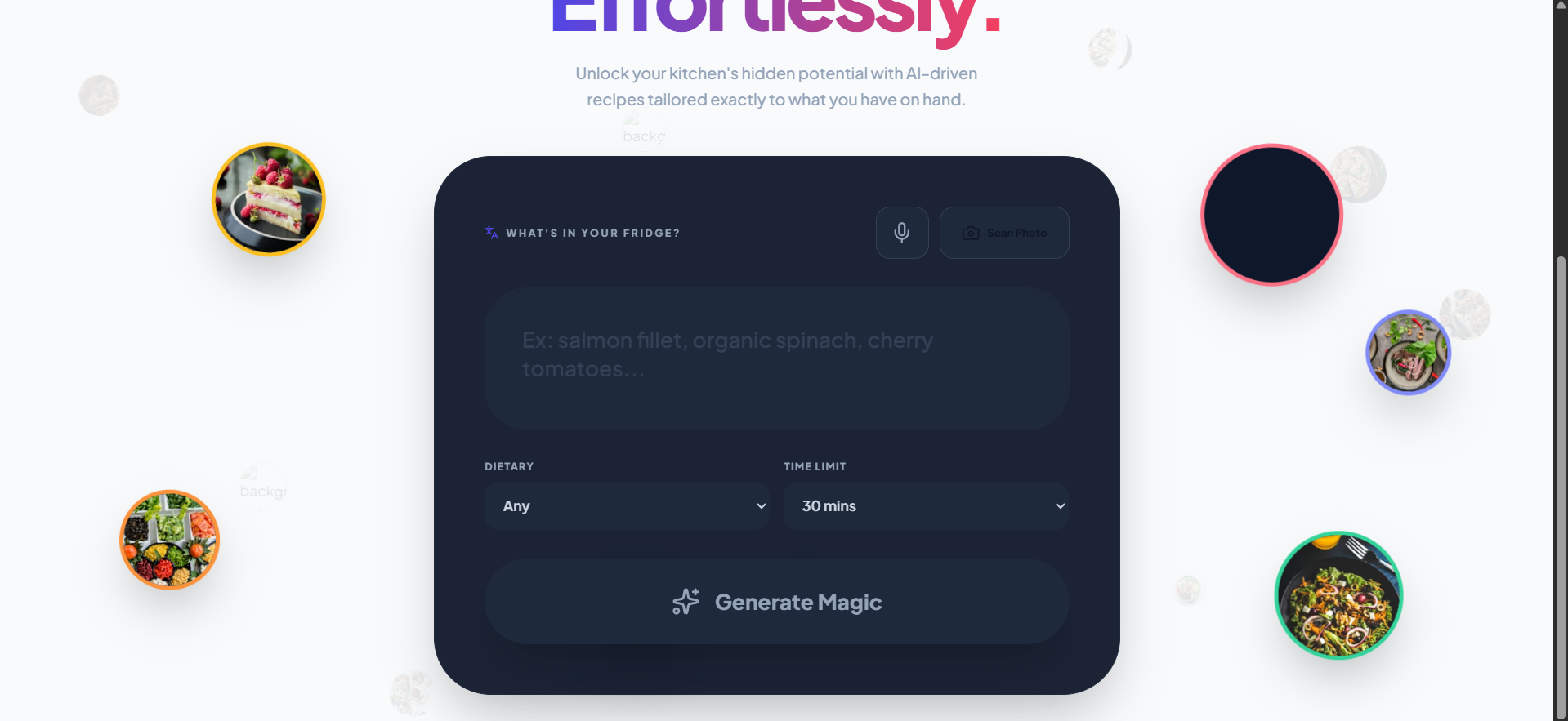
Light Theme Bottom
-
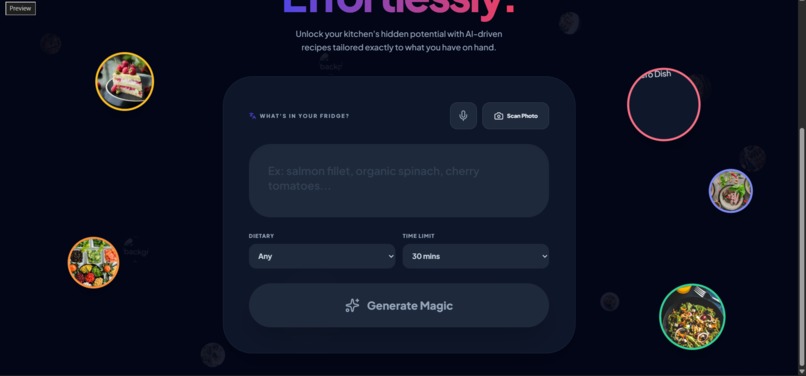
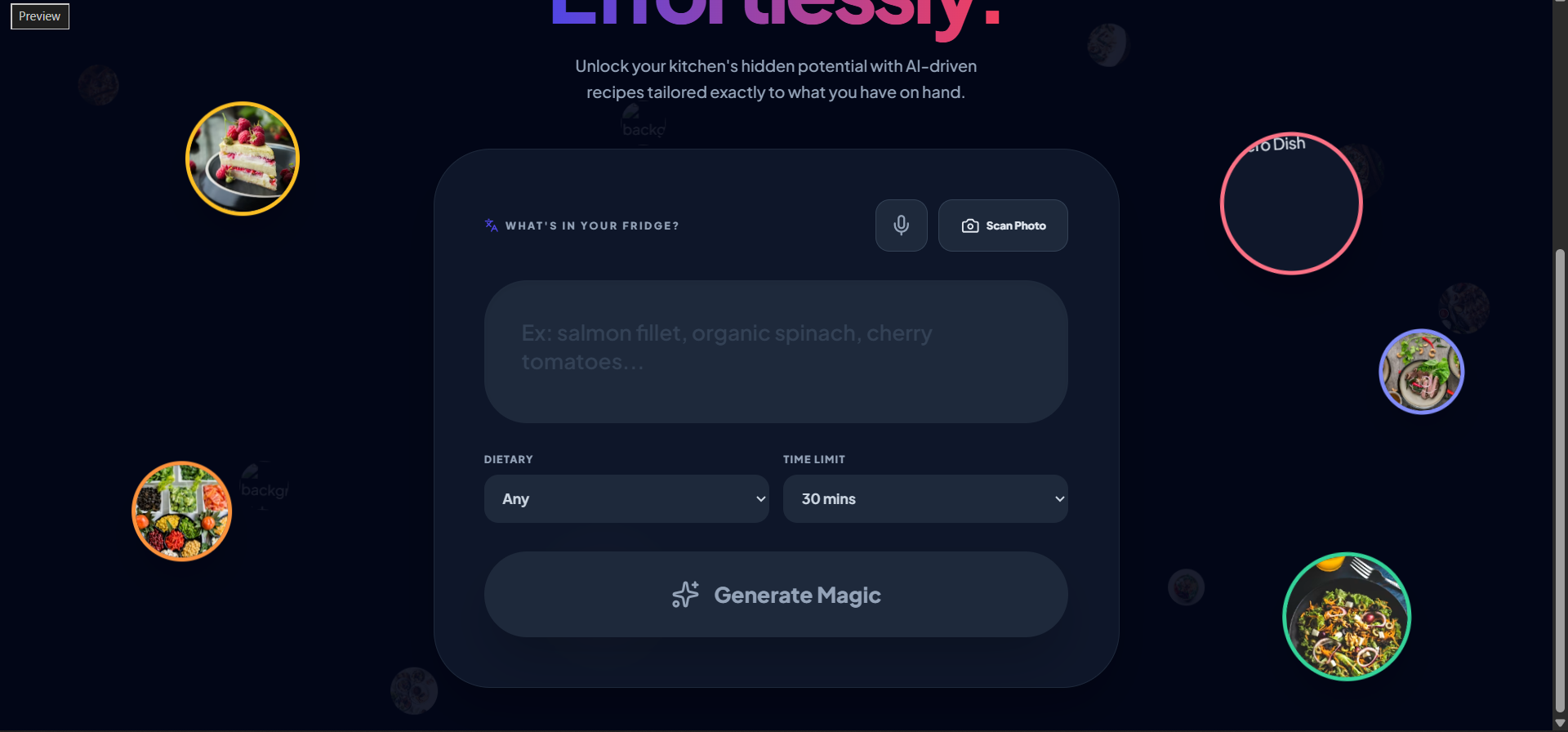
Dark Theme Bottom
-
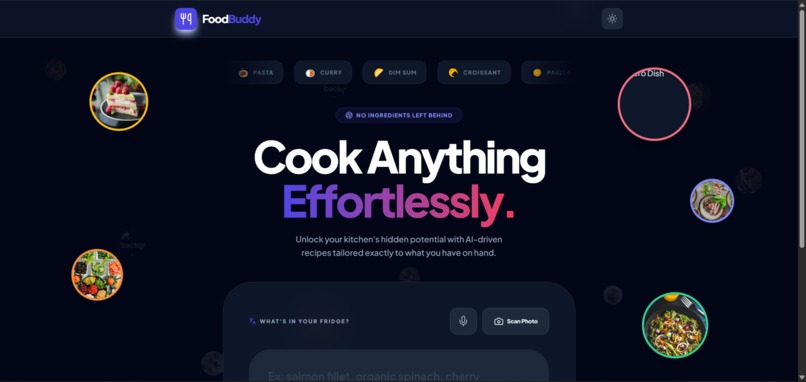
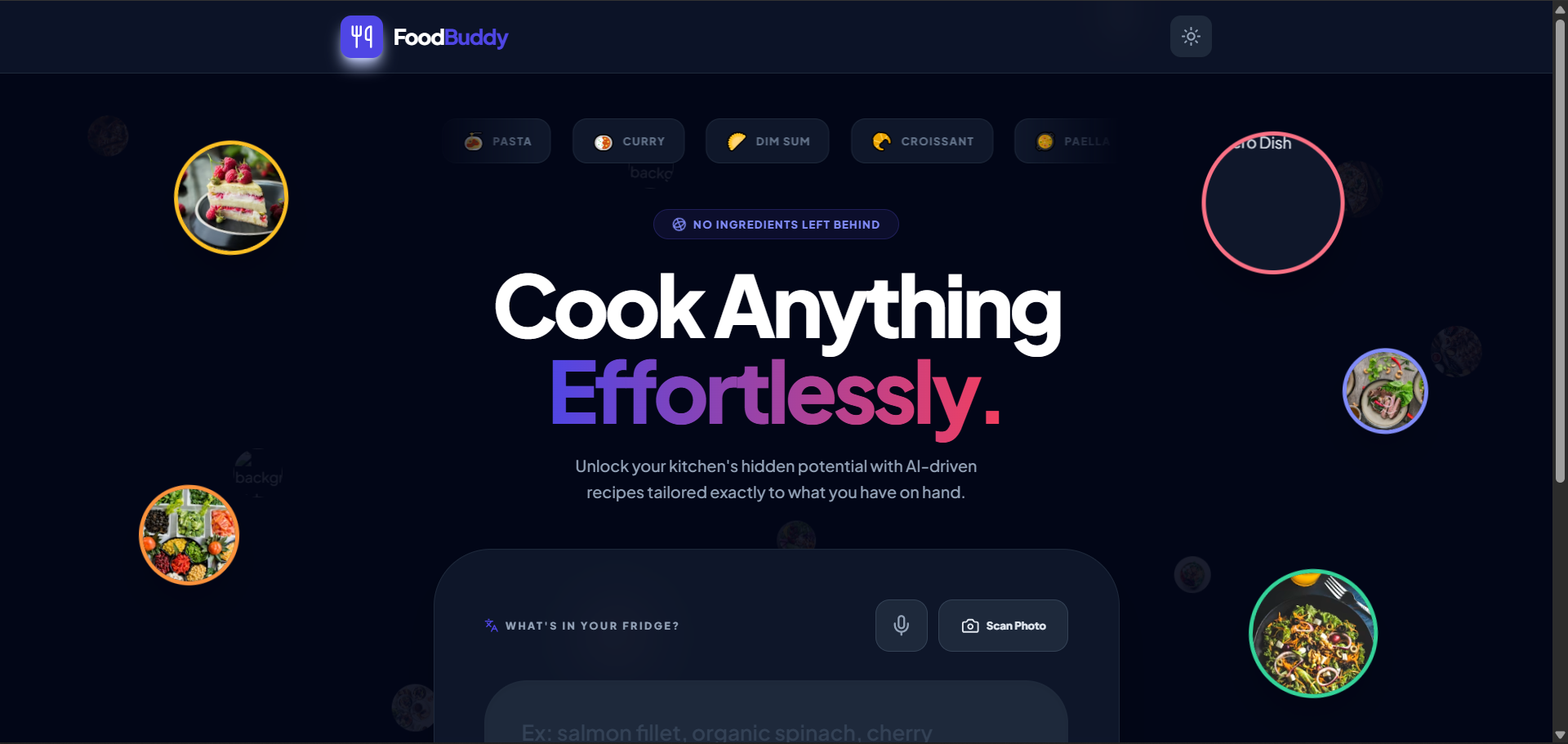
Dark Theme Top
The Story Behind Food Buddy AI
INSPIRATION The inspiration for Food Buddy AI was born out of a common daily frustration: standing in front of a half-full refrigerator and feeling like there is "nothing to eat." We noticed that while there is no shortage of recipe websites, there is a massive gap in tools that adapt to the user's current reality. We wanted to build something that felt less like a static cookbook and more like a creative partner—a tool that could look at a handful of random ingredients and see the potential for a gourmet, cross-cultural meal.
HOW WE BUILT IT
We built Food Buddy AI using a modern web stack designed for speed and intelligence: Frontend: React with Tailwind CSS for a fluid, responsive interface. Intelligence: We leveraged the Gemini 2.5 Flash model to handle complex reasoning tasks, such as identifying ingredients from images and structuring unstructured text into valid JSON recipe data. Vision: Image analysis was implemented to allow users to simply "scan" their pantry, converting pixels into a usable list of ingredients. Creativity: We integrated Imagen 4.0 to generate high-fidelity "plating previews," giving users a visual target for their cooking. Accessibility: Web Speech API was used to provide hands-free voice control, crucial for a kitchen environment where hands are often messy.
CHALLENGES FACED
One of the primary challenges was ensuring the AI consistently returned structured data. We had to carefully engineer prompts to ensure that instructions, nutritional values, and health benefits were always in a format the UI could parse without crashing.
Another technical hurdle was the nutritional estimation. Calculating accurate values for a variable list of ingredients required grounding the AI's logic in scientific notation and mathematical constants. For example, to estimate energy density ($E$), we used the standard macro calculation: $$E \approx (4 \times \text{protein}) + (4 \times \text{carbs}) + (9 \times \text{fats})$$
Ensuring the AI performed these calculations reliably across diverse food types took significant iterative testing.
WHAT WE LEARNED
This project taught us the power of Multimodal AI. Moving beyond simple text-in/text-out patterns allowed us to create a much more "human" experience. We learned that in a kitchen setting, UX is as much about voice and vision as it is about buttons and menus. We also gained a deep appreciation for "Cuisines Without Borders" discovering how AI can bridge cultural gaps by suggesting fusion techniques or traditional methods from across the globe that a home cook might never have considered.
Food Buddy AI is more than a utility; it's an exploration of how technology can make the most basic human necessity eating more creative and less wasteful.


Log in or sign up for Devpost to join the conversation.