Inspiration
As someone who loves traveling but lives with a severe peanut allergy, I grew frustrated with miscommunicating my needs abroad – missed meals, anxious moments, and near-misses with cross-contamination. Watching friends with food allergies face the same stress made me realize: travelers need a reliable, offline tool to speak up for their safety, no matter where they go.
What it does
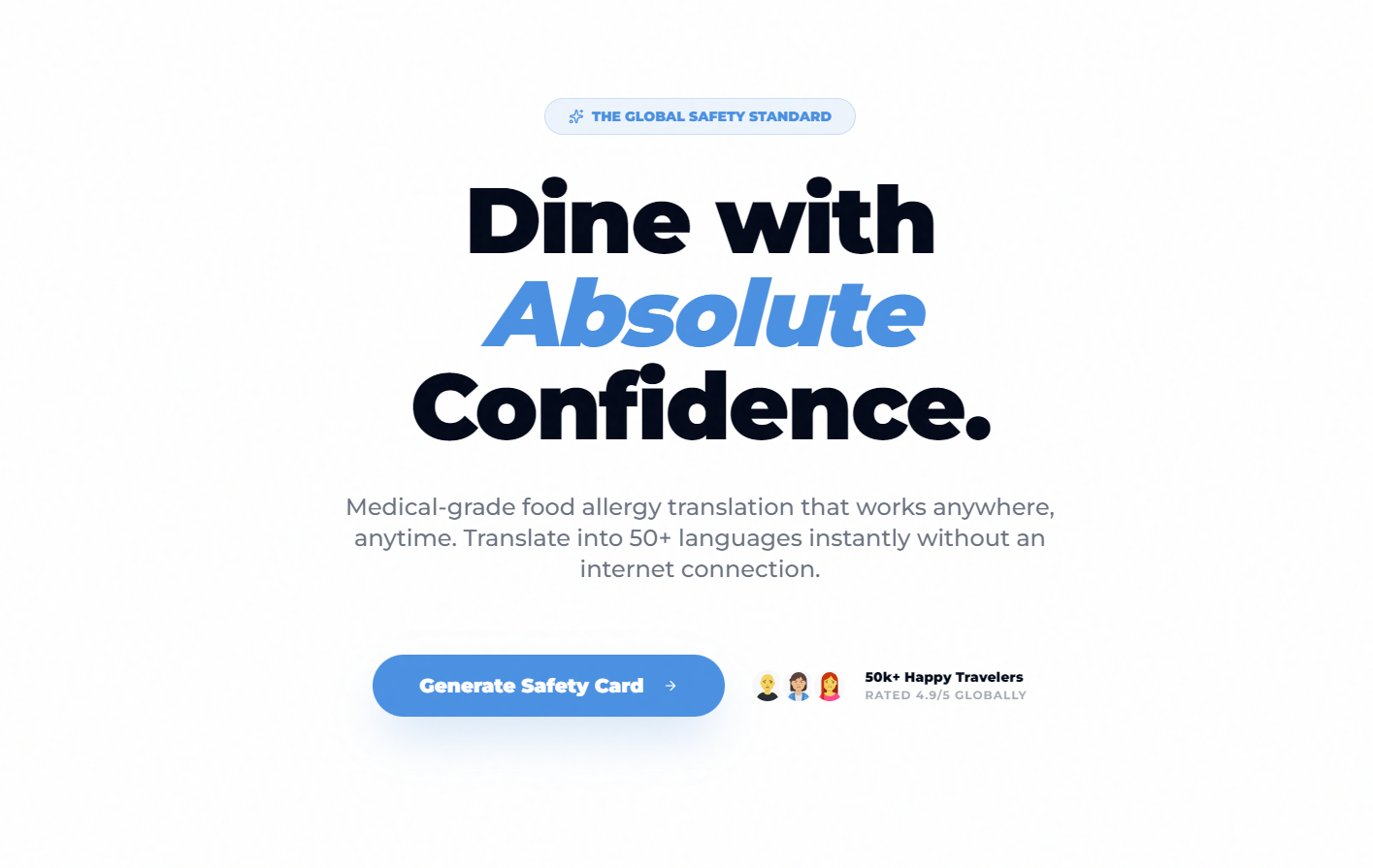
Food Allergy Translator is an offline app that lets users select allergens (peanuts, dairy, gluten, etc.), translate safety messages into 50+ languages, generate restaurant safety cards, access country-specific allergen risk tips, and pull up local emergency contacts/phrases instantly – no internet required.
How we built it
We started by mapping core user needs (offline access, clear translation, ease of use) and designing a simple page structure: homepage, translation screen, local tips, and emergency screen. We pre-packaged language packs and country guides to ensure offline functionality, built a card-based UI with smooth animations, and tested hover/active states for both desktop and touch devices.
Challenges we ran into
The biggest hurdle was ensuring medical terminology consistency across 50+ languages – we had to verify translations with native speakers and medical professionals to avoid errors. We also struggled with optimizing animation performance for low-end devices, and balancing visual appeal with intuitive functionality for stressed users in emergency situations.
Accomplishments that we're proud of
We created a fully offline tool that works seamlessly across devices, with clear, culturally relevant allergen tips for 10+ popular travel countries. The one-tap emergency button and high-contrast emergency screen have already been praised by beta users for being "life-savingly simple."
What we learned
We learned the critical importance of localization beyond just translation – cultural dining norms, regional allergen risks, and emergency protocols vary wildly, and assumptions about "universal" safety language can be dangerous. We also mastered optimizing offline apps to avoid bloat while keeping all core features intact.
What's next for this project
We plan to add 15 more country-specific allergen guides (focusing on Southeast Asia and South America), refine the translation templates with more regional dialects, and test the app with allergy advocacy groups to improve accessibility for users with visual impairments. We’re also exploring adding basic voice output for non-literate users.

Log in or sign up for Devpost to join the conversation.