-
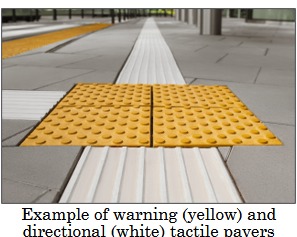
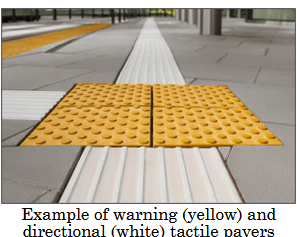
Example of tactile paving in real life
-
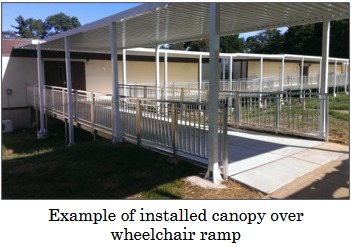
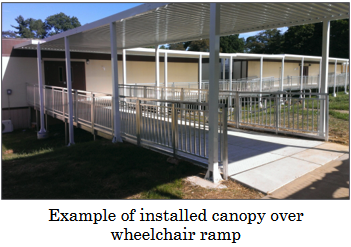
Example of canopy in real life
-
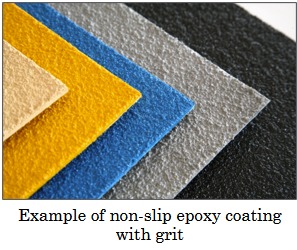
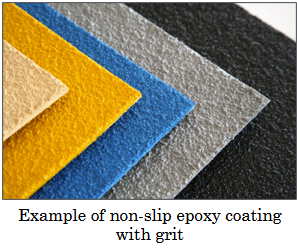
Example of gritted epoxy coating products
-
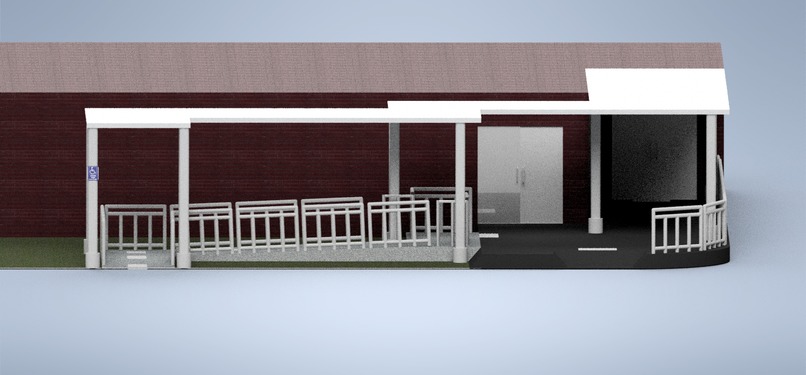
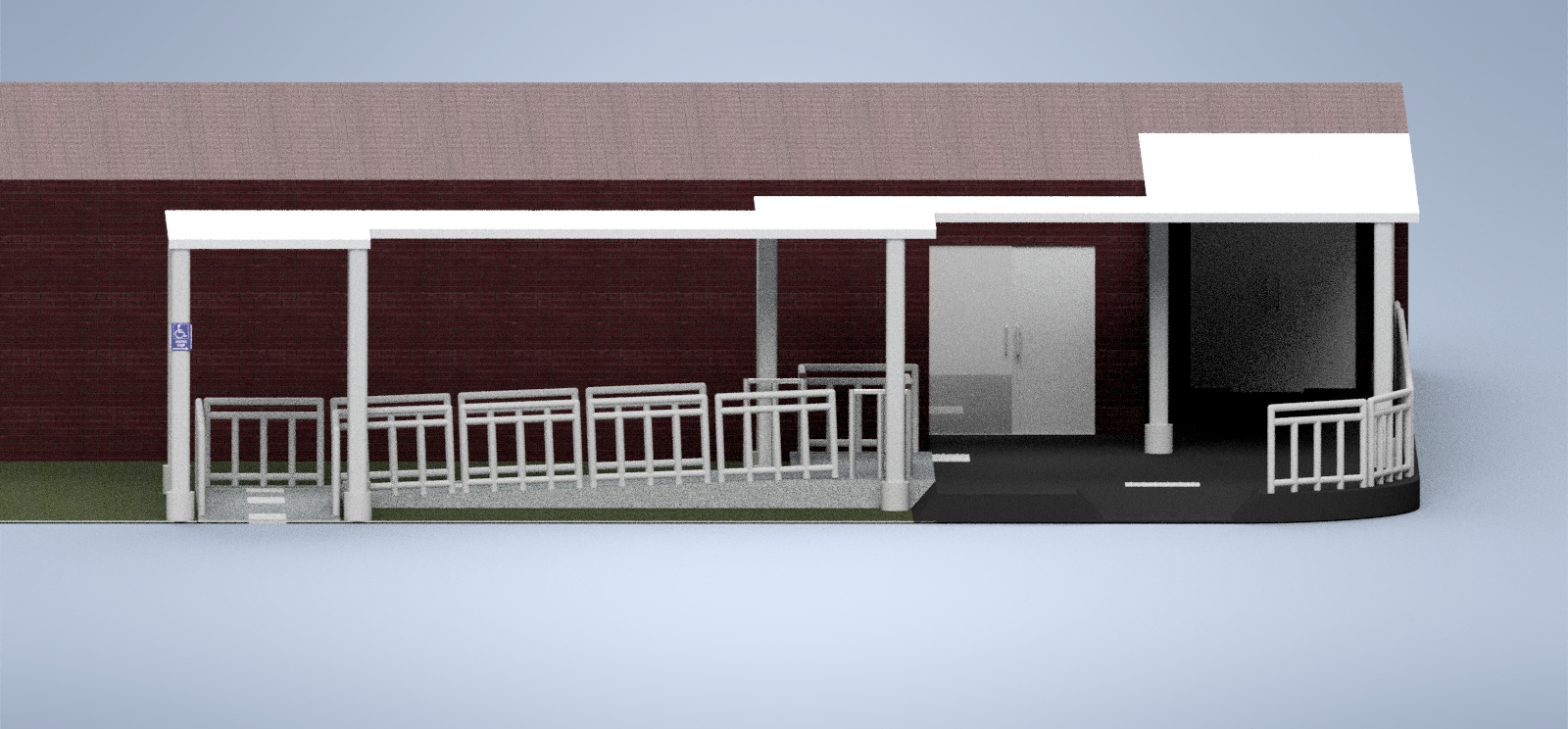
Render of final design. Note the canopy, textured epoxy ramp, signage, and tactile pavers.
-
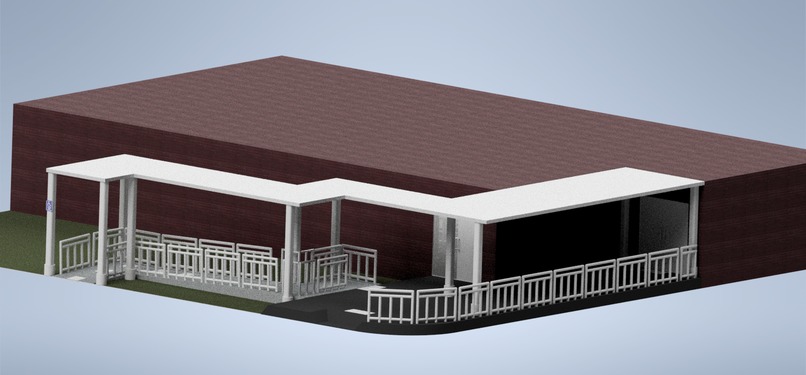
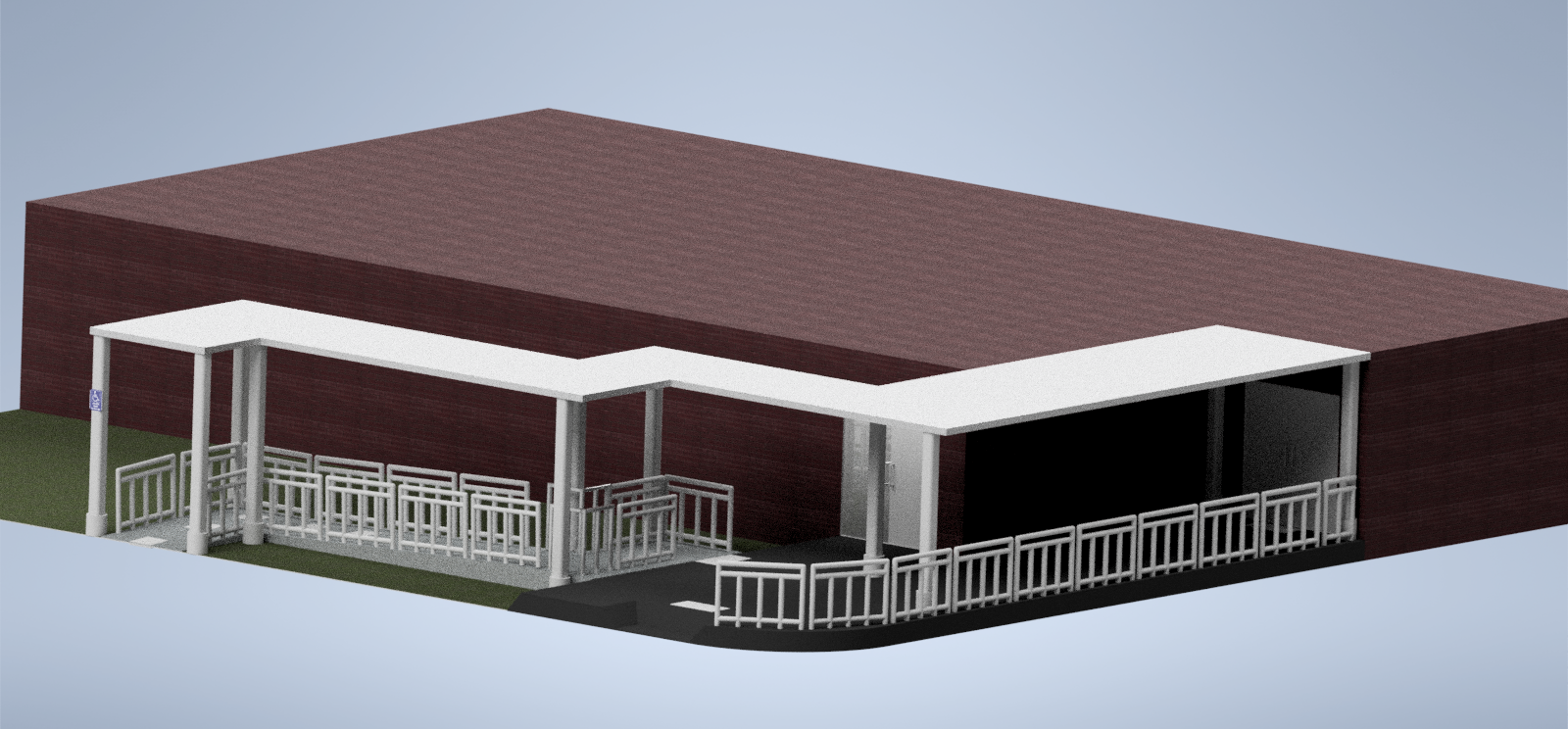
Render of final design. Note how the railing completely envelops the walking space and the step-up is well-defined.
Background
McMaster University, with its historical campus predating modern accessibility legislation, faces unique challenges in ensuring compliance with the 2019 Accessible Canada Act (ACA). While the university has largely met ACA standards, aging infrastructure reveals issues such as low-quality installations, outdated designs, and limited weather considerations. These problems result in "faux accessibility" — facilities that technically meet guidelines but fail to provide practical, safe, and inclusive access for all. Retrofitting these spaces highlights the difficulty of balancing modern accessibility needs with the constraints of post-construction installation in older buildings.
This initiative draws inspiration from the need to redesign existing infrastructure to better accommodate diverse disabilities while enhancing user safety. The goal is to integrate modern fixtures like anti-slip surfaces and tactile paving, address local weather hazards like ice and snow, and minimize costs without compromising visual appeal. By reimagining accessibility with a holistic and forward-thinking approach, we seek to not only comply with but exceed ACA standards, creating a campus environment that is truly inclusive and welcoming for all.
Proposal
The proposed accessibility improvements for the Burke Science Building aim to address safety, usability, and compliance issues while enhancing the overall functionality of the space. Key solutions include:
- Epoxy Coating with Grit: Applying a durable, textured epoxy coating to ramps, reducing the risk of slipping, especially during wet or icy conditions.
- Covered Canopy: Installing a canopy over ramps and entrances to protect against ice and snow accumulation, ensuring safer and more reliable access during cold weather.
- Complete Railings and Tactile Paving: Upgrading railings and incorporating tactile paving to mitigate fall hazards and improve navigation for individuals with mobility and visual impairments.
These upgrades are designed to create a safer, more inclusive, and visually appealing environment that meets and exceeds the standards set by the Accessible Canada Act (ACA).
Accomplishments and Skills Learnt
Through the design, research, and inspection processes, we gained a deeper understanding of the challenges faced by individuals with disabilities, particularly in navigating aging infrastructure. This awareness was central to creating practical solutions that met their actual needs.
- Practical Design: We developed accessibility features that truly addressed accessibility concerns in a practical and economic manner, such as using low-cast non-slip epoxy coatings and tactile paving tiles.
- Environmental Barriers: Local weather conditions, like snow and ice, exacerbate accessibility challenges. This led to the addition of a covered canopy and ramp modifications to improve year-round safety.
- Inclusive Solutions: The design and research process made us more mindful of the diverse needs of all users, ensuring our solutions were inclusive and exceeded basic compliance standards.
These accomplishments reflect our commitment not only to meeting regulatory requirements but to truly improving the daily experience of individuals with disabilities on campus.
Lessons Learnt
Through this project, we learned that accessibility is not just about meeting broad regulations but about understanding the diverse and nuanced needs of individuals with disabilities. We gained an appreciation for how even small barriers can have a significant impact on daily life. Retrofitting old buildings posed its own set of challenges, but it also provided opportunities for creative problem-solving. We discovered that integrating modern accessibility features into existing structures requires thoughtful planning and careful design. Additionally, we learned that weather considerations, like ice and snow, are essential when designing accessible spaces, with simple features like canopies making a big difference in safety and reducing slips. Finally, we recognized the value of collaboration, as the limited time-frame of the design competition required us to delegate tasks to eachother efficiency. We also learnt the importance of interdisciplinary skills/knowledge to create well-rounded solutions. These lessons have made us more aware of the complexities of accessibility and the importance of ensuring quality of life for all users.
Built With
- inventor

Log in or sign up for Devpost to join the conversation.