-
-
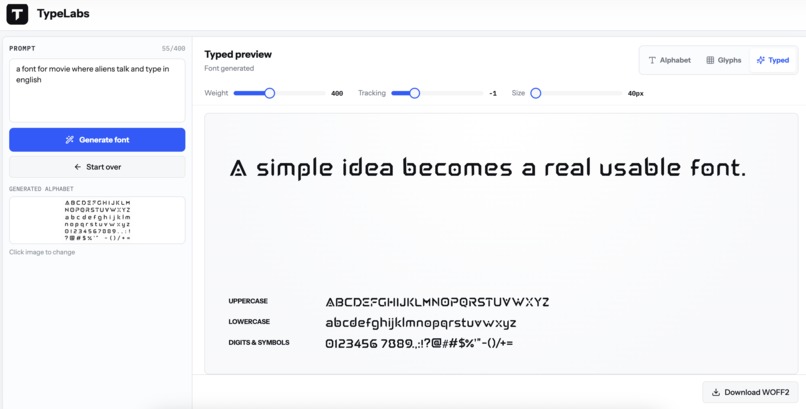
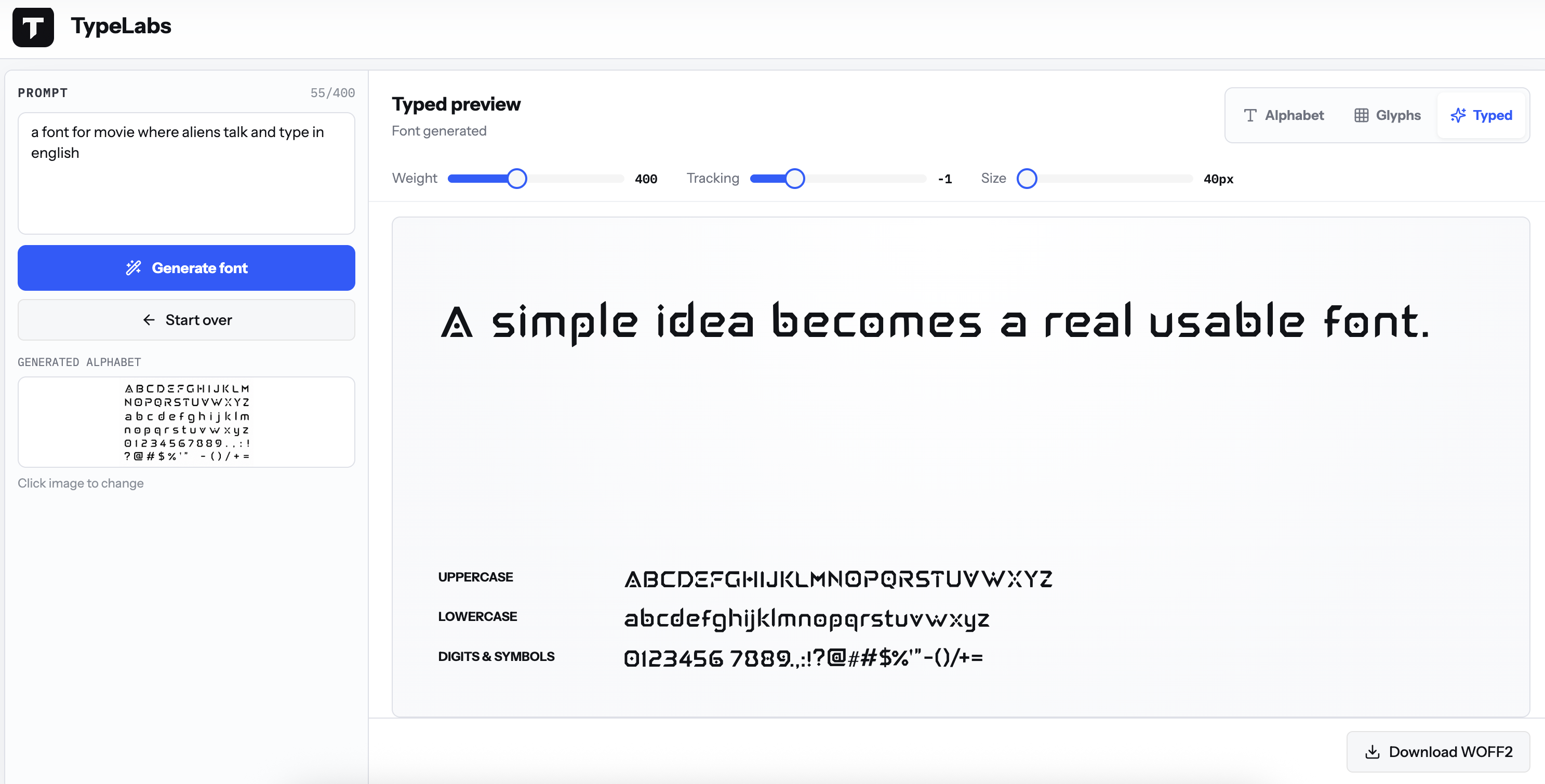
UI
Inspiration
I saw gpt-image and wondered if it could make a reusable font. I started this project about 1 year ago, but back then the models were too bad. I wanted to rewamp the project and make something cool that can be used on a real website.
What it does
TypeLabs turns a prompt such as into a usable font. You can:
- Describe a typeface in plain language.
- Inspect every generated extracted glyph.
- Align and regenerate weak or missing glyphs.
- Download your fonts in nine weights.
How I built it
I built it in an interesting way, this time i had a somewhat working pipeline already so what i did is generate a few images (in codex) and save them as fixtures. Like this as I was developping new features, or improving / rewriting existing ones i could run large e2e tests that ran on all the previous jobs ever ran. This gave me confidence to /goal with 5.6 Sol and trust the outputs.
The hardest challenges
Reliable generation. Image models optimize for appearance sometimes they forget characters, do not create them in the right order etc. I added a fixed six-row prompt to help it generate every character and then split them correctly.
Alignement and spacing. Ensuring correct, alignment especially of dots, special characters and decenders(pqy etc) proved particularly hard. Even small fluctuations there make the font look wrong and unusable.
Optical spacing. There's a thing called Kerning. Essentially LT or AV need to overlap to look right. I built a raster based kerning algorithm that rebuilds after every glyph or weight changes.
What I learned
Reliable generative products combine models with deterministic contracts. The largest gains came from making a strong e2e pipeline where all user generated images get added as fixtures that get tested against. It was kinda cool.
What changed during OpenAI Build Week
TypeLabs was a working prototype before the submission period. During build week i got to rewrite it and make it faster, more reliable and added supported glyphs. 1Bio GPT-5.6 token powered my Codex collaboration during this work. Codex helped me inspect the system, plan changes, implement and debug across the stack, add tests, and review results.
Potential impact
I want to turn this into a startup. I would like to selll it to website builders like lovable, vercel v0, base 44 etc. I think it could be very useful for image editing aswell allowing you to change the text without regenerating the whole image.
What's next
Next I want use an llm to get the last 10%. Essentially the e2e pipeline already emits warnings for each font about probable issues. An llm should look at the warnings in question and be able to fix for example an alignement issue with the move tool. I also want to add 14 glyphs to get to the whole printable ascii set.
Built With
- codex
- gcp
- gpt5.6
- python
- ruff
- typescript
- uv

Log in or sign up for Devpost to join the conversation.