Inspiration
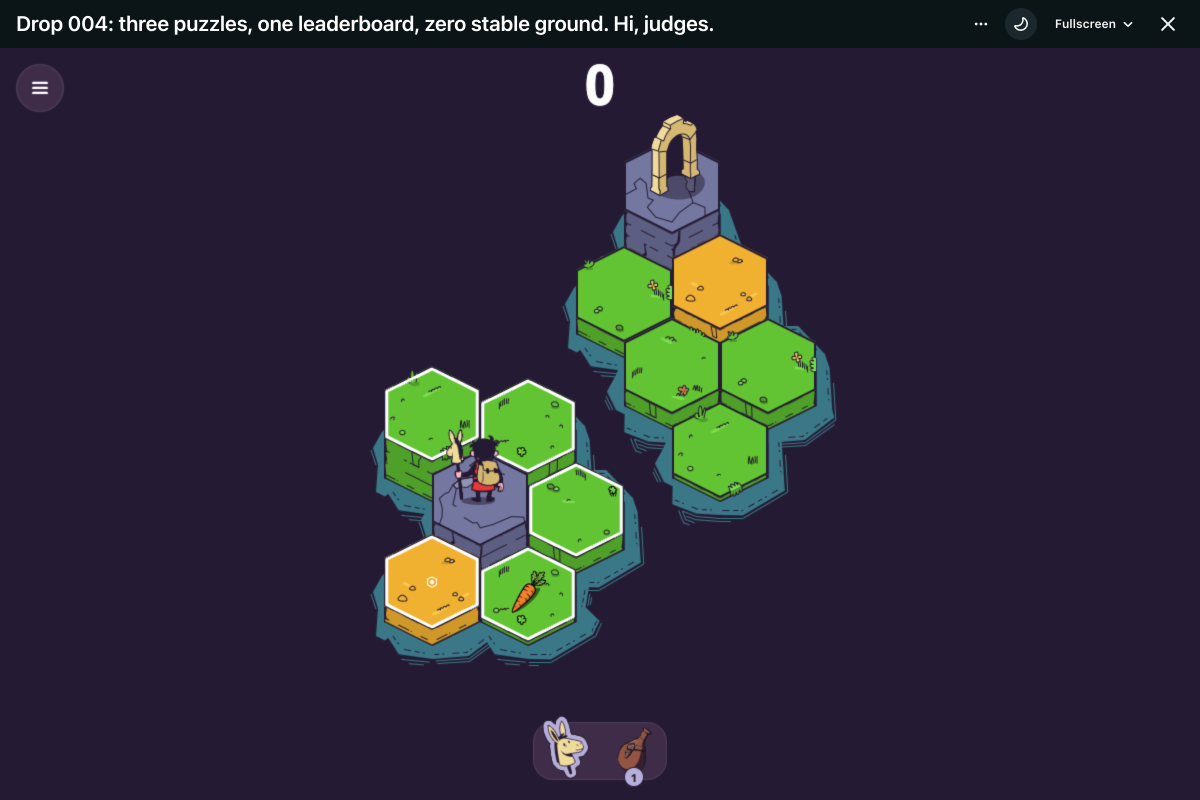
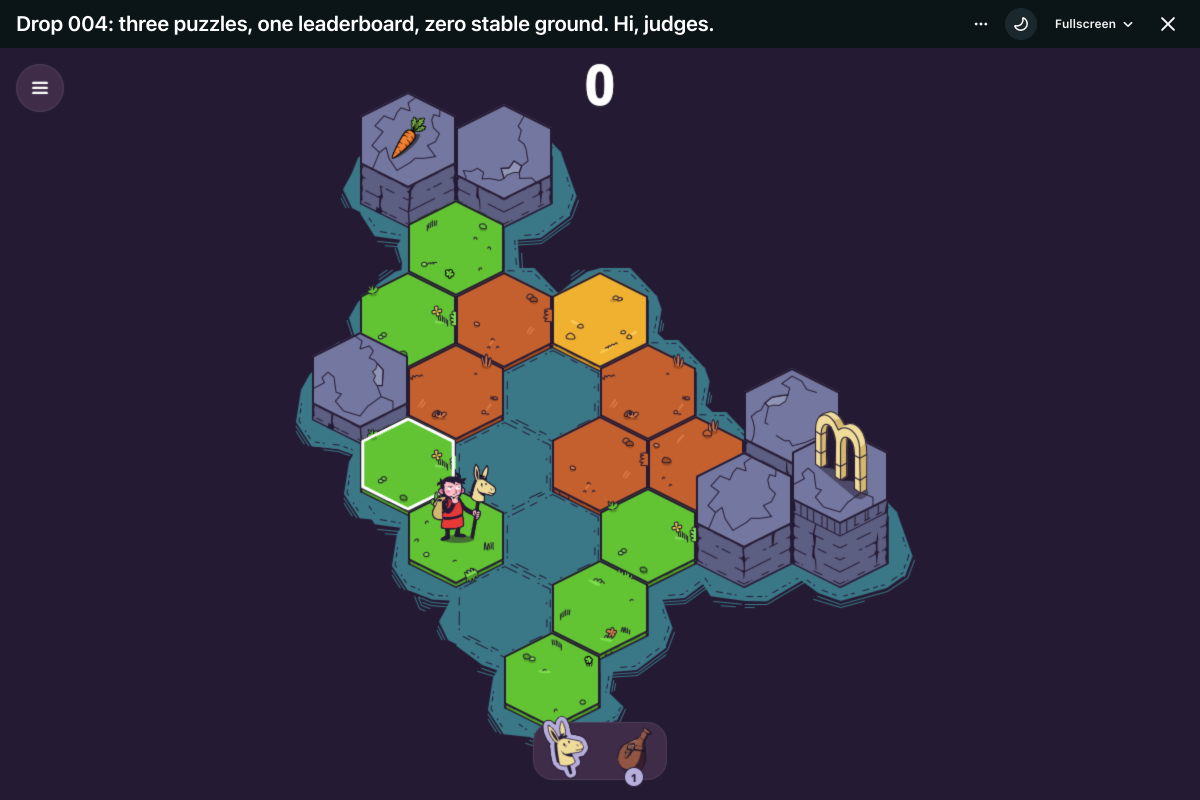
The inspiration behind Folly is Lancelot "Capability" Brown, the most famous landscape architect of 18th century England: a man who dug lakes, planted whole woodlands, and at Chatsworth removed an entire hill because it blocked the view. Someone who quite literally moved mountains was simply too funny not to build a game around. The follies of his era gave the game its name: small ornamental garden buildings with no job other than to catch the eye and pull visitors onward through the landscape, which is exactly what the goal of each puzzle does. So you play Lancelot, a kid with a toy donkey named Brown, hopping across ground that reshapes itself under every step.
Folly started as a side project before the hackathon. The hackathon gave it what every side project needs most: a deadline and a reason to actually finish.
What it does
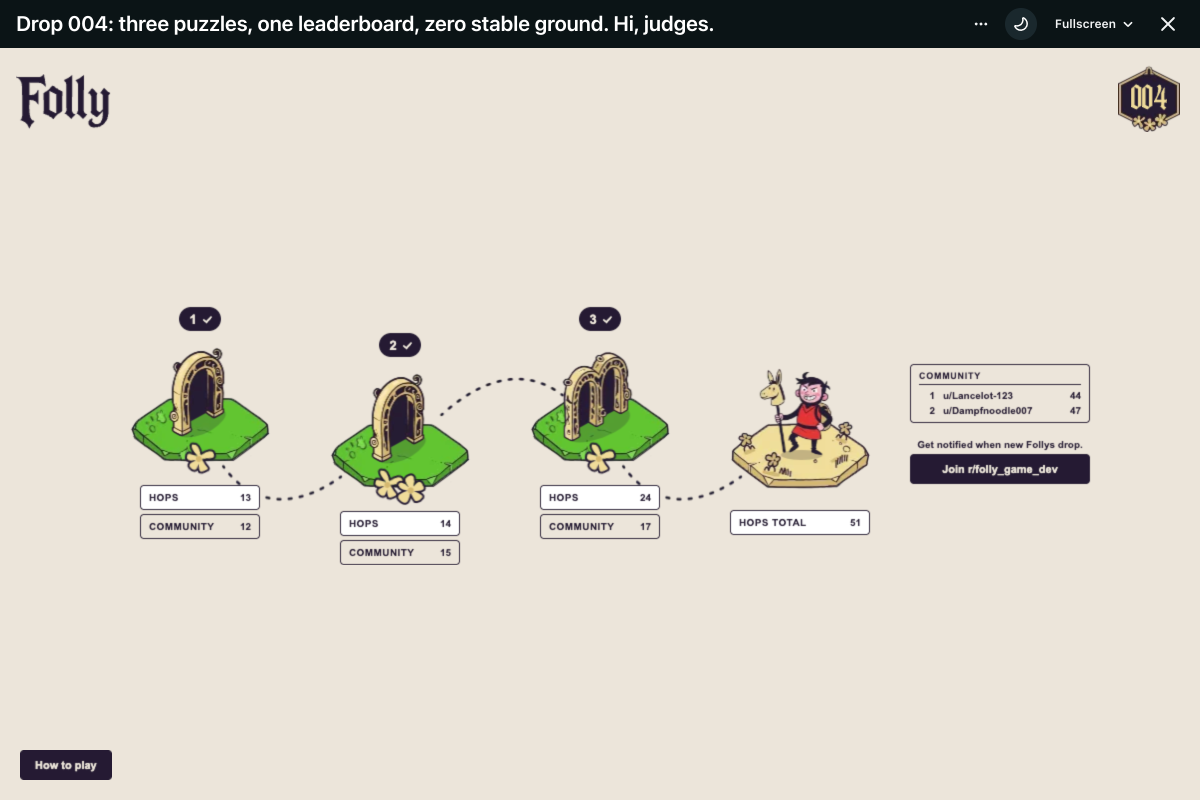
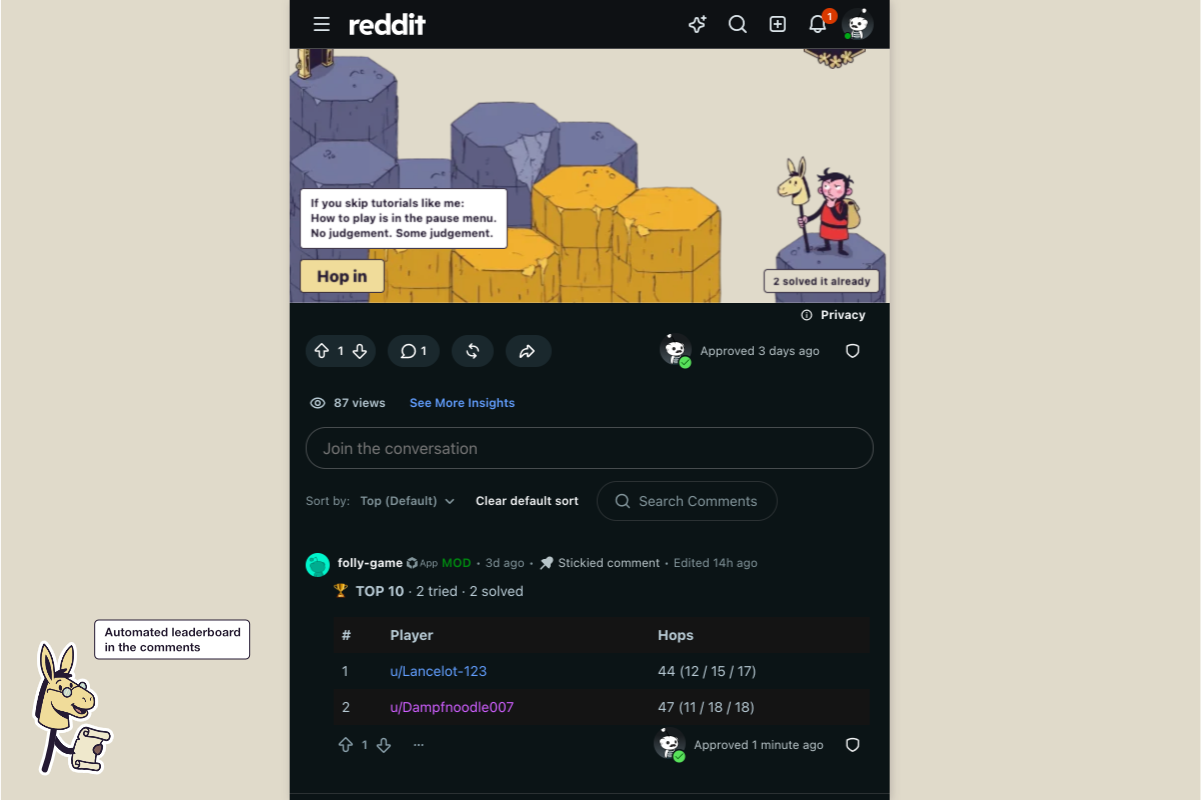
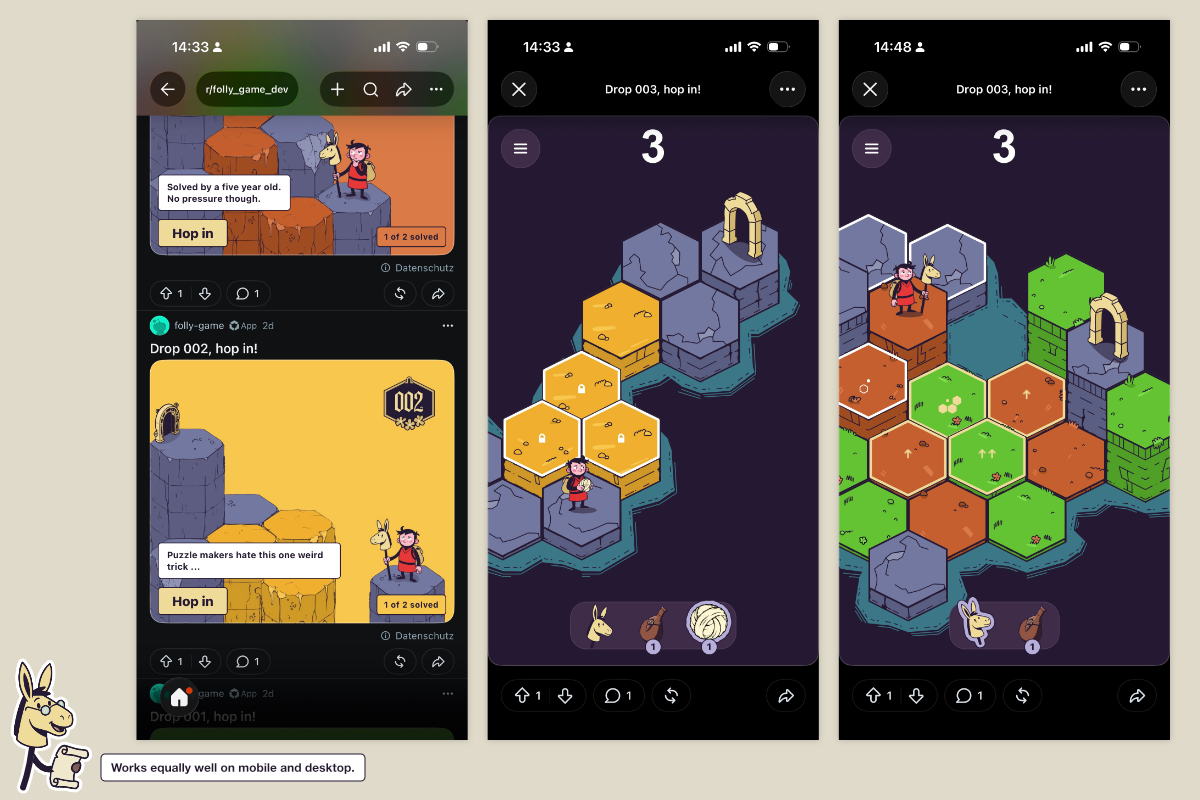
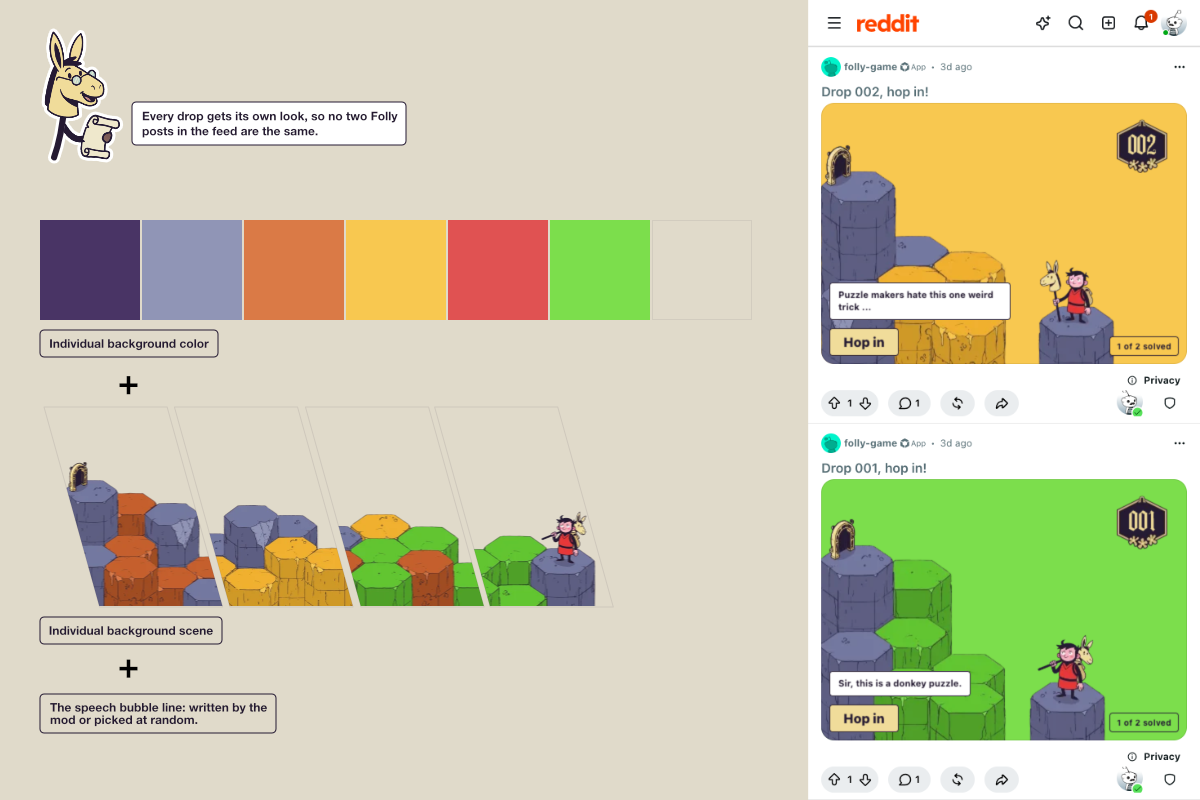
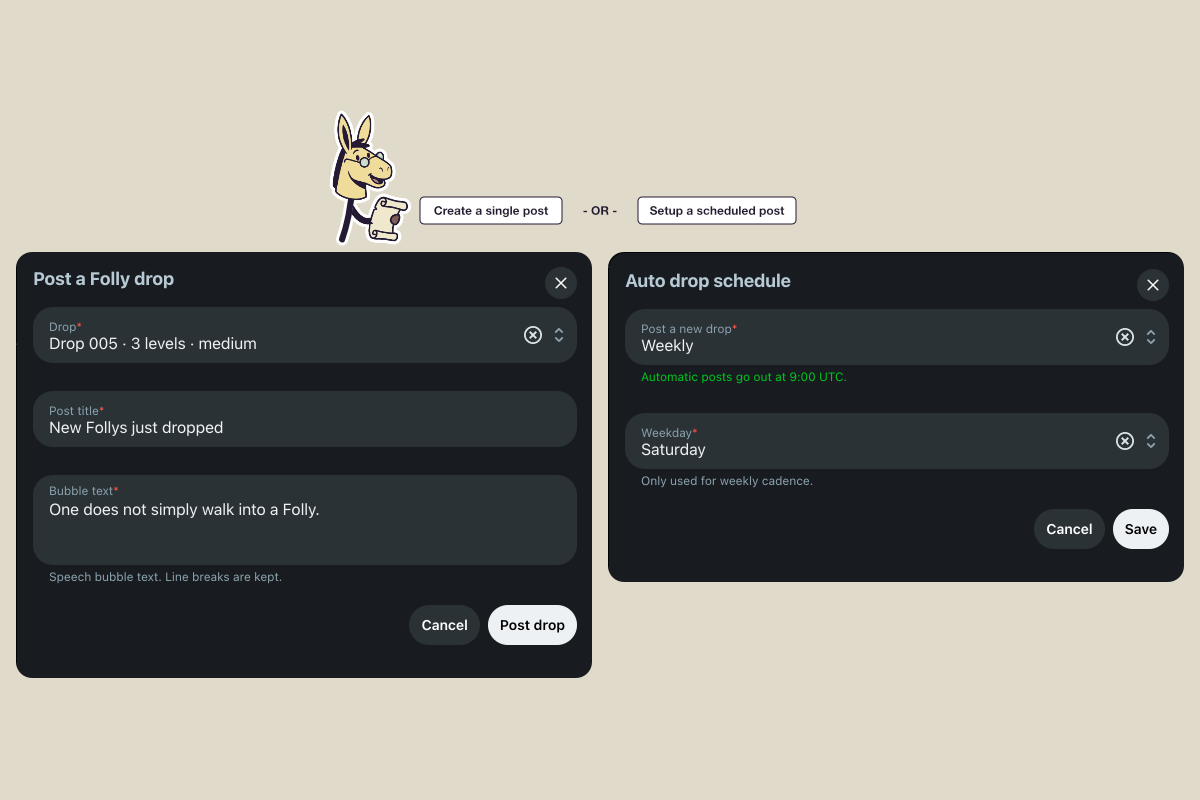
Folly posts puzzle drops into a subreddit. Each post bundles a small set of puzzles that you play right in the feed, a session takes 2 to 10 minutes. Every post has its own leaderboard, kept as a pinned comment, and the post card shows live stats on how many players tried and cleared the drop. There is deliberately no meta progression between posts: every drop is a fresh start, nothing to grind, no streak to lose, and everyone competes on equal footing. What pulls you back is the leaderboard, comparing your result with the community and replaying the drop to improve.
How we built it
The stack: Phaser 3, React, TypeScript and Vite, packaged for Reddit with Devvit. Redis keeps each post's leaderboard, the live counters on its card, and a handful of player preferences, everything else stays in the session. To speed up level production I built a level editor for local development, plus a headless solver that checks whether a level is solvable.
This is also the first project I built with Claude Code as the main development tool, with the Devvit MCP server wired in for platform docs and live app logs. For the art, characters and items, especially the sprite animations, started as AI generated images that I then drew over by hand. The rest of the in-game graphics are hand made, and the sound effects were made in GarageBand (more of those coming soon).
Challenges we ran into
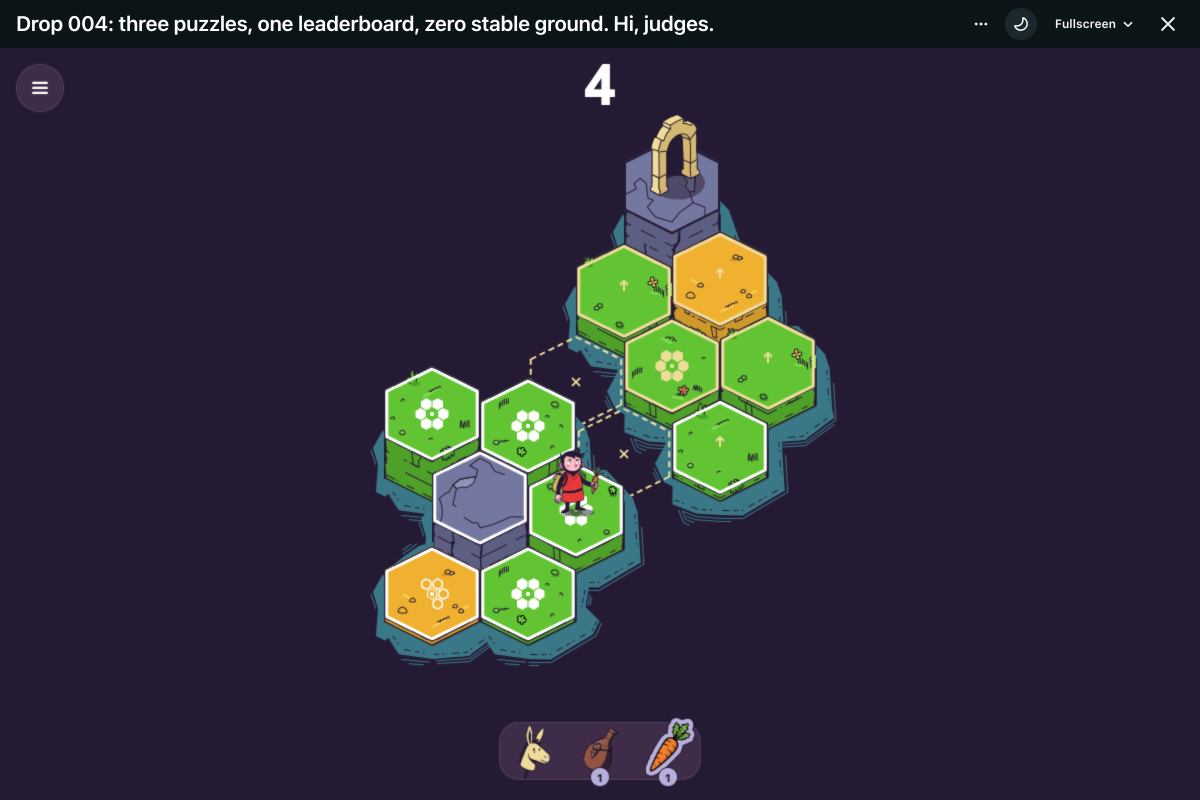
The biggest challenge was not a technical one. On Reddit, new players land right in the game with no prior knowledge and no introduction to the mechanics. That is by design, because starting fast matters in a feed. But ground that reacts to every step can frustrate quickly when it does not do what you expect. So I playtested a lot with friends, watched where they stumbled, and built many small, unobtrusive UX features that hopefully add up to a pleasant game feel, like the preview that shows what a hop will change before you commit to it.
On the technical side, crisp rendering inside the webview took the longest: getting Phaser to render sharp on retina screens needed a custom scaling setup. And I learned the hard way that webview localStorage does not survive app updates, so everything durable moved to Redis.
Accomplishments that we're proud of
An art style that feels all of a piece. A UI that does not scream "made with AI" (sorry, Claude 🫶). A project that turned into a playful way of learning how to work with AI. And above all: a finished side project.
What we learned
A feed game has to land in seconds, so the post card is as much a part of the game as the puzzles. Constraints made the design better: one post, one session, one board. And watching real players beats guessing: every playtest with friends surfaced problems I would never have found on my own.
What's next for Folly
A few more sound effects. A pile of new hand crafted levels, because AI is not quite there yet, or my prompts are not. And maybe a new gameplay mechanic, a new way for the ground to react, but not before the proper release.


Log in or sign up for Devpost to join the conversation.