Inspiration
Small business owners and sales professionals often lose potential customers after a consultation—not because the customer was uninterested, but because the follow-up was late, inconsistent, or forgotten.
Important details such as the customer’s needs, budget, objections, preferred timing, and promised next steps are often scattered across voice recordings, notes, and chat messages.
I wanted to build an AI assistant that turns every customer consultation into a clear and actionable follow-up plan.
What it does
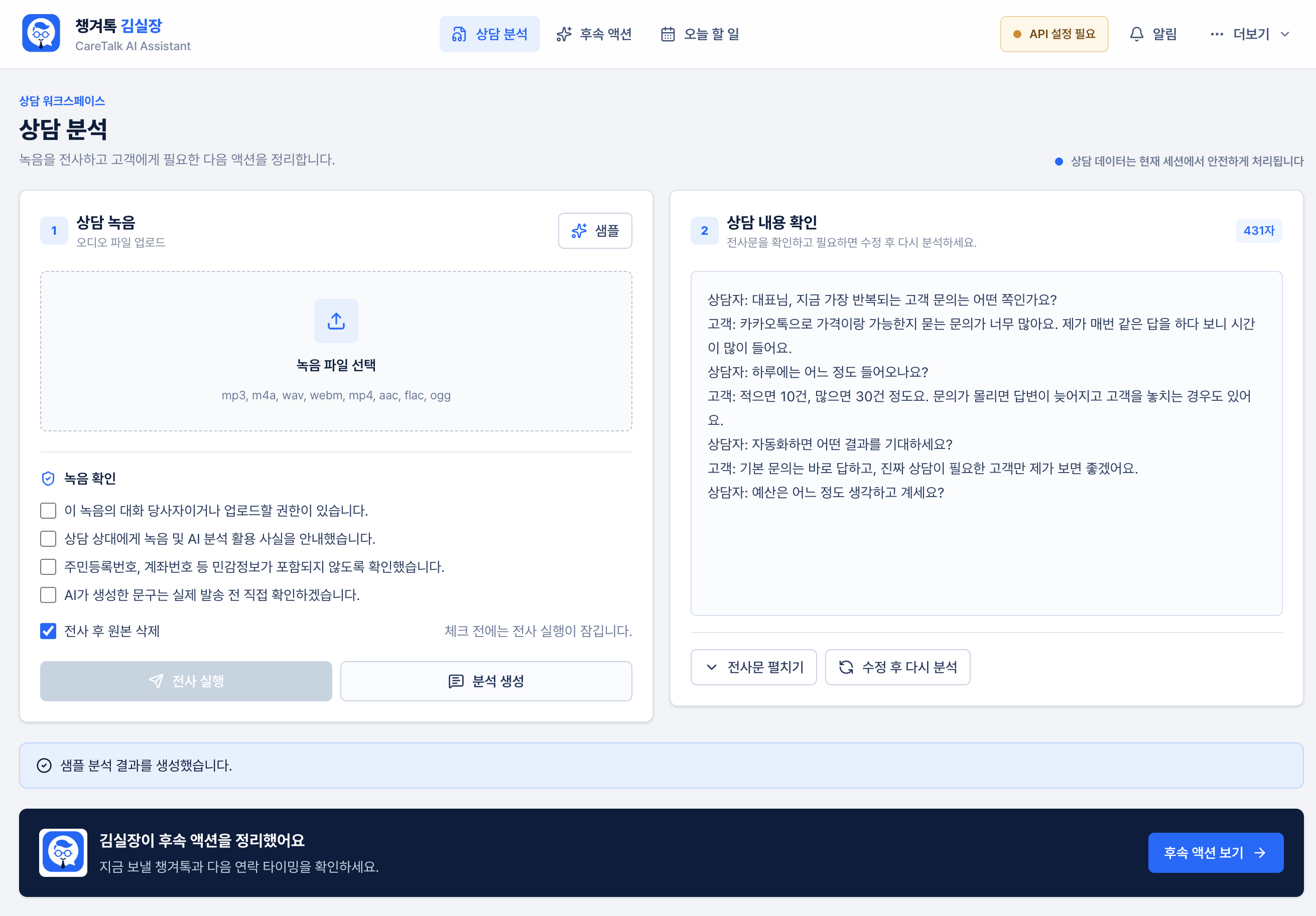
FollowUp AI is an AI-powered follow-up assistant for small business owners, consultants, coaches, and sales professionals.
After a consultation, the user can enter a transcript, consultation memo, or customer notes. The application analyzes the conversation and organizes the most important information, including:
- Customer needs and goals
- Budget and purchase conditions
- Questions and objections
- Products or services discussed
- Promised actions
- Recommended next contact date
- Suggested follow-up messages
The system then generates personalized messages that the user can send through KakaoTalk, SMS, email, or other communication channels.
Instead of spending time reviewing long consultation notes, the user receives a simple action summary:
- What the customer wants
- What needs to be sent
- What message should be used
- When the customer should be contacted again
Why it matters
Many CRM tools are designed for large companies and require users to manually enter and organize customer information.
FollowUp AI is designed for individual business owners and small teams who need a simple workflow.
The goal is not to replace human communication. It is to help users remember important customer details and respond with more relevant, timely, and personalized messages.
How I built it
The prototype is being built as a web application using:
- Next.js
- TypeScript
- React
- OpenAI models
- Codex
- Structured JSON outputs
- Supabase for customer data and history
The application workflow is:
- The user enters a consultation transcript or memo.
- The AI extracts structured customer information.
- The application generates a consultation summary.
- The AI recommends follow-up actions and timing.
- Personalized follow-up messages are generated.
- The user reviews, edits, and copies the final message.
Codex was used to help design the application structure, create reusable components, implement the AI workflow, refactor the codebase, and identify technical issues during development.
Challenges I faced
One of the main challenges was converting an unstructured customer conversation into reliable structured data.
Consultations do not follow a fixed format. Customers may mention their budget, objections, preferred schedule, and purchase intent in different parts of the conversation.
To address this, I designed a structured extraction format that separates:
- Confirmed customer information
- AI-generated interpretations
- Missing information
- Recommended next actions
Another challenge was preventing the generated messages from sounding overly robotic or aggressive. The messages needed to be short, natural, polite, and appropriate for real customer communication.
I also focused on making the interface simple enough for users who are not familiar with CRM systems or AI tools.
Accomplishments that I am proud of
I created a practical workflow that transforms consultation notes into immediate sales actions.
The current prototype can organize customer context and prepare personalized follow-up content in a format that is easy to review and use.
I am especially proud that the project focuses on a common but often overlooked problem: many sales opportunities are lost during the period after the first consultation.
What I learned
Through this project, I learned that useful AI products need more than a good prompt.
The output must be structured, editable, traceable, and connected to a clear user action.
I also learned that AI-generated recommendations should be clearly separated from confirmed facts. This helps users trust the result and reduces the risk of sending incorrect information to customers.
Codex helped me work faster by supporting implementation, code organization, debugging, and iterative improvements throughout the development process.
What's next
The next planned features include:
- Voice recording transcription
- Customer history management
- Automatic follow-up reminders
- Multiple message tone options
- Reusable business-specific templates
- Follow-up status tracking
- Integration with calendar and communication tools
- Korean and English language support
The long-term goal is to create an affordable AI sales assistant that helps small business owners manage customer relationships without needing a complicated enterprise CRM system.
What it does
How we built it
Challenges we ran into
Accomplishments that we're proud of
What we learned
What's next for FollowUp AI
Built With
- api
- codex
- css
- gpt-5
- next.js
- openai
- outputs
- postgresql
- react
- structured
- supabase
- tailwind
- typescript
- vercel

Log in or sign up for Devpost to join the conversation.