-
-
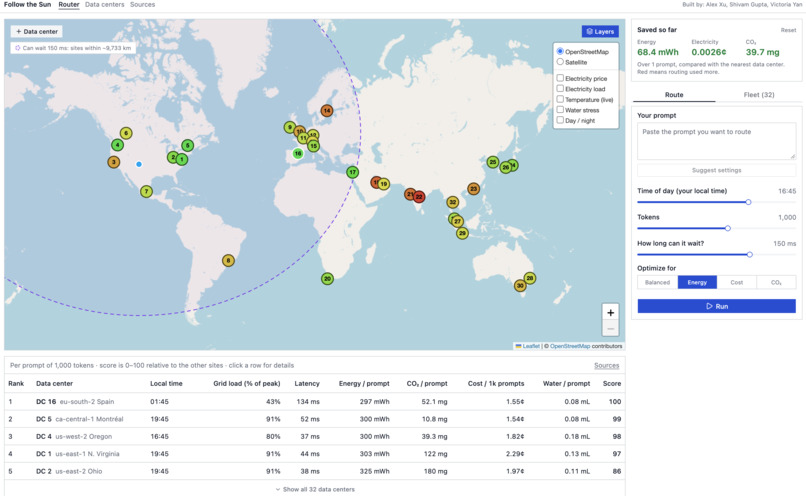
routing
-
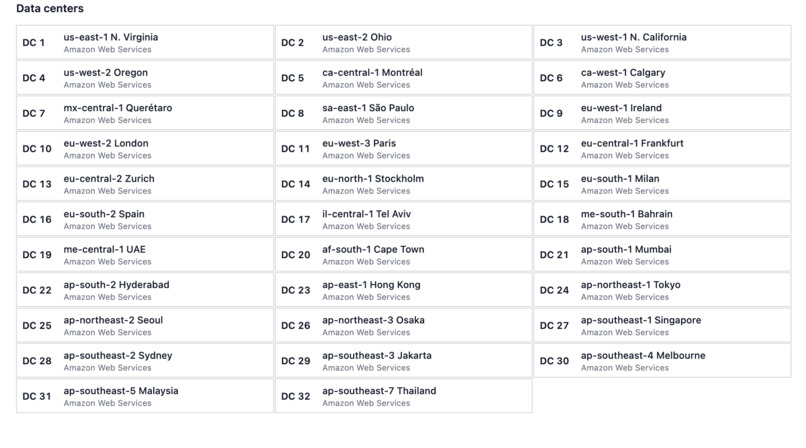
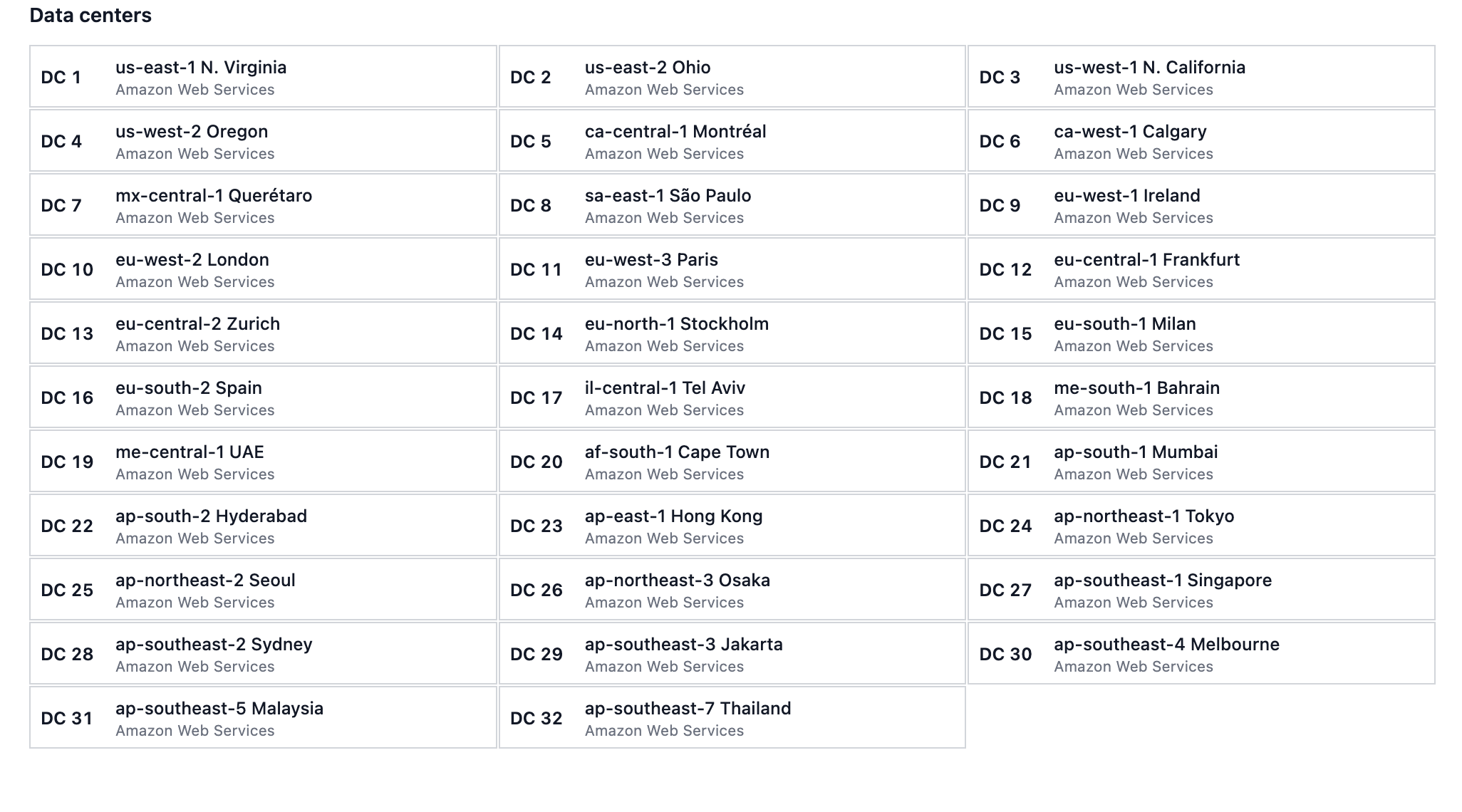
data center list
-
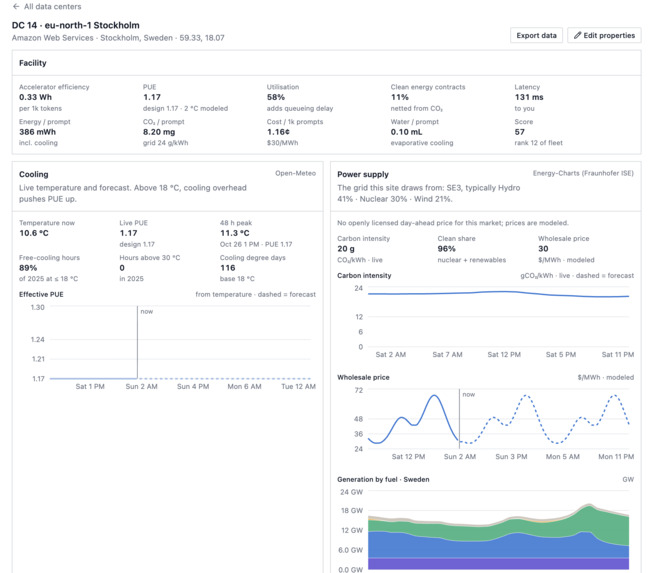
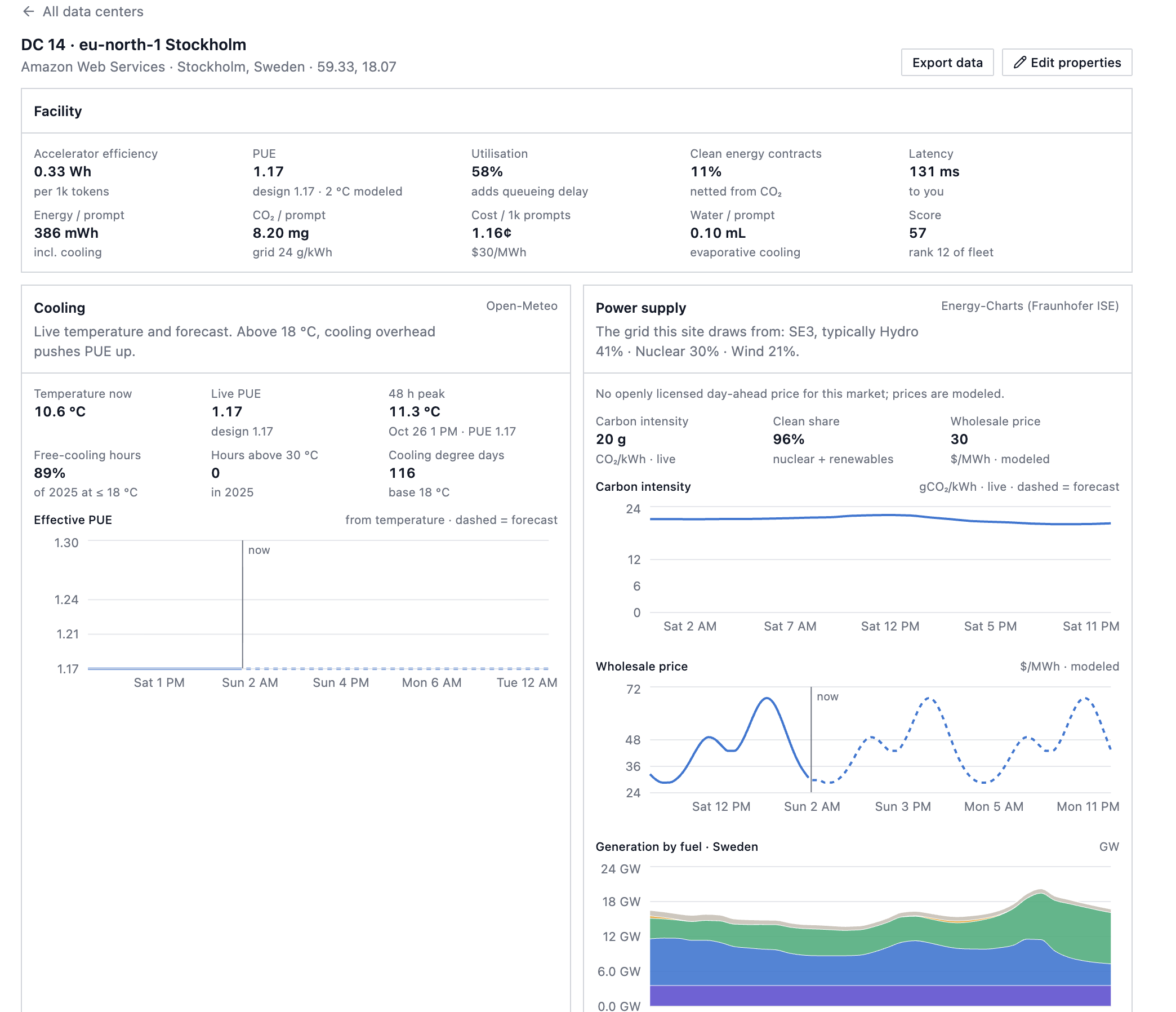
data center information/details
Inspiration
Datacenter electricity demand strains power grids and drives up energy costs. We wanted to create the biggest feasible impact on AI energy use. Here’s what we found: Inference is estimated to reach 80-90% of AI energy use, rising from the current 60%.
Currently, query routing for inference prioritizes datacenters with low latency, even when high latency would suffice. This means choosing inefficient energy, demand bursts at peak hours, and congested transmission lines even when other locations have spare capacity and more efficient power. Routing algorithms can be changed at no additional cost without sacrificing speed for tasks that need it.
What it does
We decided to create an algorithm that would choose the cleanest datacenter based on hardware energy efficiency, a location’s weather-based cooling efficiency, and a time zone’s demand curve. This increases grid resilience by reducing congestion while decreasing energy usage and cost.
How we built it
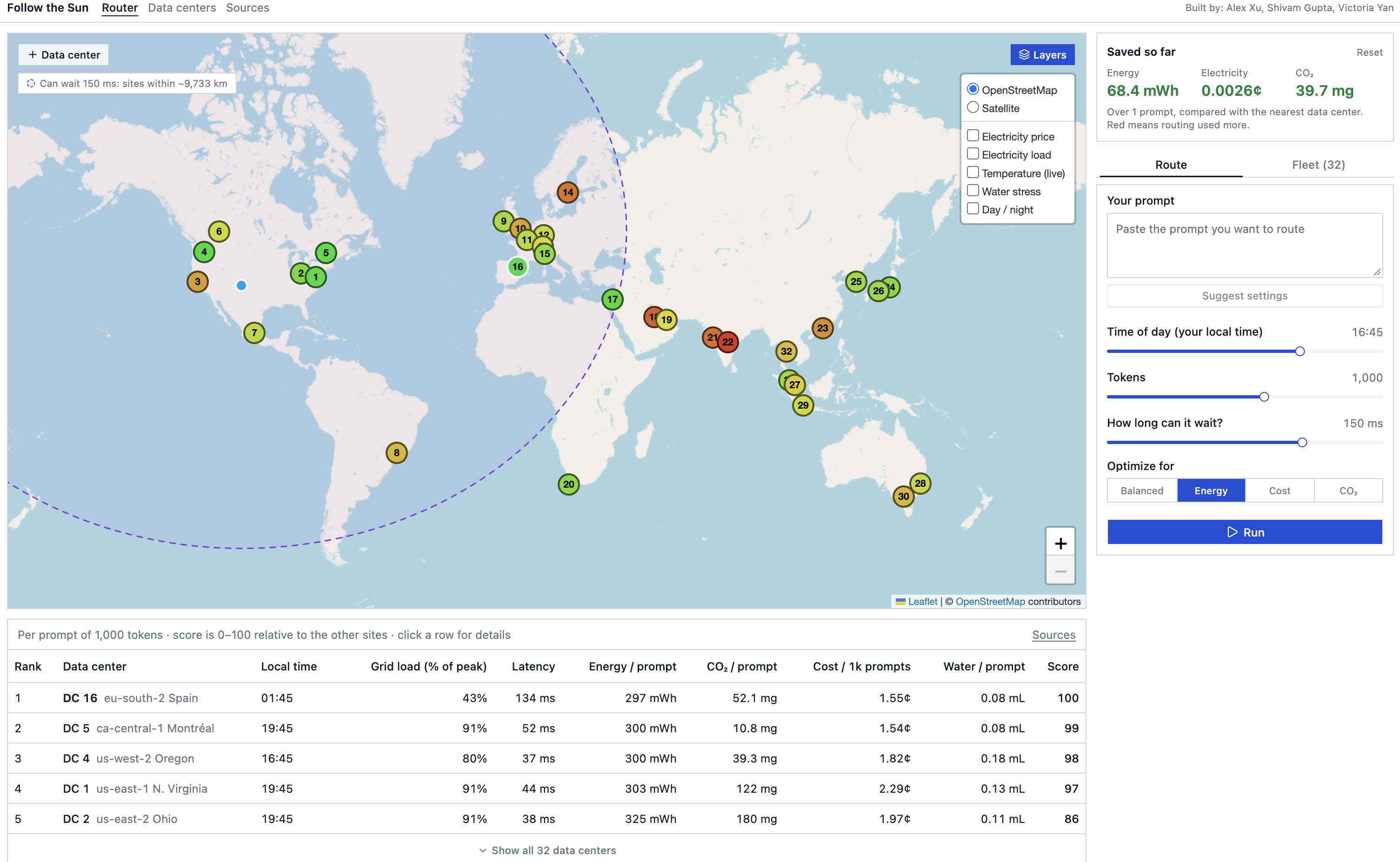
We found that time of day by location was the largest factor for energy savings. We built Follow the Sun, a Next.js and TypeScript simulator that ranks datacenters by estimated energy use and cost while respecting each request’s latency limit. An interactive map lets users explore how hardware efficiency, cooling conditions, and local demand affect routing, then compare estimated savings against the fastest available site.
Challenges we ran into
Our main challenges were combining public datasets with uneven coverage and balancing energy efficiency against latency and capacity. We learned that the best datacenter changes with local conditions, and that clearly separating modeled estimates from live measurements is essential.
Accomplishments that we're proud of
By following the sun, we can cut energy use by 13.7% while maintaining <100ms latency.

Log in or sign up for Devpost to join the conversation.