-
-
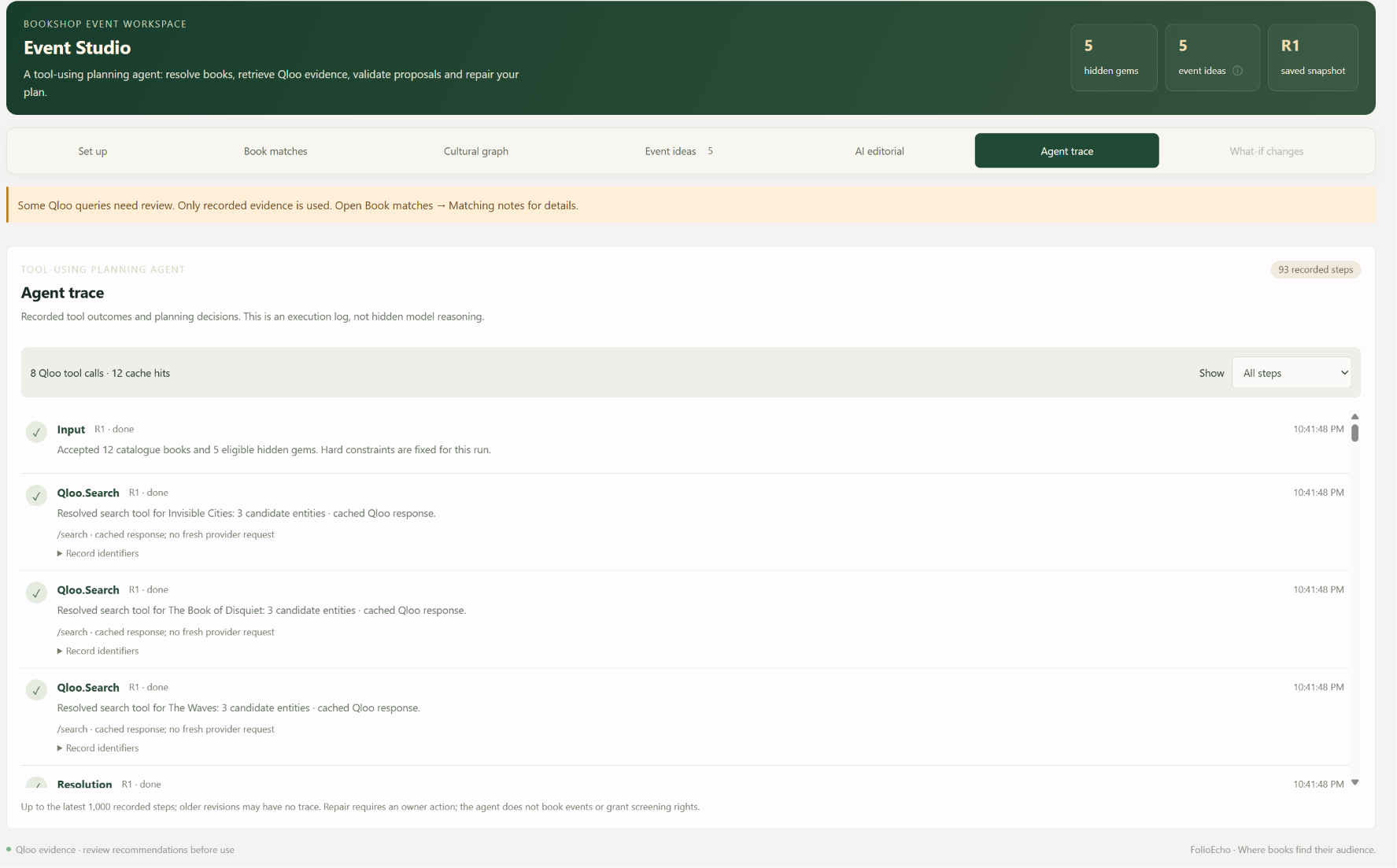
agent trace
-
usage billing
-
discovery studio
-
catalogue
-
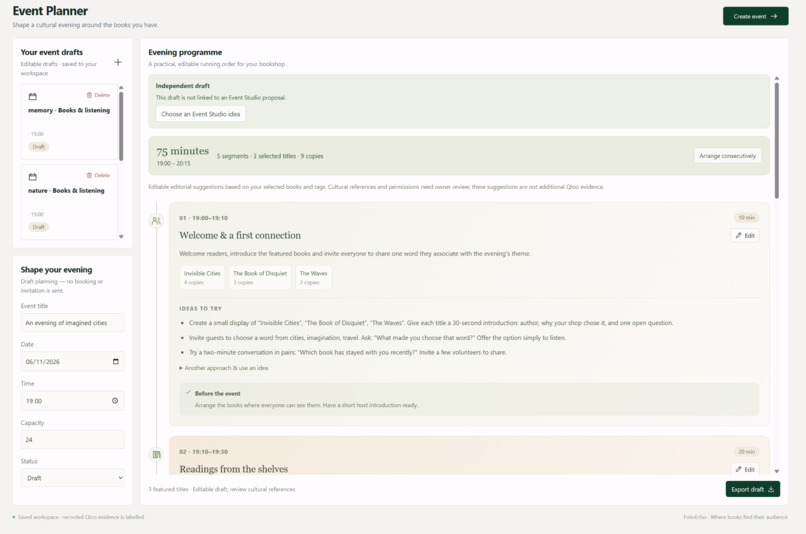
event planner
-
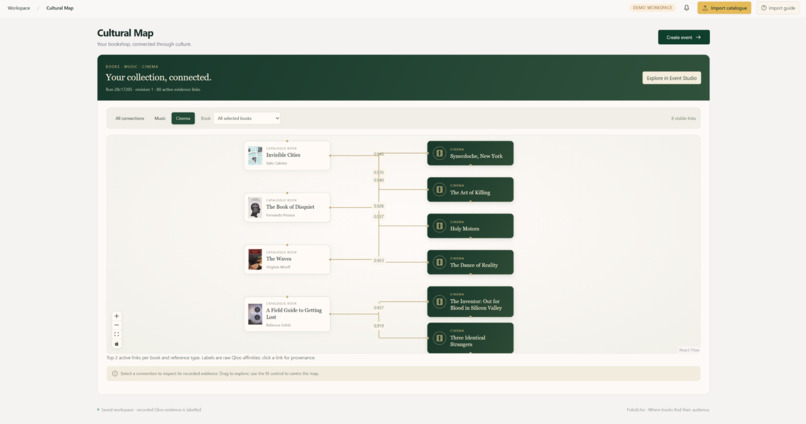
cultural map
-
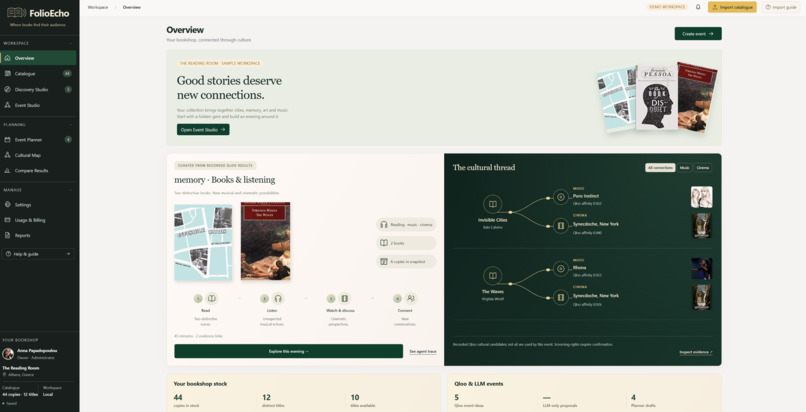
overview
Inspiration
Independent bookshops have something recommendation platforms often overlook: a carefully chosen collection and a personal relationship with their readers.
Yet excellent books can remain unnoticed on the shelves. Turning them into a compelling event takes time, research and imagination.
FolioEcho began with a question: what if a bookshop could use the books it already has to discover cultural connections and create an evening that brings those books to new readers?
Where books find their audience.
What it does
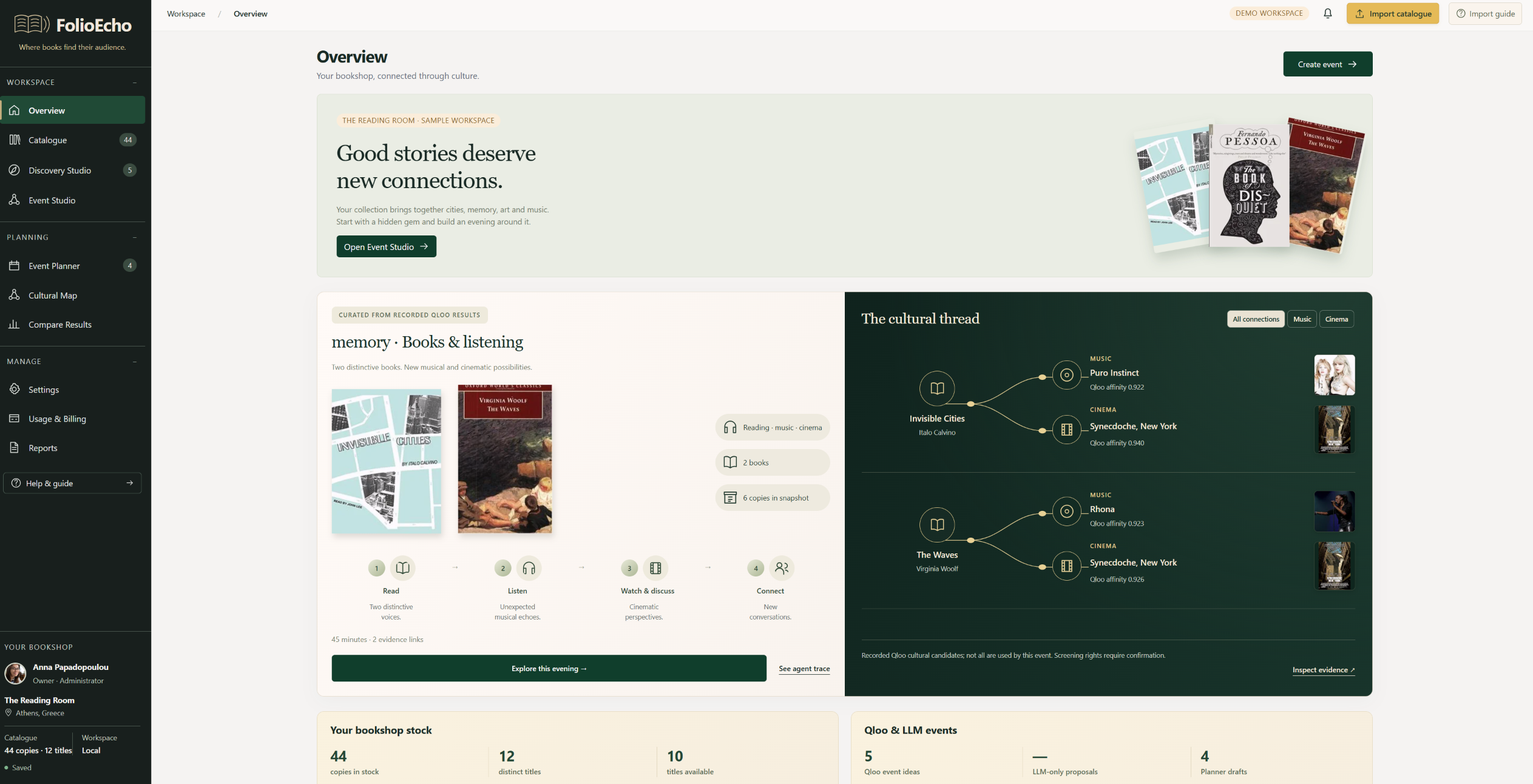
FolioEcho helps booksellers move from inventory to discovery to an editable cultural event programme.
Booksellers can:
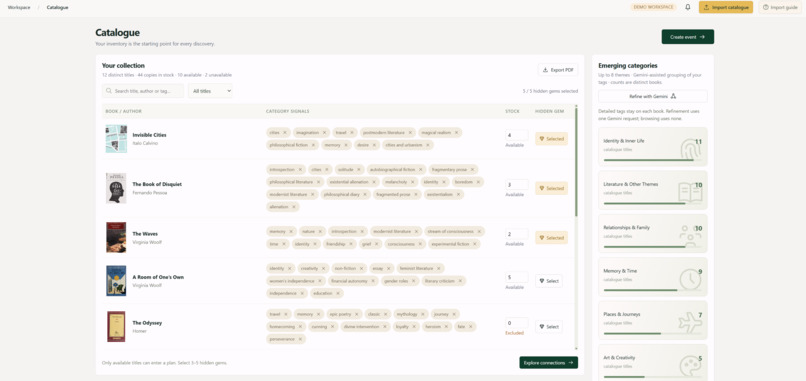
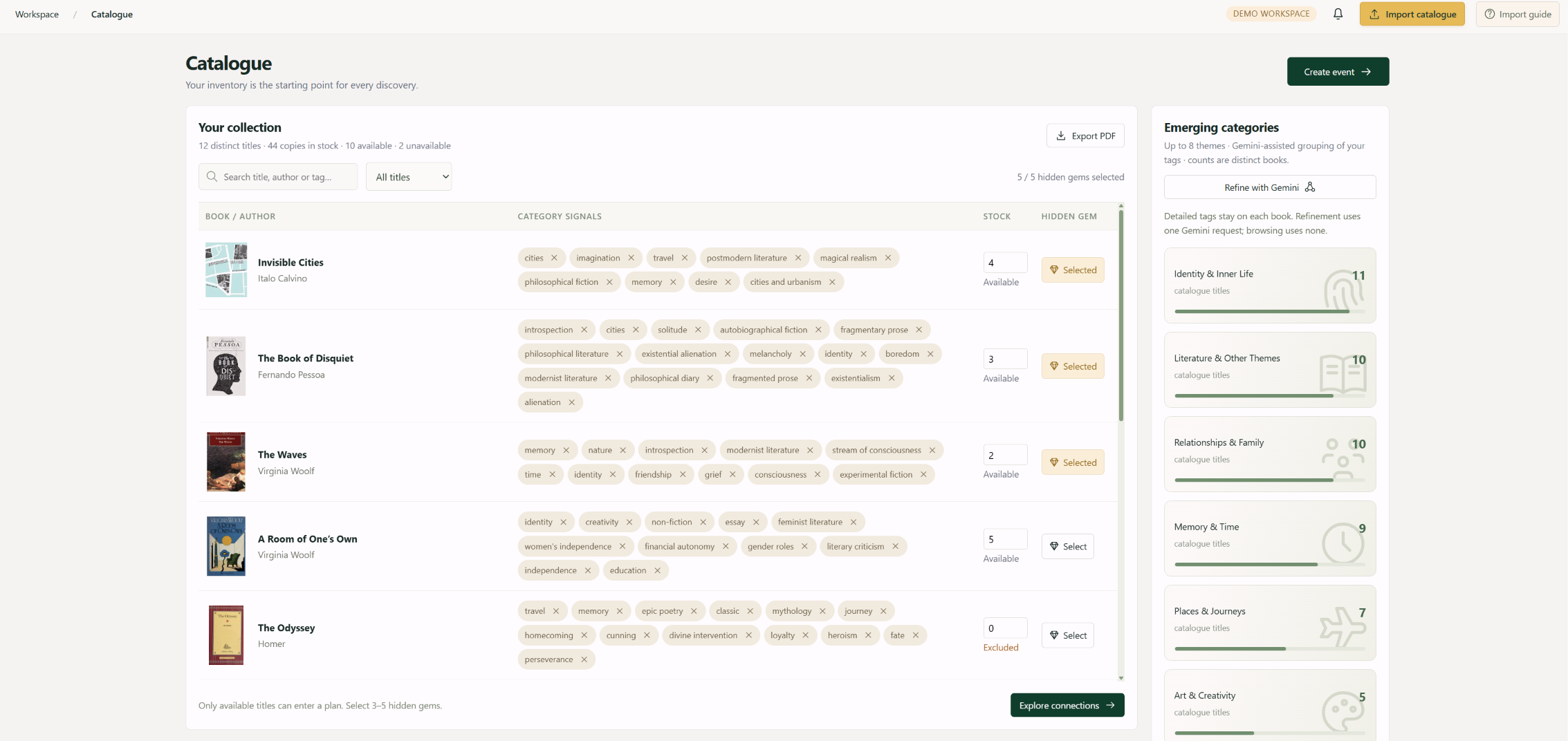
- Import a catalogue from Excel, CSV or JSON and manage available copies.
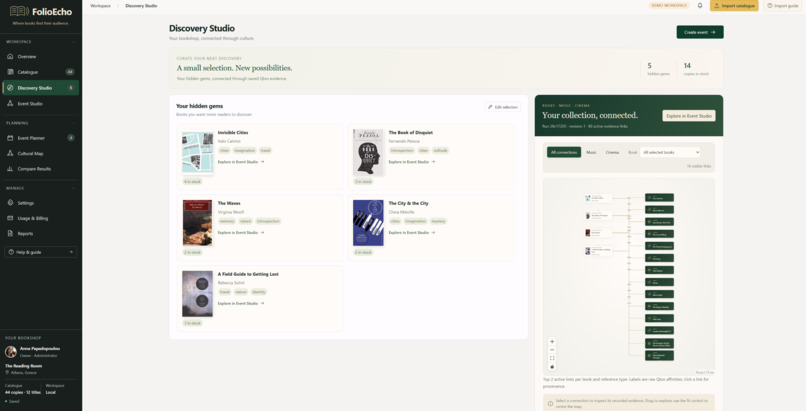
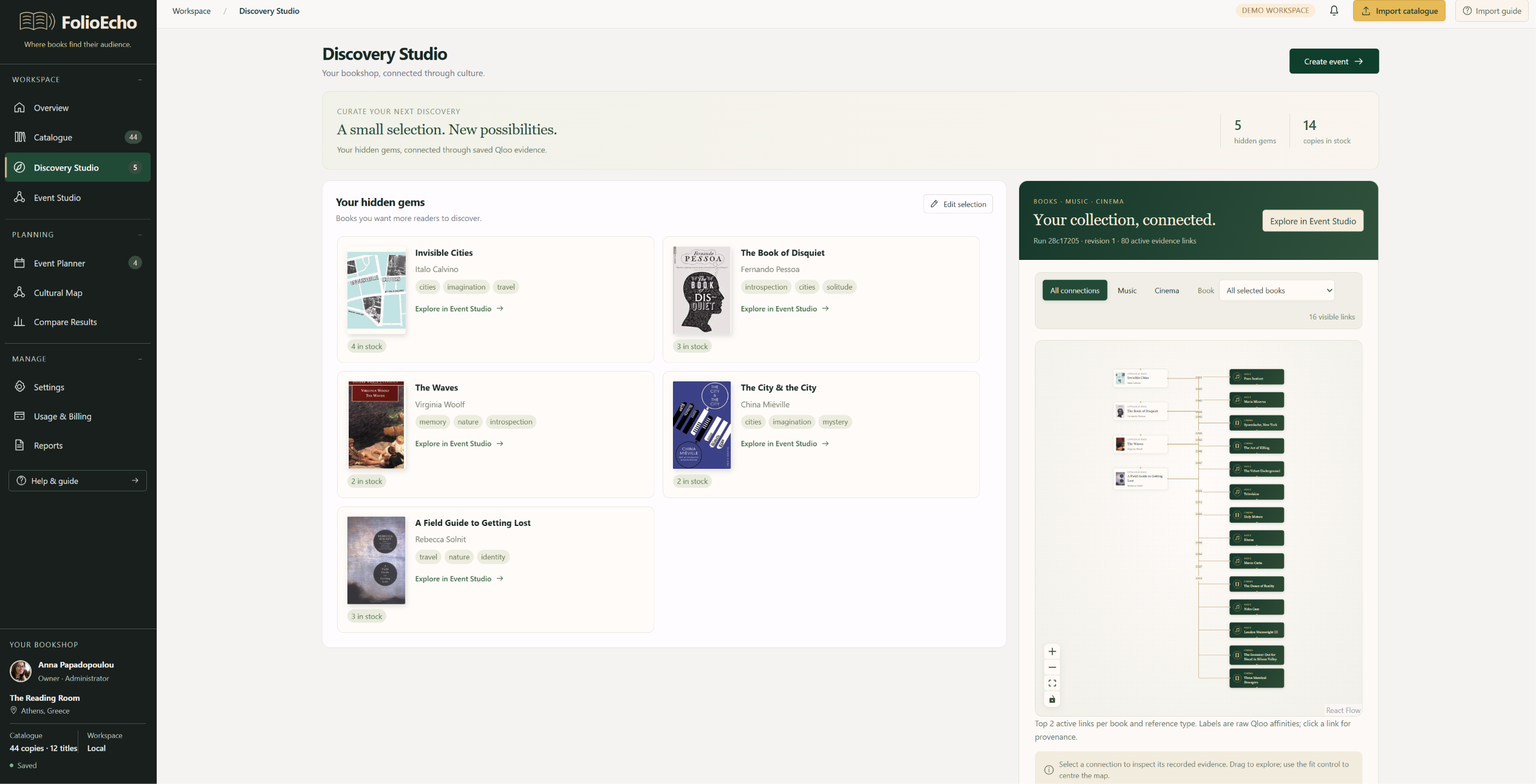
- Select hidden gems they want more readers to discover.
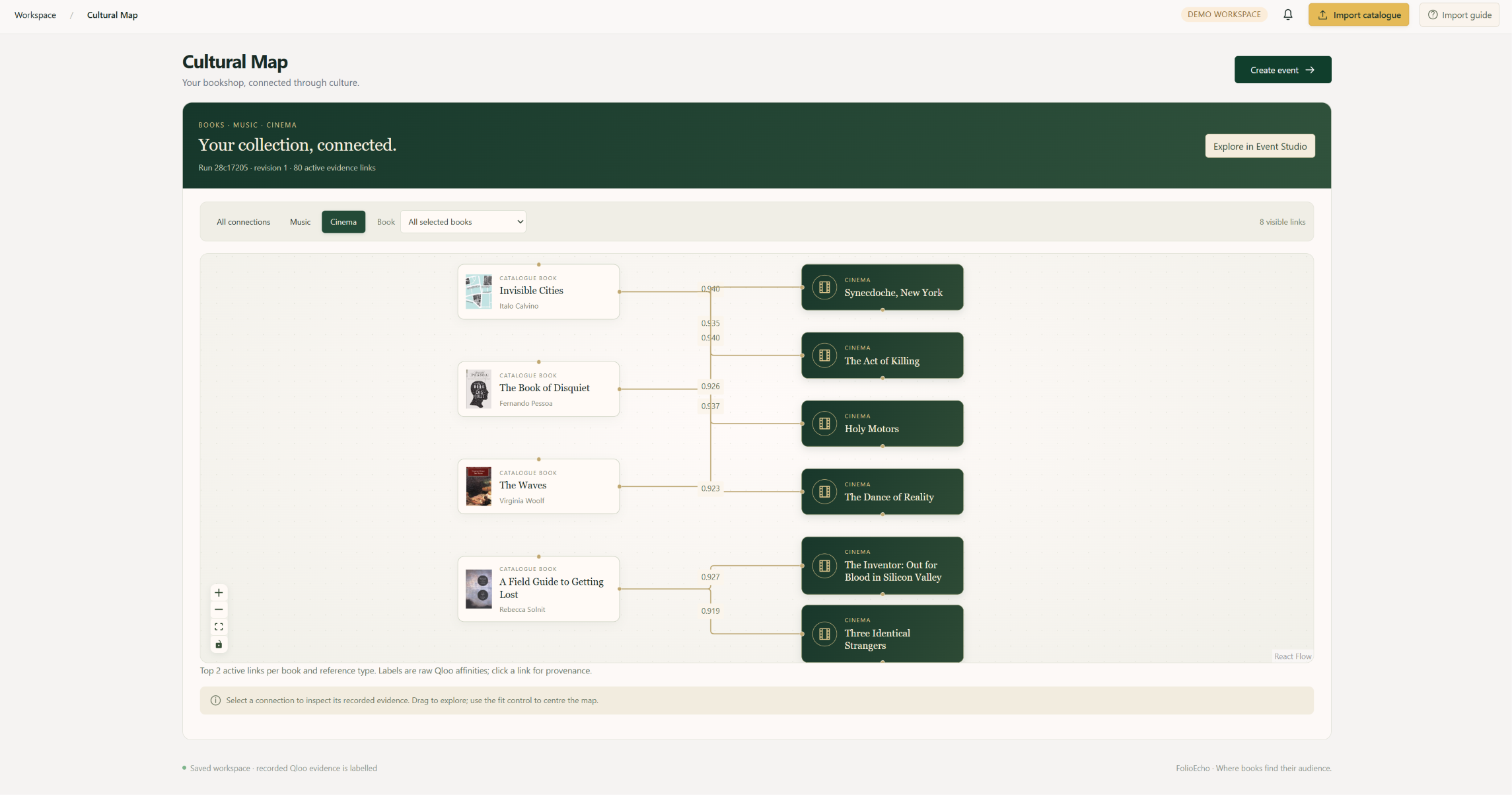
- Explore thematic groups and cultural connections.
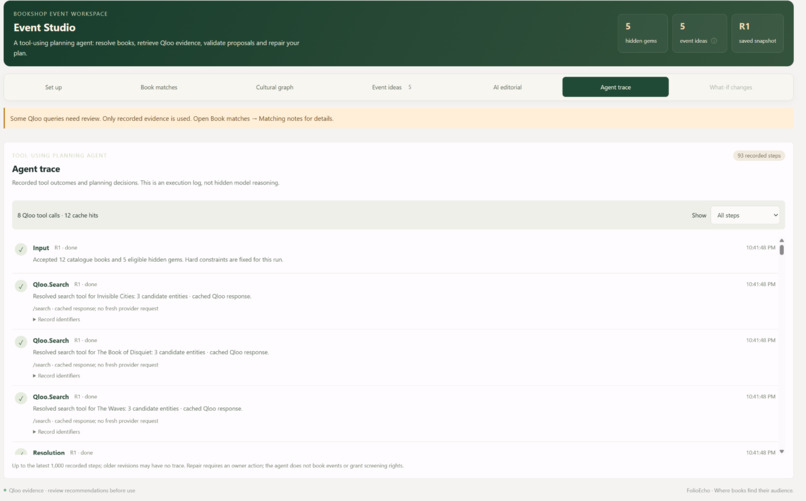
- Use Event Studio to retrieve Qloo music and film references connected to catalogue books.
- Inspect the evidence behind recommendations.
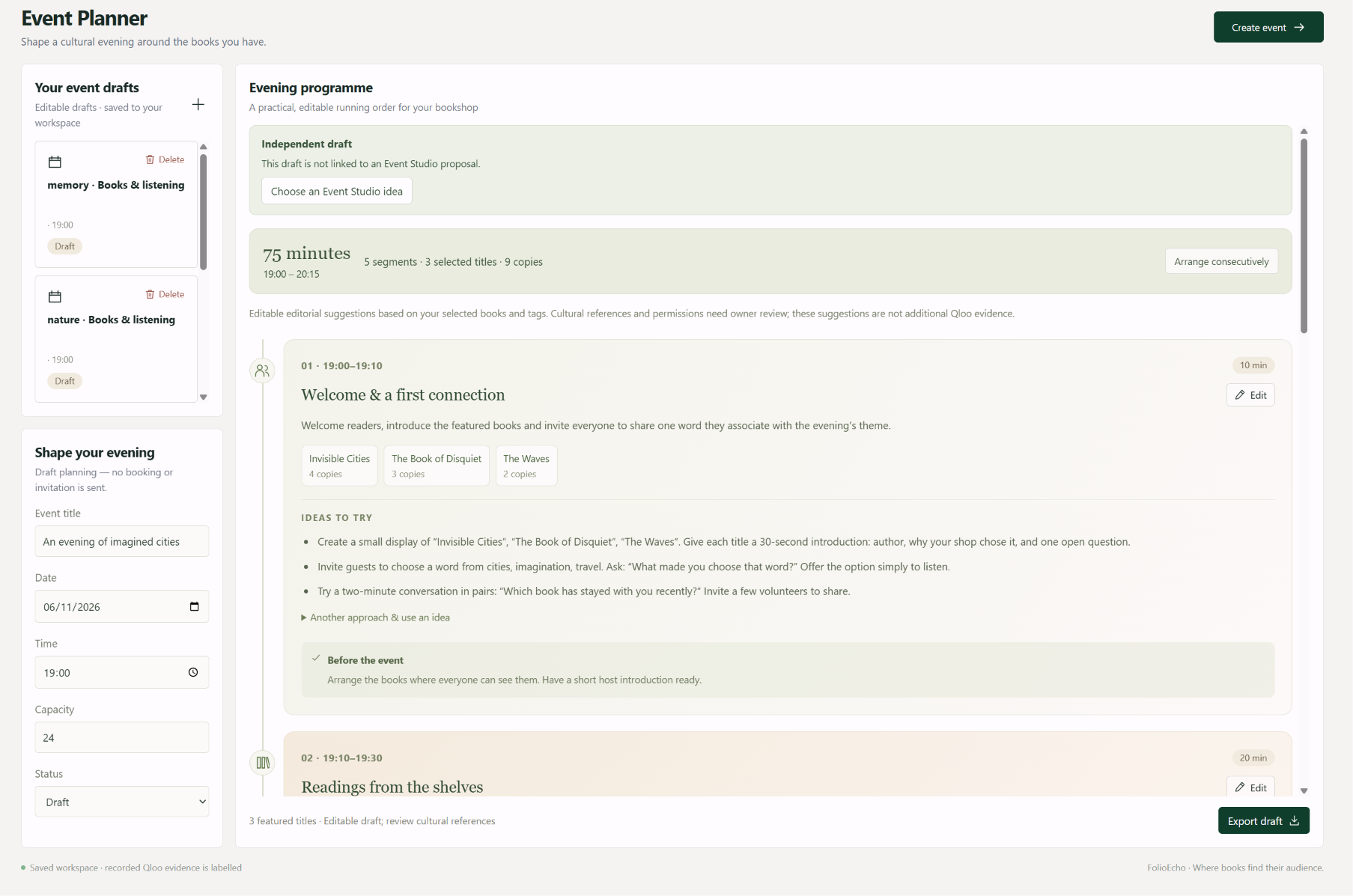
- Transfer an eligible event proposal into Event Planner and edit its running order, readings, activities and preparation notes.
- Export branded PDF reports and event programmes.
Optional Gemini features suggest genres and themes, help consolidate catalogue categories, and write event titles and ideas. Suggestions remain subject to the bookseller’s review.
How we built it
FolioEcho uses Astro, React and TypeScript, with React Flow for interactive cultural graphs.
The planning workflow resolves catalogue books to Qloo entities, groups thematic signals, retrieves music and film candidates, and builds a cultural graph with traceable evidence.
Candidate events are checked against hard constraints before scoring. Eligible proposals receive a weighted R/N/U/F score, followed by a diversity selection step. Qloo affinities are normalized within their query context rather than presented as probabilities about individual readers.
The what-if workflow lets the bookseller exclude a cultural reference or change stock availability. It invalidates affected connections, repairs proposals, rechecks constraints and explains the changes while keeping the applicable normalization references fixed.
Gemini supports editorial tasks through validated structured outputs. An optional LLM-only baseline provides a comparison using the same catalogue and constraints.
Local development uses SQLite. The Netlify deployment uses Postgres and server-side functions with isolated visitor workspaces.
Challenges we ran into
One challenge was keeping cultural relevance separate from practical feasibility. A compelling connection is not enough if its books are unavailable or the proposed event violates the owner’s constraints.
Another was making recommendations understandable. FolioEcho separates Qloo evidence, catalogue signals and editorial interpretation. Illustrative demo connections are labelled, and AI-generated text does not become Qloo evidence.
We also worked on keeping the interface manageable: fewer thematic groups, readable book cards, focused planning tabs and scrollable panels instead of long pages.
Accomplishments that we're proud of
We built a connected workflow from catalogue import to an editable event programme, with stock awareness and explanations along the way.
We are especially proud of the what-if repair process: the bookseller can challenge a recommendation, inspect its evidence and see how the proposed evening changes.
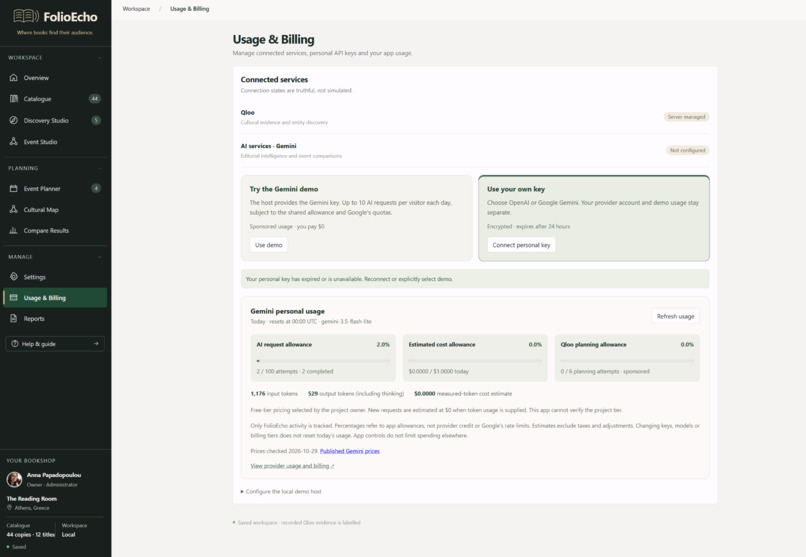
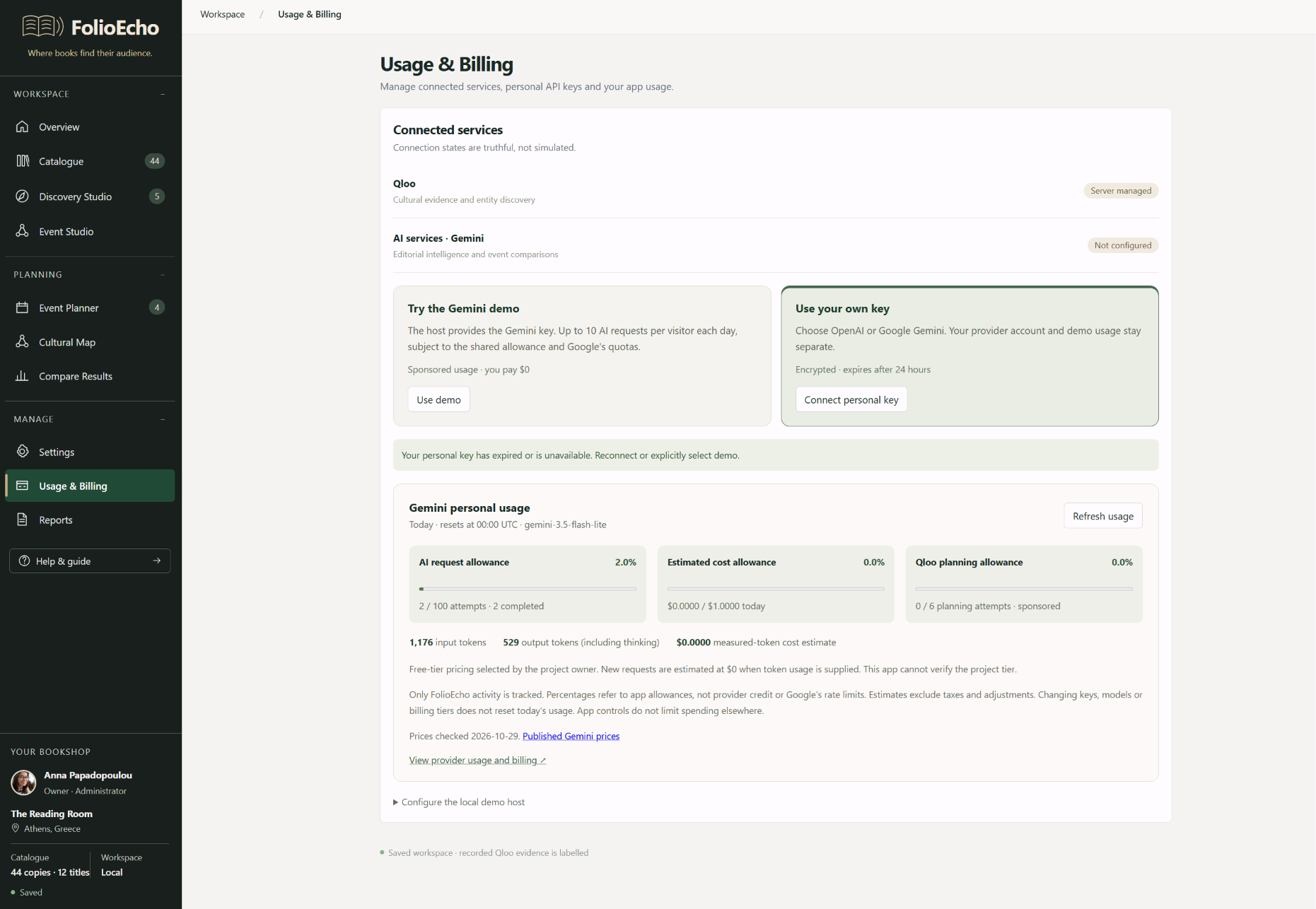
The application also supports temporary encrypted personal OpenAI or Gemini keys, separate usage tracking and a limited sponsored demo mode.
What we learned
Cultural recommendations become more useful when they support a real decision.
For a bookseller, the important question is not simply “What is related to this book?” It is “What can I do with this connection, using the books and resources I have?”
We also learned that clear provenance matters. External evidence, model suggestions and owner decisions need to remain distinguishable throughout the experience.
What's next for FolioEcho
We want to improve entity matching across languages and editions, test the workflow with independent booksellers, and refine recommendations using feedback from actual events.
Future work includes collaborative planning and better tools for evaluating whether a proposed event helped overlooked books reach new readers.
How we built it
Challenges we ran into
Accomplishments that we're proud of
What we learned
What's next for FolioEcho
Built With
- astro
- google-gemini
- netlify
- node.js
- openai
- postgresql
- qloo
- react
- react-flow
- sqlite
- typescript

Log in or sign up for Devpost to join the conversation.