-
-
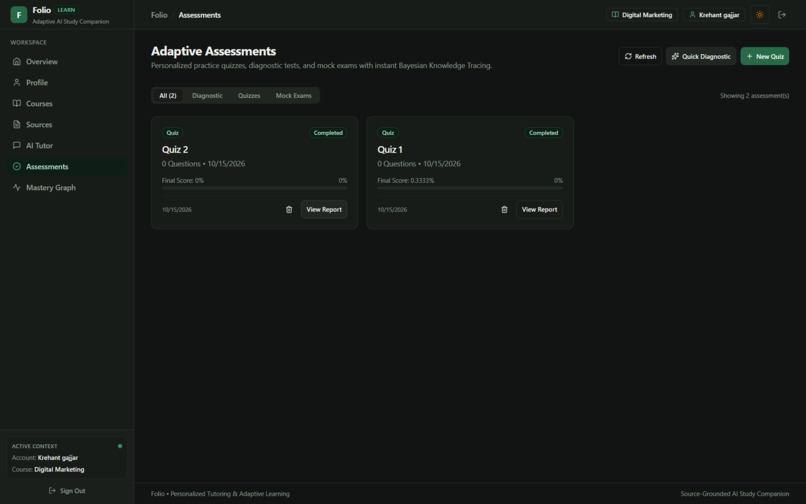
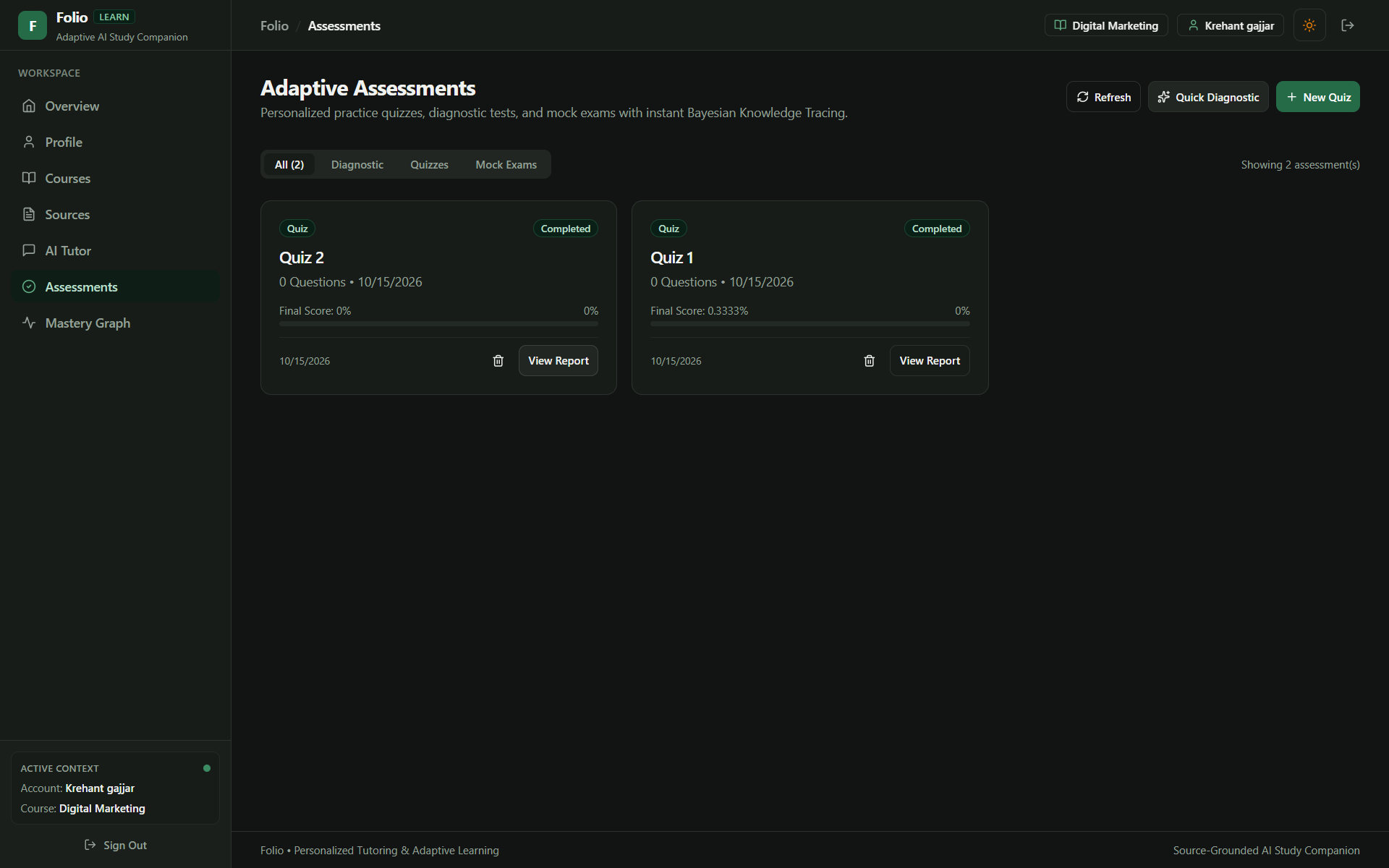
Assessments
-
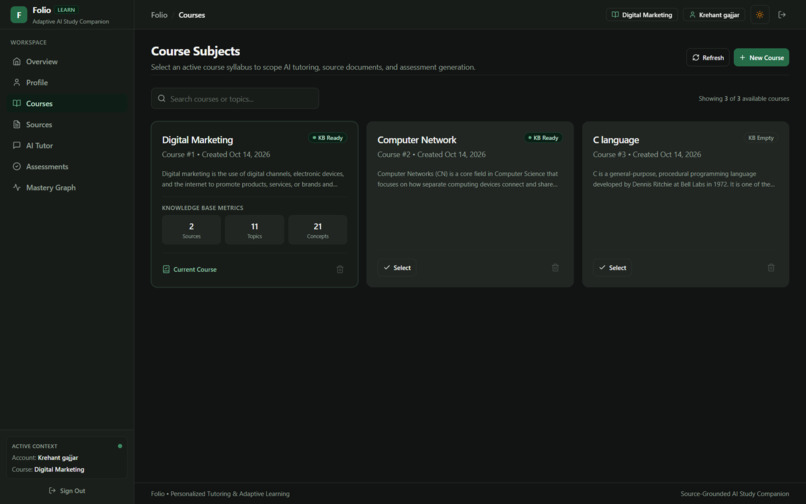
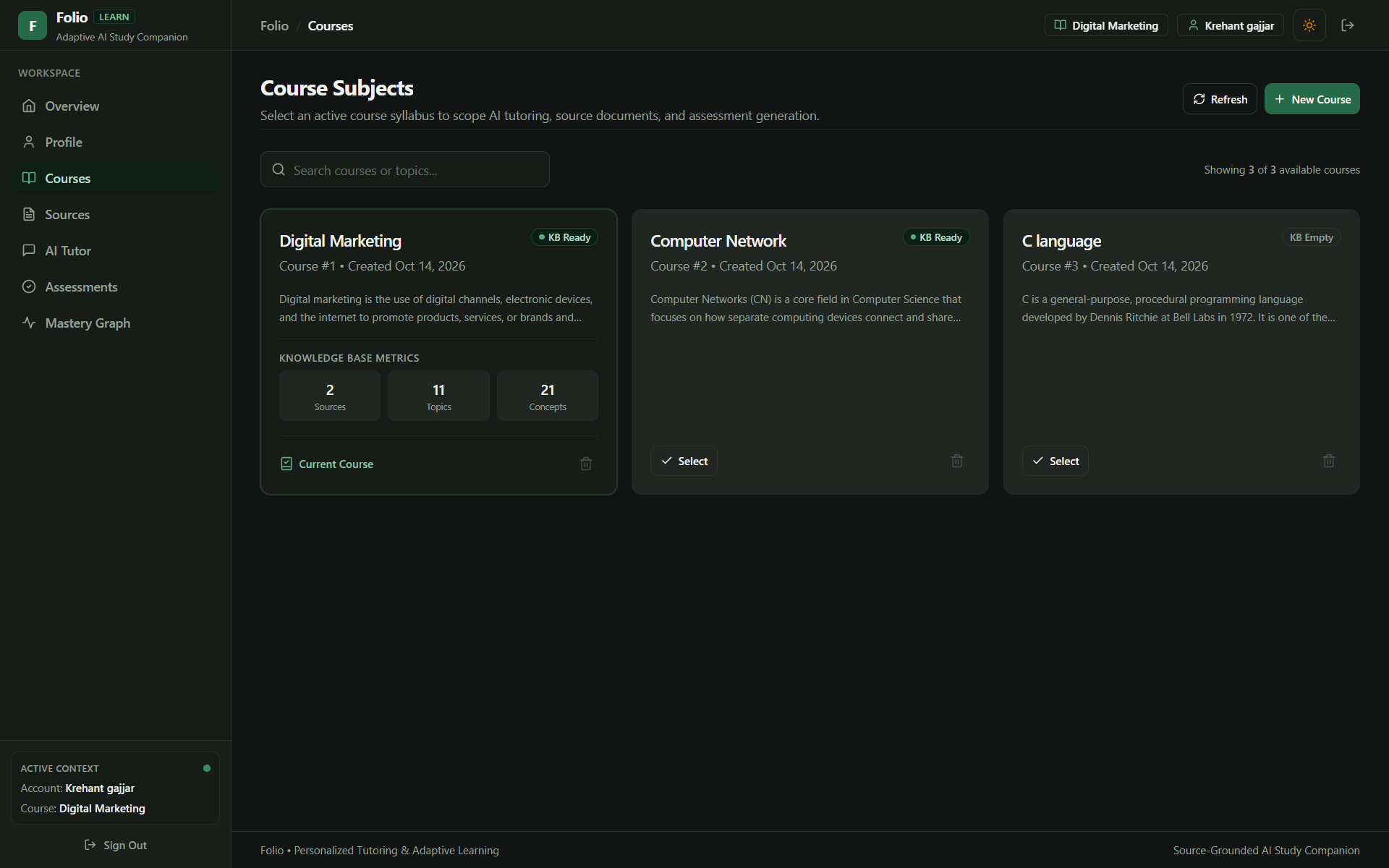
Courses Page
-
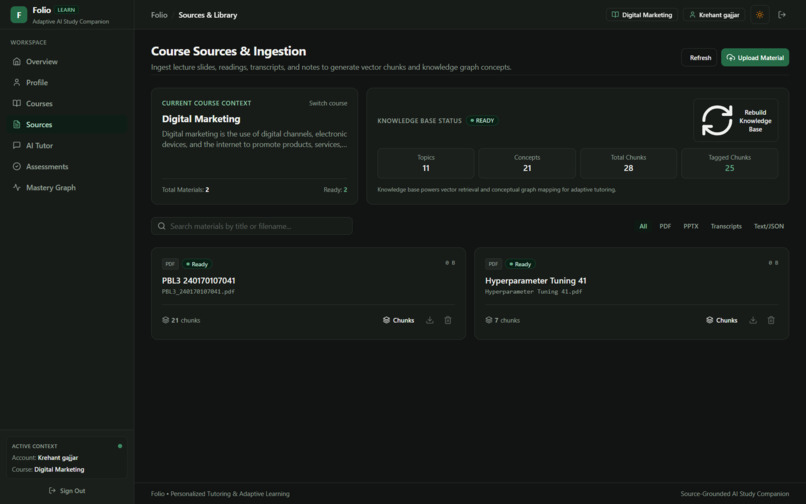
Sources Page
-
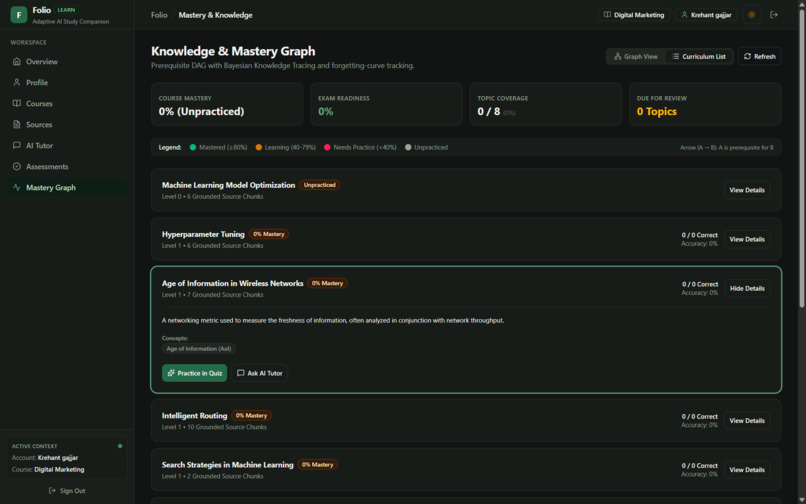
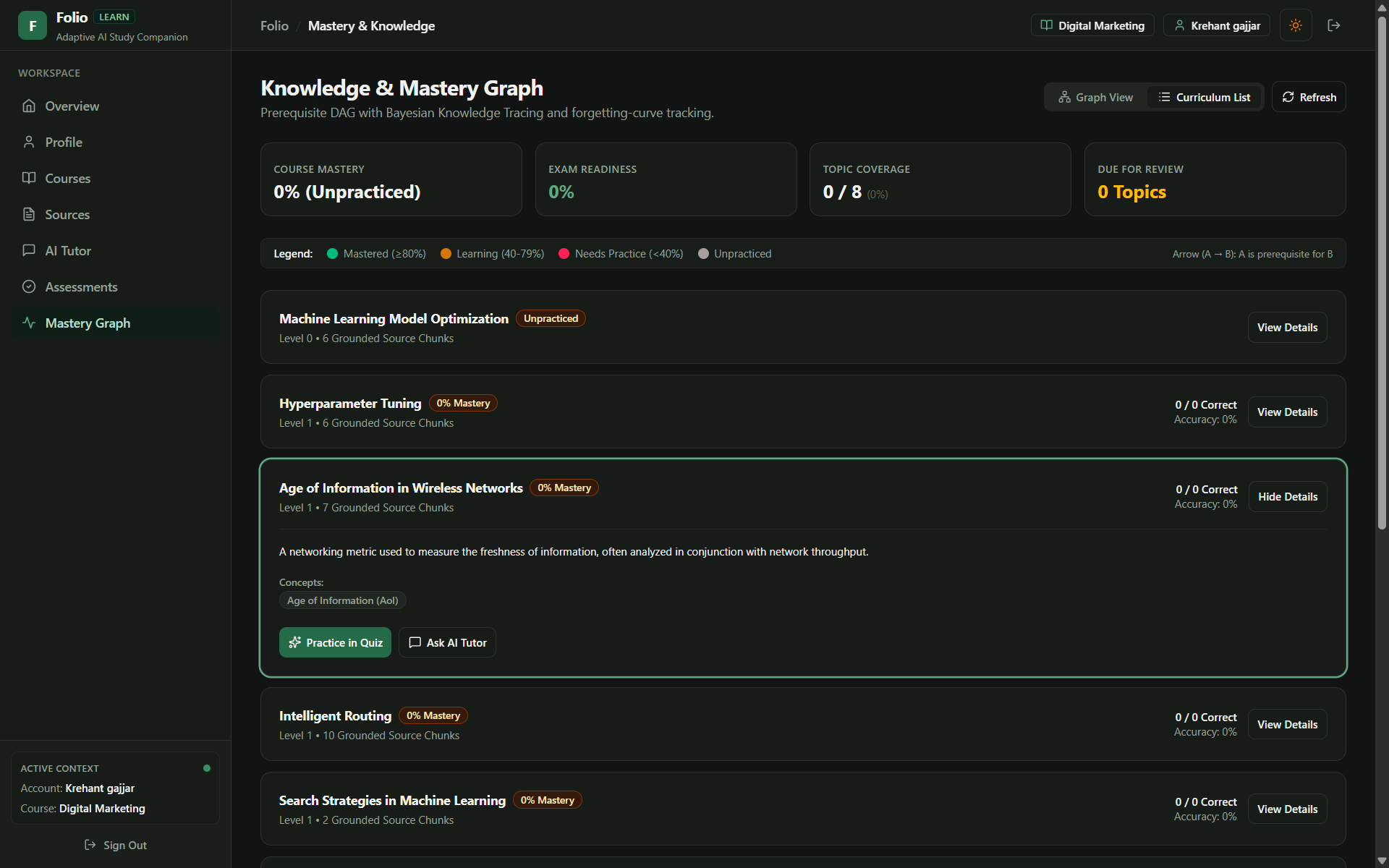
Mastery Graph - Curriculum List
-
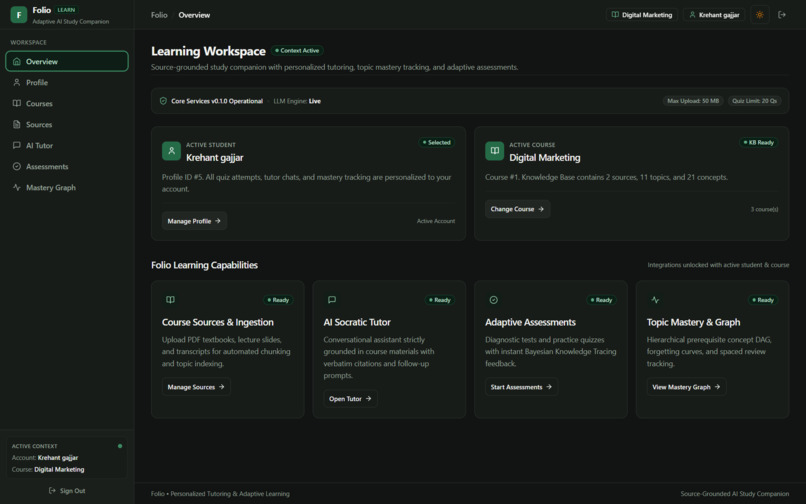
Overview Page
-
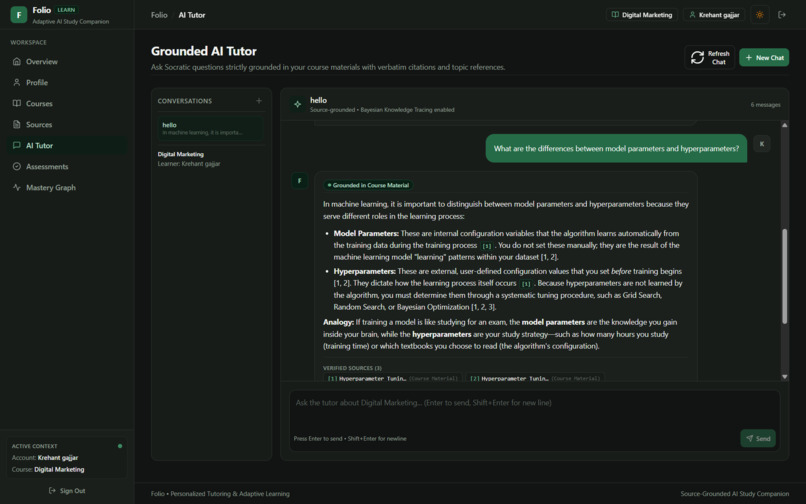
AI Tutor
-
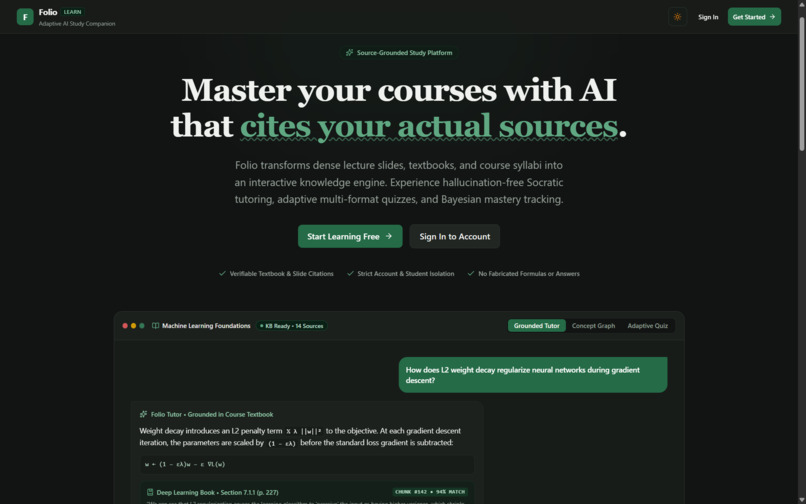
Landing Page
-
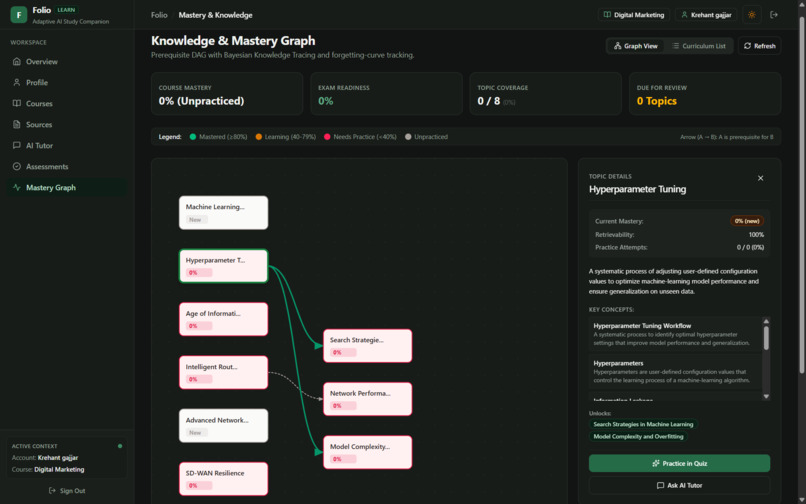
Mastery Graph - Graph View
Inspiration
Folio — Learn at Your Pace, Grow with Every Concept
Inspiration
Every student learns differently. Some understand concepts quickly, while others need additional explanations, practice, and guidance. However, traditional learning platforms often focus on delivering content rather than helping students understand what they have truly mastered and where they need to improve.
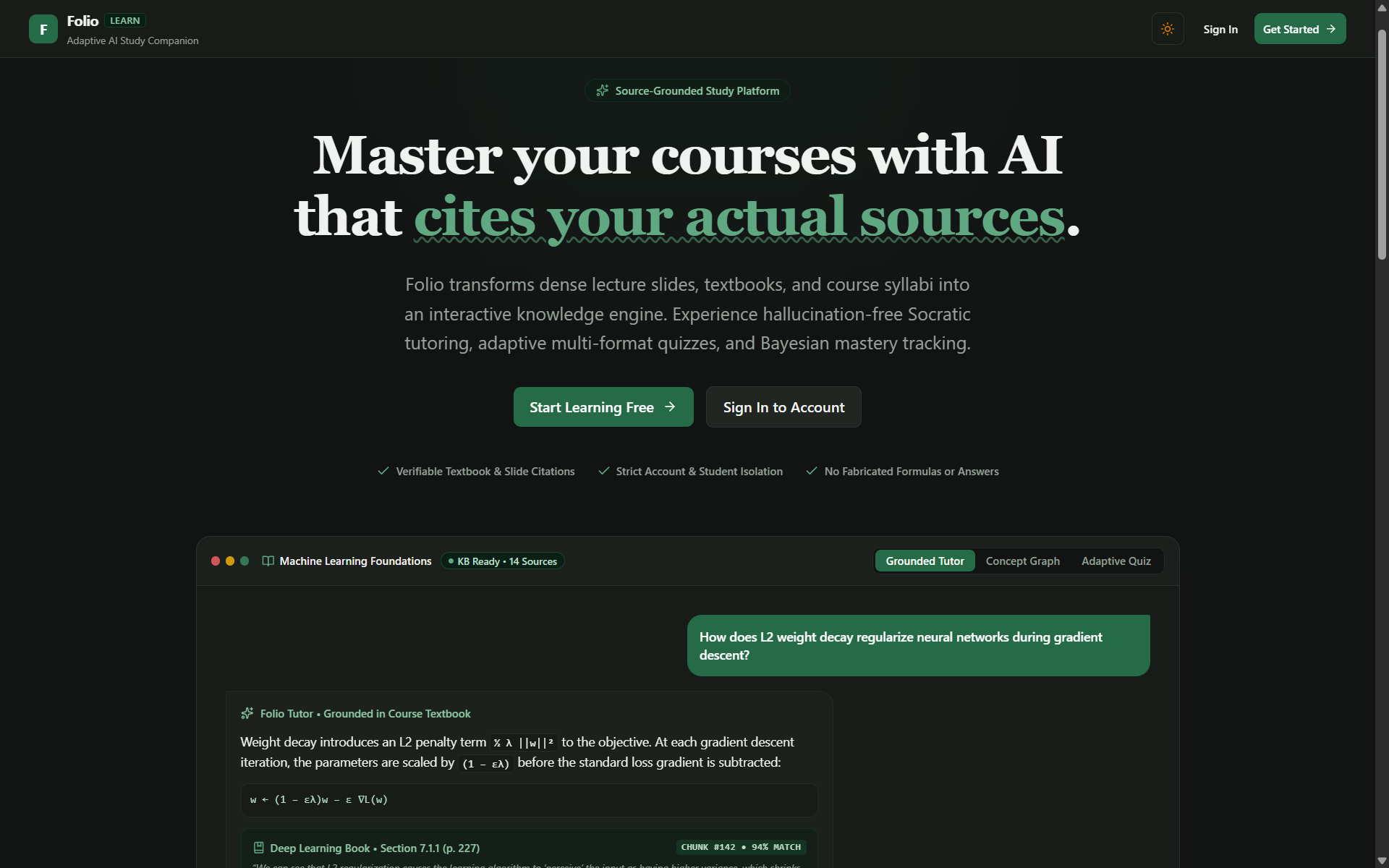
This inspired us to build Folio, a personalized learning platform that brings learning resources, AI-powered tutoring, adaptive assessments, and topic-level mastery tracking together in one place.
Our goal was to make learning more interactive and help students take a more informed approach to their learning journey.
What It Does
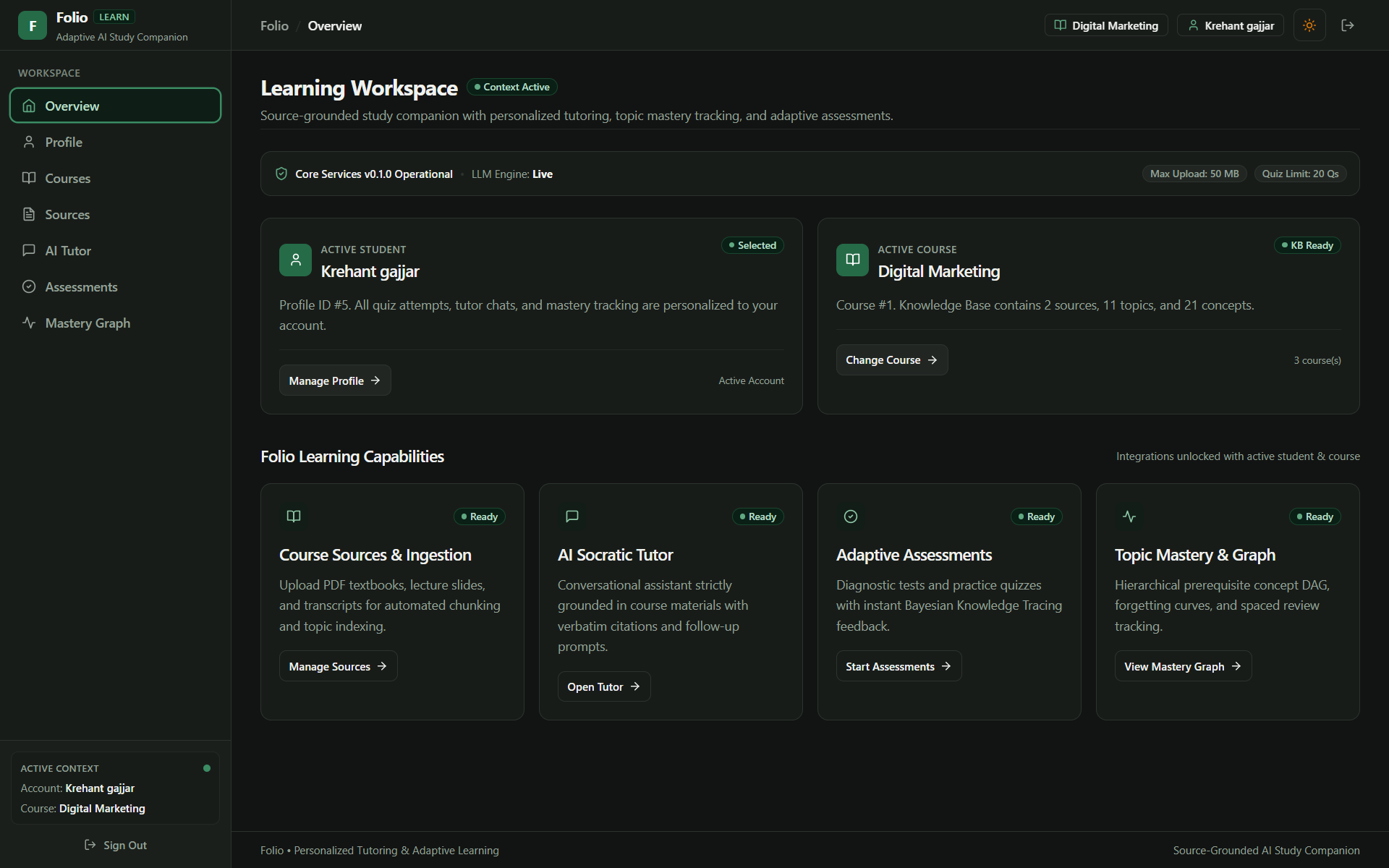
Folio provides students with a connected learning experience through four core capabilities:
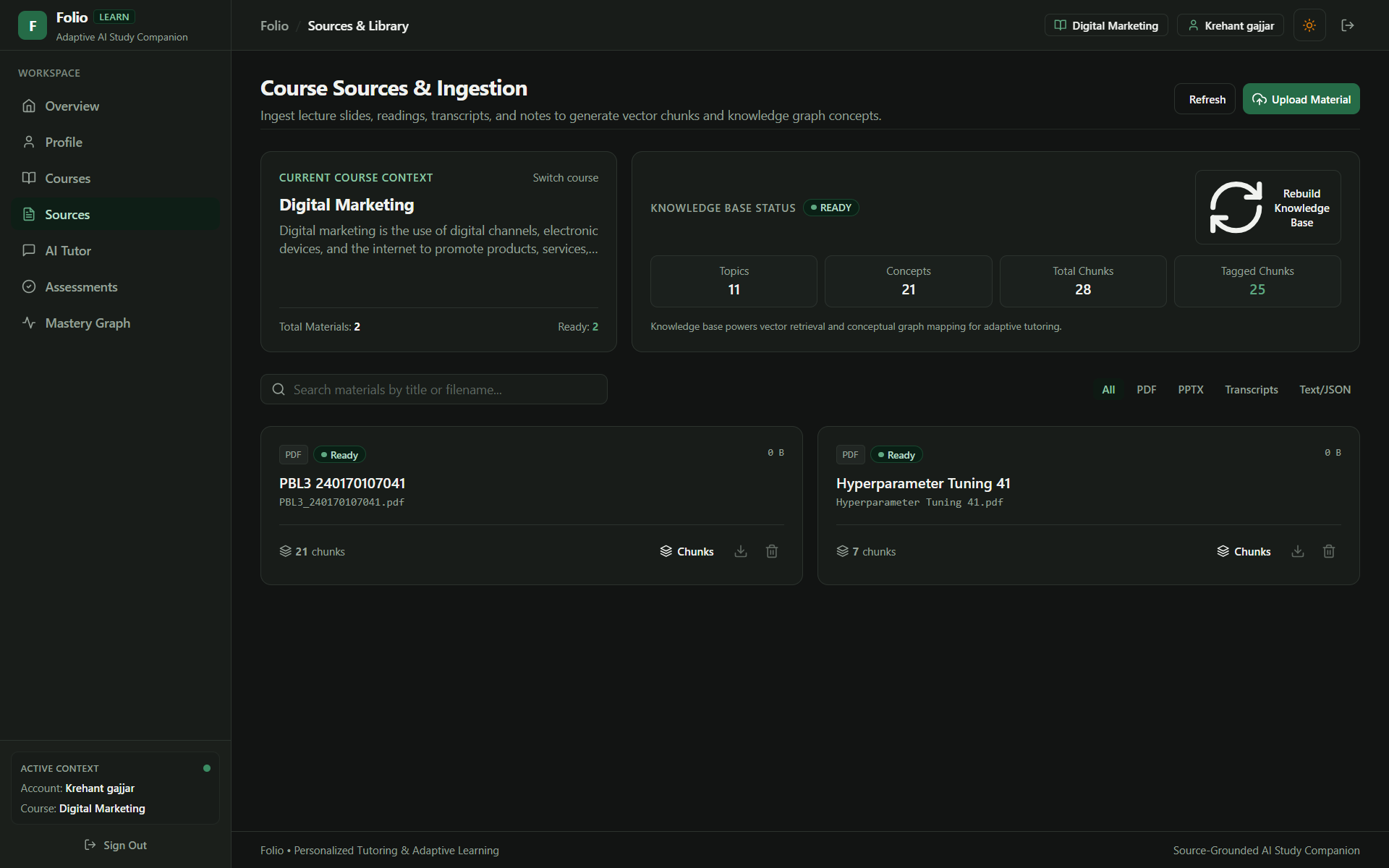
- Course and Learning Resources: Students can organize courses and upload learning materials to build a knowledge base for their studies.
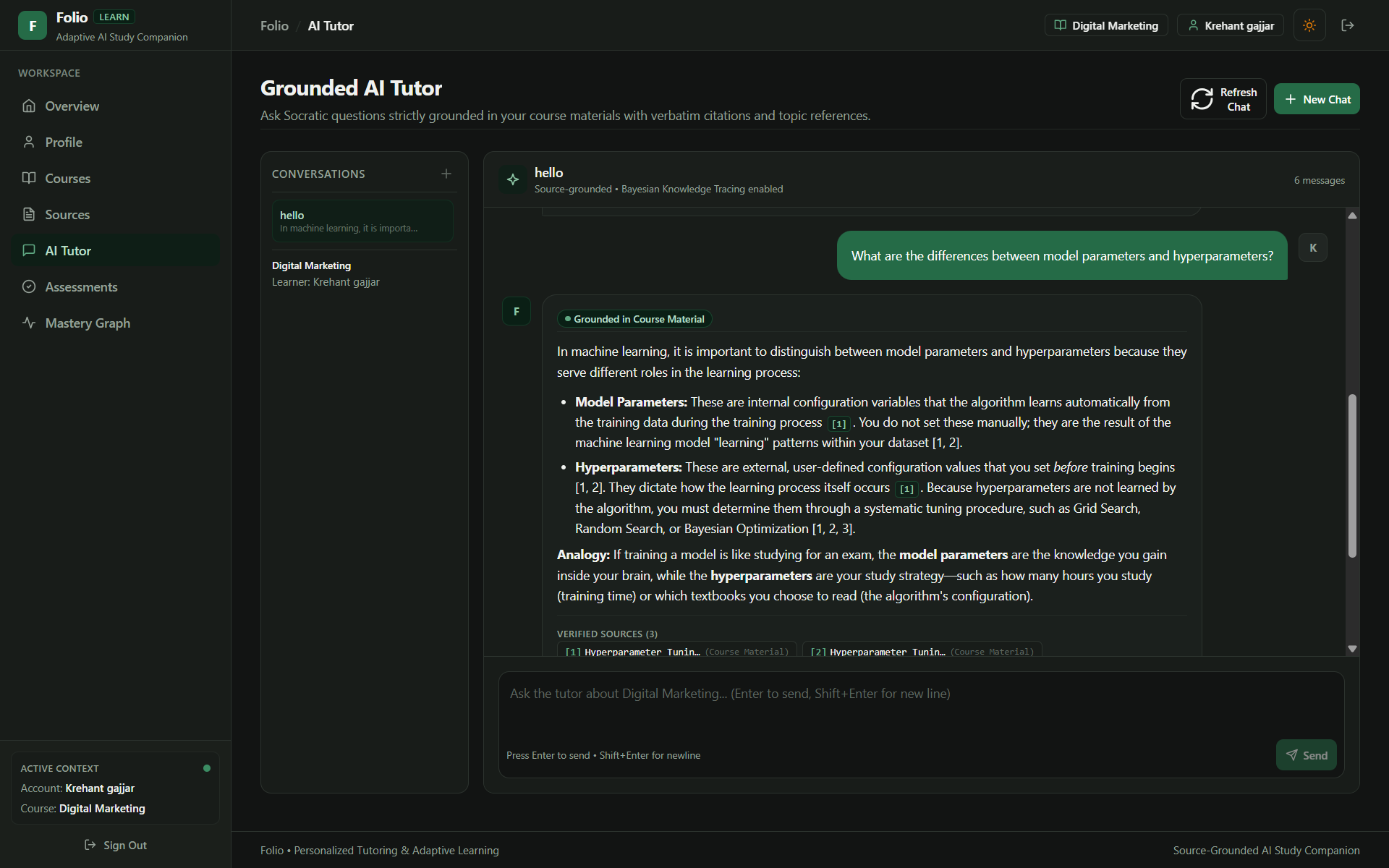
- Grounded AI Tutor: Students can ask questions and receive explanations based on available course materials, with source citations to help them verify the information.
- Adaptive Assessments: Students can practice their understanding through assessments designed to support their learning and identify areas that need further attention.
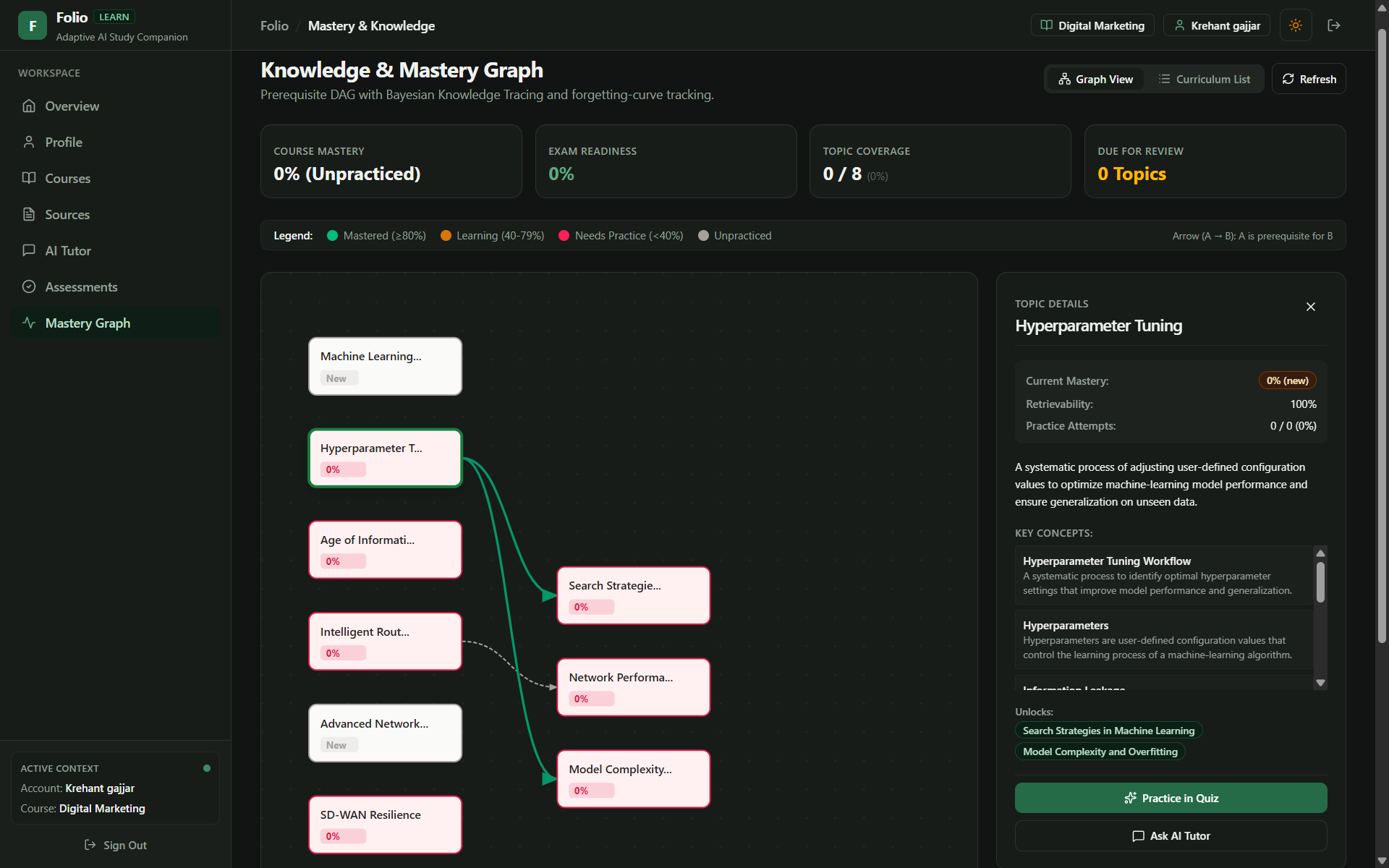
- Mastery Graph: Students can explore topic-level mastery information, recognize learning gaps, and choose whether to practice through a quiz or seek help from the AI tutor.
Folio connects these features so students can move from studying material to asking questions, practicing concepts, and reviewing their progress within one application.
How We Built It
We built Folio with a modern frontend and a Python-based backend.
Frontend
- React and TypeScript for a component-based, maintainable user interface.
- Vite for development and building.
- Tailwind CSS for responsive styling and consistent design.
- React Router for navigation and protected application routes.
- Lucide React for interface icons.
Backend and AI Integration
- FastAPI for backend API integration.
- REST APIs for authentication, courses, learning resources, tutoring conversations, assessments, and mastery information.
- A knowledge-grounded tutoring workflow that connects student questions with course materials and source citations.
We organized the frontend into reusable components, typed API modules, context providers, and separate pages. We also implemented authentication, protected routes, loading and error states, and responsive layouts to make the application more reliable and easier to use.
Challenges We Faced
One of our biggest challenges was connecting multiple learning features while keeping the application consistent.
Keeping learning data synchronized: Course information, source-processing status, and knowledge-base metrics needed to stay consistent across different pages. We improved the frontend refresh flow so relevant course details could be refreshed after source operations.
Grounded AI responses: We wanted the tutor to do more than provide generic answers. Integrating course context and displaying citations helped make responses more connected to the learning materials.
API contract alignment: Connecting the frontend to real backend endpoints required careful attention to request formats, response types, authentication, and error handling. We refined the integration as the backend evolved.
Responsive and accessible design: We worked to make the interface usable across desktop and mobile screen sizes while maintaining a consistent visual language, clear navigation, and both light and dark themes.
These challenges taught us that a useful AI application requires more than an AI model. Reliable data flow, clear interfaces, accurate API integration, and thoughtful user experience are equally important.
What We Learned
Building Folio strengthened our understanding of full-stack application development, API integration, authentication, typed frontend architecture, and the practical challenges of integrating AI into a real product.
We also learned to break a large project into manageable stages, build reusable components, validate features against actual API contracts, and improve functionality through iterative testing.
Most importantly, we learned that AI becomes more useful in education when it is connected to a student's learning context and paired with practical ways to measure understanding and decide what to learn next.
What's Next
We want to continue improving Folio by making learning recommendations more personalized, strengthening progress tracking, improving assessment adaptation, and refining the experience based on student feedback.
Our vision is simple: help every student understand what they know, discover what they need to improve, and take the next step with confidence.
Folio — Learn at Your Pace, Grow with Every Concept.
What it does
How we built it
Challenges we ran into
Accomplishments that we're proud of
What we learned
What's next for Folio - Personalized Tutoring & Adaptive Learning
Built With
- adaptive
- al
- api
- artificial
- css
- education
- fastapi
- generative
- intelligence
- jwt
- learning
- personalized
- python
- react
- rest
- tailwind
- typescript
- vite

Log in or sign up for Devpost to join the conversation.