-
-
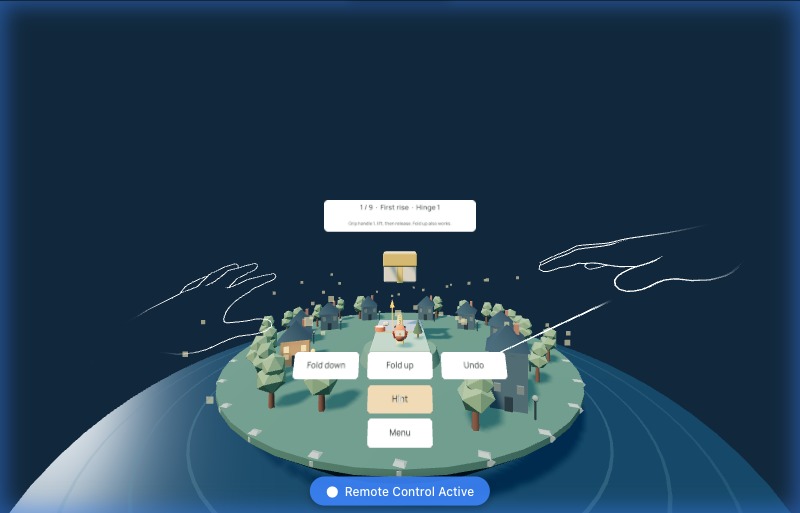
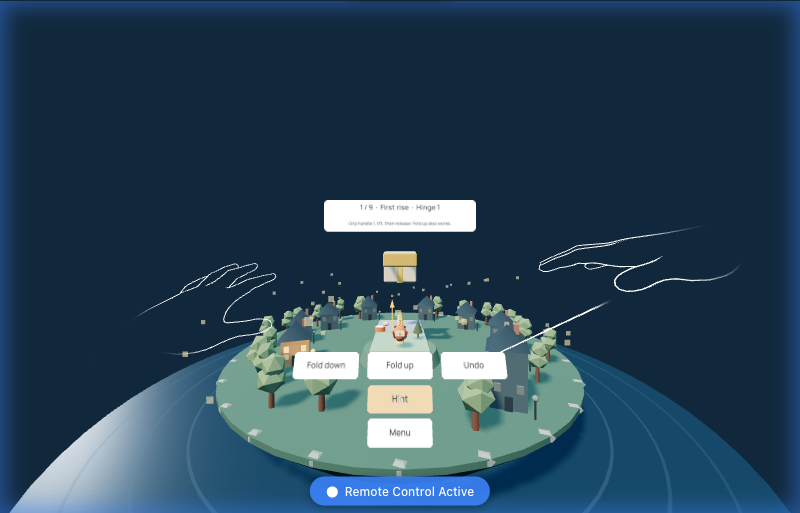
IWER emulator: five main controls, with larger controls enabled. No physical Quest capture.
-
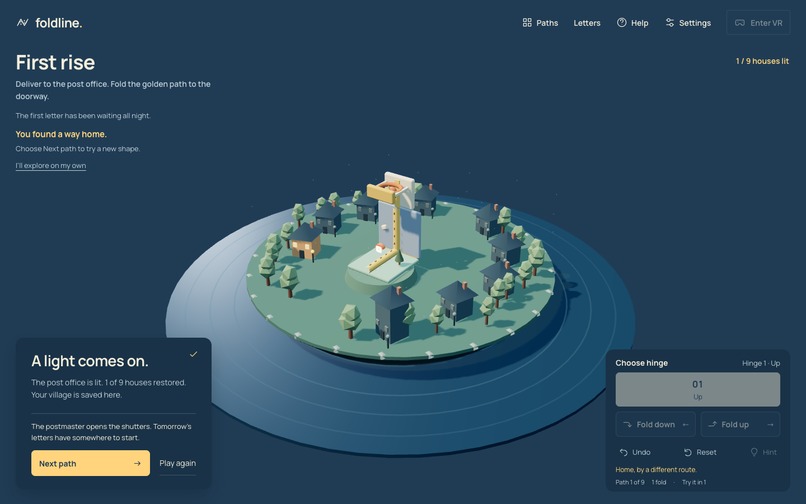
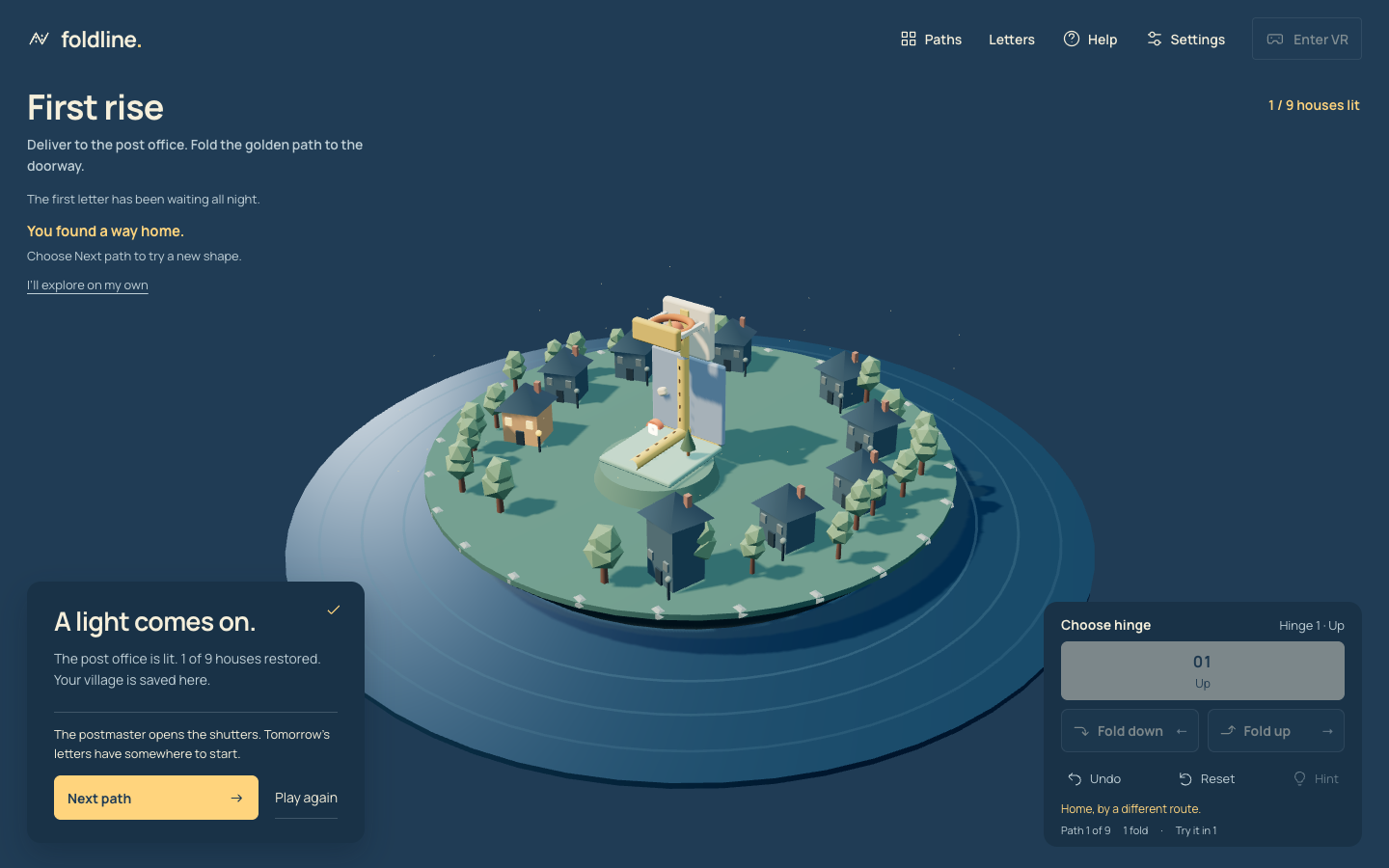
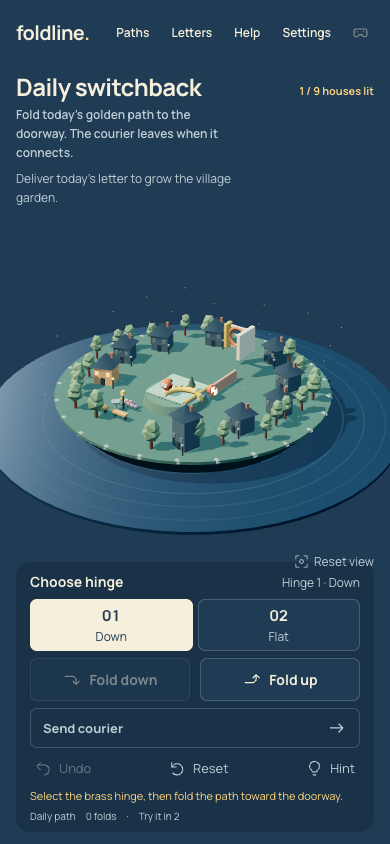
First delivery and its resident's letter, shown in the desktop browser.
-
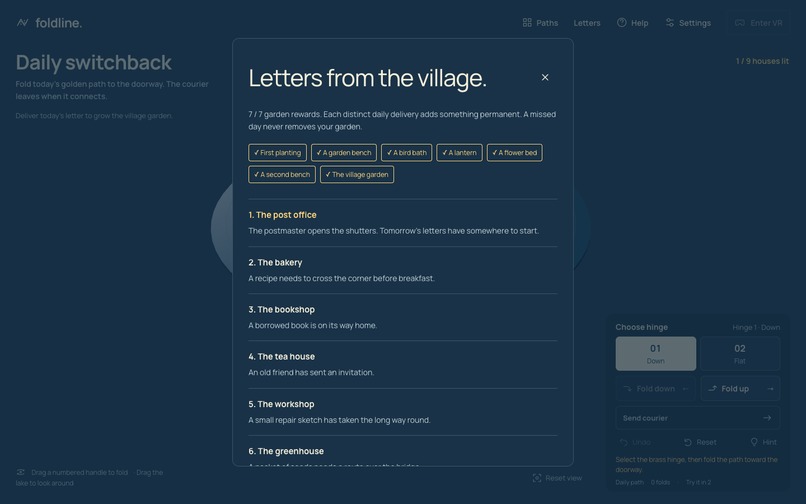
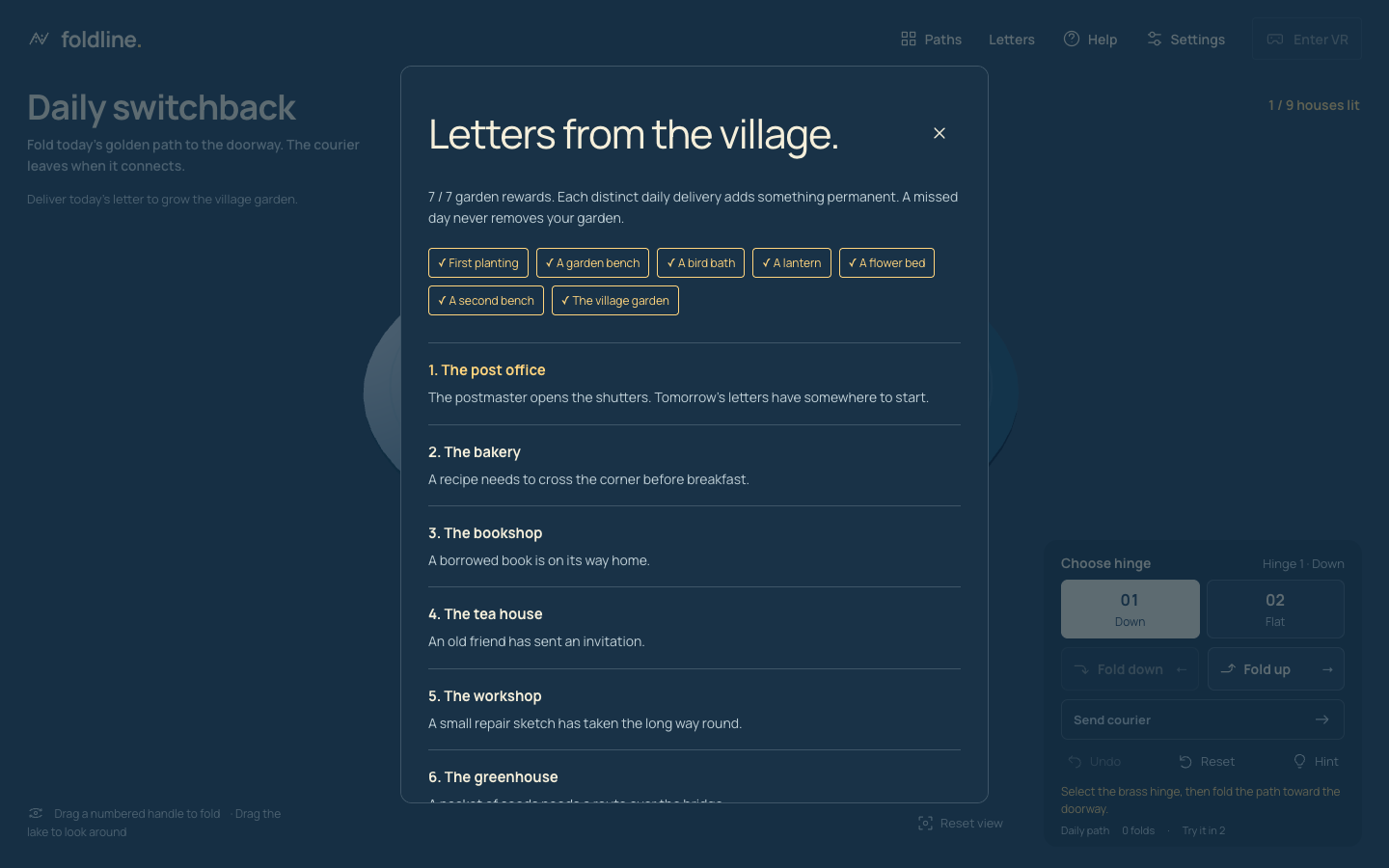
The resident journal shows letters unlocked in a browser test save.
-
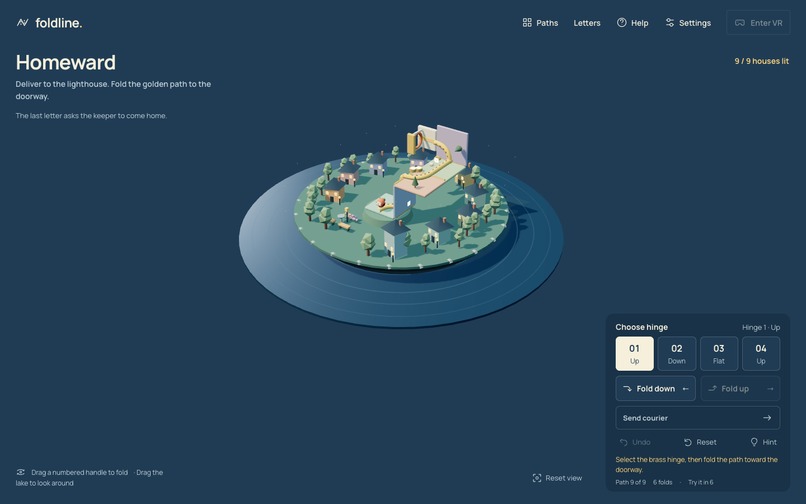
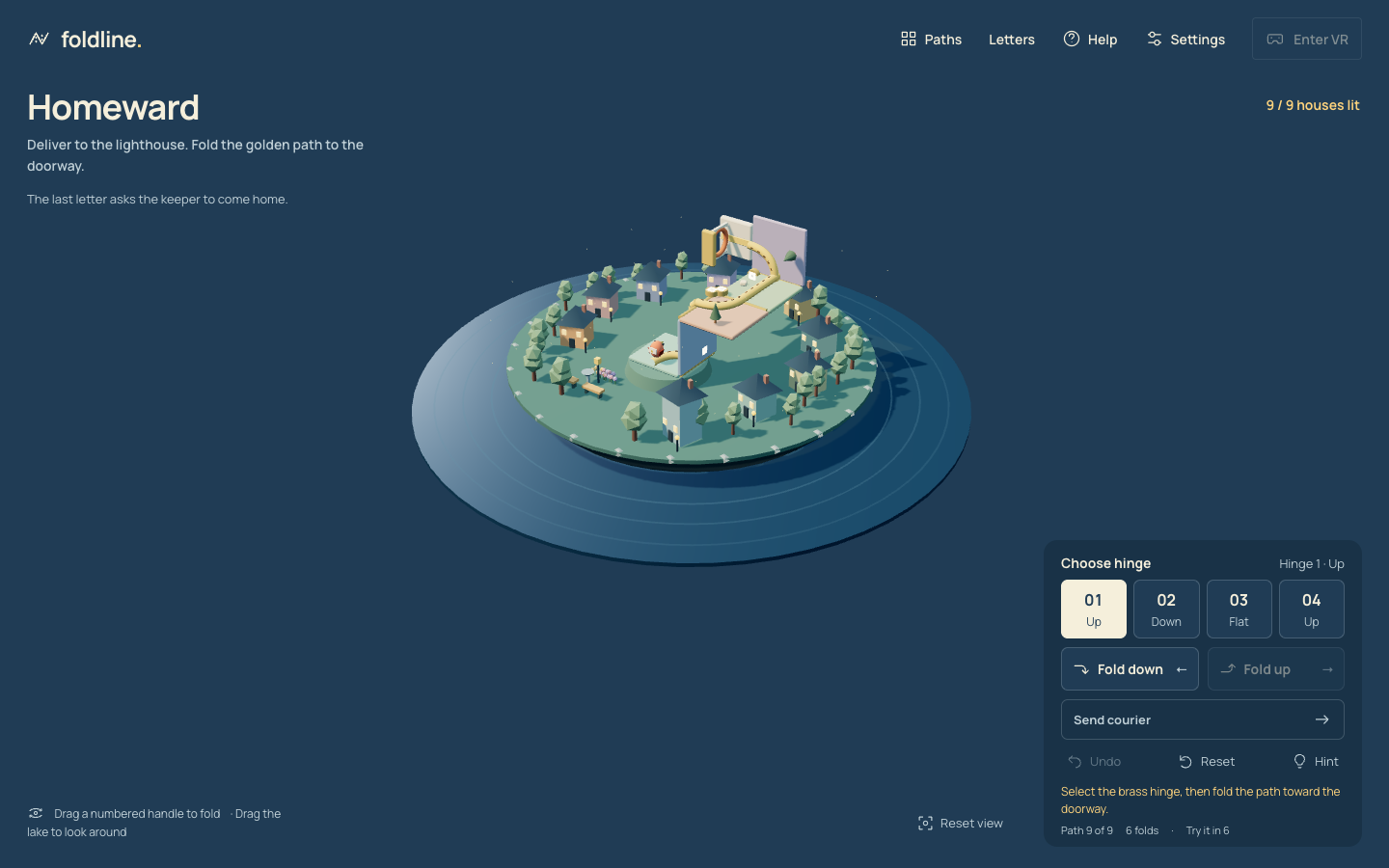
Homeward: the ninth authored spatial route, shown in a browser test save.
-
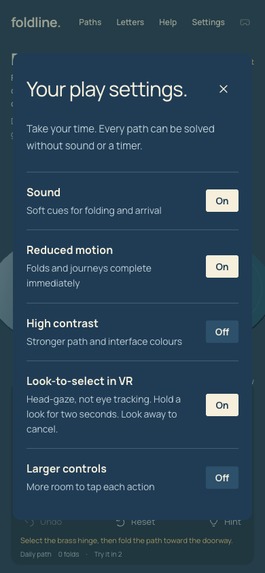
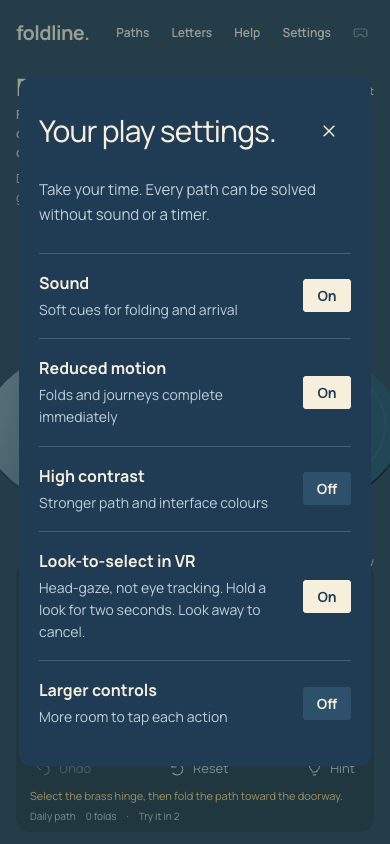
Mobile browser preferences: high contrast, larger controls and reduced motion.
-
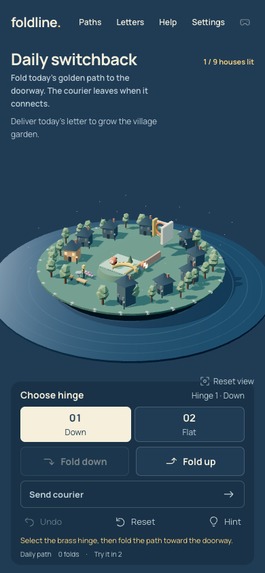
Date-controlled test save: seven permanent garden additions; not observed seven-day retention.
Inspiration
A bridge can become a staircase with one fold. Foldline builds a puzzle around that change: deliver nine letters by folding miniature paths in three dimensions, then bring their village back to life. The first route needs a single upward fold; later routes ask players to reason about connected hinges and doorway orientation.
What it does
Foldline is a seated spatial puzzle built with Meta's Immersive Web SDK. Aim at a numbered hinge, pinch, move to preview the fold, and release to settle at a legal stop. Labelled controls offer another way to fold. The first puzzle shows five actions; Menu opens paths, settings and help. When the golden path reaches the doorway with the correct orientation, the courier crosses automatically, a house lights up, and its resident's letter appears.
Nine authored puzzles, a letter journal and best-fold replay targets provide campaign progression. A rotating daily route adds a permanent garden reward on each of seven distinct completion dates. Missing a day never removes earned growth. Progress and preferences save in the same browser.
There is no timer. Hints, undo, reduced motion, optional sound, high contrast and larger controls offer different ways to play. Optional head direction plus a deliberate two-second dwell activates VR controls without pinching. Looking away cancels the selection; a held look fires once. This is head direction, not eye tracking. Desktop players can use a mouse, touch or keyboard.
How it was built
TypeScript computes connected panel transforms and checks the route's endpoint and orientation. A solution search supplies hints from the current arrangement. IWSDK, WebXR and Three.js render the village and handle immersive input. The geometry, residents and sounds are created in code; repeated house parts use instanced rendering. The landing preview is captured from the actual scene.
The public game needs no account, paid API or backend. Co-op and a model coach remain separate local experiments and are excluded from this entry's public feature claims.
Validation and future plans
All nine routes and seven date-controlled garden rewards pass browser checks with saved-state recovery. Seventy-three unit tests and the production build pass. Hands-only and head-only emulator suites test controls, completion and recovery with the unused input sources disconnected.
The demonstration contains labelled IWER and desktop gameplay. No physical Quest testing has been completed, so headset performance, tracking, seated reach, comfort and accessibility-user outcomes remain unverified. Next, unfamiliar Quest players will test the first five minutes, a later puzzle and interruptions. Their observations and device measurements will guide target sizing, pacing and future puzzles.
Built With
- iwsdk
- three.js
- typescript
- vercel
- vite
- webxr

Log in or sign up for Devpost to join the conversation.