-
-
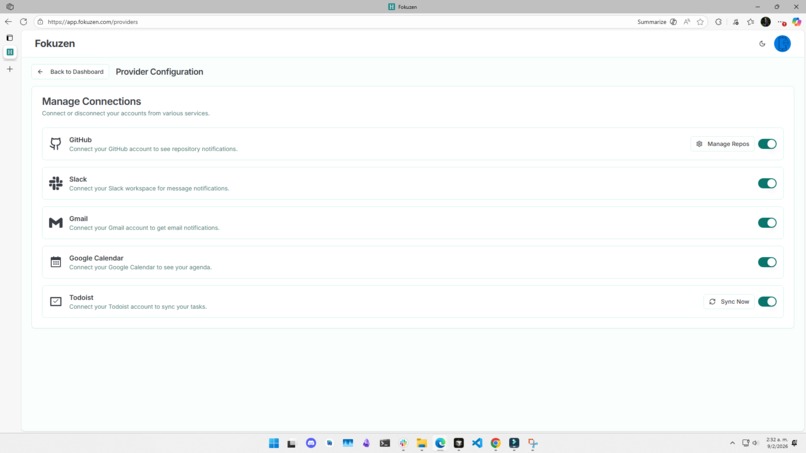
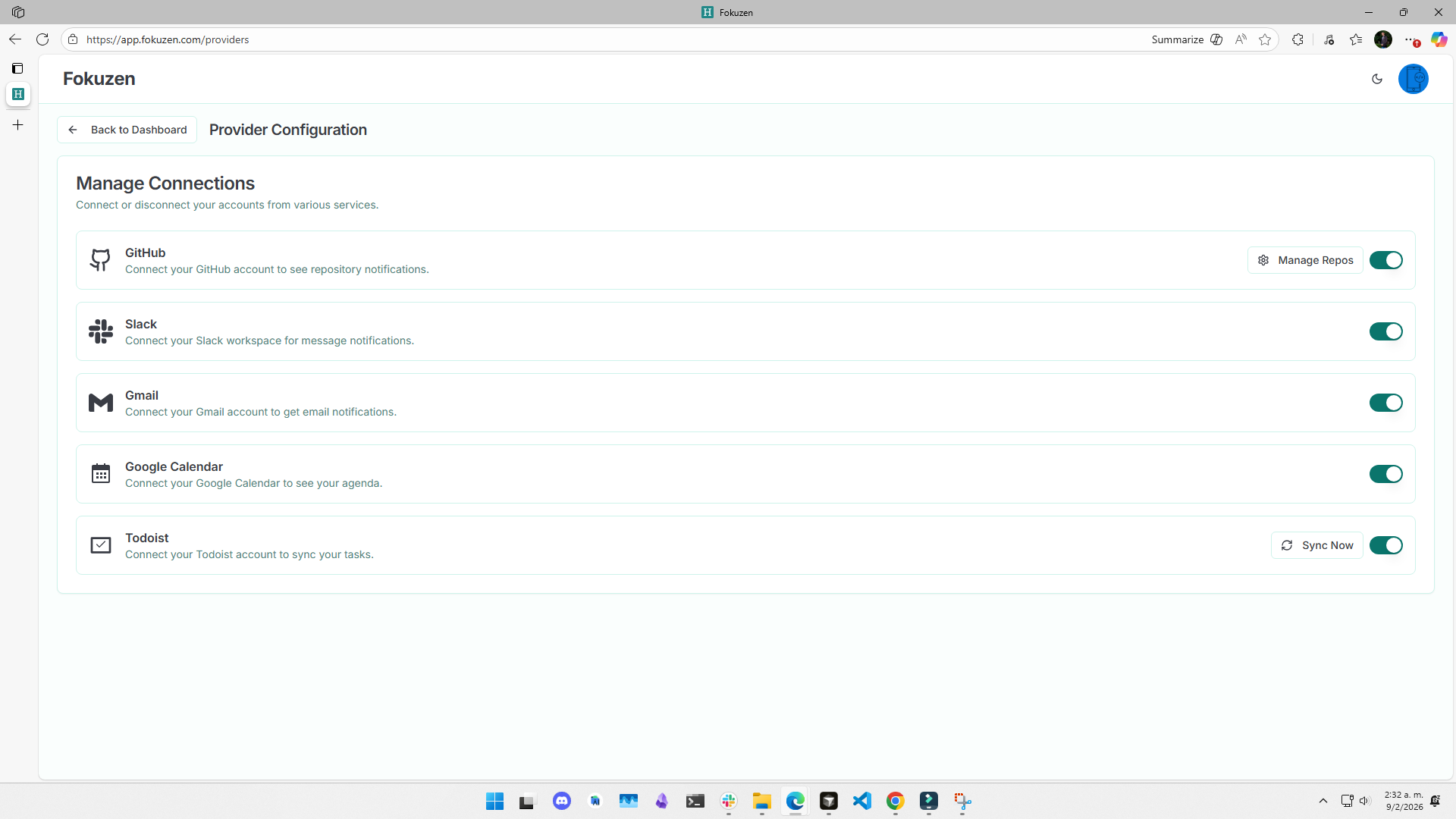
Provider management
-
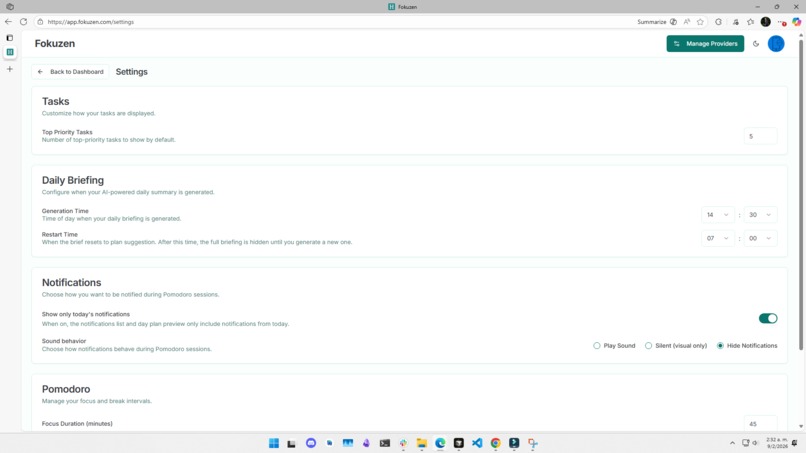
Settings
-
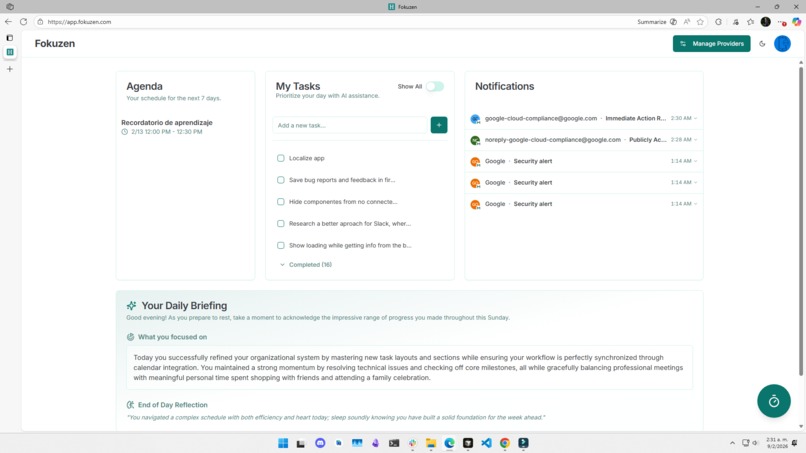
Dashboard
Inspiration
I’ve always felt anxious about missing something important. Most of my work happens across email, Jira, GitHub, and Slack, and I constantly catch myself checking them "just in case", even when no notification comes in.
That habit breaks my focus and adds unnecessary mental noise. Fokuzen came from that frustration. I wanted a way to centralize what actually matters, prioritize my work more clearly, and stay focused long enough to move faster and work with less stress.
What it does
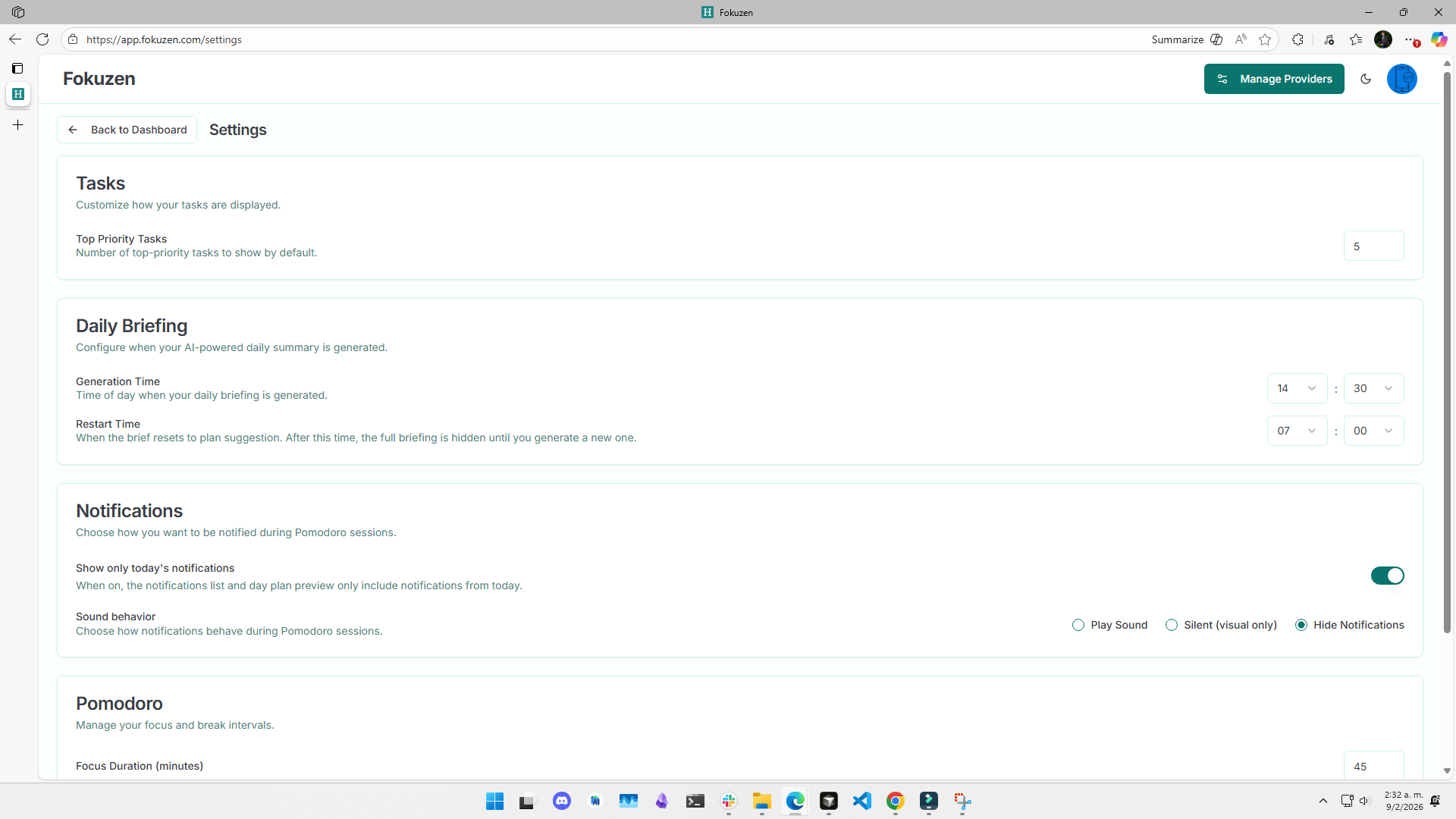
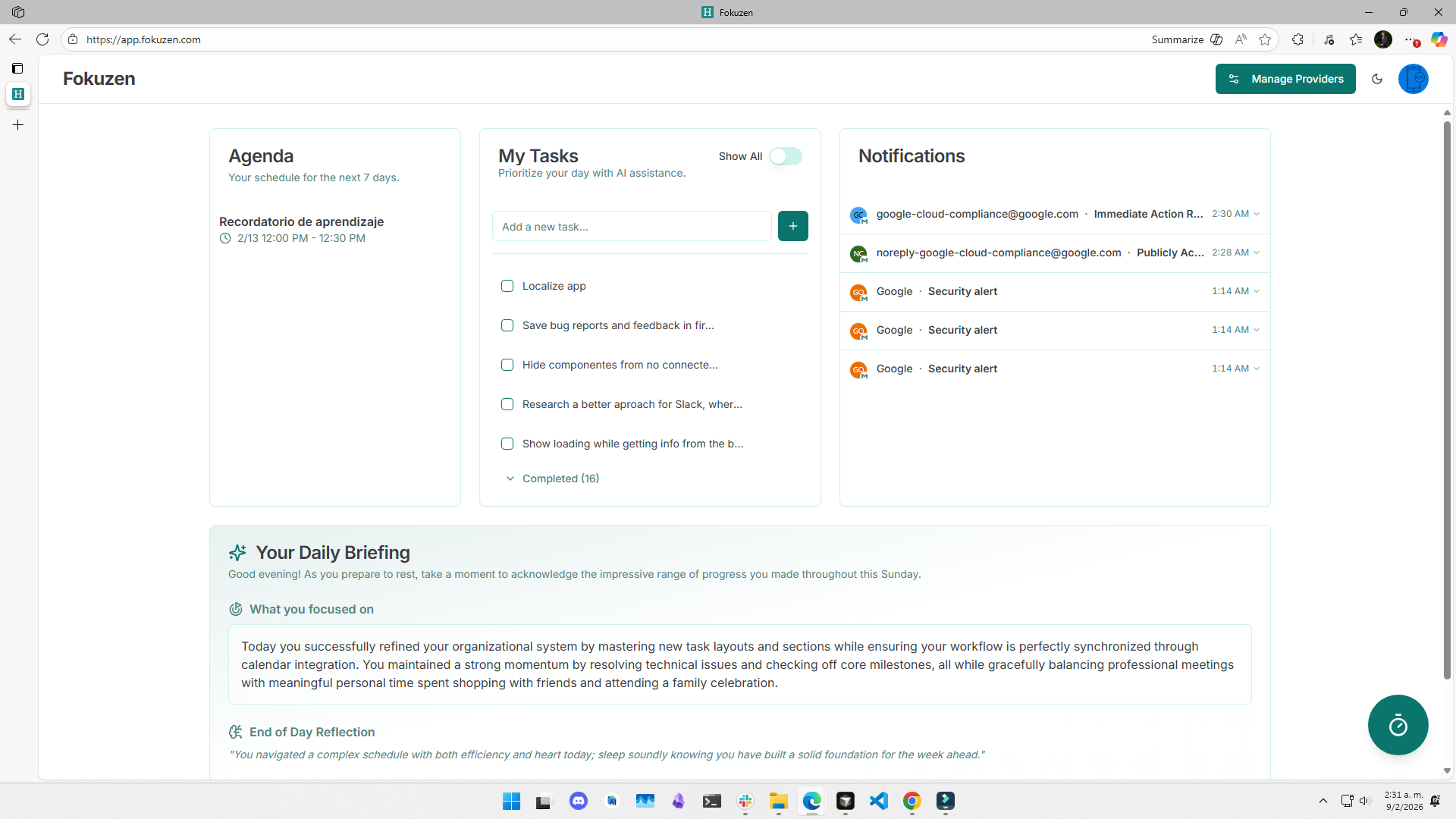
Fokuzen centralizes what actually needs your attention. It brings key notifications, calendar and tasks into one place, helps you prioritize them, and reduces the urge to constantly check multiple tools.
How we built it
I focused on building a simple, clean UI, with minimal friction, and only the signals that matter. Everything was built iteratively, testing assumptions as early as possible.
Challenges we ran into
Many OAuth and webhook flows: Coordinating five providers (Todoist, Google+Calendar, GitHub, Slack) with different callback URLs, scopes, and token refresh. We solved it with a shared callback pattern and clear env/config docs.
Accomplishments that we're proud of
I turned a personal pain into a working product that genuinely reduces mental noise. Seeing how much calmer the workflow feels (even in early versions) was a big validation.
What we learned
Focus isn’t about doing more; it’s about removing uncertainty. When people trust that important things won’t slip through, they naturally work with more confidence and flow.
What's next for Fokuzen
I'm expanding integrations, refining prioritization, and learning from real users. The next step is shaping Fokuzen into a tool people rely on daily without it becoming another distraction.
Built With
- firebase
- gemini
- gemini-3
- genkit
- google-cloud
- next.js
- react

Log in or sign up for Devpost to join the conversation.