-
-
EURL SIREP OASIS NEXUS WEFEH
Inspiration
Milestone 1: The NEXUS WEFEH MVP is now live in the public repository. The first working workflow is irrigation optimization for oasis Zone Z3: the NEXUS Supervisor consults Water, Energy, Food, Ecosystem, and One Health specialists, previews the outcome on a digital twin, runs deterministic safety checks, requests human approval, and only then executes the simulated command.
The key safety principle is now enforced in code: the AI cannot directly control equipment or bypass the policy engine. We also added a 50-case evaluation suite covering normal operations, water shortages, energy constraints, cross-system conflicts, and equipment or water-quality faults.
Within FOGGARA, AI is the bounded NEXUS Intelligence Layer: a set of predictive, analytical, anomaly-detection, simulation-support, and optionally language-model capabilities that transform authorized agricultural and operational data into explainable recommendations.
It has no identity-administration privileges, no data-ownership authority, no approval authority, and no direct connection or credentials to execute field commands.
What it does
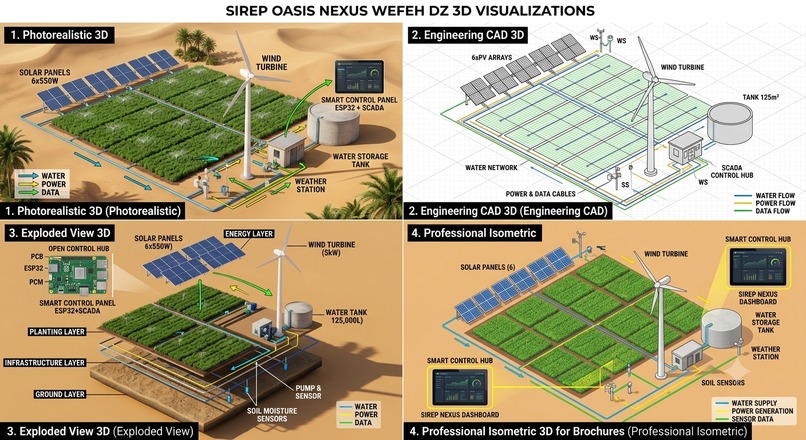
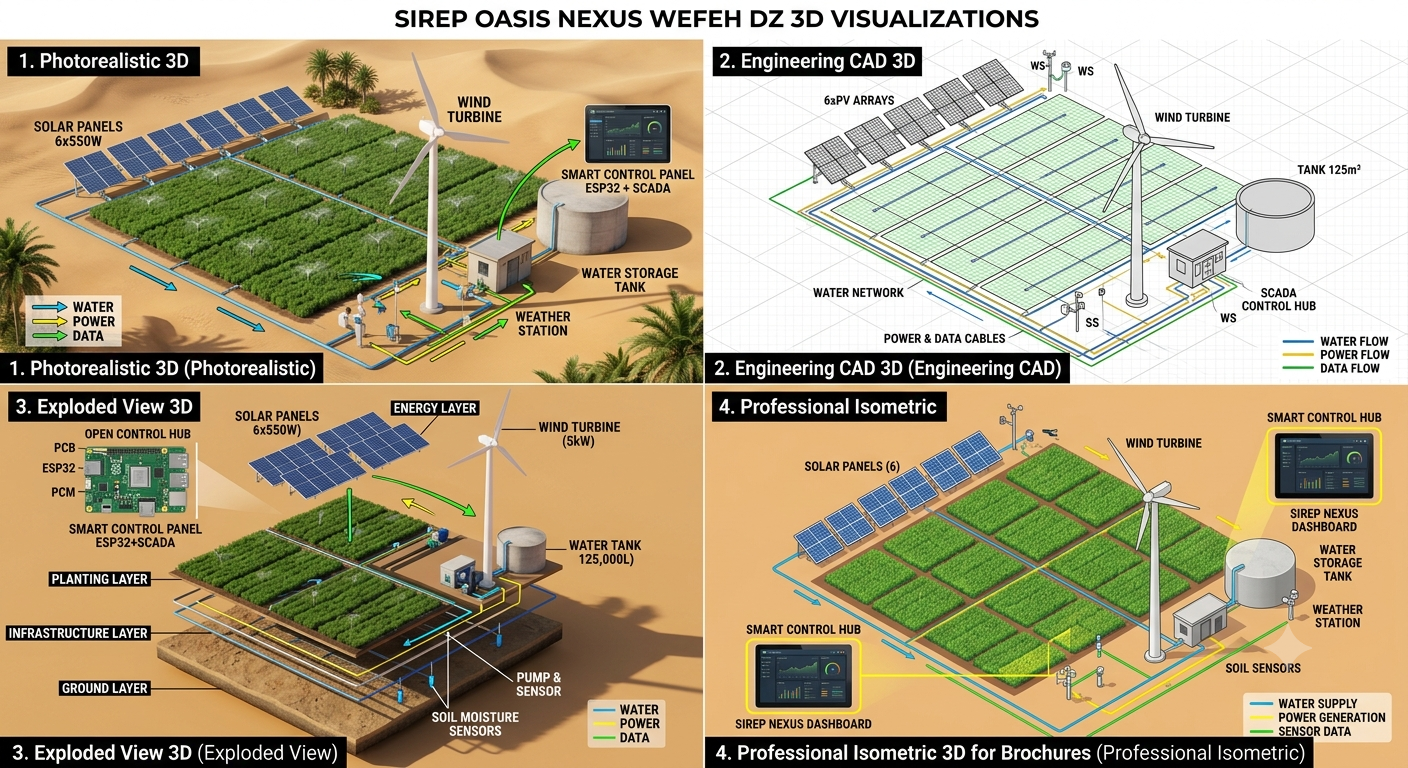
FOGGARA is a sovereign WEFEH platform vision, and this hackathon submission demonstrates its working NEXUS WEFEH decision layer: a Strands Agents SDK multi-agent system for resilient oasis operations. A NEXUS Supervisor coordinates five specialist agents—Water, Energy, Food, Ecosystem, and One Health—over a live oasis digital twin containing tanks, wells, pumps, valves, solar generation, crop zones, water budgets, and environmental-health signals.
The agent does not merely chat. It performs an end-to-end operational workflow: it consults the relevant specialists, previews a proposed irrigation action, runs deterministic safety rules, creates a mandatory human-approval request, executes only after approval, updates the digital twin, and records a tamper-evident audit trail.
FOGGARA is governed through the FOGGARA Decision Council: a sovereign, human-accountable framework for decision rights, resource policies, operational safety, and traceable approvals. AI components may analyze and recommend, but they do not own data, approve actions, or execute operations. Every operational recommendation is evaluated against deterministic safety rules and requires authorization by an accountable human operator.
For the golden demo, the system detects low soil moisture in Zone Z3, evaluates solar availability and water constraints, recommends irrigation for a specific duration, and safely simulates the result. If the pump, valve, tank reserve, water budget, aquifer threshold, or water-quality conditions fail, the safety gate blocks the action and no approval request can be created.
How we built it
FOGGARA was built as a sovereign, safety-first WEFEH platform, with the NEXUS WEFEH Agentic Decision Layer serving as the working hackathon MVP.
The MVP is implemented in Python using the Strands Agents SDK. It uses an agents-as-tools architecture in which a NEXUS Supervisor coordinates five specialized agents: Water, Energy, Food, Ecosystem, and One Health. Each specialist is given narrowly scoped, in-repository tools to analyze its own domain without receiving unrestricted access to systems, files, external HTTP endpoints, or physical equipment.
The system operates over an Oasis Digital Twin built with Pydantic models. The twin represents operational assets and field conditions including reservoirs, wells, pumps, VFD status, irrigation valves, solar generation, crop zones, soil-moisture levels, daily water budgets, ecosystem indicators, weather signals, and water-quality or environmental-health alerts.
The agent workflow is designed to perform real operational work, not only provide conversational answers. For an irrigation decision, the NEXUS Supervisor consults the five domain agents, evaluates water need and solar availability, previews the result on the digital twin, runs deterministic safety rules, creates a human-approval request, executes only after explicit approval, updates the simulated oasis state, and records the action in a tamper-evident audit log.
Safety is intentionally separated from LLM reasoning. The deterministic policy engine checks pump health, VFD and electrical status, valve faults, tank reserve, daily water budget, well draw limits, irrigation-duration limits, pump-flow feasibility, aquifer extraction thresholds, water-quality conditions, and heat-risk conditions. The AI agent cannot bypass these rules and cannot directly control field hardware.
The MVP includes 14 custom Strands tools, a FastAPI service, an operator dashboard, a command-line demo, a hash-chained audit trail, and a 50-case evaluation suite. The evaluation covers normal irrigation cases, water shortages, energy constraints, cross-system conflicts, and equipment or safety faults. The deterministic safety evaluation currently reports zero false-allow safety violations.
Amazon Bedrock is supported as the default cloud model provider, while Ollama can be used for local and sovereign operation. Amazon Bedrock AgentCore is included as a deployment-ready integration path; the current MVP runs locally with Strands Agents SDK, FastAPI, and the Oasis Digital Twin. The repository includes an AgentCore runtime entrypoint and deployment guide for future session-isolated execution, observability, and managed scaling. The implementation is publicly available at: https://github.com/skacimo1985-star/nexus-wefeh
Accomplishments that we're proud of
We are proud that FOGGARA is not presented as a generic agriculture chatbot. The hackathon MVP performs a complete operational decision workflow across five interconnected WEFEH domains and keeps a human operator in charge of every execution decision. We are especially proud of the safety architecture: the AI cannot directly control a pump or valve, cannot override deterministic rules, and cannot reuse an approval for a different command. A blocked command cannot even become an approvable request. We also built a reproducible oasis digital twin, a web dashboard, a CLI demonstration, a hash-chained audit log, and a 50-case safety evaluation suite. This makes the project testable by judges even without physical IoT hardware or cloud credentials.
What we learned
This project confirmed that useful AI systems for the field must be context-aware and operationally grounded. Raw data alone is not enough; the value comes from interpreting data within local constraints, timing, and risk. It also reinforced the value of multi-agent design. Specialized agents make more sense than one generic assistant when the system must cover heterogeneous tasks and domains. The project further showed that sovereignty, governance, and deployment flexibility are not secondary concerns—they are central product features, especially for strategic sectors like agriculture, water, and environmental management. Finally, we learned that broad visions become credible only when they are translated into clear workflows, modular architecture, and understandable user outcomes. That discipline helped shape FOGGARA into a stronger platform concept.
What's next for FOGGARA: Sovereign WEFEH AI Agents
The next cloud milestone is to deploy the NEXUS WEFEH Supervisor to Amazon Bedrock AgentCore Runtime, enabling session-isolated agent execution, observability, and managed scaling. Until then, the MVP remains fully runnable locally through its FastAPI dashboard, CLI workflow, deterministic safety engine, and oasis digital twin.


Log in or sign up for Devpost to join the conversation.