Inspiration
The project is inspired by pomodoro timers, fitness wearables and tracking, and study companion apps. We realized that the only way for studying to be effective is if the user has the self control and willpower to study. Yet for some others, whether it be due to factors outside of their control like health or environment, it becomes much more difficult. So by combining these three concepts, we can help the user keep tabs on their study session’s quality, effectiveness, and efficiency.
What it does
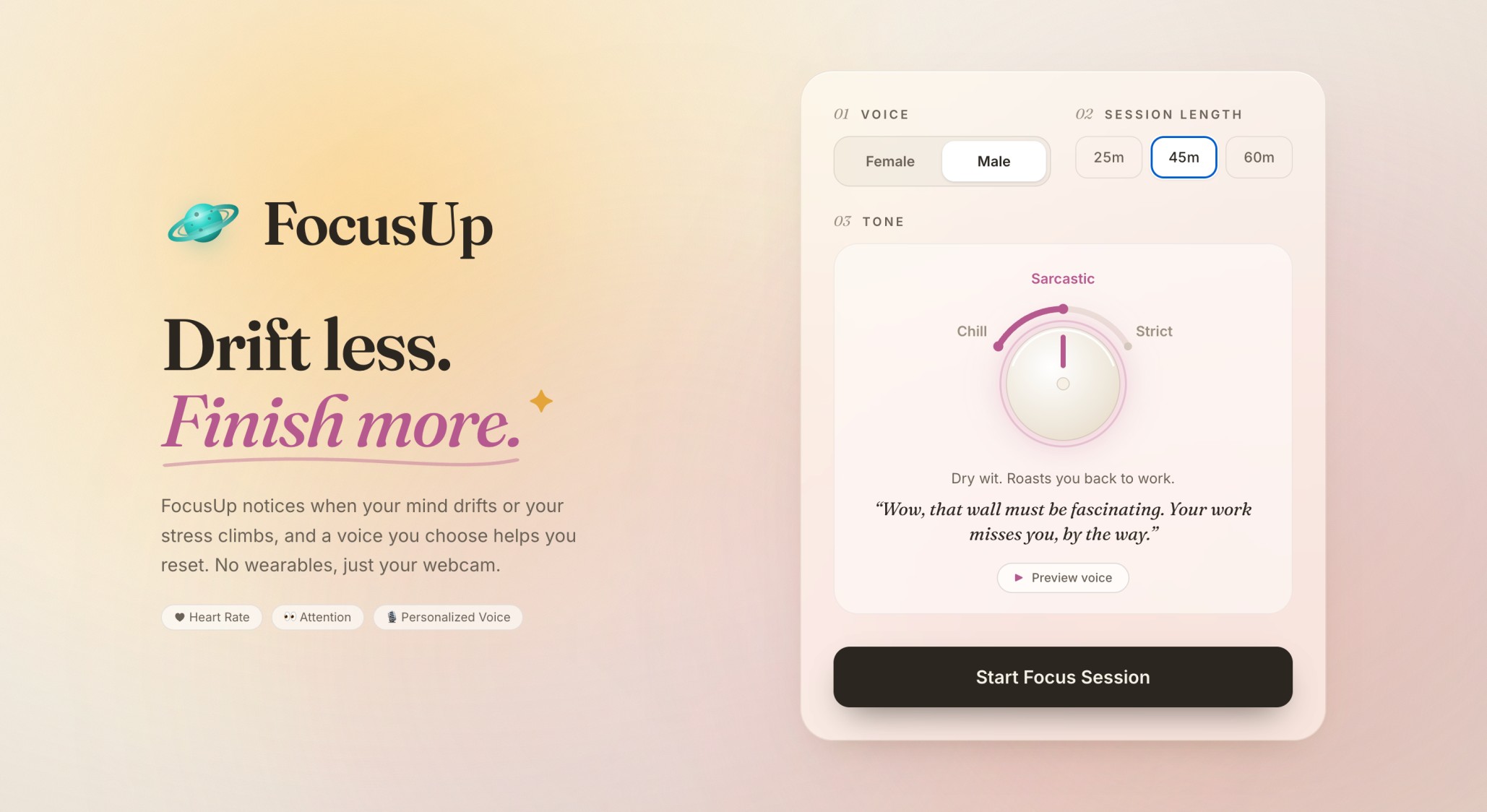
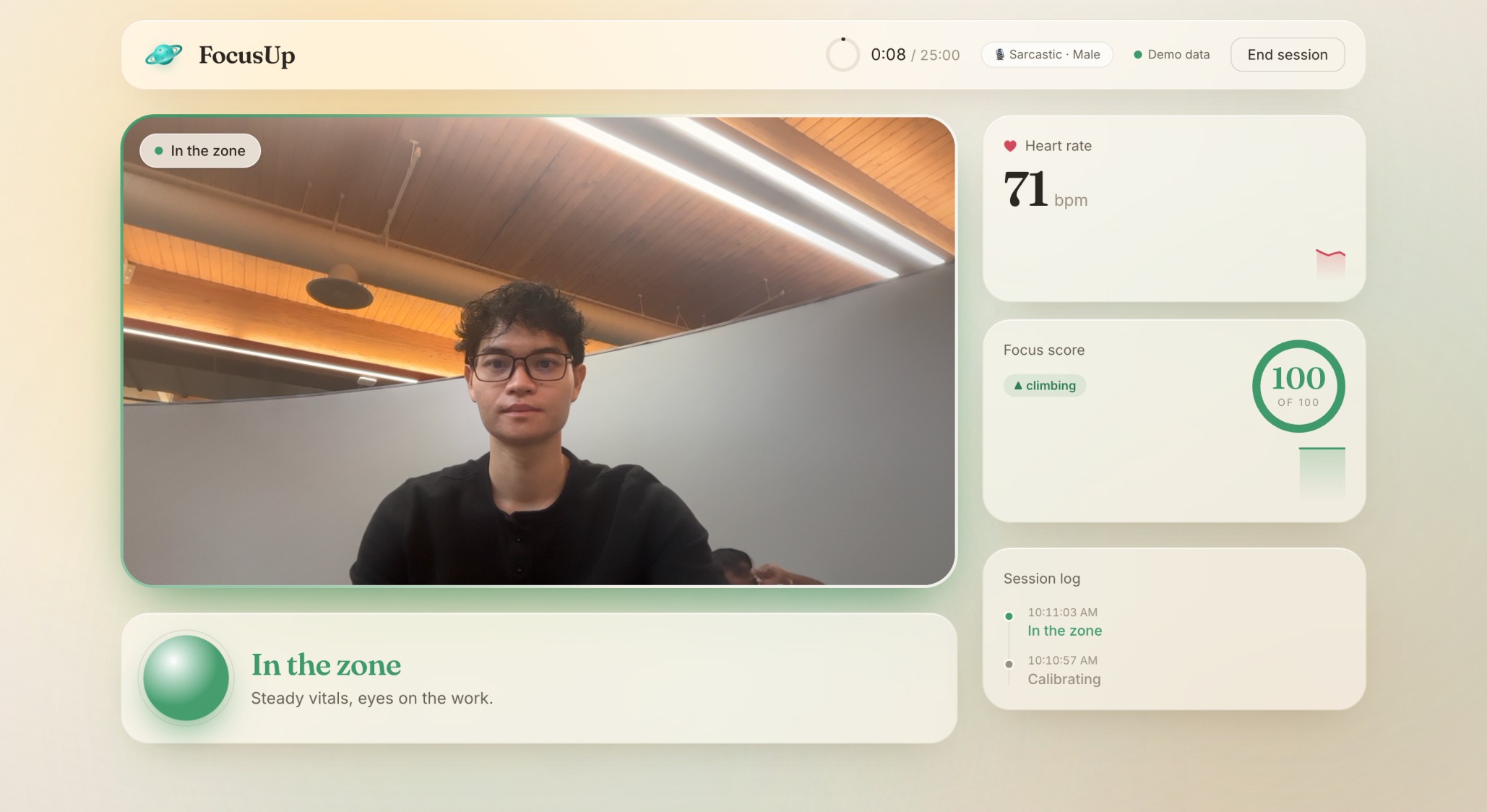
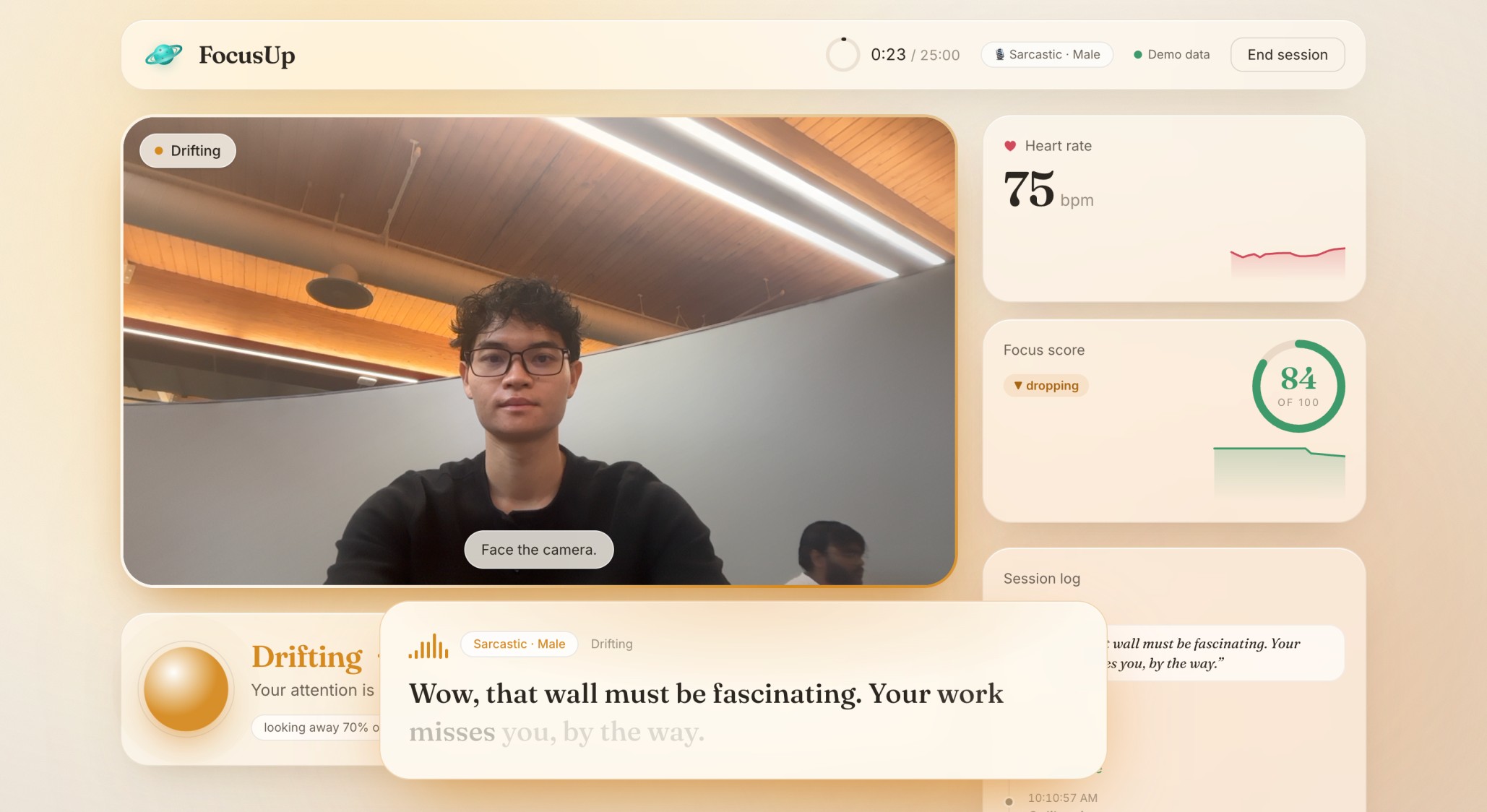
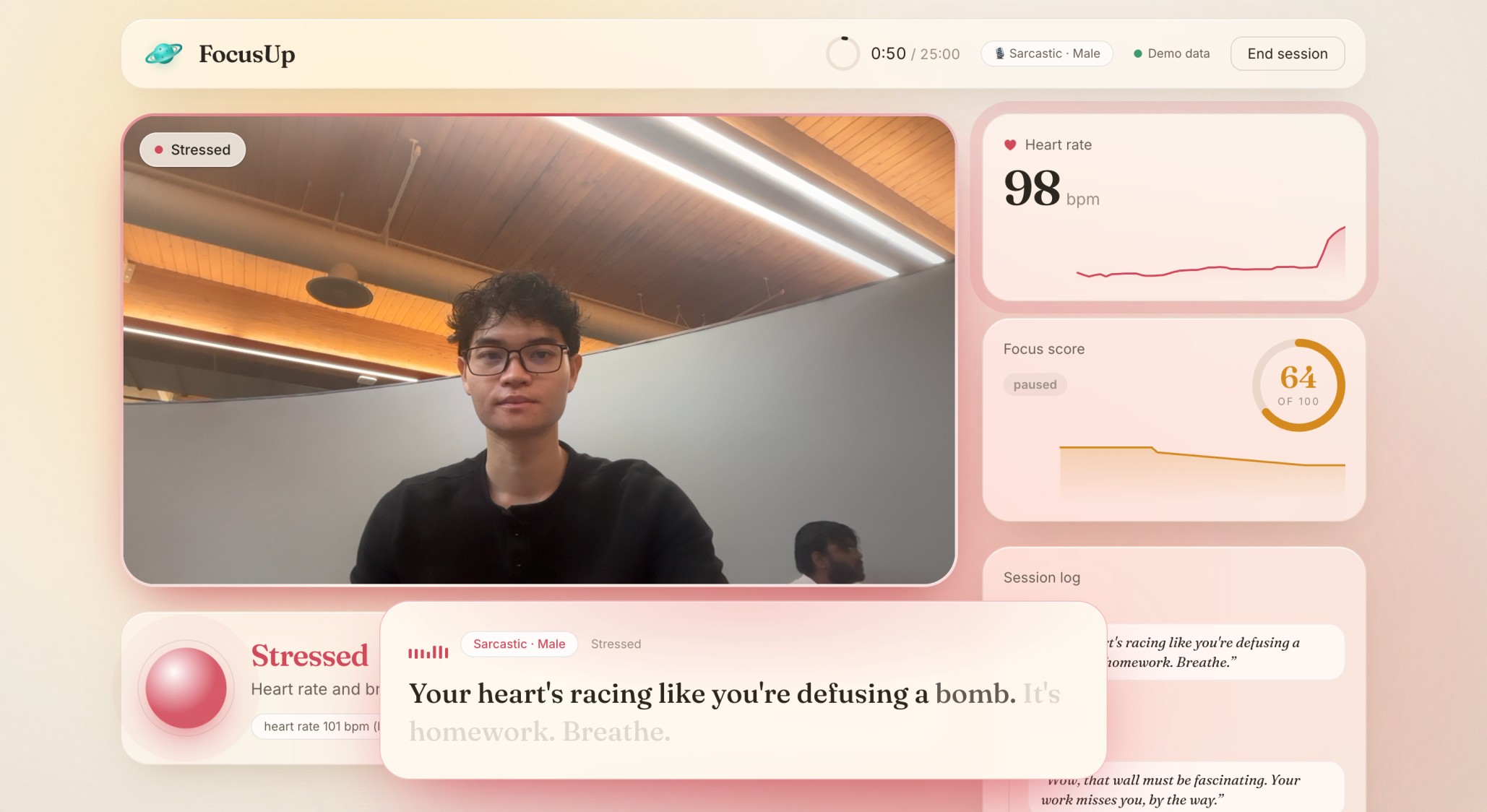
These concepts are combined in the FocusUp application to help the user get the most out of their study session, and really make them "keep focused." We use the camera attached to the user's laptop or webcam above their display to monitor their study session. If we notice that the user is drifting focus, we tell the user to get back to being focused with varying levels of "personality". However, if it detects the user being too over stressed, we remind them to take breaks and de-stress to cool off to become more work efficient. The study session is then scored by the amount of time focused on studying against being distracted, giving the user more incentive to stay focused.
How we built it
The app uses the camera of your laptop or a web cam above your display to monitor your study session. The camera feed is sent into the Presage SmartSpectra SDK to check your vital signs and focus, monitoring stress levels and focus to determine how well the study session is progressing.
FocusUp first requires a calibration period to understand user resting biometric values, typically 20-25 seconds or until the first 10 reliable readings are produced for each variable. It is assumed that the user is non-stressed and ready to focus on work when starting their session.
If SmartSpectra detects that the user is getting too distracted, whether it be by turning away from the display under the camera too often or talking to someone nearby too much, we consider it a "drifting" focus.
SmartSpectra also monitors cardiovascular, breathing, and facial data to determine "stress level." These can be determined if the HRV, heart rate, breath rate are too high, or if the user has a “stressed” facial expression. If any of these return a stress level that is too high, it returns a "stressed" assessment.
If none of these conditions are met, we can consider the user as “in the zone” and currently focused on their work, successfully balancing focus and stress management.
However, if one of these conditions are met, an ElevenLabs' AI voice then gives the user a reminder in the pre-set tone to get back to work, or to take a break and reduce their stress levels.
We keep a running score of the study session, to give a final assessment as to the effectiveness of the study session. Every .5 seconds that the user is not focused, the score gets reduced by 1 point, and vice versa when then they are being focused.
Challenges we ran into
The main challenge we ran into was being able to determine face and biometric data that qualifies as “drifting” and “stressed,” as well as how to extract and interpret that data. This was overcome by using more granular variables provided in the SmartSpectra SDK to dive deeper into facial markers, biometric data, and introducing the calibration period.
Accomplishments that we're proud of
We are very proud of the UI that we’ve created. We’ve put a lot of effort into choosing our logo, choosing a color palette of yellow to represent calm, happy vibes when studying. We also made sure to display important information in a simple and uncluttered way so that users can focus on their work.
We also put a lot of effort into fine tuning our function that detects whether or not a user starts to lose attention when studying. We take into account many factors such as eye contact, head movement, and talking.
Last, we are also proud of the voices that we’ve chosen from elevenlabs. We believe that we picked the best voices out of a large catalog that best fits our project and gives the right amount of personality to each reminder.
What we learned
We learned much from this experience, such as using Versage’s Spectra SDK to gather information to turn into accurate biometric data. We were able to use this data to make reliable indicators of focus, distraction, and stress through calibration and testing. We also learned how to use the ElevenLabs API to select the best voices, models, and voice settings for our project. When integrating the Gemini API, we made sure to add certain restrictions to the output in the form of a word limit to make sure that the responses were clear, concise, and natural.
What's next for FocusUp
We are hoping to have FocusUp adapt with the user over time, and help enforce better care for them. This could be in the form of periodic check-ins on the user, or forcefully pausing the timer and having the user take a mandatory break when their stress gets too high. We could also use the system to adapt to the user over time and study sessions, where it recognizes study patterns and habits to better optimize study sessions.


Log in or sign up for Devpost to join the conversation.