-
-
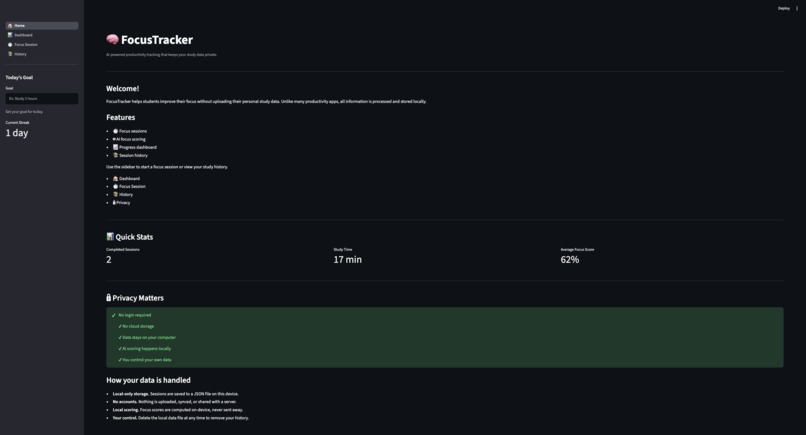
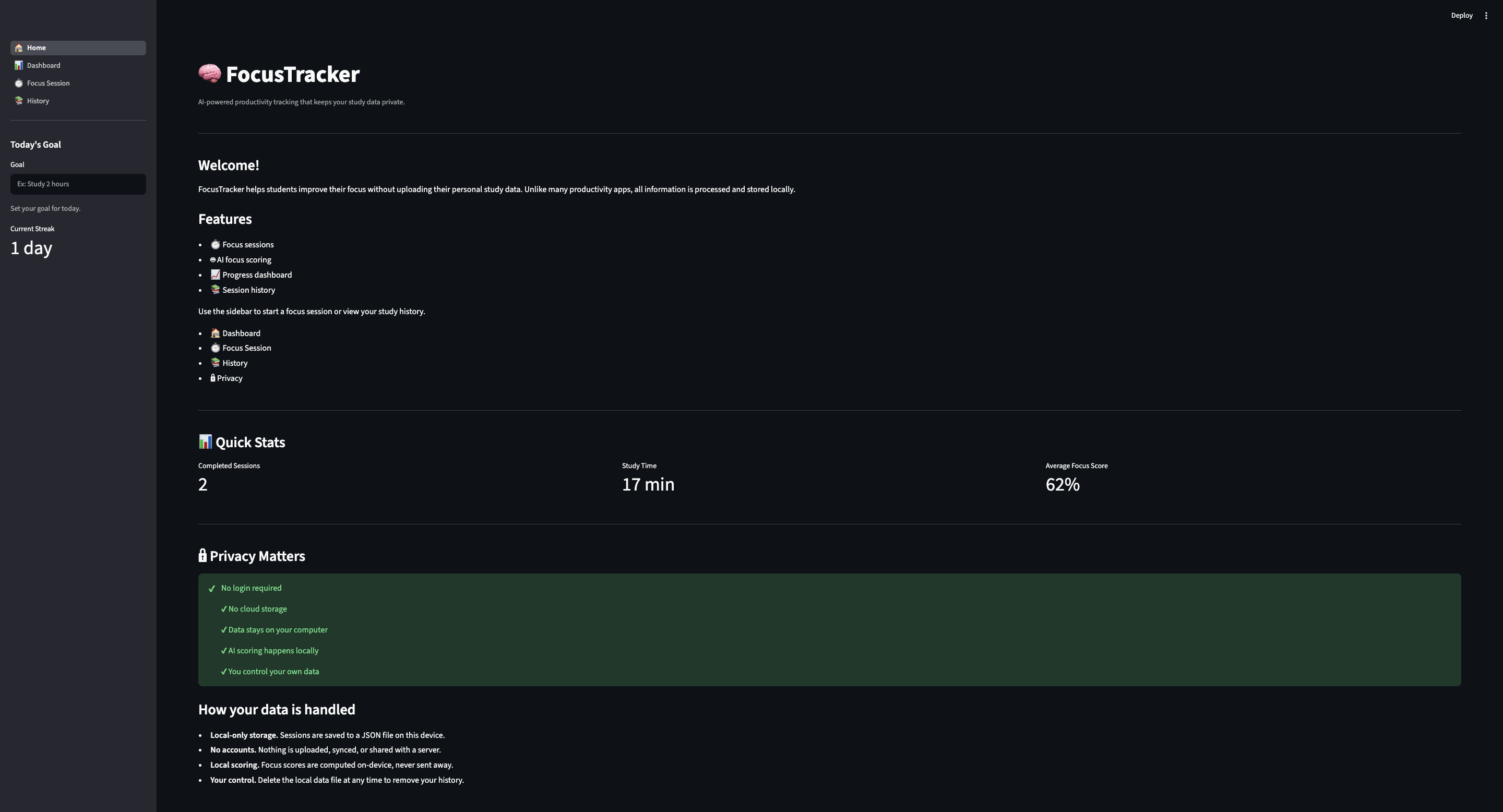
Homepage
-
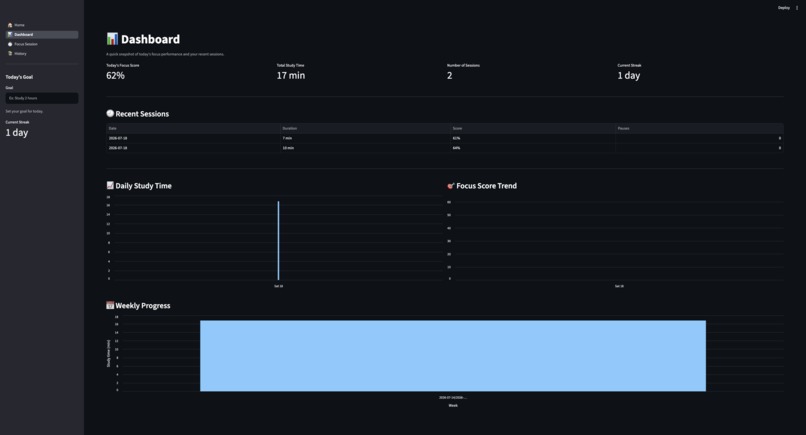
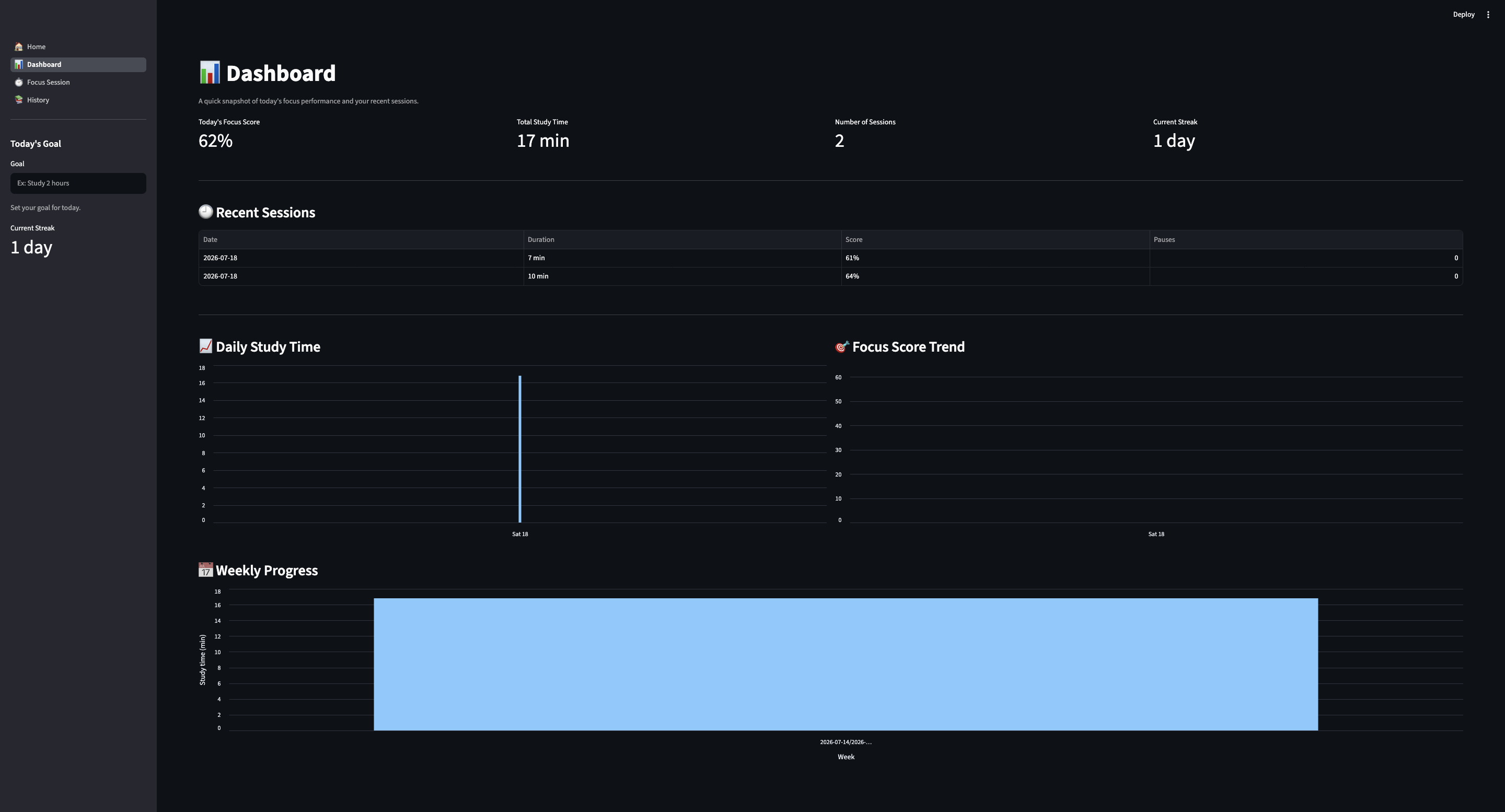
Dashboard Page
-
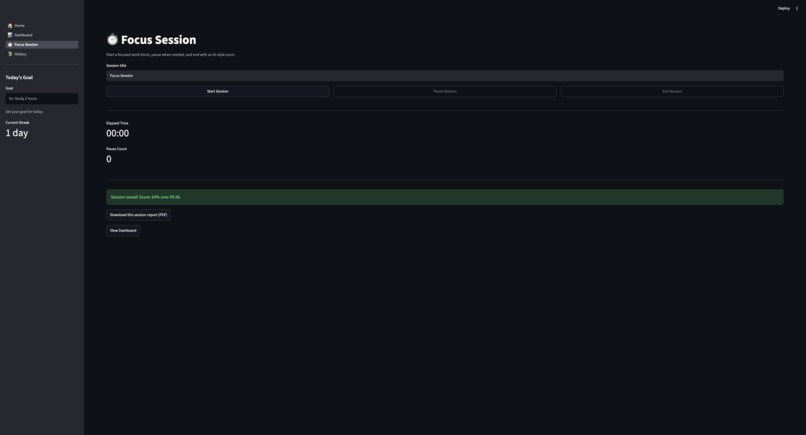
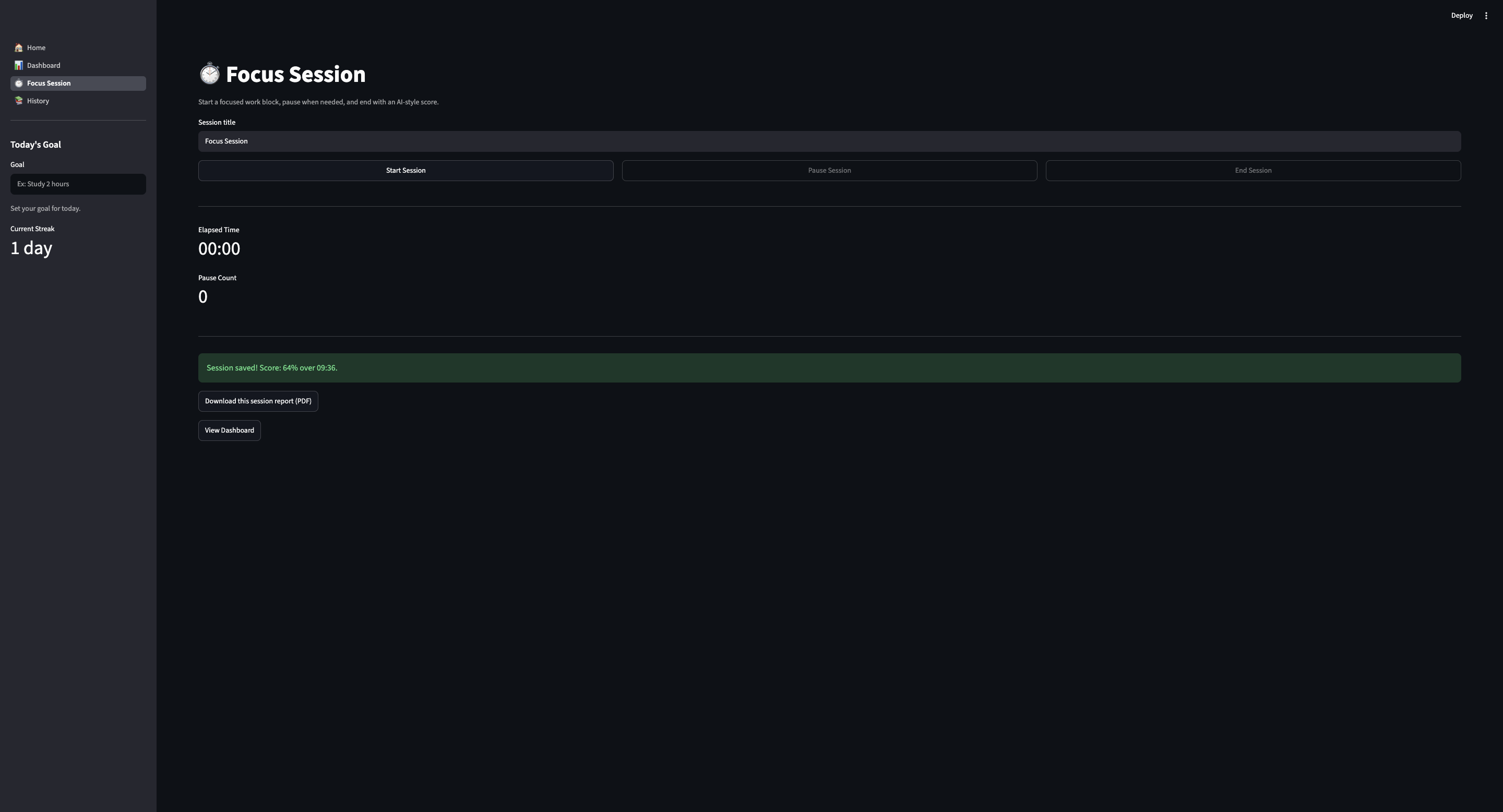
Focus Session Page
-
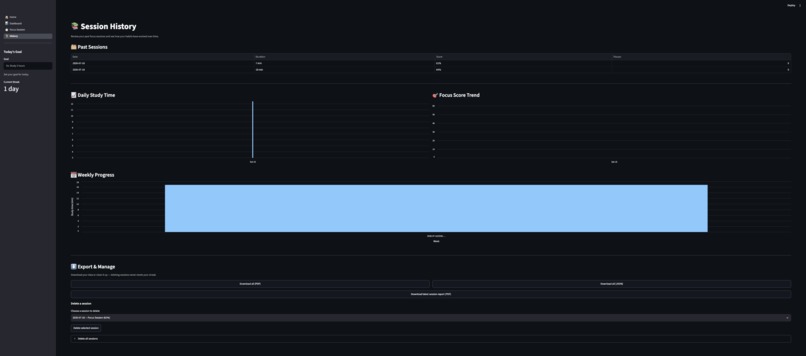
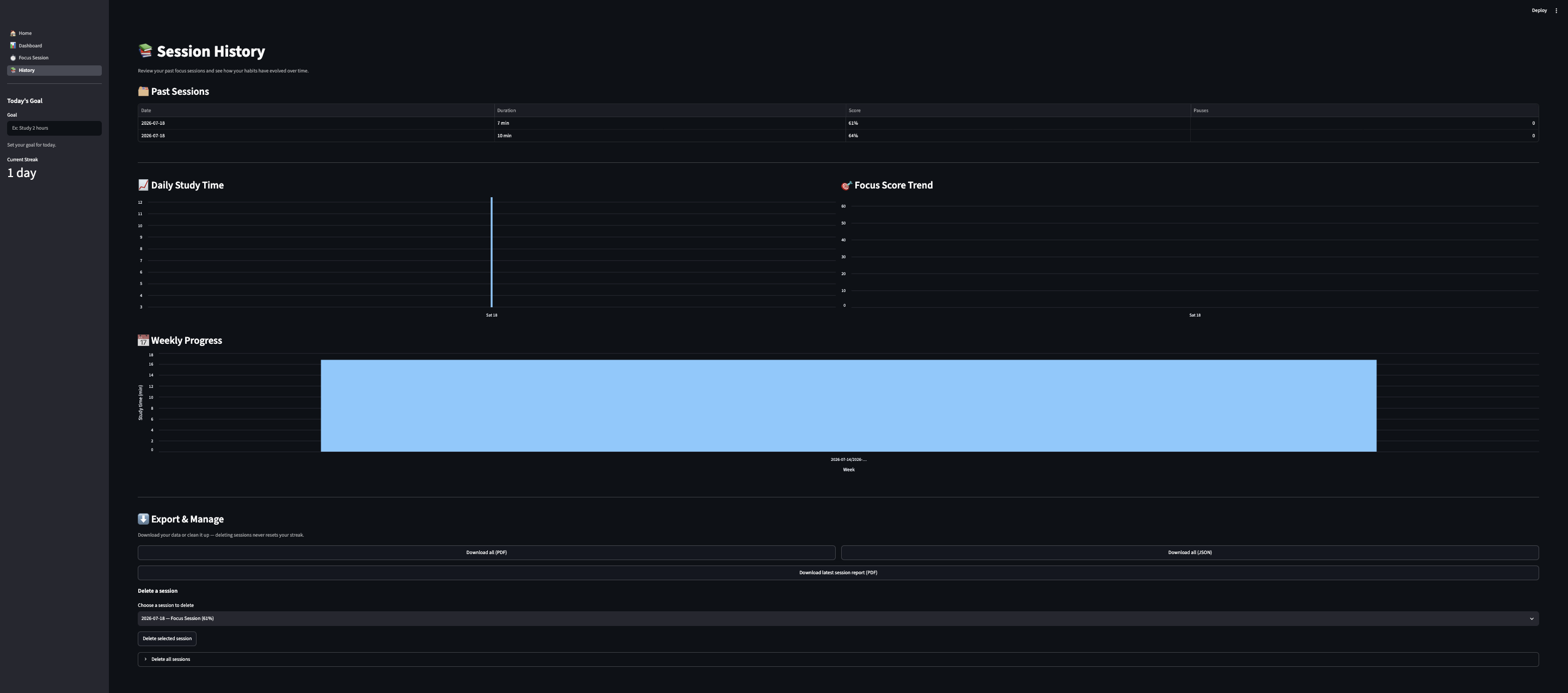
History Page
Inspiration
Many productivity apps collect personal information, such as study schedules, work hours, daily routines, and time spent on tasks. This information is often uploaded to cloud servers, where users have limited control over how it is stored or analyzed. I wanted to demonstrate that AI-powered productivity tools can still provide meaningful insights while keeping users in control of their personal data, which inspired me to build FocusTracker, a privacy-first productivity application that processes and stores study information locally.
What it does
FocusTracker helps users to improve their focus without sending any of their study data to the external servers. Users can start and end focus sessions, receive a locally generated focus score, track their study history, visualize their progress with charts, set daily study goals, monitor their current study streak, export session reports as PDF or JSON files, and delete their data whenever they choose.
How we built it
I built the app by Python & Streamlit to create a multi-page web application that includes a homepage for quick look at the dashboard and explanation of how user data is protected, a dashboard for tracking productivity, a focus session timer with local focus score calculation, and a history page with charts and downloadable reports. All session data is stored locally using JSON files, and no cloud services or external AI APIs are used.
Challenges we ran into
One of the biggest challenges was to organize the project into reusable components and services, manage local data storage, and implement features such as report generation, study streak tracking, and session history within a limited hackathon timeframe. I also faced on rendering the sidebar to link the pages correctly with the respective python file.
Accomplishments that we're proud of
I am proud of building a complete privacy-first productivity application that works entirely with local data. The app includes multiple pages, session tracking, focus score analysis, progress visualization, downloadable reports, daily goals, study streaks, and data management features while keeping all user information under the user's control.
What we learned
I learned how to design a privacy-first application, structure a Streamlit project using reusable components and services, manage local data persistence, and build an AI-inspired workflow without relying on cloud-based services. I also learned the importance of balancing usability with privacy.
What's next for FocusTracker
In the future, I would like to improve the focus analysis by providing personalized suggestions immediately after each completed session. I also like to change the current scoring logic with a lightweight local machine learning model, support customizable focus plans and reminders, and add optional encrypted local storage for even stronger privacy.
Built With
- python
- streamlit

Log in or sign up for Devpost to join the conversation.