-
-

Logo
-
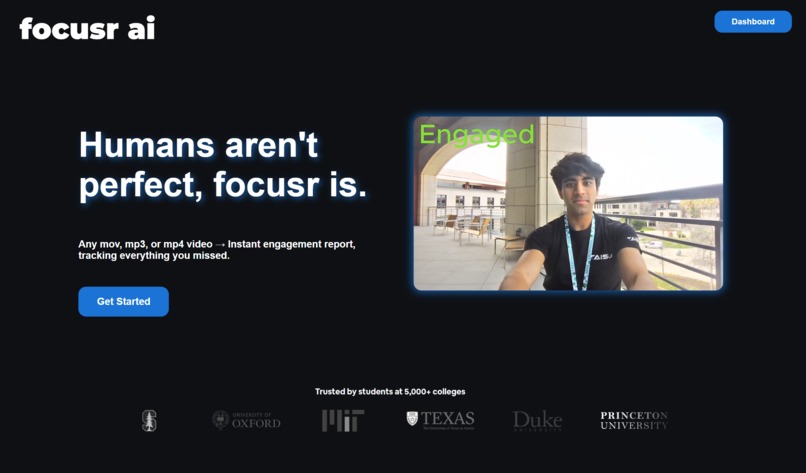
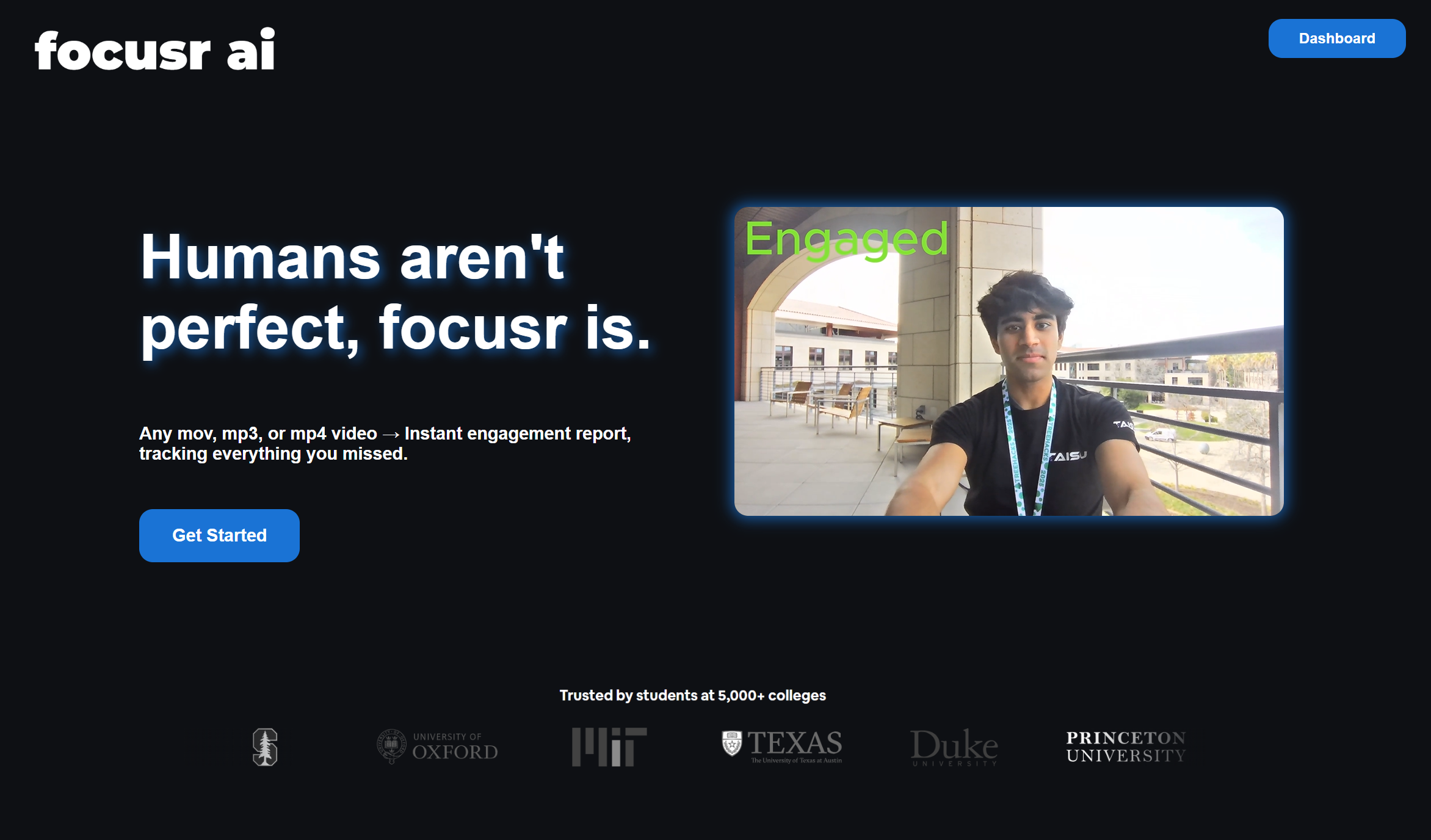
Website - Landing Page
-
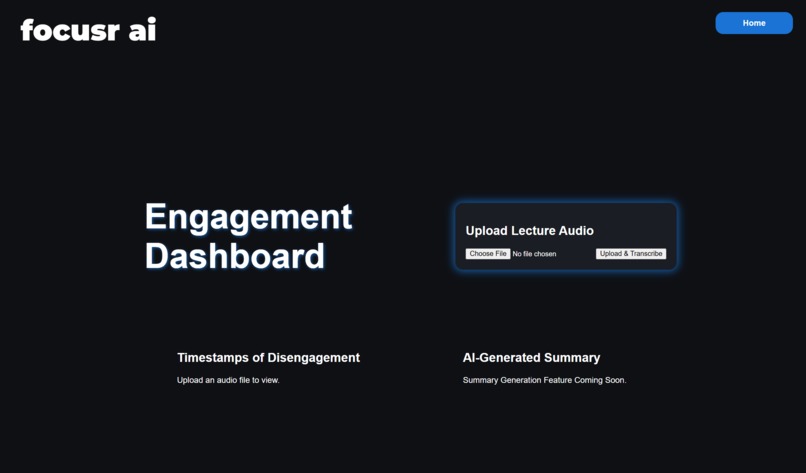
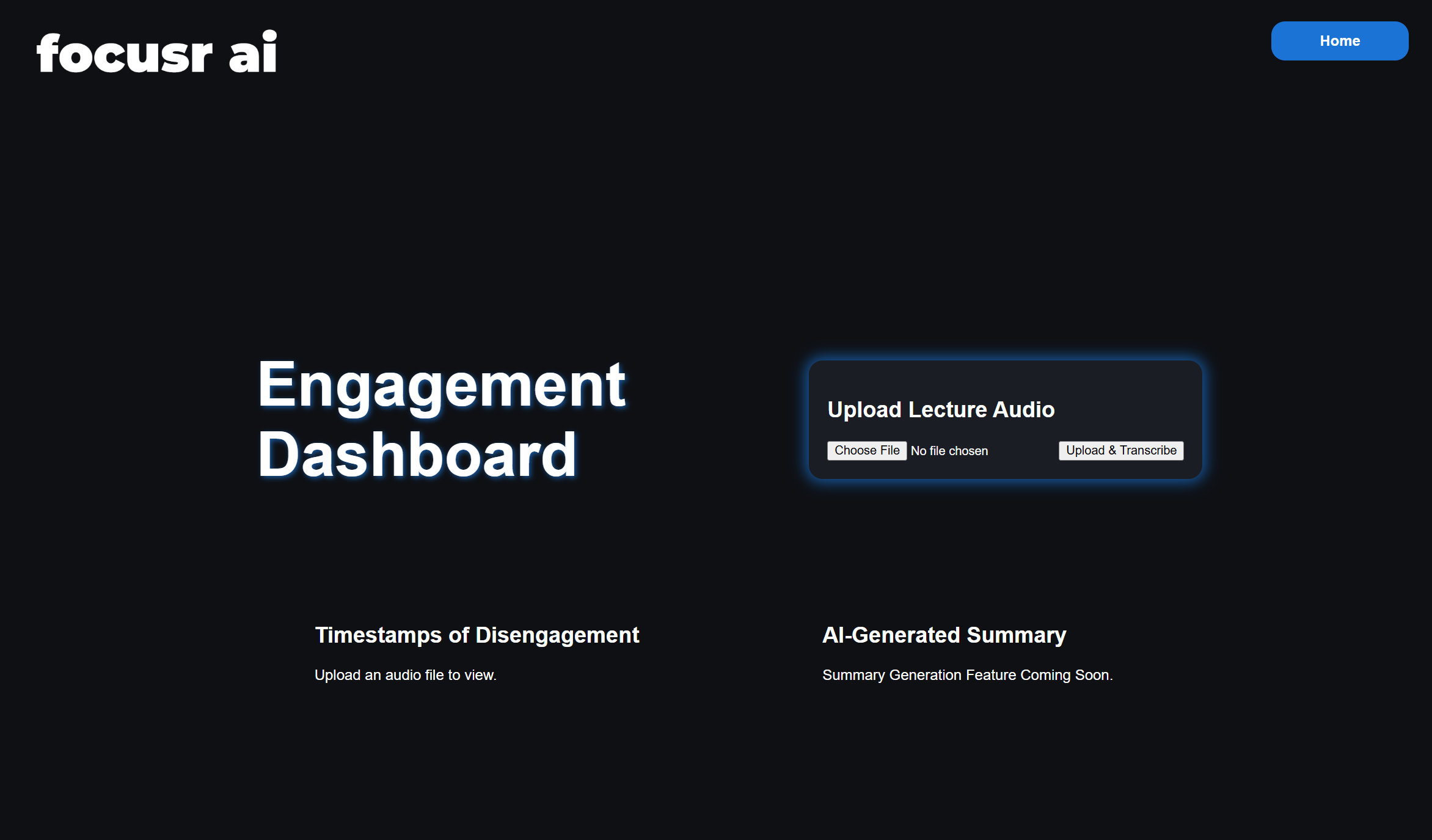
Website - Dashboard Page

Inspiration
Staying engaged during a lecture isn’t always easy. A brief lapse in focus—whether due to distractions, fatigue, or simply a wandering mind—can mean missing a key concept, making it harder to follow along with the rest of the lesson. In fast-paced courses, those small moments of disengagement add up, leaving students struggling to catch up. For those with learning disabilities, this is even more so the case.
We built focusr.ai to help bridge that gap. By tracking engagement in real-time through eye movement, our tool identifies when a student zones out and ensures that missed topics get extra emphasis in the AI-generated summary. Instead of rewatching an entire lecture or sifting through lengthy PowerPoints, our users can quickly review exactly what they need to stay on track.
This project isn’t about forcing focus—it’s about helping students learn more effectively, even when attention slips.
How we built it
We built focusr.ai as a web application that tracks engagement, transcribes lectures, and generates AI-powered summaries to help students stay on top of their learning. The frontend uses React and Tailwind CSS, while the backend, built with Flask, handles audio processing, AI interactions, and engagement tracking. To detect focus lapses, we use Gemini’s multimodal processing, analyzing eye movement patterns. OpenAI Whisper transcribes lectures, and Perplexity AI creates context-aware summaries, prioritizing missed sections. An interactive engagement chart visualizes attention levels, helping students quickly review key moments. Hosted on Vercel with cloud/local storage, focusr.ai ensures that distractions don’t become setbacks, making learning more adaptive and accessible.
Challenges we ran into
A major challenge we faced was engagement tracking for long lectures. Using OpenCV and MediaPipe for eye-tracking was too slow for extended recordings. We switched to Gemini and used images rather than videos, which efficiently analyzed video input directly, eliminating the need for uploading unnecessarily large files. This drastically improved speed and accuracy, making real-time engagement tracking viable for full-length lectures.
Accomplishments that we're proud of
We as a team all contributed to this project, and we are thrilled at the intuitive way in which the UI/UX has come together. We’re proud of how we streamlined the entire learning workflow—instead of just transcribing audio, our system prioritizes the moments when a student loses focus, ensuring they can efficiently catch up without rewatching everything. We originally thought about going with another project idea because we thought we wouldn't be able to learn and finish everything on time for focusr.ai, but we successfully brought it all together into a working product that makes reviewing lectures more effective.
What we learned
All team members gained a much deeper understanding of the languages, libraries, and implementation techniques in their respective area of building focusr. The members: Ishan - frontend, Tyler - backend (engagement analysis), and Isabella - backend (transcript generation); all leaped into React.js, Flask, Git/Github, as well as component integration. Every member of our team worked with a language, technology, or library they hadn't previously worked with before, so we're proud to have learned while creating something we're all proud of.
What's next for focusr.ai?
We see focusr.ai expanding its impact on both students and educators. From a teacher’s perspective, implementing this system across multiple students in a class could provide valuable insights into engagement trends. If a significant percentage of students consistently lose focus at the same point in a lecture, instructors could identify and refine less engaging sections to improve overall learning outcomes. For students, we want to move beyond video uploads and explore live engagement tracking during lectures. This could allow real-time feedback, helping students refocus before they fall too far behind. Expanding in this direction also opens the door to making focusr.ai a Zoom app, extending its use beyond in-person lectures to online meetings, virtual classrooms, and remote work settings, making it a more versatile engagement tool.
Built With
- api
- flask
- gemini
- javascript
- openai
- perplexity
- python
- react.js
- vercel

Log in or sign up for Devpost to join the conversation.