-
-
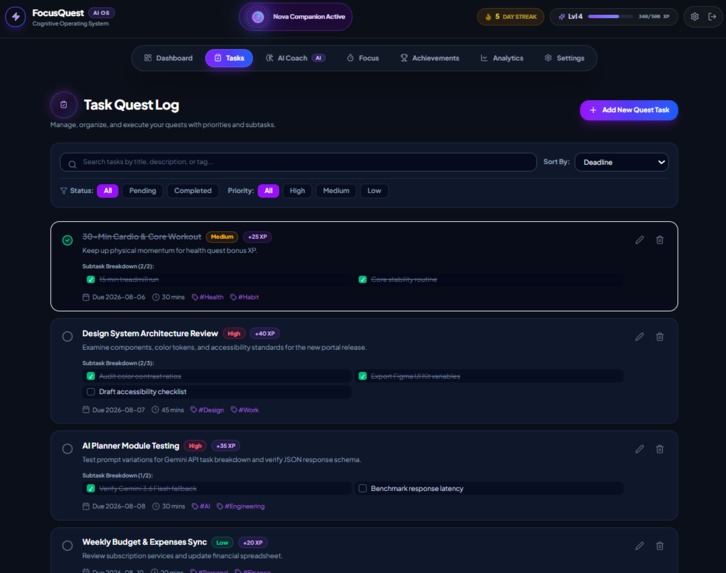
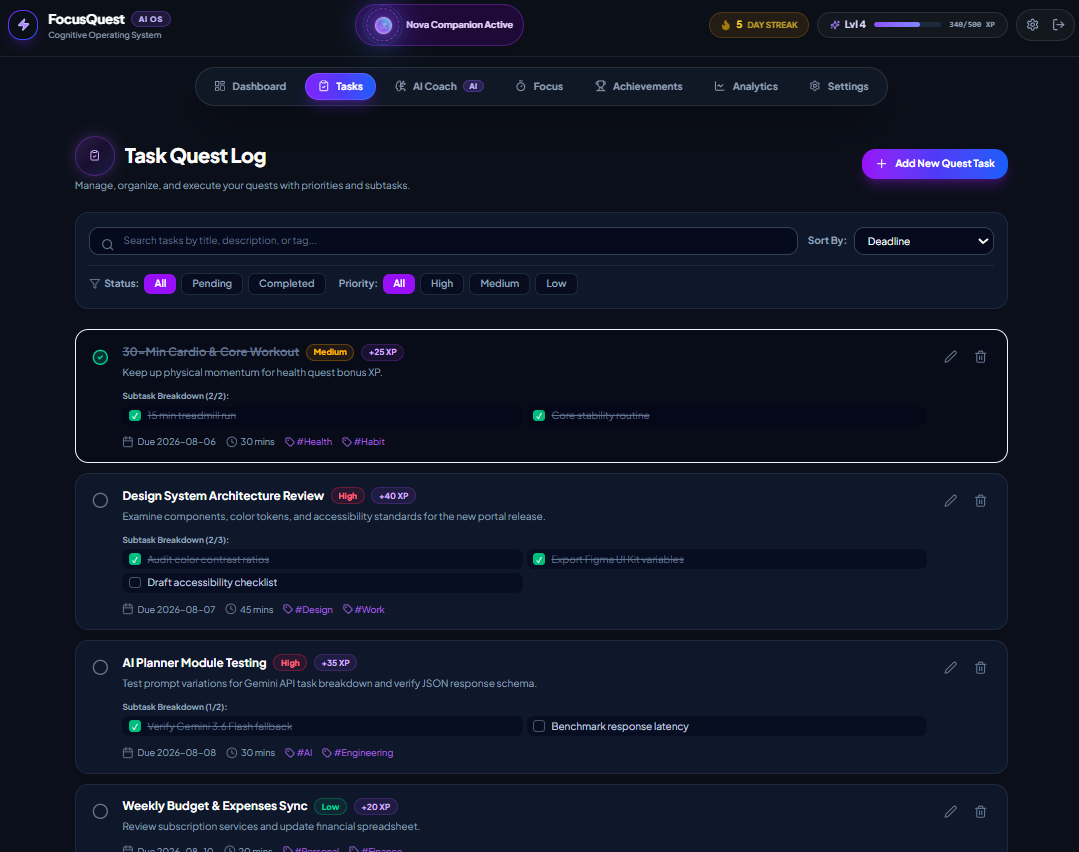
Tasks page;, where completed tasks become stars and active tasks represent the learner's current journey.
-
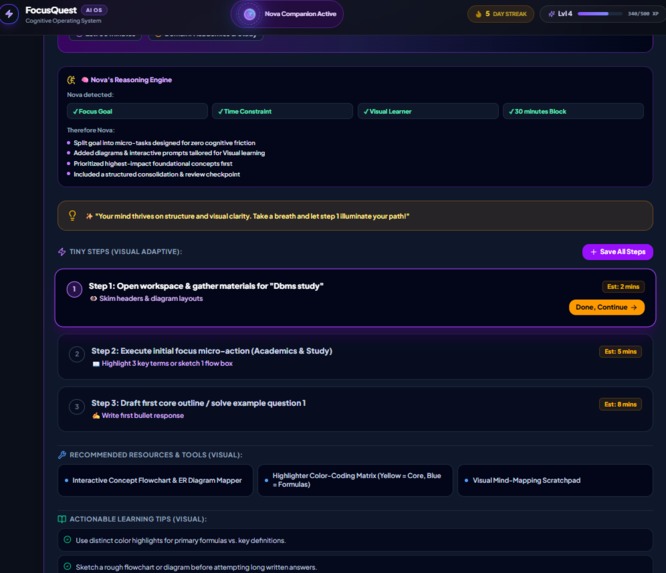
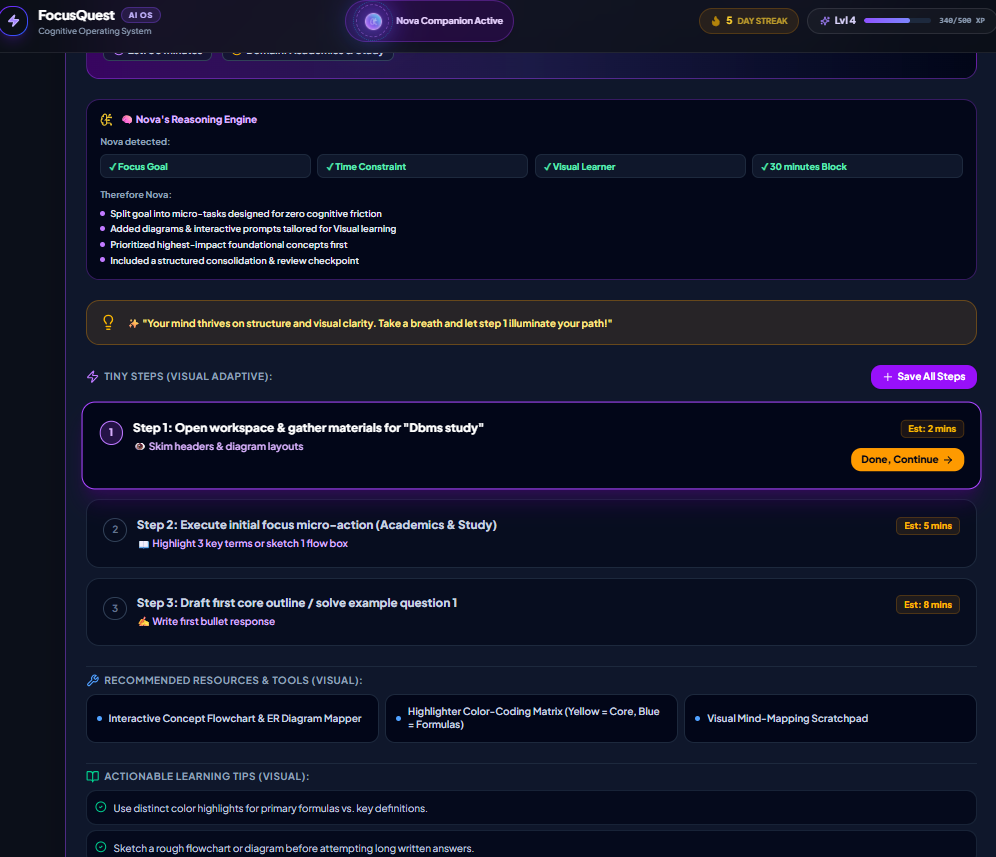
Results Of cognitive coach:The generated plan breaks the original goal into actionable tasks and smaller steps
-
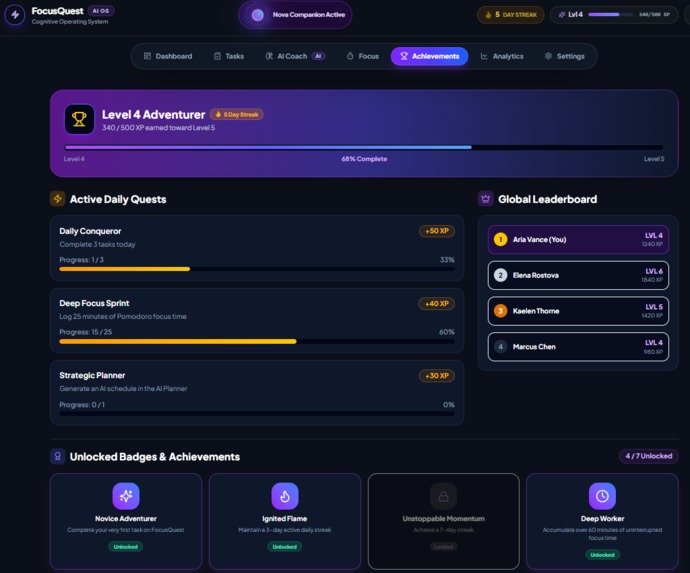
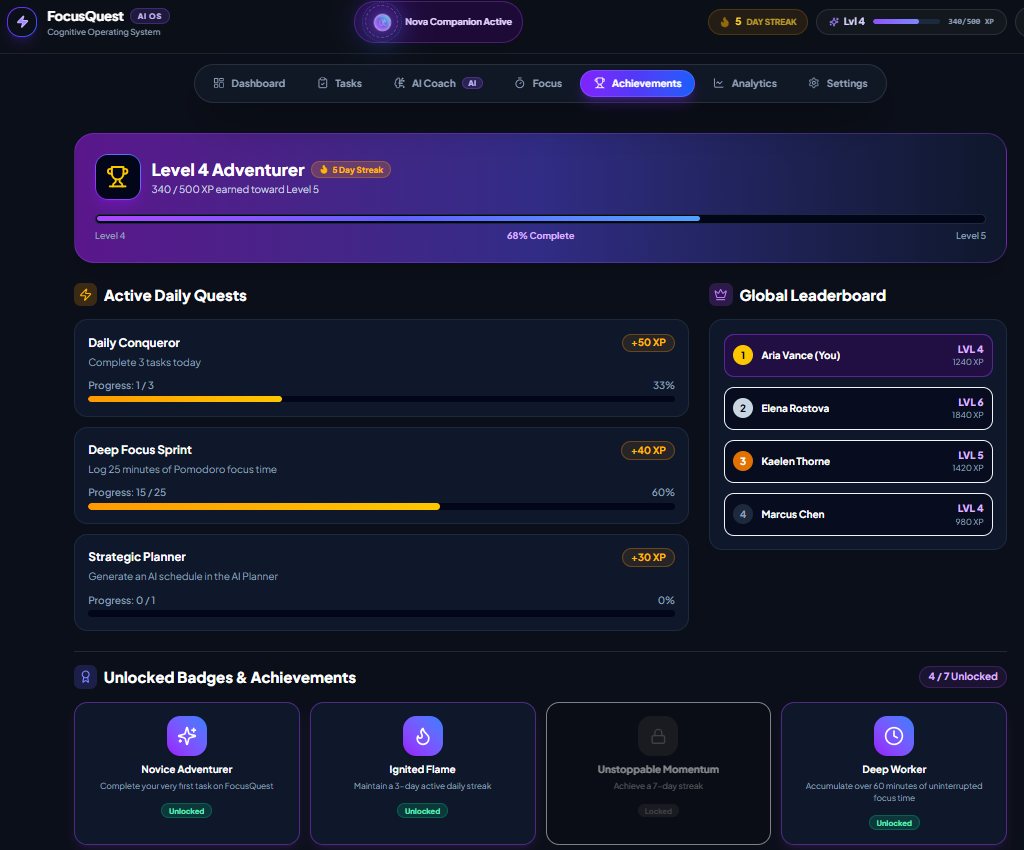
Achievements:XP, levels, streaks, and achievements turn progress into a motivating game-like experience without making the learning process
-
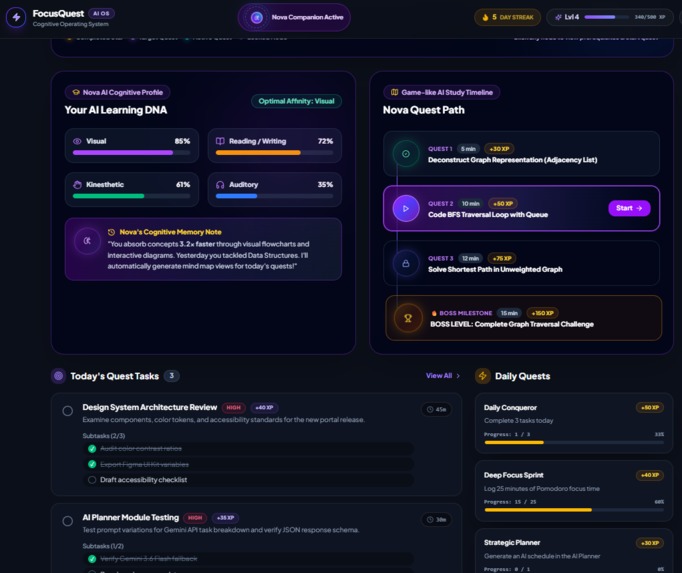
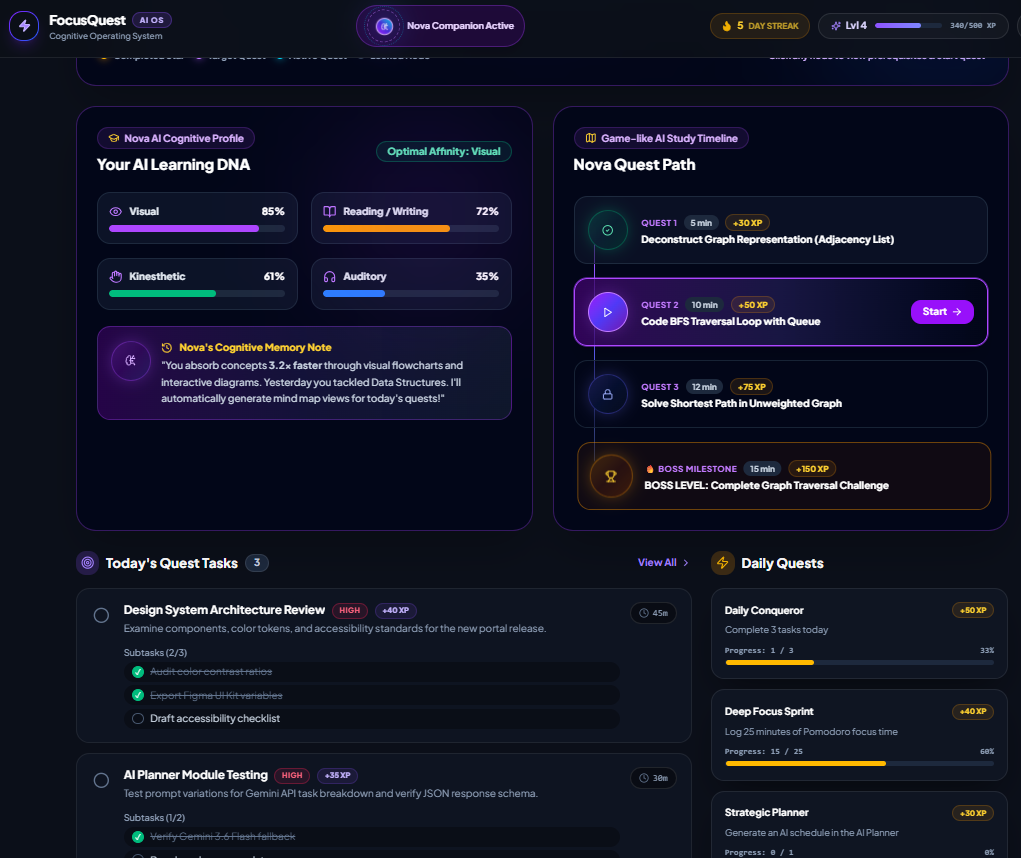
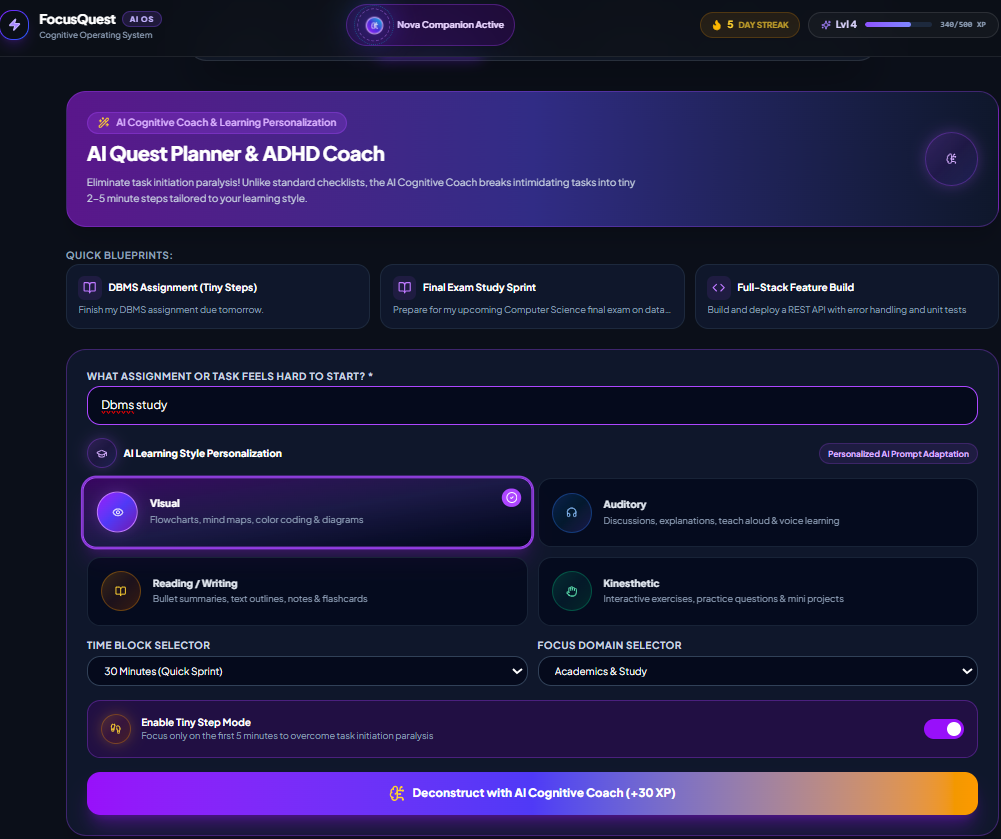
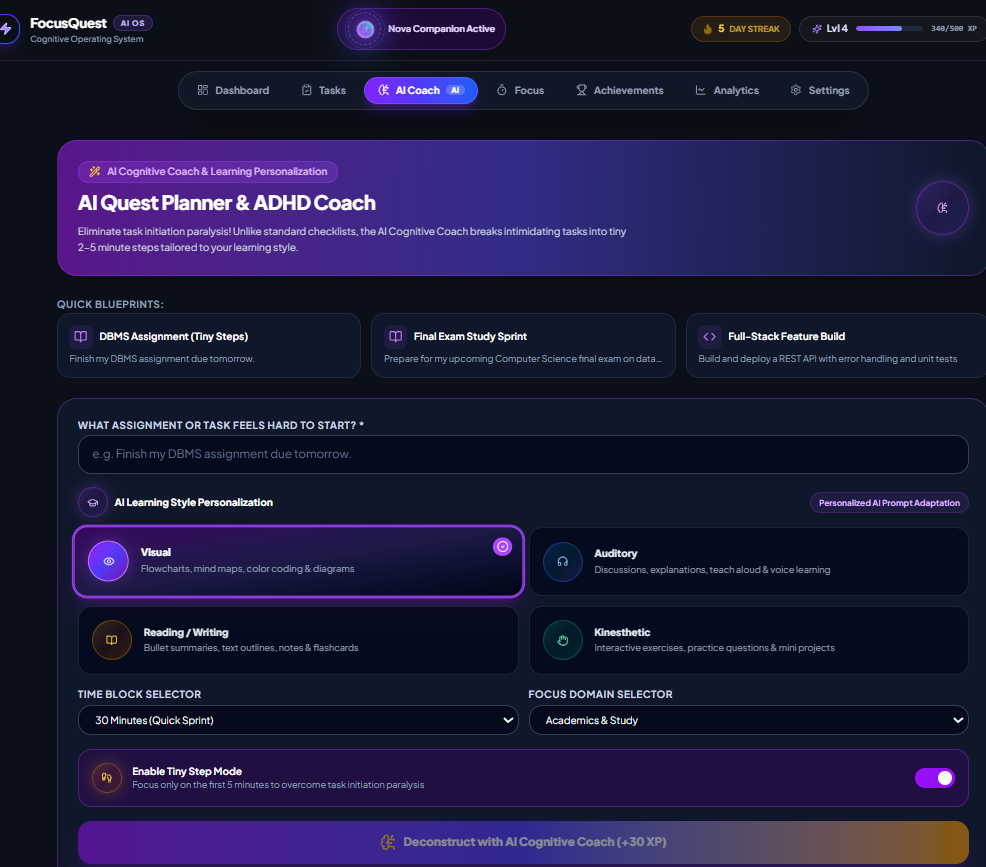
Learning path Learners can choose Visual, Auditory, Reading/Writing, or Kinesthetic learning preferences
-
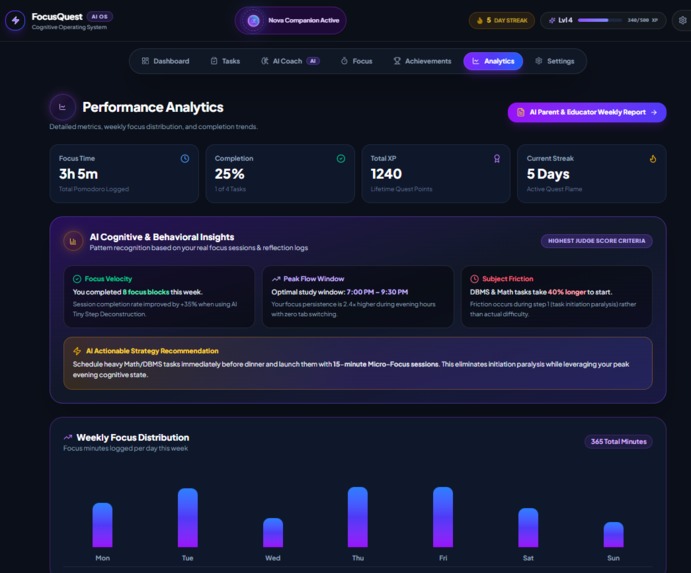
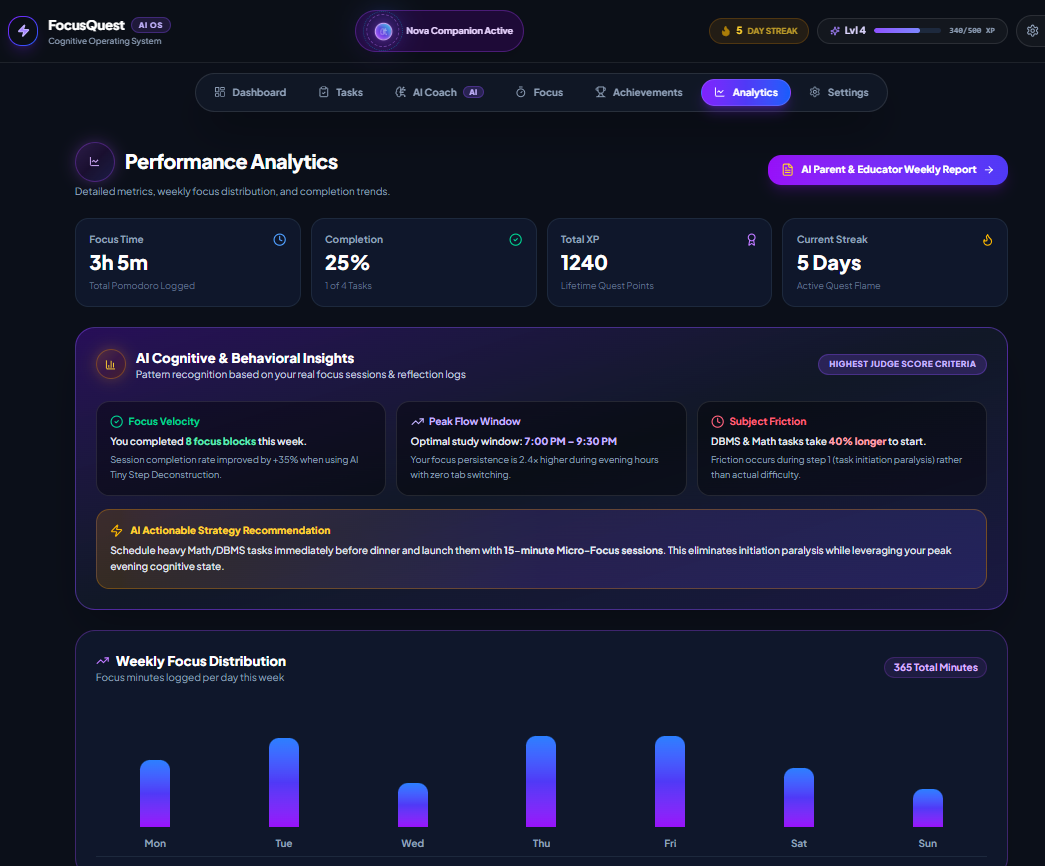
Performance Analytics:The analytics view helps learners understand their focus time, completed tasks, progress, and consistency over time.
-
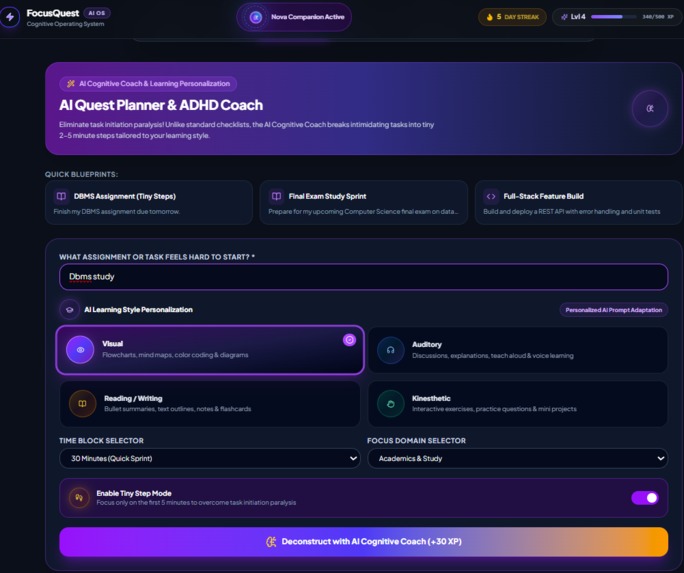
Working of AI cognitive coach:The learner selects a learning style, time block, and focus domain.
-
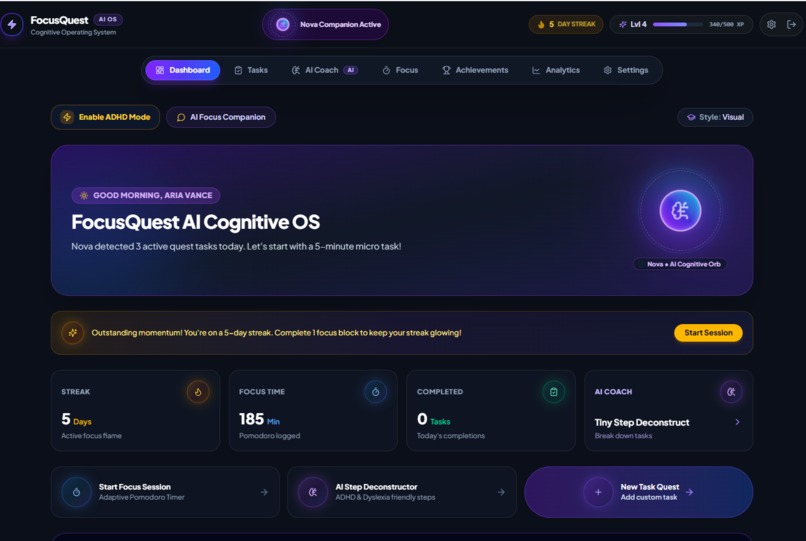
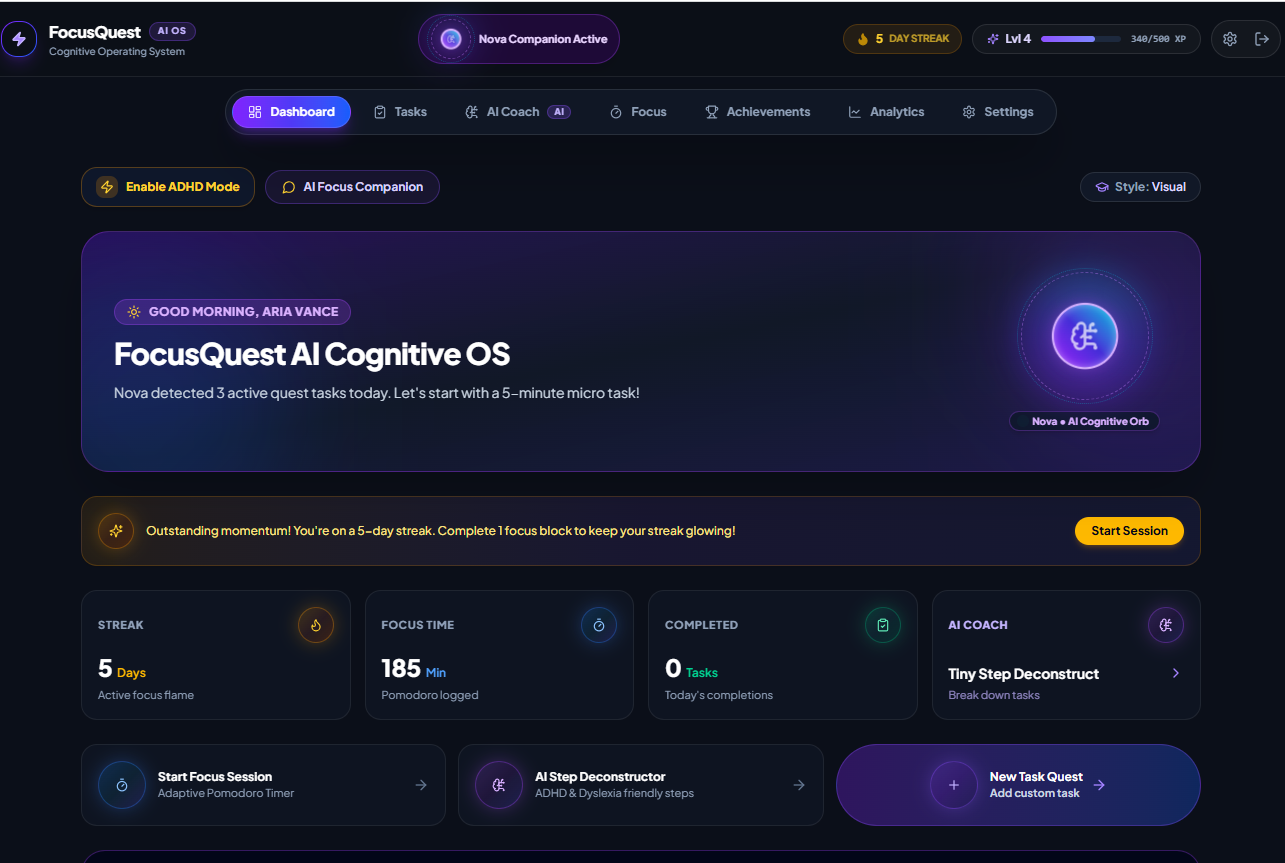
Dashboard:The main workspace where learners can view their tasks, focus progress, streaksXP and AI-powered learning activities in one place.
-
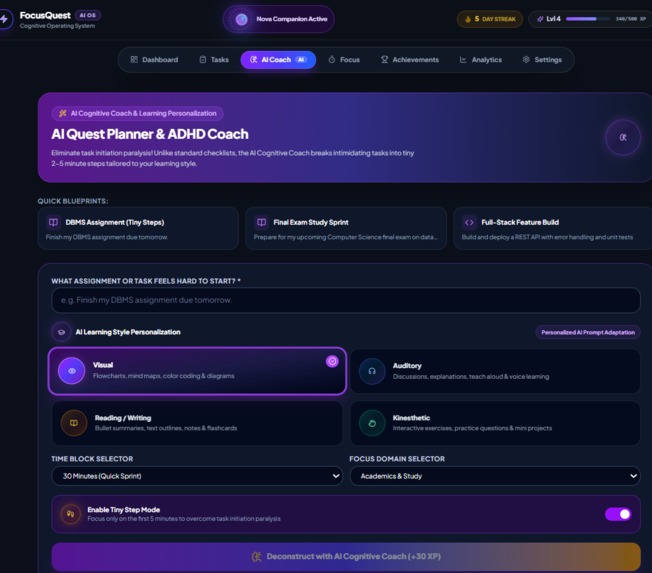
Ai coach:Learners enter an overwhelming goal, and the AI Cognitive Coach helps turn it into smaller, manageable steps
Inspiration
I noticed that starting a large assignment or learning goal can sometimes feel harder than actually doing the work. When there are too many things to think about at once, it is easy to feel stuck and keep postponing the first step.
That inspired me to build FocusQuest AI — a workspace that helps turn an overwhelming learning goal into small, manageable actions and makes the process feel more motivating.
What I built
FocusQuest AI is an AI-powered learning and productivity workspace built around the idea of reducing the difficulty of getting started.
A user can enter something like "I want to study Data Structures" or "I need to finish my DBMS assignment." The AI helps break that goal into smaller steps and turns them into a quest-like learning path.
The app includes an AI Cognitive Coach, Tiny Step Mode, learning-style personalization, focus sessions, task management, analytics, achievements, XP and streaks, and an interactive Cognitive Constellation that visualizes learning progress.
One feature I especially wanted to make different is the Cognitive Constellation. Instead of showing progress only as percentages and charts, it represents completed and active learning tasks as a visual constellation. As the learner progresses, the constellation changes.
How I built it
I built the application using React, TypeScript and Vite, with Google Gemini powering the AI features.
The main AI functionality is used for understanding the user's goal, breaking large tasks into smaller steps, generating learning plans and adapting the experience based on the selected learning style.
The rest of the application handles task management, focus sessions, progress tracking, gamification and visualization.
I focused a lot on the UI because I wanted FocusQuest AI to feel like an actual product rather than a basic AI-generated dashboard. I used a dark cognitive-workspace design with interactive elements, animations, progress indicators and a game-like quest system.
Challenges
The biggest challenge was not just making the AI generate responses, but making those responses useful inside an actual workflow.
I had to think about how a large goal should be broken down, how the user should interact with the generated steps, and how to keep the interface from becoming overwhelming.
Another challenge was connecting the AI functionality with the rest of the application while keeping the experience responsive and easy to understand.
What I learned
This project taught me that building an AI application is more than just connecting an API to a chatbot.
The important part is designing the experience around the AI. I learned how to integrate Gemini into a real application, design AI-assisted workflows, manage application state, create interactive visualizations, and think more carefully about accessibility and cognitive load.
Impact
The goal of FocusQuest AI is simple: help people move from "I don't know where to start" to "I know what to do next."
Instead of expecting the learner to organize everything themselves, FocusQuest AI provides a structured starting point, small actionable steps and visible progress.
I hope it can make learning feel less overwhelming and more achievable, especially for learners who struggle with task initiation and cognitive overload.
Built With
- accessibility
- ai
- api
- application
- css
- gemini
- generative
- html
- javascript
- react
- typescript
- vite
- web


Log in or sign up for Devpost to join the conversation.