nspiration
The idea for FocusPostureAI emerged from a personal realization: long hours spent at a desk severely impacted both my productivity and well-being. I noticed how easy it was to slump into poor posture at my office chair, resulting in stiffness and neck pain. I also had a strong desire to work effectively using structured Pomodoro sessions—focused deep work periods of around 30 minutes. Observing colleagues experiencing similar struggles inspired me to create an AI-powered companion to help maintain optimal posture, breathing habits, and promote healthy productivity practices—especially since it's so difficult to catch oneself slouching.
What I Learned
This was my first time coding independently at this level, and I learned a tremendous amount. Throwing myself into this project allowed me to quickly grasp practical skills in "vibe coding"—rapid prototyping, iterative testing, and problem-solving through trial and error. I discovered the importance of taking action first and refining later, boosting my confidence and adaptability in coding projects.
How I Built It
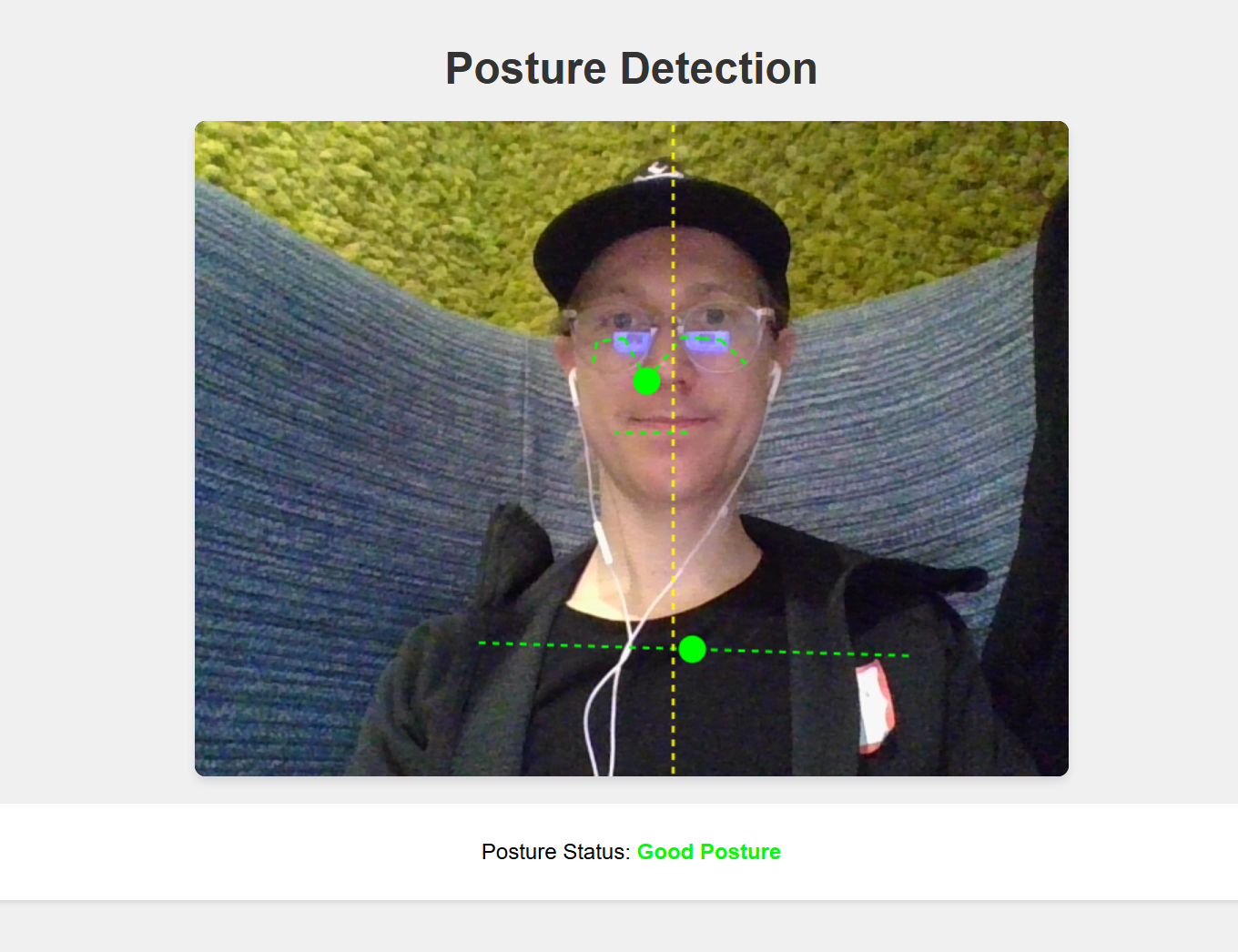
I built the initial prototype using MediaPipe and TensorFlow.js for real-time pose detection and breathing pattern recognition, combined with Tavus AI for hyper-realistic video feedback. The user interface was developed as a simple web application to facilitate immediate interaction and feedback.
The system starts by calibrating the user's sitting posture using the webcam on their computer. It then continuously monitors their alignment and breathing pattern in real-time. Tavus AI serves as a coaching companion, offering lifelike video feedback when poor posture or mouth breathing is detected.
For users in silent mode, instead of video prompts, a subtle glowing frame appears around the screen and starts blinking if incorrect posture is held for more than 10 seconds. The app also notifies the user when it detects mouth breathing, encouraging better respiratory habits.
Additionally, FocusPostureAI integrates Pomodoro-style deep work sessions. After each session, users are guided through short physical exercises to maintain energy and posture.
Optionally, microtransactions can be implemented to reward users with small financial incentives—paid by employers or insurance companies—for completing productive and healthy work sessions.
Challenges
Integrating multiple AI components smoothly was the biggest challenge. Ensuring real-time responsiveness and accurate detection of subtle posture deviations required iterative testing and optimization. Additionally, refining the user experience to be engaging without being intrusive took careful consideration.
Overall, this project reinforced my belief in the transformative power of AI for enhancing everyday health and productivity.

Log in or sign up for Devpost to join the conversation.