-
-
Dashboard
-
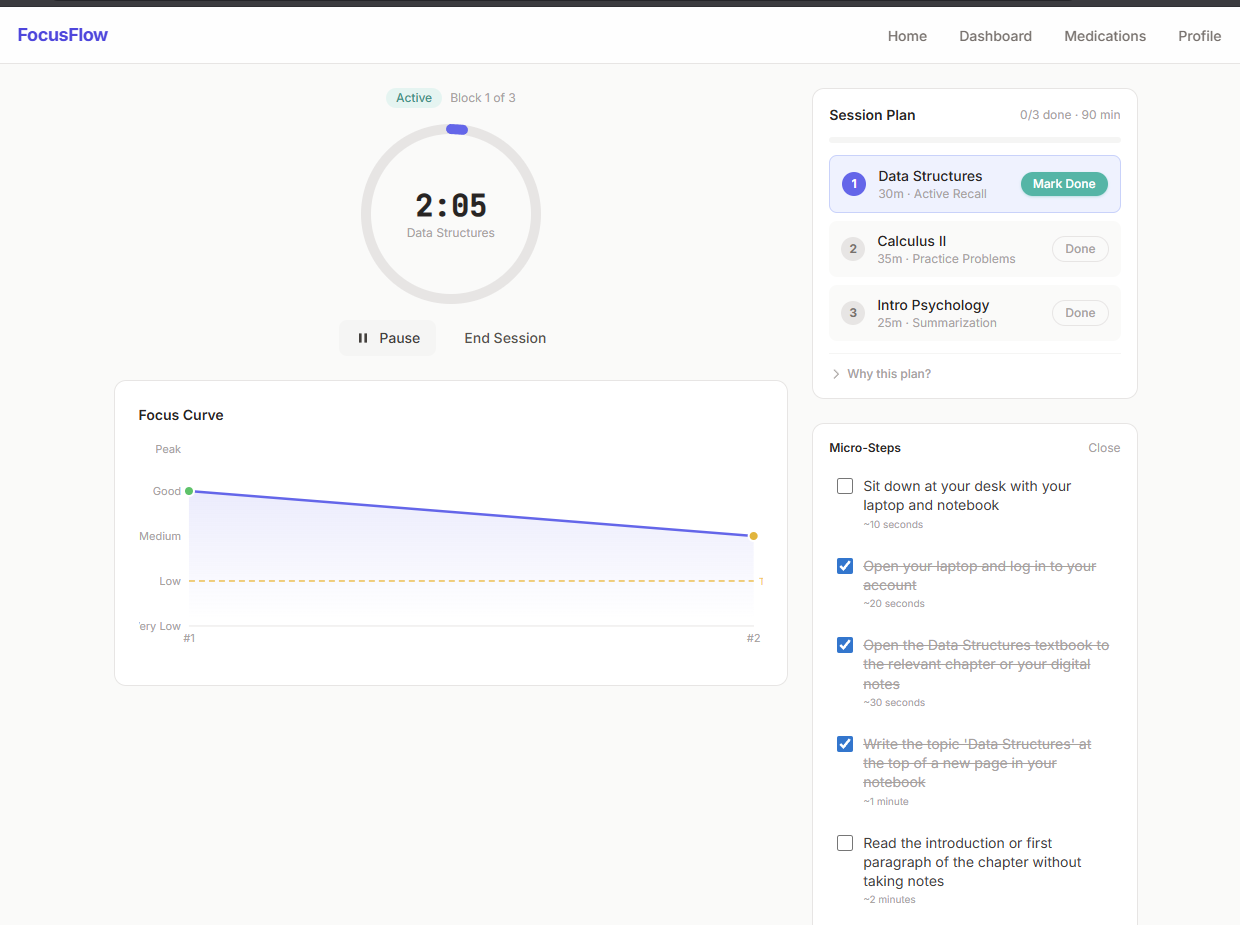
Timer
-
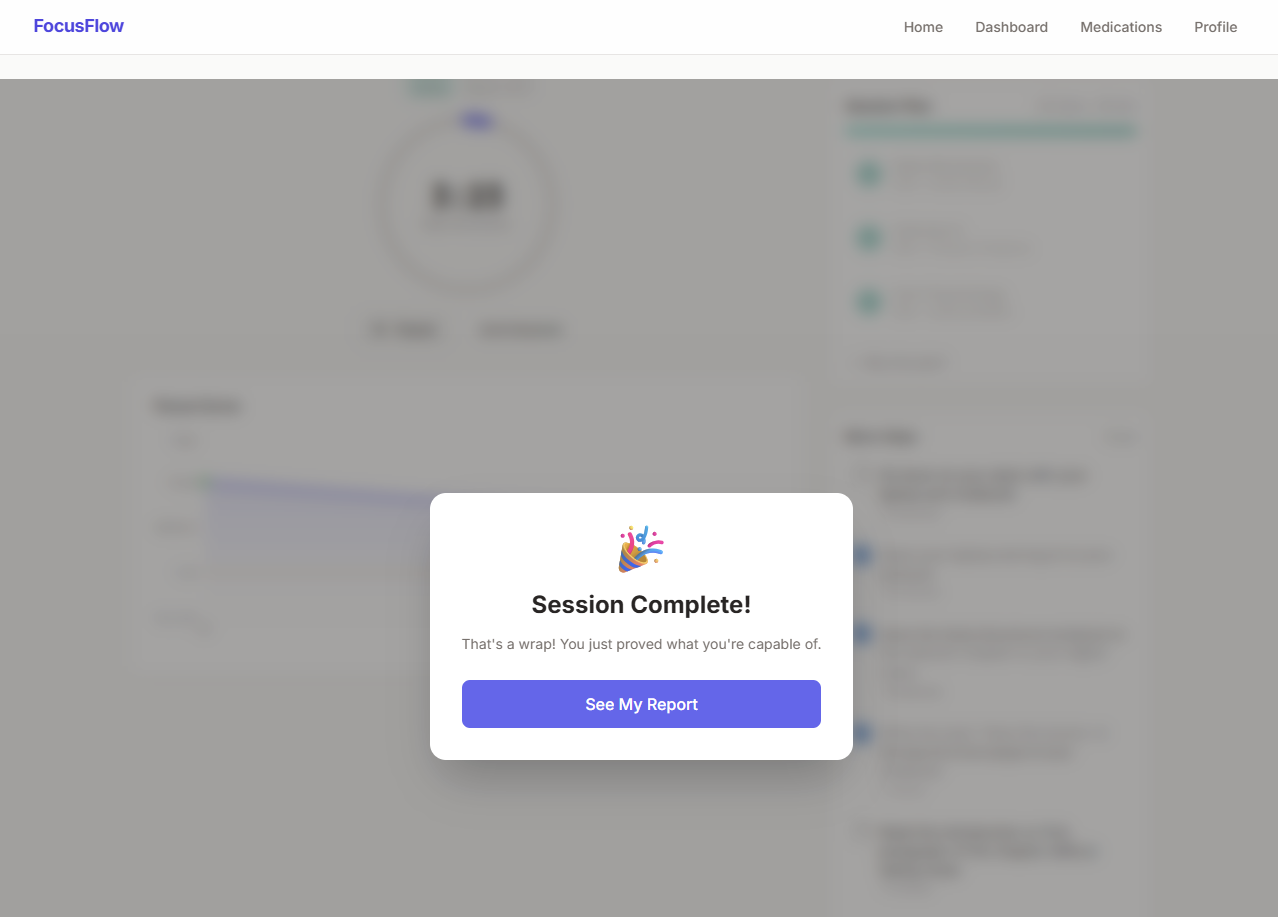
Success
-
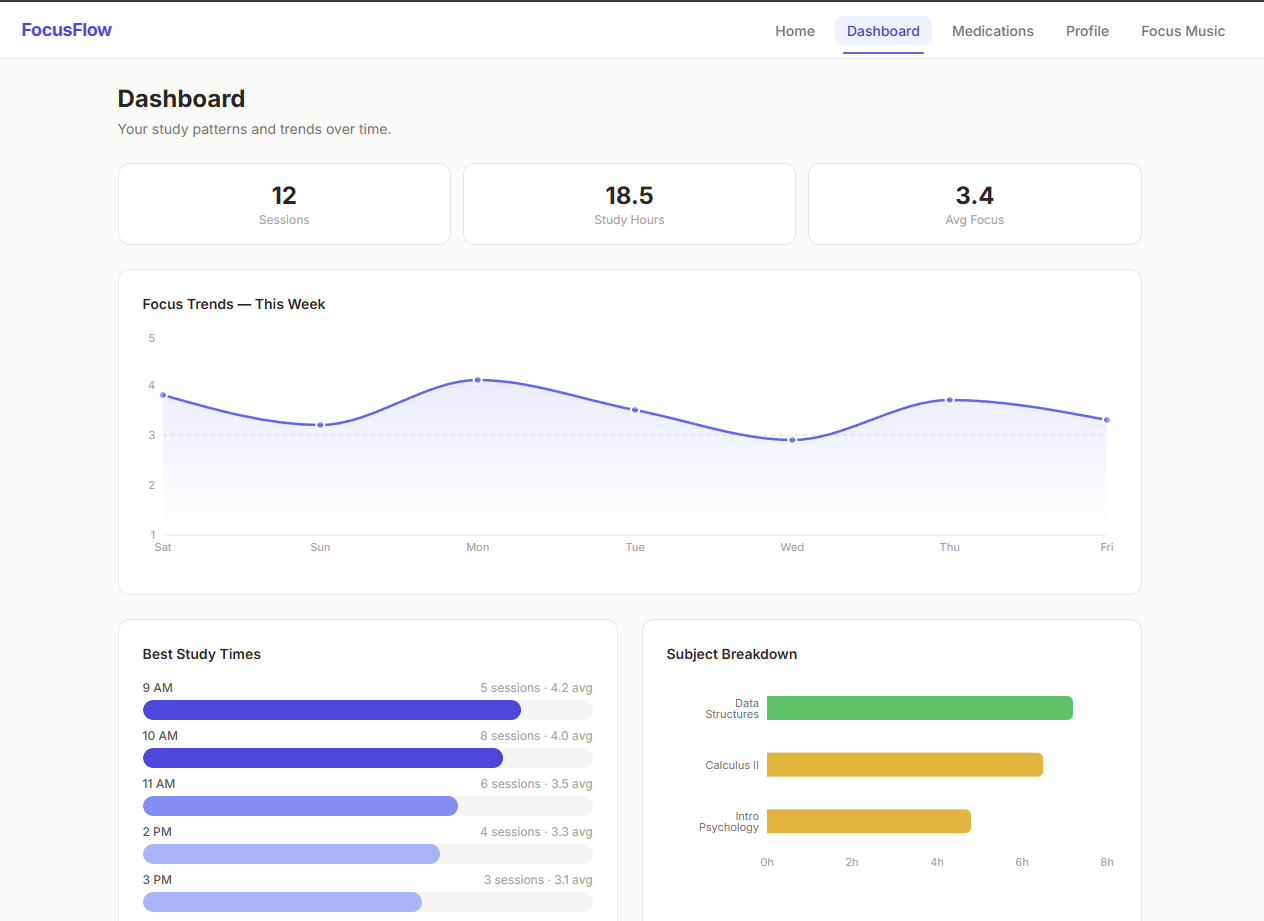
Dashboard
-
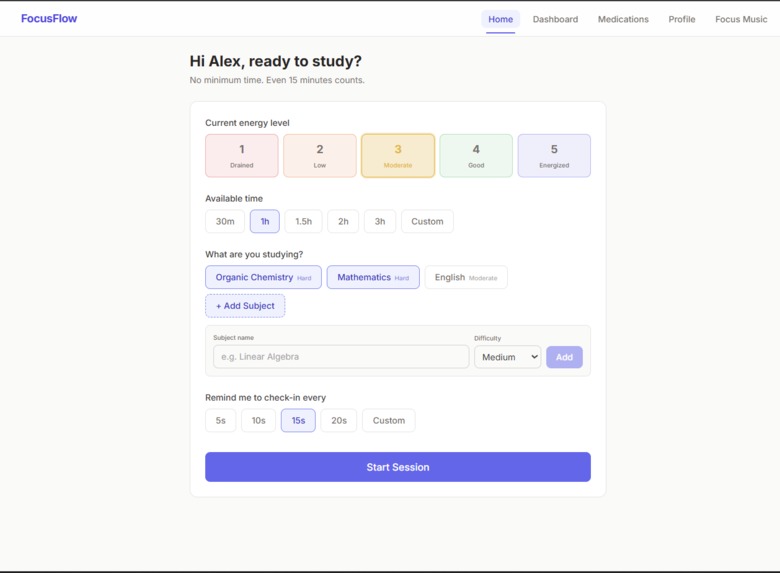
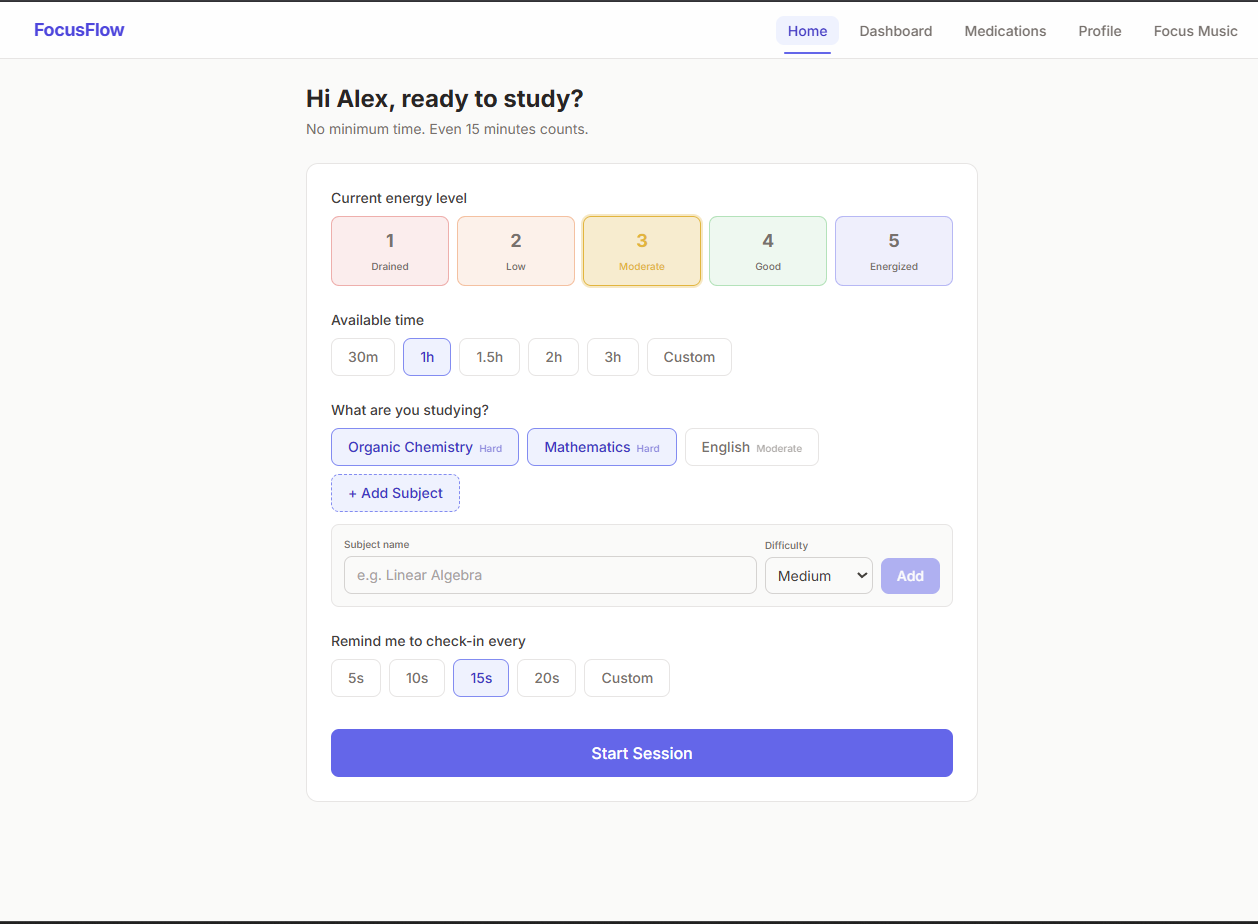
Input
-
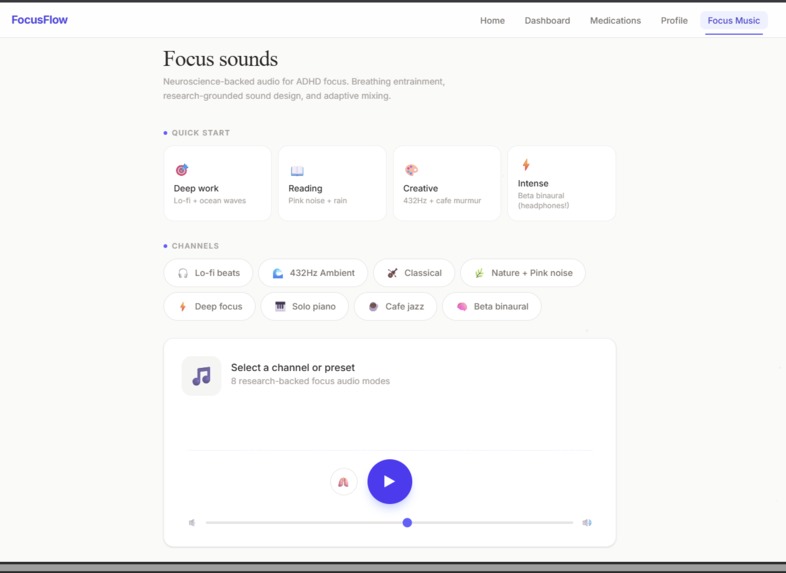
Ambient Music
-
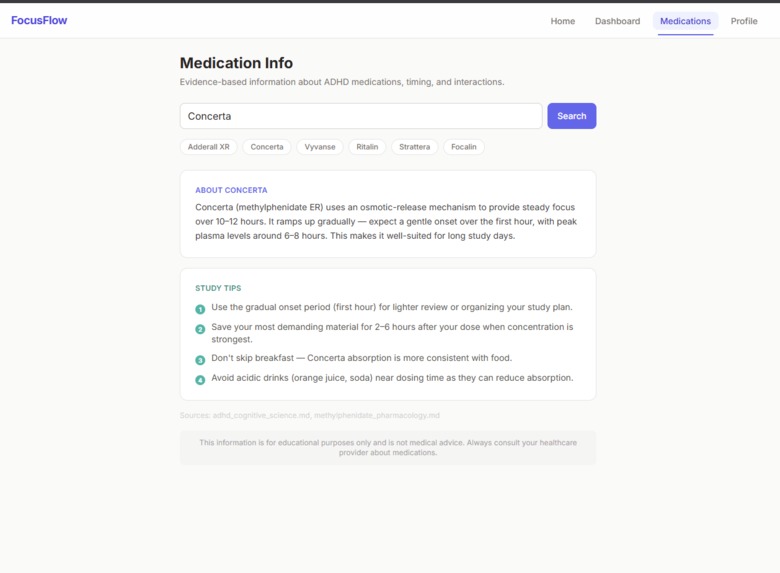
Medications
Track chosen: Educational Health
Inspiration
As college students with ADHD, we lived the problem firsthand. Every study tool we tried Pomodoro timers, AI chatbots, planner apps was built for neurotypical brains. Pomodoro assumes you can sustain focus in rigid 25-minute cycles. Planners assume you can follow a plan. That's literally the core ADHD difficulty. With 11% of U.S. college students diagnosed with ADHD and 70% failing to graduate within 6 years, we knew the gap wasn't intelligence it was tooling. We wanted to build something that treats cognitive performance the way sports medicine treats physical performance: track it in real-time, detect degradation, and intervene before burnout.
What it does
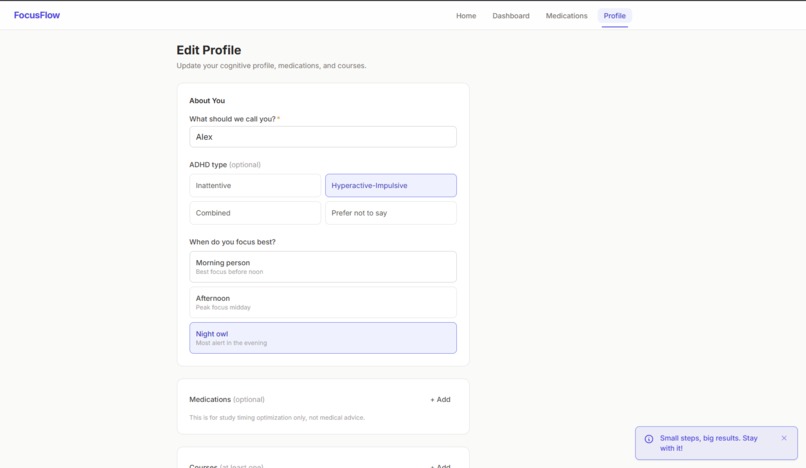
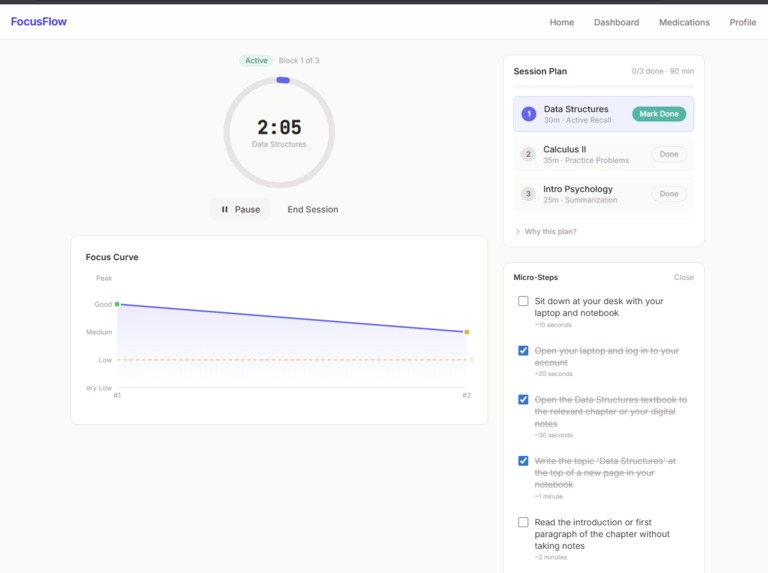
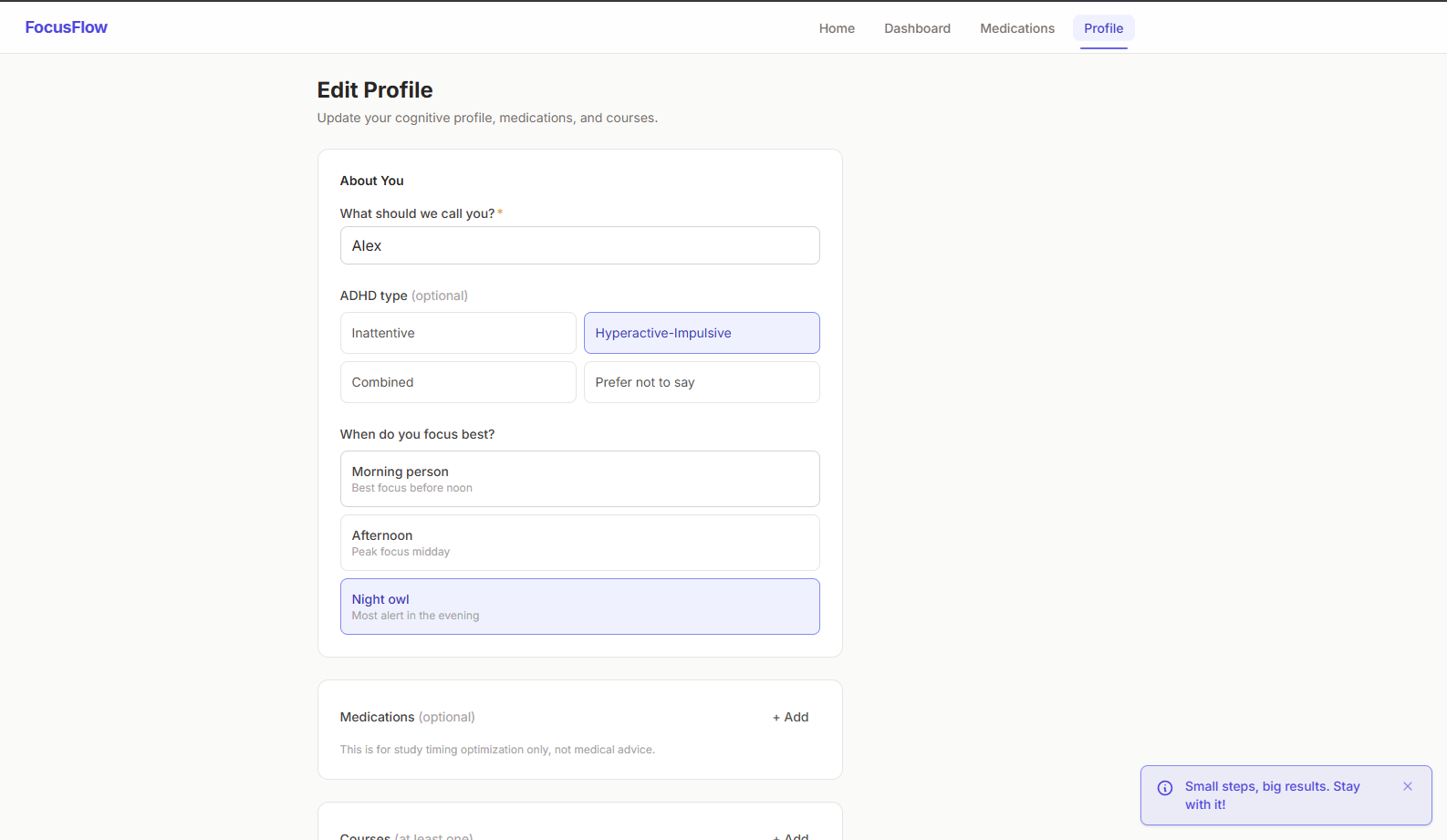
FocusFlow is an AI-powered adaptive study session manager for neurodiverse students. It builds a cognitive profile (ADHD type, medications with dosing schedules, courses with difficulty ratings, energy patterns) and uses it as context for every AI decision. When a student starts a session, the AI generates a personalized study plan ordering subjects by medication peak windows and energy levels, chunking overwhelming topics into micro-tasks, and scheduling movement breaks.
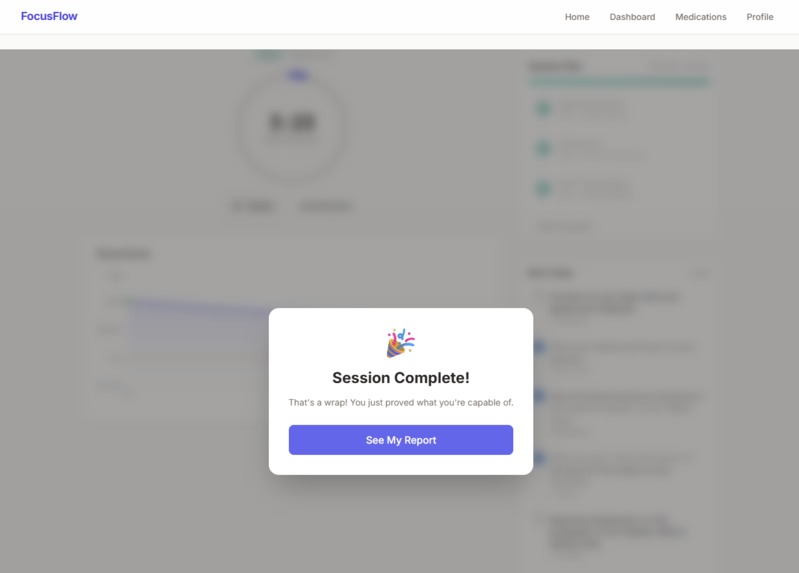
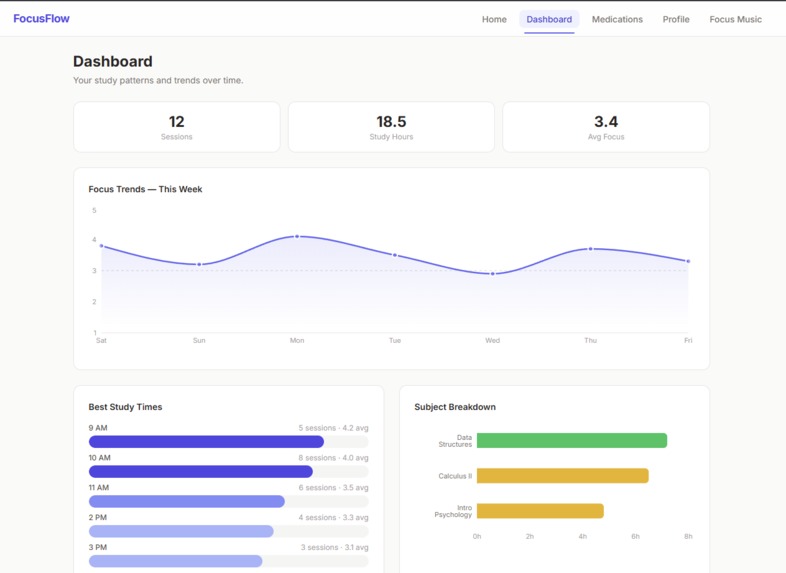
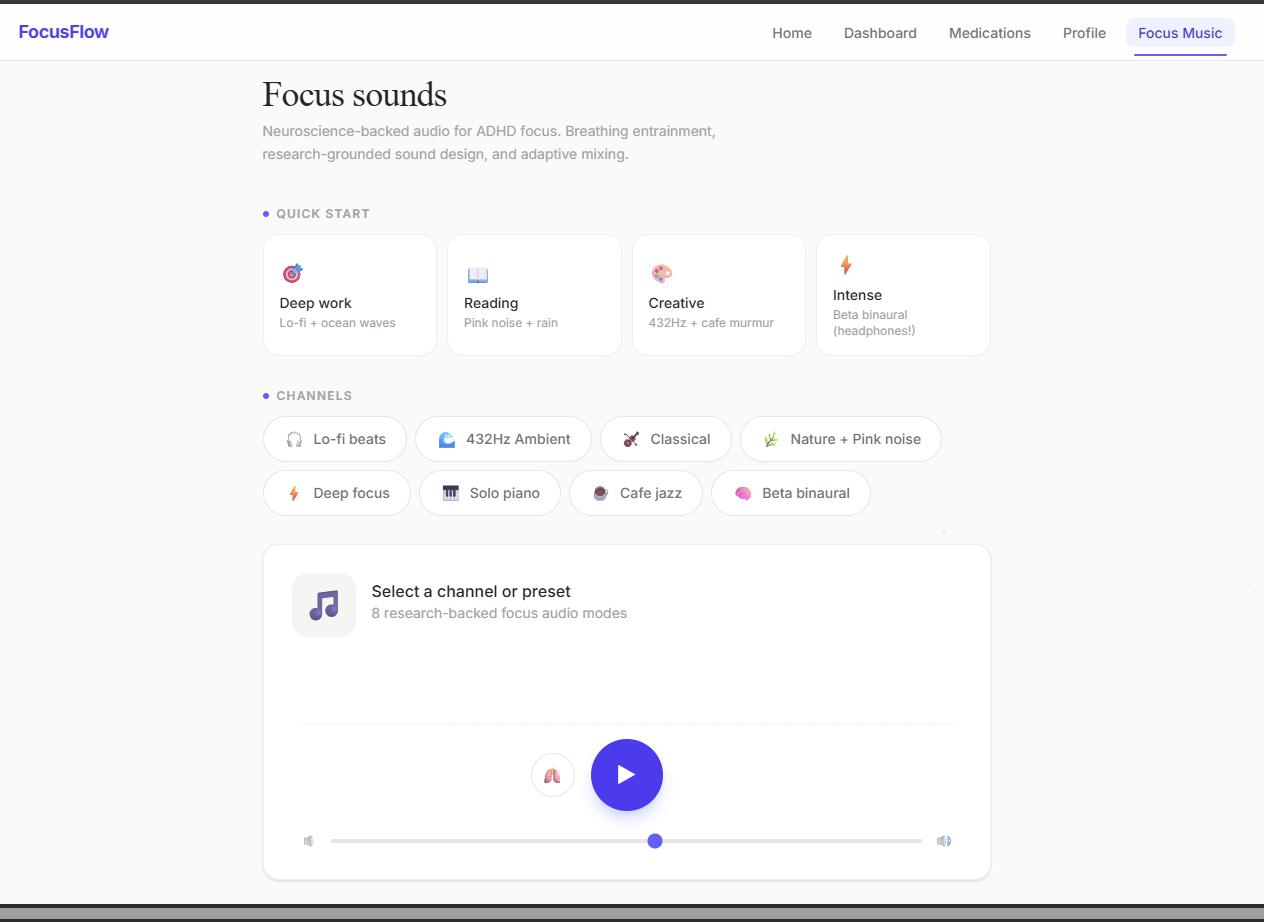
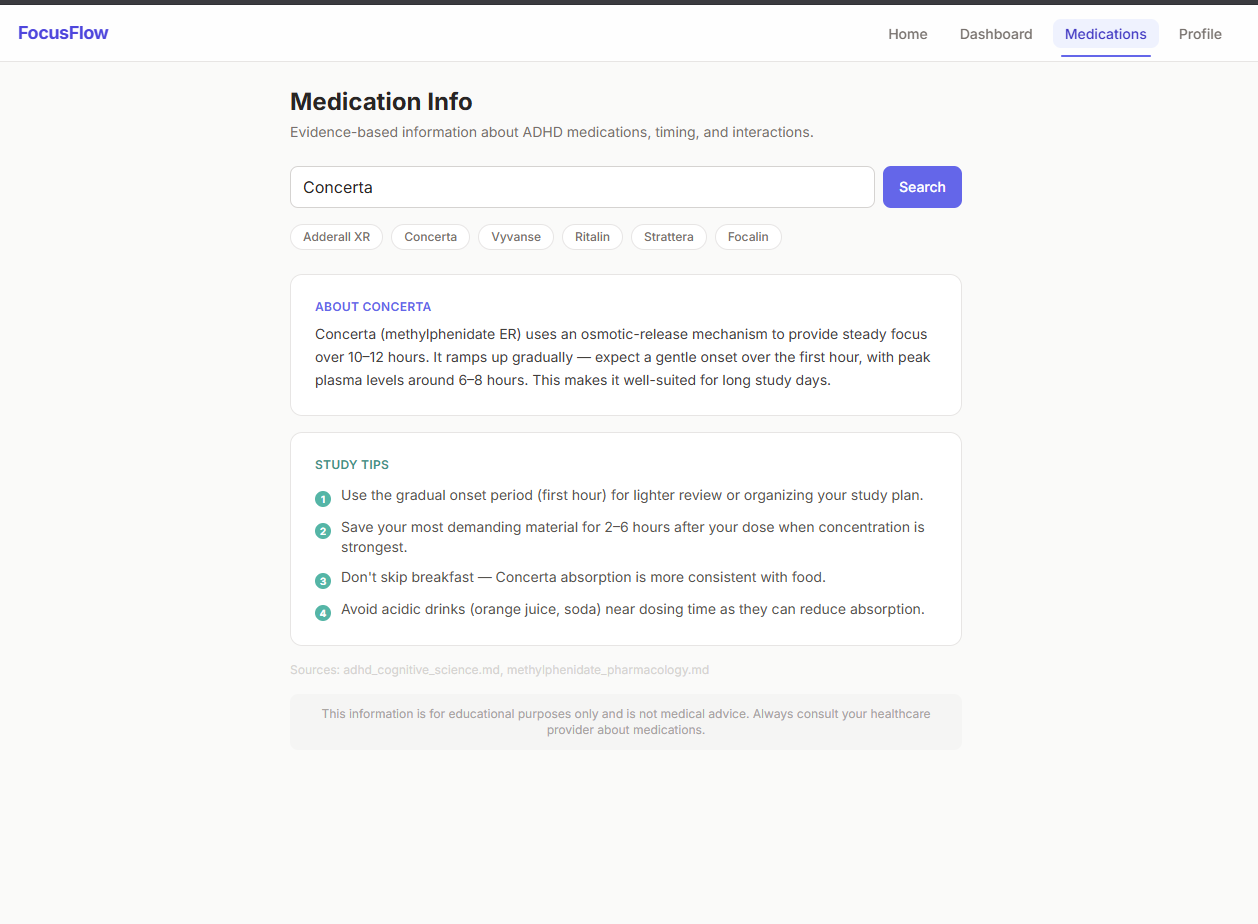
During the session, FocusFlow performs micro check-ins (a simple 1–5 focus tap every 15–20 minutes) and builds a live focus curve in real-time. When focus drops, the AI intervenes with context-aware suggestions not generic "take a break" advice, but specific recommendations based on the student's medication timing, current subject, and session history. It also includes a Focus Music engine with 8 synthesized audio channels and 8 ambient layers (100% procedurally generated via Web Audio API zero audio files), a RAG-powered medication info module with harm reduction guidelines, and a longitudinal dashboard tracking focus trends across sessions.
How we built it
Frontend: React 19 + Tailwind CSS 4 + GSAP for smooth, neurodivergent-friendly animations. Zustand for state management with persistence. Recharts for data visualization. The Focus Music engine is a custom SoothingEngine class built on the Web Audio API oscillators, filters, LFOs, and gain nodes creating lo-fi beats, 432Hz tones, nature soundscapes, and binaural patterns entirely in the browser.
Backend: FastAPI (Python) with SQLAlchemy + SQLite for the database. LLaMA 3.3 70B via Groq's inference API ($\sim$200ms response times) powers all AI features session planning, check-in analysis, adaptation suggestions, and coaching reports. A RAG pipeline over a curated knowledge base of ADHD cognitive science, medication references, study strategies, and harm reduction guidelines grounds every LLM response in vetted information.
Deployment: Netlify (frontend) + Render (backend), both free tier. Total infrastructure cost: \$0.
Challenges we ran into
Memory limits on Render's free tier (512MB). Our initial stack included ChromaDB + sentence-transformers, which pulls in PyTorch (~2GB) as a transitive dependency. We had to replace the entire vector database with a lightweight in-memory keyword-based RAG system same API surface, zero heavy dependencies, and it actually works better for our small (~32KB) curated knowledge base.
Frontend-backend schema mismatches: The onboarding form sent empty strings ("") for optional fields like adhd_type, but the backend Pydantic schemas had strict regex validation that rejected anything that wasn't null or a valid option. This caused silent 422 errors that took time to trace through the full stack. We added pre-validators to gracefully convert empty strings to None.
Audio persistence across React Router navigation: React unmounts components on route changes, killing any playing audio. We solved this with a module-level singleton pattern the SoothingEngine instance lives outside React's lifecycle in a Zustand store, so music keeps playing seamlessly across page navigation.
Accomplishments that we're proud of
Zero-file audio engine: 8 music channels + 8 ambient layers, all procedurally synthesized in real-time using the Web Audio API. No MP3s, no downloads, no licensing issues. Real-time adaptive intervention: The AI doesn't just track focus it detects degradation patterns and suggests specific, context-aware recovery actions grounded in the student's cognitive profile. Encouragement-first design: Every interaction from check-in copy to the coaching report is written to reduce shame and celebrate small wins. The UI uses warm neutrals, no harsh reds, and gentle animations specifically designed for neurodiverse users. Full-stack deployment at \$0: A production-grade AI application with LLM inference, RAG pipeline, persistent database, and real-time audio running entirely on free-tier infrastructure.
What we learned
Building for neurodiversity isn't about adding accessibility features to a neurotypical tool it's about rethinking every assumption from the ground up. Fixed timers don't work. Rigid plans don't work. Shame-based motivation doesn't work. We learned to design for how ADHD brains actually function: variable attention spans, medication-dependent energy curves, and a deep need for structure that doesn't punish you when you can't follow it.
On the technical side, we learned that deployment constraints drive architecture. The 512MB Render limit forced us to replace a heavyweight vector database with a simpler solution that turned out to be faster and more maintainable. Constraints breed creativity.
What's next for FocusFlow
Wearable integration heart rate variability and galvanic skin response data from smartwatches for passive focus detection, eliminating the need for manual check-ins. Peer study rooms multiplayer sessions with shared focus curves and gentle group accountability. Therapist dashboard anonymized, longitudinal cognitive data that students can share with their ADHD coaches or therapists. Mobile app React Native port with offline support and push notification check-ins. Institutional pilot partner with university disability services to offer FocusFlow as a supported accommodation tool.


Log in or sign up for Devpost to join the conversation.