FocusFlow: A Solo Developer's Journey to Building an AI Co-Pilot The Inspiration: From Personal Struggle to a Unified Solution As a student, I found myself constantly juggling a fragmented digital life. My calendar was in one app, my to-do list in another, my study timer was a separate tool, and my personal wellness goals were often just an afterthought. This digital clutter created mental friction, making it harder to focus on what truly mattered: learning and personal growth.
I was inspired by the promise of modern AI to create not just another tool, but a true assistant—a single, intelligent co-pilot that could understand my needs and automate the tedious parts of my life. I envisioned a system that didn't just manage my time, but also supported my well-being. This vision became FocusFlow.
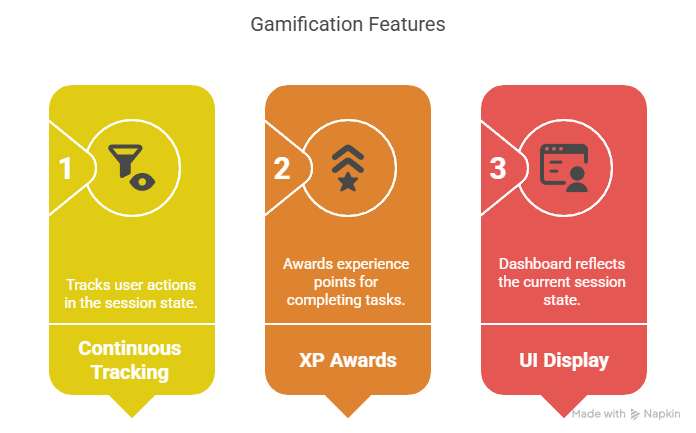
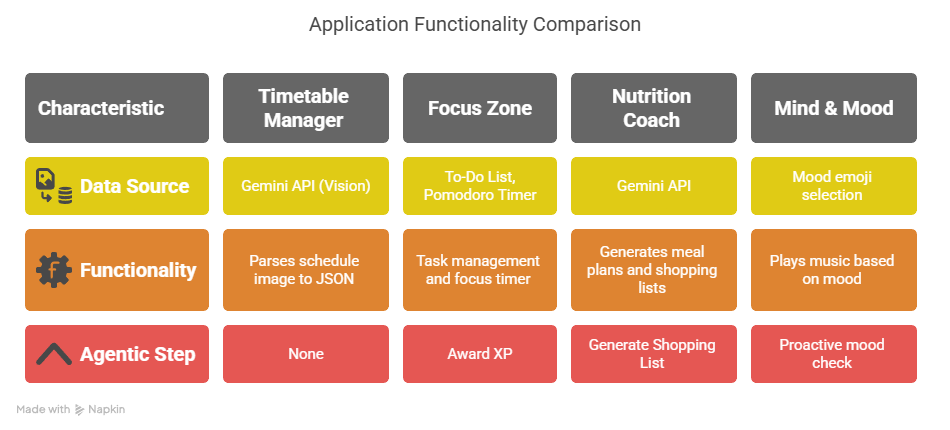
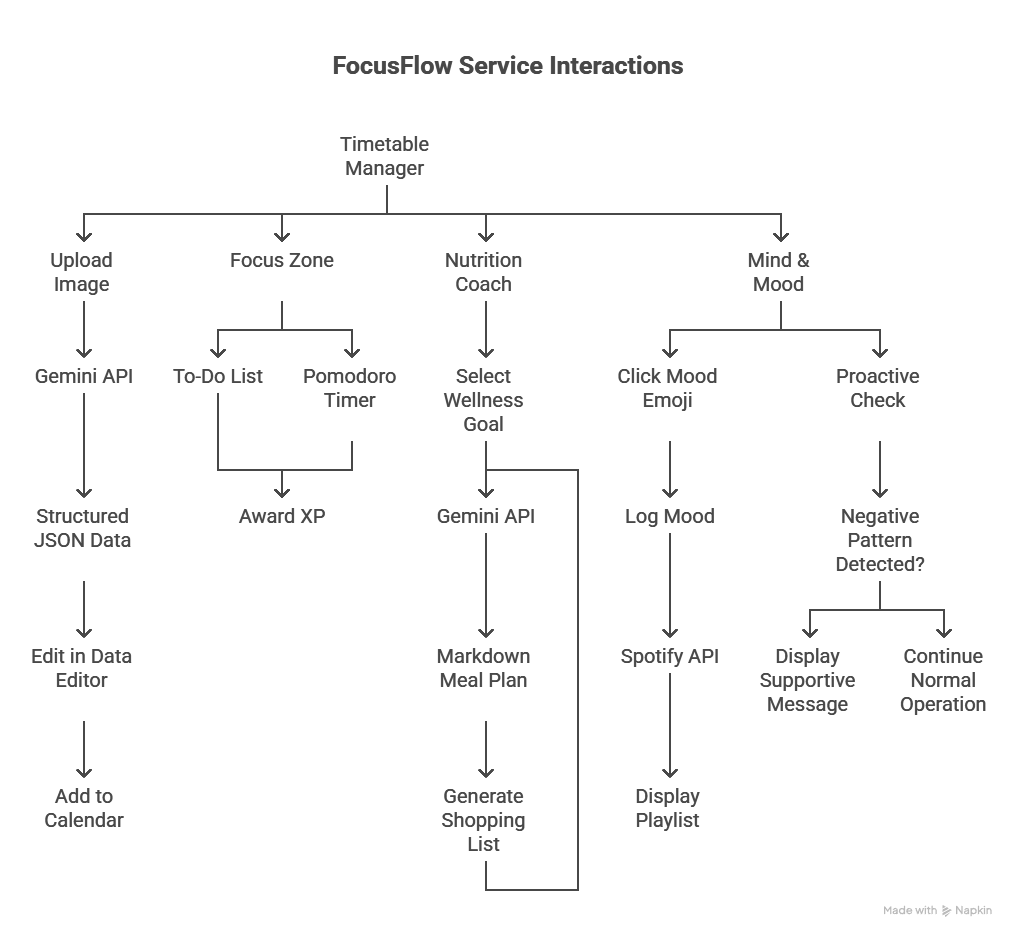
The Project: What is FocusFlow? FocusFlow is an agentic AI assistant designed to be a student's all-in-one platform for productivity and wellness. It integrates scheduling, task management, nutrition planning, and mental health support into a single, cohesive, and gamified experience.
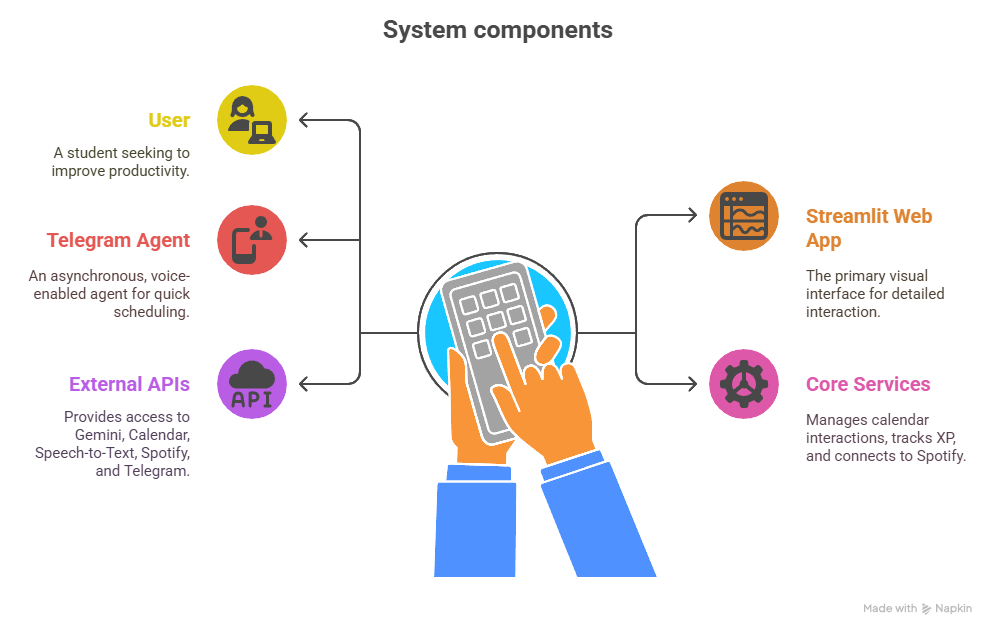
The core principle is to reduce the cognitive load of daily planning. Instead of manually inputting events, users can simply talk or type a command in natural language. Instead of researching what to eat for better focus, they can ask the AI for a personalized plan. The system is designed to be proactive, insightful, and accessible from anywhere, whether through its web interface or a fully integrated Telegram bot.
The Build: A Solo Journey Through Modern Tech Stacks As the sole developer on this project, I architected FocusFlow to be both powerful and modular.
The Brain At the heart of the system is Google's Gemini 1.5 Flash model. I chose it for its strong function-calling capabilities, which are essential for translating natural language commands into concrete actions like creating a calendar event.
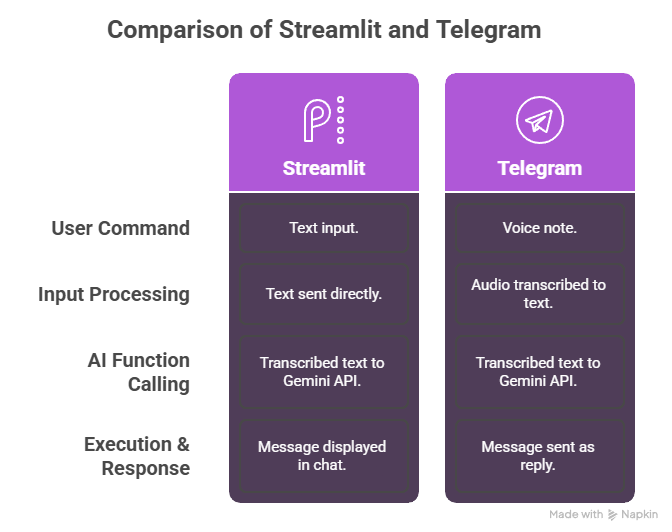
The Web Interface I used Streamlit to rapidly build a multi-page web application. Its simplicity allowed me to create a polished, interactive user interface for features like the gamified dashboard, the timetable manager, and the mood tracker without getting bogged down in complex front-end development.
The Agentic Layer To make the assistant truly accessible, I built a backend agent using Quart (an async version of Flask). This server listens for incoming messages from the Telegram Bot API. When a user sends a voice note, the agent uses the Google Cloud Speech-to-Text API for transcription before passing the command to the Gemini model. This creates a seamless, asynchronous communication channel that is completely free and globally accessible.
Service Integrations The project is a testament to the power of APIs. I integrated the Google Calendar API for scheduling, the Spotify Web API for the music therapy feature, and various Google AI services, all orchestrated by a central Python codebase.
Challenges Faced and Lessons Learned Building FocusFlow as a solo developer was an immense learning experience, marked by several key challenges:
Reliable Function Calling My biggest challenge was getting the AI to reliably call functions with the correct parameters every time. Early versions suffered from "hallucinated" successes or malformed calls. The lesson was in rigorous prompt engineering: I learned that a successful AI agent requires an extremely clear, direct, and unambiguous system prompt that treats the AI less like a conversationalist and more like a highly specialized function-calling engine.
Timezone Complexity Scheduling events across different timezones is notoriously difficult. My initial approach led to events being created at the wrong time. I learned that the most robust solution is to establish a clear "source of truth" for timezone logic. I redesigned the system so the AI provides timezone-naive data, and my Python code handles all the complex conversions using the pytz library before communicating with the Google Calendar API.
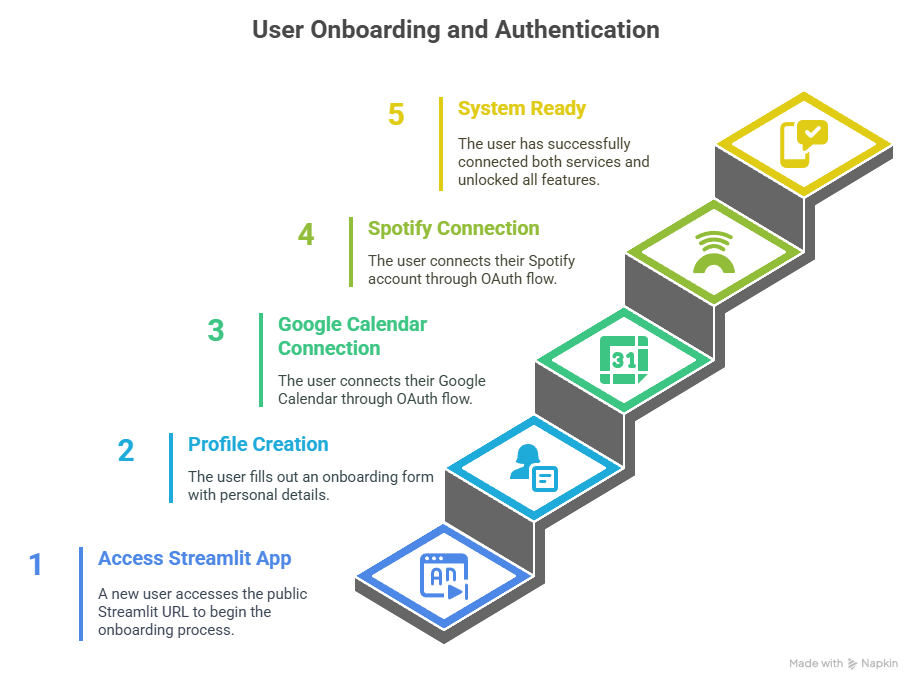
Authentication Flows Integrating multiple OAuth 2.0 services (Google and Spotify) within a Streamlit app presented significant hurdles, particularly with redirect URIs. My key learning was to centralize the authentication process onto a single page. This created a two-stage onboarding flow—profile creation first, then account linking—which solved the redirect loops and resulted in a much cleaner user experience.
The Outcome The result is FocusFlow, a project that I believe demonstrates the potential of agentic AI to create truly helpful and holistic digital experiences. It was a challenging but incredibly rewarding journey that pushed my skills in prompt engineering, system architecture, and full-stack development. It's more than just a scheduling app; it's a co-pilot built to help students navigate their academic and personal lives with less stress and more focus.
Built With
- google-calendar
- google-web-speech-api
- python
- quart
- streamlit
- telegram

Log in or sign up for Devpost to join the conversation.