-
-
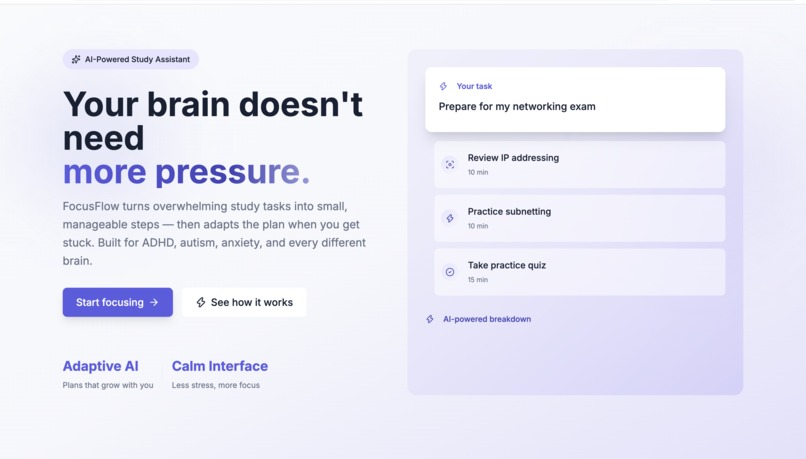
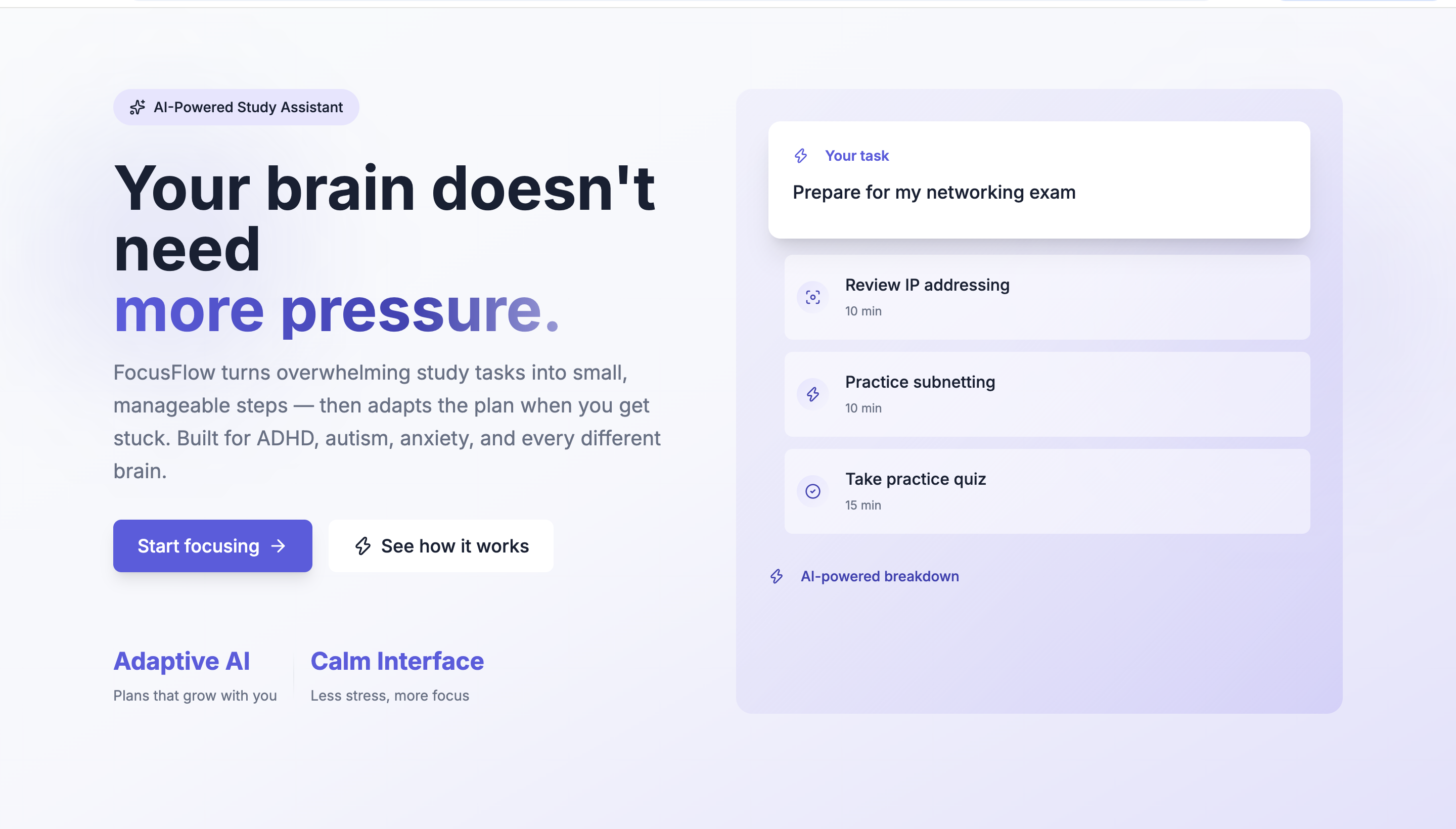
Landing Page
-
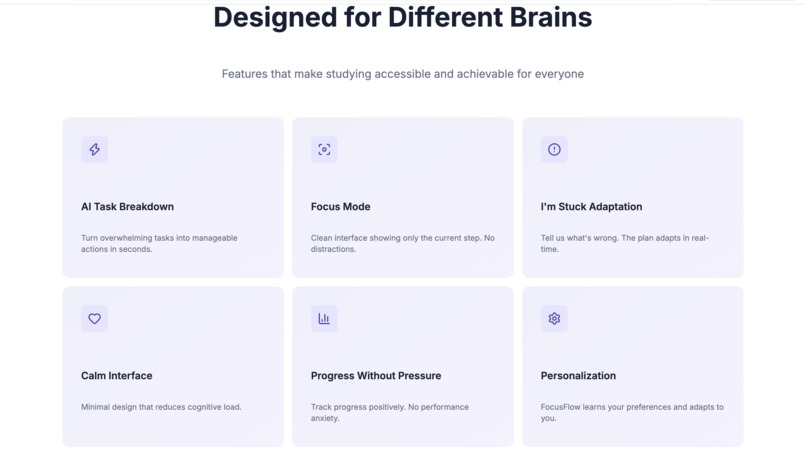
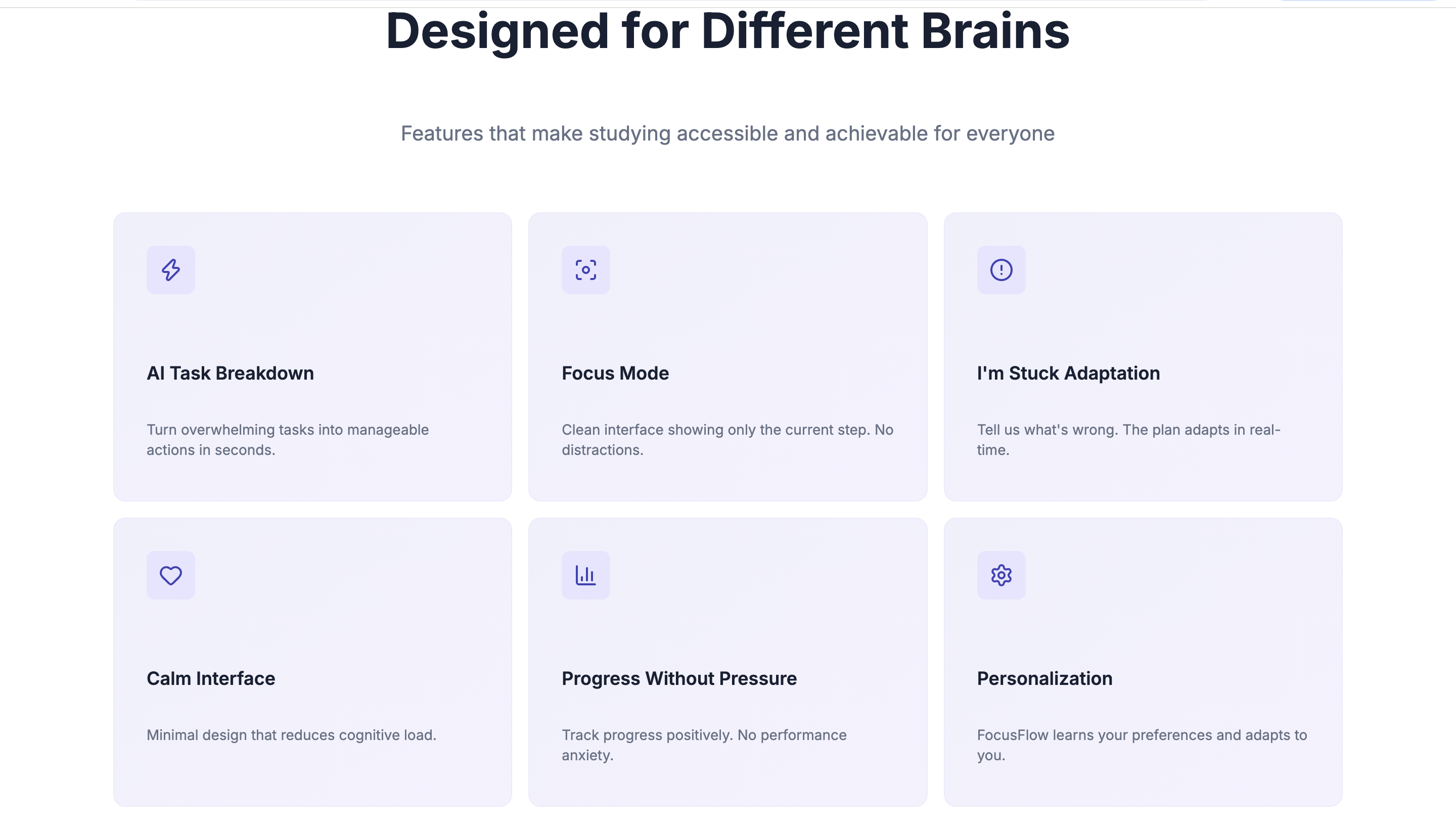
Features Overview
-
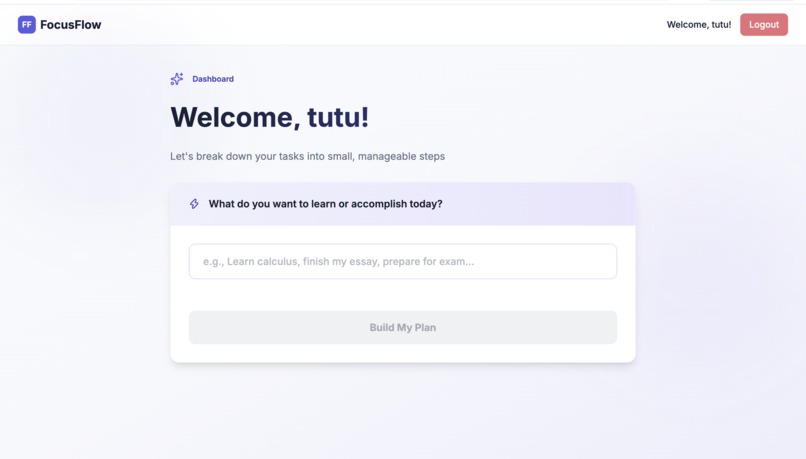
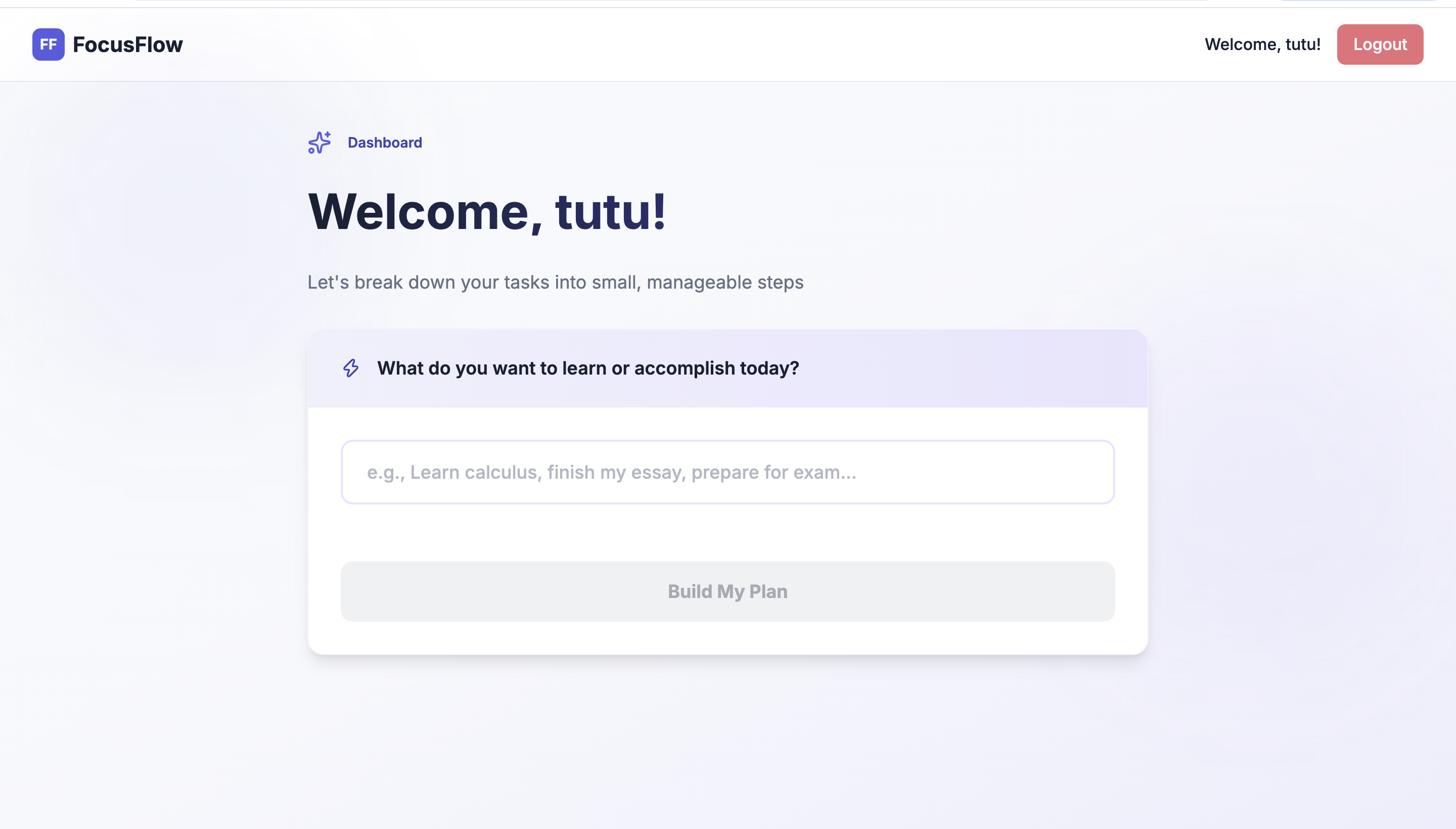
Welcome Dashboard
-
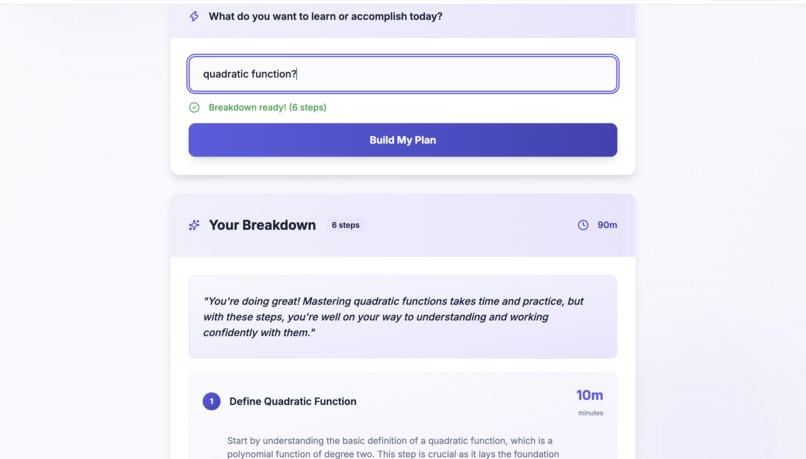
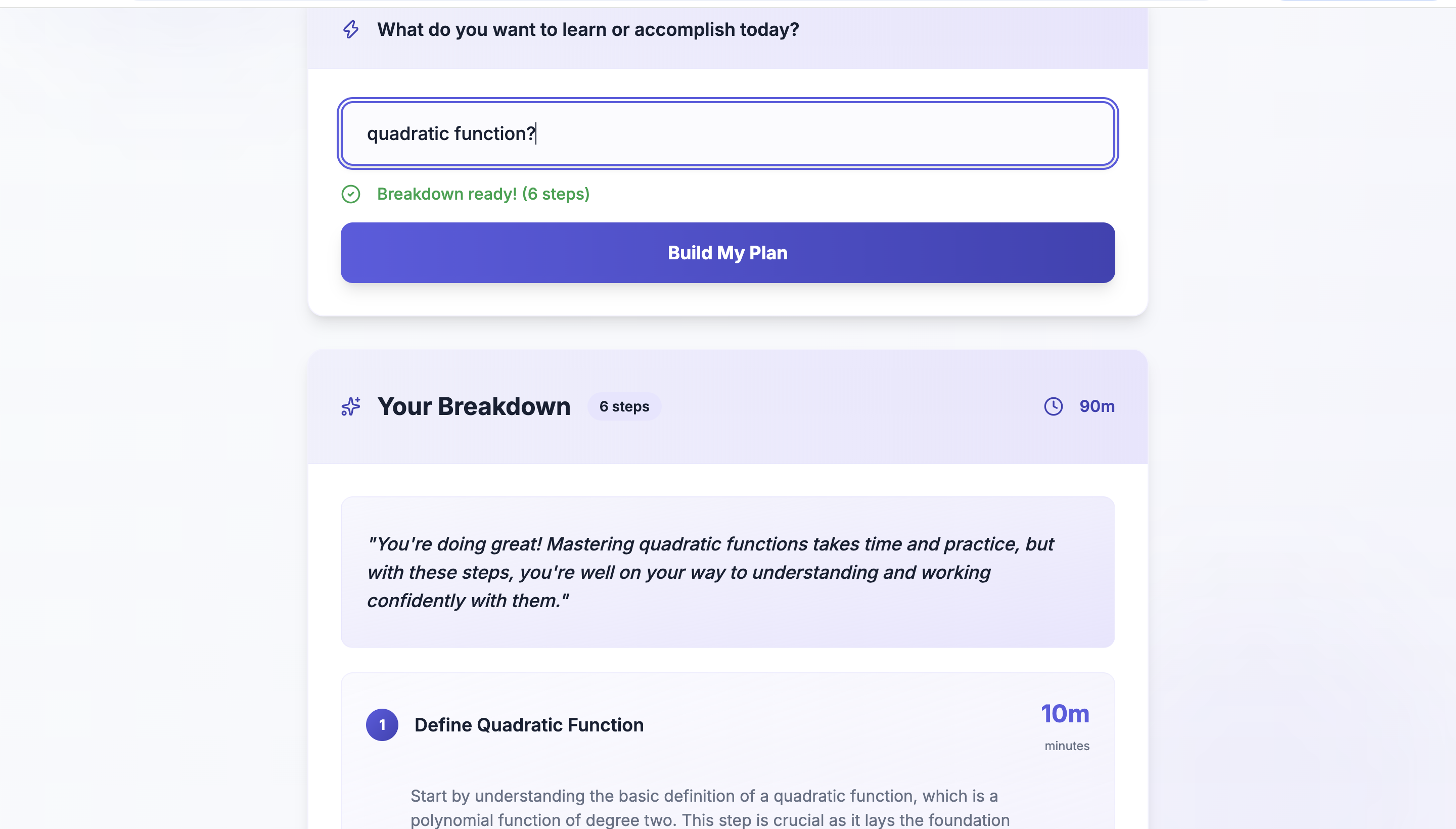
AI Breakdown
-
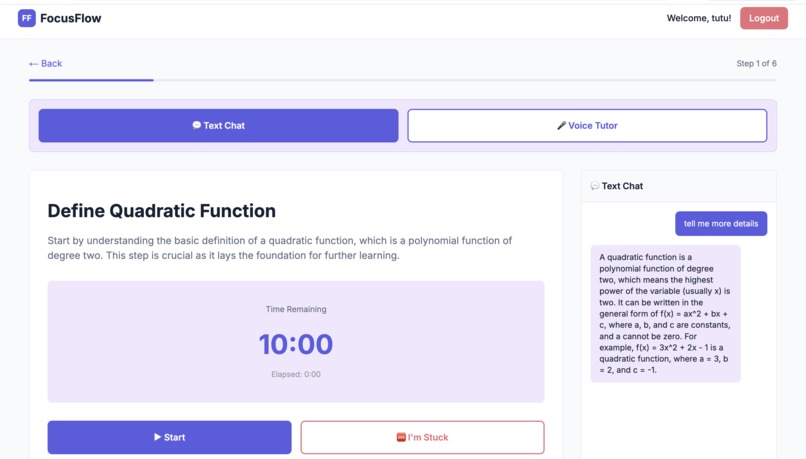
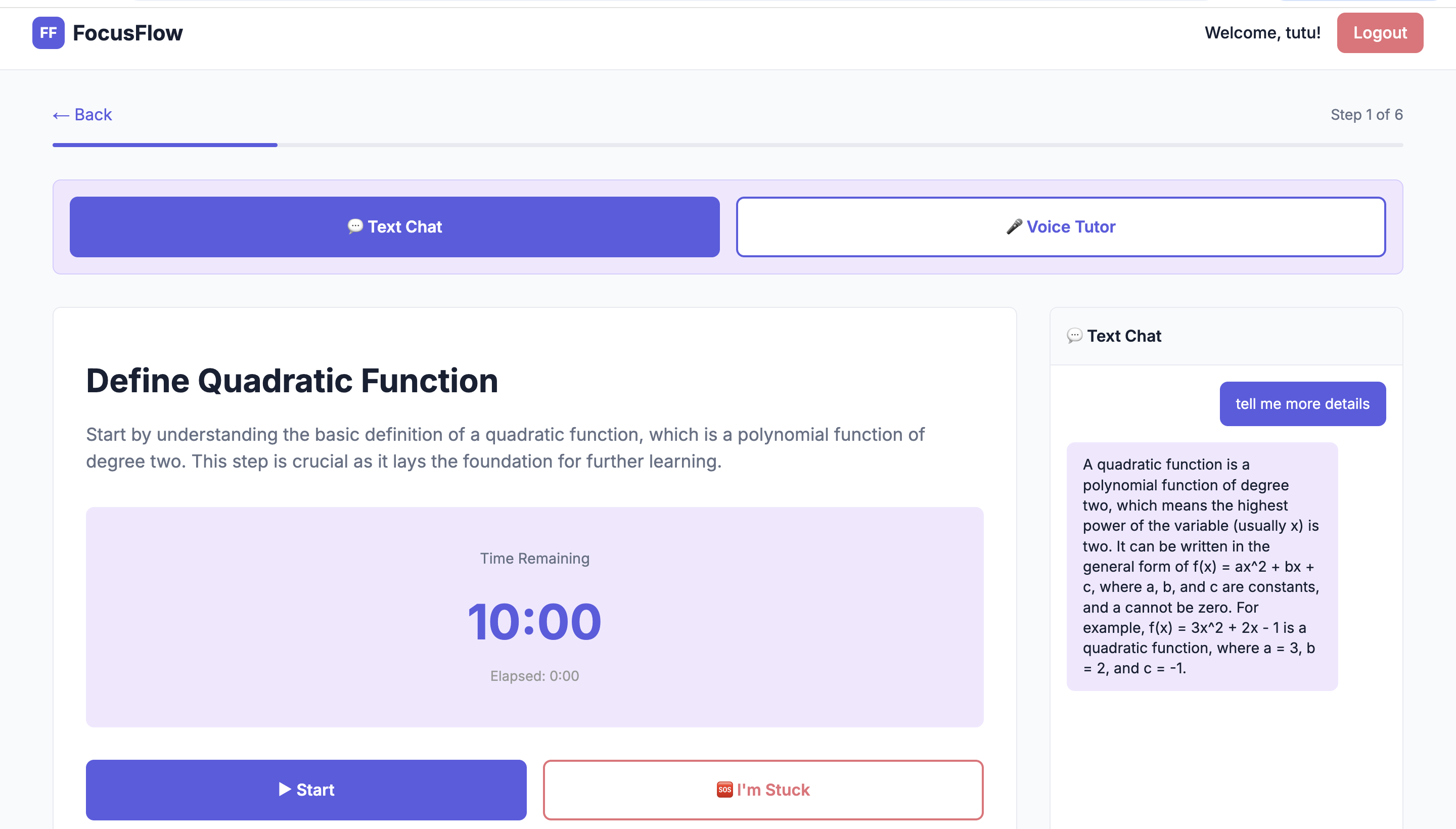
Focus Mode
Inspiration
FocusFlow AI
Don’t make the student adapt to the tool. Make the tool adapt to the student.
An adaptive AI-powered study assistant designed for neurodivergent students and all learners. FocusFlow transforms overwhelming academic tasks into manageable steps and adapts in real-time when students get stuck. Many students struggle in silence. Not because they lack intelligence or motivation. But because their brains are wired differently—ADHD, autism, anxiety, dyslexia. The education system wasn't built for everyone.
They sit in front of a textbook and freeze. Not from laziness, but from cognitive overload. A single assignment feels like climbing a mountain with no map. They ask for help and hear: "Just focus harder." "Break it down yourself." "Everyone else can do it." But their brains don't work like everyone else's. And no tool adapts to that reality.
The deepest insight I've learned: most technology solves business problems. Few solve human problems.
For years, I've been obsessed with a different question: How do we use technology—AI, voice, adaptation—to solve the problems humans face? Not problems that make companies money. Problems that break people's spirits. ⸻
My Journey
A year ago, I built an educational app for autistic children. It wasn't about productivity. It was about understanding how they learn. How they process information. What makes them anxious. What helps them thrive. I learned that technology stops failing when it stops treating people as problems to optimize—and starts treating them as humans to understand.
That app taught me something I couldn't unsee: the world has plenty of tools. What it needs are systems that care.
⸻
The Catalyst
During the development of FocusFlow, I tested it with someone close to me who was struggling with the same challenges. Not because he wasn’t smart, but because traditional study methods exhausted him. I showed him the early versions of the platform and explained how it worked: how the AI could break down his tasks and adapt whenever he got stuck.
As he tested FocusFlow, he struggled with certain features and shared honest feedback—the kind that stings because it’s true.
What it does
⸻
The Vision: Different Brains Deserve Different Support
Neurodivergent students don't need better productivity tools. They need what every human deserves: a system that sees them. Understands them. Adapts to how they actually work.
FocusFlow AI isn't a productivity app. It's a personal tutor.
A tutor who:
- Breaks overwhelming tasks into steps your brain can handle
- Learns your patterns—what helps, what hurts
- Adapts in real-time when you're stuck (doesn't say "try harder"—changes the approach)
- Speaks your language—literally. Voice mode. Chat mode. Text mode. Your choice
- Gets smarter the more you use it
- Never makes you feel broken for thinking differently
Over weeks and months, it stops feeling like software. It feels like someone who understands you.
⸻ What if the system adapted instead?
What if neurodivergent students had access to a tutor who doesn't just understand ADHD—who's built for ADHD? Who doesn't just accommodate autism—who celebrates how autistic brains solve problems? Who sees anxiety not as a limitation but as valuable information about how to support someone?
That's what FocusFlow builds toward. Not as charity. As standard.
⸻
Why We Built This
Because I believe technology's highest calling isn't to optimize businesses or maximize engagement. It's to solve human problems. To give people who've been excluded another chance. To build systems that don't make humans adapt—that adapt to humans.
This is only the beginning.
⸻
How we built it
⸻
Frontend:
- Next.js 16.3 for scalable React architecture
- TypeScript for type-safe development
- Tailwind CSS for responsive, accessible design
- Lucide React for clean UI icons
Backend & AI:
Groq API (llama-3.3-70b-versatile) for ultra-fast LLM inference
- Task breakdown generation
- Conversational AI tutoring
- Real-time step adaptation
ElevenLabs API for natural text-to-speech
- Automatic fallback support
Voice & Interaction:
- Web Speech API for native browser speech recognition
- Real-time transcription of student questions
- Seamless voice + text hybrid interaction
Storage & Deployment:
- localStorage for persistent chat history across steps
- Vercel for production deployment
- GitHub for version control and CI/CD
Architecture Highlights:
- Global chat persistence (not per-step)
- Real-time LLM responses with streaming
- Emotion-aware context (foundation for future MediaPipe integration)
- Zero-latency adaptation when students request help
⸻
Challenges we ran into
⸻
1. TypeScript Configuration
Next.js 16.3 had strict tsconfig requirements. We spent hours debugging baseUrl/paths conflicts before finding the right balance between bundler module resolution and Next.js expectations.
2. ElevenLabs vs Web Speech Fallback
Early versions used browser fallback voices, which caused unexpected issues. We isolated the issue and rebuilt to use ElevenLabs-only with graceful error handling.
3. Circular JSON Serialization
Chat history was trying to serialize React component fiber references. We solved this by creating a clean step object shape (id, title, description, duration, difficulty) separate from internal state.
4. Real-time LLM Streaming
Groq's ultra-fast responses were sometimes too fast for UI state updates. We added debouncing and proper async/await patterns.
5. Accessibility & Neurodivergent UX
Generic accessible design isn't enough for ADHD/autism. We had to rethink focus management, cognitive load reduction, and visual hierarchy specifically for attention-challenged users.
⸻
Accomplishments that we're proud of
⸻
✅ Deployed to production — From concept to live on Vercel with full CI/CD pipeline
✅ Adaptive AI that actually adapts — Not just a chatbot. Real real-time plan modification based on user struggles
✅ Multimodal interface — Voice + text + chat seamlessly integrated
✅ Zero database friction — localStorage-first architecture for instant deployment
✅ User testing with real neurodivergent students — Built with real feedback, not assumptions
✅ Clean, scalable architecture — Code is maintainable for future features
✅ Fully accessible — WCAG AA compliant
⸻
What we learned
⸻
1. Technology's highest calling is solving human problems, not business problems.
The deepest satisfaction comes from building systems that change how people feel about themselves.
2. Neurodivergent users need co-creation, not assumptions.
We learned more from real user feedback than hypothetical design.
3. Real-time adaptation is table stakes.
Users want systems that learn, remember, and adjust.
4. Voice is not optional for some brains.
Text feels like work. Voice feels like conversation.
5. Speed matters for attention-challenged brains.
Slow responses lose focus.
6. One size fits nobody.
The most important feature we built was the commitment to adapt.
⸻
What's next for FocusFlow AI - Adaptive Study Assistant
Phase 2: Emotion Detection
- MediaPipe Face Detection integration
- Real-time emotion recognition
- Proactive AI responses
- Automatic step simplification
Phase 3: Learning Analytics
- Progress tracking without performance anxiety
- Time metrics and efficiency insights
- Pattern recognition
- Custom goal setting
Phase 4: Data Persistence
- Cloud authentication
- Multi-device sync
- Privacy-first analytics
Phase 5: Mobile Apps
- React Native for iOS/Android
- Push notifications for adaptive reminders
- Offline mode with sync
⸻
Long-term Vision:
Our mission: Build a world where different brains don't have to adapt to tools. Tools adapt to them.
Built With
- accessibility
- adaptive-learning
- adhd-friendly
- ai
- autism-friendly
- edtech
- elevenlabs
- groq
- llm
- machine-learning
- natural-language-processing
- neurodiversity
- next.js
- node.js
- react
- real-time-adaptation
- tailwind-css
- typescript
- voice-interface
- web-speech-api

Log in or sign up for Devpost to join the conversation.