Inspiration
Students often begin studying with a clear goal but struggle to manage their time, decide what to study next, and adapt when their schedule changes. Many study tools provide static plans but do not respond naturally to changing priorities. We wanted to build a study companion that keeps track of progress and helps students take the next useful step.
What it does
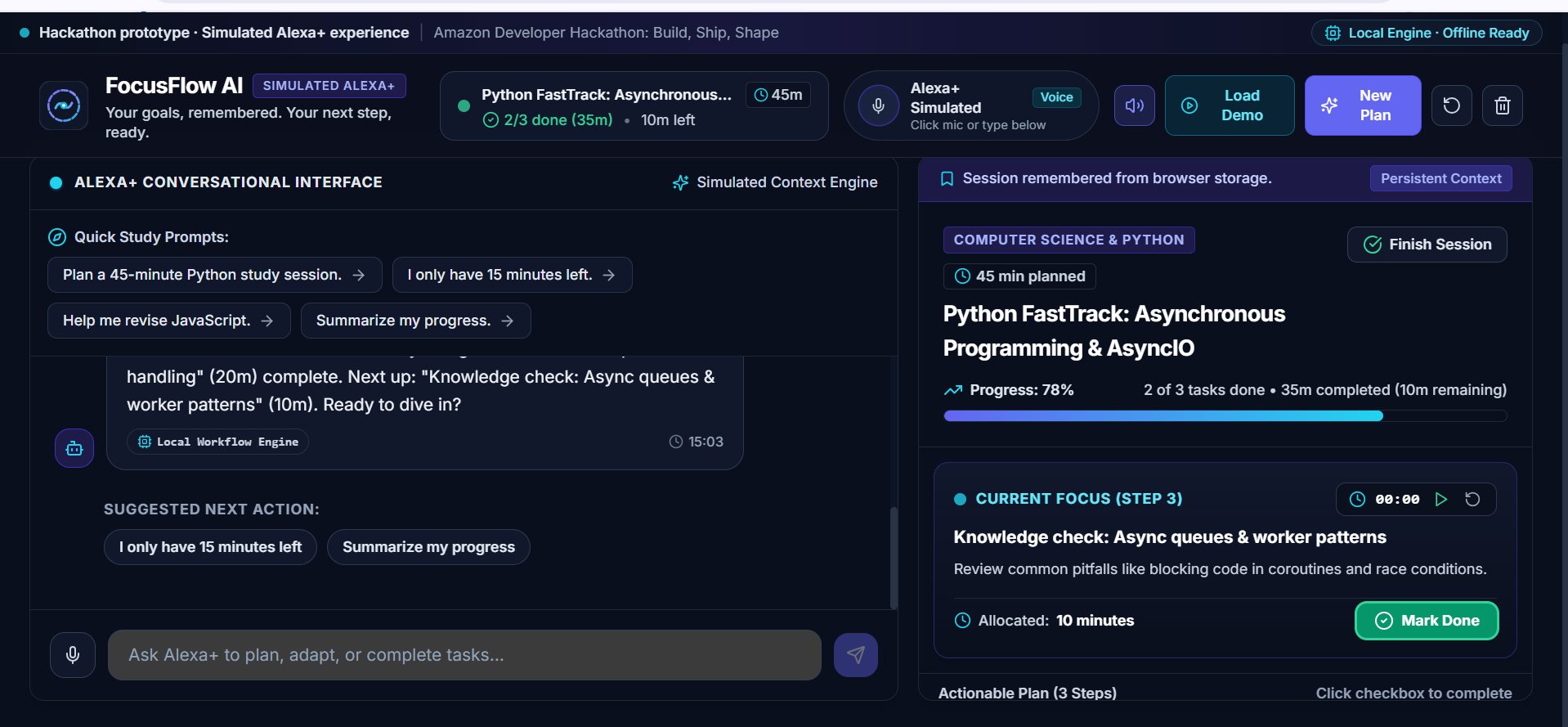
FocusFlow AI is a context-aware study companion built as a simulated Alexa+ conversational experience. Students can create focused study sessions, receive structured tasks, mark tasks as complete, and adapt unfinished work when less time is available.
Key features include:
- Adaptive study planning: Creates structured study tasks based on a topic and available time.
- Conversational interaction: Lets users type requests and use suggested prompts to plan, adapt, and review a session.
- Progress tracking: Shows completed tasks, current focus, and remaining work.
- Persistent context: Uses local browser storage to restore session progress after a refresh.
- Quick adaptation: Helps reorganize unfinished tasks when the available study time changes.
How we built it
We built FocusFlow AI as a lightweight web application with a conversational interface and a study dashboard. Its local study engine handles planning, task completion, time adaptation, and progress updates. Browser localStorage supports session persistence, allowing the experience to work without requiring a hosted AI service for its core workflow.
The project is explicitly presented as a simulated Alexa+ experience, rather than claiming an official Alexa integration.
Challenges we faced
One of the main challenges was keeping the conversation and study dashboard synchronized. Completing a task or changing the available time should update progress and the next recommended action without losing completed work. We also focused on keeping the interface responsive and lightweight for everyday laptops.
What we learned
Building FocusFlow AI helped us understand how conversational interfaces, persistent state, and adaptive workflows can work together to make a practical learning tool. We learned that a useful assistant is not just about answering a message; it should also help users maintain context and move toward a clear goal.
What's next
Future improvements could include more advanced personalized recommendations, additional study modes, and optional voice interactions, while keeping the experience accessible and transparent about its capabilities.

Log in or sign up for Devpost to join the conversation.